Tag Archives: Red Crossbill

The 2015-16 Winter SnowBird(er) Contest is Underway!

L1010480_RECR1_immMale,CousinsIsland,3-28-14_edited-1A group of Red Crossbills on Cousin’s Island that landed at our feet was just one of the highlights during the 2014-15 Winter SnowBird(er) Contest.

It’s December, and you know what that means! It’s time for the SnowBird(er) Contest here at Freeport Wild Bird Supply!

We are very excited to announce the start of the 7th annual “Winter SnowBird(er) Contest,” which was introduced as a way to encourage people to get outdoors in the depths of winter.  Just because it’s cold out does not mean there aren’t a lot of great birds to see!  While we offer free Saturday morning birdwalks throughout the year, it is much easier to entice people to participate in May when warblers are around, or July when it is nice and warm out.

Therefore, to get more birders out and interested in the great winter birding our area offers, we have added an extra incentive: prizes!  Participants accumulate points based on the temperature at the start of the birdwalk – the colder the morning, the more points are awarded.  The contest runs December 5th through March 26th, and at the end of the period, over $250 in prizes will be awarded!

Winter birding can be a lot of fun.  It is prime season to see seaducks, such as Common and Red-throated Loons, Common Goldeneye, Bufflehead, and scoters.  The southernmost wintering flock of Barrow’s Goldeneyes on the East Coast resides in the lower Harraseeket River in South Freeport, and we frequently visit Winslow Park and the Freeport Town Wharf to enjoy this beautiful duck.
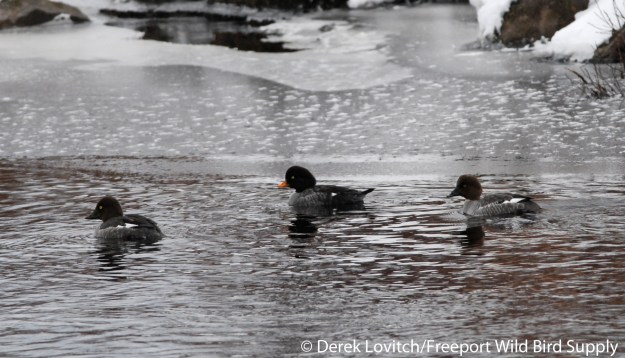
female BAGO with imm COGO1, East Machias River, 2-13-12_edited-1
Barrow’s (center) and Common Goldeneyes side-by-side is another highlight of winter birding in the area.

We’ll look for Northern Shrikes, enjoy our year-round woodland residents, and who knows what else? Last year, we spotted everything from a vagrant Townsend’s Solitaire to Red Crossbills literally at our feet. And, if this winter turns out to be another “irruption” year (and there is a good suggestion that for many species, it will be), we may find Snowy Owls, Common Redpolls, both crossbills, and much more!

Droll Yankees logoThe person with the most points at the end of March wins this year’s Grand Prize: a B7 Domed Caged Feeder complements of DROLL YANKEES. Large capacity, Gray Squirrel-resistant, pigeon-proof, and sheltered from the weather, this great feeder solves feeding station problems. Like all of Droll’s products, it is made in the USA and has a Lifetime Guarantee.

Royal River Massage logoThe runner-up will receive a one-hour massage from ROYAL RIVER MASSAGE in Yarmouth. Relieve “warbler neck” and other aches and pains in a 60 Minute Therapeutic Massage! It’ll be a great way to recover from the winter season of shoveling snow.

Laughing Stock Farm logoAnd, finally, the third place finisher will receive 2 weekly organic vegetable pickups (“medium” shares) at LAUGHING STOCK FARM CSA in Freeport. A selection of veggies will be available on each of two pick-up dates in April.  We’ve been members of the farm’s CSA for 10 years and love having fresh, organic, and local vegetables all year long.

Betsey Puckett, President at Droll Yankees was excited to provide the Grand Prize for the second year in a row, “Kudos…for providing a challenging and educational event. But then again, you Mainers are known for your endurance.”

There are some mornings in mid-winter that can make it tough to get out of bed, so we hope to add a little extra motivation. The real prize of course, is the birding our area offers in the depths of winter.

For a recap of what we have been seeing on our recent birdwalks, you can always visit the News page of our website to see what you are missing. And with 240 species seen in the 11 years of free Saturday Morning Birdwalks, you have been missing a whole lot!

So join us on a Saturday this winter to see how fun winter birding can be, and start accumulating points! Birdwalks meet at the store at 8:00am for a short carpool to a local site, rarely more than 10-15 minutes away. We return to the store between 10 and 10:30 for free shade-grown, organic, bird-friendly coffee and a look at what’s hanging out at our feeders.  The birdwalks are free and do not require advance registration.  Hope to see you soon!

SNOW,Brunswick_Landing_birdwalk,1-31-15_edited-1
This Snowy Owl in Brunswick during last winter’s birdwalk was the 237th species ever seen on a Saturday Morning Birdwalk
My February Birding Re-Cap (2/16/15)

I know it’s been a while since I’ve blogged, but I sure hope you have taken that to mean that I have not been out birding! Quite the contrary in fact.

Yeah, it’s been bitter cold – we’ve yet to rise above freezing in February! And if you hadn’t noticed, we’ve had quite a bit of snow recently. Of course, strong winds with dangerous windchills (like yesterday) and heavy snow precluded birding on some days -well, except for feeder-watching, which has been truly excellent.

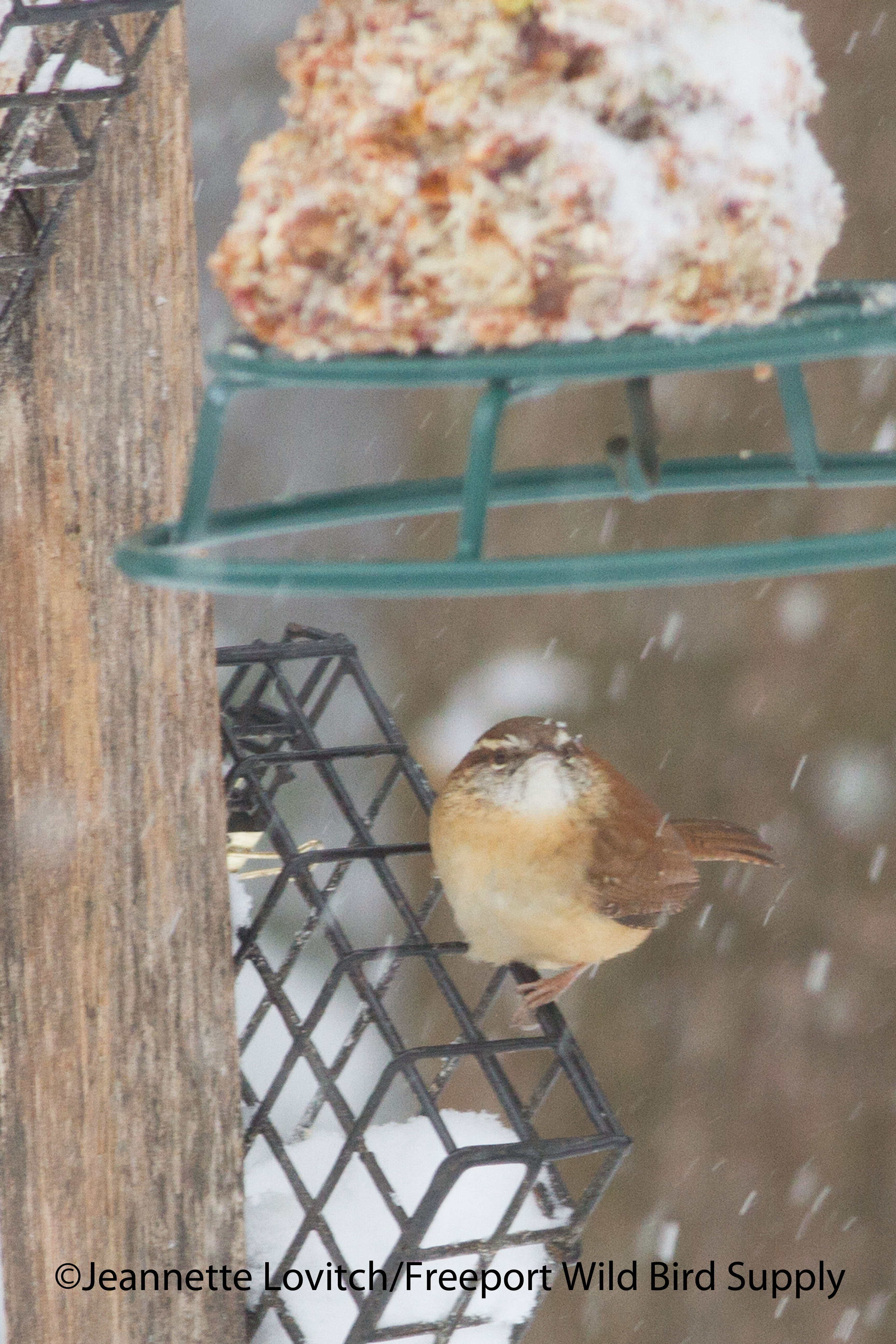
In fact, the feeder-watching has been so good of late, that Saturday’s birdwalk outing was mostly spent watching feeders. 50+ Common Redpolls, Pine Siskins, Purple Finches, a Carolina Wren, and more were enjoyed from a sheltered yard, or from the inside of our house. Yup, we went indoors for the birdwalk this week, defrosting for about a half hour – our feeders are only visible from inside the house, afterall.

And with several snow days and work-from-home writing days of late, I have been enjoying our feeder activity: a large number of American Goldfinches have been joined by varying small numbers of Pine Siskin, Purple Finch, and Common Redpolls. Still waiting for a big flock, however. And the second-ever, and first long-staying, Carolina Wren in the yard has been a treat – we’re pumping him full of mealworms to keep him around, and healthy.
IMG_9420_edited-3

The feeders at the store have been active, as well, although non-goldfinch finch numbers have not been as good or as consistent at home. But, for mid-winter with this much snow on the ground, the diversity has been surprisingly good. (Weekly totals are posted to our store’s website).

Snowy Owls are around, and on 1/31 we finally added one to our all-time Saturday Morning Birdwalk list with a visit to Brunswick Landing: species #236. Meanwhile, our birdwalk to Winslow Park on 2/7 had Barred Owl, the continuing (despite all the ice) over-wintering Dunlin (12), and the 4 Barrow’s Goldeneyes (3 drakes and 1 hen) that had been present.

But the impressive ice cover in Casco Bay has greatly reduced the amount of waterfowl in the immediate vicinity over the last couple of weeks. The end of Winslow remains clear (barely) and the duck concentrations there are quite good, but as of today, however, the much-reduced area of open water now held only two drake Barrow’s Goldeneyes. Meanwhile, the small hole of open water at the base of the Lower Falls in Yarmouth is still somehow still hosting the merganser “hat-trick” (with varying numbers of all three species) as it does every winter – they’re running out of room though!

IMG_4852_MALLs,RiverbankPark,2-10-15_edited-1

IMG_4862_edited-1
Not all ducks are quite as concentrated as these hungry Mallards (with a few American Black Ducks) at Riverbank Park in Westbrook.

While the field trip portion of my Gull Identification Workshop has been postponed for the last two Sundays, gull-watching is pretty good right now, especially in and around Portland Harbor. Hatch Hill Landfill in Augusta on the 12th, however, had only about 100 Herring Gulls – gull numbers are drastically reduced here when there is little open water on the Kennebec River in downtown. The Bath Landfill is hosting a few Iceland and a couple of Glaucous Gulls, however.

Frugivores have been common, with large flocks of American Robins and goodly numbers of Cedar Waxwings stripping all available, palatable fruit. Bohemian Waxwings have been scattered about – although I have yet to catch up with any – but so far Pine Grosbeaks have mostly remained to our north. The rapidly diminishing fruit crop locally will likely concentrate these birds further, or push them southward.

My two best days of birding this month, however, were on Feb 1 and just this past Friday. On the 1st, a snowshoe at the Waterboro Barrens Preserve was awesome. I went there to refind the Red Crossbills that a friend and I had there in December, as my recordings from that visit were inconclusive as to “type.”

Not only did I find 14 crossbills, but many were in full song, and one male was apparently carrying nesting material! A light wind, and my huffing-and-puffing from snowshoeing in waist-deep snow drifts off trail, impeded the clarity of my recordings, unfortunately. However, one of the call types (as analyzed by Matt Young over at Cornell) was suggestive of the Type 8 Red Crossbill from Newfoundland, which has yet to be definitively recorded outside of that province. Intriguing -yup, I need to find time to go back and improve the recording.

The icing on the cake that day was a Hoary Redpoll teased out from a flock of about 40 Commons as they alighted in fed in the Pitch Pines with the crossbills. This was my first Hoary in Maine away from a feeder.

With all of these storms, and two “nice” days of northeasterly winds, I had alcids on my mind as Lois Gerke and I spent the morning in Cape Elizabeth on Friday (2/13). Apparently, my hunch was correct – we scored 4 species of alcids! This is not an easy feet in winter in Maine, although I have hit the total several times (not yet hit 5, however). Black Guillemots were scattered about, as usual, but the fun started with a fly-by Dovekie at Dyer Point.

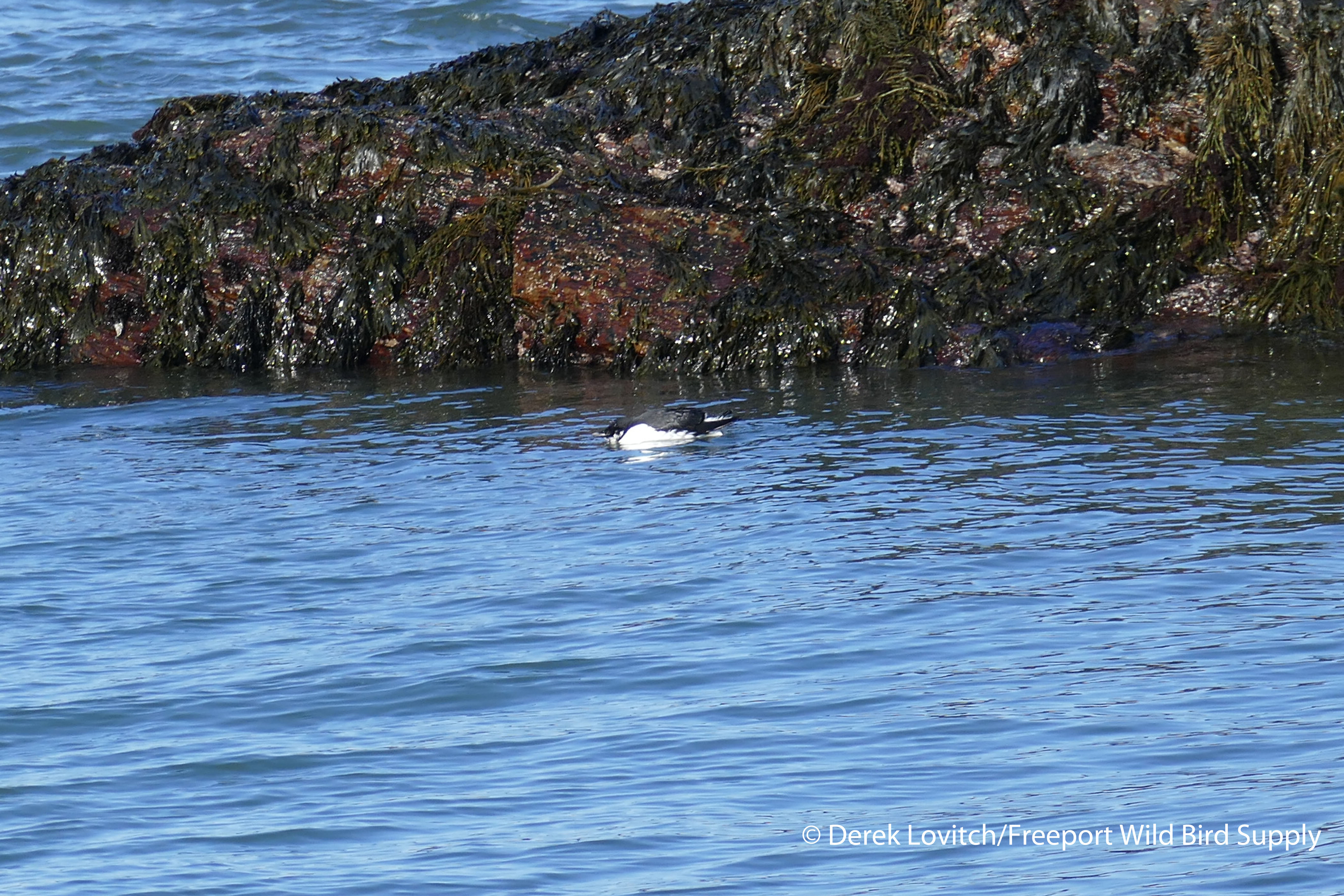
A continuing (and apparently not very healthy) Thick-billed Murre was at nearby Kettle Cove.
L1010192_TBMU,Kettle_Cove,2-13-15_edited-1

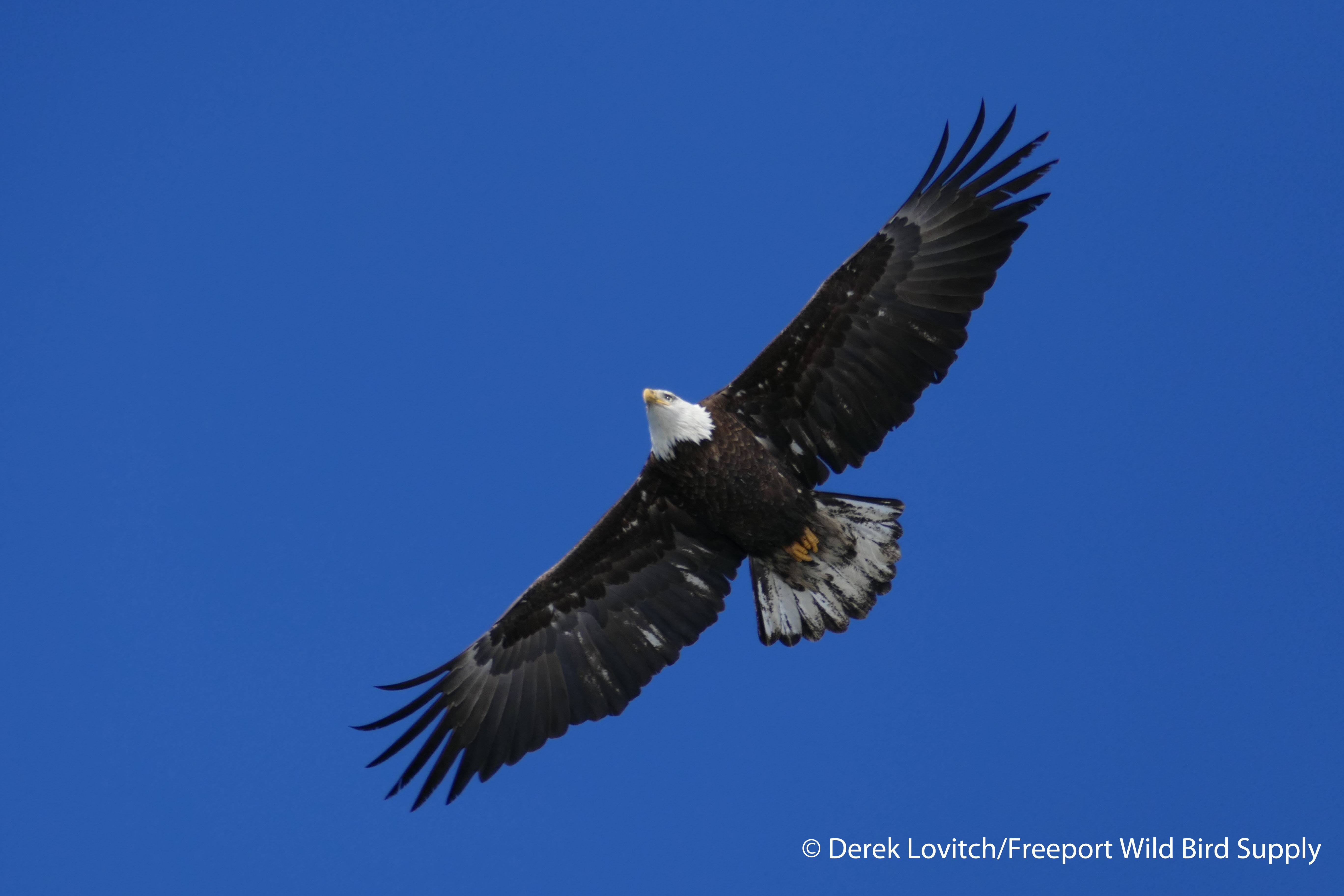
Our presence likely saved its life for now, as a 4th-cycle Bald Eagle had its eye on it – but also, us, apparently. The eagle even landed on the rocks a few inches from the murre, which, instead of diving to escape as a healthy alcid would, was apparently resigned to simply tucking itself into a corner of the rock.
L1010186_BAEA1,4thC,Kettle_Cove,2-13-15_edited-1

L1010189_BAEA2_4thCycle,Kettle_Cove,2-13-15_edited-1

After checking for frugivores at Village Crossings (just a few American Robins on what was left of the crabapple, but we did enjoy a flock of 22 Common Redpolls), we decided to try for a Razorbill for our fourth alcid of the day. Lois’s time was limited, so instead of heading back down to Dyer Point (where the wind was also brutal), we rolled the dice and tried Portland Head Light. And sure enough, a Razorbill was offshore, feeding at the mouth of Casco Bay on the changing tide!

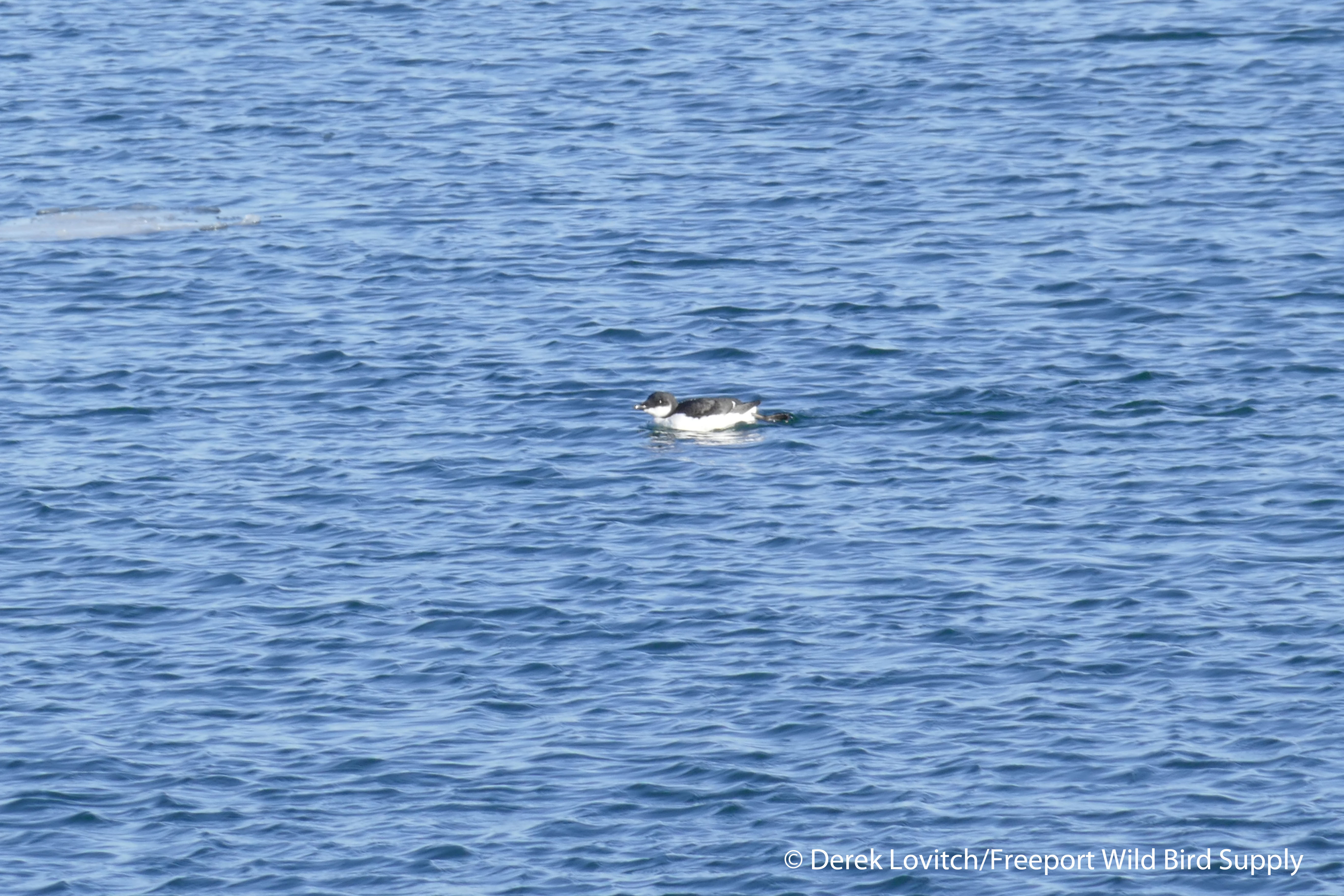
After lunch, I decided to procrastinate a little longer and slowly bird my way to the store, checking for open water on the Falmouth Foreside coastline. Although I was looking for duck concentrations, once again, alcids stole the show: a Thick-billed Murre flew into the cove on the south side of the Mackworth Island causeway. Perfectly strong and healthy, this bird was likely following some small fish into the bay on the incoming tide.

Even more surprising was another Thick-billed Murre in Falmouth, even further up the bay off of the Town Landing. This bird also looked fine, swimming steadily upstream with the tide, “snorkeling” to look for food.
L1010236_TBMU,FalmouthTownLanding,2-13-15_edited-1

L1010218_TBMU_wBUFF,FalmouthTownLanding,2-13-15_edited-1
These Buffleheads looked just as surprised as I was.

So yeah, a 4-alcid day, with three different Thick-billed Murres in quite a day, and probably one of my best birding days of the winter. It just goes to show you what winter birding can bring in Maine, even during an impressive deep-freeze. So yeah, I’ll be out birding as much as I can, and signs of spring are certainly in the air: woodpeckers are drumming actively, Tufted Titmice and White-breasted Nuthatches are singing frequently now, and Great Horned Owls are already nesting. Bald Eagles are probably starting some house-keeping, Common Ravens are reaffirming territories, and in only a month, the Bradbury Mountain Spring Hawkwatch gets underway!

Until then, it’s finches, ducks, white-winged gulls, frugivores, and alcids. I’ll be out in the field, and I hope you will be too. (And don’t forget, you can check out what I have been seeing in near-daily posts to our store’s Facebook page).