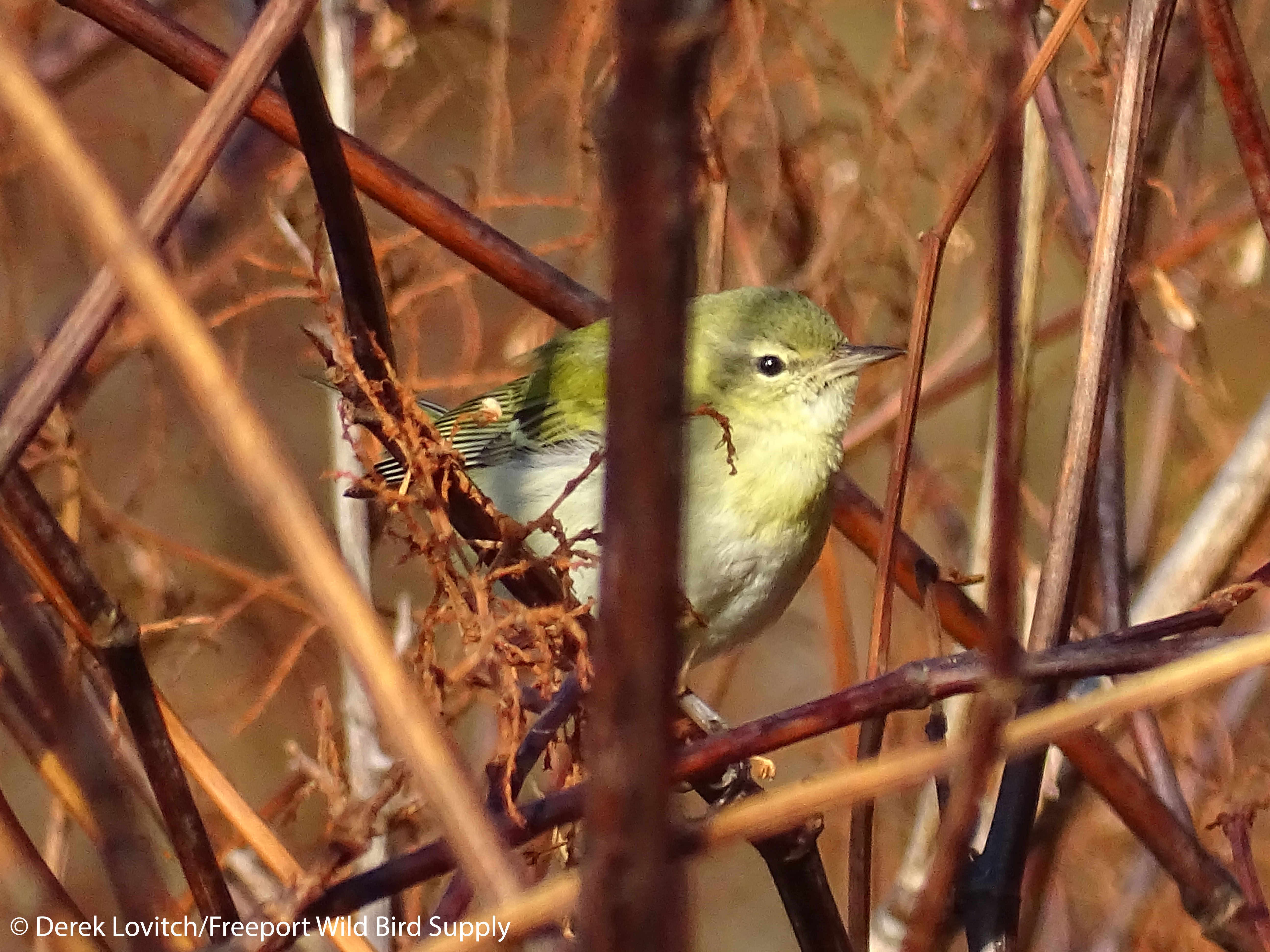
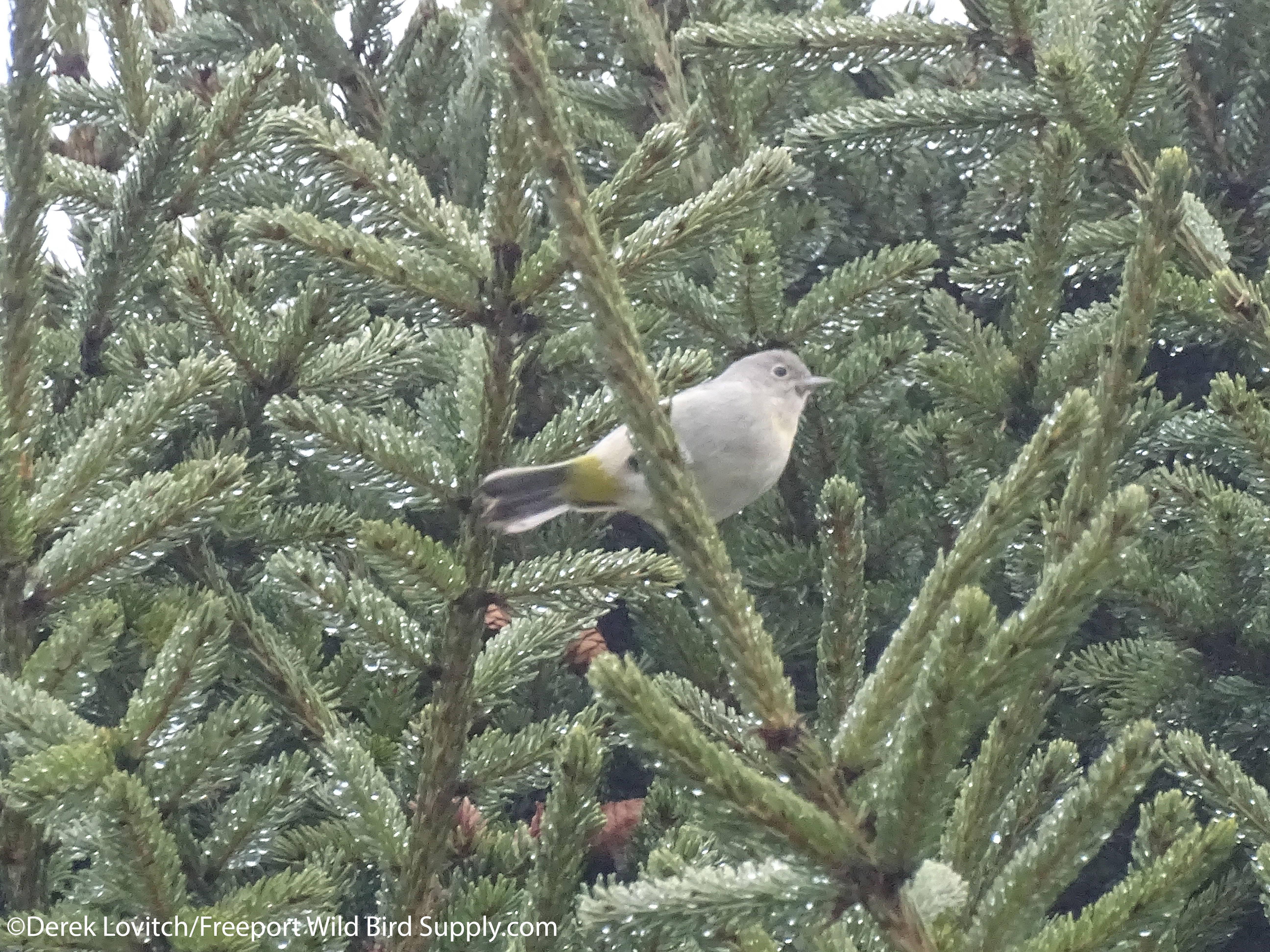
I found Maine’s 4th or 5th Virginia’s Warbler on Peak’s Island on Monday, the 24th. Or at least I was confident that I did. I returned two days later to alleviate any lingering doubt, re-found it, saw it much better, and managed to photographed it! Many other birders have seen it through the 28th among a flock of other late/lingering warblers. Details below.
It was simply another incredible week of birding. Frustrated by not having found a mega-rarity since Monhegan (in an otherwise amazing fall for vagrants), I went to Peak’s Island on Monday. It worked! It was a six-warbler week for me, highlighted of course by the Virginia’s Warbler – a new state bird for me! My “Rarity Fever” is raging now! Here are my observations of note over the past eight days:
Evening Grosbeaks have become more regular locally this week, with single birds, mostly flyovers, here and there. Scattered 1 to a few Red Crossbills continue as well. Additionally, there was also a nice little surge in American Goldfinch and Pine Siskin numbers this week locally.
Plenty of the typical “late” migrants still around, such as Red-winged Blackbirds, Common Grackles, scattered Swamp Sparrows and Northern Flickers, Red-shouldered Hawk, etc.
1 Orange-crowned Warbler, Trout Brook Preserve, South Portland, 11/23.
Peak’s Island, 11/24: 1 almost-definite VIRGINIA’S WARBLER with 2 NASHVILLE WARBLERS (see below) on Seashore Ave, and 1 COMMON YELLOWTHROAT at Battery Steele.
1 NASHVILLE WARBLER, Commercial Street (near the cruise ship terminal), Portland, 11/26.
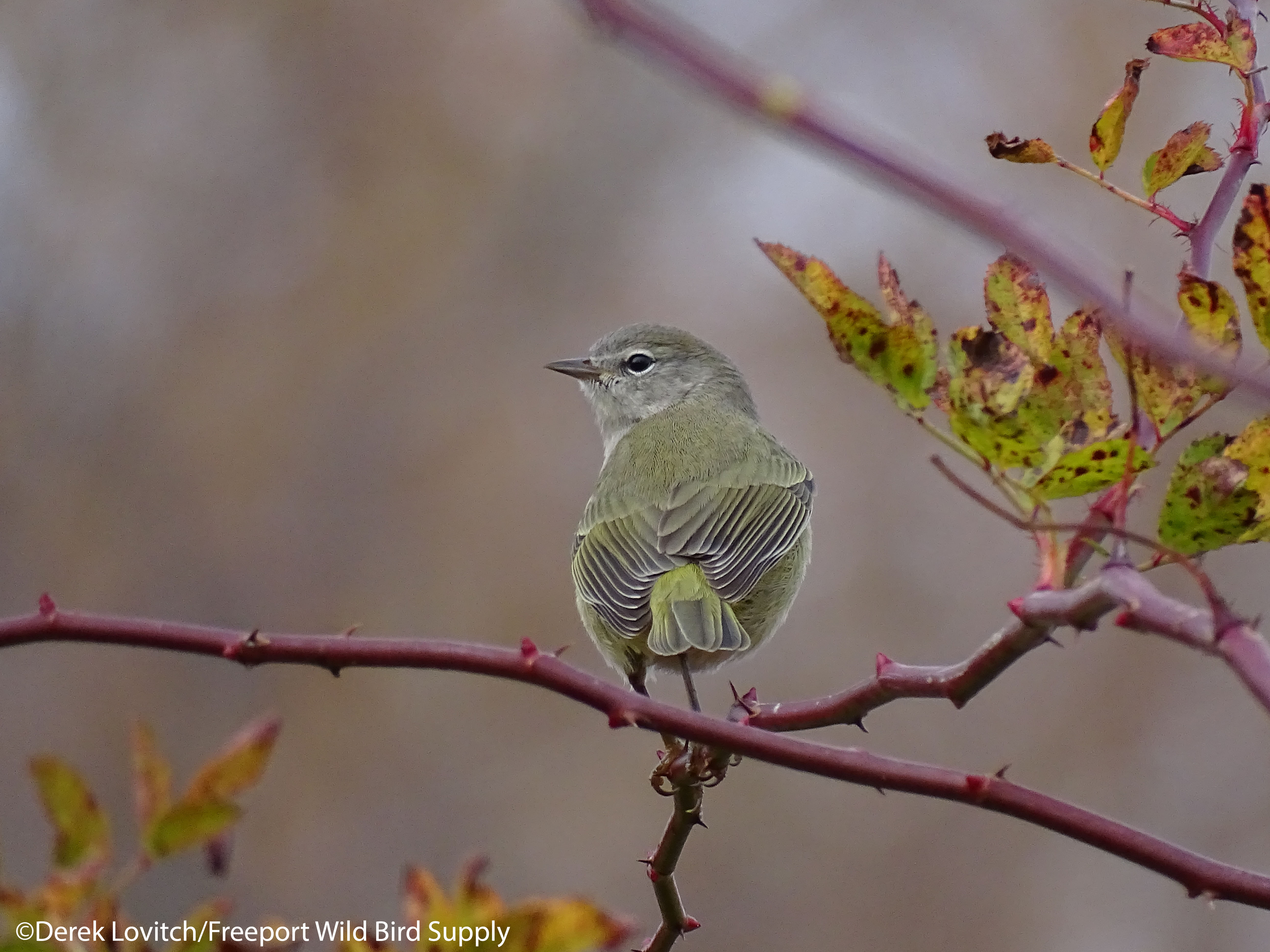
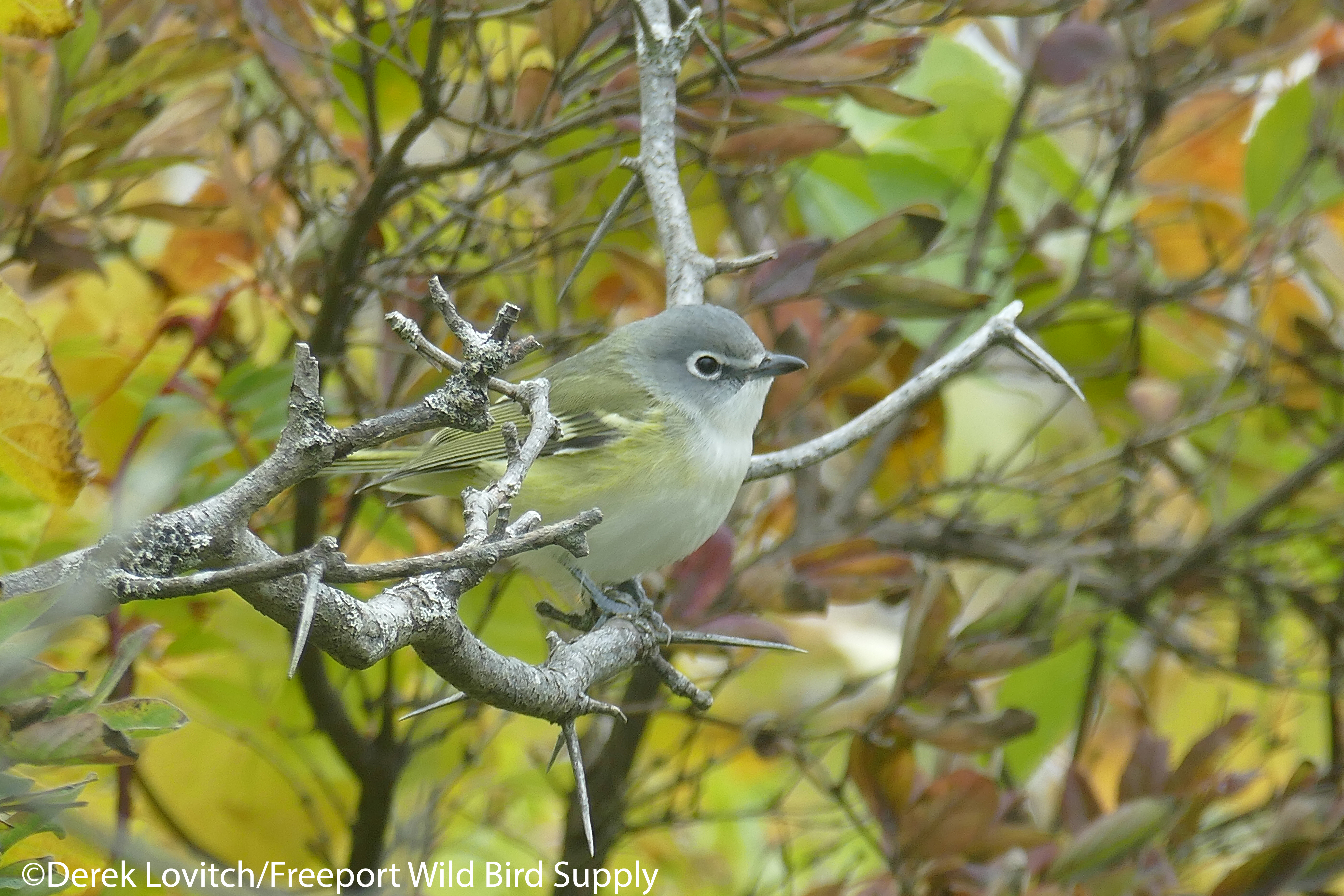
Back to Peak’s Island, 11/26: 1 VIRGINIA’S WARBLER (confirmed! Photo above) with 2+ NASHVILLE WARBLERS, 1++ Orange-crowned Warbler, and 1+ Yellow-rumped Warbler, Seashore Avenue. Complete details here:
4-5 NASHVILLE WARBLERS (4 continuing since being found by B. McKay et al on 11/26; I had a single bird at the other end of the hillside that was likely a 5th individual) and 1 Hermit Thrush, West Commercial Street, Portland, 11/28. This has been an insane fall for “late/lingering/pioneering/vagrant” Nashville Warblers here in Maine. Interestingly, this phenomenon appears to be rather widespread, as well above average numbers of NAWA are being seen along the Northeast coast as far south as Cape May this fall. Fascinating!
My best photo of the week was not of of the rarities, but I enjoyed this photo of one of four very cooperative Snow Buntings at Kettle Cove on the 23rd that I caught this one mid-stretch-break.
It’s been an extraordinary rarity season in Maine this fall. Perhaps it’s been the weather patterns, widespread drought, increasing use of neonicotinoid pesticides, or perhaps – according to a recent paper – geomagnetic storms!
But whatever it is, it’s made for an active month for vagrants here in Maine. Monhegan was epic at the end of September, October was pretty good on the mainland, and November has been exceptional. And, we still haven’t fully entered the rare-birds-at-feeders season, although there have already been quite a few noteworthy feeder visitors.
Personally, I’ve had a great fall, especially on Monhegan, and as you have read in my This Week’s Highlights blog (if you’re the one or two people who actually read it!), I’ve had quite a few notable finds, some fun chases, and overall great birding recently. But I hadn’t turned up a “mega” to add to the tally. On Monday, 11/24, I continued my search by taking a day to bird Peak’s Island, one of my favorite late fall birding destinations.
Arriving on the 7:45 ferry from Portland, I began my usual circuit, working around town to Picnic Point. The wrack line here always looks prime for a vagrant!
A short while later, at about 8:30am, I paused at one of my usual thickets on Seashore Ave, diagonally opposite the 5th Regiment Museum. There are always birds here, augmented by a dense tangle, some tall trees, and a few small feeders behind it.
On Monday, it was very active as usual, with numerous Northern Cardinals, a lot of House Finches, and other typical residents. Movement caught my eye in a stand of still mostly-still-leafed willow trees towards the back right of the thicket, approximately 25 yards from the roadside.
Three warbler-like birds were chasing each other. One appeared to be an aggressor, and I was hearing repeated short, high-pitched call notes that were either, or very similar to, Nashville Warbler. It’s been an extraordinary fall for “late” Nashville Warblers (although they are likely drift vagrants, mirror vagrants, or even reverse migrants rather than just behind schedule), so this was not too surprising. But three non-Yellow-rumped Warblers in one tree? That’s notable on November 24th!
The first bird I saw well was a bright, adult male-type Nashville Warbler (NAWA). The birds, still chasing each other and not sitting still, were not easy to see, but the second bird I got my binoculars on was rather confusing. I observed it for as long as I could, but the distance was just a bit too far.
A very drab Orange-crowned Warbler (OCWA) first came to mind, especially with the yellow undertail coverts, but the bird was really, really gray. A flat, cool, not at all yellowish or greenish gray. It was flicking its tail like a NAWA, but even more emphatically. It turned around, and I saw its breast, and there was a small amount of yellow there. Wait, what!? The patch was smaller and more isolated than a drab female Northern Parula, but there were no wingbars are at all, and it was too long-tailed.
I noted an eye-ring, but the distance made it hard to tell how bold it was, whether or not it was complete, or even if it was really white like a NAWA. I went for my camera, hoping to zoom in to see detail, but the birds were far too active and in too dense of a twiggy tree, so coupled with the distance, this was a complete fail.
Two birds departed to the right, but the bird of interest remained for another minute or three, calling very similarly to a Nashville Warbler, but quite emphatic. I then lost it, too.
By now, I was putting the pieces together and was under the suspicion that this was a Virginia’s Warbler, but I was not convinced. With all three birds departing as of 8:48, I opened up my Sibley app to refresh my memory (it’s been quite some time since I have seen a VIWA!) and listen to the call. The call recording on the app included two pitches of calls, the second of which was spot-on for what I was hearing from this very drab, gray, not-quite-Nashville warbler.
Hmm…but why didn’t I notice the yellow rump? Or was I just focusing on the rest of the bird? All of the views were so painfully brief, and I never saw the complete bird at one time.
About 10-15 minutes later, the trio returned: the adult male-type NAWA, a second, drab immature-female-type NAWA, and the likely VIWA. In a brief view, I noticed the all gray head, reminiscent of a female American Redstart, and confirmed the presence of yellow in the center of the breast.
The birds departed again, to the right, across Ryefield Street, but I only glimpsed one bird and it was likely the VIWA. I walked around the block, noticed a few feeders on New Island Avenue, but I did not find any warblers. Since they had returned to the original stand of willows three times now, I stood in place now, about a full hour after my original observation and I started sending out texts and scribbling notes.
I noticed that the recycling container at the house adjacent to the thicket had been taken in. Damn; I missed the homeowner! I needed to get closer to the thicket if the bird returns, but I am absolutely unwilling to trespass or enter yards without being invited/given permission. Many of you have understood this from my tours to Monhegan, but I stand by this elsewhere. But did it cost me today?
Happily, a short while later, the homeowner was in his yard and after a brief chat, allowed me to hang out in his backyard. It was now 10:28. He even brought me a comfy chair! I was so appreciative, now that I was camped out next to the willows, no warblers reappeared. I took another loop around the block, then returned to my chair. A single Evening Grosbeak dropped into the thicket, and I glimpsed what was almost certainly a Lark Sparrow within a House Sparrow flock, but I did not pursue it to confirm.
By 11:15, I was cold and needed to get a real walk in, so I departed, birding my usual circuit out to and through Battery Steele (found a Common Yellowthroat there) and otherwise enjoyed a rather birdy day on the island. A Hermit Thrush, a couple of Swamp Sparrows, a growing cadre of Red-necked Grebes offshore, and tons of Red-breasted Nuthatches in the woods. Song Sparrows were also unusually abundant.
I walked into town for lunch to go (the wraps at Unruly Girls’ Peaks Cafe are fantastic as always, but the hot chai was even more clutch!). I was back to the thicket at 1:36. The sun that broke through while I was far away had mostly been enveloped by clouds once, and the wind was picking up. Neither was particularly helpful. I departed at 2:25 to catch the 2:45 departure (I had planned on leaving before lunch!)
I was frustrated. I knew what I saw, but was bothered by what I did not see, and how unsatisfying and conclusive my views were. I felt confident that it was indeed a VIWA, but I don’t like birding by default or identification by the sum of all parts!
I thought about going back the next day but couldn’t. I must say, the oral surgery may have been less painful than having this bird get away!
I looked at guides, viewed photos online, and concluded there was little doubt that I had seen a VIWA. But the mind can play tricks on you, and memory can be affected by the post-observation studies, so it was bothering me. Jeannette asked if I was going to “count it?”
I didn’t know. So, on Wednesday morning, I decided to be a little late for work and go back to Peak’s Island. I couldn’t help it; I had to! Jeannette agreed.
Walking to the ferry terminal, I stumbled upon a Nashville Warbler on Commercial Street, near the cruise ship terminal, which I took as a good sign. 7:45 ferry, 8:05 arrival on the island, and I was to the thicket by 8:30, after a thorough check on Picnic Point on the way (the foggy conditions had me hoping to refind the bird on the wrack line like so many late-season insectivores find sustenance).
I stared at the thicket, but overall bird activity was much slower than two days prior. At 8:55, I began walking down Seashore, towards Maple Street. I soon heard warblers! I first heard a Yellow-rumped Warbler from quite some distance, but then heard NAWA, or NAWA-like, calls.
In the side yard of 66 Seashore, I found not three, but 5 warblers: 2 NAWA, a YRWA, and a drab Orange-crowned. Very drab. Hmm…could I have blown this mystery warbler? Was this all I had seen? No, no way! And then warbler #5 popped out: Virginia’s Warbler!!!!!
Between this yard, and the first yard on Maple Street a minute later, I had several perfect views at varying distances, and all field marks were observed. With a good look, there sure wasn’t any mistaking this bird!
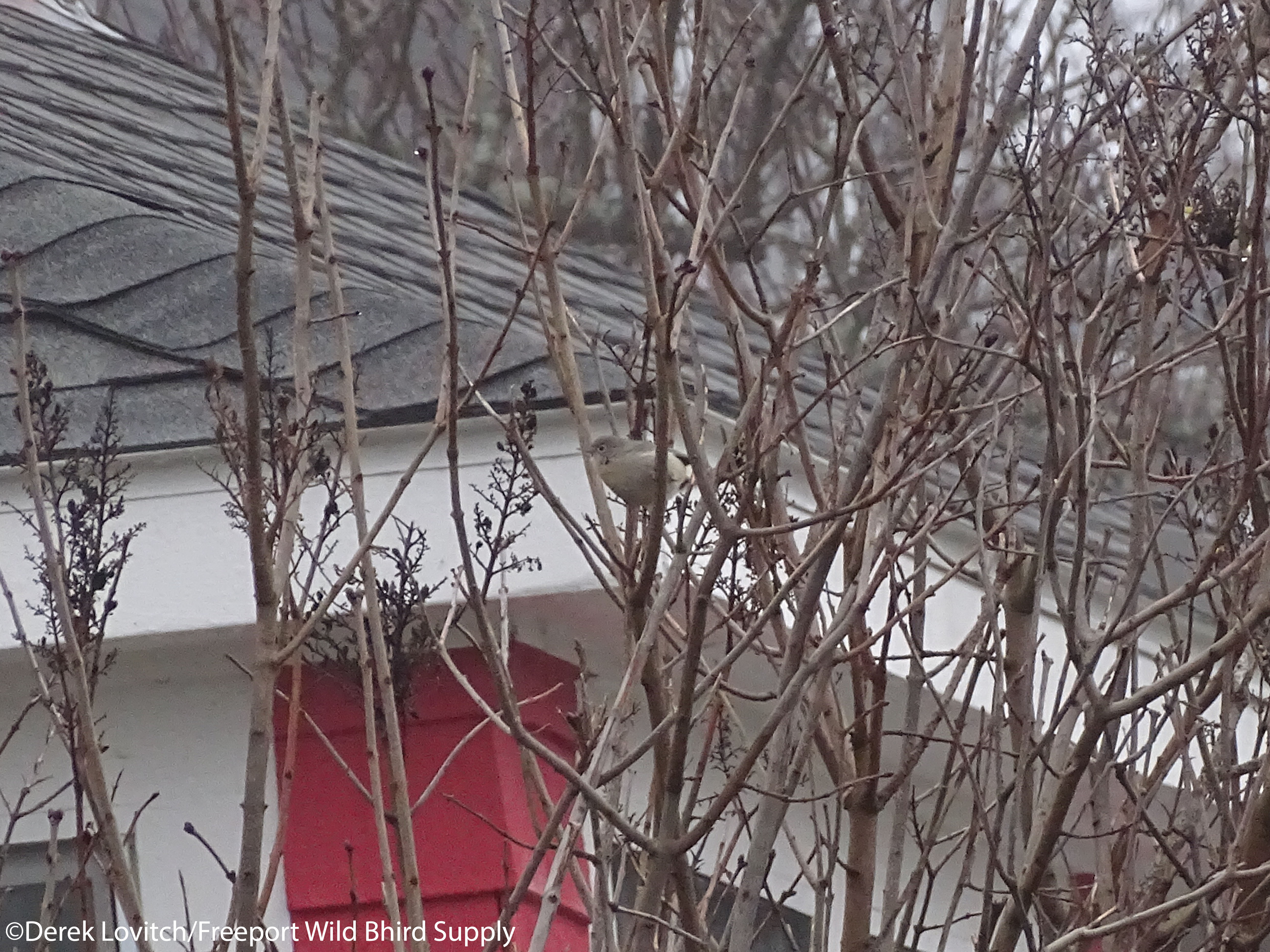
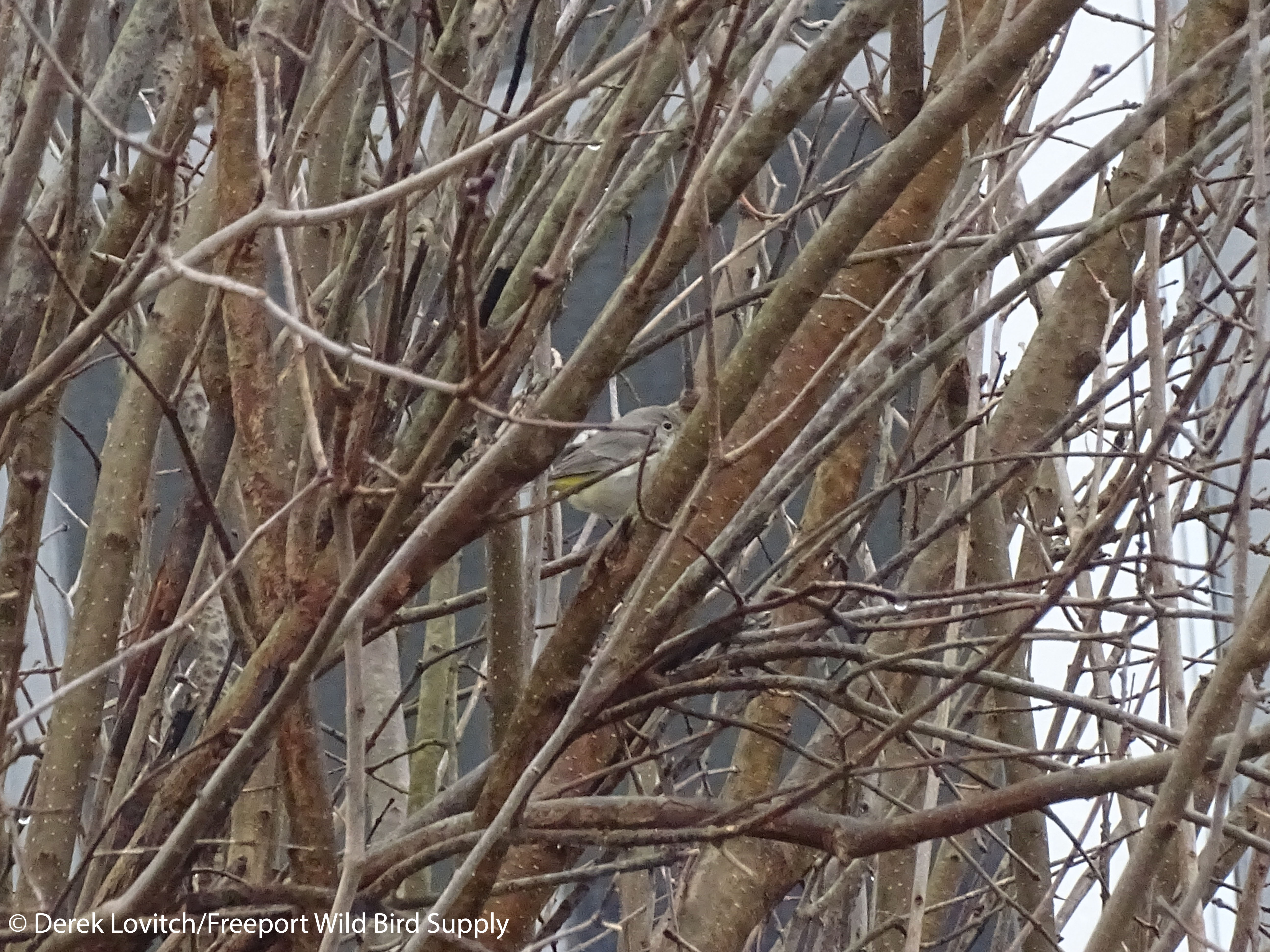
Thin, slim warbler with a thin bill; bold but thin white eyering; cool gray upperparts with no wingbars, and here, you can just make out part of the yellow rump.Most of my views – and all of them on Monday – were like this: small parts of a small bird between twigs! Here, however, you can see the plain gray overall color, complete, thin eye-ring, and a hint of the yellowish undertail.
I followed the flock back towards the original thicket and willow trees, but I lost their tail. I decided to be responsible and head back for the 10:00 ferry and get to work. I also had left my Tylenol in the car. Besides, my job here was done! This is the 4th or 5th record for Maine, and the first away from Monhegan.
Addendum: Several friends arrived on the next ferry, and after a short while found the bird in the same area, often returning to the original thicket from Monday. I was so focused on identification of the VIWA that I probably didn’t take a full inventory of all of the warblers that were around. They had at least 4 OCWA now, 2-3 NAWA, 2 YRWA, and crushing views of the VIWA. The bird was seen by many through the afternoon. And thanks again to the homeowners who accepted my presence in their yard and invited others in later that day!
I also can’t help but wonder if there will be a “Patagonia Picnic Table Effect” as birders descend upon and follow this possibly-growing flock of unseasonable warblers. Could I be heading back to Peak’s soon? I’ll at least be able to grab another Mediterranean wrap this time.
12/1 UPDATE: The VIWA has not been seen since the afternoon of 12/29. Birders searched for it on 12/30 and had 1+ NAWA and 4 OCWA in the area. Today, Jeannette and I spent the morning looking for it to no avail. In the Seashore Avenue area, we had 2 NAWA and 2-3 OCWA. As we widened our search, Jeannette and I had a continuing COMMON YELLOWTHROAT in the same spot as last Monday and another OCWA, both near Battery Steele.
Six, somewhat-late American Pipits at Carrying Place Cove in Lubec were among the highlights of three days of dedicated rarity-searching in Washington County for our “weekend” this week. I was hoping for a wagtail though…or a Meadow Pipit.
I had a very busy week of birding, led by three days of searching for rarities in Washington County. Locally, my observations of note over the past eight days were as follows:
Scattered Red Crossbills continue in southern Maine, and Pine Siskins are increasing now.
1 Indigo Bunting, West Commercial Street, Portland, 11/13.
1 Orange-crowned Warbler (my 10th of the season!), South Portland Greenbelt Pathway, 11/13.
1 Rusty Blackbird, our property in Durham, 11/15.
1 NASHVILLE WARBLER and a variety of marginally late migrants such as 2 Hermit Thrushes and a Chipping Sparrow, etc, Bailey Island, Harpswell, 11/20.
Jeannette and I visited Washington County 11/16-18, with our priority being all of those little places we see in the summer that “looks good for rarities” in the late fall Rarity Season. So finally, we made it happen. Unfortunately, one day of rain, one day of snow, and two days of very strong winds made bird-finding rather challenging. We would have much preferred these clear and calm days of the second half of the week!
Our notable observations included:
3 continuing Gadwall, 18 American Wigeon, 8 Northern Pintail, 182 Green-winged Teal, etc, Sebasticook Lake, 11/16.
1 BARN SWALLOW, Roque Bluffs State Park, 11/16.
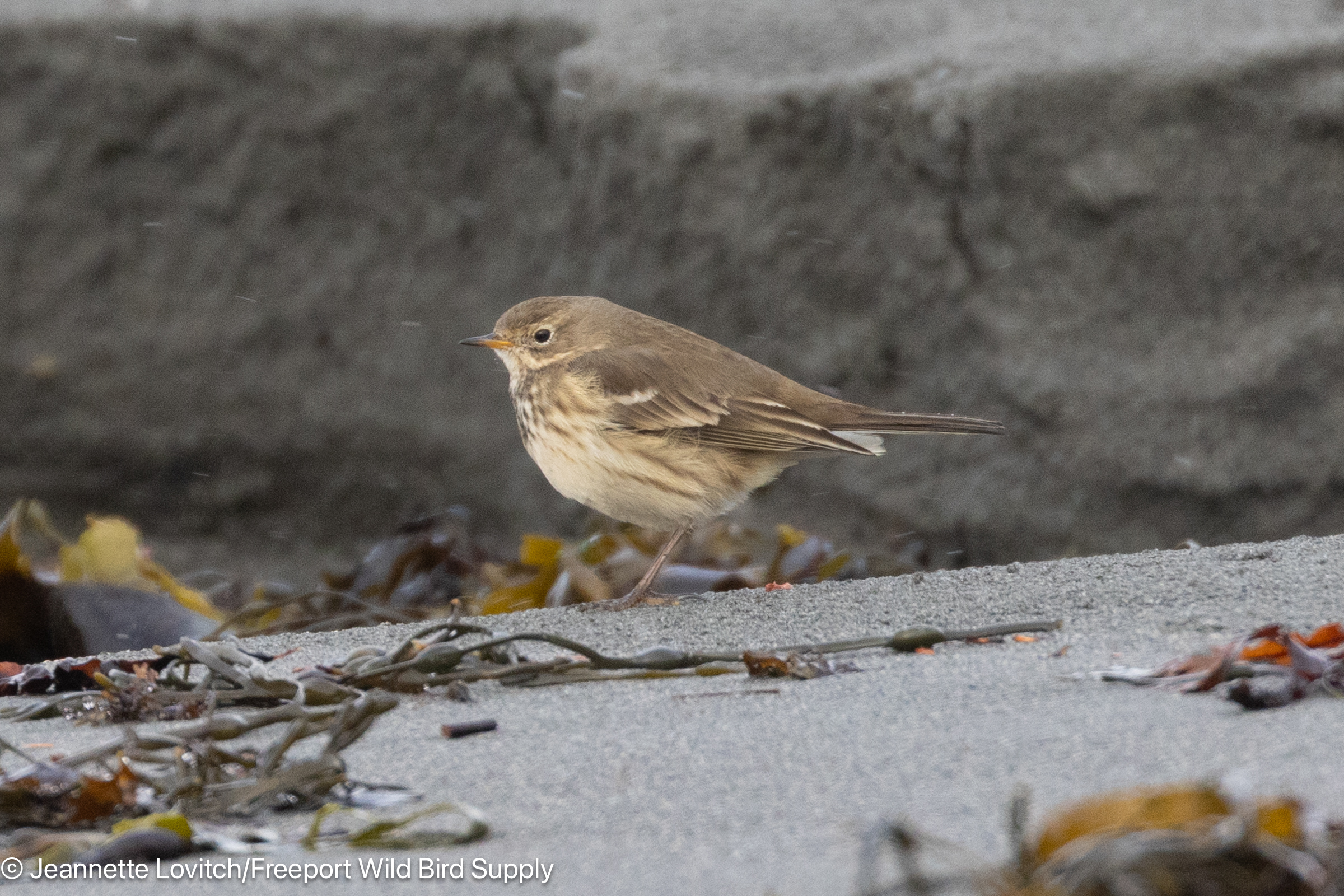
6 American Pipits, Carrying Place Cove, Lubec, 11/17 (photo above).
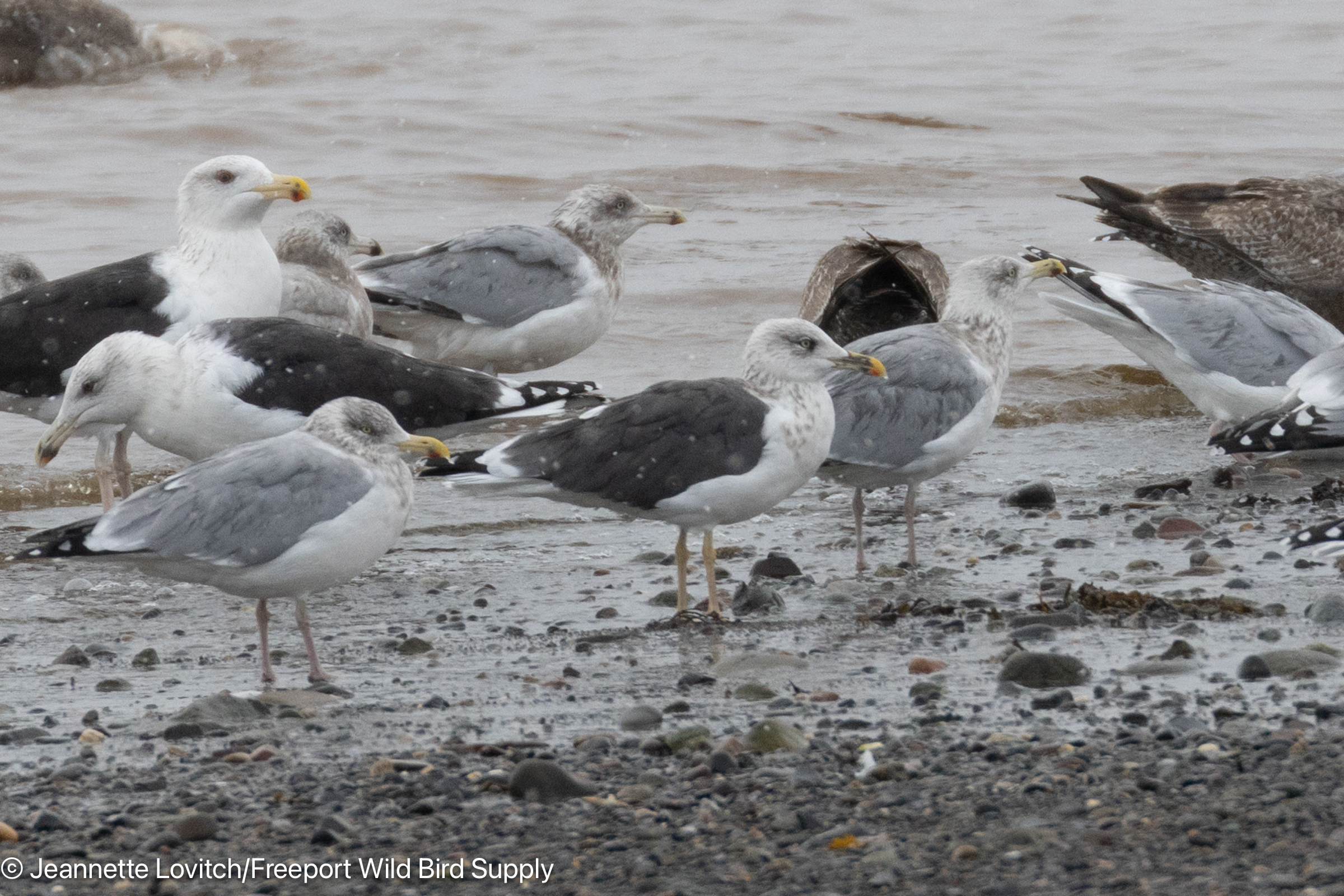
1 4th-cycle Lesser Black-backed Gull and 1 1st-cycle Iceland Gull, Mowry Beach, Lubec, 11/17.
1 1st-cycle Iceland Gull, Lubec village waterfront, 11/17.
1 ORANGE-CROWNED WARBLER, Old Farm Point Park, Lubec, 11/17.
4 Snow Buntings, Petit Manan NWR, 11/18.
1 1st-cycle Icleand Gull, Bangor Waterfront Park, 11/18.
Locally unexpected/rare: 1 Tufted Titmouse in a mixed species foraging flock at Hamilton Cove Preserve on 11/17 and two Red-bellied Woodpeckers in Lubec on 11/17 (“downtown” and Old Farm Point Park). Meanwhile, Red-breasted Nuthatches were exceptionally abundant, while both Black-capped Chickadee and Golden-crowned Kinglets seemed above average. Every mixed species foraging flock had plenty of each of the big three.
Finches: American Goldfinches were fairly widespread, and scattered small numbers of Purple Finches were around, but since finches are often detected via flight calls, the weather – especially the strong winds – did not make it easy to detect them. We also spent less time in Boreal habitats on this trip than most. So, other than those two, our finch observations were sadly limited to only 1 Evening Grosbeak and 5 Common Redpolls (FOF), Hamilton Cove Preserve, 11/17; 2 Red Crossbills and 2+ Pine Siskins, Machias River Preserve, Machias, 11/18.
Frugivores: American Robins were the only widespread frugivore so far, including an ample vismig on 11/17 with snow falling. 8 Cedar Waxwings and a distant flock of about 30 likely Bohemian Waxwings at Old Farm Point Park on 11/17. We were disappointed to not run into any Pine Grosbeaks.
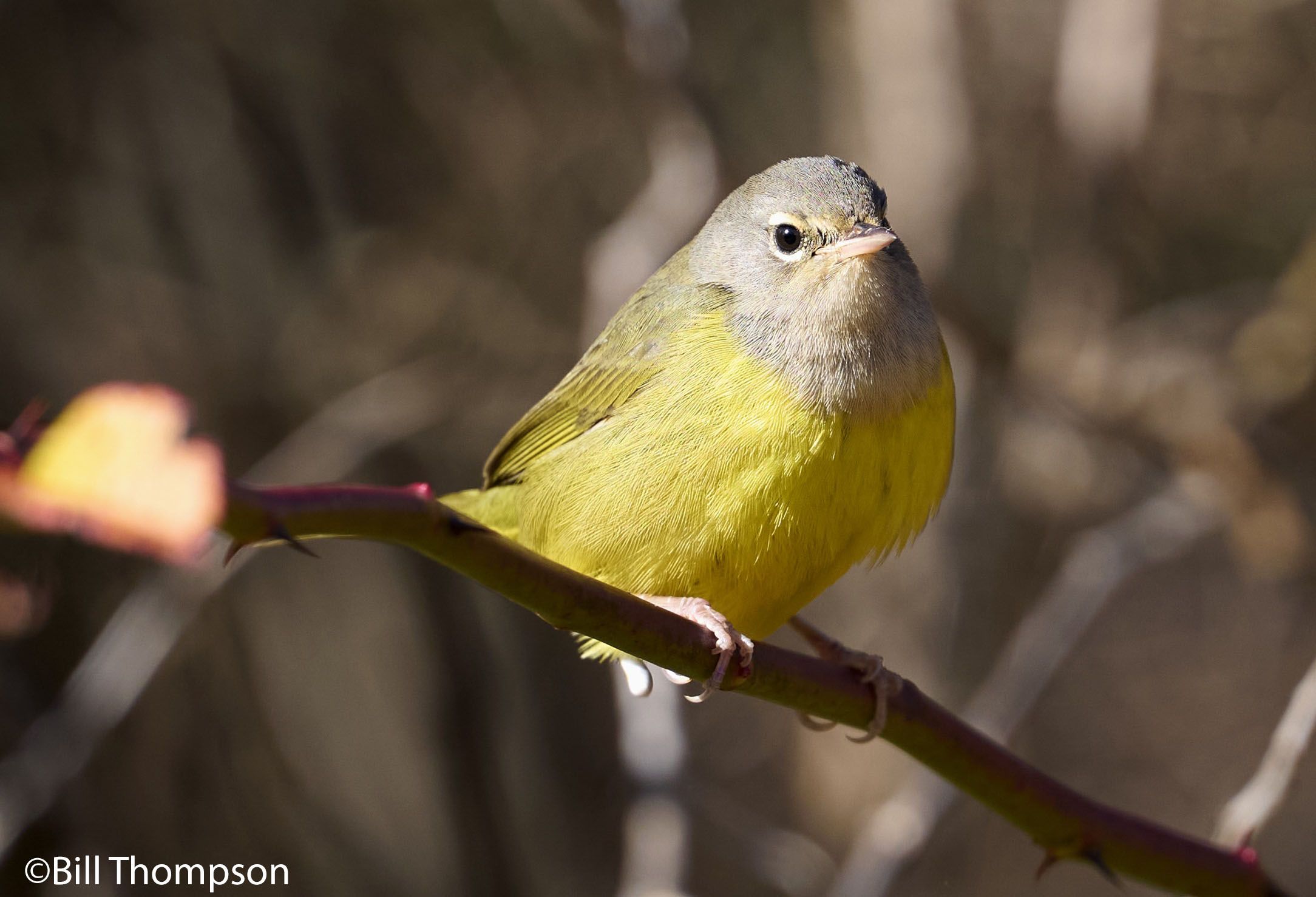
The Yarmouth MacGillivray’s Warbler has been hanging out since November 2nd, but its skulky nature makes it hard to photograph. The few fuzzy, out-of-focus photos I have obtained don’t do this gem justice, so I am “borrowing” these from Bill Thompson. Because he’s really, really good at this.
Rarity season continues, but I was a little more limited in my birding this week – other than a few “professional chases,” so I didn’t add to the roster of vagrants currently being seen. However, I did have some notable observations here and there over the course of the past seven days.
Sabattus Pond waterfowl on 11/7 including 341 Ruddy Ducks, 98 Green-winged Teal, 97 Lesser Scaup, 40 Greater Scaup, 6 American Wigeon, 3 Gadwalls, etc. 1 Rusty Blackbird was also present.
1 continuing MACGILLIVRAY’S WARBLER, Grist Mill Park, Yarmouth, 11/8 (with Saturday Morning Birdwalk group). Originally found on 11/2 by Noah Gibb and Stacey Huth, it had been present all week, and we had a great (and unusually efficient) visit with it on our birdwalk. It was the 255th all-time species encountered on our Saturday Morning Birdwalks!
Back to Grist Mill Park for the still-continuing MACGILLIVRAY’S WARBLER on 11/9 with my Birds on Tap Roadtrip! “Rarity Roundup” tour. We found it within seconds of our arrival on the entrance path, foraging for the second day in a row in a patch of cultivated Pink Turtlehead.
2 Fish Crows, Anniversary Park, Auburn, 11/10 (with Jeannette).
1 Rusty Blackbird and 2 Red Crossbills, Florida Lake Park, Freeport, 11/12.
1 BOHEMIAN WAXWING (first of fall), over the store with American Robins, 11/12.
My photos of my highlights this week are not exactly worthy of a “cover shot,” so instead, here’s a Northern Mockingbird that posed nicely for me in Biddeford Pool on the 29th.
Winter seems to be settling in! The colder (seasonable, finally!) temperatures should produce another wave of rarities and “lingering/late” birds to find though, and that was the case for my observations of note over the past seven days.
45 American Pipits and ~10 Horned Larks, Mayall Road, Gray/New Gloucester, 11/23 (with Saturday Morning Birdwalk group).
1 female BLACK-THROATED BLUE WARBLER, Village Crossings – Cape Elizabeth Greenbelt Trail, 11/24.
1 Northern Shrike (FOS), feeders here at the store, 11/24.
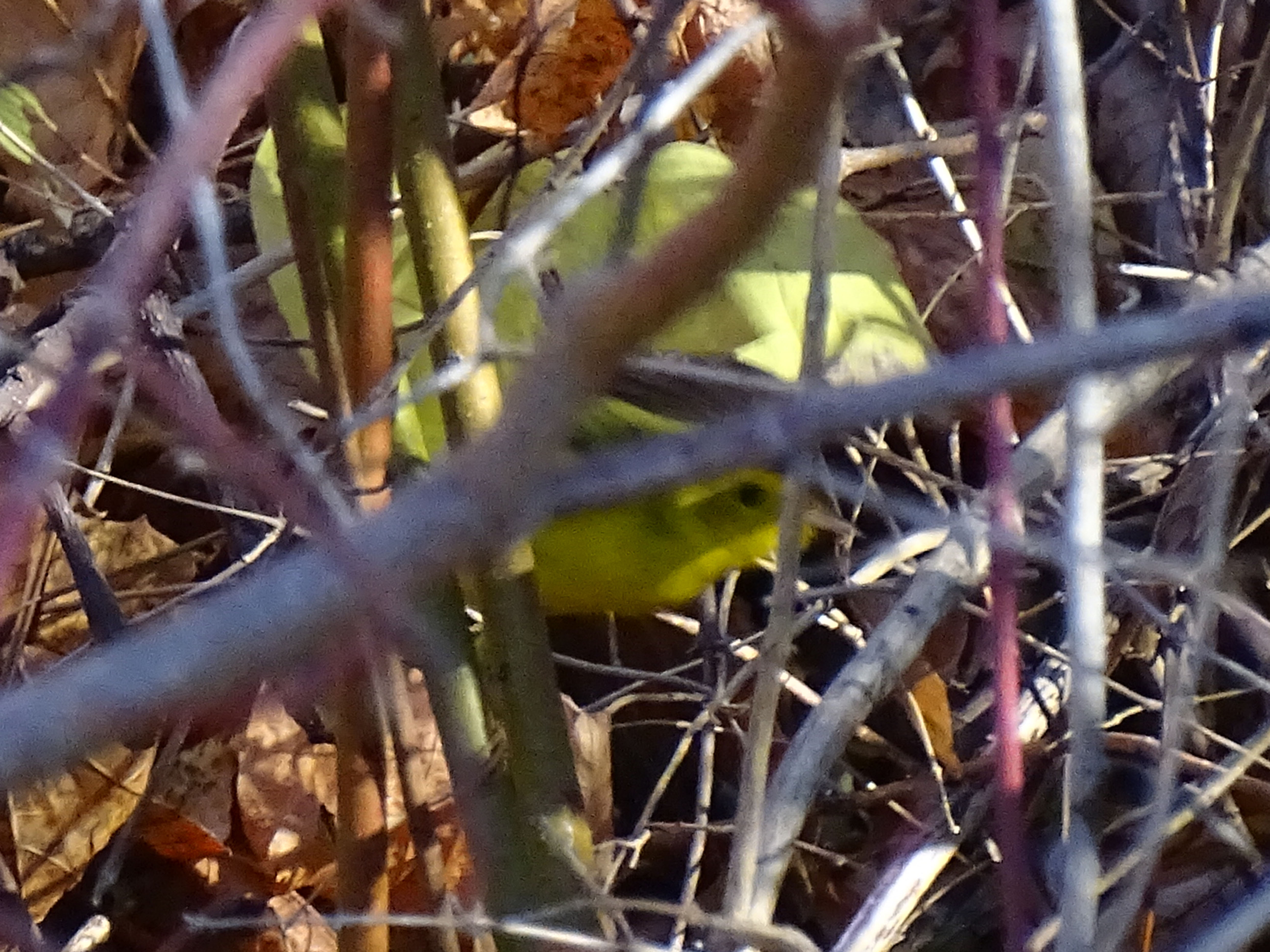
If you stitch together all of my photos, you might be able to make one poor photo of a whole Wilson’s Warbler. Nonetheless, it was a nice surprise that added a splash of color to the week’s birding endeavors. Trust me, the snapshot of the Palm Warbler is much worse!
An above-average number of species such as Northern Flickers, Hermit Thrushes, and Swamp Sparrows still continue around the area.
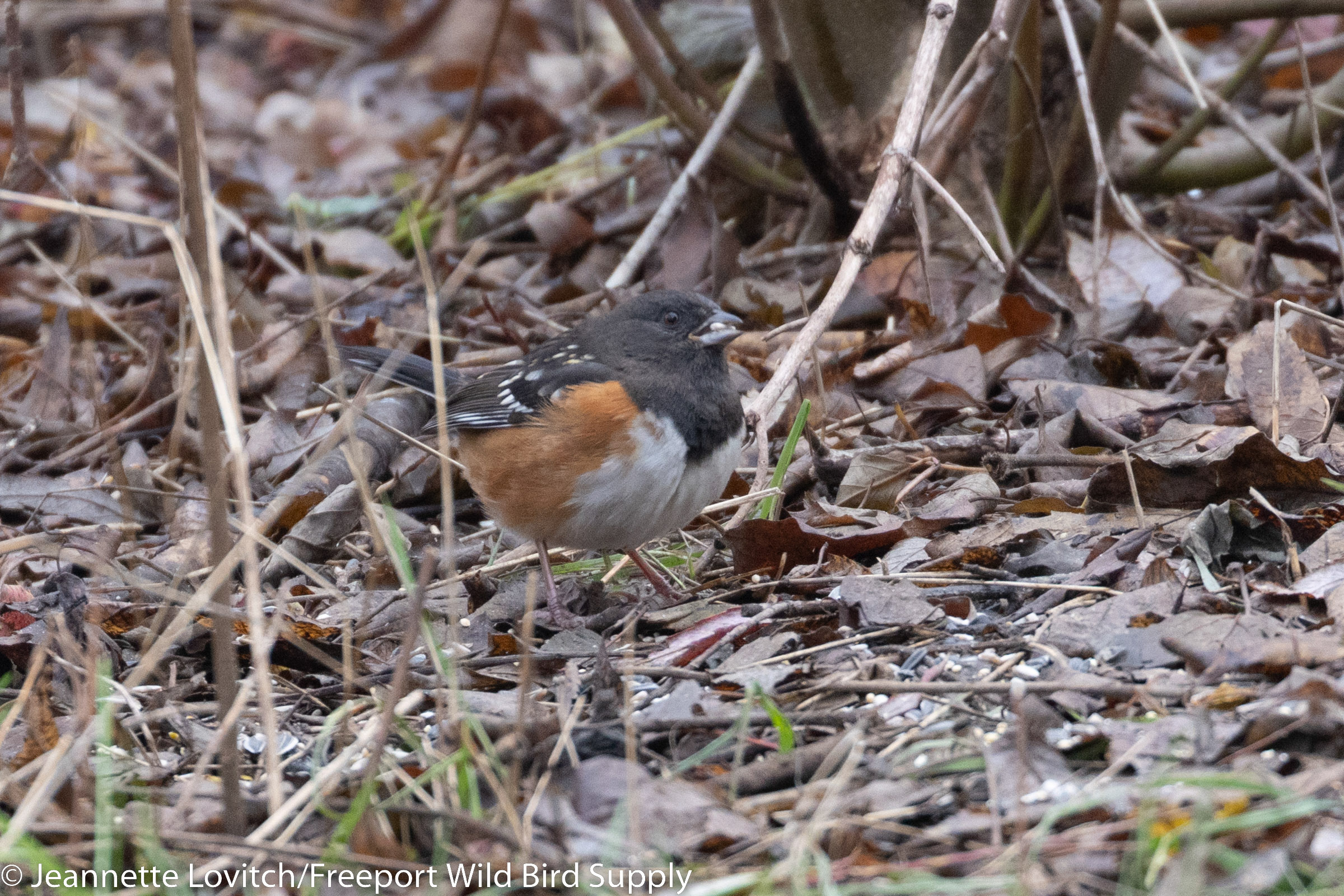
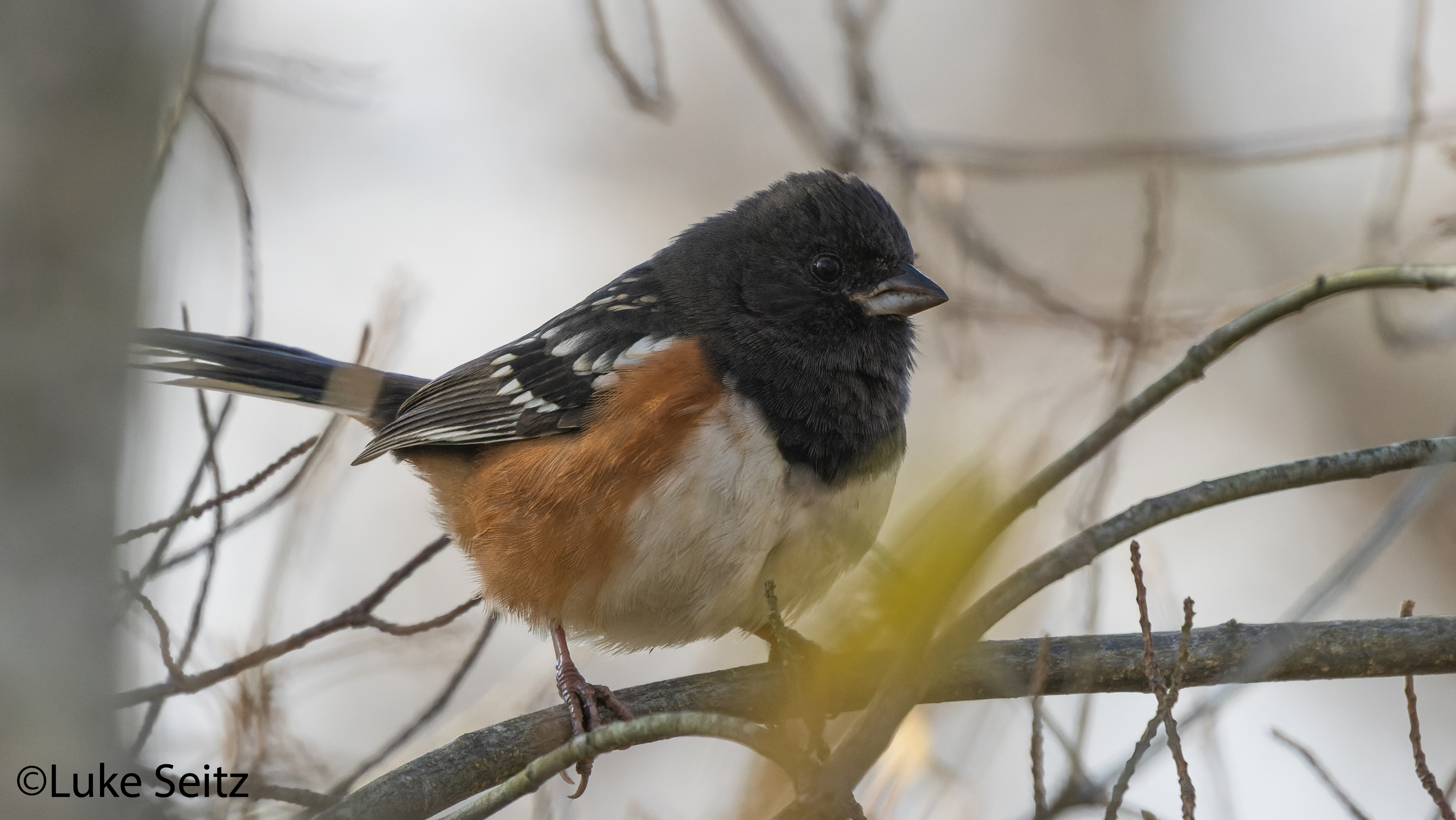
I finally went back this week, this time with Jeannette, to revisit the Spotted Towhee that I found at Kittery’s Fort Foster on 11/19. We were treated to two sessions of it feeding, both of which provided longer and better views than on the first day.
Early December is often a time with another pulse of rarities being detected as birds concentrate at fewer seasonally abundant food sources, like feeding stations, and concentrate along the coast and other migrant traps. At the very least, it’s a time for unusual “late,” “lingering,” or “pioneering” birds that brighten up a cold, gray winter’s day. This was often the case for me in my relatively limited birding over the past two weeks, with the following observations of note:
1 Gray Catbird and 1 Ruby-crowned Kinglet, Capisic Pond Park, Portland, 11/30.
Sabattus Pond, Sabattus, 12/1 (with Dan Nickerson): 380 distant scaup, 272 Common Mergansers, 238 Ruddy Ducks, 209 Mallards, 8 American Black Ducks, 8 Common Goldeneyes, 7 Buffleheads, 4 GREEN-WINGED TEAL, 3 Common Loons, 1 Belted Kingfisher, and 1 RUSTY BLACKBIRD.
1 Chipping Sparrow, King Road, Lisbon, 12/1 (with Dan Nickerson).
3 Ruby-crowned Kinglets and 2 Field Sparrows, Saco Riverwalk, Saco, 12/3.
1 Hermit Thrush and 1 Swamp Sparrow, Elphis Pond, Biddeford Pool, 12/3.
Southern York County Coast with Jeannette on 12/5:
1 continuing SPOTTED TOWHEE (photo above), 2 MARSH WRENS, and 1 Swamp Sparrow, Fort Foster, Kittery.
2 American Pipits and 1 Horned Lark, Seapoint Beach, Kittery.
1,000+ Black Scoters, The Nubble.
60 Sanderlings, Ogunquit Beach.
1 Ruby-crowned Kinglet, Auburn Riverwalk, 12/7.
1 drake BARROW’S GOLDENEYE (first of season), 74 Lesser Scaup, and 2 Greater Scaup, Lake Auburn, Auburn, 12/7.
1 Red Crossbill, over our property in Durham, 12/8.
Meanwhile, at our feeders in Durham, a nice uptick in sparrow activity including up to 14 Dark-eyed Juncos, 4 continuing White-throated and 1-2 continuing Song Sparrows, with our first American Tree Sparrow arriving on 11/22 before the store, and 15 Dark-eyed Juncos, only 1 White-throated Sparrow, and a return on 12/6 of an American Tree Sparrow after the storm. 40-50 American Goldfinches and 1-2 Purple Finches continue daily, but this week, we only had Pine Siskins in the woods and not at the feeders.
Since we’ve had a mix of “the birds are back!” and “there are still no birds at my feeders” at the store recently, a wrote a new blog talking about the season and the inconsistencies we are seeing with overall feeder activity, which is posted here.
The amazing birding and migration site – especially for fall “morning flights” – in the Mid-Coast is once again under direct threat. Birders need to help convince the state to find an alternative location for a massive new port and its infrastructure. Our most significant places of concentration for migratory birds need to be protected. Here isour Statement in Opposition to a New Port on Sears Island in Searsport.
On Sunday, November 19th, 2023, I found Maine’s first confirmed Spotted Towhee at Fort Foster Park in Kittery. Fort Foster is one of my favorite birding locations, especially in fall “rarity season.” I’ve been lamenting the complete dearth of vagrants found in Maine during the month of November so far, and so I set out for the southern York County coast that morning in hopes of changing that.
It didn’t take long.
A little more than an hour after I arrived at the park, slowly birding the warm, sunny edges of a chilly morning, I encountered a pocket of activity as I was turning off the main coastal trail and up the slight hill towards the Small Pier Pavilion. A tardy “WESTERN” PALM WARBLER that I encountered earlier had flown this way with a Yellow-rumped Warbler, and these two birds were at the edge along with several resident species including Black-capped Chickadees and Northern Cardinals as well as migrants including Golden-crowned Kinglets and White-throated Sparrows.
As I approached the top of the rise, I noticed a towhee sitting in the sun at the edge of one of two fairly large Eastern Red Cedars. Since I had my camera at the ready since it’s rarity season afterall, I immediately grabbed it. Although I was assuming it was just a late Eastern Towhee (not unreasonably rare in a mild fall even at this date), it was a nice photo – towhees don’t sit still in the sun often enough! The bird was facing directly at me, so all I could see was its black hood, rufous sides, and white belly.
As I focused through my viewfinder, the bird shifted slightly, showing just enough of its side to reveal large white spots on it’s wing! A vagrant Spotted Towhee! Incredible!
And to think I almost blew this…if I didn’t go for my camera for “just” a nice shot of an Eastern Towhee, perhaps I wouldn’t have looked at it long enough to see its diagnostic wings and back. That was a close one! (That one twig right across the face though!)
Knowing that hybrids between the two towhees (formerly known collectively as “Rufous-sided Towhee”) have occurred out of range, I knew I needed some better views and more photos. Over about 10 minutes, I observed and photographed the bird in the cedars, having it drop down once into the brush only to return to the cedar, perhaps as a result of some gentle pishing.
During this second photo session, a Cooper’s Hawk flew overhead, and all of the activity in this pocket dove for cover and remained silent (9:28am). As birds slowly returned to the edge, the towhee did not. A late Hermit Thrush that was also in the cedars reappeared, but the towhee did not.
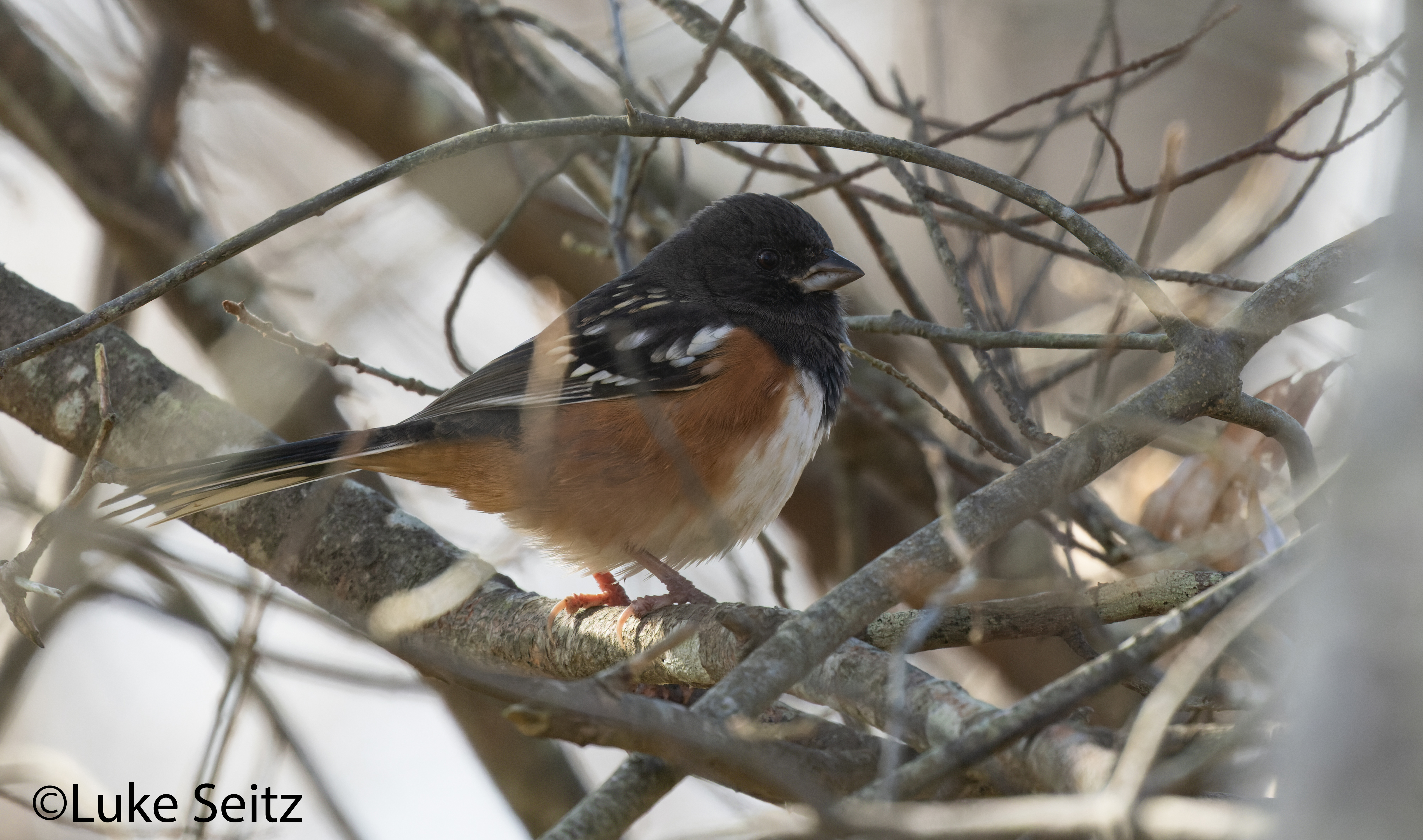
As I waited, I sent out some text messages and checked my photos. Within about 45 minutes, Maili Waters and Luke Seitz arrived, and we began a thorough search, slowly increasing our search radius. It took until about 12:15 before Maili and Luke finally relocated the towhee on the other side of the very large and dense thicket. Luke’s excellent photos showed a more complete view of the wing and back, crucial field marks for confirming the bird’s identity.
I was on the other side of the park, searching for the towhee and whatever else might have been present, turning up a very late PRAIRIE WARBLER, a Gray Catbird, and a Ruby-crowned Kinglet – all good birds for the date. It took me a while to get to where Luke and Maili were, and we were soon joined by Doug Hitchcox and Matthew Gilbert.
We waited for about 30 minutes before the need for water and lunch finally got the best of me, and I headed out. I was halfway to Kittery Center when Noah Gibb spotted the bird once again at the original location. It was here, in the two cedars, that numerous observers were able to see the bird early in the morning the next day as well.
Returning home and in discussion with Luke, Maili, and Evan Obercian, we confidently ruled out any suggestion of a hybrid. The amount of white in the primaries had us a little wary, for example, but the National Geographic Guide to the Birds of North America nicely shows the regional variation with Spotted Towhees, including the more extensive white “slash” on the primaries of the Great Plains subspecies – the expected source of vagrants to the East.
Big white spots on each scapular, two complete wingbars (one bold on the greater coverts and one more subtle bar on the median coverts), the spotted-streaked back mantle, and the extensively white undertail are all consistent with a phenotypically pure Spotted Towhee – Maine’s first, and a long-overdue addition to our state’s list. In fact, this was #4 on my “Next Birds for Maine” predictions list. But as always, it’s always better find than to chase!
I found this presumptive BLACK-HEADED X RING-BILLED GULL HYBRID along Greely Road in Cumberland during steady rain in the late morning of the 13th. It looks very similar to the individual of this hybrid pair that wintered on the Falmouth waterfront for at least two years, 2019-20, and 2020-21. Could it be the same bird with a little more black on the head due to the earlier date?
Rarity season is upon us, but most of my birding this week was in and around our yard. Not that that wasn’t extremely enjoyable though! A few forays afield did not produce those hoped-for November “Megas,” but I did see a few things of note over the past eight days including:
Evening Grosbeaks have been present daily at our feeders in Durham all week. 7 on 11/11 peaked at 32 on 11/12 (with Saturday Morning Birdwalk group).
1 Lapland Longspur (FOF), over our yard in Durham, 11/11.
1 PUTATIVE BLACK-HEADED X RING-BILLED GULL HYBIRD, Greely Road, Cumberland, 11/13. First distant observation in driving rain suggested a much, much darker head and mantle, but finally relocated closer to the road. Joined by Nick Lund and Reed and Laura Robinson.
Red Crossbills have been regular fly-overs in our Durham yard this week, but 10 were feeding on Eastern Hemlocks on 11/17.
This week’s Orange-crowned Warbler was “slightly” better photographed than the individual I had here two weeks ago!
With “Rarity Season” now in full swing, my observations of note over the past seven days included the following:
2 ORANGE-CROWNED WARBLERS, Kettle Cove, Cape Elizabeth, 10/31 (with clients from Maine and New Mexico).
2 Indigo Buntings, Private property in Cape Elizabeth, 10/31 (with clients from Maine and New Mexico).
1 Great Egret, Mill Creek Cove, South Portland, 10/31 (with clients from Maine and New Mexico).
1 Indigo Bunting, Capisic Pond Park, Portland, 10/31 (with clients from Maine and New Mexico).
1 WHITE-EYED VIREO and 4 “Ipswich” Savannah Sparrows (FOF), Reid State Park, Georgetown, 11/1 (with Jeannette).
1 ORANGE-CROWNED WARBLER and 1 RED-EYED VIREO, Sandy Point Beach, Cousin’s Island, Yarmouth, 11/3. My 9th-ever here and 2nd of the season. Photo above.
1 continuing CATTLE EGRET (present for 4 days), Wolfe’s Neck Road, Freeport, 11/4. Video here: https://fb.watch/93PdvTCQmg/
3 Common Goldeneyes (FOF), Wolfe’s Neck Center, Freeport, 11/4.
1 ORANGE-CROWNED WARBLER (likely continuing from 11/3), 1 American Woodcock, 32 Snow Buntings, etc, Kettle Cove, Cape Elizabeth, 11/5.
2 “Ipswich” Savannah Sparrows, Crescent Beach State Park, Cape Elizabeth, 11/5.
These two Savannah Sparrows of the “Ipswich” subspecies were most obliging at Crescent Beach State Park in Cape Elizabeth on Friday morning.
Thanks to our annual note in our newsletter to keep hummingbird feeders up through early November – and to give us a call if one shows up after the first week of October – we received another call about a late October hummingbird this year. I raced over as soon as it returned to study it and get documentation photos. Unlike last year, however, this was “just” a Ruby-throated. I should have known it wasn’t another “mega” rarity as it was way too easy to photograph closely, and I only waited 5 minutes for its arrival!
Before and after the storm, it was a rather great week of birding for me. Rarity Season is now underway! Here are my observations of note over the past seven days:
1 Field Sparrow, 2 Common Yellowthroats, 7 Semipalmated Plovers, etc., Wolf’s Neck Center, Freeport, 10/24 (with Saturday Morning Birdwalk group).
1 juv RUBY-THROATED HUMMINGBIRD, private property in Freeport, 10/28. First seen on 10/26, but not on the 27th. See photo and caption above.
1 DICKCISSEL (photo below; Abner Point Road), 1 WHITE-WINGED CROSSBILL (first of fall locally), 2 male BLACK-THROATED BLUE WARBLERS, and 2 American Tree Sparrows (first of fall), Bailey Island, Harpswell, 10/29.

















 Maine Birding Field Notes