Tag Archives: raptors

2026 Birding Tours in Portland, Maine with Portland Explorer and Freeport Wild Bird Supply !

Seasonal hotspots. Local expertise. Small-group experiences.

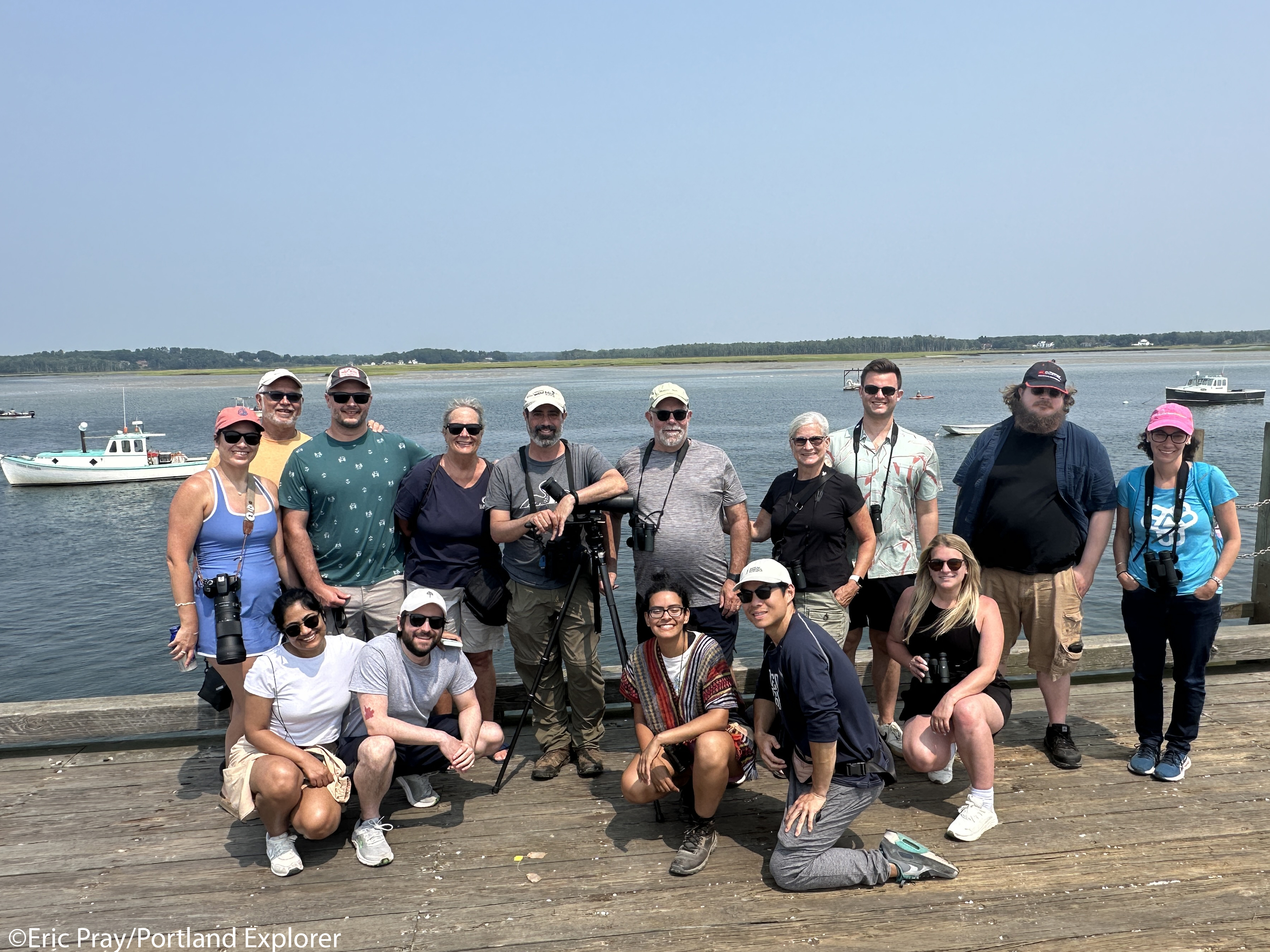
For the 12th season, Portland Explorer and Freeport Wild Bird Supply are teaming up to offer Maine’s most unique guided birding tours — combining peak birding hotspots, expert instruction, comfortable transportation, and in select outings, visits to some of our favorite local breweries.

Whether you’re a seasoned birder, just getting started, or traveling with someone whose main interest might be craft beer until they become a avid birder, these relaxed and educational outings offer something special.

For more information, and to register for all of these tours, visit our website, here.

This blog will be updated with trip reports after each tour, so check back in to see what you missed and to sign up for upcoming outings!

The 2026 Birds on Tap – Roadtrip Series!

Our collaboration with Portland Explorer (formerly The Maine Brew Bus) enters its 12th season, with three exciting itineraries. These unique, relaxed birding and beer-ing adventures that you have come to love combine great local birding at seasonal hotspots with approachable opportunities to sample the delicious creations of some of our favorite Maine breweries. These events are a perfect introduction to birding and/or craft beer, and a great opportunity to enjoy our favorite pastimes with significant others, friends, and family that have interest in one topic, while your interest is primarily in the other (for now!). Educational, enjoyable, and eye-opening you won’t want to miss out our unique Birds on Tap series, including a brand new outing for 2026.

The three tours are as follows. After completion, tour reports will be posted here so this blog is your one-stop shopping for tour reports and upcoming itineraries.

  • Birds on Tap -Roadtrip: Hawks and Hops!

Sunday, April 19, 2026: 9:00am – 3:00pm

Portland Explorer (formerly Maine Brew Bus) and Freeport Wild Bird Supply Freeport Wild Bird Supply are excited to continue our collaboration for 3 very special outings in 2026. 

    These unique, relaxed birding and beer-ing adventures that you have come to love combine great local birding at seasonal hotspots with visits to sample the delicious creations of some of our favorite local breweries. These tours are a perfect introduction to birding and/or craft beer, and a great opportunity to travel with significant others, friends, and family that have interest in one topic, while your interest is primarily in the other (for now!). Seasonal birding hotspots and great local beer – a perfect combination, and we’ll even do all of the driving!

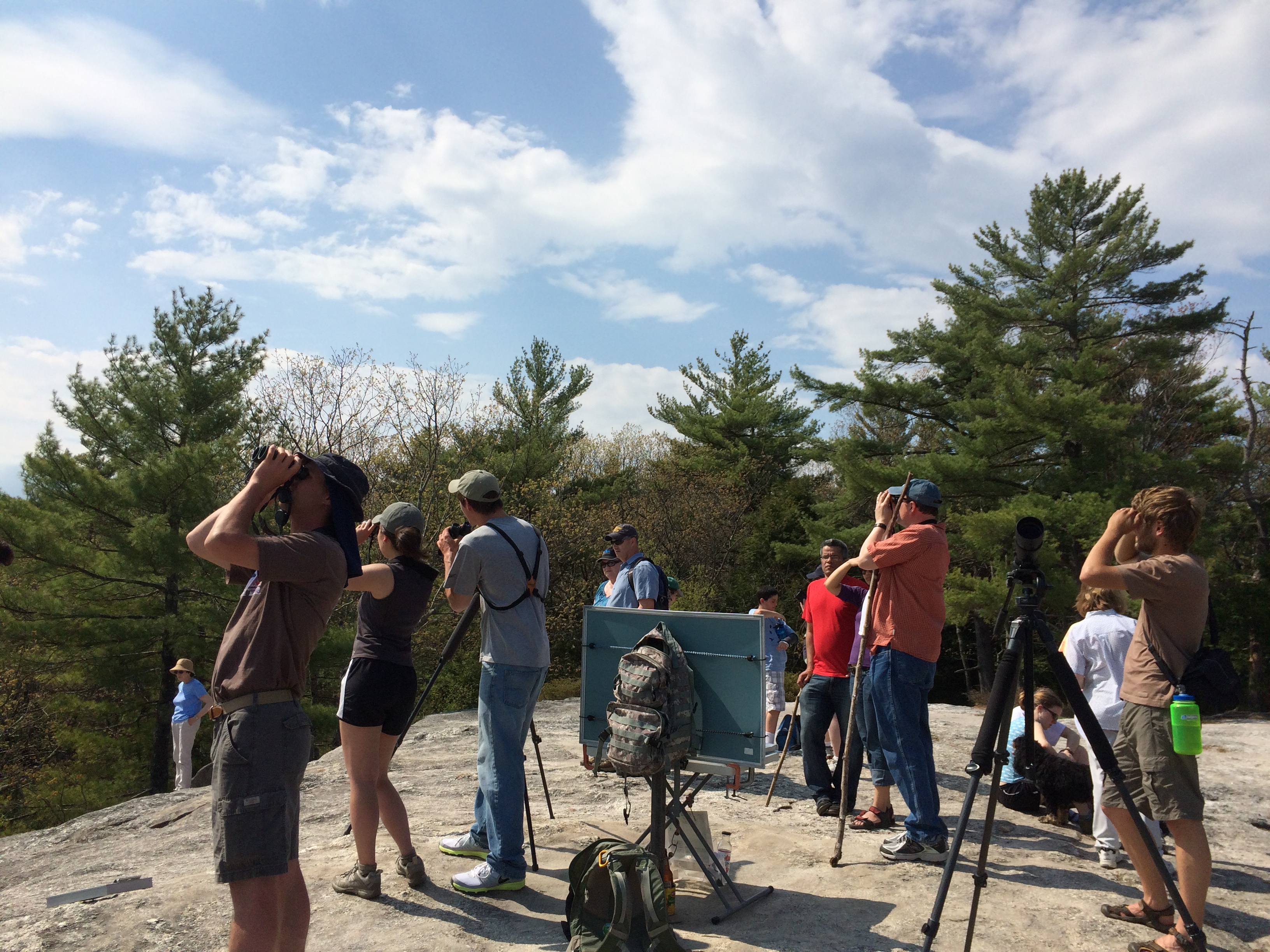
    This brand-new itinerary takes us to the Bradbury Mountain Spring Hawkwatch at Bradbury Mountain State Park in Pownal in the peak of northbound raptor migration. Now in its 20th year, this research project by Freeport Wild Bird Supply tallies an average of 4,180 migrating birds of prey each spring from the summit!

    After a gentle 1-mile climb through the woods, looking and listening for migrant and resident songbirds, we’ll arrive at the summit and join the project’s Official Counter. Derek will discuss the history and methodology of the project, as the counter points out migrating raptors. Derek will lead us through the basics of hawk identification to give us a hawkwatch primer, and then if the migration action allows, we’ll sit back and enjoy the show until it is time to depart (the walk down is a steep ¼ of a mile on a wide, well-worn trail with rocks and roots and some steps; hiking sticks are suggested if you use them). This is the only Hawkwatch Workshop program that FWBS will be offering this year, so this is a tour you won’t want to miss!

    After about 3 hours of birding, we will be transported to two of our great local producers to sample their offerings and learn their styles. Our brewery destinations are subject to change, but the current plan is to visit Maine Beer Company and Goodfire Brewing

    Maine Beer Company was founded with a deep commitment to quality, community, and sustainability, Maine Beer Company has become one of the most respected craft breweries in the country. Known for their clean, hop-forward ales like Lunch and Dinner, they focus on balance, drinkability, and precision. Their Freeport brewery is a beautiful, modern space built with environmental responsibility in mind, including solar power and energy-efficient design.

    Goodfire Brewing in Freeport offers a fresh, creative take on modern craft beer. Known for expressive New England–style IPAs, crisp lagers, and thoughtfully crafted seasonal releases, Goodfire focuses on vibrant flavors and small-batch innovation. Their welcoming taproom atmosphere reflects their community-driven spirit, this stop highlights the artistry and evolution of Maine’s contemporary brewing scene.

    The samples are included in the tour price, and Portland Explorer will supply a light snack (TBD) and water. Bring binoculars. We also recommend bringing a lunch or additional snack if you so desire. Be sure to bring layers as it is often windier and cooler at the exposed summit than down below and trails may be muddy so wear appropriate footwear.

    We’ll be doing all of the driving, so you can relax. And to make it even easier, we have two pick-up times and locations for this trip:

    9:00am – Marginal Way Park & Ride (opposite the intersection with Diamond St, just east of Franklin Ave), Portland.

    9:20am – Freeport Wild Bird Supply, 541 Route One, Freeport.

    (Please arrive 15 minutes prior to your departure time at either location, and please let us know where you will be meeting us)

    We’ll return to these locations to drop you off at 2:40pm (Freeport) and 3:00pm (Portland).

    This tour is limited to 12 participants, so sign up soon! This is a one-of-a-kind tour, and we think one you won’t want to miss!

    • Birds On Tap – Warblers and Wort

    Sunday, May 10, 2026: 8:00am – 2:00pm

    During last year’s tour, we tracked down this mega-rare Cerulean Warbler!

    Portland Explorer (formerly Maine Brew Bus) and Freeport Wild Bird Supply  are excited to continue our collaboration for 3 very special outings in 2026. 

    These unique, relaxed birding and beer-ing adventures that you have come to love combine great local birding at seasonal hotspots with visits to sample the delicious creations of some of our favorite local breweries. These tours are a perfect introduction to birding and/or craft beer, and a great opportunity to travel with significant others, friends, and family that have interest in one topic, while your interest is primarily in the other (for now!). Seasonal birding hotspots and great local beer – a perfect combination, and we’ll even do all of the driving!

    We’re bringing back the “Mother’s Day Special” in 2026, with a return to Portland on one of our most popular itineraries. May means warbler migration, and the destination for Warblers and Wort will hit two of Maine’s most famous springtime migrant traps, Portland’s Evergreen Cemetery and nearby Capisic Pond Park. Two oases in the urban jungle, featuring water sources and a mix of various habitats, help concentrate migrant birds that found themselves in or over the city come sunrise. After migrating all night, tired travelers look for refuge: food, water, and shelter, and urban greenspaces are absolutely critical for refueling.  

    Warbler diversity will rapidly be increasing, over 15 species possible by the middle of May, depending on the progression of the season. Other species, such as sparrows, raptors, and other Neotropical Migrants such as orioles and tanagers are also on the move, increasing our chances of seeing a diversity of species. If the cemetery’s apples and cherries are blooming, we may be in for quite a treat as these are absolute magnets for hungry migrants.  Meanwhile, most trees have yet to fully leaf out, making them easier to spot! 

    ​It’s sometimes hard to leave Evergreen on a busy spring morning, but if we do, it will be for the very short trip over to Capisic Pond Park, where we’ll continue to seek migrants of all shapes and sizes.

    After about 3 hours of birding, we will be transported to two of our great local producers to sample their offerings and learn their styles. Our brewery destinations are subject to change, but the current plan is to visit Foundation and Rising Tide Brewing Company.

    Foundation Brewing Company is known for its clean, focused approach to craft beer, with a strong reputation for hop-forward ales and thoughtfully balanced lagers. Their lineup often showcases precision and consistency, with beers that highlight both modern techniques and traditional brewing fundamentals. A visit to Foundation offers an opportunity to explore how attention to detail and quality ingredients come together to create approachable yet expressive beers that reflect Portland’s thriving craft scene.

    Rising Tide Brewing Company has been a cornerstone of Portland’s craft beer community since its early growth years. With a diverse portfolio that ranges from crisp, easy-drinking favorites to bold, hop-driven offerings and seasonal specialties, Rising Tide emphasizes accessibility and craftsmanship. Their beers often reflect a balance between innovation and tradition, making them a great representation of the evolution of Maine’s brewing culture.

    The samples are included in the tour price, and Portland Explorer will supply a light snack (TBD) and water. Bring binoculars. We also recommend bringing a lunch or additional snack if you so desire. Light-colored, long-sleeve shirt and pants are highly recommended to reduce the nuisances of biting insects and trails may be muddy so wear appropriate footwear.

    We’ll be doing all of the driving, so you can relax. This tour will have one pickup location:

    8:00am – Marginal Way Park & Ride (opposite the intersection with Diamond St, just east of Franklin Ave), Portland.

    (Please arrive 15 minutes prior to your departure time.)

    We’ll return to these locations to drop you off at 2:00pm.

    This tour is limited to 12 participants, so sign up soon! This is a one-of-a-kind tour, and we think one you won’t want to miss!

    For a taste of what’s in store, here’s the trip report from our very exciting outing in 2025. 

    • Birds on Tap℠ – Road Trip! Shorebirds and Steins

    Sunday, August 16: 9:00am – 3:00pm​


    Portland Explorer (formerly Maine Brew Bus) and Freeport Wild Bird Supply are excited to continue our collaboration for 3 very special outings in 2026. 

    These unique, relaxed birding and beer-ing adventures that you have come to love combine great local birding at seasonal hotspots with visits to sample the delicious creations of some of our favorite local breweries. These tours are a perfect introduction to birding and/or craft beer, and a great opportunity to travel with significant others, friends, and family that have interest in one topic, while your interest is primarily in the other (for now!). Seasonal birding hotspots and great local beer – a perfect combination, and we’ll even do all of the driving!

    The original BoT Roadtrip! Way back in 2015, our most popular tour returns to Scarborough Marsh at prime time for a good variety of migrant shorebirds. We’ll learn how to identify our common species, and search for the rare. Up to 20 species of shorebirds are possible! We’ll practice identifying our “peeps” (Least, Semipalmated, and White-rumped Sandpipers) and attempt to tease out a rare Western or even a Baird’s among the masses. We’ll look for local breeding American Oystercatchers and Willets, while searching for migrants such as Red Knots on their way from the high Arctic to the southern tip of Argentina.

    And not to worry, we’ll take a look at everything else, such as Common, Roseate, and Least Terns; herons and egrets, and who knows what else? We may even get a chance to see Nelson’s and Saltmarsh Sparrows depending on time, wind, and tide.

    After about 3 hours of birding, we will be transported to two of our great local producers to sample their offerings and learn their styles. Our brewery destinations are subject to change, but the current plan is to visit Nonesuch River Brewing and the Allagash Bungalow.

    Nonesuch River Brewing blends classic brewing traditions with a creative, food-friendly approach. Known for producing a wide range of styles—from hop-forward IPAs to smooth stouts and refined lagers—the brewery emphasizes balance, drinkability, and quality ingredients. With a strong culinary influence behind their brand, their beers are crafted to complement a variety of tastes, showcasing both technical precision and thoughtful flavor development. A visit highlights the versatility and craftsmanship that define Maine’s modern brewing landscape.

    Allagash Brewing Company is internationally recognized for its Belgian-inspired beers and commitment to craftsmanship. The Allagash Bungalow offers an inviting setting to explore a rotating selection of their beers, which may include their iconic witbier, barrel-aged specialties, or experimental small-batch releases. Rooted in tradition but continually innovating, Allagash represents one of Maine’s most influential breweries, known for its focus on fermentation, balance, and refined complexity.

    The samples are included in the tour price, and Portland Explorer will supply a light snack (TBA) and water. Bring binoculars and a spotting scope if you have one. We also recommend bringing a lunch or additional snack if you so desire. Sunscreen, a light jacket in case the wind turns onshore, and sturdy comfortable walking shoes are also recommended – we will be out in the sun for the duration of the birding portion of the tour. 

    We’ll be doing all of the driving, so you can relax. There will be one pickup location for this tour:

    9:00am – Marginal Way Park & Ride (opposite the intersection with Diamond St, just east of Franklin Ave), Portland.

    (Please arrive 15 minutes prior to your departure time).

    This tour is limited to 12 participants, so sign up soon! This is a one-of-a-kind tour, and we think one you won’t want to miss!

    For a taste of what’s in store, here’s the trip report from our very exciting outing in 2025. 

    ___________________________________________________________

    The New 2026 Fort and Feathers Series!
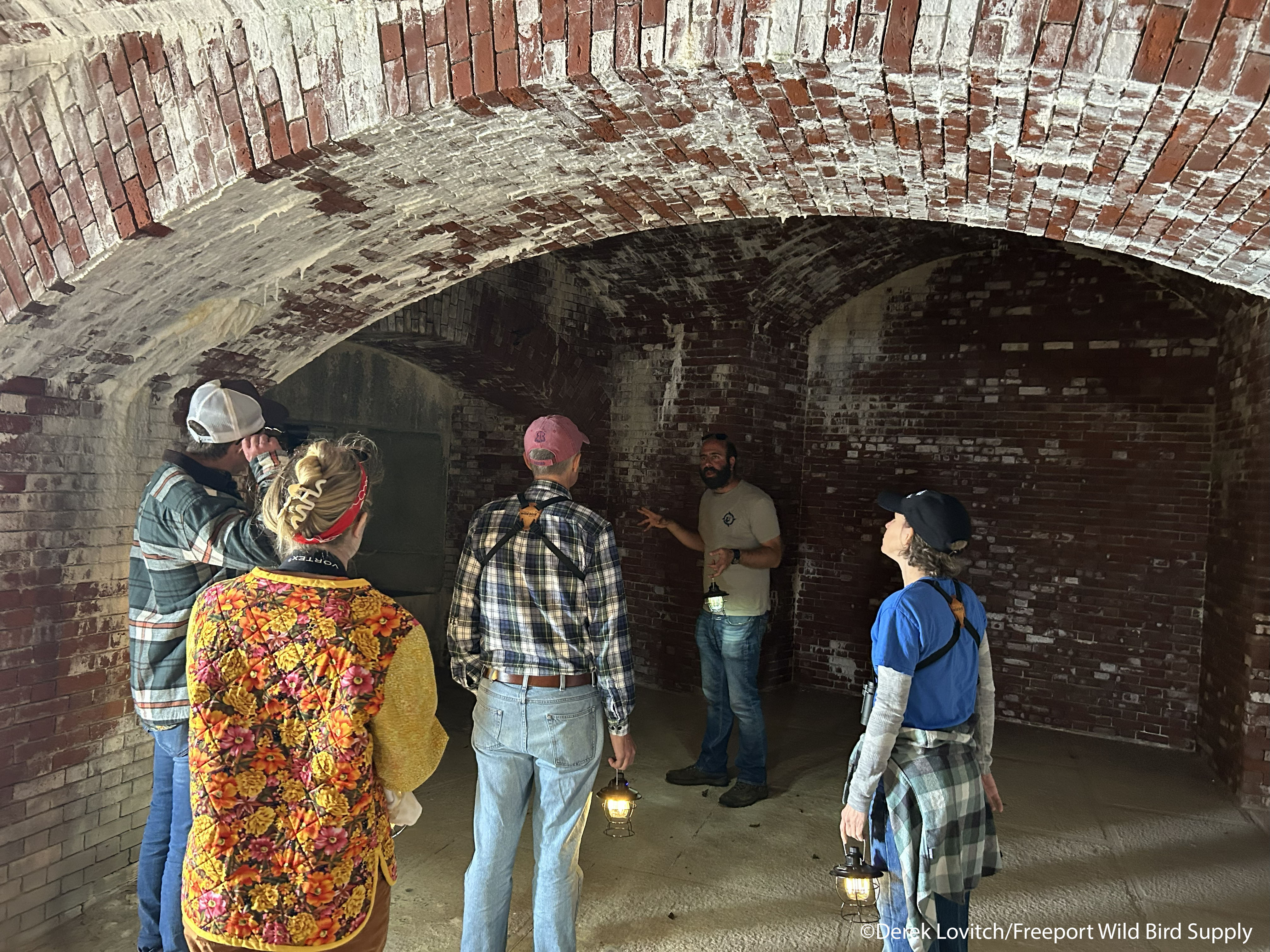
    Our collaboration with Portland Explorer (formerly The Maine Brew Bus) enters its 12th season, and our collaboration continues with a new series of joint history and birding tours. These unique, relaxed birding and history adventures combine great local birding at seasonal hotspots with educational journeys through some of our local history. Join two experts in their field on this brand new collaboration! (Sorry, no beer tastings here!)

    The three tours are as follows. After completion, tour reports will be posted here so this blog is your one-stop shopping for tour reports and upcoming itineraries.

    • Forts and Feathers: House Island!

    Sunday, October 18: 9:00am – 2:00pm​


    As our collaboration with Portland Explorer enters its 12th season, we’re mixing things up with a brand new series of joint history and birding tours. These unique, relaxed birding and history adventures combine great local birding at seasonal hotspots with educational journeys through some of our local history. Join two experts in their field on this brand new collaboration! (Sorry, no beer tastings here!)

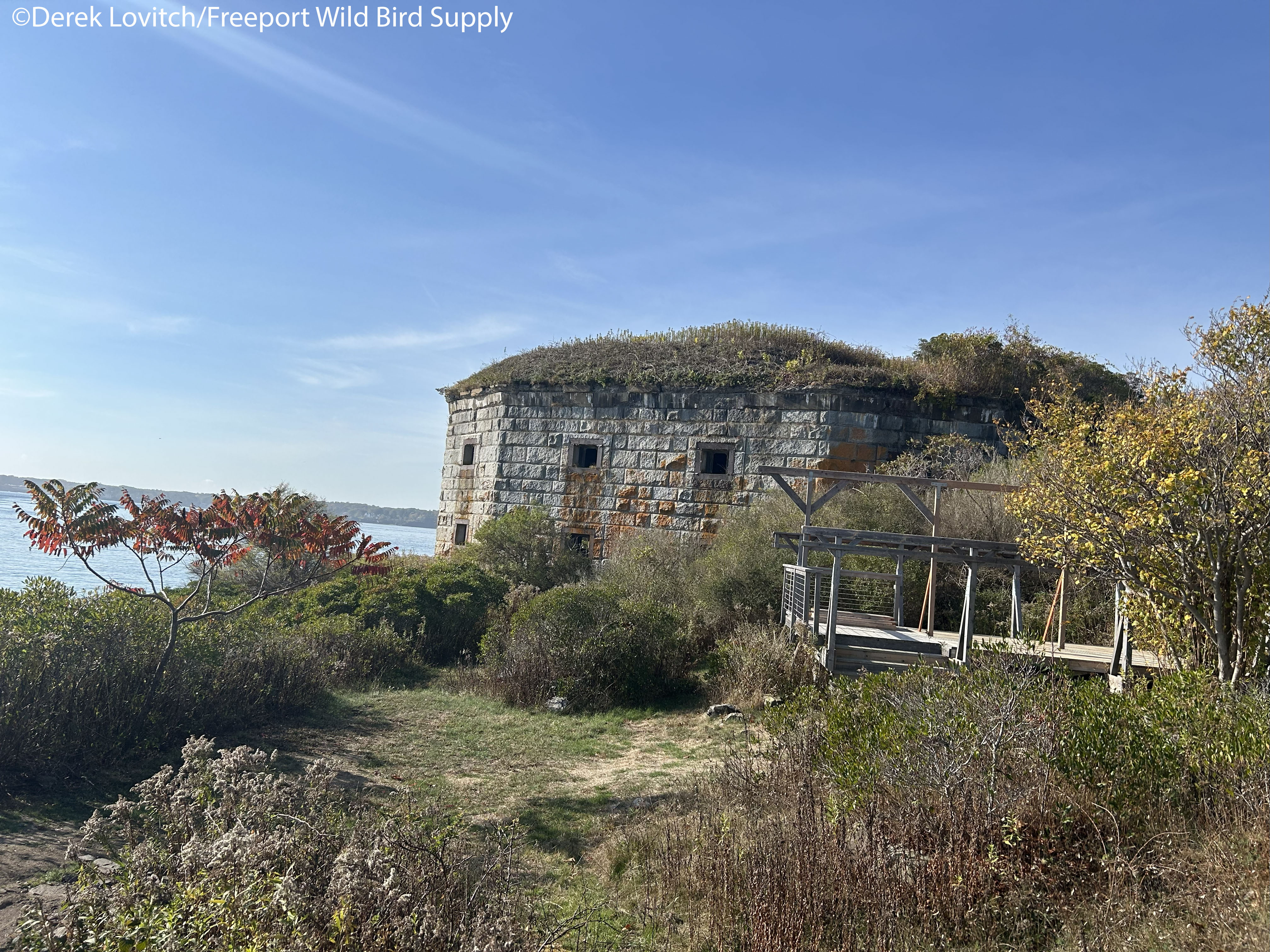
    But this time we’re leaving the van in the garage, and hitting the water! That’s right, we’re taking a cruise, and we’re returning to the private House Island in Porland Harbor!

    During our previous outings in which we became the first birding groups ever on the island, we found oodles of Yellow-rumped Warblers, other migrants, and learned about the island’s ecology. But we were also captivated by Captain Pete, who guided us through the historic fort, sharing a wealth of historical knowledge and fascinating stories.

    Once again, we’ve been granted special permission to come ashore and scour the island here in the peak of fall migration. We’ll follow well-maintained trails through the island’s mosaic of open habitats, scrub, and young woods. These are great habitats to search for a variety of migrants, and perhaps even a rarity!  

    Returning in October, rarities will once again be on our mind. While rare birds are rare, we are still going to expect the unexpected. But more likely are regular migrants of the season such as Yellow-rumped Warblers, a variety of sparrows, and a growing diversity of waterbirds. At the very least, we’ll have resident waterbirds and several species of gulls to sort through.

    As we motor back across the harbor, we’ll continue to familiarize ourselves with some of the common waterbirds, such as Common Eiders, Common Loons, and perhaps some lingering Ospreys and others from the summer, all while enjoying a local craft beverage produced in the city of Portland. While the exact plan is subject to change, we’ll be sure to come up with a plan to adequately celebrate our discoveries – or the one that got away! 

    Portland Explorer will supply a light snack and everyone is welcome to a free drink (alcoholic or non during the boat ride back). Bring binoculars. We also recommend bringing a lunch or additional snack if you so desire. Sturdy comfortable walking shoes are also recommended, as are a variety of layers as it can be quite chilly on the water by the end of October. 

    For a taste of what’s in store, here’s the trip report from our very exciting outing in 2025 (but note we will not be offering the beer tasting component in 2026).

    Meeting Location: 9:00am, Portland Beer Hub: 320 Fore Street, Portland, ME 04101

    *Please arrive 15 minutes prior to your departure time.*

    We’ll return to Portland Beer Hub at 2:00pm

    This tour is limited to 12 participants, so sign up soon! This is a one-of-a-kind tour, and we think one you won’t want to miss! To conveniently pay online, click on the “Book Now” link here.

    • Forts and Feathers: The Beaks of Peaks!

    Sunday, November 1st (weather date 11/8): 9:00am – 3:00pm.
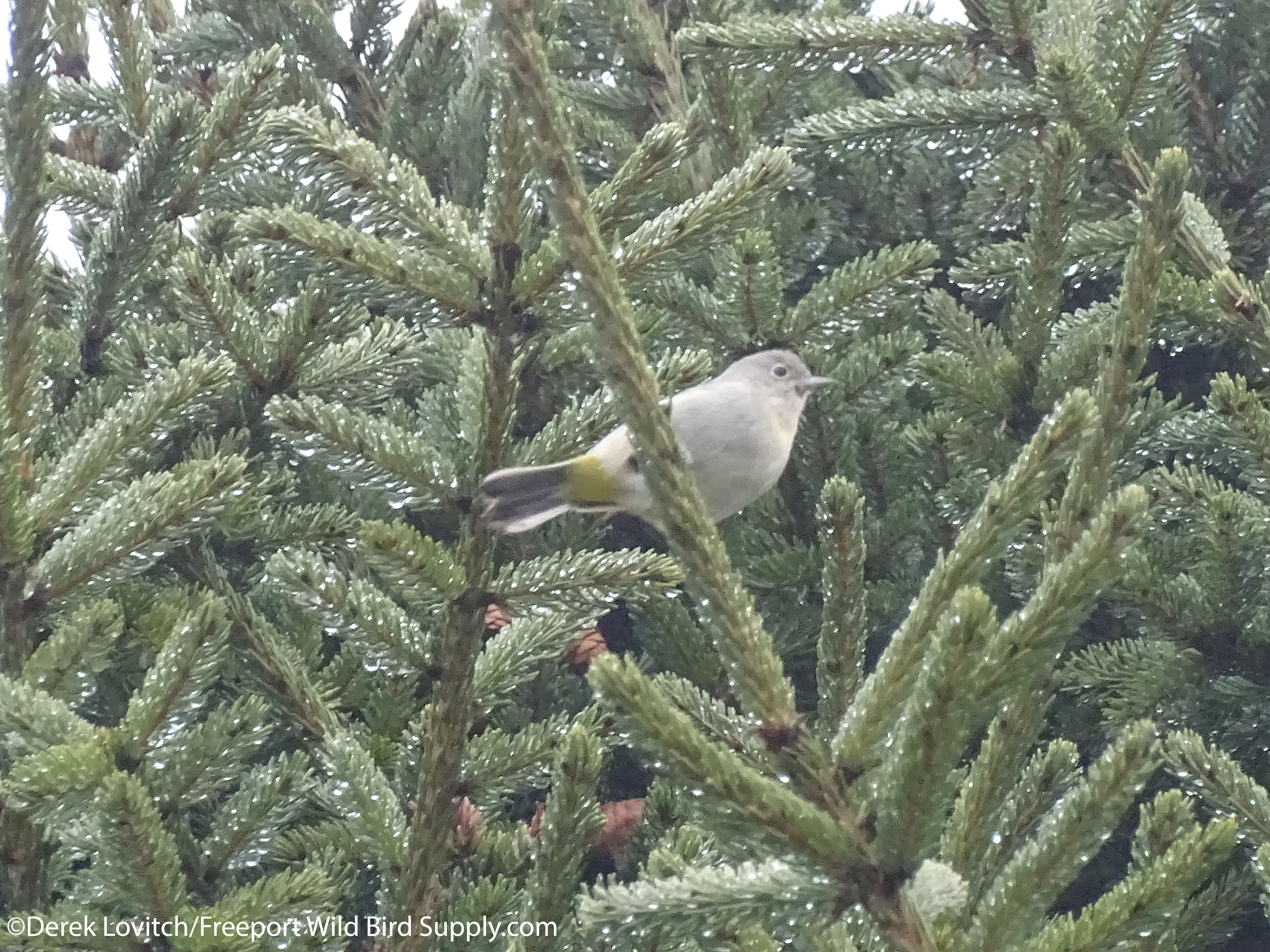
    This “Mega” rare Virginia’s Warbler was Maine’s 5th ever, and found by Derek on Peak’s Island on the weekend we’ll be returning this year…just in time to find the next rarity!

    As our collaboration with Portland Explorer enters its 12th season, we’re mixing things up with a brand new series of joint history and birding tours. These unique, relaxed birding and history adventures combine great local birding at seasonal hotspots with educational journeys through some of our local history. Join two experts in their field on this brand new collaboration! (Sorry, no beer tastings here!)

    But this time we’re leaving the van in the garage and hit the water once again! We’re going to hop aboard the Casco Bay Ferry Lines for the short, 20-minute trip across Portland Harbor to Peak’s Island.

    Once there, we’ll plan on walking 3-4 easy miles (paved or dirt roads and a few narrow trails including one with irregular boards over wet areas) to cover the prime birding hotspots of the island, including the thickets that were made famous last year when Derek discovered Maine’s 5th-ever Virginia’s Warbler (and first away from Monhegan). We’ll make our way along the shoreline, looking at resident and recently-arrived migrant waterbirds, but checking various nooks and crannies that can hold unexpected vagrants.

    We’ll make our way to the famous Battery Steele – famous for its access, it’s impressive graffiti, and yes, its birding. Here, a complex of wetlands and scrubby areas combine to attract and hold a wide range of avian species, often including some that are usually long gone from Maine by now. We’ll then explore the open-access fort and even get to experience total darkness!

    Birding will continue as we traverse the island to return to town. There will be an opportunity to purchase a delicious lunch, or bring your own, and we’ll relax for a spell as we await our ferry departure.

    Portland Explorer will supply a light snack and water. Bring binoculars and a flashlight. We also recommend bringing lunch or additional snack if you so desire. Sturdy comfortable walking shoes are also recommended, as are a variety of layers as it can be quite chilly on the water by the end of October. 

    Meeting Location ; 8:45am – Portland Beer Hub: 320 Fore Street, Portland, ME 04101

    *Please arrive 15 minutes prior to your departure time.*

    We’ll return to Portland Beer Hub at 3:00pm

    This tour is limited to 15 participants, so sign up soon! This is a one-of-a-kind tour, and we think one you won’t want to miss!

    • Forts and Feathers: Fort Williams and Portland Head Light!

    Sunday, November 29: 8:00am to 1:00pm

    It’s a perfect time of year to find late migrants such as Orange-crowned Warblers
    in the scrubby habitats of the park.

    As our collaboration with Portland Explorer enters its 12th season, we’re mixing things up with a brand new series of joint history and birding tours. These unique, relaxed birding and history adventures combine great local birding at seasonal hotspots with educational journeys through some of our local history. Join two experts in their field on this brand new collaboration! (Sorry, no beer tastings here!).

    With arriving winter waterbirds – from Great Cormorants to all three species of scoters – and truant migrants (and sometimes, even rarities!) – late November is a great time to hit the coast of Maine for productive birding. On this tour, we’ll take the Portland Explorer van over to Cape Elizabeth to bird the cliffs and uplands of Fort Williams Park.

    But that’s not all! We’ll also be diving into the history of the Fort and the world-famous Portland Head Lighthouse. At Fort Williams Park, we’ll explore a scenic coastal landscape rich with history and sweeping views of Casco Bay. The park features historic military structures, open green space, and dramatic rocky shoreline—offering a glimpse into Maine’s past alongside some of its most iconic ocean vistas.

    Just beyond the fort grounds stands Portland Head Light, Maine’s oldest lighthouse. Perched on the cliffs overlooking the Atlantic, it has guided mariners for more than two centuries and remains one of the most recognizable landmarks on the New England coast.

    We’ll be doing all of the driving, so you can relax. There will be one pickup location for this tour:

    8:00am – Marginal Way Park & Ride (opposite the intersection with Diamond St, just east of Franklin Ave), Portland.

    (Please arrive 15 minutes prior to your departure time).

    This tour is limited to 12 participants, so sign up soon! This is a one-of-a-kind tour, and we think one you won’t want to miss! To conveniently pay online, click on the “Book Now” link here.

    ________________________________________________________

    But, wait, there’s even more!

    • The Rarity Roundup Van Tour 2026

    Sunday, November 8: 8:00am – 3:00pm​

    Portland Explorer and Freeport Wild Bird Supply are teaming up to offer a very special, very exclusive road trip outing in 2026.  

    Early November is a fantastic time of year in Maine for vagrants – birds normally seen in far-off places.  Due to a combination of weather patterns, changing seasonal food resources, falling temperatures, and other factors – some of which are not completely understood – birds that may have ended up in Maine by “accident” begin to concentrate at the coast in “migrant traps” and “hotspots.”  In other words, this is the time of year to expect the unexpected.  

    ​A traditional “Rarity Roundup” involves teams of birders heading out on a given day during rarity prime time, looking for species that are not supposed to be around. And in honor of that tradition, that’s exactly what we are going to do on this unique tour. We may “chase” a rarity (go to see something that has already been found, aka “twitch”) or we might choose a destination known for rare birds in an attempt to find one of our own. Or perhaps, we’ll do both!

    ​Anything in southern Maine is fair game, and we might not even know where we will head until we are on the bus and the latest rare bird alert is received. For those who love adding a bird to your Life or State List, and/or basking in the thrill of discovery, well then this is the tour for you! In between seeing great birds, we’ll discuss the complex factors that are involved in delivering rarities to an area, and how we go about finding them.

    For example, last year, our Birds on Tap – Roadtrip: Rarity Roundup traveled to Yarmouth to see one of the few MacGillivray’s Warblers ever recorded in the state, then ventured all of the way to Kittery to try and find our own vagrant and the famous Fort Foster Park. For a taste of what’s in store, here’s the trip report from our very exciting outing in 2025 (but note we will not be offering the beer tasting component in 2026).

    Portland Explorer will supply a light snack (TBA) and water. Bring binoculars and a spotting scope if you have one. We also recommend bringing a lunch or additional snack if you so desire. Sunscreen, an extra layer or two, and sturdy comfortable walking shoes are also recommended as we will want to be comfortable during both a long drive or a standing vigil outside. 

    We’ll be doing all of the driving, so you can relax. There will be one pickup location for this van tour.

    8:00 am – Marginal Way Park & Ride (opposite the intersection with Diamond St, just east of Franklin Ave), Portland.

    (Please arrive 15 minutes prior to your departure time)

    This tour is limited to 12 participants, so sign up soon! This is a one-of-a-kind tour, and we think one you won’t want to miss!

    __________________________________________________________________________________________________________

    For more information, and to register for all of these tours, visit our website, here.
    This Week’s Highlights, 3/25-31,2023

    Despite a few wintery days this week, spring is most definitely in the air. As I have finally seemed to have turned the corner with my dreadfully slow recovery, I am also getting out a lot more. Therefore, with more to report, and more changes week-to-week, I’ll try to get back into my old habit of weekly posts here.

    Observations of note over the past seven days:

    • increasing number of blackbirds
    • first trickle of migrant sparrows
    • 1 SNOW GOOSE, our property in Durham, 3/27.
    • increasing number and diversity of waterfowl inland.
    • 1 Eastern Phoebe (FOY), Bradbury Mountain Hawkwatch, 3/31.
    • 1 Tree Swallow (FOY), Bradbury Mountain Hawkwatch, 3/31.

    Despite only getting out into the field twice this week, I enjoyed some good birding. For now, my birding remains primarily feeder- and yard-watching, but this week, it was more evenly split between our feeders at home in Durham and here at the store in Freeport. Blackbird flocks are officially “in” and several species of sparrows are on the move.

     At home, Common Grackles and Red-winged Blackbirds are now present daily, in varying numbers (between 4 and 56 and between 3 and 26, respectively), with one or two Brown-headed Cowbirds on most days.  Similarly, at the store, small flocks of Common Grackles come and go, but 7 Red-winged Blackbirds are more consistent. One Brown-headed Cowbird made only one appearance here.

    A Fox Sparrow that arrived last Friday departed on Tuesday night, and a second Song Sparrow arrived this week. Dark-eyed Juncos continue, with fewer by week’s end. However, a third White-throated Sparrow arrived on the 30th. Here at the store, four Song Sparrows continue, and 2 American Tree Sparrows arrived on the 26th– surprisingly our first two of the entire winter.

    At both locations, breeding activity is heating up, too, with more territorial and courtship behaviors observed each day.

    The yard highlight, however, was the Snow Goose – Yard Bird #125! -I spotted passing low over our yard on the 27th.  While I didn’t technically see it from bed, I did get out of bed – where I was doing some of my physical therapy exercises to look at a large group of geese passing overhead. You may not be surprised to know that we have a pair of binoculars in every room, which is a good thing, as I was able to pull out the lone Snow from a flock of about 75 Canadas.

    Speaking of binoculars, I need to take a moment to plug my Zeiss SFL 8×40’s. I fell in love with them when they came out last year, and I was very thankful for them when my shoulder was in pain. They’re just so incredibly lightweight, but I have found minimal tradeoff in brightness, color, etc. Since I am still a one-armed birder, they have been absolutely critical for my ability to look at birds when out and about now. Great balance combined with the light weight just makes them perfect for holding steady with one hand. I do need to rebuild my stamina, however, as there has been a lot of atrophy of field birding muscles over the last 2+ months!

    Anyway, back to waterfowl….another highlight this week was the arrival of Wood Ducks in our backyard. A pair have been frequenting a vernal pool we can see from the house for the last few days, and Jeannette spotted them sitting in the trees just off of our porch on the 29th.  Three more drakes are frequenting a pond across the street, where a pair of American Wigeon (my first of the spring) plopped in on the 30th).

    Finally this week, I was able to get back up to the Bradbury Mountain Hawkwatch for a couple of hours on Friday. A few raptors were on the move (much less than we expected given the conditions), but I did pick up my first Eastern Phoebe and Tree Swallow of the year. Later that afternoon, another phoebe was staking out a territory around our house.

    Trips and Tours Notes:

    • Due to Saturday’s weather forecast, we have postponed the evening’s Woodcocks Gone Wild program at Pineland Farm until Saturday, April 8th.

    Mt. Cutler in Hiram: A New Fall Hawkwatching Hotspot?

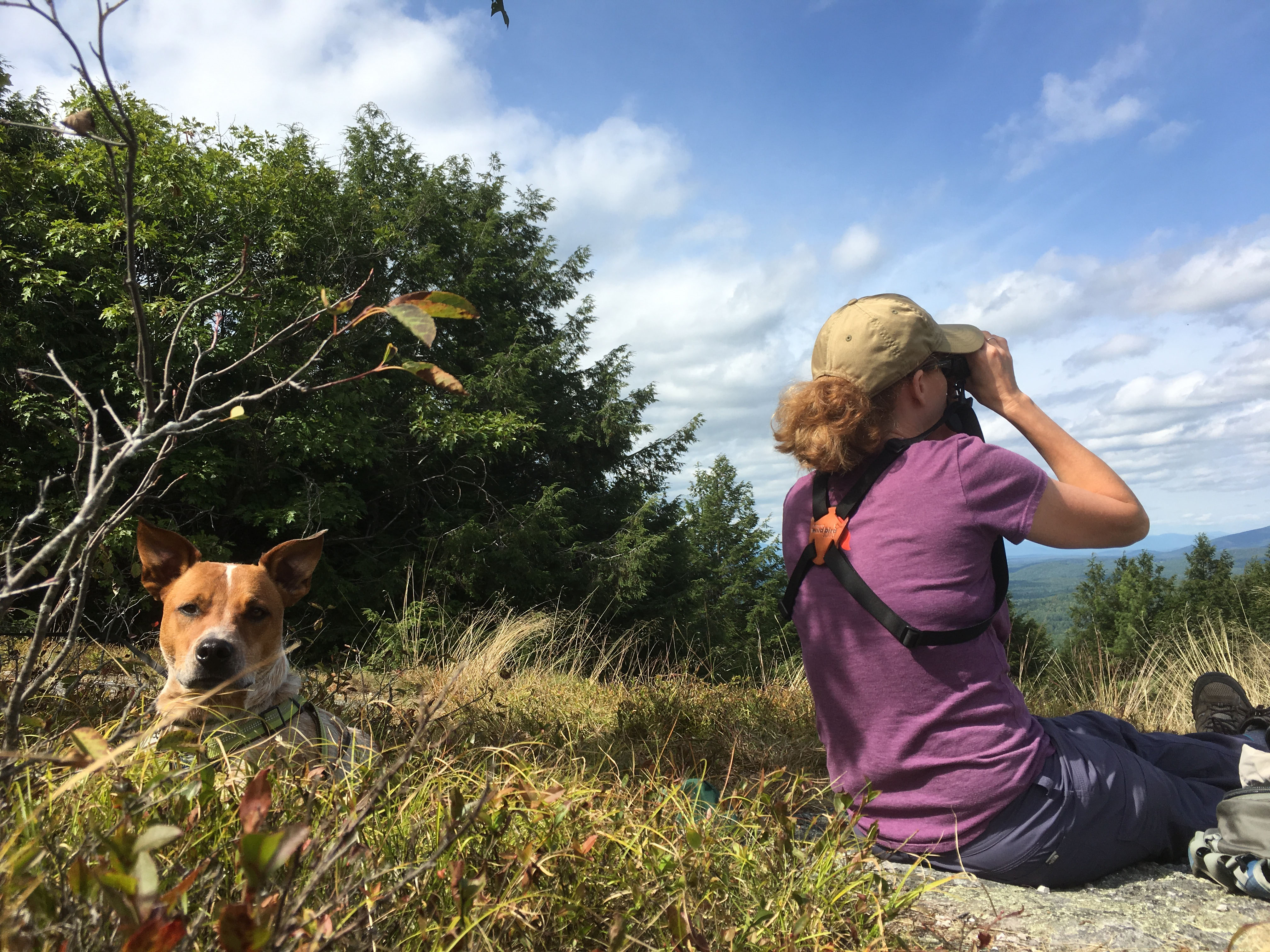
    IMG_0522_Bonxie+J_hawkwatching

    For several years now, Jeannette and I have been searching for a fall hawkwatching location away from the coast in southern Maine. While there are several good concentration points in the area, we were looking for an inland hill or ridge well off of the coastal plain that was relatively convenient, accessible without too much hiking, and most important: consistent – a place where even on a “slow” day, at least a few hawks might be seen.

    Along the coastal plain, large numbers of hawks can sometimes be seen. But it’s often fairly random: you just happen to look up at the right time in the right place. In fact, our biggest fall hawk flights – by far – have been right over our store here in Freeport. Those (especially the 7,000+ bird day a few years back) have been some great flights, but most days would not produce a single migrant raptor – there’s no concentration mechanism along most of the southern coastal plain (the peninsulas of the Mid-Coast are a different story).

    But we’ve been looking for an “old-fashioned” inland ridge, where a variety of conditions will produce birds, and the chance of close birds (unlike most coastal sites) and rarities (like Golden Eagle and perhaps consistent Rough-legged Hawk or Northern Goshawk) might occur.

    Well, we very well might have found one!

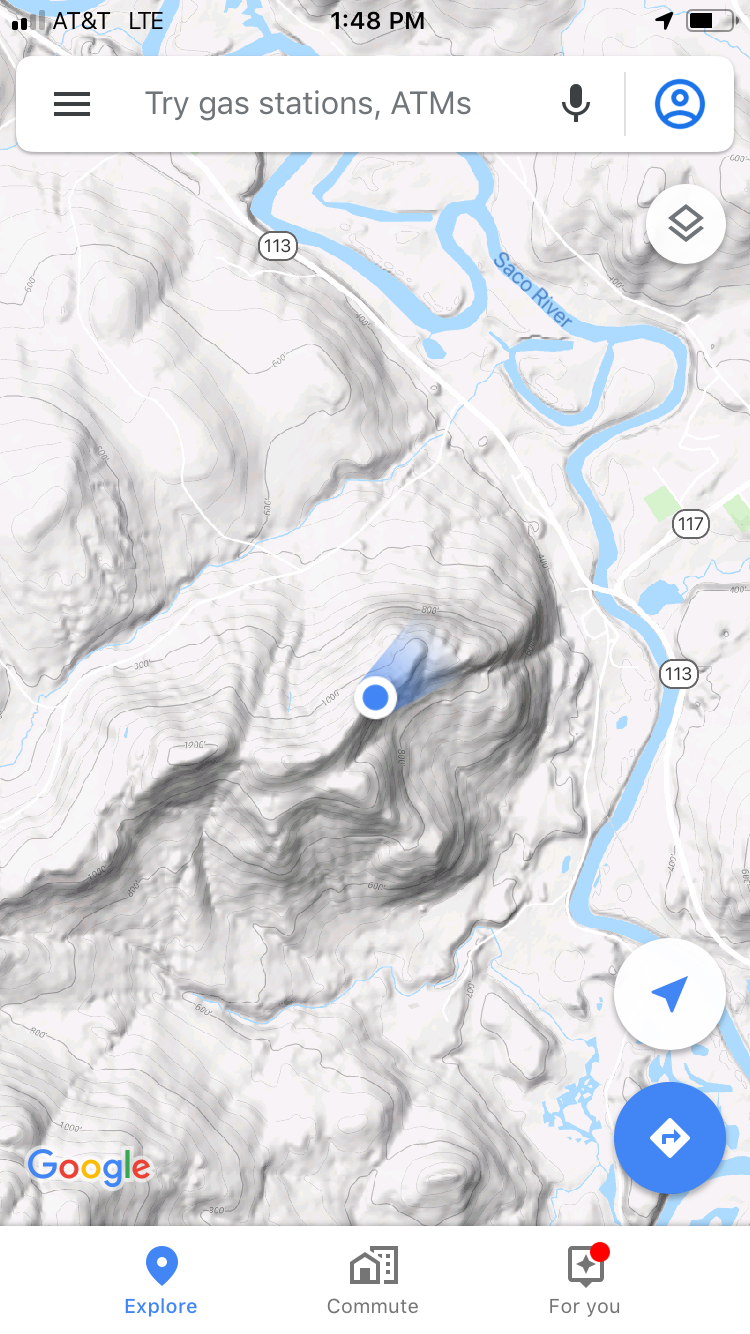
    Yesterday, Jeannette and I hiked up Mt. Cutler in Hiram, Maine, about 1:15 away from us in the southeastern corner of Oxford County. A steep but rather short hike of less than a mile delivers you to the 1,232ft summit. But we actually returned to a clearing at 0.82 miles up the North Trail from the parking area on Hiram Hill Road.

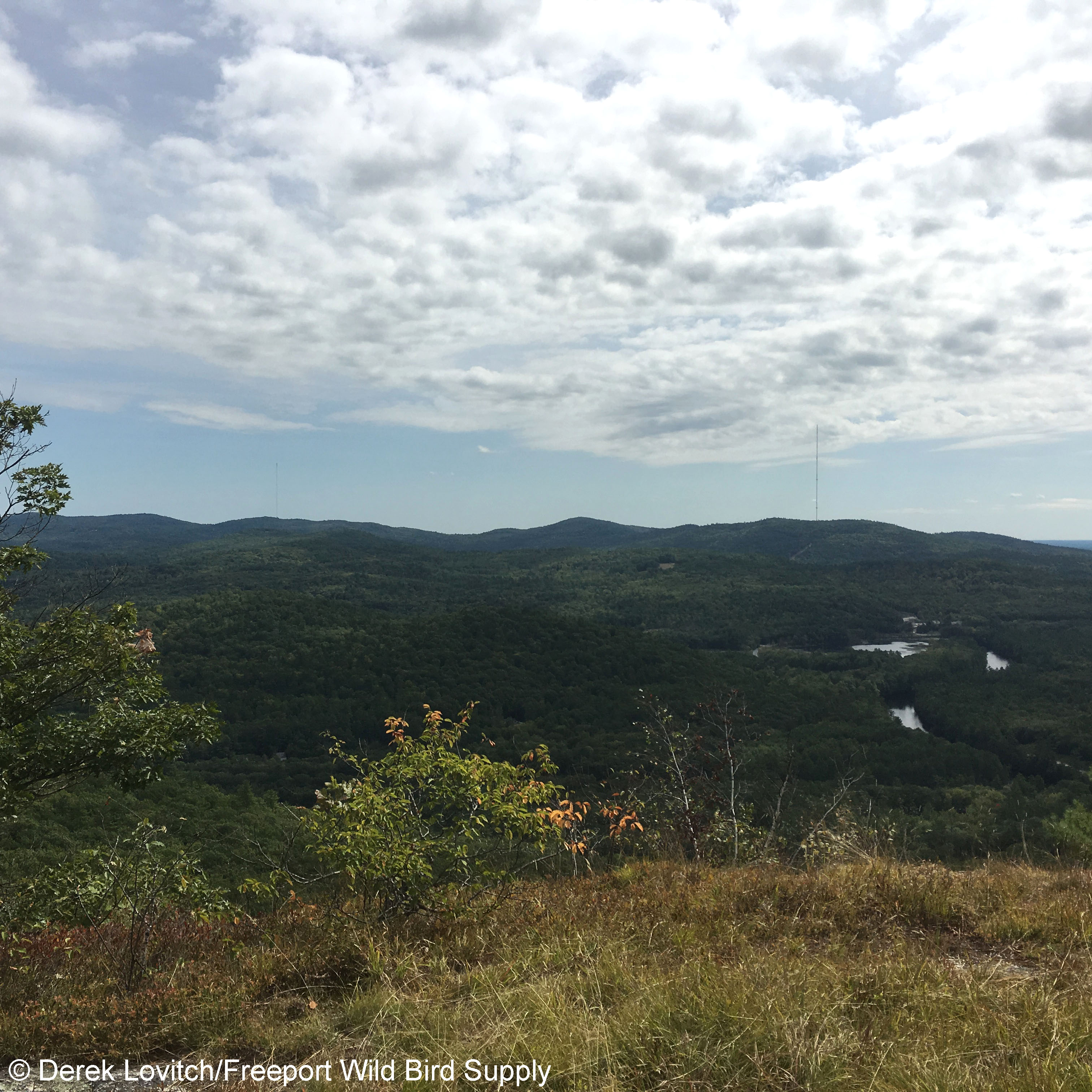
    Impressive views extend on both sides.
    IMG_0516

    To the west, you can see the foothills of the White Mountains.
    IMG_0515_westerly view_edited-1

    To the east-southeast, the hills and ridges on the west shore of Sebago Lake. And down below, the Saco River valley.
    IMG_0510_easterly view

    That’s a nice mix of geography to usher birds to a relatively long (for this area of the foothills) ridge running northeast to southwest.
    IMG_0519IMG_0520

    No sooner had we put down our backpacks and tied Bonxie to a tree, we looked up and immediately starting seeing raptors. Soon, we very much regretted not having arrived earlier; we didn’t start scanning the skies until 11:22.

    But by our departure at 2:30pm, we tallied 236 migrant raptors of 7 species. This is not an epic flight by any stretch of the imagination, but how many did we miss before we arrived? A light WNW wind and a thin layer of cirrus clouds were perfect for producing a hawkflight here. And we were excited to finally get the right conditions on a day off to try a new hawkwatching locale. We hiked here about two years ago and thought it would be worth coming back during fall hawk migration season, and it’s been on the agenda ever since.

    More importantly, we believe, was that even after the winds shifted to the unfavorable south-southwest by 12:50 pm with increasing clouds, we still had birds moving. Instead of soaring high in kettles though, they were gliding by in a slow trickle, using the lift generated by the steep ridge and headwind. This suggests that raptors seek out Mt. Cutler specifically for geographical or aerodynamic reasons, and therefore our flight was not just a lucky random occurrence. The diversity of non-raptor migrants also adds more credence to our hypothesis.

    Of course, one day a hawkwatch does not make. Our data set is far too small to draw any conclusions other than it’s worth going back up here again. And you know we will!  I’ll report what we find, but in the meantime, if you give it a try, please let us know what you see.

    Here is our scorecard:
    203 Broad-winged Hawks
    9 Ospreys
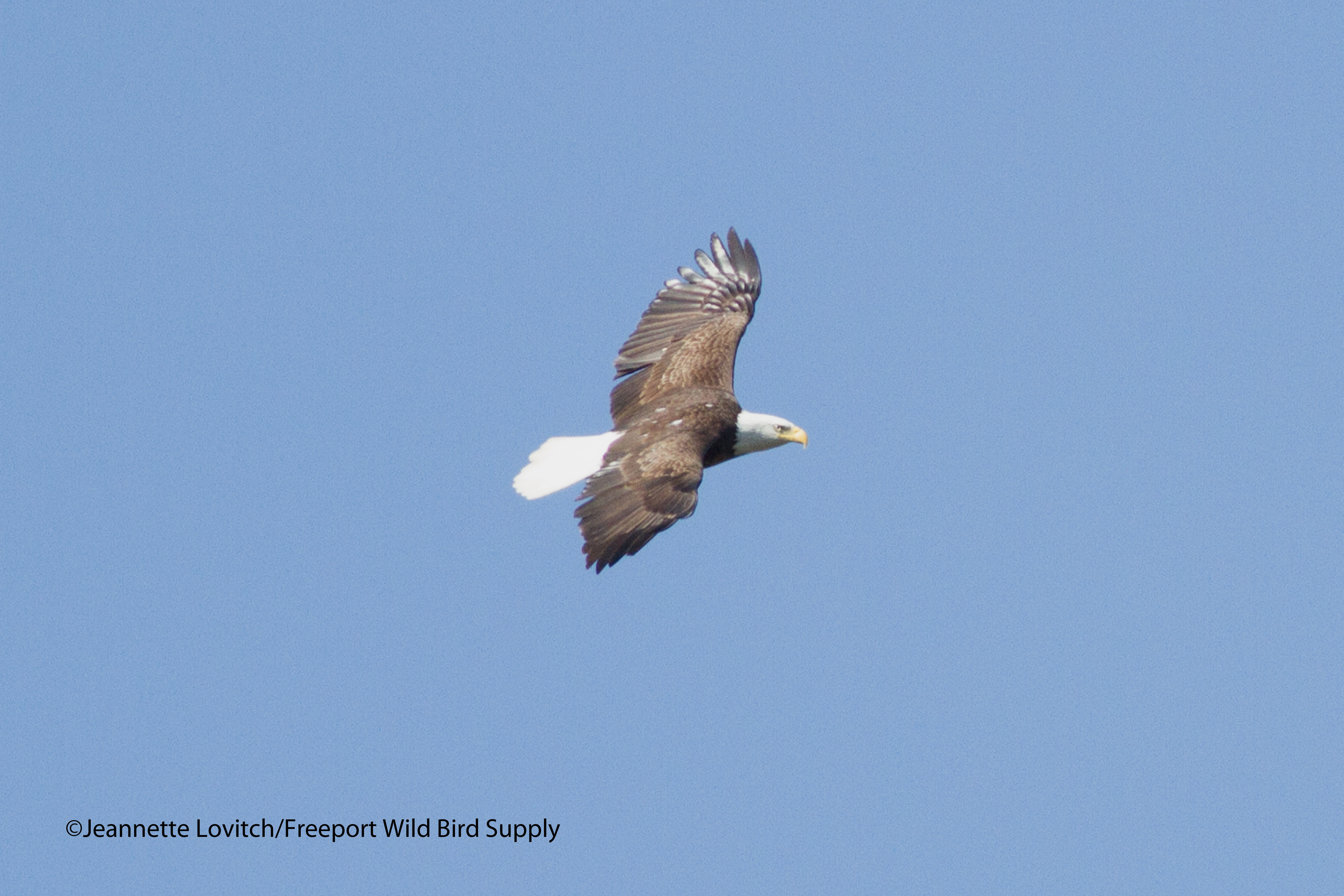
    8 Bald Eagles
    8 Turkey Vultures
    6 Sharp-shinned Hawks
    1 Cooper’s Hawk
    1 Merlin

    T=236

    Other migrants:
    38 Monarchs
    11 large dragonfly species
    3 PURPLE MARTINS (late and intriguing sighting; could they be related to the passage of Hurricane Dorian that deposited a large number of martins in Nova Scotia, where they are a vagrant).
    2 Green Darners
    1 Common Loon
    1 Double-crested Cormorant
    1 Eastern Kingbird
    1 unidentified warbler
    1 Twelve-spotted Skimmer
    1 Red Admiral

    10/14/2020:

    Well, we finally had a day off with favorable conditions!  

    We had a little raptor flight on light northwesterly winds, but stealing the show was a BOREAL CHICKADEE at our observation point just below the summit. In mixed woods at around 1200ft, this is low and out of habitat, and by far my most southeastern observation ever in the state. As surprising as it was, this species is also irrupting this year – like so many birds out of the Eastern Canadian Boreal – and so it wasn’t completely shocking.
     
    6 RED CROSSBILLS, 21 Pine Siskins, and 1 Purple Finch were also noted.
     
    The hawkflight between 9:35am and 1:35pm consisted of:
    18 Sharp-shinned Hawks
    10 Turkey Vultures
    9 Bald Eagles
    3 Red-tailed Hawks
    2 unidentified buteos
    1 Red-shouldered Hawk
    1 Northern Harrier


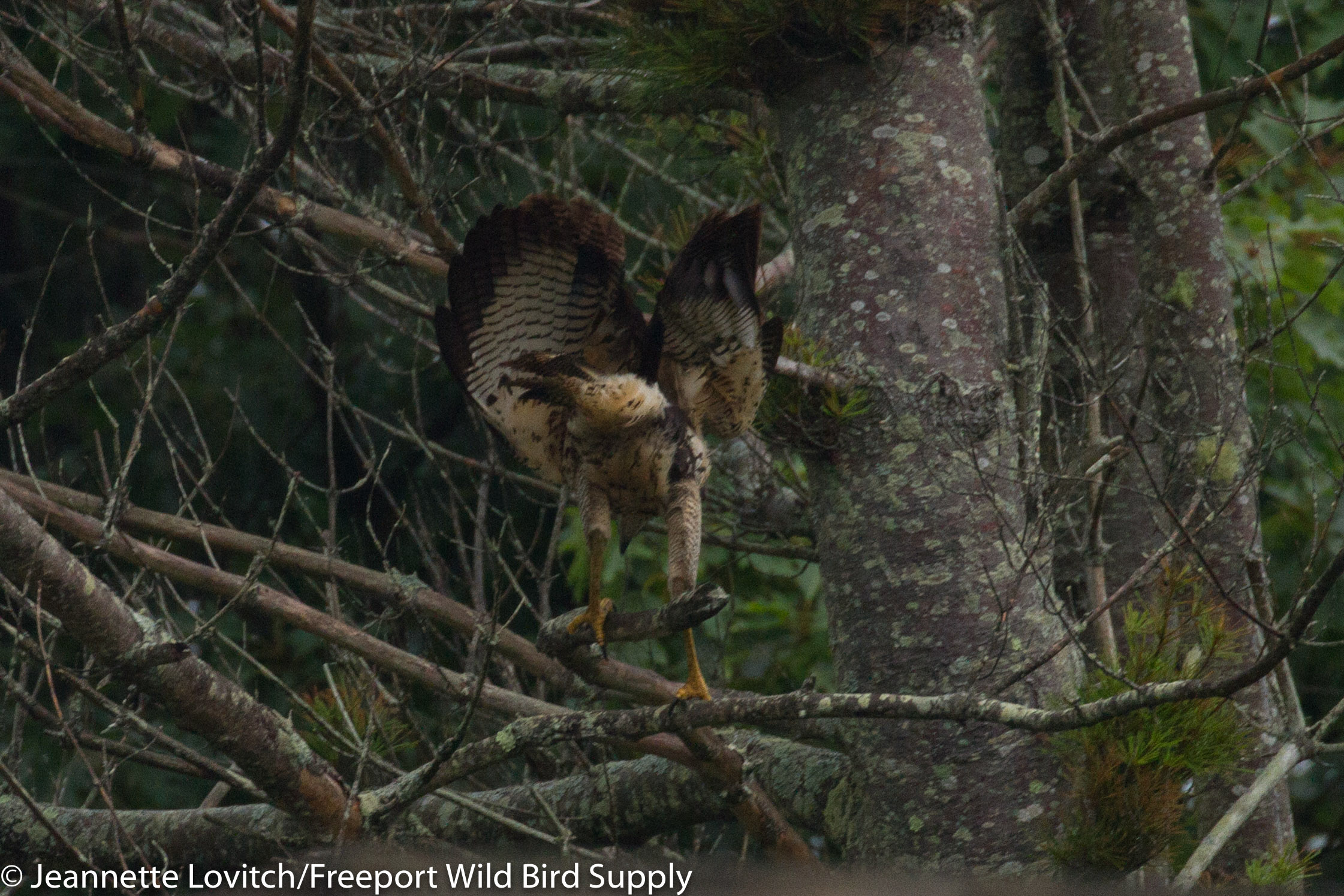
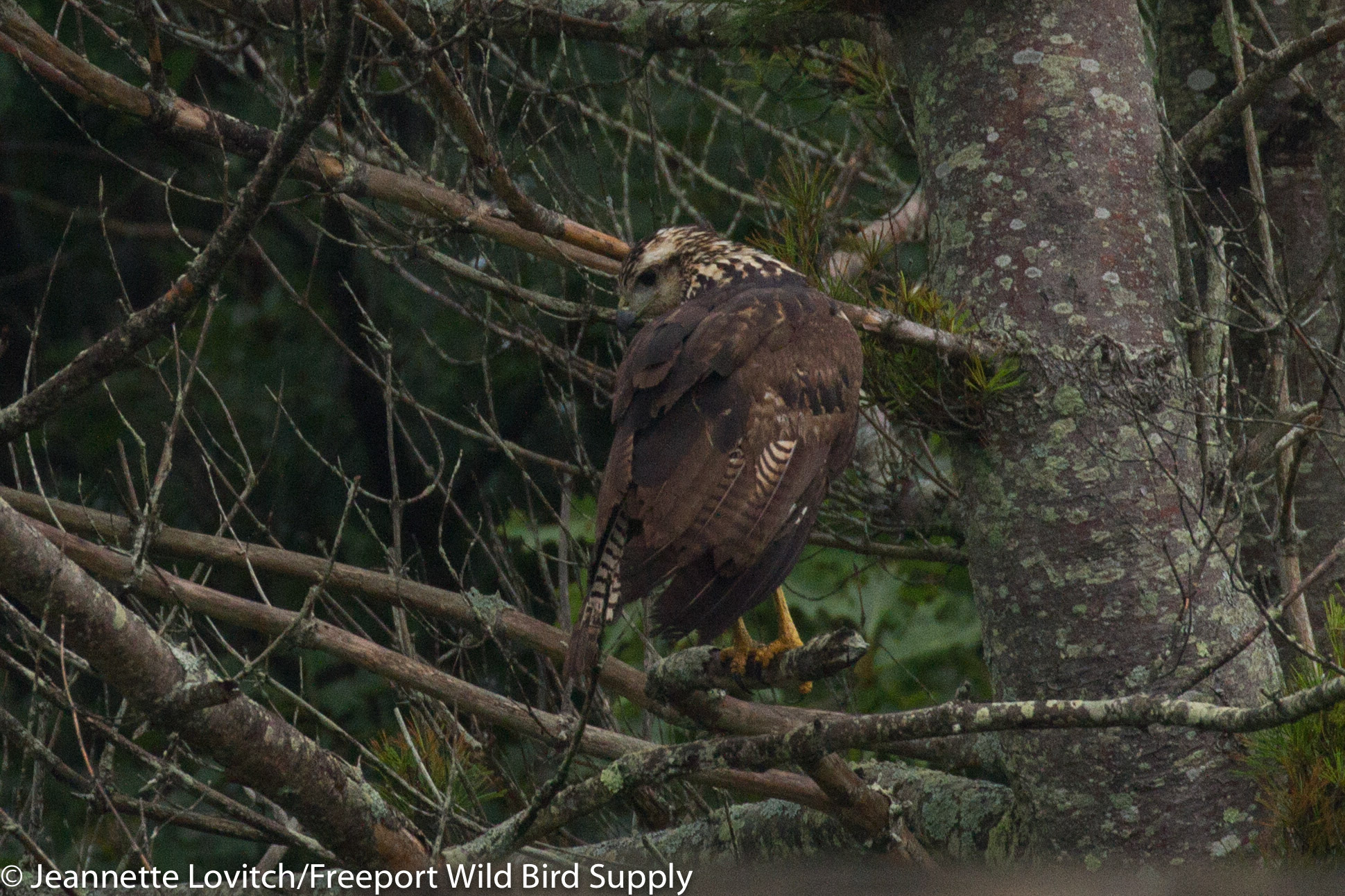
    GREAT BLACK HAWK IN BIDDEFORD!!!!

    IMG_1498-edited-edited

    No seriously. This is not a test, do not adjust your television. This is not a drill. This is insane, but it is real.

    The Timeline.

    8/7.

    9:13 AM. Ryan Wirtes posted a photo to the “What Bird is This Facebook Page” of a raptor photo sent by a friend. He suspected a black hawk of some flavor, but at the time, the sighting information was nothing more than “photographed this month in Maine.”

    10:35 am. Tim Swain shares that post to the “ABA Rare Bird Alert” Facebook page. All hell breaks loose. While many people discuss the ID, others immediately jump to the conclusion that it is far too rare and far too out of range to be possible, so the conspiracy theories take hold. One person claimed to debunk it in multiple forums based on the plants in the scene. His plant ID was seriously flawed. I was brought into the discussion and identified the plants in the two pictures as all occurring in and around Biddeford Pool: Japanese Knotweed, Red Maple, and an invasive bush honeysuckle that I left as Lonicera sp (presumably tatarica). I know these thickets and habitats extremely well, and all looked just like a number of areas around here. While I was not vouching for the credibility of the sighting, the misidentification of the plants should not have impacted anyone’s decision to get the heck out there and search for it. And while skepticism and critical evaluation of exceptional sightings is important, I felt too many people were immediately looking to debunk it – that is not constructive, especially when using nothing more than simple misinformation spoken loud enough to be believed.

    Luckily, people were out searching for it, and didn’t need my plant ID to be encouraged to do so!

    Later in the day, Michael Smith was able to contact the photographer, and it turned out the bird was photographed only one day prior, on Maddox Pond Road in the Fortunes Rocks Beach section of Biddeford. The plot thickened.

    8/8.

    Birders searched the area extensively in the morning. The exact location of the photograph was confirmed. There was no hoax, conspiracy, or simple mistake/miscommunication. But there was no bird.

    6:03 pm: Doug Hitchcox relocates the bird in a backyard on nearby Lily Pond Road. Birders converge. I arrived at about 7pm, and about 15 of us continued to observe the bird, with several remaining through dark.

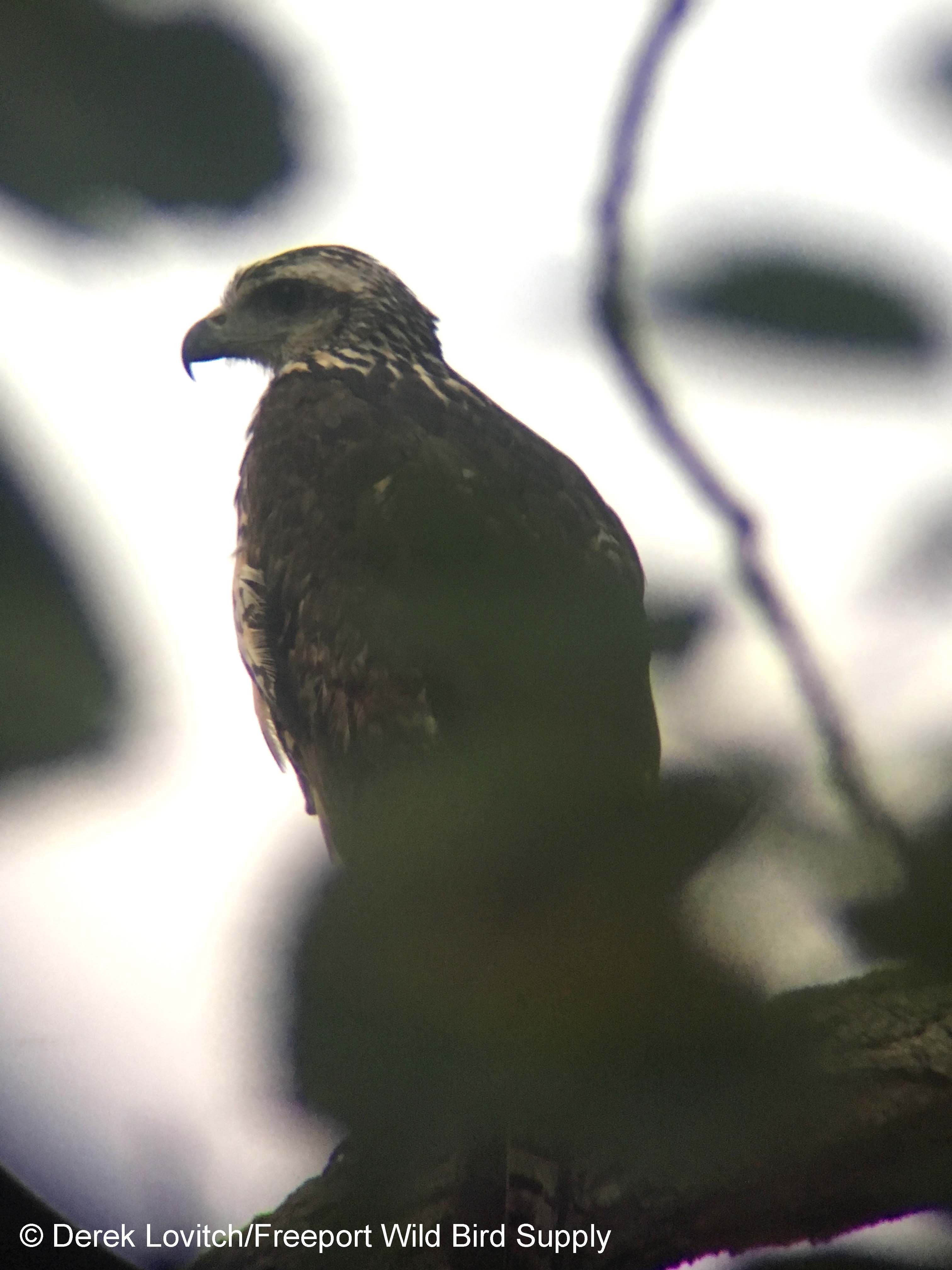
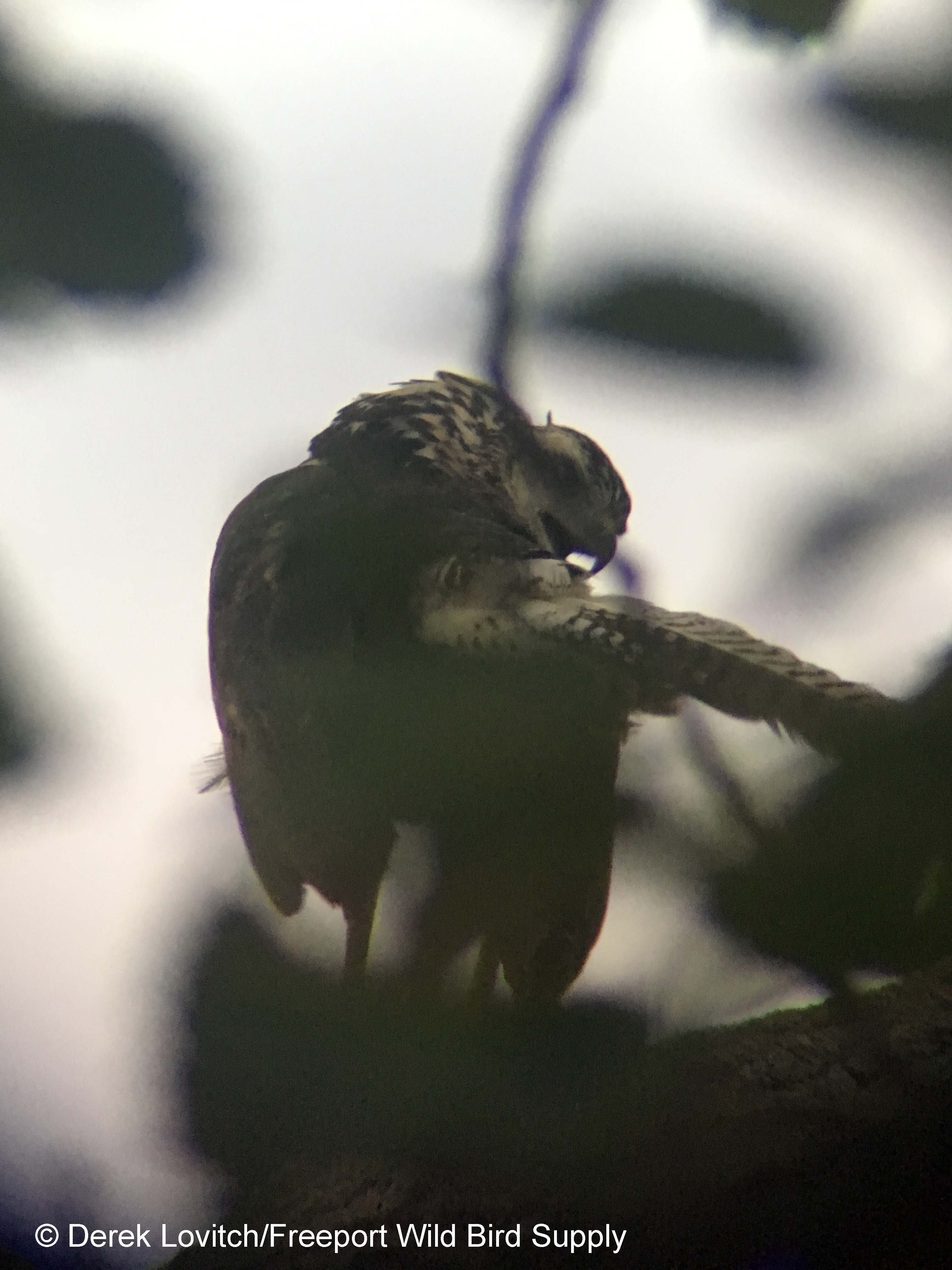
    I managed a few phone-scoped photos.IMG_2287_best,kinda_edited-1preening1_edited-1

    But, given the low light, I had better luck with video, which I did extensively. I posted one here, on our store’s Facebook Page.

    For the record, it was perched in a Black Locust when I saw it.

    8/9.

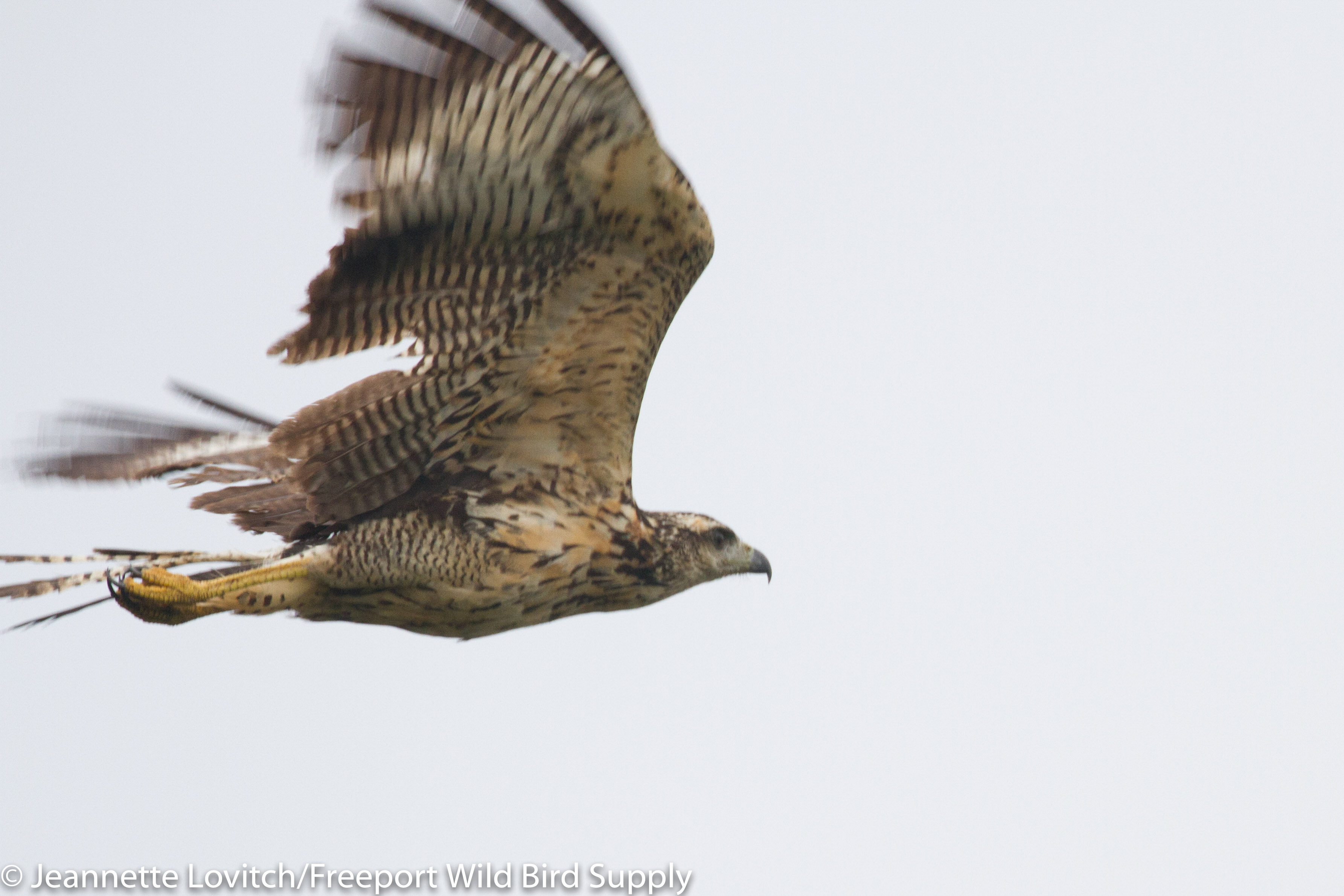
    7:20 am: With dozens of people from several states converging and looking, it was refound on Lily Pond Road. And now all hell will really break loose! Jeannette went down this am and scored some great photos as the bird flew around, hunted eggs and nestlings (it was observed eating a nestling and robbing an American Goldfinch nest for eggs), and as since its first observation, being constantly mobbed by passerines (for good reason).

    IMG_1461-edited-editedIMG_1462-edited-edited
    IMG_1520-edited-editedIMG_1583-edited-edited

    For those looking to find it, I’d recommend the play-by-play on the ABA Rare Bird Alert Facebook Page. I’ll leave it to there, and the Maine-birds listserve, to provide the specifics on sightings, observation details, and any concerns (like extensive and problematic permit parking restrictions in the area) that may arise.

    Furthermore, Fortunes Rocks Beach is covered in Site Y11 in my Birdwatching in Maine: A Site Guide and Biddeford Pool (including parking tips) is extensively treated as Y12.  Besides carpooling, my recommendations are to arrive early or late, or hoof it (I’ll throw a bike on the rack next time I go) a considerable distance from somewhere with open, public parking.  And, like with several of the “Mega” rarities that have occurred in recent years, I am (somewhat) available for private guiding, including round-trips from the Portland Jetport!

    But since I have been asked by many people about “how,” “why,” and “WTF?” I figured I would pull some info together here for convenience.

    The Identification:

    First, the identity of the bird is not in question: it is an immature Great Black Hawk (often written as Great Black-hawk), separated from the similar Common Black Hawk by a combination of plumage and structural features. I’ll quote Howell and Webb’s A Guide to the Birds of Mexico and Northern Central America:

    “(GBH) has narrower wingbase, longer tail (esp juv) often less spread when soaring and gliding. At rest, note longer legs and short primary projection…juv and immature usually have whitish head that lacks strong dark malar stripe; note more numerous dark tail bars of the juv. With very broad distal dark band or narrow dark bars to tail tip.”

    I believe those are the same features that are used to separate it from the Cuban Black Hawk (or Cuban race of the Common Black Hawk), but I need to do more research on that.

    And finally, Solitary Eagle is “larger with more massive legs and bill; at rest, wingtips extend to or beyond relatively shorter tail…juv and immature have solidly dark brown thighs, juv has pale grayish tail band with no distinct dark barring, imm. tail similar but with broad paler median band. (Howell and Webb, 2014)

    Great Black Hawk is a large buteo-like raptor of Northern South America, extending north along the coasts of Mexico. Many folks are citing the first accepted “ABA-area” record that occurred only this past spring in Texas.  The Texas Bird Records Committee voted unanimously to add it to the official list on July 3rd:

    “The TBRC has voted unanimously to add GREAT BLACK HAWK (Buteogallus urubitinga) to the state list. A juvenile was well documented with several excellent photos as it landed briefly and passed over South Padre Island on 24 April 2018. This species has been somewhat hoped for/expected to show up in Texas as it regularly ranges as close as southern Tamaulipas, Mexico but it was still a surprising and exciting find for folks that were on the island taking in spring migration that day. The addition of Great Black Hawk brings the state list to 649 in good standing. This record will now be considered by the ABA Checklist Committee as a first for the ABA. There have been a few Great Black Hawk sightings in Florida since the 1970s though there has been questions/concern about the provenance of those birds.”

    Ah, but yes, those Florida birds. Here’s where things get murky. And while Great Black Hawks do not seem to be kept by falconers, they are kept in captivity. And with all records of exceptionally far-flung vagrants, captivity needs to be considered. The “cage bird” and wildlife smuggling plague in the world is rampant, and likely constitutes billions of dollars annually. While “charismatic megafauna” (or parts there of) get all of the attention, birds are being smuggled – as well as legally traded – all over the world. And I believe it is much, much worse than usually suggested, so it’s worth considering “provenance” and just because it’s not used for some purpose, I do not believe we can immediately discount captive origin. But let me be clear: there is absolutely no evidence of that here – no bands, no “cage wear,” no obviously problematic behavior – although it is rather confiding and does allow close approach which could be suspect.

    Jon Greenlaw, co-author of the recently-fully revised and updated The Robertson and Woolfenden Florida Bird Species: An Annoted List (2014) wrote to me with the following analysis of the Florida occurrence of “black hawks:”

    “They occur in Mexico in Yucatan north to Tamaulipas on the Atlantic side, so both possible in Texas and Florida. To my knowledge only the Great Black Hawk is known from the Atlantic coast in Florida. No Common Black-Hawks have been confirmed from Florida out of more than 20 reports, but one of the two records (photographic) (one specimen w/ no label details in Archbold BS collection) remained for several years in the Greater Miami Area (Virginia Key, Key Biscayne) and was seen by many observers and photographed well by Robin Diaz of Miami. It was initially ID’d as a Common Black-Hawk, but it was later confirmed as a Great Black-Hawk as more photos & details came in. Greenlaw et al. 2014 provides the most recent update of status in Florida. Smith FFN 23:101, 1995 reviewed the Florida reports and concluded them to represent Great Black-Hawks. The belief previously has been that the Florida reports were likely escapes in captivity (they are known to occur as captive birds in s. Florida), but the numbers of reports here over the years make it difficult to totally reject the presence of vagrant individuals (esp immatures) from their range in the Americas, esp Yucatan. Still, photographs of the Virginia Key bird (the most recent occurrence example) indicate the adult was from the sedentary population (nominate) in South America.

    And more extensively treated here for those looking for the complete story of this complex conundrum, click here.

    Let me reiterate, there is absolutely no suggestion of non-wild origin, and while a hoax or miscommunication has been debunked, provenance (where it came from and how) must always be carefully considered. While listing powers-that-be may eventually decide whether or not you “can count it,” I would recommend going to look at this magnificent bird and, well, my list is my list…and I’ll probably count it!

    The How.

    Besides feeling like the tropics these past few weeks, the weather pattern that has brought us this oppressive (well, to us in Maine not used to it) heat and especially humidity could very conceivably result in a bird escorted this far away from its usual home range.

    Although a resident species not particularly prone to wandering, some likely do, and presumably this would especially true of juveniles. Some have suggested this could even be the same bird as the South Padre Island sighting in April; photos will undoubtedly be studied carefully to see if there are any clues. Whether it’s the bird from Texas or another individual, the extensive and stubborn southerly flow created by a strong and persistent Bermuda High spinning off the southern Atlantic Coast would certainly facilitate the bird’s peregrinations. Whether originally “lost,” misguided, navigationally-challenged (simply mis-wired, or as one of the apparent impacts from our chronic use of pesticides), or just a “pioneer” prospecting for new habitats in the face of a rapidly warming climate and rampant tropical deforestation, there are a lot of ways where a large raptor that can soar with little effort and cover hundreds of miles in a day and end up in the Northeast.  While weather rarely “causes” vagrancy, it certainly plays a role in where a vagrant could show up.

    Heck, North America’s first record of the tropical Variegated Flycatcher occurred (in November of 1977) in the Biddeford Pool neighborhood just up the road! Which is more exceptional would be up for debate, but clearly birds from a long way off can make it to Maine’s coast (for additional example, our relatively numerous records of Fork-tailed Flycatcher). And, as circumstantial evidence that the recent weather pattern is delivering birds from the south to New England, notice that New Hampshire currently has a Wood Stork and a Neotropical Cormorant!

    Now what?

    Birders are flying in from all over the country already, and likely hundreds if not thousands of birders will descend on the area in the coming days, and if we are all lucky, weeks. Of course, the bird could leave any minute now.

    Folks will debate provenance, and others will simply enjoy the sighting and take a lot of photographs. Hopefully, birders will spend a few dollars in the area (can I recommend Bufflehead’s restaurant on Hill’s Beach, Palace Diner in Biddeford, and Saco Island Deli in Saco to start?) and let it be known that they are here to see this epic rarity.

    Furthermore, there is always the chance of the “Patagonia Picnic Table Effect,” wherein birders descending on an area for a rare bird sighting find additional rare birds.  What could be next? And from where? I very much look forward to what else is turned up. This could be fun.

    At the very least, don’t forget there is a Little Egret just up the road in Scarborough Marsh! Remember when, 4 years ago, that’s what everyone was flying in for?

    Final Disclaimer:

    I’m not the first to say it, but it needs to be repeated. This is a quiet, residential area with extremely limited daytime public parking. The bird is often in yards, and since the best hours to visit are before 8:00am and after 5:00pm when parking is available at nearby Fortunes Rocks Beach, PLEASE be extremely respectful to local residents and private property. Do not enter any yard unless invited to do so, and do not block driveways. And yes, police have been actively patrolling the parking areas! And always, put the bird – and its neighbors – first, no matter how much you want a slightly better look or photo!

    Thanks for reading!
    IMG_1555-edited-edited

    UPDATE #1:
    Photo reviews by Tom Johnson and others of the April Great Black Hawk from Texas and our Maine bird shows the exact same pattern of brown flecks on the outermost underwing coverts. Variable in this species, this is too perfect to be a coincidence, so it is almost unquestionably the same bird!

    UPDATE #2:
    Unfortunately, at 1:52pm (I believe) on Thursday, August 9, the black hawk was observed flying over Fortunes Rocks Beach and “out to sea.” It has not been seen again since. Birders scoured the area for the rest of the day, and again on Friday, August 10th to no avail…and so far without turning up anything else of note. In fact, not even the Little Egret has been seen in the last few days (I looked carefully at every Snowy in Scarborough Marsh this morning when guiding for a family from Indiana). We’ll see if any interesting reports roll in by day’s end.

    2016 Bradbury Mountain Spring Hawkwatch Season In Review

    Hawkwatch_last_day_2016
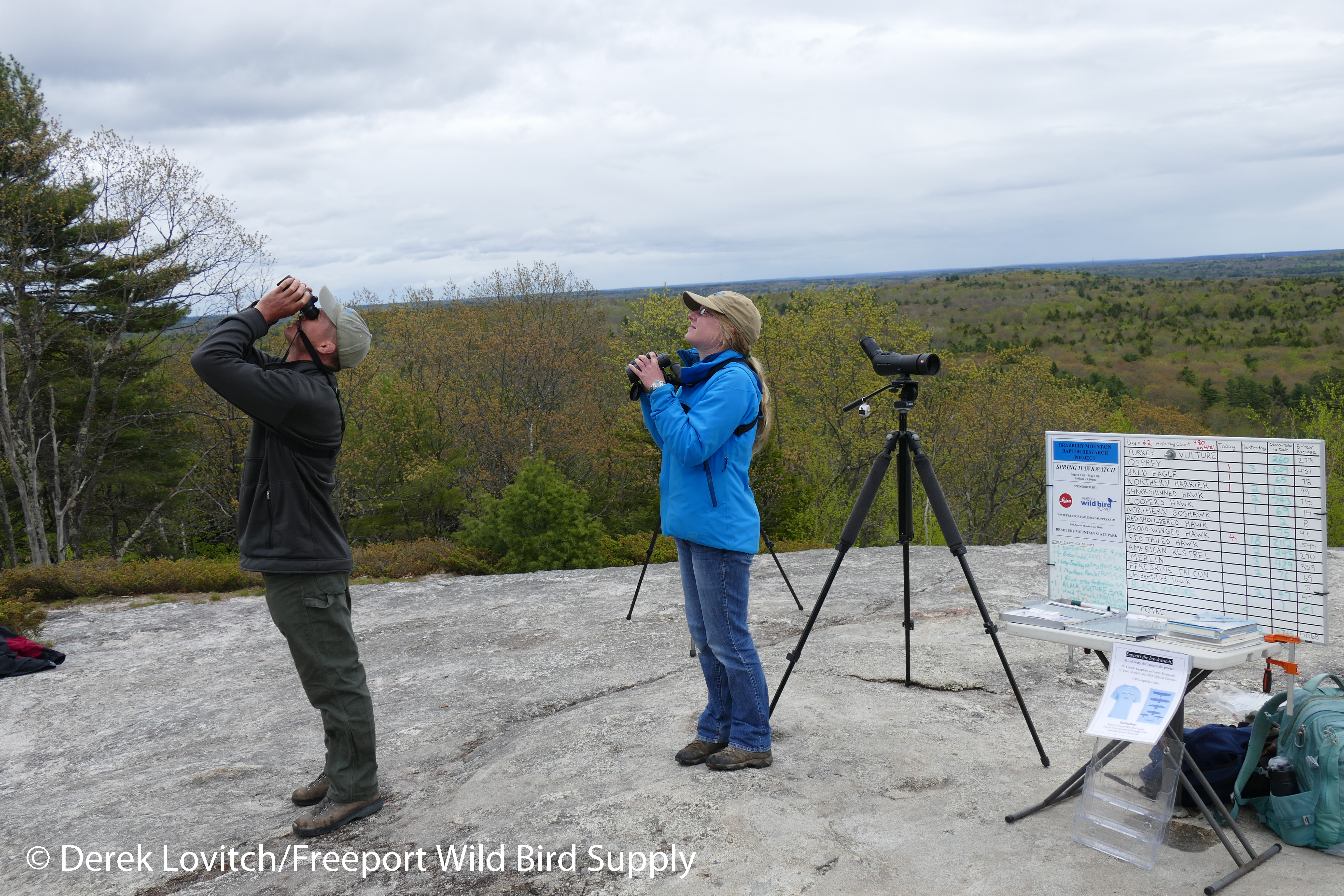
    The 10th annual Bradbury Mountain Spring Hawkwatch wrapped up on May 15th, bringing a remarkable season to a close. Although I did go up for two hours to hope for a vagrant Mississippi or Swallow-tailed Kite on the 20th, netting five migrants (2 Sharp-shinned Hawks and 1 each of Broad-winged Hawk, Cooper’s Hawk, and Merlin. All immatures as expected on the late date). It was worth a try!

    Anna Stunkel, a College of the Atlantic graduate and veteran of the Lucky Peak hawkwatch in southwestern Idaho, was the 2016 Official Counter, and she did an incredible job. A tireless observer and interpreter, she introduced hundreds of visitors to the project, and to our numerous local Bald Eagles! While Jeannette and I covered her days off – when rain didn’t do the job for us – or whenever else we got a chance, our many volunteers, especially Zane Baker, Tom Downing, Dave Gulick, Chuck Barnes, and Rick Hartzell were priceless. No hawkwatch is successful without a loyal cadre of assistants – spotting birds, answering questions, and bringing food – so thanks to you all!
    L1040575_edited-1

    The 2016 season total of 4,785 between March 15th and May 15th was our second highest total in the ten years of the project, and an impressive 17.6% above average (we exclude 2007 from our data analysis due to a change in methodology after this “trial” year).

    Oddly enough, we amassed this tremendous total despite losing 16.5% of our possible coverage hours (9am to 5pm EDT) to weather, including fog, rain, snow, or high winds. The 414 total hours of observation was actually 6.6% below our average.

    343 raptors passed the watch on April 17th, topped by the 980 tallied on 4/22 and 585 on 4/23. Those two amazing days changed our season dramatically – we went from worrying about a record low count to dreaming about a record high! 3,165 of our raptors passed through between April 16th and April 28th, accounting for 70% of our total flight.

    Two rarities were recorded, headlined by a Black Vulture (our 7th of all time) on May 12th, and perhaps even rarer according to the season, a Broad-winged Hawk on March 20th (our previous earliest date was April 3rd, 2008 which itself was an outlier). We hypothesize that this was not a vanguard of the usual long-distant migrants arriving from Central America so early, but rather a bird that wintered either in South Florida or perhaps even well north of usual range thanks to the mild winter over the East.

    Although southwesterly winds – our best conditions – were rare this spring, numerous days of west and light northwest in April, combined with sunny conditions and few weather systems during the peak weeks of our flight produced our great count, led by above average numbers of Osprey, Northern Harrier, Sharp-shinned Hawk, Broad-winged Hawk, American Kestrel, and Merlin. On our biggest day (4/22), light westerlies eventually turned to the southwest, and westerlies rotated around to the southeast on the following day.
    IMG_4644_edited-2

    However, the mild winter and early onset of early spring – including snow-free conditions over much of the area on the first day of the count and ice-out already occurring on larger rivers – got the season off to a quick start, but also meant we missed a number of birds that had already continued north before the count started on March 15th. Below average numbers of Turkey Vulture, Bald Eagle, Cooper’s Hawk, Northern Goshawk, Red-shouldered Hawk, and especially Red-tailed Hawks were the result. “Locals” of each from Day 1 also affected our count as we had to err on the side of caution early on to not overcount local birds (especially vultures and eagles) every time they flew around the mountain. It was a very, very different season from the 2015 count, in which winter never seemed to want to go away.

    However, our record low 1 Peregrine Falcon is not as easy to explain – perhaps the constant westerlies just kept this predominately more coastal migrant far enough towards the coastline of Casco Bay.

    As always, we also keep track of non-raptor migrants to the best of our ability.
    2,010 Double-crested Cormorants, 1457 Common Grackles, 1028 Canada Geese, 918 Tree Swallows, and 747 unidentified/mixed blackbirds led the way.

    Sandhill Cranes are now an annual occurrence, and this year we tallied four birds: 2 on 3/26, and one each on 4/16 and 4/25. The expansion/colonization/recolonization of Maine by this magnificent species continues, and our hawkwatch is apparently well placed to sample their return flight. Other noteworthy migrants included a White-winged Crossbill on 3/17, migrant Bohemian Waxwings on 3/26 (50) and 4/19 (29) with numerous visits by small flocks to the Common Juniper at the summit, and two Blue-gray Gnatcatchers (4/22 and 5/3).

    A total of 92 species were seen and/or heard from the summit, including regular vocalizations from local Barred Owls and a variety of warblers.

    IMG_4638_edited-2

      2016 Avg. 2008-2015 difference from average
    Black Vulture 1 0.8 33.3%
    Turkey Vulture 260 272.5 -4.6%
    Osprey 513 431.1 19.0%
    Bald Eagle 68 77.6 -12.4%
    Northern Harrier 132 98.6 33.8%
    Sharp-shinned Hawk 744 715.1 4.0%
    Cooper’s Hawk 69 74.1 -6.9%
    Northern Goshawk 2 7.9 -74.6%
    Red-shouldered Hawk 75 91.4 -17.9%
    Broad-winged Hawk 2123 1545.0 37.4%
    Red-tailed Hawk 245 270.4 -9.4%
    Rough-legged Hawk 0 0.9 -100.0%
    Golden Eagle 0 0.5 -100.0%
    American Kestrel 429 359.3 19.4%
    Merlin 76 69.1 9.9%
    Peregrine Falcon 1 5.4 -81.4%
           
    Unidentified Raptor 47 47.3 -0.5%
    Total 4785 4067.9 17.6%
           
    Hours 414.25 443.5 -6.6%

    Of course, this project doesn’t happen without your support of Freeport Wild Bird Supply, but we can’t do this without the support of Bradbury Mountain State Park and our co-sponsors, Leica Sport Optics. Our sincerest thank you goes out to Sunshine Hood, the new park manager at Bradbury (we can’t wait to grow the project with you!), and Jeff Bouton and Stan Bucklin of Leica.
    L1040577_edited-1

    But most importantly, this project doesn’t happen without all of you joining our counter at the summit, learning about raptors, migration, and conservation. To show your support for the project, and to raise funds for future needs (counter’s salary, new signage, etc), check out the exclusive Bradbury Mountain Hawkwatch t-shirt by North Yarmouth’s Coyote Graphics. It features Michael’s original artwork of the view from Bradbury within the outline of raptor on the front, and raptor silhouettes by the 2016 Official Counter, Anna Stunkel on the back.

    We look forward to seeing you at the summit again beginning on March 15th, 2017 – or perhaps sooner if weather conditions align (like more kite weather!)
    L1040752_edited-1

    2015 Bradbury Mountain Hawkwatch Season in Review

    The 2015 Bradbury Mountain Spring Hawkwatch, co-sponsored by Freeport Wild Bird Supply and Leica Sport Optics, came to its conclusion on May 15th. This season was an interesting one, especially in how the weather affected our counts. During the 2-month period, the Official Hawkcounter, Andrew Wolfgang, tallied a total of 3628 raptors. This included vultures, hawks, eagles, and falcons. Over the 8-year span that we have conducted this standardized count, this year was the second lowest, coming in 12% below average.

    Andrew_at_the_Brad,3-14-15

    The_Brad,3-14-15
    Welcome to spring hawkwatching in Maine, Andrew!

    However, a single year’s count tells us little beyond what the weather conditions were like during the course of the season. The late arrival of spring was actually a benefit to the count at the start, as few early migrants had progressed north by March 15th. Therefore, we had very good counts of our earliest migrants: Bald Eagles, Red-shouldered Hawks, and Turkey Vultures. In fact, we set a new record for eagles deemed migrating, and vultures produced our second highest tally of all time. We simply didn’t “miss” any of these migrants before the project got underway.
    IMG_0693_edited-2

    IMG_0701_edited-2
    Bald Eagles set a new all-time record this season.

    However, as the season progressed, spring still didn’t seem to arrive. Lots of unfavorable (for viewing birds at Bradbury Mountain) winds meant that viewing migrating hawks past this mountain was not optimal. Strong and cold west winds, for example, push birds towards the coast beyond our view, while persistent easterlies seem to shunt birds inland before they reach the northern terminus of the coastal plain. Simply put, the poor conditions during the peak of our migration period in mid to late April really lowered the overall numbers and it’s those couple of weeks that can really make or break the overall count for the season. Therefore, the below-average numbers of our two most abundant migrants (Broad-winged Hawk and Sharp-shinned Hawk) combined to yield a below-average season total.

    However, we had some great birds once again, highlight by our 4th record of a Golden Eagle.
    Golden Eagle Bradbury 4 edit

    Andrew also recorded a new record of 3 Rough-legged Hawks, no doubt due to the late onset of the spring’s flight (most Rough-legs probably move north before the start of the count in most years).

    Meanwhile, a total of 85 species were recorded, including an ever-increasing number of Sandhill Cranes. This year a total of 11 migrant cranes were recorded. Other highlights included frequent visits by Bohemian Waxwings to the summit for much of the first half of the count, both Red and White-winged Crossbills. Fox Sparrow was recorded at the summit for the first time as well (two dates).

    But, this hawkwatch is not just about the numbers. We also work hard to educate visitors to the park, both birders and non-birders. Every year we expose more and more people to the world of hawkwatching and bird migration in general. Bradbury Mountain is just one of many hawk migration sites throughout the continent. The data we collect becomes part of this vast network allowing researchers to determine population and geographical trends in particular species. So, even though our numbers this year were low relative to past seasons, it becomes no small part of building this data set. 1174 visitors were recorded at the hawkwatch (tabulated as coming specifically for the hawkwatch or spending time chatting with the counter), plus many hundreds more who at least briefly read the sign or asked a question or two. This was slightly below average, but likely due to the cool conditions for most of the season.
    IMG_5373

    There are few public projects where scientific data collection so effectively goes hand-in-hand with public outreach and education. With the growth of regular hawkwatch visitor volunteers, and especially the growth of the “Feather Over Freeport: A Birdwatching Weekend” festival, we look forward to many more years of introducing people to hawkwatching and hawk research and conservation.

    Season Totals:
    Turkey Vulture 374
    Osprey 382
    Bald Eagle 102*
    Northern Harrier 101
    Sharp-shinned Hawk 610
    Cooper’s Hawk 85
    Northern Goshawk 4
    Red-shouldered Hawk 104
    Broad-winged Hawk 1190
    Red-tailed Hawk 236
    Rough-legged Hawk 3*
    Golden Eagle 1
    American Kestrel 307
    Merlin 75
    Peregrine Falcon 8
    Unidentified Hawk 46

    Total 3628

    *Denotes new season record

    IMG_0846_edited-2
    Peregrine Falcons just eclipsed our annual average this year; most migrants in this area stick closer to the coast.

    Our ninth Spring Hawkwatch kicks off again on March 15th, 2016! We invite everyone, whether seasoned veteran hawkwatchers or casual nature enthusiast, to join our professional biologist and naturalist at the summit once again.

    IMG_0733_edited-2
    Ospreys are a fan favorite at the hawkwatch.

    L1010831
    It was quite a change in climate and the color of the scenery since the start of the count!