Tag Archives: Peregrine Falcon

MonhegZEN Birding Fall Migration Weekend, 9/26-30/13

This past weekend was my annual “MonhegZEN Migration Weekend.”  A small group – absolutely no more than eight people per day – joins me on a per diem basis to enjoy the wonder of fall migration at this offshore hotspot.  While the 105 total species was right about my Fall Weekend average, it did include 20 species of warblers, and a variety of the usual fall-on-Monhegan cast of characters.  And a few “good” birds as always.

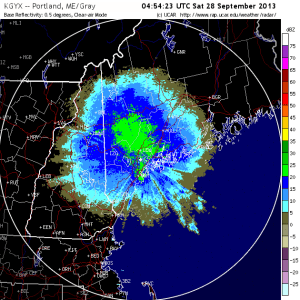
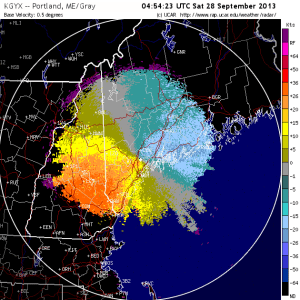
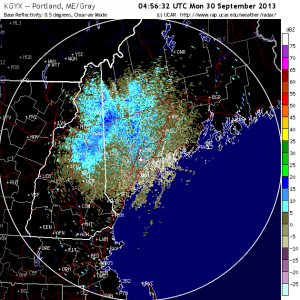
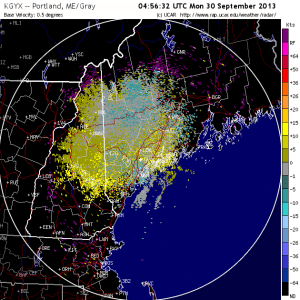
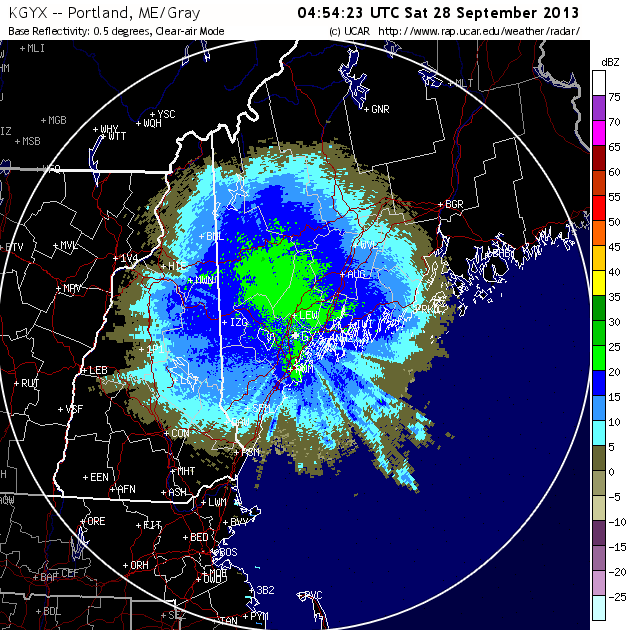
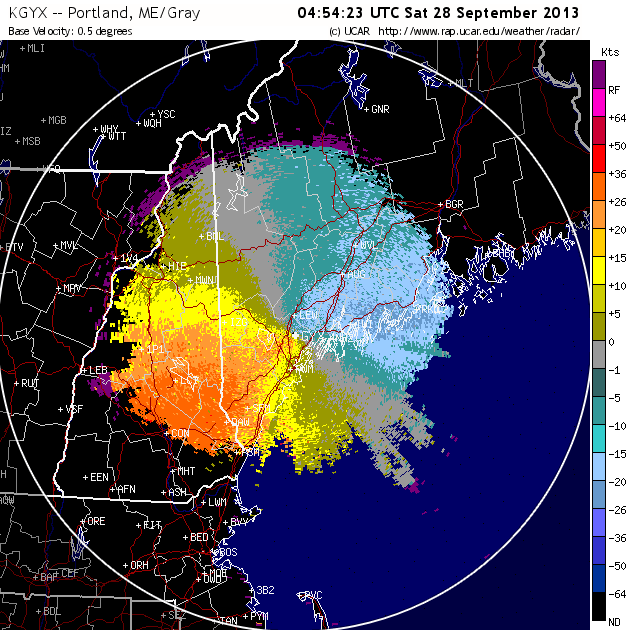
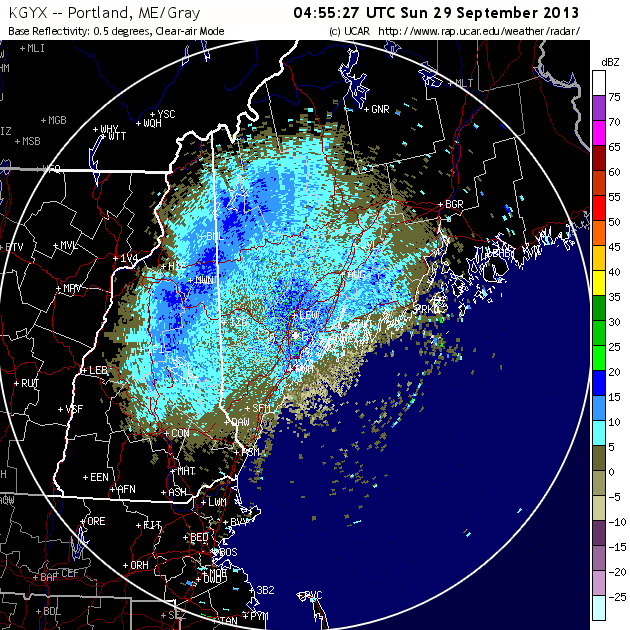
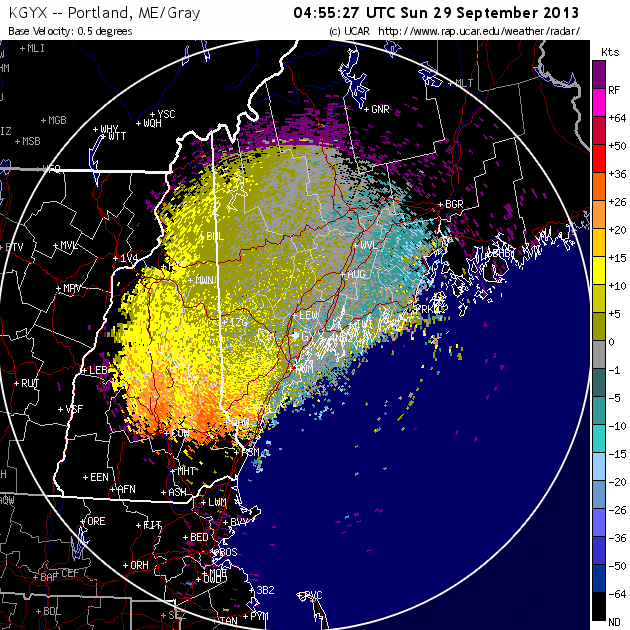
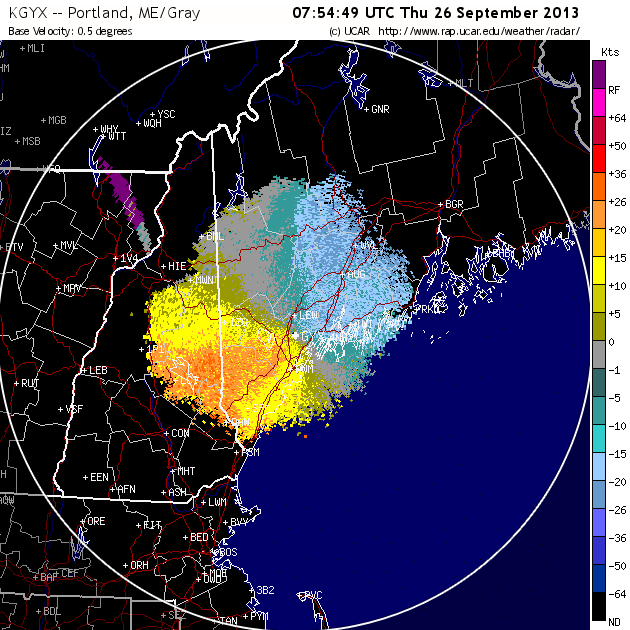
But before I get into the daily rundown, let me post a quiz.  Here are the 1am radar and velocity images from each of the four nights preceeding each of my four days on the island.  Can you guess which days had the most birds?
9-27-13 1am ref 9-27-13 1am vel 9-28-13 1am ref 9-28-13 1am vel 9-29-13 1am ref 9-29-13 1am vel 9-30-13 1am ref 9-30-13 1am vel

If you said the first two had more birds than the second two, you would be absolutely right!  And yes, Saturday (Day 2) was definitely the best day for migrants on the island.  And yes, Monday (Day 4) was very, very slow.  The radar certainly suggested it, and our birding over the course of each day definitively ground-thruthed it.
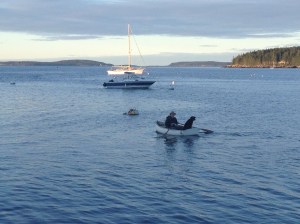
IMG_1587Leaving Port Clyde, 9/26.

After the good flight on Thurday night into Friday morning, I arrived with part of my group from Port Clyde on the 7am ferry, dropping us on the island just before 8.  The birding was still going strong.  In fact, it took us almost an hour and a half just to walk to the end of Dock Road (about ¼ mile)!  At least six Cape May Warblers in one cluster of spruces, Rusty Blackbirds were overhead (including one just as our boat docked, a nice welcome to the island), and then a buzz-by from a Cooper’s Hawk.

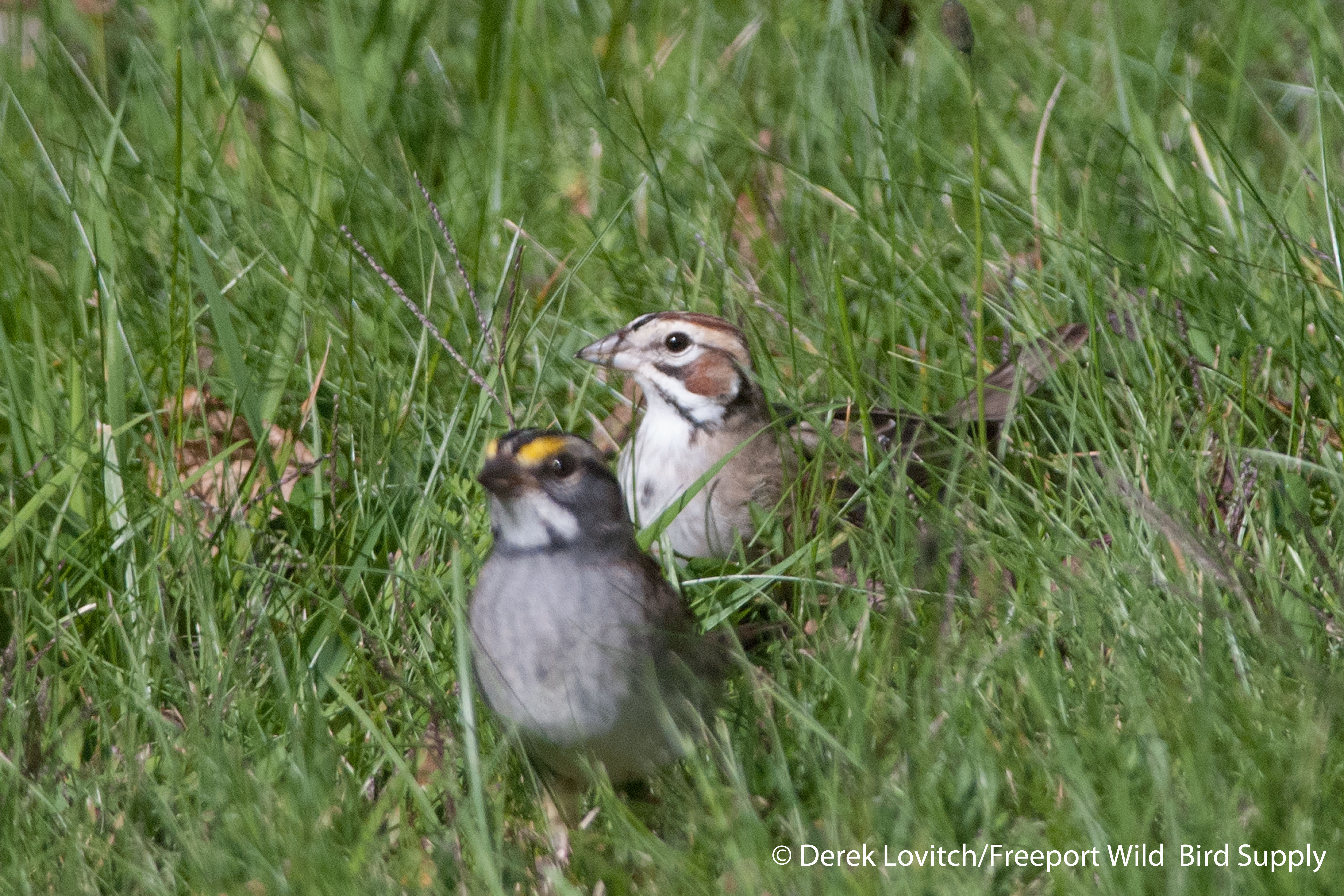
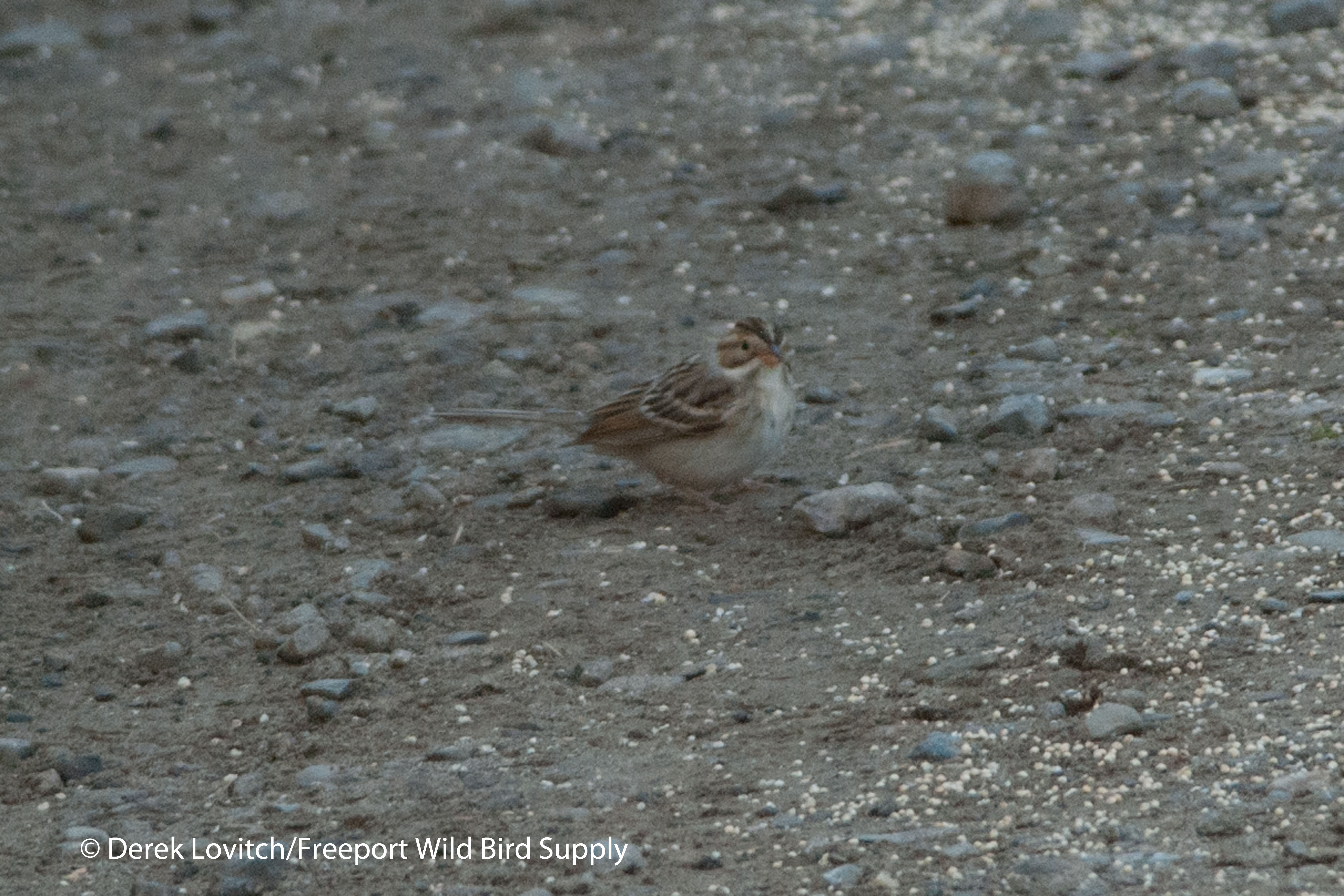
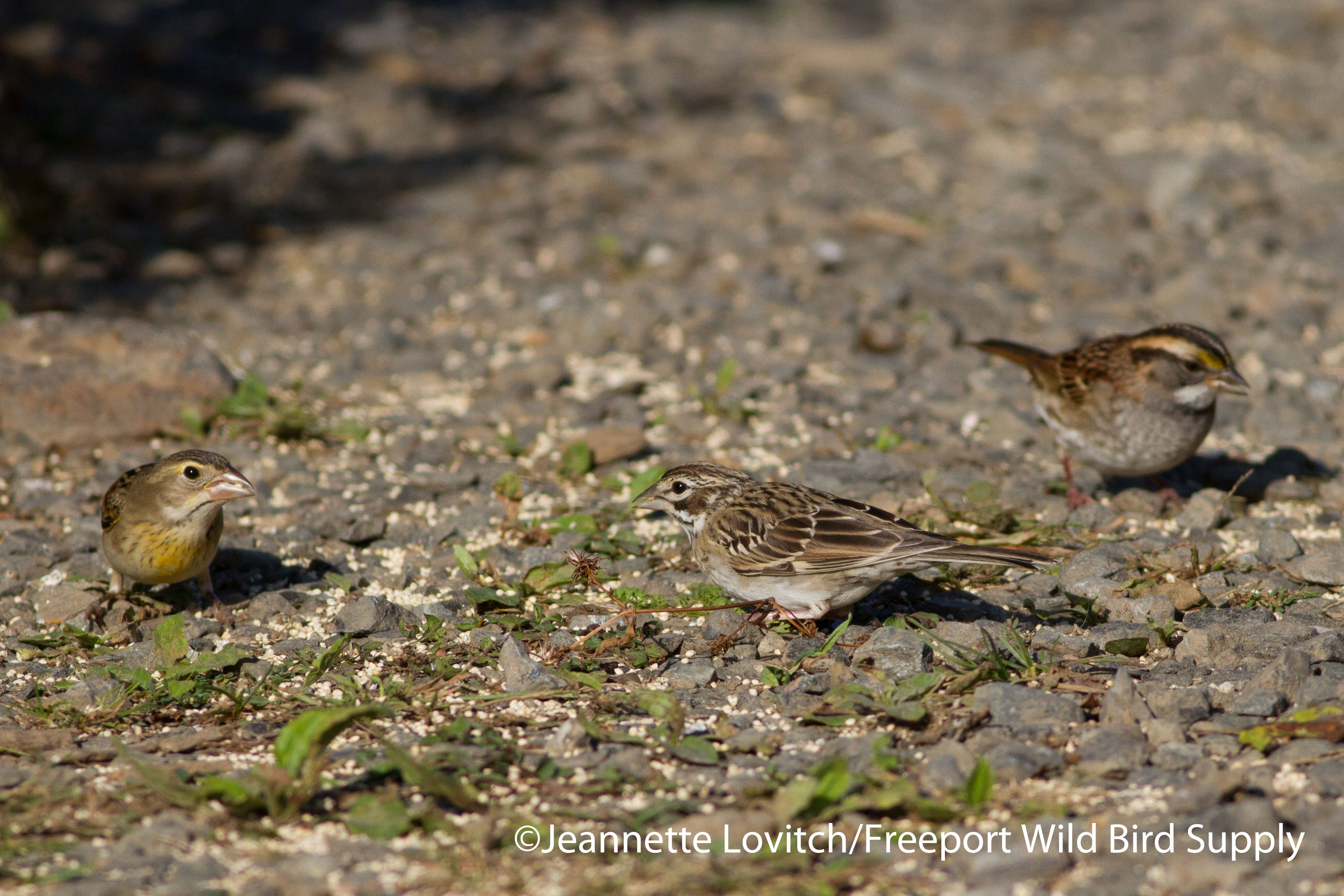
Common on the mainland, Coops are rather rare this far offshore, and I don’t see them on the island every fall, so this was a real treat – and an “Island Bird” for a friend I was exchanging info with.  A short while later we caught up with the last individual of what was once 5 Broad-winged Hawks that drifted to the island – only my second-ever out here.   A Yellow-billed Cuckoo, a continuing Lark Sparrow, Clay-colored Sparrow, and Dickcissel – yup, most of the usual fall Monhegan “trash birds!”
a -DSC_0007_LASP1,Monhegan,9-28-13Lark and White-throated Sparrows

b -DICK1,Monhegan,9-27-13Very pale juvenile Dickcissel

c -CCSP,Monhegan,9-27-13Clay-colored Sparrow.

Honestly however, the bird of the day – from an island rarity perspective – was probably House Sparrow.  Seriously.   A male that apparently landed on the Hardy Boat half way to the island a few days prior had taken up residence here.  Were a female to show up – almost certainly in similar fashion – then we could have an issue <insert ominous foreshadowing music here>.

The morning flight was hot and heavy on Saturday morning.  In fact, there was so much overhead that we barely left the grounds of the Trailing Yew before breakfast.  All we could do was stand around, look up, and marvel at the wonders of migration.  Hundreds of Yellow-rumped Warblers, 10’s of Palm Warblers, oodles of Golden-crowned and Ruby-crowned Kinglets…2-3 Blue-gray Gnatcatchers, another Dickcissel or two, and a fly-by Blue Grosbeak (the first on the island this fall?) – it would have been overwhelming to quantify, but luckily, when I am away from SandyPoint, I am not nearly as compulsive.  Phew.

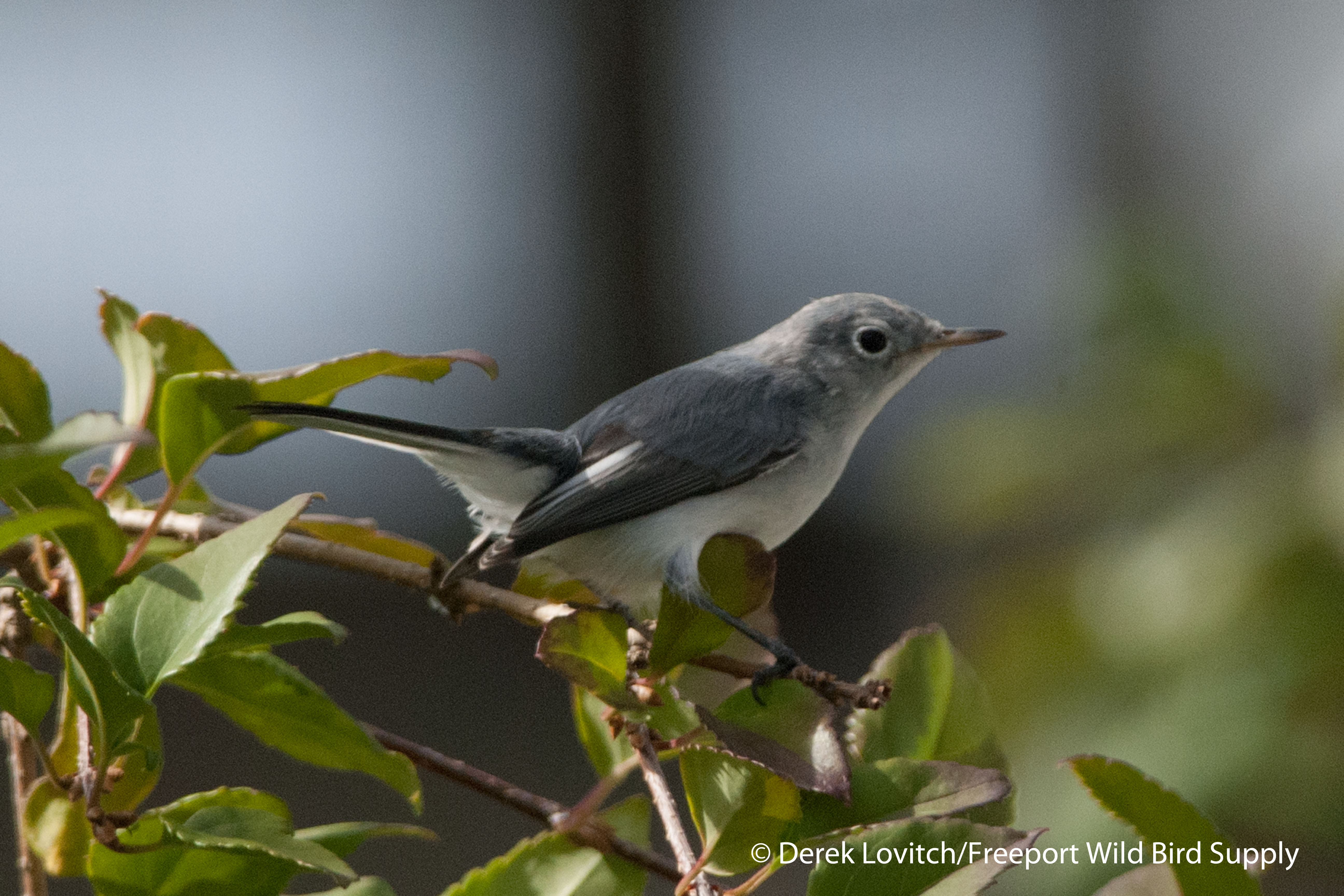
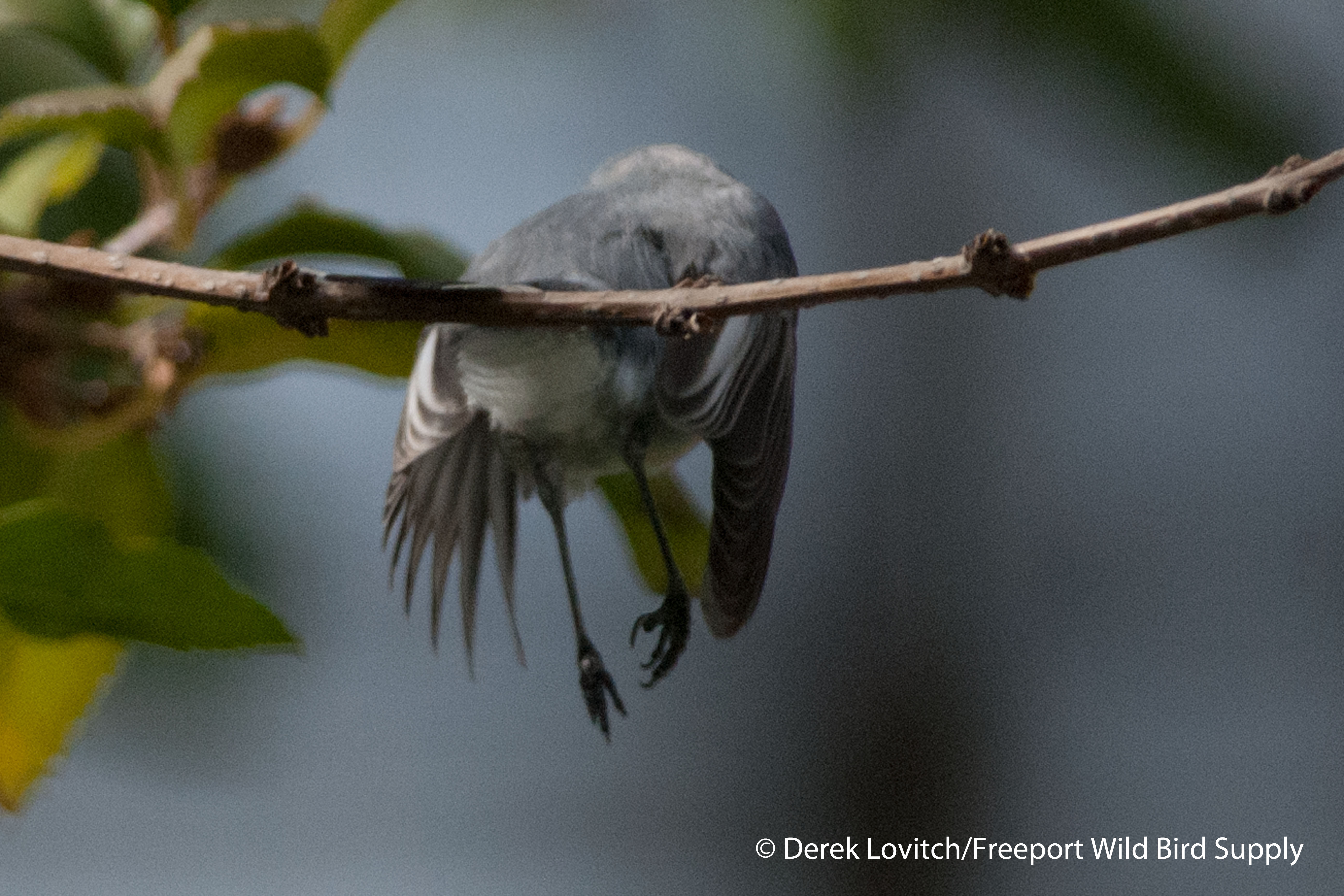
d -DSC_0020_BGGN1,Monhegan,9-28-13e -DSC_0016_BGGN_jumping,Monhegan,9-28-13
This Blue-gray Gnatcatcher visited us while we were dining on Novelty pizza.

ea -DSC_0092_BRCR,Monhegan,9-29-13Brown Creepers were common, and unusually photogenic, throughout the day.

Good birding continued throughout the day.  We confirmed a Nelson’s Sparrow in the marsh at Lobster Cove and found a Marsh Wren.  We tallied 17 species of warblers over the course of the day. It was warm.  It was calm.  It was simply perfect!

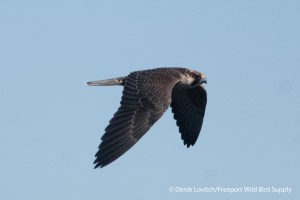
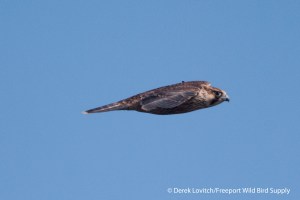
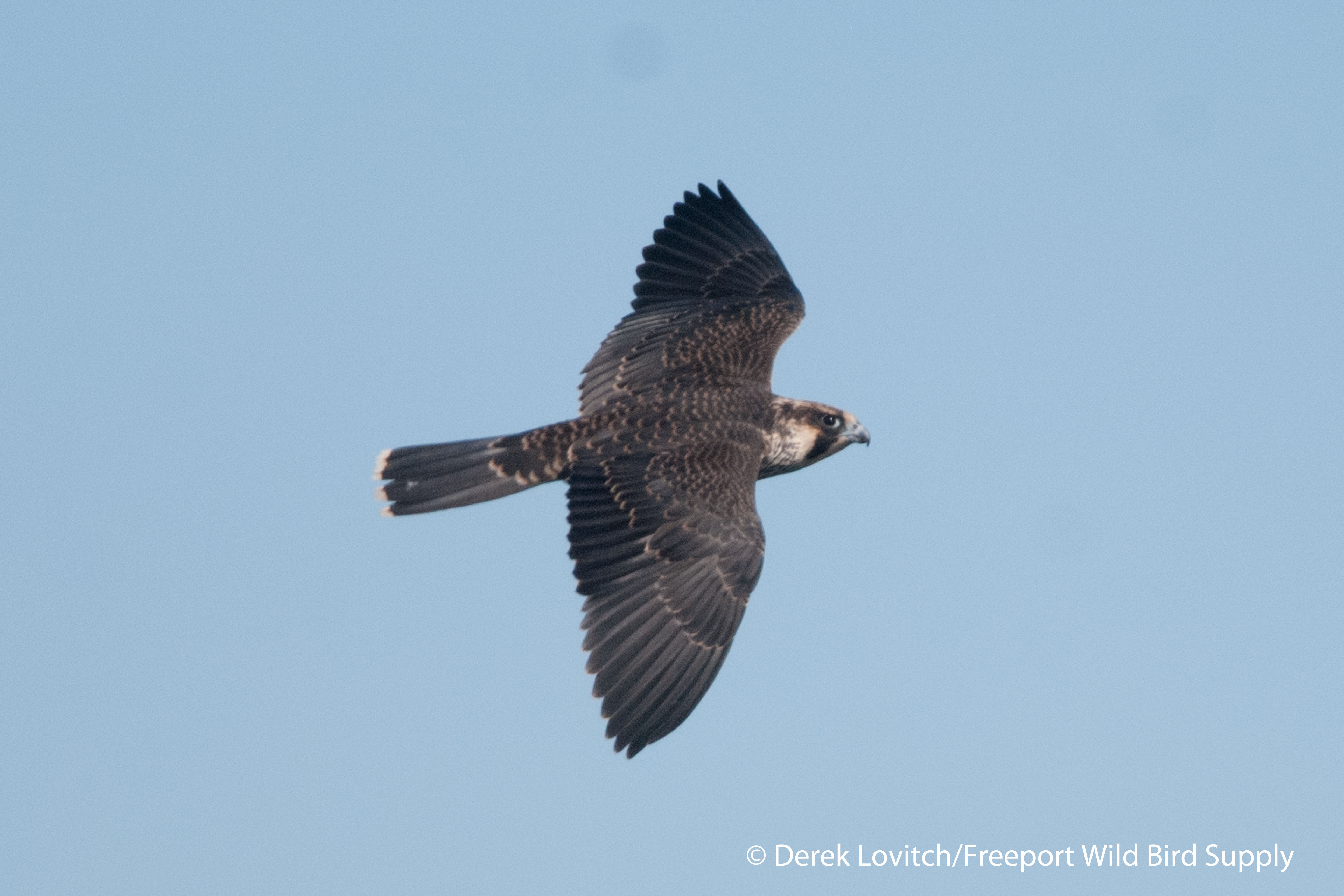
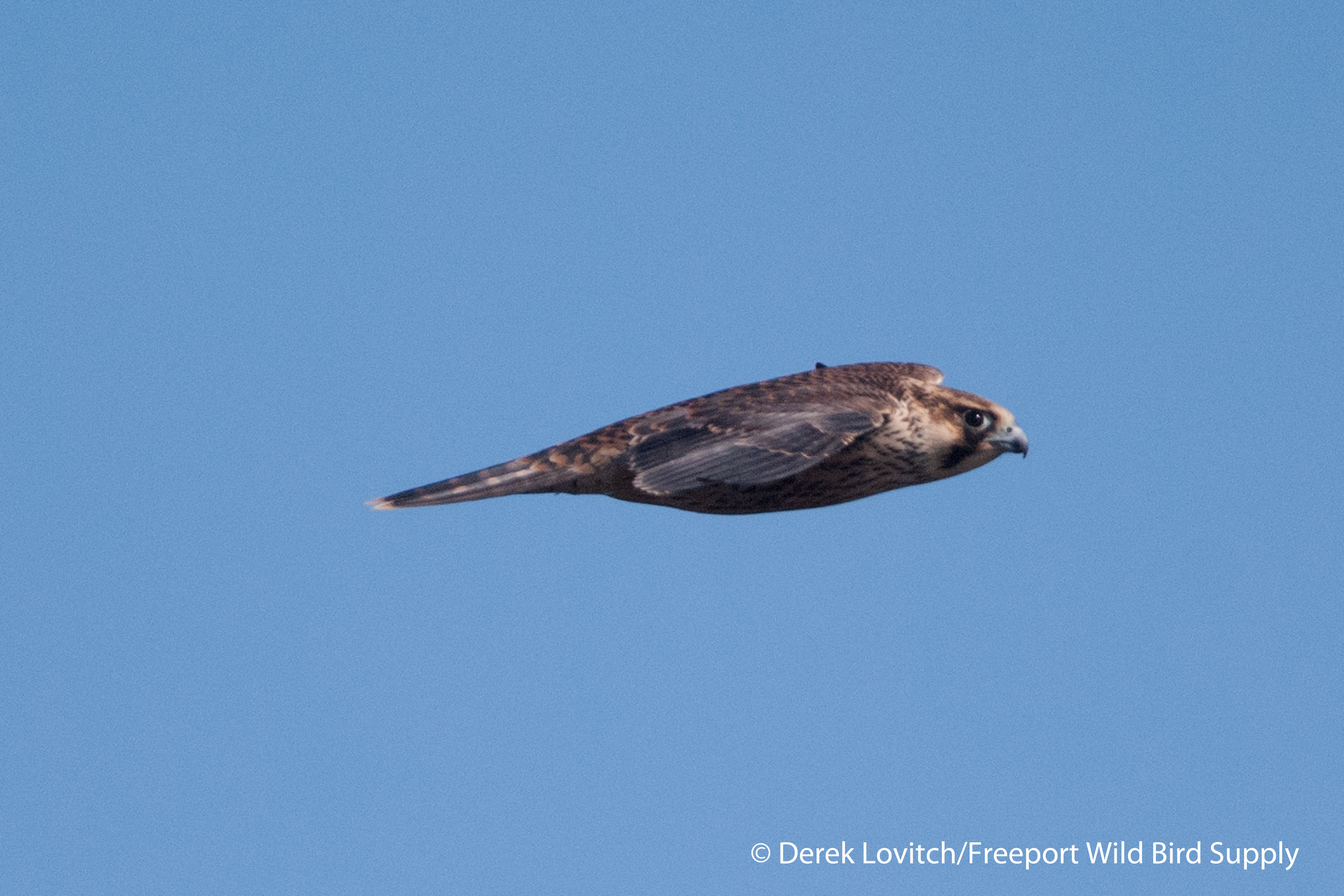
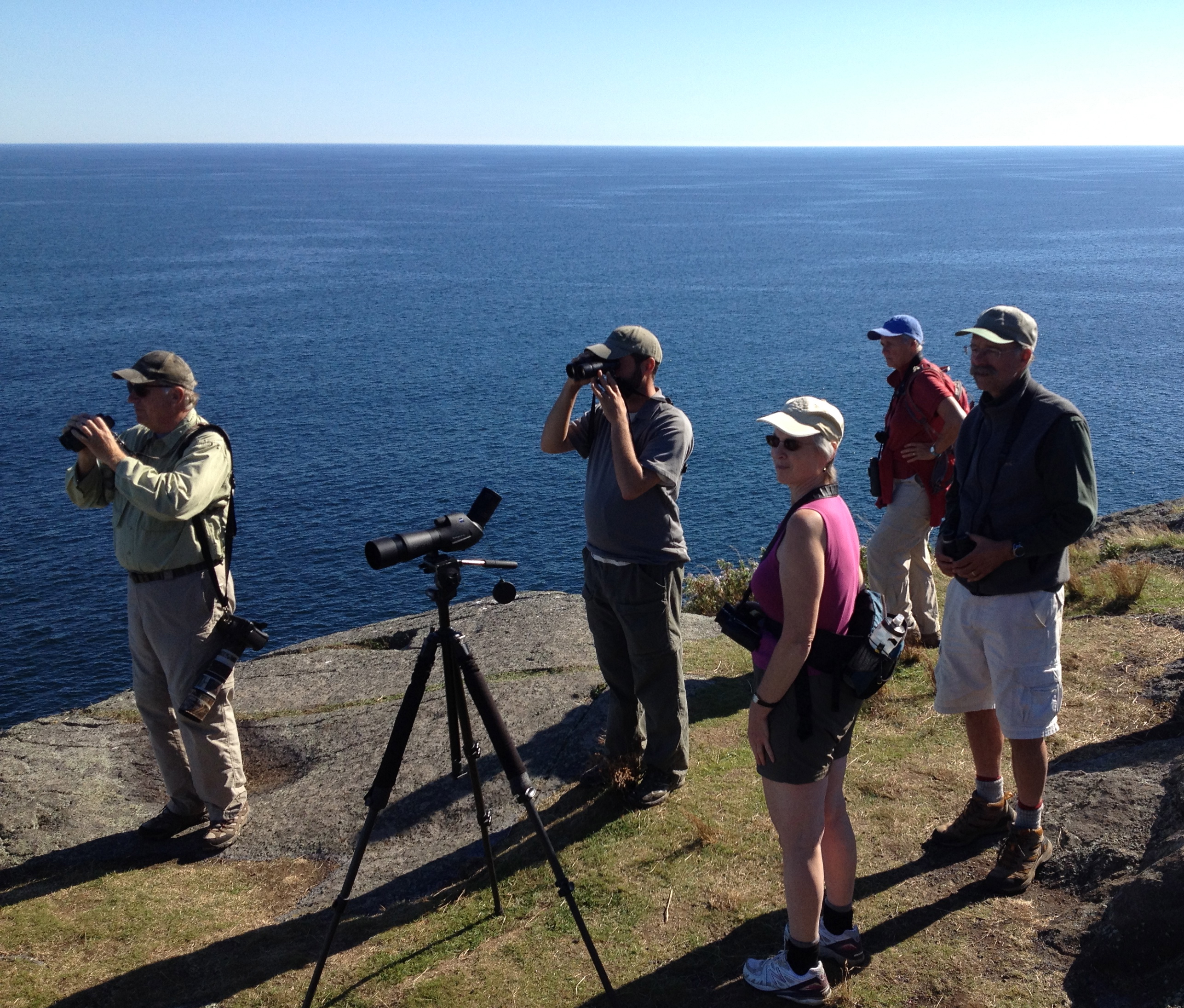
But we all agreed that the highlight was the afternoon on White Head.  A light southeasterly breeze produced a light updraft off of the cliffs, and Peregrine Falcons were taking full advantage.  Some birds were swirling around, doing little more than what could be described only as “playing” in the wind.  Some birds were undoubtably passage migrants getting a quick lift from the rising warm air.  We know there were at least six Peregrines, as we had a bona-fide kettle of six swirling together at one point.  Normally, the hawkcounter in me swings into action.  But alas, this is MonhegZEN birding, so I just sat back and enjoyed the show.
eb -DSC_0104_PEFA1,Monhegan, 9-28-13f -DSC_0105_PEFA2,Monhegan,9-28-13

g -DSC_0124_PEFA3,Monhegan,9-28-13j -DSC_0053_OSPR1,Monhegan,9-26-13me_with_group_Monhegan,9-28-13,K.Lindquist (Photo (c) K. Lindquist).
Sea- and Hawk-watching from White Head. Lots of eye-to-eye Peregrine Falcons, an Opsrey, and a distant Minke Whale or two.

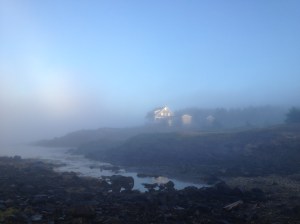
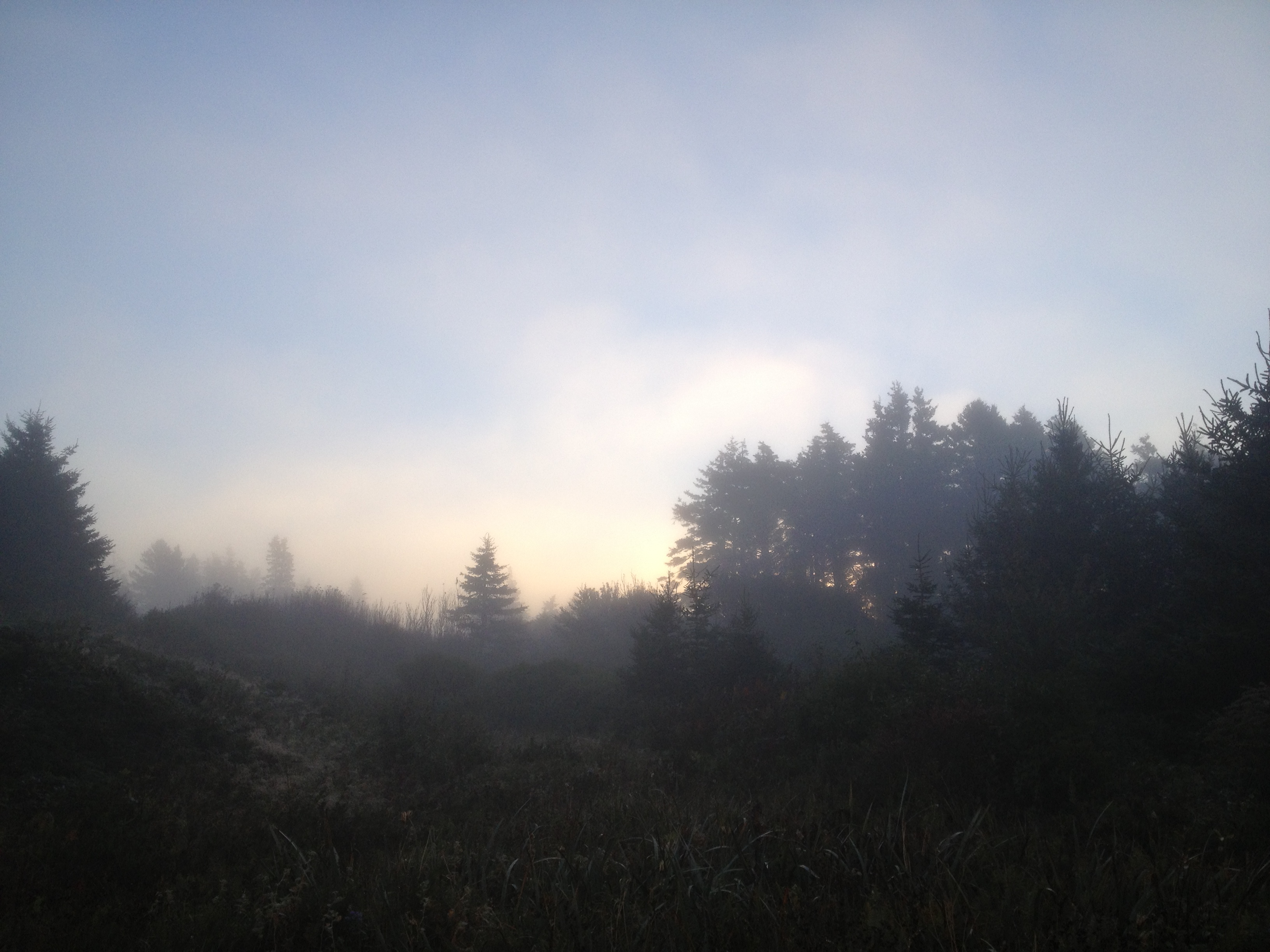
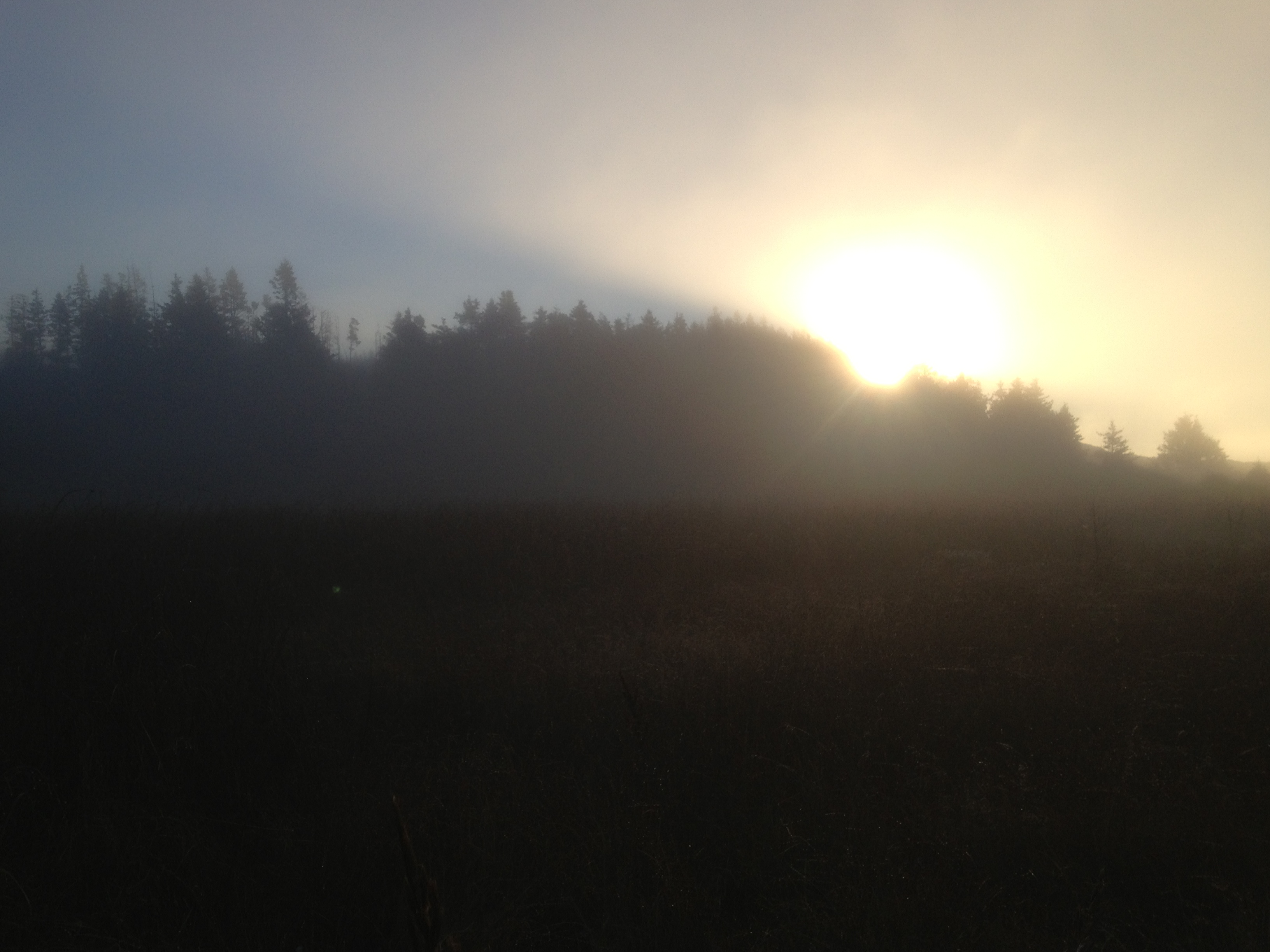
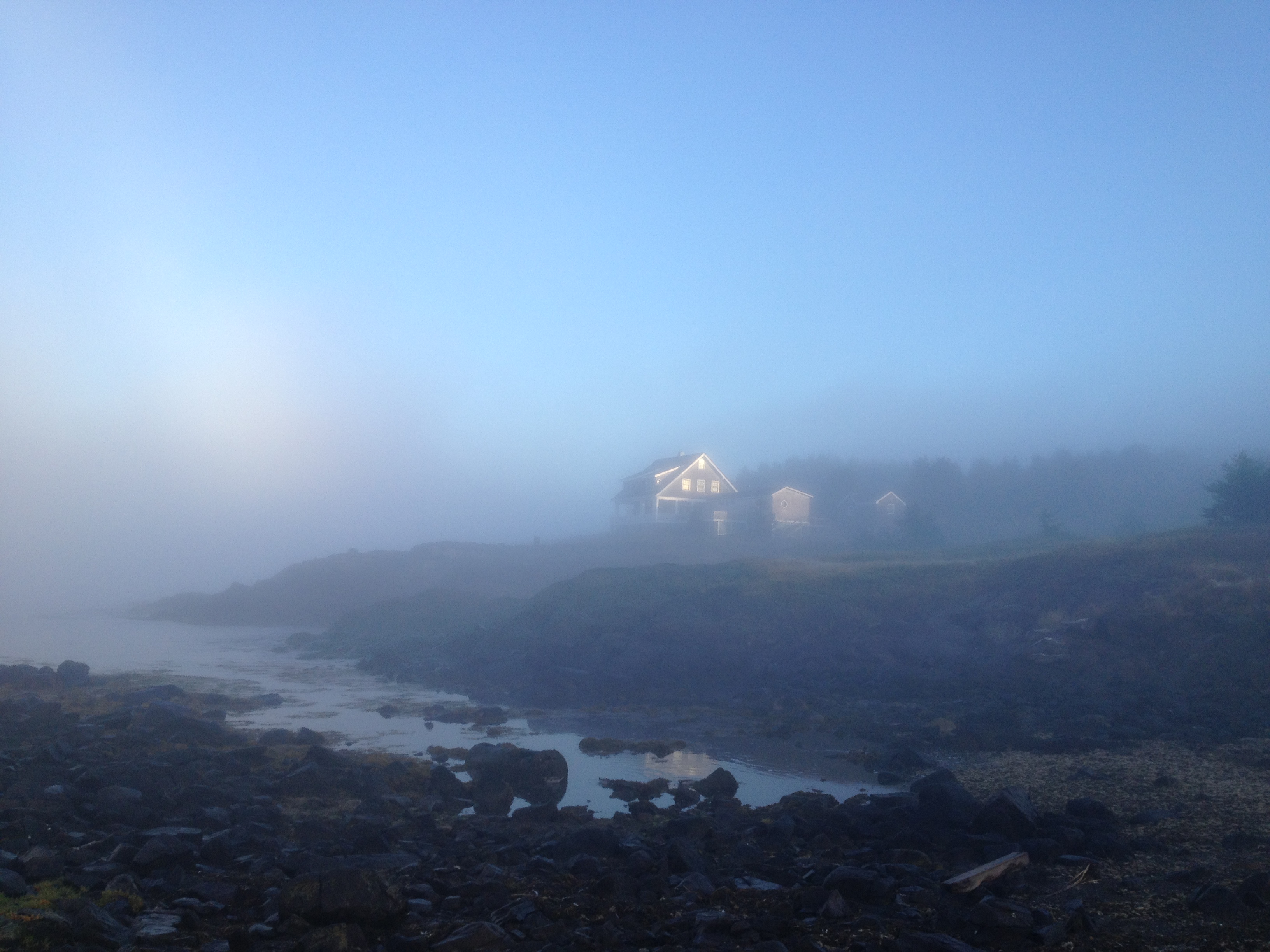
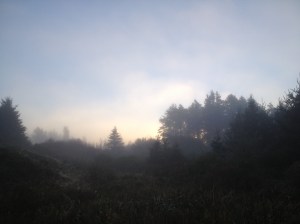
A shroud of fog enveloped the island on Sunday morning, but there weren’t too many birds overhead to be obscured by it.  Although there were few birds overhead or moving around once the fog lifted, there was still an ample supply of Yellow-rumped Warblers and Golden-crowned Kinglets.   We happened upon a Prairie Warbler, and added a few other species to our trip list, such as two Ruby-throated Hummingbirds, and – finally – Ring-necked Pheasants (how did I go two days without hearing or seeing a pheasant here?).  Lark Sparrow, Yellow-billed Cuckoo, Rusty Blackbird, Least Flycatcher (finally, after three days I had an Empid to try and string!)…the list goes on.  But overall, birding was decidedly slower than the previous two days (note what constitutes a slow day on Monhegan!), and rather warm.
IMG_1591IMG_1600IMG_1597
While the birding was slow, we took time to enjoy the scenery in the fog.

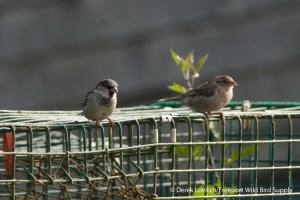
Remember when I said that all that male House Sparrow needed was a female to arrive?  Uh-oh.
h -HOSPpair,Monhegan,9-29-13

I am unsure how long it’s been – if ever? – since two House Sparrows were on the island.  While only die-hard island-listers appreciated these birds as much as I did (I remain captivated by the way birds – all birds – find their way to islands and what their lives are like once they get there ), the members of my group that have birded here before at least understood the significance, and potential colonization consequences of this sighting.

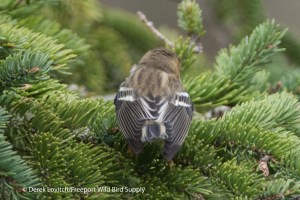
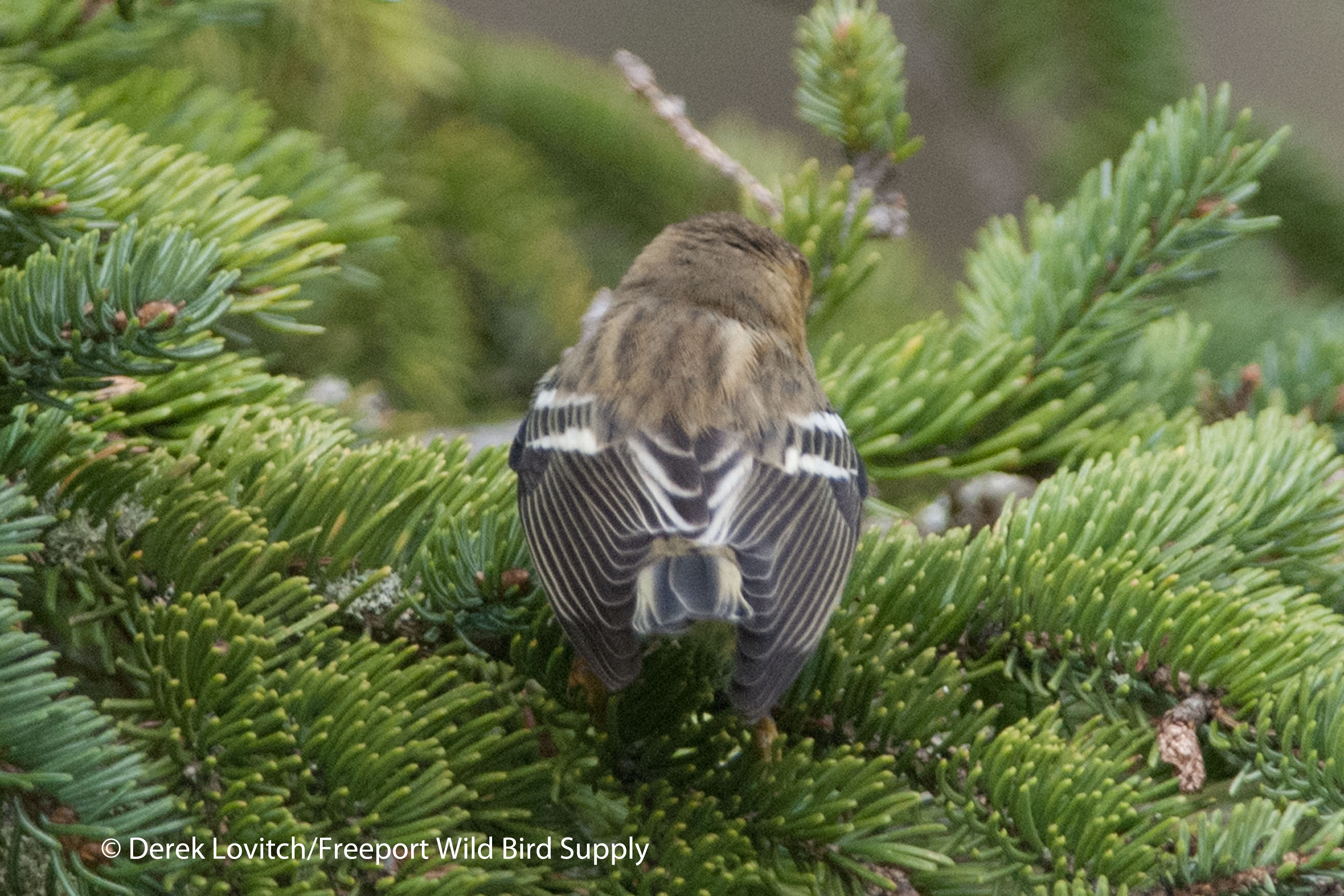
Luckily, we had other intrigue to talk about as well.  The spruces along Dock Road were happenin’ again today, but one warbler in particular occupied us for a while.  I first called it a Blackburnian, and then I back-tracked…a lot.  It was so impressively pale, and feeding above us, some of the most diagnostic features were not visible.  We spent about a half hour with this bird, which eventually obliged us as it fed in the lowest boughs of the tree.  We worked it carefully and thoroughly, taking the opportunity to really learn from this individual.  It took a while, but I was finally convinced it was a Blackburnian in large part due to the very pale but distinct “braces” on the back, and what we would (via camera-screen “instant replay”) finally confirm as a small, pale orange central forehead stripe.
i -DSC_0142_ultra-paleBLBW1,Monhegan,9-28-13l -DSC_0134_ultra-paleBLBW2,Monhegan,9-28-13m -DSC_0155_ultra-paleBLBW3,Monhegan,9-28-13

The orange feet seem odd to me, and the dark auriculars appeared much more contrasting on these photos than we interpreted it in the field.  This was a good “learning and teaching bird,” and therefore this was one of my favorite birds of the trip.

IMG_1624_Monhegan_Brewery
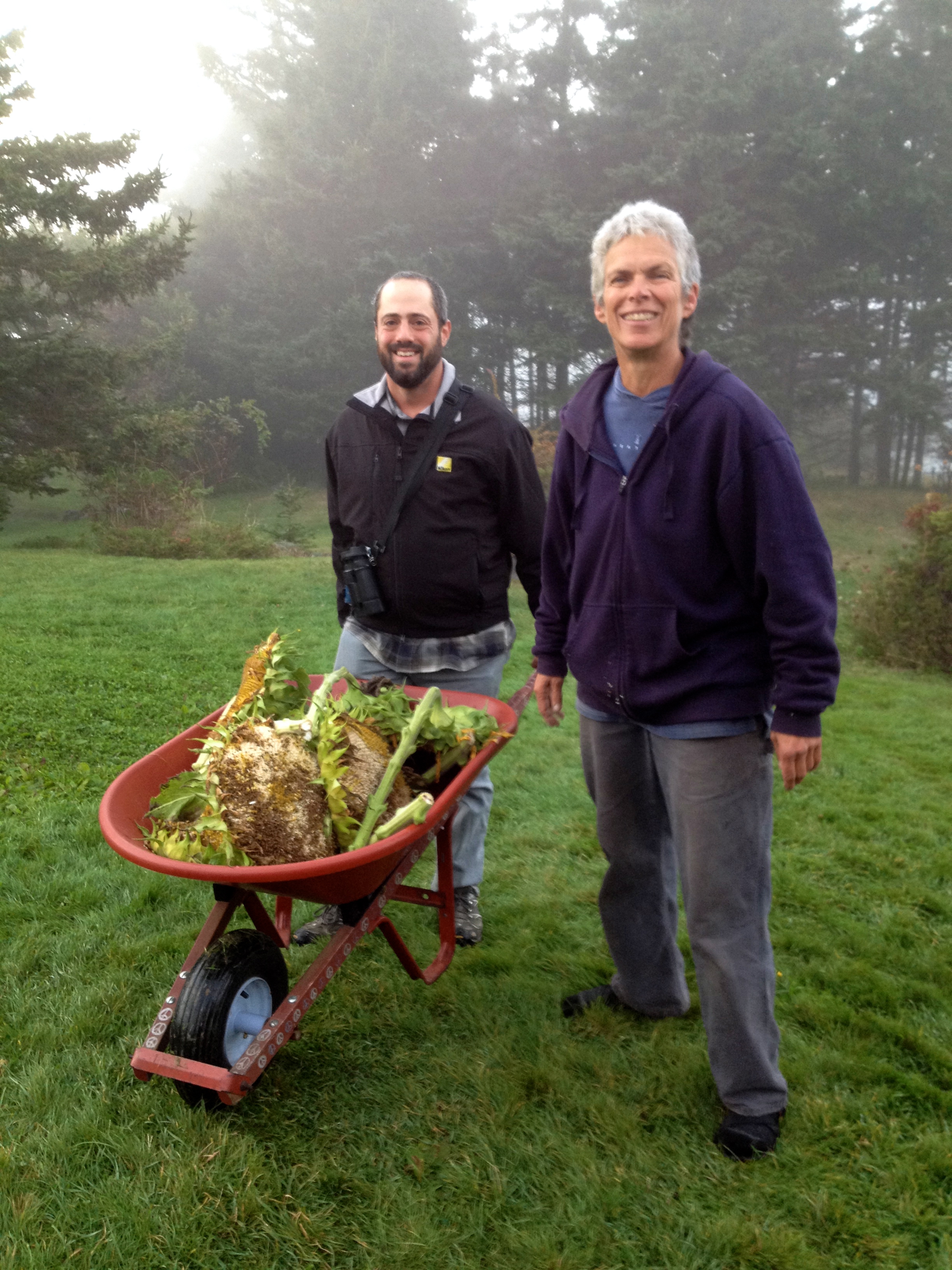
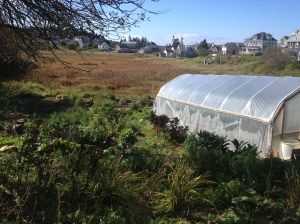
I visited the Monhegan Brewing Company a couple of times for good beer and conversation.  And we know good business can be conducted over a beer.  In fact, during my last beer there on Sunday evening, I struck a deal with Sue to buy the sunflower heads from the Island Farm.  They’re currently drying at our house, but they’ll soon be for sale here at the store.  The money will go to help the Island Farm in their pursuit to provide a sustainable source of produce for the island.  The gardens are also great birding!
IMG_1614me,Sue,andSunflowers,K_Lindquist

Very few birds were on the move Sunday night, and with almost nothing visible on the radar, I didn’t exactly pop out of bed in the morning.  I did get out for a little while before breakfast, however, and once again the morning flight – or lack thereof – proved what the radar suggested.  My tour had come to an end, but I elected to stay out for the day to bird with my friend Kristen.  We both just wished there were a few more birds to see!

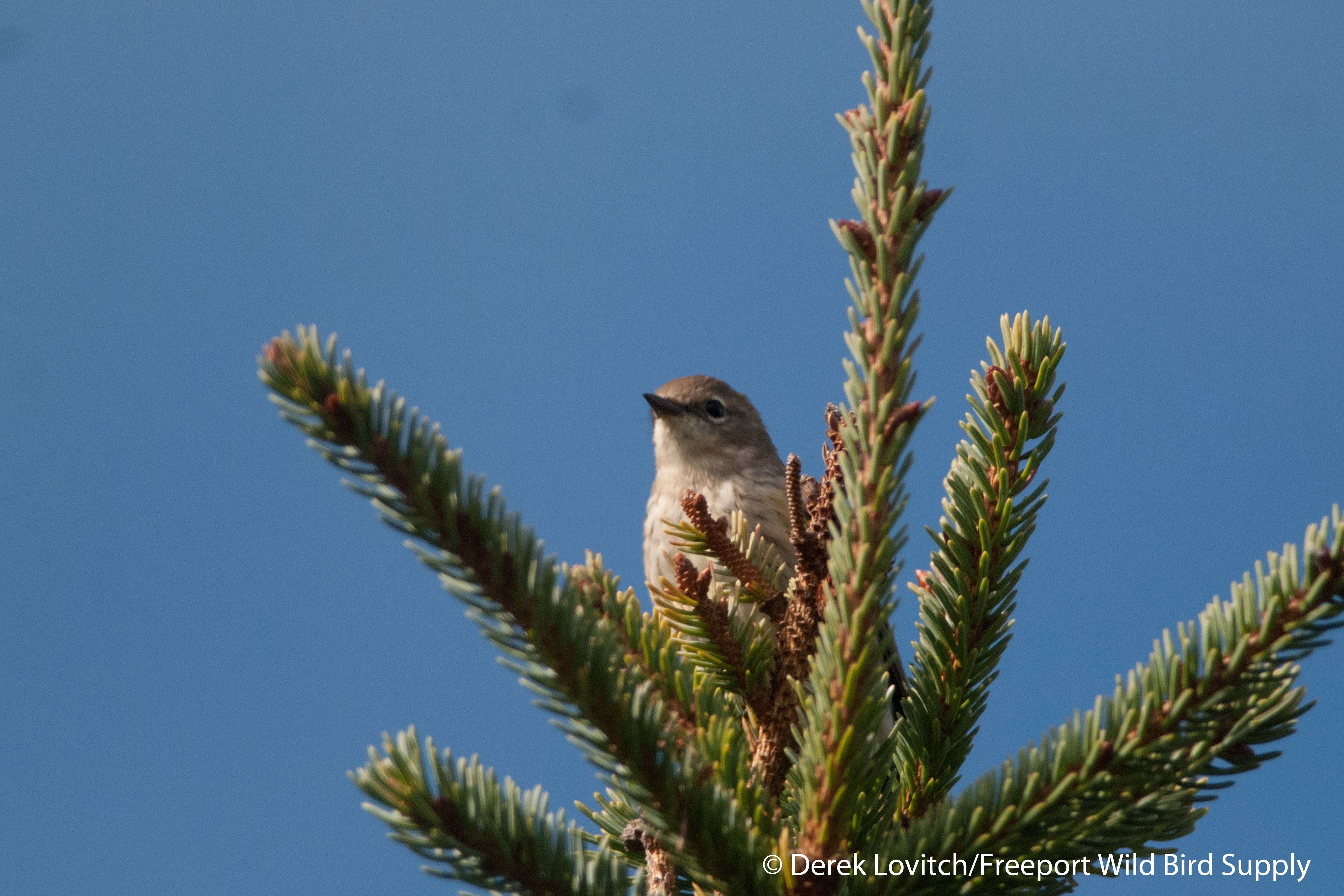
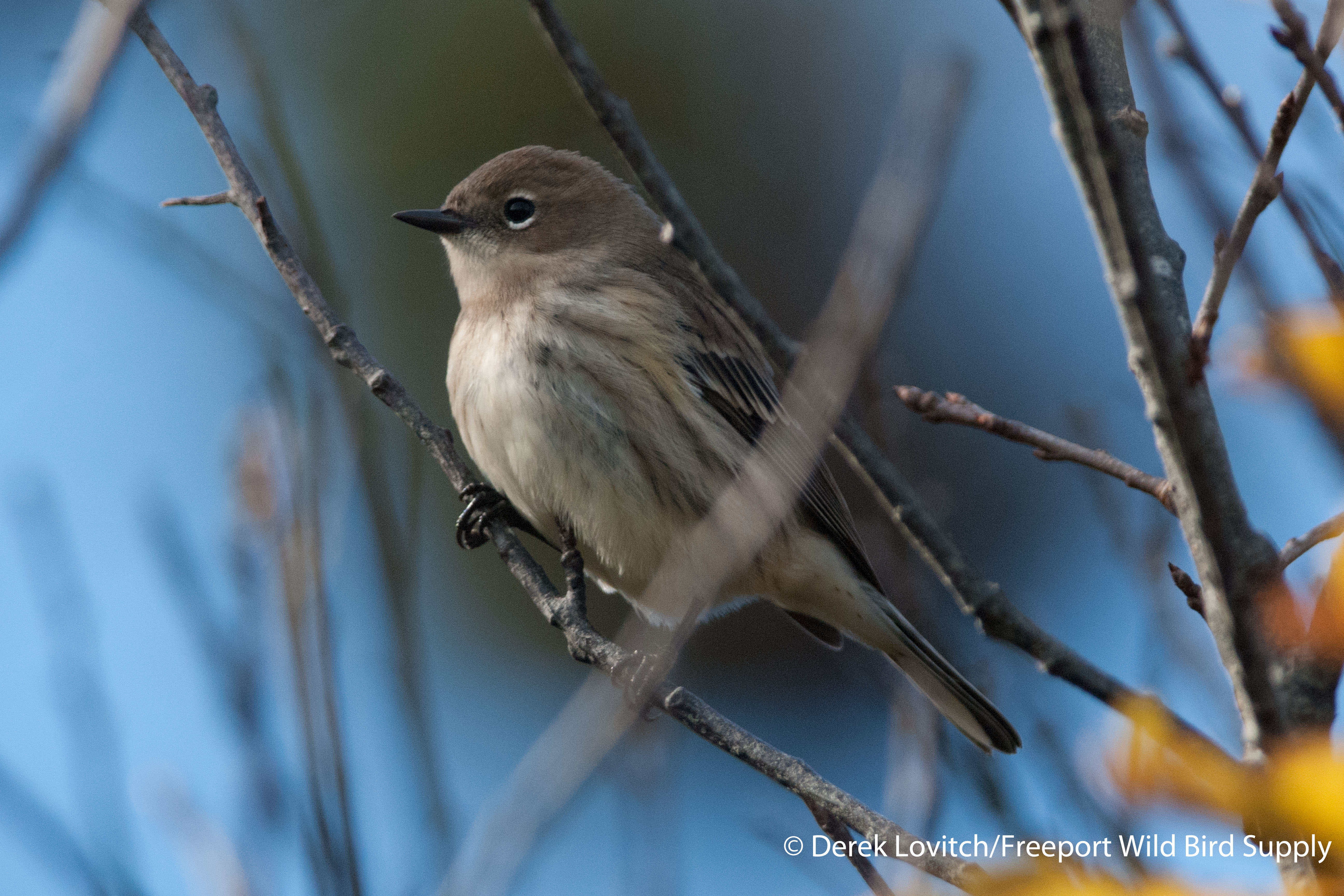
n -DSC_0167_YRWA1,Monhegan,9-30-13n -DSC_0168_YRWA2,Monhegan,9-30-13
Although I like the photo on the left of the Yellow-rumped Warbler atop a Red Spruce, as you can see on the right, I excel at photographs of fuzzy twigs.
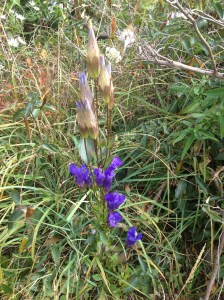
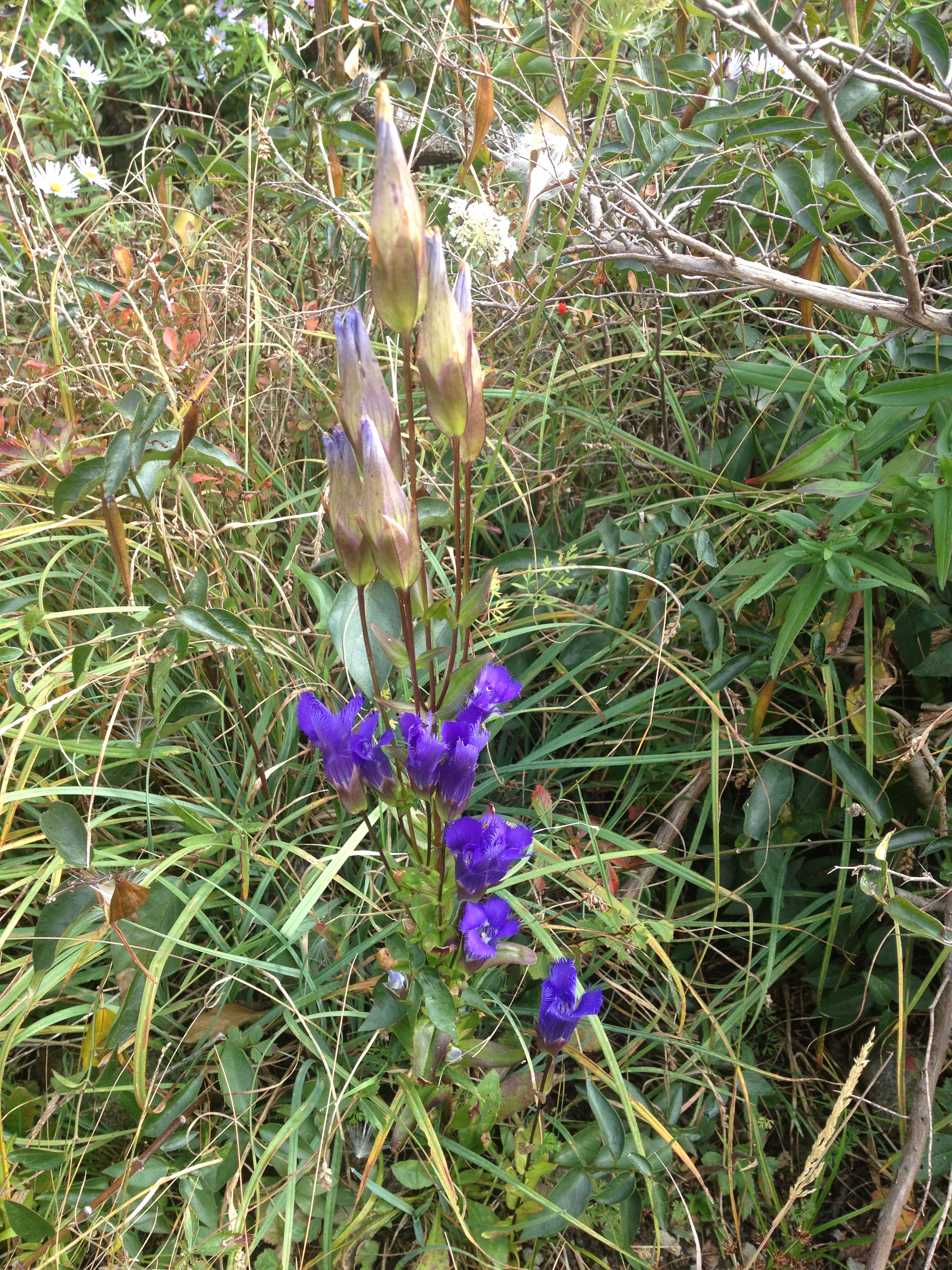
IMG_1603 A most impressive Fringed Gentian.

We worked the bush hard, checking all sorts of seldom-searched nooks and crannies.  Some of our totals for the day were higher than previous days simply because we covered more ground.  The Clay-colored and Lark Sparrows continued, as did the two Green-winged Teal in the town marsh.  A spiffy Chestnut-sided Warbler was my 20th species of warbler for the weekend, and we added a few more waterbirds to the list by dedicating some time to sea-watching and scanning the gulls in the harbor.

Unfortunately, most of the afternoon – following one last pizza – was spent keeping an eye on our watches and watching our time rapidly tick away.  At least we weren’t nursing a concern about leaving hot and heavy birding – it was slow, very slow, today, and that did make our departure a little less unwelcome.  A little; it’s never easy to leave this magical place.
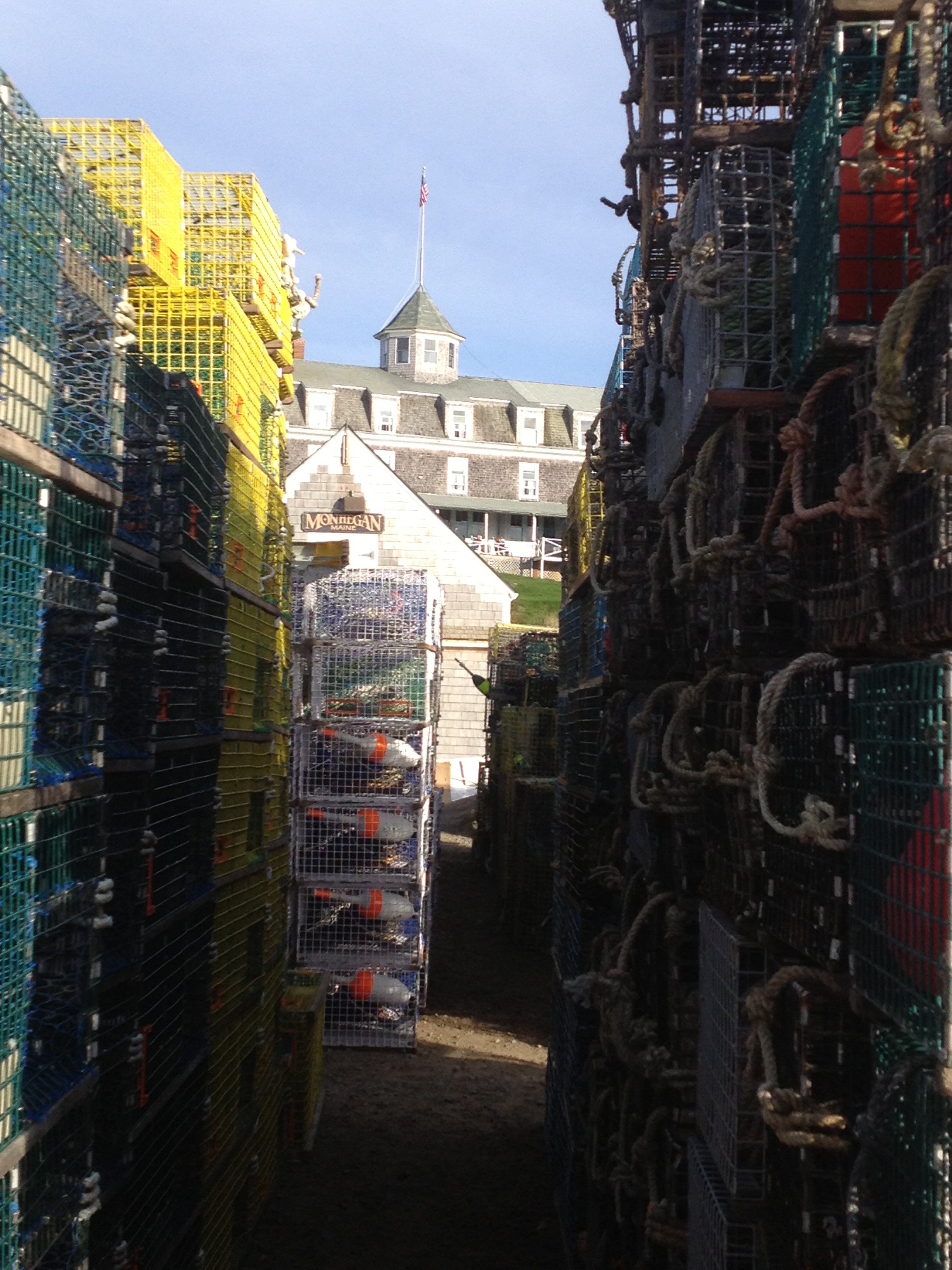
IMG_1627IMG_1632
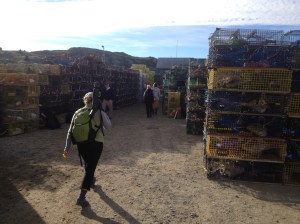
Trap Day!

Here’s my weekend’s checklist, with estimates or counts of each species per day (not including ferry):

Mallard: 12, 12, 12, 12
American Black Duck: 1, 1, 1, 5
Green-winged Teal: 1, 1, 2, 2,
Common Eider: x, x, x, x
Surf Scoter: 0, 0, 0, 4
Ring-necked Pheasant: 0, 0, 3, 2
Common Loon: 3, 2, 1, 1
Red-necked Grebe: 0, 1, 0, 0
Great Cormorant: 1, 5, 1, 7
Double-crested Cormorant: x,x,x,x
Northern Gannet: 0, 125, 8, 30
Great Blue Heron: 1, 1, 1, 0
Osprey: 0, 2, 0, 0
Bald Eagle: 2, 2, 2, 2
Northern Harrier: 1, 1, 0, 0,
Sharp-shinned Hawk: 6, 5, 5, 4
COOPER’S HAWK: 1,0,0,0
BROAD-WINGED HAWK: 1,0,0,0
American Kestrel: 2, 2, 1, 1
Merlin: 15, 8, 4, 3
Peregrine Falcon: 8, 12, 1, 1
Semipalmated Plover: 2, 0, 1, 0
Laughing Gull: 0, 0, 0, 2
Ring-billed Gull: 0, 0, 0, 1
Herring Gull: x,x,x,x
LESSER BLACK-BACKED GULL: 0, 0, 0, 2
Great Black-backed Gull: x,x,x,x
Black Guillemot: 10, 20, 10, 15
Mourning Dove: 3, 3, 3, 3
YELLOW-BILLED CUCKOO: 1, 0, 1, 0
Ruby-throated Hummingbird: 0, 0, 2, 2
Belted Kingfisher: 1, 0, 1, 1
RED-BELLIED WOODPECKER: 1, 0, 0, 0
Yellow-bellied Sapsucker: 25, 50, 25, 20
Downy Woodpecker: 0, 1, 1, 1
Northern Flicker: 20, 15, 25, 20
Eastern Wood-Pewee: 0, 1, 0, 0
Least Flycatcher: 0, 0, 1, 0
Eastern Phoebe: 8, 5, 3, 1
Red-eyed Vireo: 30, 20, 18, 12
Blue-headed Vireo: 12, 20, 25, 6
Blue Jay: 6, 10, 8, 8
Common Raven: 2,2,2,2
American Crow: x,x,x,x
Black-capped Chickadee: 20, 15, 15, 20
Red-breasted Nuthatch: 6, 15, 10, 8
Brown Creeper: 15, 35, 20, 3
Carolina Wren: 5, 8, 10, 12
House Wren: 0, 1, 1, 0
Winter Wren: 1, 1, 1, 1
Marsh Wren: 0, 1, 1, 1
Golden-crowned Kinglet: 15, 75, 50, 35
Ruby-crowned Kinglet: 25, 40, 25, 15
BLUE-GRAY GNATCATCHER: 1, 2-3, 2, 0
American Robin: 0, 1, 0, 0
Gray Catbird: 6, 8, 10, 18
Northern Mockingbird: 1, 1, 0, 0
Brown Thrasher: 2, 1, 1, 0
European Starling: 8, 10, 12, 14
American Pipit: 2, 2, 1, 0
Cedar Waxwing: 40, 60, 40, 40
Tennessee Warbler: 0, 1, 0, 0,
Nashville Warbler: 5, 3, 6, 1
Northern Parula: 1, 0, 2, 2
Yellow Warbler: 2, 6, 7, 0
Chestnut-sided Warbler: 0, 0, 0, 1
Magnolia Warbler: 6, 5, 2, 0
Cape May Warbler: 9, 3, 0, 0
Black-throated Blue Warbler: 0, 8, 6, 1
Yellow-rumped Warbler: 300, 400, 300, 175
Black-throated Green Warbler: 0, 4, 2, 1
Blackburnian Warbler: 0, 0, 1, 0
PRAIRIE WARBLER: 0, 0, 1, 0
Palm Warbler: 30, 100, 30, 15
Bay-breasted Warbler: 0, 2, 0, 0
Blackpoll Warbler: 1, 20, 1, 3
Black-and-white Warbler: 25, 30, 15, 2
American Redstart: 2, 1, 2, 0
Northern Waterthrush: 0, 1, 1, 0
Common Yellowthroat: 10, 15, 10, 18
Wilson’s Warbler: 3, 4, 1, 0
Scarlet Tanager: 1, 0, 0, 0
Chipping Sparrow: 4, 6, 6, 5
CLAY-COLORED SPARROW: 1, 0, 1, 1-2
LARK SPARROW: 1, 1, 1, 1
Savannah Sparrow: 2, 15, 12, 10
NELSON’S SPARROW (spp. subvirgatus): 0, 1, 0, 0
Song Sparrow: 15, 15, 20, 25
Lincoln’s Sparrow: 0, 2, 2, 2
Swamp Sparrow: 2, 30, 20, 15
White-throated Sparrow: 25, 50, 60, 30
White-crowned Sparrow: 1, 5, 4, 2
Dark-eyed Junco: 3, 10, 6, 8
Northern Cardinal: 8, 6, 5, 8
Rose-breasted Grosbeak: 0, 0, 0, 1
BLUE GROSBEAK: 0, 1, 0, 0
Indigo Bunting: 0, 1, 0, 0
DICKCISSEL: 0, 2, 0, 0
Rusty Blackbird: 4, 9, 1, 0
Common Grackle: 1, 3, 4, 4
Baltimore Oriole: 1, 2, 2, 0
American Goldfinch: 12, 10, 10, 8
HOUSE SPARROW: 1, 1, 2, 0

Total species: 64, 83, 79, 66 (Total =105)

Mammals:
Minke Whale
Gray Seal
Harbor Seal
Harbor Porpoise
Muskrat
Brown Rat

IMG_1629

Yet Another Great Morning Flight at Sandy Point!

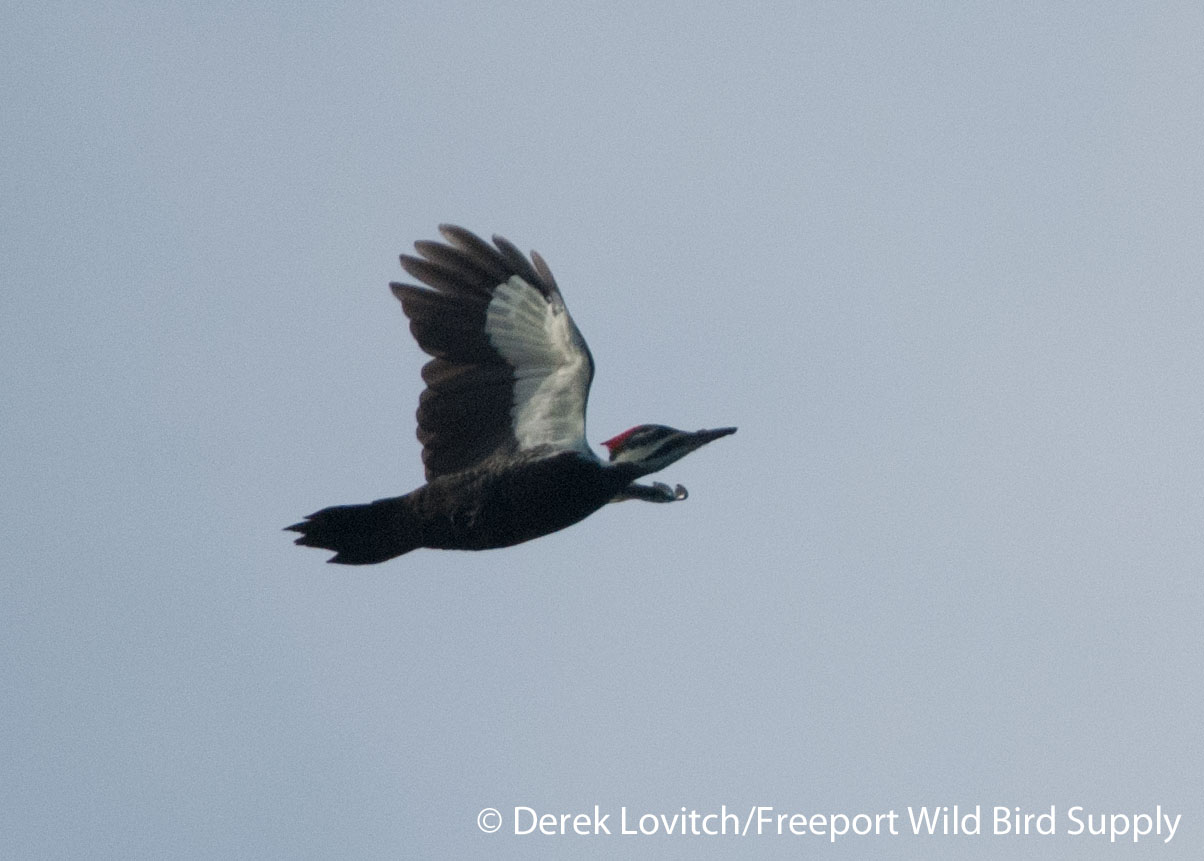
k -DSC_0024_PIWO,SandyPoint,9-26-13
I do love it when the big ones fly by, especially on mornings like this.  They’re easier to identify and tally…especially when they are Pileated Woodpeckers!

It’s also nice when more birds pause in the trees at the point, allowing for identification as a “sample” of what’s going overhead.  It’s especially nice when they land in front of my face…like this Philadelphia Vireo did.  If only there weren’t a few twigs between us!
i -DSC_0008_PHVI,SandyPoint,9-26-13

I usually leave the bridge before raptors begin to get going, but today, I was treated to an early-morning Peregrine Falcon flight.  A couple of the birds didn’t even blink and eye and kept going.  Others terrorized migrant flickers.
j -DSC_0017_PEFA,SandyPoint,9-26-13

Normally, I start off with the overnight radar analysis to describe why there were (or were not) so many birds come morning.  But today, let’s cut to the chase and get right to the numbers:

6:32-10:10am
43F, light NW, mostly cloudy, slowly clearing.

1662 Unidentified (*2nd highest)
441 Yellow-rumped Warblers (*2nd highest)
263 Northern Parulas (how are there still so many parulas!?)
193 Black-throated Green Warblers  (*2nd highest)
188 Ruby-crowned Kinglets (*2nd highest)
150 Northern Flickers
56 Golden-crowned Kinglets
52 Magnolia Warblers (*2nd highest)
46 Black-throated Blue Warblers (*new record; old = 13!)
44 Cedar Waxwings
44 Dark-eyed Juncos
41 Black-and-white Warblers (*2nd highest)
31 Red-eyed Vireos
29 Blue-headed Vireos (2nd highest)
27 Blackpoll Warblers
26 Eastern Phoebes (*new record)
26 Nashville Warblers (*new record)
23 Palm Warblers
22 Yellow-bellied Sapsuckers
15 American Robins
15 American Goldfinches
14 Blue Jays
12 Scarlet Tanagers
12 Rusty Blackbirds
9 White-throated Sparrows
8 Eastern Bluebirds (*new record)
7 Philadelphia Vireos
7 Chipping Sparrows
6 Peregrine Falcons (*new record)
6 Unidentified vireos
6 Brown Creepers
5 Yellow Warblers
4 Tufted Titmice (*new record)
4 Rose-breasted Grosbeaks
3 Black-capped Chickadees
3 Tennessee Warblers
2 Sharp-shinned Hawks
2 Cape May Warblers
2 Wilson’s Warblers
1 Red-breasted Merganser (first of fall)
1 Common Loon
1 American Kestrel
1 Merlin
1 Mourning Dove
1 PILEATED WOODPECKER (my third crossing ever; crossed after 4 false-starts)
1 RED-BELLIED WOODPECKER (crossed after 3 false-starts)
1 Warbling Vireo
1 Red-breasted Nuthatch
1 White-breasted Nuthatch
1 Swainson’s Thrush
1 Bay-breasted Warbler
1 Common Yellowthroat
1 Swamp Sparrow
1 Lincoln’s Sparrow
1 DICKCISSEL (4th of season)
1 Red-winged Blackbird

Total= 3523 (*third highest total)

So there you have it.  Wow.  <Insert various superlatives and/or swear words>   I just wish I could have whittled down that unidentified total a little bit more – who knows how many single-species records I might have set?

There were two reasons the unidentified tally was so high.  One is that early-morning cloud cover once again reduced many of the birds to silhouettes.  Secondly, the intensity of the first two hours of the flight was really exceptional.  On multiple occasions, I could do nothing more than step back look up, smile, and click off a cloud of unidentified warblers – no point of even lifting the binoculars.  Bunches of birds high overhead; I’d follow one bird into the Magic Elm, and 20 would shoot out.  Birds were sneaking below me.   It was, at times, a bit overwhelming!  But it was also exceedingly fun; I like the challenge, and since my interest lies in quantifying the flight as much as identifying the composition of it, the high unidentified tally only bothers me a little…OK, maybe a little more than a little, but anyway…

I couldn’t resist taking a few photos, such as the Philadelphia Vireo landing in front of me, or the majestic Pileated Woodpecker cruising by.  16 species of warblers, a bunch of new records and near-records, and some “good” birds.  Yeah, that’s a good flight.  But I actually think my highlight was one little female American Redstart.  She dropped in from high overhead, straight down into the regenerating cherry that stands directly in front of me (and perfectly blocks the sun from my eyes for the first hour of the day) – the one the Philly V was in – and hopped her way to the near edge.  She looked at me, and cocked her head to look at the camera lens that was lying down next to me.  I am guessing she saw her reflection.  She looked at me, chirped in a gentle contact call – not the harsh alarm call or even the sharp flight call – and then hopped back into the brush.  We had a moment.  I enjoyed that.

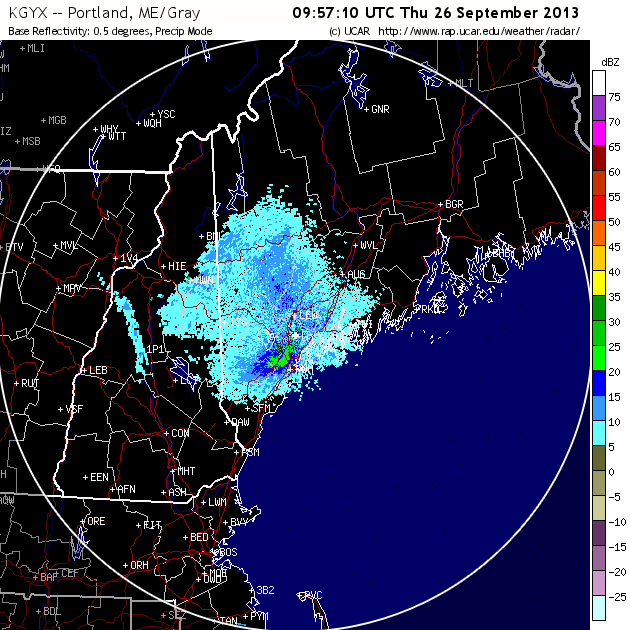
OK, back to business…the radar.  Save these images for future reference.  This is what “GO BIRDING IN THE MORNING!!!” looks like.  Here are the 10pm, 12am, 2am, and 4am radar and velocity images for example <insert “boom” sound>:
a-10pm radar, 9-26-13 b -10pm velocity, 9-26-13 c -12am radar, 9-27-13 d -12am velocity, 9-27-13 e -2am radar, 9-26-13 f -2am velocity, 9-26-13 g -4am radar, 9-26-13 h -4am velocity, 9-26-13

Even at 6:00am, with light more than peaking into the eastern sky, birds were still on the move.  If I had not expected to go to SandyPoint for sunrise this morning, and I had seen this image, I would have flown out the door.
6am radar, 9-26-13 6am velocity, 9-26-13

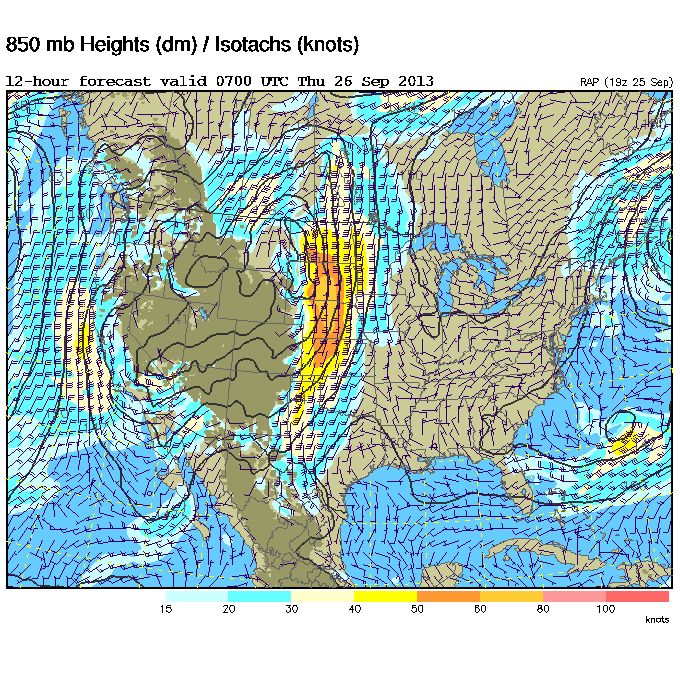
When there are this many birds in the air so close to sunrise, there are going to be a lot of birds taking part in the “morning redetermined migration” come dawn, along with crepuscular migrants that are moving in the early light.  The radar provided all of the suggestions of a big flight.  And, with a light northwesterly breeze, many more birds were low and in the trees than on the westerly breezes of the last few mornings.  Here’s the wind map, showing that low moving off of the Maritimes, ushering in a north to northwesterly flow behind it – as I postulated on my blog yesterday.
wind map, 9-25-13

While I am rarely even at Sandy Point for four days in a row, it is exceedingly rare that the fourth day would be so busy.  But I think that upper level low finally pulling out of the way re-opened the floodgates.  And it looks like tomorrow should be good as well, continuing a most impressive string of good flight nights.  But I will give my neck a break tomorrow from staring straight up and spinning back and forth at Sandy Point.  Instead, I’ll just have to see what the flight will be like with my tour on Monhegan Island.  Yeah, I know, tough life.

Monhegan Island, 9/20-22/2013

On a morning with a big overnight migration in the fall, there’s no where I’d rather be than SandyPoint.  I just wish there was a direct ferry from there right to MonheganIsland.  Any other time, I would just rather be on Monhegan.

While our annual MonhegZEN Fall Migration Weekend coming up this weekend (still some space available), Jeannette and I headed to the island Friday through Sunday for a few days of birding and visiting with friends.  It was kinda odd being there without a group!  Not surprisingly, I did not bird much less hard.

I’ll post some radar images from the weekend on a forthcoming blog entry that I hope to post by day’s end.  A decent flight Thursday night into Friday produced a fair amount of birds on the island, even after our late (relatively speaking) arrival at 10:00am, and even though it seemed – as is often the case on calm mornings – birds that arrived at dawn continued on to the mainland.  Three of our first handful of species, however, were Philadelphia Vireo, Cape May Warbler, and Yellow-billed Cuckoo.  Welcome (back) to Monhegan.

The birding improved in the afternoon, highlighted by a Western Kingbird.
_MG_9983_edited-2

A Lark Sparrow and two Dickcissels – all present for a few days – were enjoyed (here, one of the Dickcissels with the Lark Sparrow and a White-throated Sparrow in the background). Typical “Monhegan Trash Birds:” birds that are noteworthy anywhere else in the state but are fully expected in an autumn visit here.
_MG_0050_edited-2

We ended up with 67 species of birds on the day, including 11 species of warblers.  Yup, a slow day of birding on Monhegan beats a good day of birding almost anywhere else.  Light southerly winds that developed over the course of the day became calm by nightfall, and call notes early in the night were suggestive of birds departing the island.
IMG_1571

With a southerly flow aloft, I didn’t have high hopes of a lot of new arrivals for the next morning.  The radar image was, simply put, was weird – some sort of temperature anomaly or perhaps a malfunction, so I couldn’t use that to confirm or alleviate my concerns.  A mere handful of bird overhead at dawn on Saturday morning confirmed it though – there was not much on the move overnight.

Fog rolled in and out for most of the morning, clearing out in the afternoon on an increasing south to southwesterly breeze.  We beat the bush hard, and covered a lot of ground, but birds were hard to come by.  There were quite a few more Yellow-rumped Warblers around than on previous mornings, Kristen noted, and we added plenty of species to our trip list over the course of the day.  While the Dickcissels apparently departed, the Lark Sparrow continued, and the island was now up to three Clay-colored Sparrows.
_MG_0160_edited-2

Clay-colored Sparrows, Dickcissels, and Lark Sparrow, check:  the triumvirate of Midwestern regular-rarities out here.  Two adult Lesser Black-backed Gulls, a tarrying Eastern Kingbird, a Semipalmated Plover, and a good afternoon Northern Gannet show were the other highlights of what amounted to be an exceptionally slow day of birding for Monhegan in the fall.  Nevertheless, complaints were not uttered – we were on Monhegan! – and besides, I got to mooch a TV (Thanks Paul and Sue!) to watch Rutgers come from behind to defeat Arkansas in an exciting finish, and we visited the Monhegan Brewing Company.  Yup, tough day.
_MG_9963_edited-2
This young Peregrine Falcon – with a bulging crop from its last meal – also had a good day.

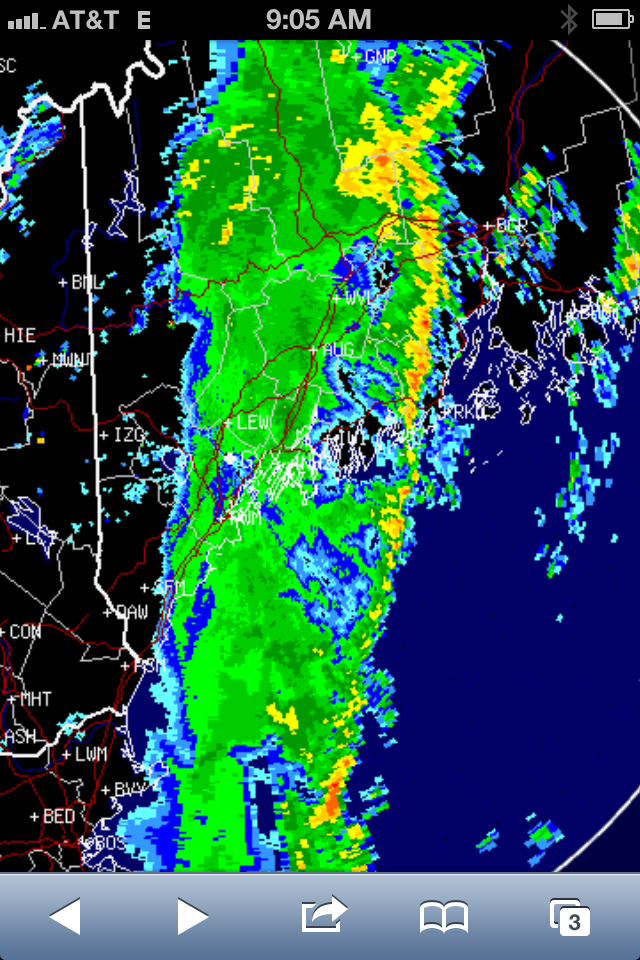
Unfortunately, an increasing southerly wind overnight precluded much in the way of any migration.  Take a look at the next blog to see what “almost nothing” looks like on a radar image.  Clouds were thick by dawn, too, but the rain held off until after breakfast.  After another fulfilling and scrumptious breakfast at the Trailing Yew, Jeannette, Kristen, and I headed down to Lobster Cove for a bit of seawatching.  We could see the wall of rain on the radar, and we could now see it on the horizon.  But as it marched closer, tubenoses joined the gannets.  In a mere 15 minutes or so, 20+ Great Shearwaters and 6+ Sooty Shearwaters zoomed through my scope.  And then the skies opened up.  This is what a line of rain – ahead of a cold front – looks like on the radar.
IMG_1573

The southerly winds were diminishing as the rain tapered off rather quickly over the course of the morning, but seawatching was less productive before lunchtime – apparently those tubenoses were all on the move just ahead of the precipitation.  But with the sun beginning to peak out after lunch, at least more birds were more visible again: two of the Clay-colored Sparrows, a Philly Vireo, etc.  Joined by Paul and Doug, we encountered a – or the – Yellow-billed Cuckoo, and then a calling flyover Lesser Yellowlegs became my 202nd species on Monhegan.

Moments later, Paul spotted a night-heron in a narrow drainage, and Doug soon relocated it.  A juvenile Yellow-crowned Night-Heron!  Once a more regular bird in Maine, and even on Monhegan, it had been about a decade since one had made an appearance on the island.  But this bird showed up a couple of weeks ago, and was often seen foraging on grasshoppers in lawns.  Rumors of its continued presence were circulated, but there were no confirmed sightings for over a week.  Until today.
_MG_0216_edited-2
Monhegan bird #203!  And two island birds in about 10 minutes.  Now that’s the way to finish strong.

When it was time to go, we were very happy to see the waves were rapidly dropping off.  Seven foot seas this morning had been reduced to 3-4 at most as we hopped on the Hardy Boat for the trip back.  A Great Cormorant on the Outer Ducks was our 88th species for the Monhegan tally for this trip, but 88 –including a mere 13 species of warblers – was a fairly low total for three days out here at this time of year.  That being said, it could have been much lower had we not continued to beat the bush.

Two juvenile Lesser Black-backed Gulls joined some hopeful Herring Gulls following the boat to shore, and westerly winds were increasing as the cold front pushed through.  There would no doubt be a lot of new birds come morning on Monhegan.  While I would be sorry to miss them, I knew fun was going to be had at SandyPoint, so I was not upset.

And I was right…