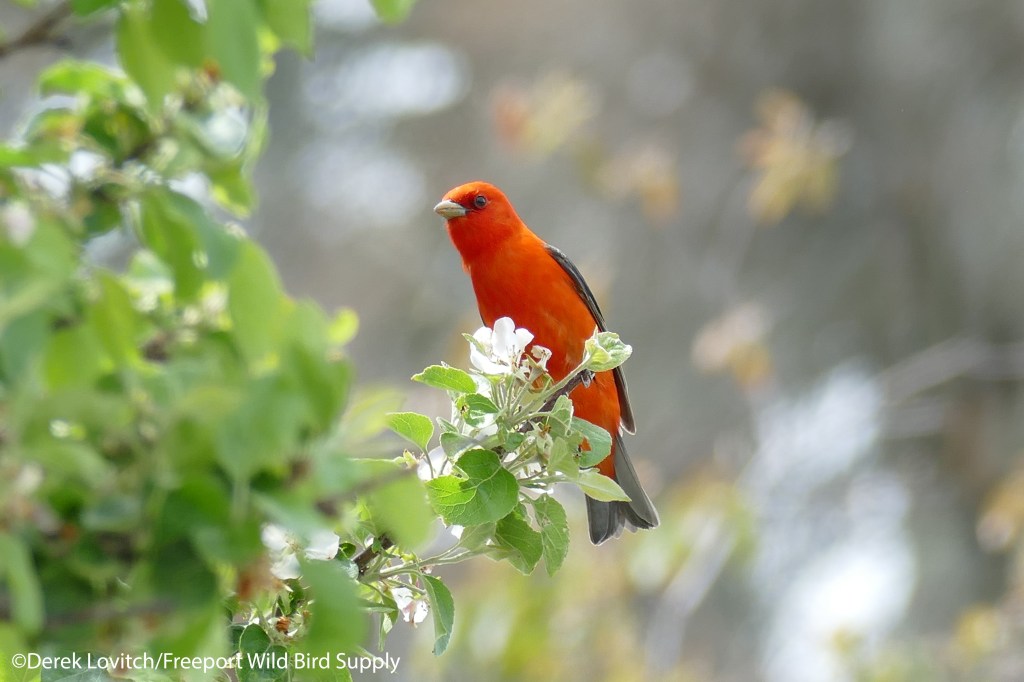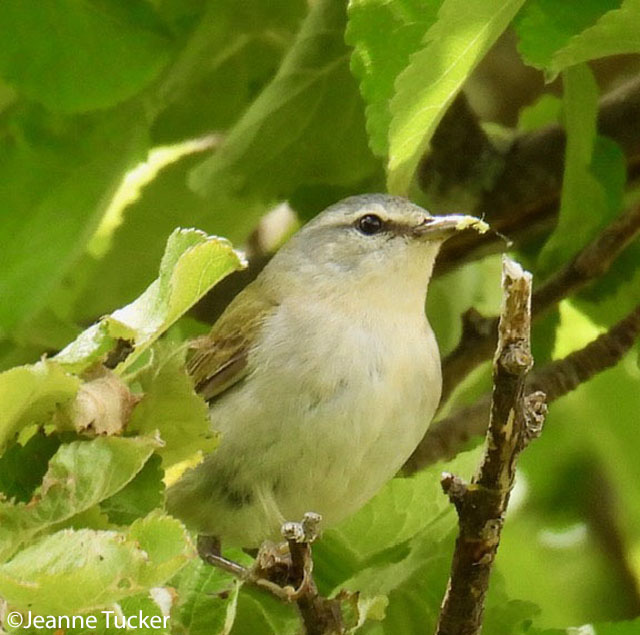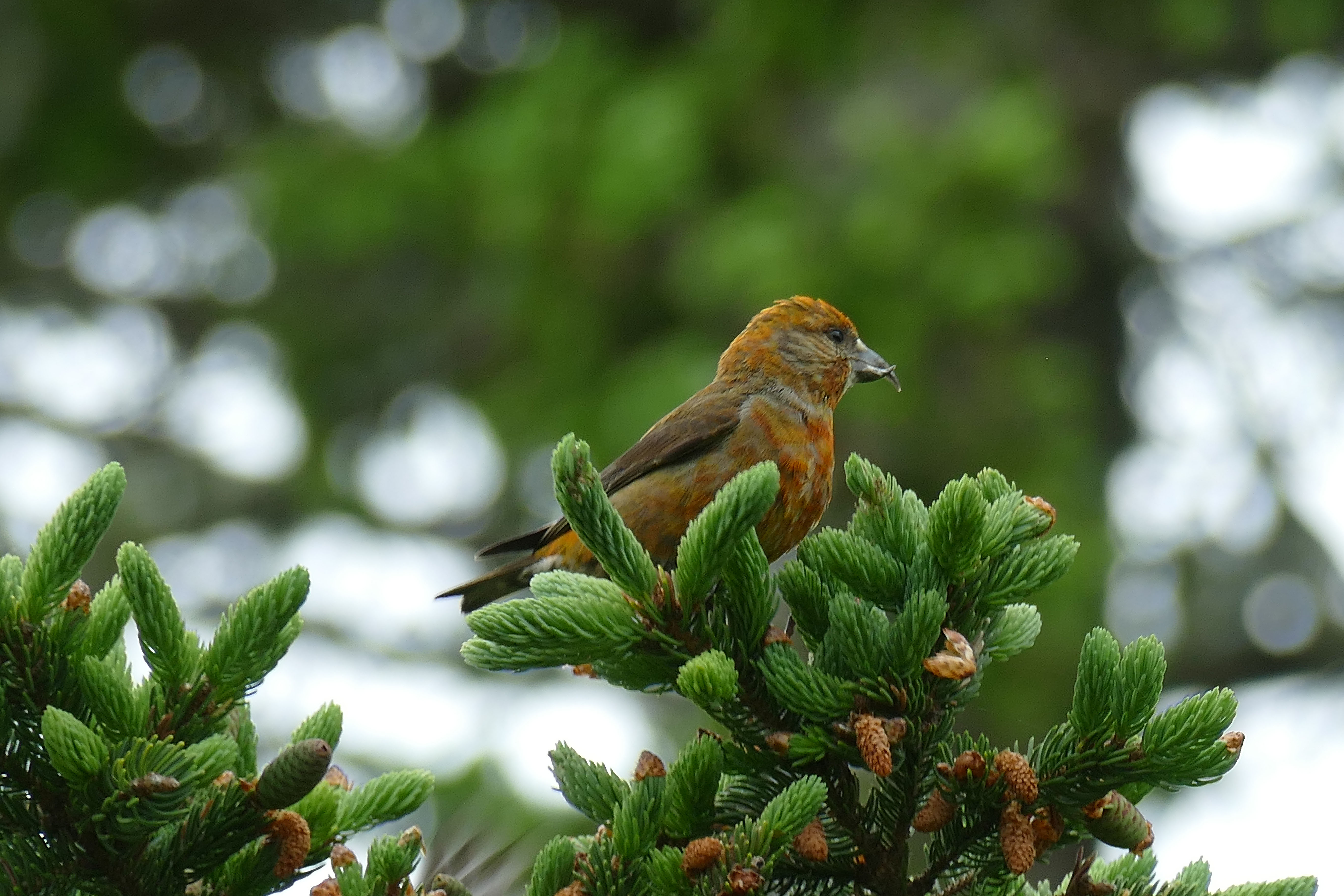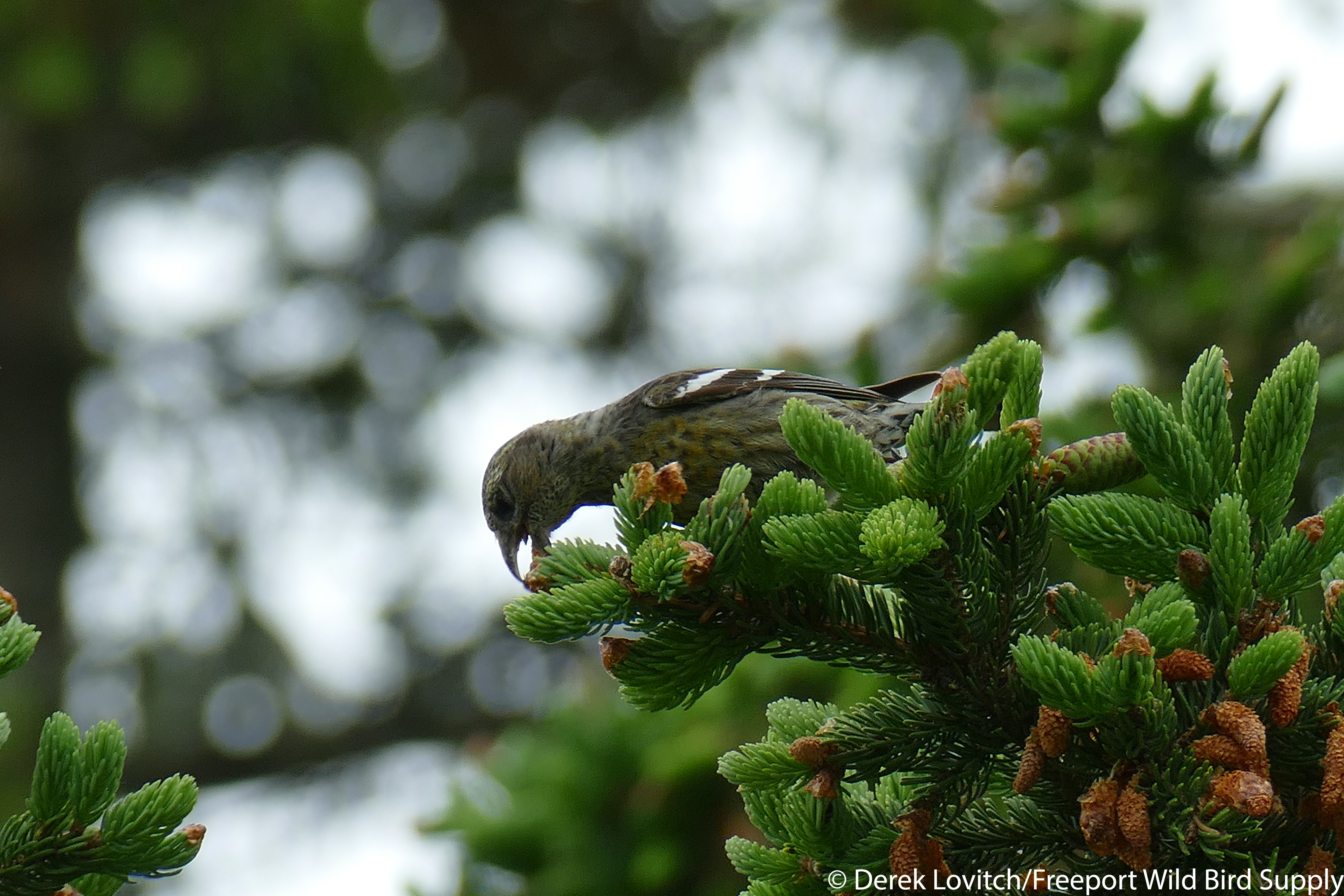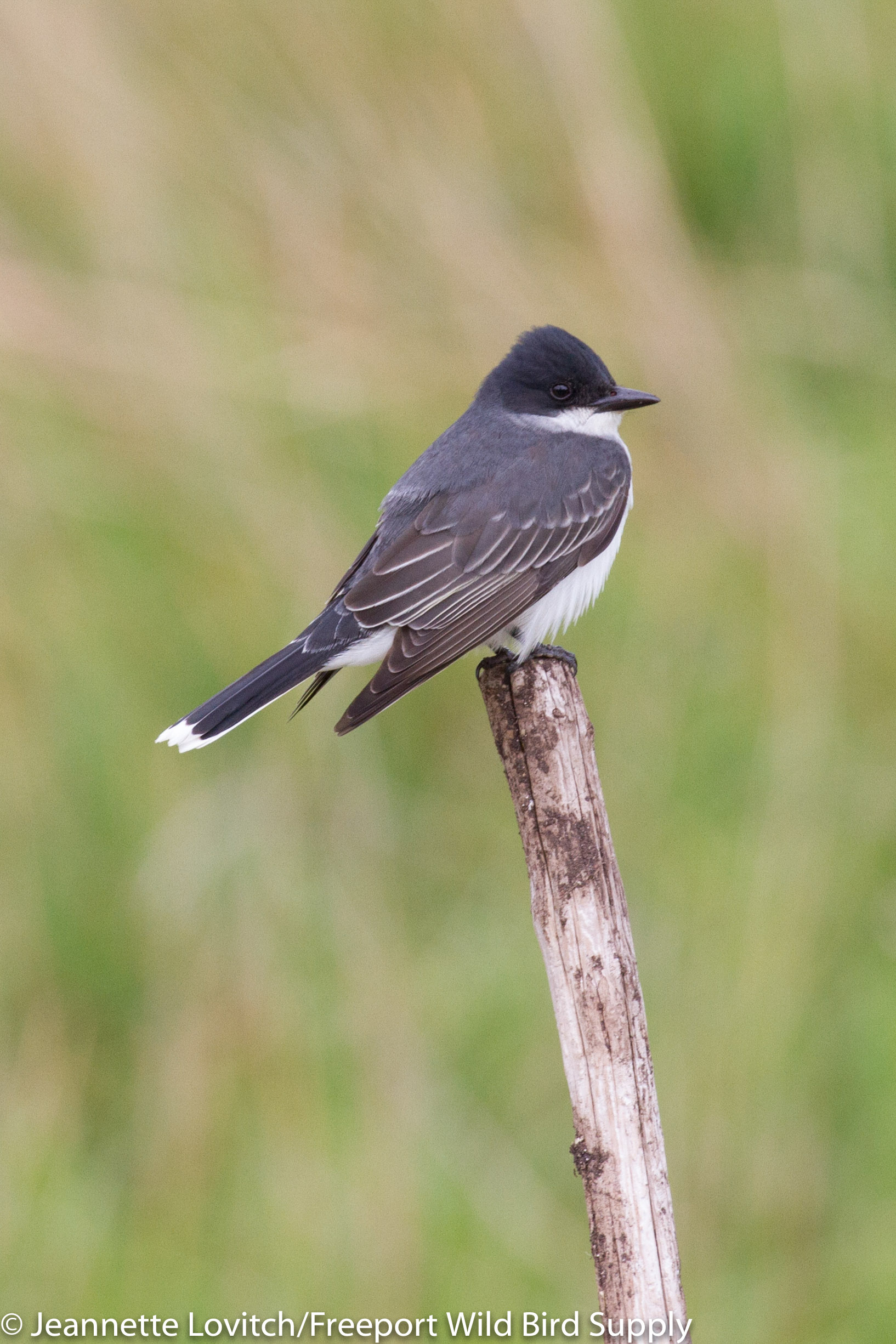
Tag Archives: Monhegan Spring Birding Weekend

2025 Monhegan Spring Migration Weekend Trip Report

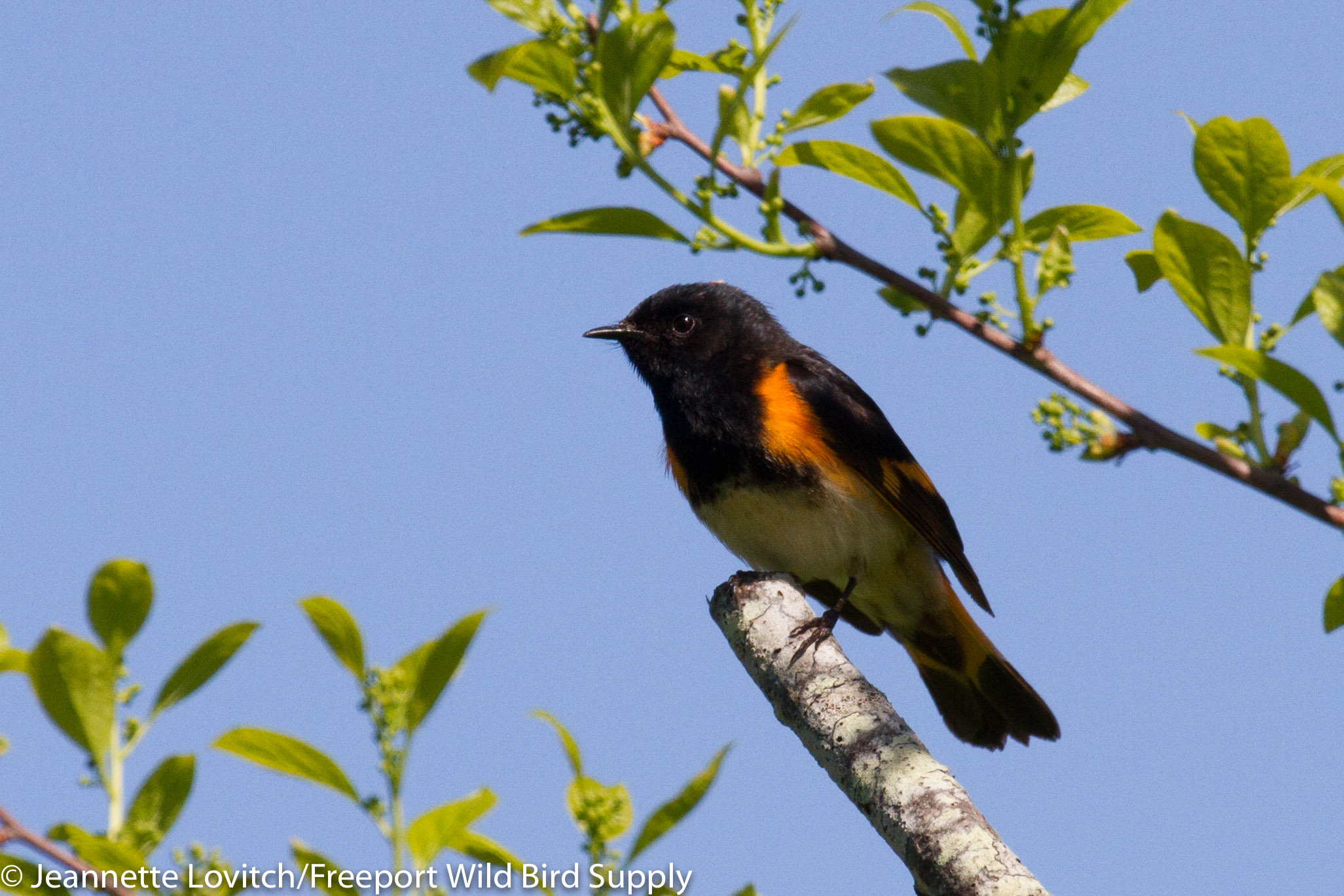
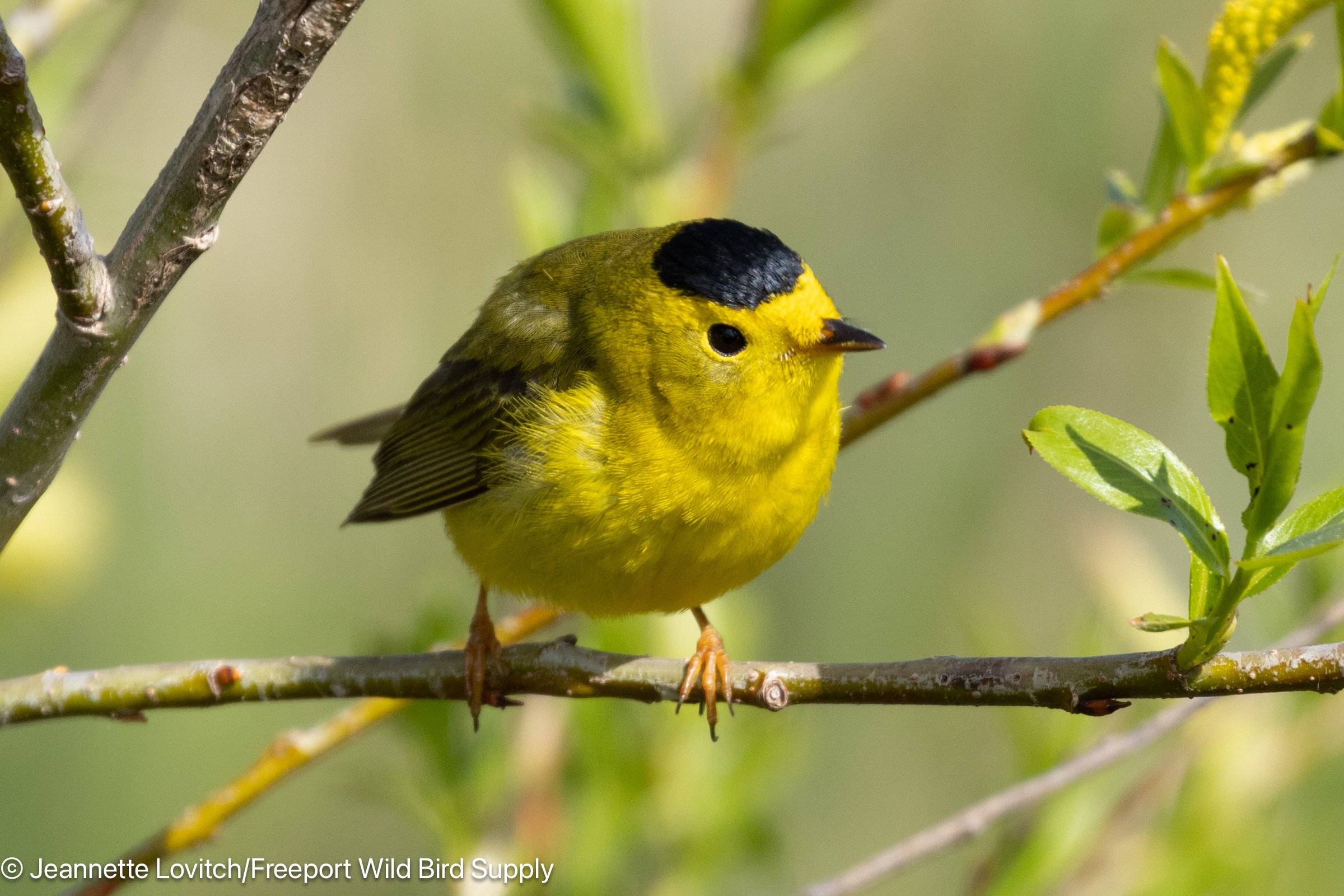
It was a great weekend for warblers, with a tour total of 19 species and a 5-day total of 22 species, including quite a lot of Wilson’s Warblers for the end of May. With 10-20 estimated per day,
we were regularly treated to exceptional views, such as this adult male.

The 2025 Monhegan Migration Spring Weekend was a shocking success. We went from having a weather forecast that made me worry if there would be any migrants to see at all, to an exceptional weekend that was by far the best Memorial Day weekend of birding out here in quite a few years.

Technically, our tour was to begin on Friday with a little morning birding in Port Clyde before boarding our ferry. But it was raining. A lot. Wisely, most folks held out until the ferry meeting time. Unfortunately, that meeting time was delayed by 5 hours when the first two boats of the day were cancelled due to the storm. It was a bona fide late season Nor’Easter and it was raging out there.

We were lucky enough to get spaces on the 3:00 boat, but even luckier that the seas were dropping dramatically. OK, it was far from calm, and while I might not have thought it was “too bad,” others disagreed. But we made it! And the rain had stopped. And we went from 10-14 foot seas to a few waves that may have approached 8 feet. Not pleasant, but more than manageable. Of course, I have to admit that the “worst ferry ride” bar is pretty high for me.

By the time our luggage was organized, we didn’t have a lot of time, but we decided to try and catch up with the continuing truant Harlequin Ducks that had been seen in and around the harbor. Up to 8 had been reported, but when we arrived at the recommended spot, we found 12!  While common in winter, “Harlies” are usually long gone by now, so this was a treat (it was also an island bird for me!). We also picked up a 2nd/3rd cycle Lesser Black-backed Gull for our troubles. There was even a short break of sunshine!

Noteworthy for the date, 12 lingering Harlequin Ducks diminished to just one by the end of the weekend.

By dusk, winds were light northwest and it was still cloudy. Overnight there were some scattered showers, with winds shifting to the west and then going calm. The fog and showers made the radar hard to decipher, but the wind map for offshore offered some hope.

Screenshot

Note how birds who were offshore of southern New England would be pushed out to sea, but then find a tailwind that could theoretically take them right to the Mid-coast of Maine? The Boston radar was very busy, and suggested birds were indeed well offshore to our south come dawn. We had hope.

But our pre-breakfast walk was not very productive. Uh-oh. Scattered showers had returned, and there were very, very few migrants around. We did see the 12 Harlequin Ducks again, but passage migrants were limited to a handful of Blackpoll Warblers and a Wilson’s Warbler. Was this going to be a very slow weekend?

We returned for breakfast at our respective lodges, and the showers stopped. We met at 9:00 and began our next outing. I was concerned. But then, it happened. All of it.

First, a Lark Sparrow was found – very rare in spring – and while I was going to meet the group, I relocated it in the lawn of the Trailing Yew. It wasn’t there when we returned as a group, but we elected to repeat the southern loop in the hopes of encountering it. And encounter it we did, several times, actually, as it worked its way around the lawns feeding on fresh dandelion seeds.

Meanwhile, something else was happening. Suddenly, birds were everywhere! Pocket after pocket of warbler activity was encountered, and every apple tree had birds in it! Small batches of birds giving flight calls overhead were suggestive of birds only now, at mid-morning, arriving on the island. As these birds were a very different mix of species from the last “birdy” day four days ago, according to a fellow guide, these were in fact “new birds” only now, and rather unexpectedly, arriving en masse.

As the afternoon went on, it only got better! There were warblers in every cluster of trees, with lots of Magnolia Warblers and American Redstarts, but overall good diversity. Birds must have been arriving throughout the day and therefore remained active into the evening. Birds were often low, easy to observe, and the repetition allowed for reinforcing study and comparisons.
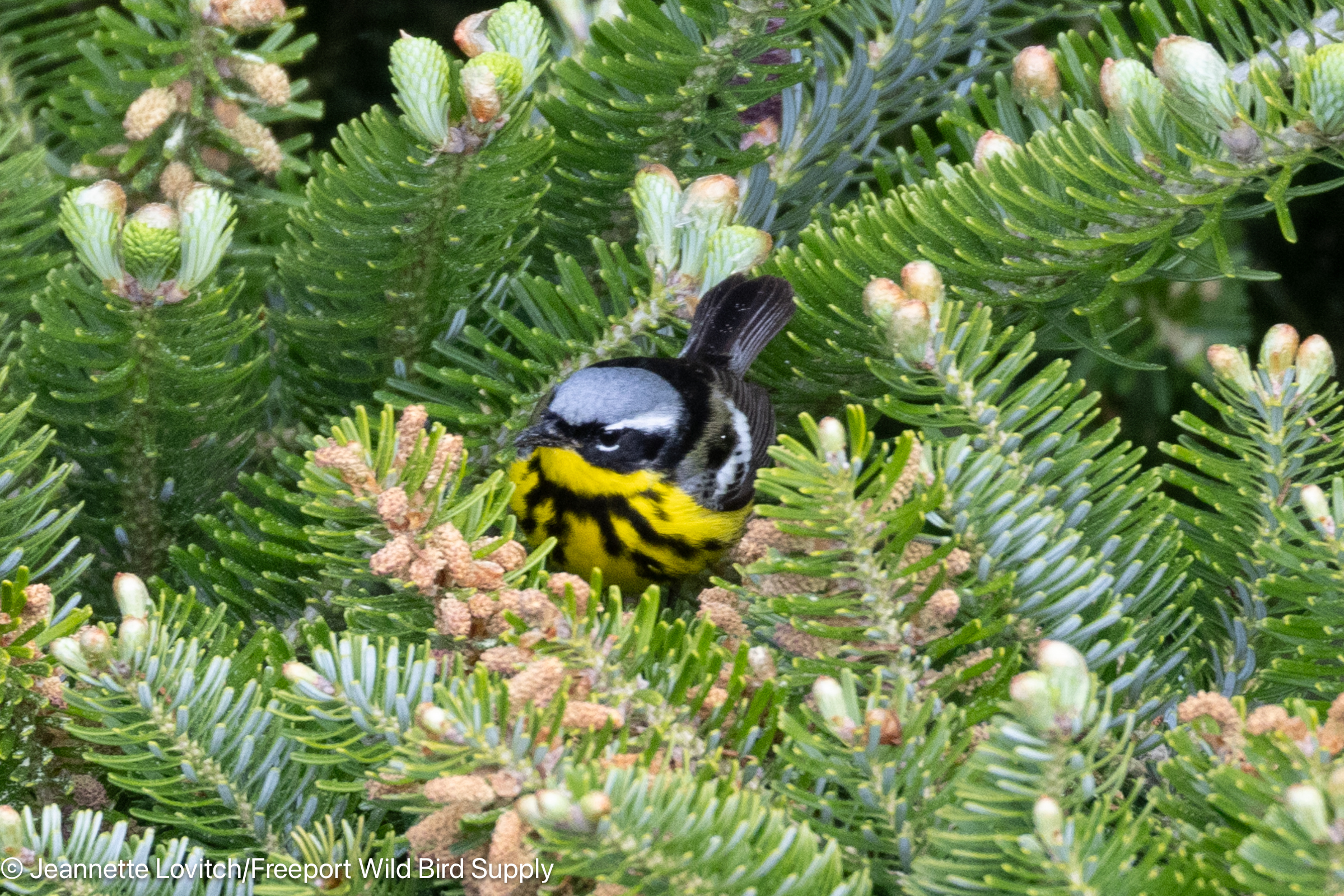
Magnolia Warbler
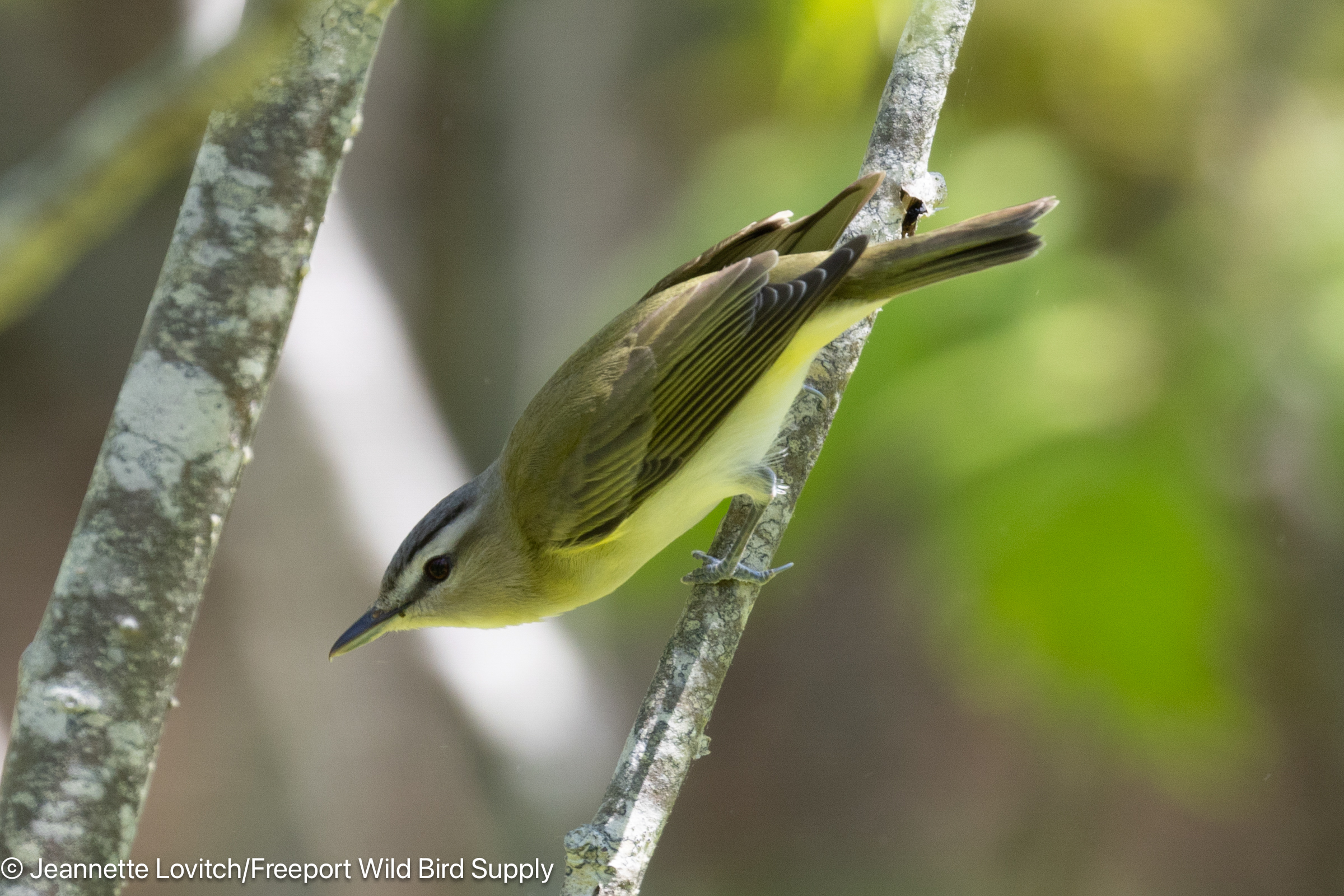
Red-eyed Vireo

Not only was today not the forecast wash-out (just a few brief periods of drizzle and a couple of very light showers), but it was simply amazing! While warblers stole the show as expected, and the Lark Sparrow was a harbinger of things to come, our afternoon at Lobster Cove was rather exceptional, too, with two continuing “Eastern” Willets, a close pair of Harlequin Ducks, and 3 feeding Atlantic Puffins. What a way to end a spectacular day! It was like the good ol’ days out here.
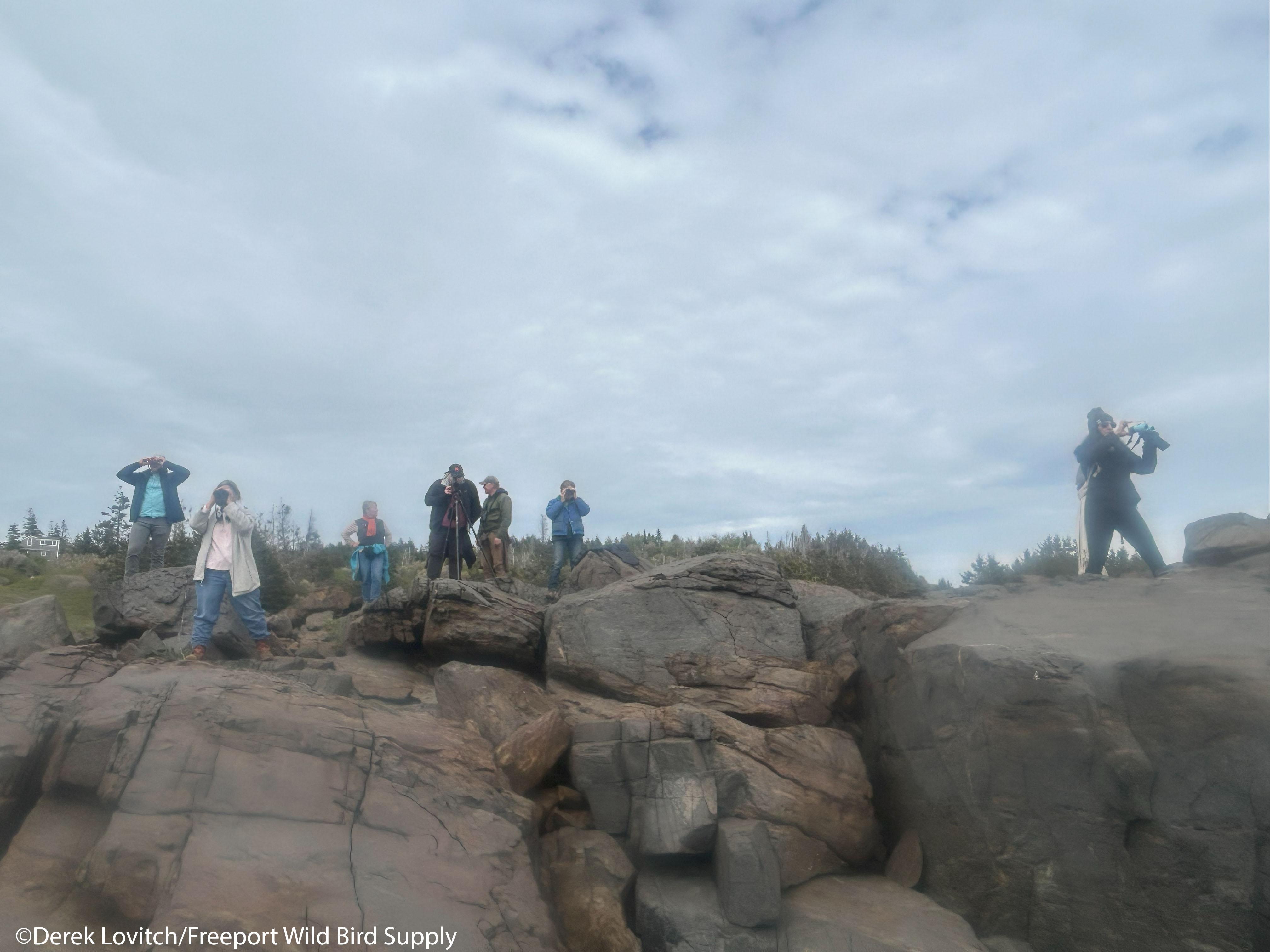
By Sunday, the Low was dissipating over New Brunswick, and while the radar showed what may have been a light migration overnight, there wasn’t much happening in the “morning flight” once again. But as we began our birding day, it was actually quite good! While a lot of birds were left over from yesterday’s flight, they were augmented by some new arrivals, or at the very least, new detections. Once again, the birding was better than expected, and by late morning we already had some partial sunshine.

Unlike Saturday, activity slowly died down as the morning went on as usual, but it was just a downright delightful morning in the field. Lots of pockets of activity were still dominated by American Redstarts and Magnolia Warblers, but there were a lot more Blackpoll Warblers and fewer Wilson’s Warblers today. 8-10 Harlequin Ducks continued, and spiffy Bay-breasted Warblers were particularly cooperative. And we had three irregularly fantastic views of Lincoln’s Sparrows throughout the day.
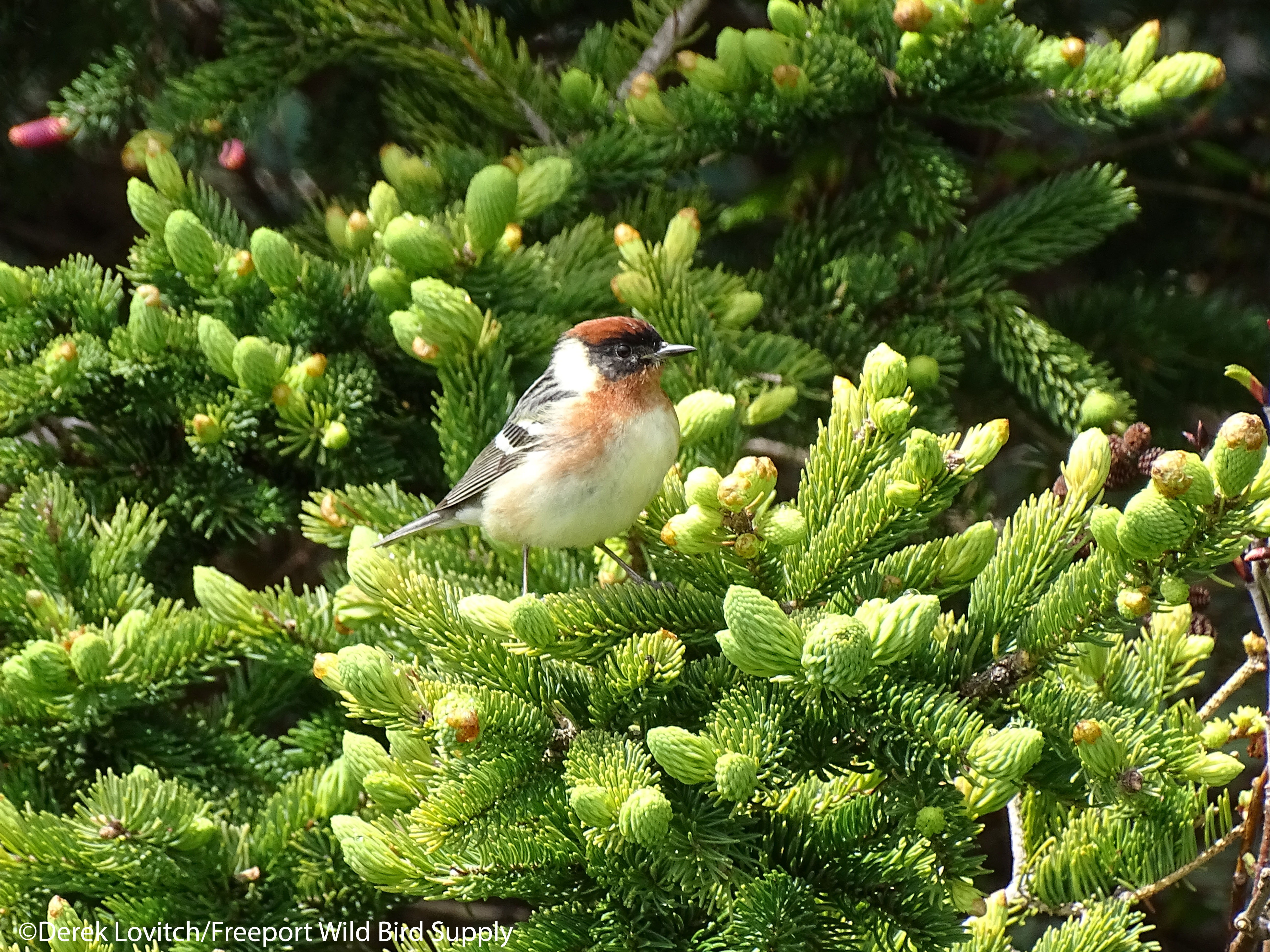
Bay-breasted Warblers were really conspicuous this trip, and we enjoyed great looks at both males and females daily.

Lincoln’s Sparrows were unusually cooperative.

A longer walk out to Burnt Head and a check of the island’s interior in the afternoon found some of the birds that had melted away from the edges, while an uncharacteristically skulky Great-crested Flycatcher gave us a jolt of excitement until finally revealing itself.

With the storm pulling away, light northwesterly winds and mostly cloudy skies dominated the overnight Sunday into Monday, and therefore there was little or no migration overnight, and therefore almost nothing in the Morning Flight. However, it also meant that most birds didn’t leave. And while slower than the last two days, it was still decent, good views of fun species were to be had, and the sun came out for good.

Magnolia Warblers,  American Redstarts, and Blackpoll Warblers continued to dominate, along with the ubiquitous Yellow Warblers. Flycatchers were up, offering ample opportunity for instruction – and for eyes to glaze over. Morning highlights ranged from a particularly good tutelage from a Willow Flycatcher, a raft of 50 Surf Scoters offshore, and a really amazing Common Nighthawk repeatedly flying low over our heads and foraging over the island as noon approached.

It was warm and sunny, and with a sea breeze pushing birds out of the edges and deeper into cover, we decided to enjoy more of the island with a visit to the lighthouse grounds and a stroll deep into the spruce woods. In addition to building our list with island residents like Golden-crowned Kinglet and breeding species such as more Black-throated Green Warblers on territory, we enjoyed the plantlife of the Acadian habitat and a healthy dose of phytoncides. And in between, the occasional pocket of migrant warbler activity to bring us back to birding.
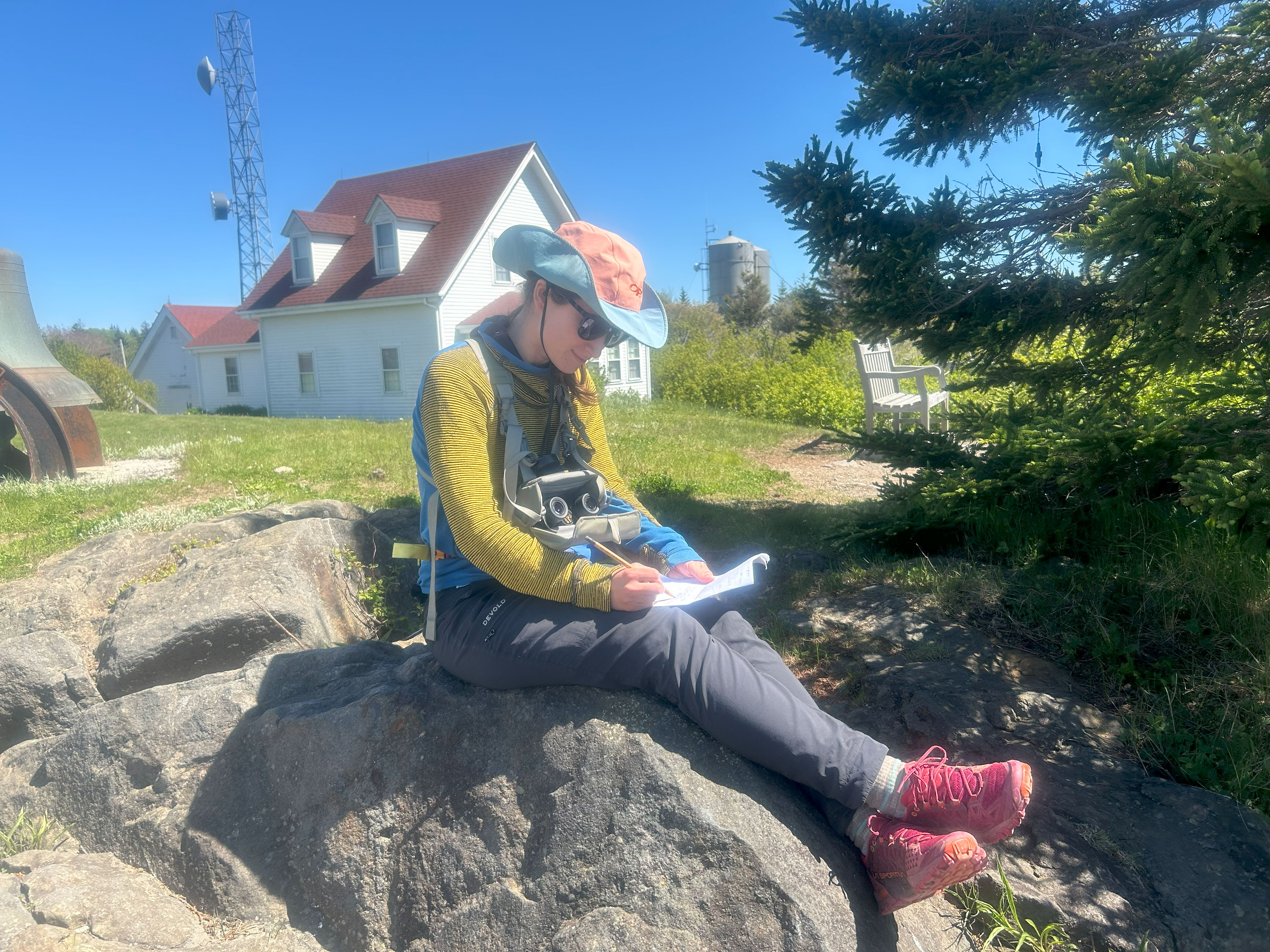
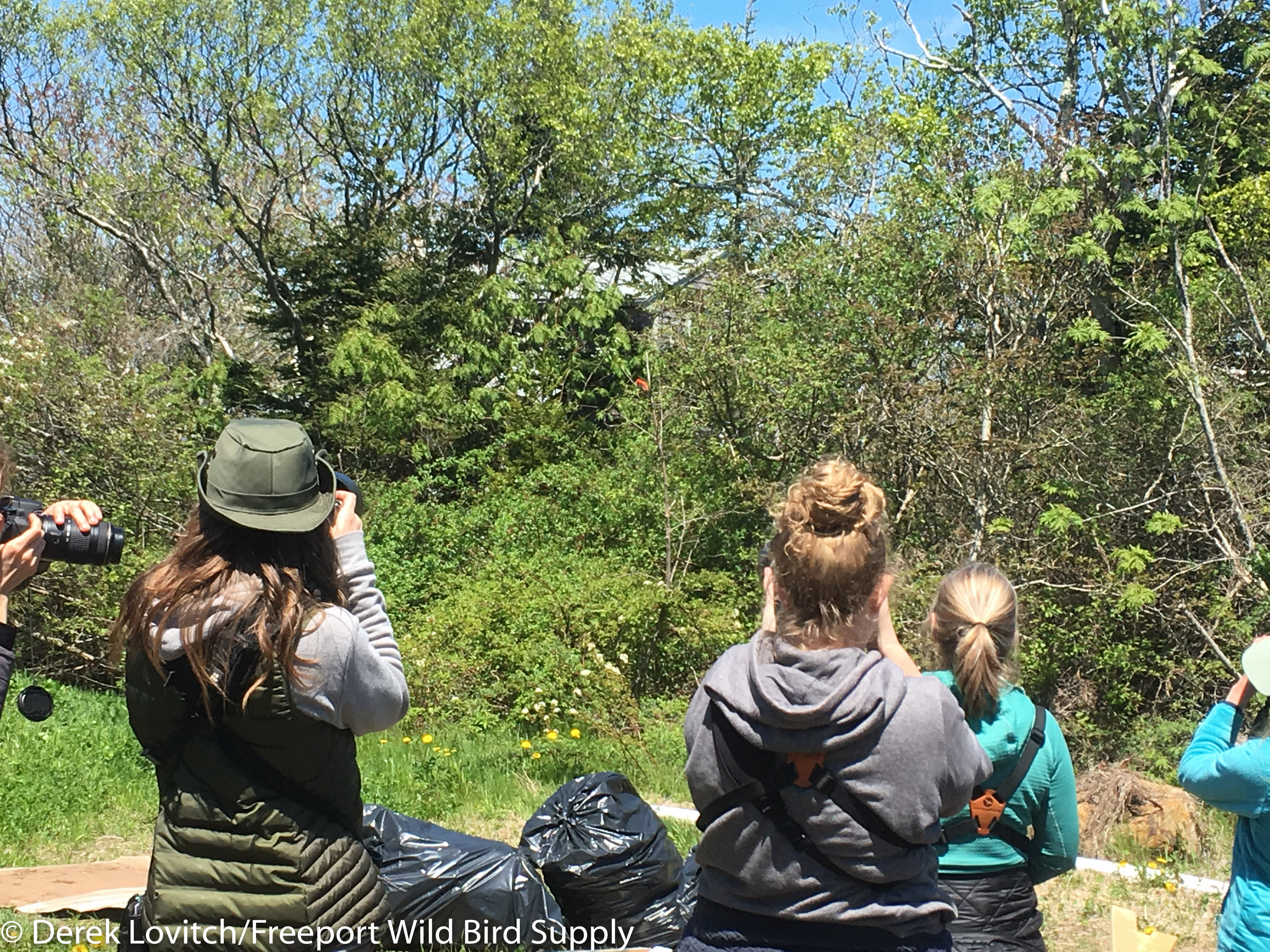
Catching up on note-taking.

Our tour concluded with an impressive 91 total species, but I admit to being a little frustrated by having to give up with 19 species of warblers…20 sounds so much better! But given the unexpected big arrival on Saturday, and the minimal rain and wind after Friday, the tour was truly an incredibly success, far exceeded expectations, and did live up to what Monhegan birding legends are made of.
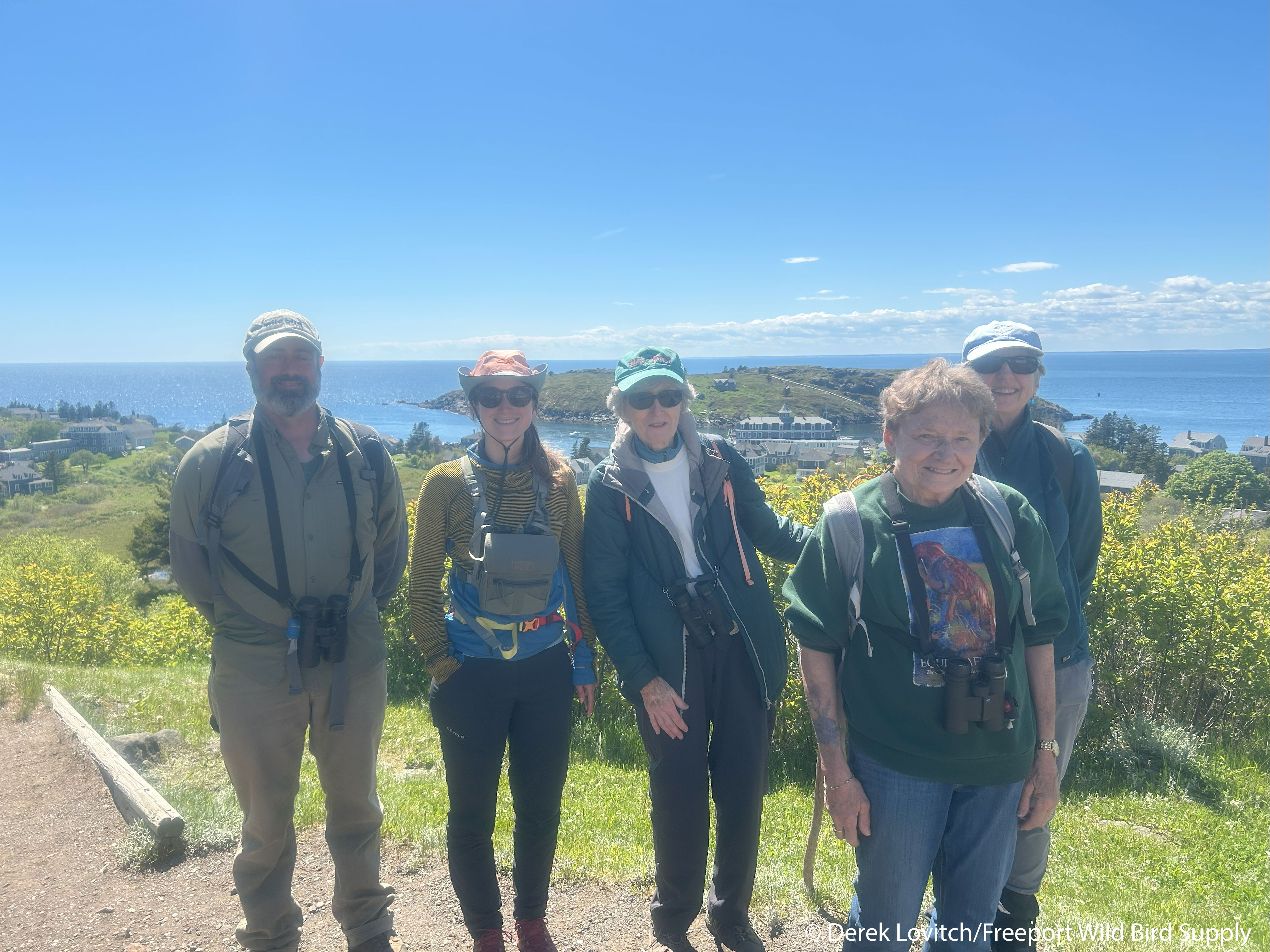
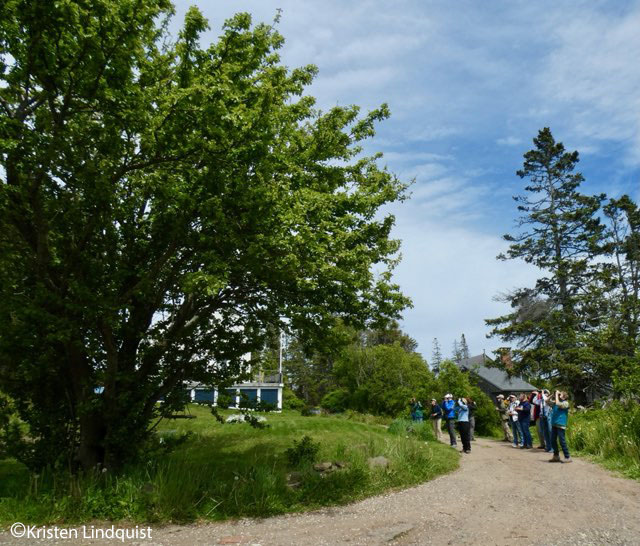
Last birders standing on the last afternoon of the tour.
Staring at Eastern Egg Rock, attempting to will THE Tufted Puffin over to us.

Then, as per usual, Jeannette – who joined us late on Sunday – and I enjoyed a day off together on the island on Tuesday. Unlike the magically-appearing flight on Saturday, this was a more predictable great morning. A moderate to strong flight overnight lit up the radar on light southwesterly to west winds. That put a lot of birds in the Gulf of Maine come dawn, and the morning flight was hoppin!

Consisting mostly of Blackpoll Warblers, American Redstarts, and Magnolia Warblers, it was quite diverse overall. A few “new” species included a Pine Siskin and a Wood Duck, and 3 Red-breasted Mergansers were a fun Morning Flight fly-by.

Before and after breakfast, the birding was excellent. It was the best day by far in volume, but a lot of the birds were “on the move” and departing the island throughout the morning. But there was more of pretty much every migrant species, save for Wilson’s Warblers in particular. Birds weren’t held low by clouds and drizzle, or exhaustion, so it wasn’t as mind-blowing as Saturday, even with more birds around overall.
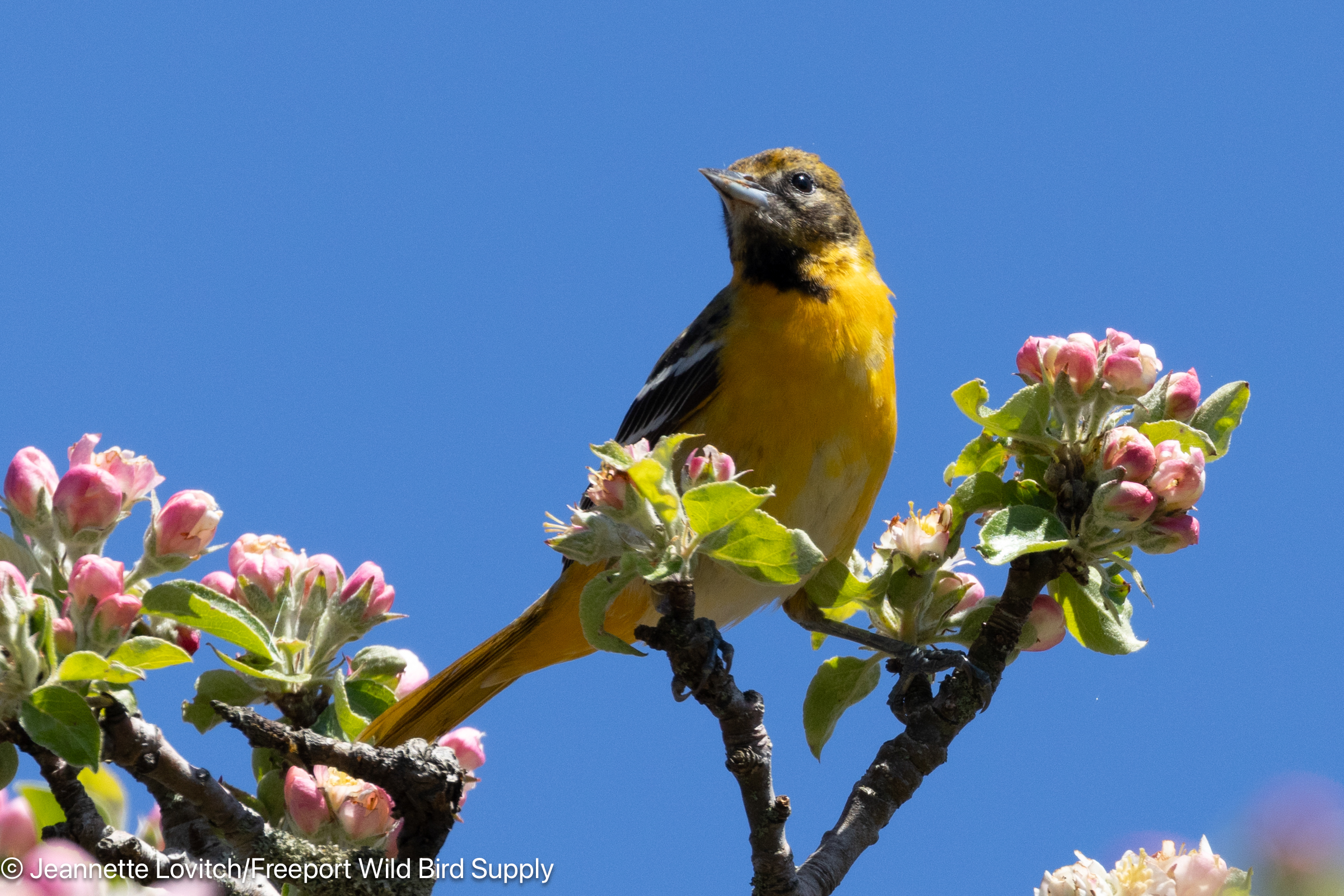
Baltimore Oriole
There were a lot more flycatchers around today, including quite a few Eastern Wood-Pewees.

It was also getting warm on a perfectly sunny sky, and birds took to the shadows earlier than in days past; the hotspots got much quieter by late morning with the increasing seabreeze. Nonetheless, pockets of activity continued right up through lunchtime.

The veggie burger bahn mi from The Bait Bag.

We rapidly added to our collective weekend list (which do not count for our tour total, of course), including finally reaching 20 species of warblers with an uncommon-out-here Pine Warbler. We then eclipsed it with a stunning male Mourning Warbler, and finally in the afternoon, picked up an Ovenbird for our 22nd and final species of warbler. Locally-rare Hairy Woodpecker, a truant Long-tailed Duck, at least one continuing Harlequin Duck, and we found my first Nelson’s Sparrow of the year at Lobster Cove. We even got a little hike in to try and burn a few of the extra calories we consumed from all of the islands’ scrumptious meals. And, anytime we stopped at a favorable looking patch of vegetation, migrants would appear, everywhere we went. It’s always tough to leave, but we at least went out with a bang!

Male Chestnut-sided Warbler

So back here in the Real World now, we can reflect on this past weekend as one that we will most surely always remember!

Here is the trip list four the five-day tour. I didn’t bother including the first day though, but it did net us a Lesser Black-backed Gull that we didn’t see any other day.

* = seen from ferry only.

Species5/245/255/265/27 (with Jeannette)
*ferry ride only
Canada Goose02 42
Wood Duck0001
Mallard1515xx
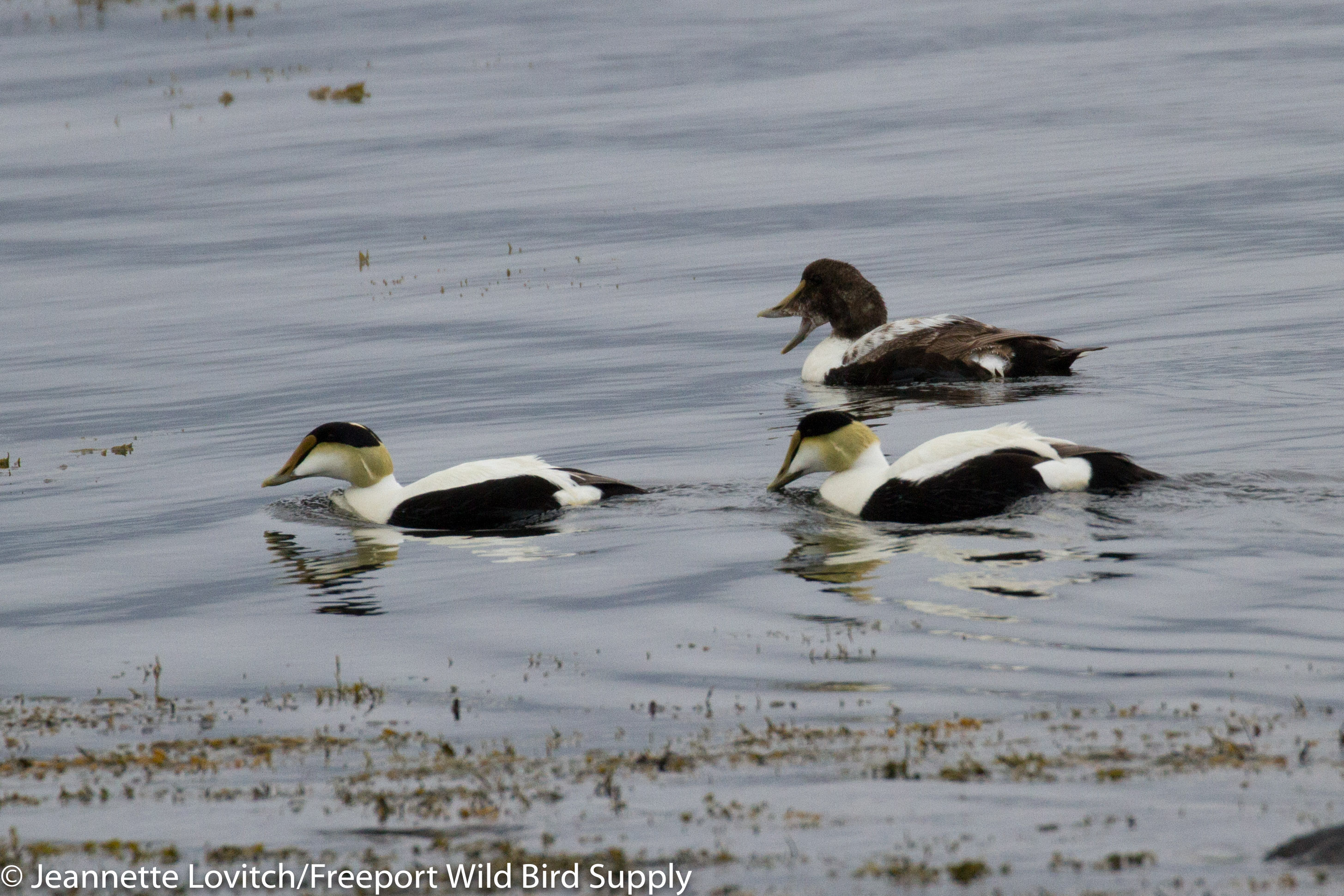
Common Eiderxxxx
HARLEQUIN DUCK121001
White-winged Scoter0002
Surf Scoter00501
Black Scoter00030*
Long-tailed Duck2001
Red-breasted Merganser0003
Ring-necked Pheasantxxxx
Mourning Dove68108
Common Nighthawk0010
Ruby-throated Hummingbird3454
Virginia Rail0111
WILLET2000
Spotted Sandpiper0002
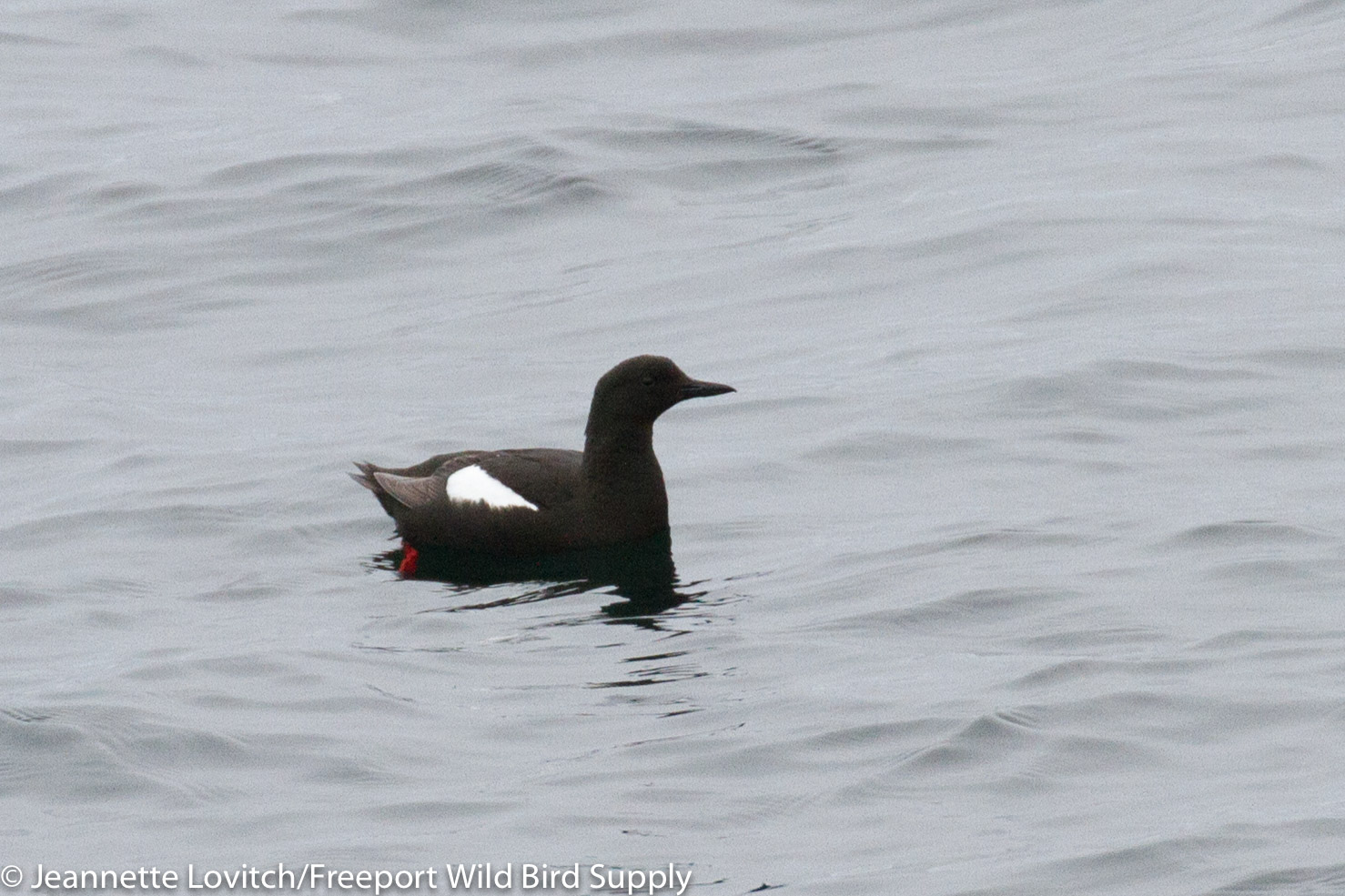
Black Guillemotxxxx
ATLANTIC PUFFIN3000
Laughing Gull56106
Herring Gullxxxx
LESSER BLACK-BACKED GULL1 (5/23)000
Great Black-backed Gullxxxx
Common Tern0005*
Common Loon2331
Red-throated Loon0001
Northern Gannet6212*
Double-crested Cormorantxxxx
Great Cormorant0001*
SNOWY EGRET0101
Great Blue Heron0010
Osprey0120
Sharp-shinned Hawk1000
Bald Eagle2233
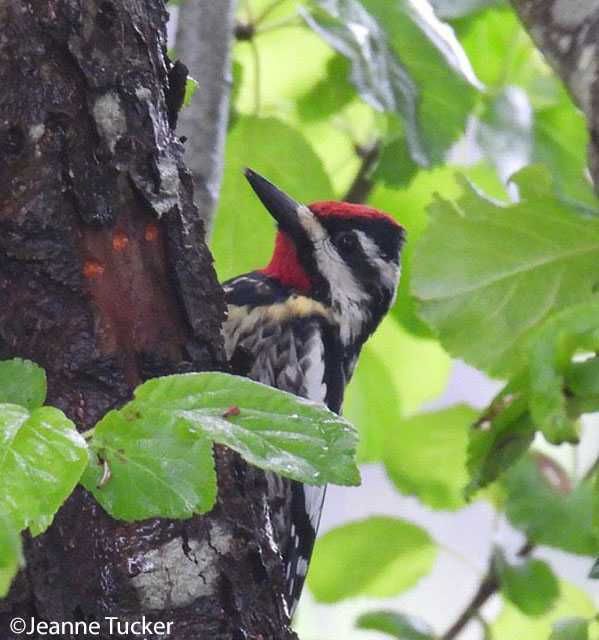
Yellow-bellied Sapsucker0010
Downy Woodpecker1000
HAIRY WOODPECKER0001
Northern Flicker1221
American Kestrel0001
Merlin1100
GREAT-CRESTED FLYCATCHER0100
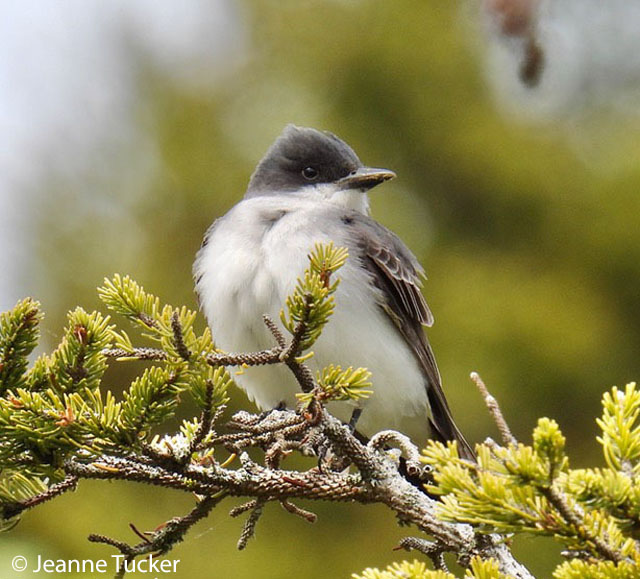
Eastern Kingbird3122
Eastern Wood-Pewee42420
Alder Flycatcher0222
“Traill’s” Flycatcher0013
Willow Flycatcher0022
Least Flycatcher221012
Philadelphia Vireo1000
Red-eyed Vireo65430
Blue Jay4211
American Crow2244
Common Raven2222
Black-capped Chickadeexxxx
Tree Swallow1122
Barn Swallow1136
Golden-crowned Kinglet0221
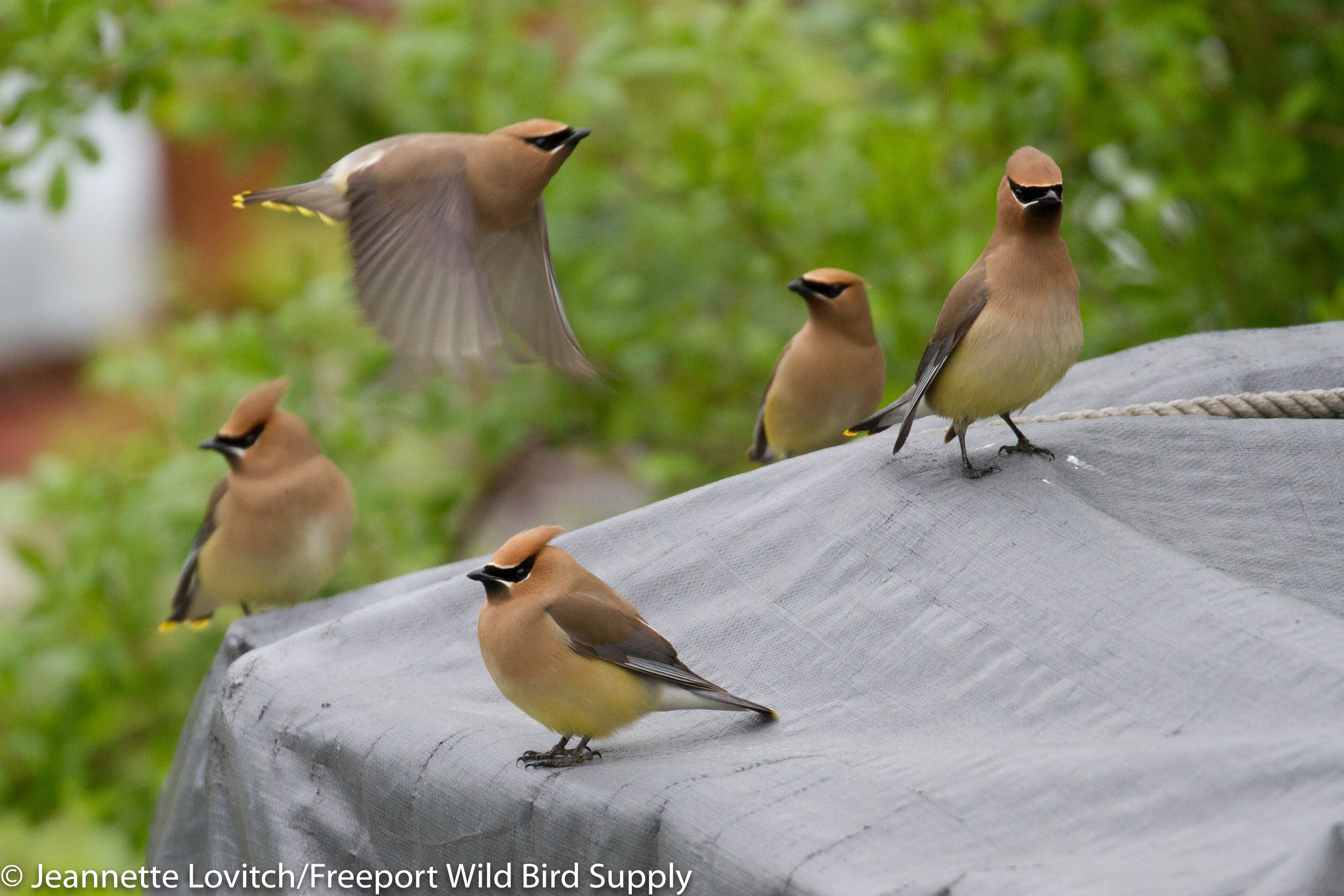
Cedar Waxwing806060150
Red-breasted Nuthatch1246
Carolina Wren2433
House Wren2212
Gray Catbirdxxxx
Brown Thrasher0111
European Starlingxxxx
Eastern Bluebird0201
Swainson’s Thrush1338
American Robin1010x8
Purple Finch1101
Pine Siskin0001
American Goldfinch10101210
LARK SPARROW1000
Chipping Sparrow2000
White-crowned Sparrow0111
White-throated Sparrow1211
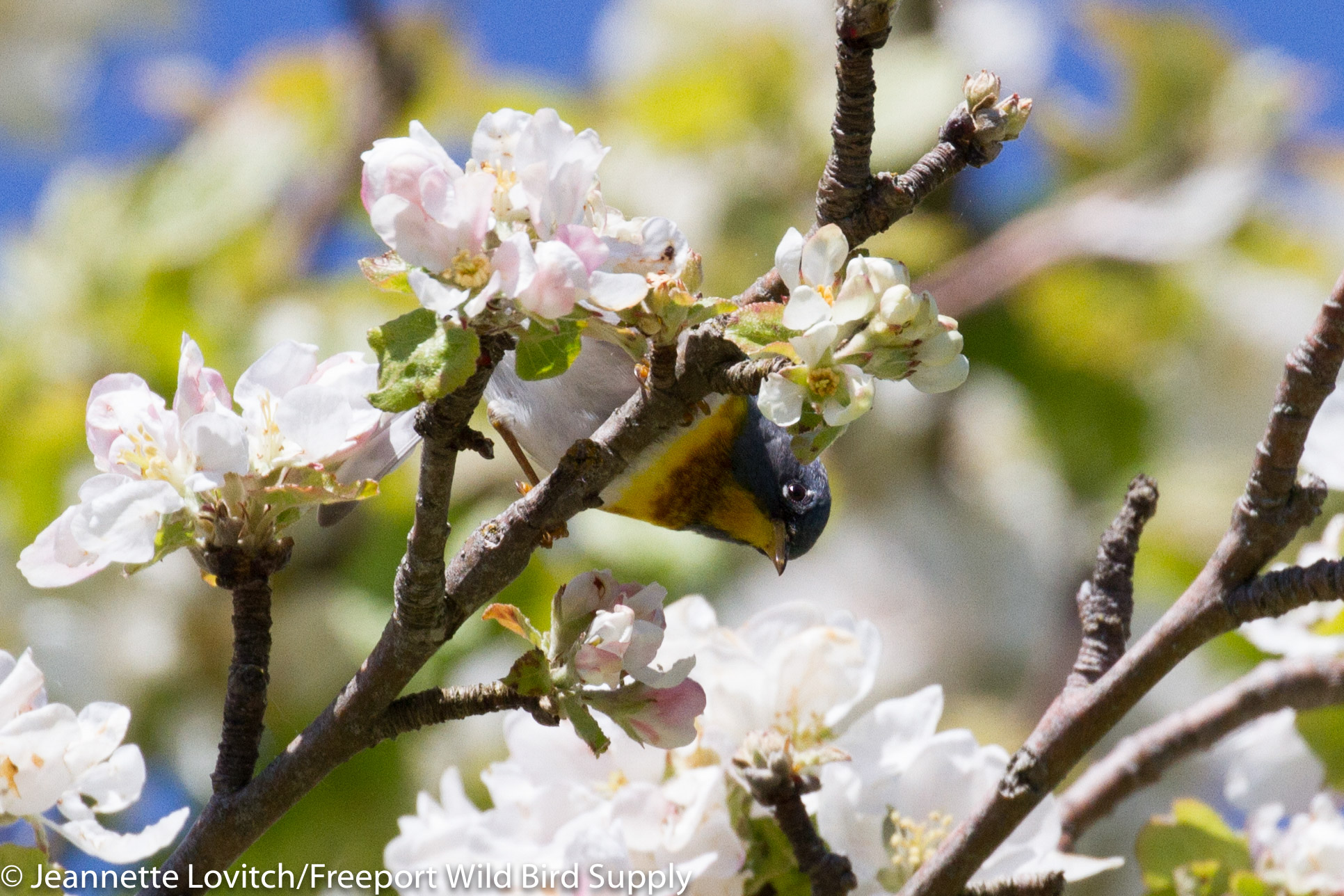
NELSON’S SPARROW0001
Savannah Sparrow 4432
Song SparrowxXxx
Lincoln’s Sparrow03310
Bobolink3413
Baltimore Oriole2232
Red-winged Blackbirdxxxx
Common Gracklexxxx
Ovenbird0001
Northern Waterthrush11110
Black-and-white Warbler1210815
Tennessee Warbler22610
Nashville Warbler0114
MOURNING WARBLER0001
Common Yellowthroat2020xx
American Redstart55454080
Cape May Warbler3426
Northern Parula15154540
Magnolia Warbler50454070
Bay-breasted Warbler810315
Blackburnian Warbler4434
Yellow Warbler353025x
Chestnut-sided Warbler661020
Blackpoll Warbler153555100
Black-throated Blue Warbler1126
Pine Warbler0001
Yellow-rumped Warbler3201
Black-throated Green Warbler10152015
Canada Warbler1000
Wilson’s Warbler20151010
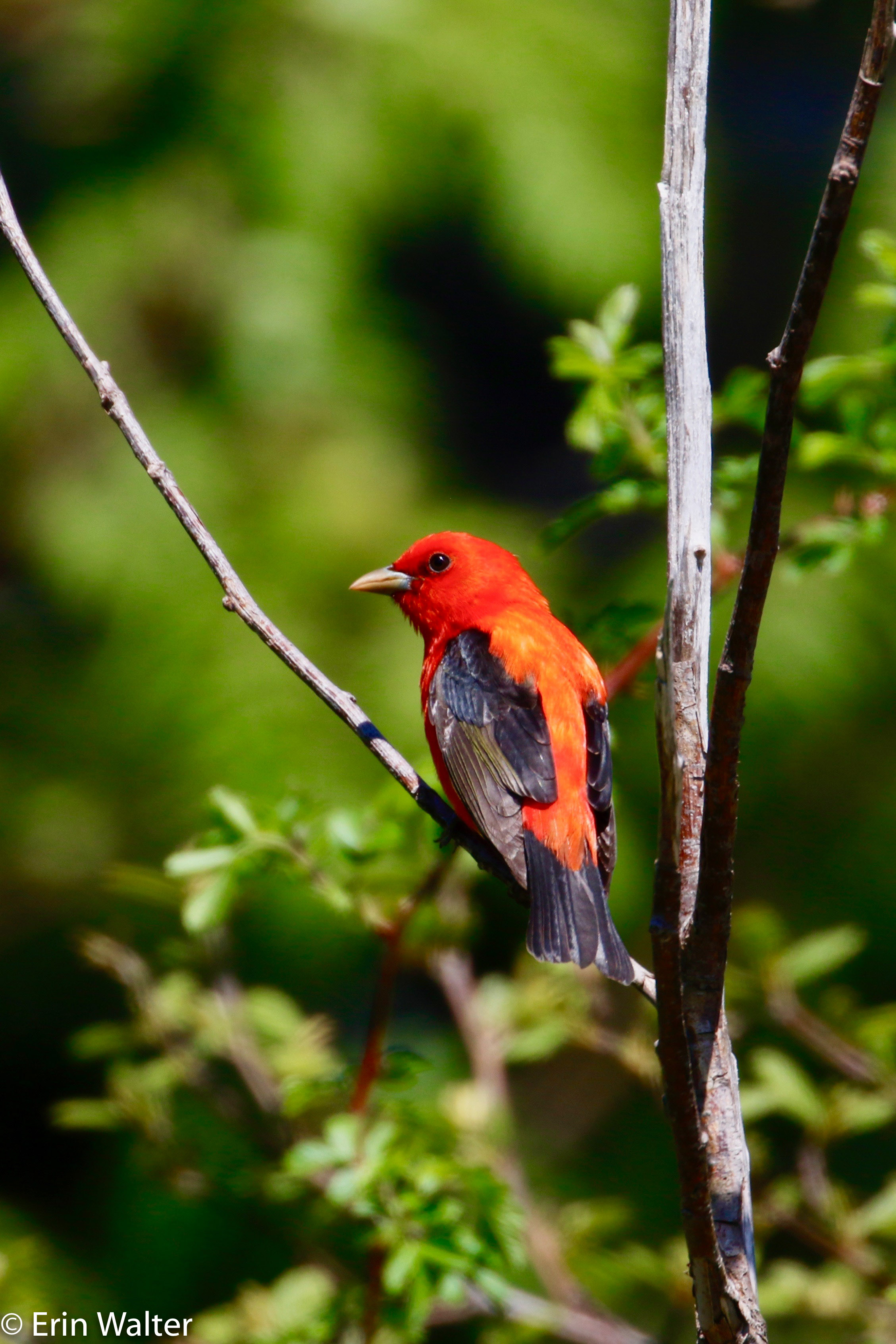
Scarlet Tanager1111
Northern Cardinal61086
Rose-breasted Grosbeak3332
Day Total72757392
Warbler Day Total18181721
Trip Total91Weekend Total inc. Tuesday106
Warbler Trip Total19Warbler total inc, Tuesday22

The above birds follow the “guide plus one” rule, meaning both me and at least one client need to see the bird for it to go onto the list. This year, the only two birds I saw without the group that we didn’t later encounter was a fly-by Belted Kingfisher and an American Woodcock at dusk, both on the the 24th, for a total of 91 with the group and a 5-day tally of a respectable 106 species.

In other words, it was a great weekend!

2023 Monhegan Spring Migration Tour Report

Not surprisingly for the end of May, Blackpoll Warblers were the dominate migrant on Monhegan this weekend. However, we never tired of seeing both males (above) and females (below) so well each and every day.

A point-blank Bay-breasted Warbler. Up close and personal Magnolia Warblers, Northern Parulas, and 9 other species of warblers including more Blackpoll Warblers than we knew what to do with…and we hadn’t even made it up the hill of Dock Road yet!

In other words, our 2023 Spring Monhegan Migration Weekend tour got off to a great start as we really hit the ground running.  Then, a calling Evening Grosbeak. A fly-by Black-billed Cuckoo…more. Hmm… it was time to check in, and happily, shed a few layers.

After lunch, the excellent birding continued, with highlights including a flock of 10 Bay-breasted Warblers, a spiffy male Orchard Oriole, and great looks at a Philadelphia Vireo.  By day’s end, we had 59 species including 13 species of warblers – not bad for a mid-morning arrival!

Yellow Warblers (above) and Common Yellowthroats (below) were common and conspicuous in and around town and other scrubby environs as expected.

It was cool and clear on Saturday morning, and the overnight radar image was a little ambiguous. Did the light westerly wind overnight push birds offshore as they approached from the south, or was that all just pollen and smoke haze in the atmosphere? However, the radar return did suggest birds offshore in the early morning, so we were excited to find out. Afterall, I did not expect yesterday to be so good, and it was excellent.

While only a few warblers were overhead by the time we assembled around the coffee pot at 6:30, it took a while for us to leave the spruces behind the Trailing Yew, as we had a nice pocket of warblers and good early-morning activity. We teased out a Blackburnian Warbler – the only one of the weekend, and the 3 White-winged Crossbills that have been on the island paid us a visit. Later in the morning, we caught up with the stunning male Dickcissel that has been around for a while, and were among the first to see a pair of recently-arrived House Finches (a surprising rarity on the island!). We also found a flock of 10 tardy White-winged Scoters and a total of 6 Surf Scoters that briefly visited Deadman’s Cove.

After lunch, we had the female/immature Summer Tanager, a female Orchard Oriole, found an Olive-sided Flycatcher, and while the afternoon was overall rather quiet, we had lots of great studies of a variety of birds, especially Blackpoll Warblers.

Although far from one of our best birding days on the island, it was noteworthy how well we saw just about everything. Even with a full group, birds were overwhelmingly cooperative, and everyone thoroughly enjoyed the birding…and another beautiful day of weather!

Many of our common warblers were easy to see, photograph, and enjoy throughout the weekend, such as this Northern Parula (above) and Black-and-white Warbler (below).

Saturday night into Sunday morning saw another ambiguous radar image, but the overall small number of new arrivals suggested that most of the return was something other than birds this day.

That being said, we started the day with one of the birds of the trip when I nearly spit out my coffee when I realized that flock of cormorants that looked strange was actually a flock of 9 Glossy Ibis.  They circled the town, looked to be pondering the town marsh, and then soared up high and over Lighthouse Hill. Incredibly rare for the island, these were a new “island bird” for me, and we felt very fortunate that we were one of the only birders (I believe only one other birder saw them at all) on the island that got to see them. The “lingering around the coffee pot at the Yew” strikes again!

As expected, it was relatively slow overall, but even after the excitement of the ibis, we continued to enjoy ourselves. We had great looks at a lot of things all morning, including common warblers like American Redstarts and oodles of Blackpolls.  We had our best looks yet of feeding Red Crossbills – they were all over the island this spring! – spotted a Peregrine Falcon, and continued to marvel at the growing flock of swirling Blue Jays contemplating a trip back to the mainland.

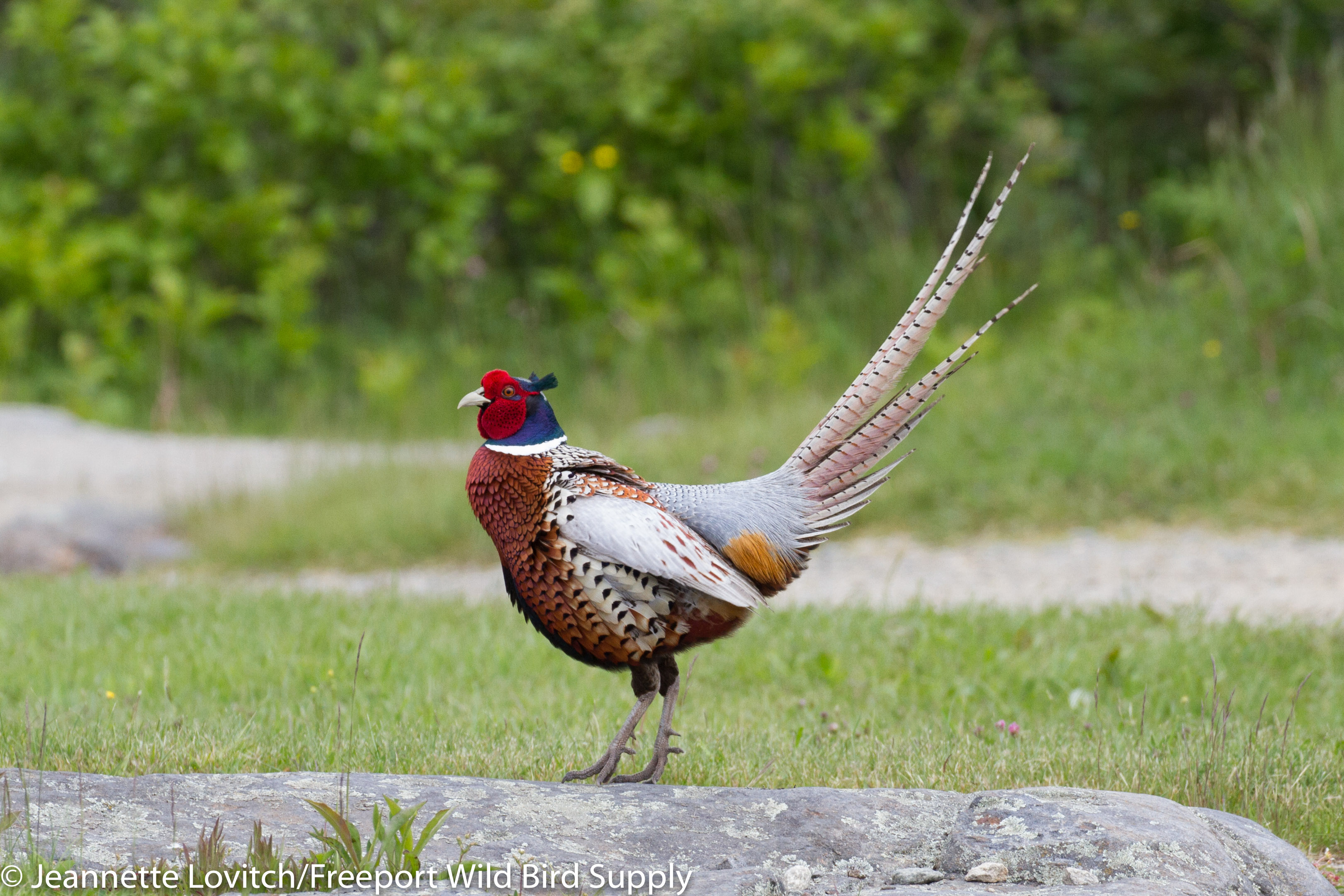
Ring-necked Pheasants kept us entertained as always, however.

After breakfast, we had another good find when a Purple Martin flew over us, and a bigger flock yet of Red Crossbills entertained us for a while. Jeannette arrived and joined the group to help carry my scope and to take photographs for this trip report, as well as help us find more birds.

Juvenile Red Crossbill.

It was warm and fairly slow, so I needed all the help I could get. Regardless, we added species to our trip list here and there in the afternoon, with quality surpassing quantity.  We visited the long-staying 1st year male Blue Grosbeak that has taken up residence at Lobster Cove, where, unlike most Blue Grosbeaks, it has taken to flycatching for seaweed flies in the wrack. Why it is doing this no one knows, but it was a fascinating behavior to watch. Birds and birding on Monhegan never cease to amaze!

The Blue Grosbeak.

A little later, we found an immature Broad-winged Hawk, or again, it found us, as it passed right over us as we poked around the Underhill Trail to find some birds in the shade and in cover.  It was often a struggle to find birds this afternoon, and it was downright hot!  But I heard very few complaints compared to the slow days when it’s 45-degrees, windy, and raining!

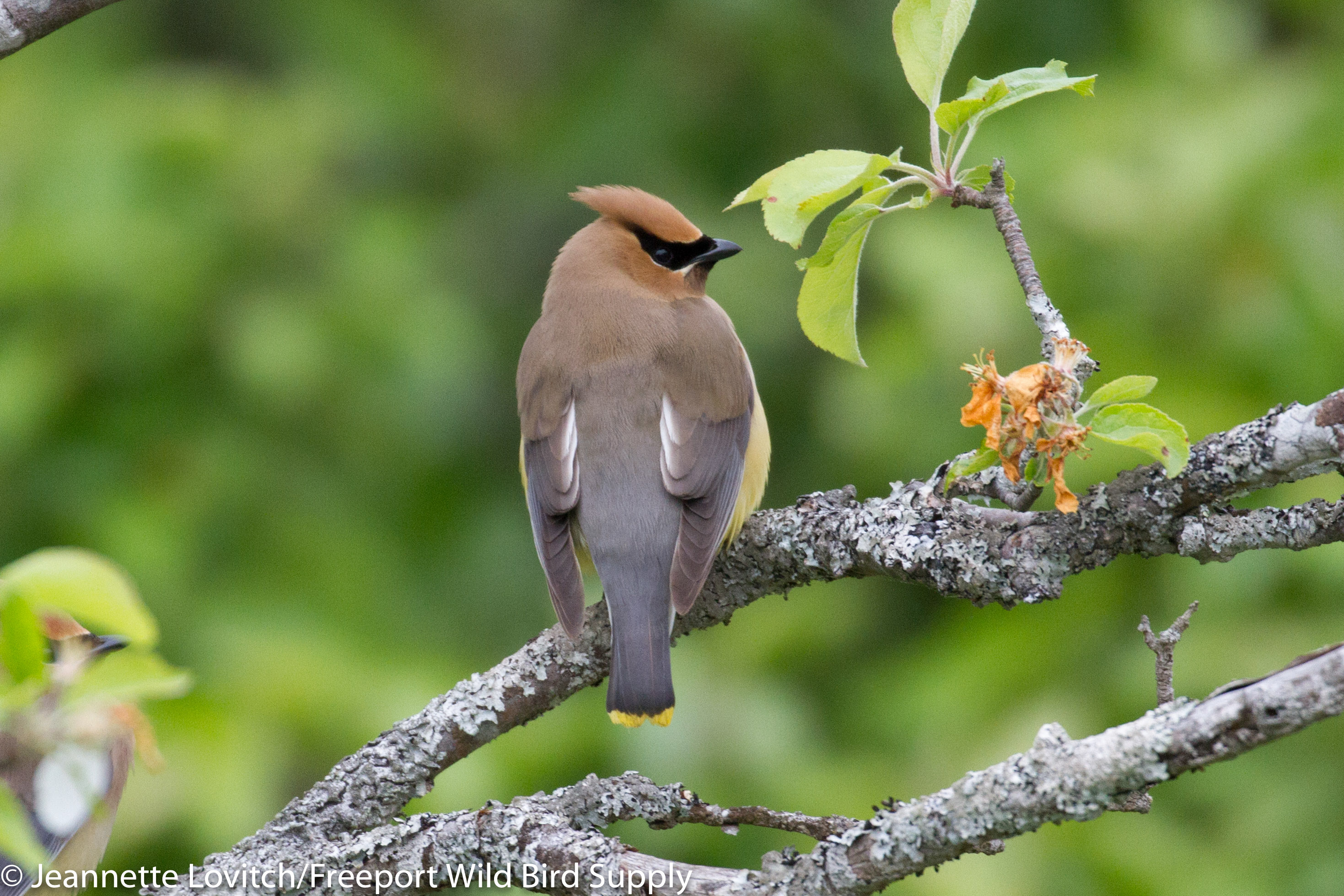
We spent a lot of quality time observing birds today, getting to know their behavior and natural history, such as these courting Cedar Waxwings.

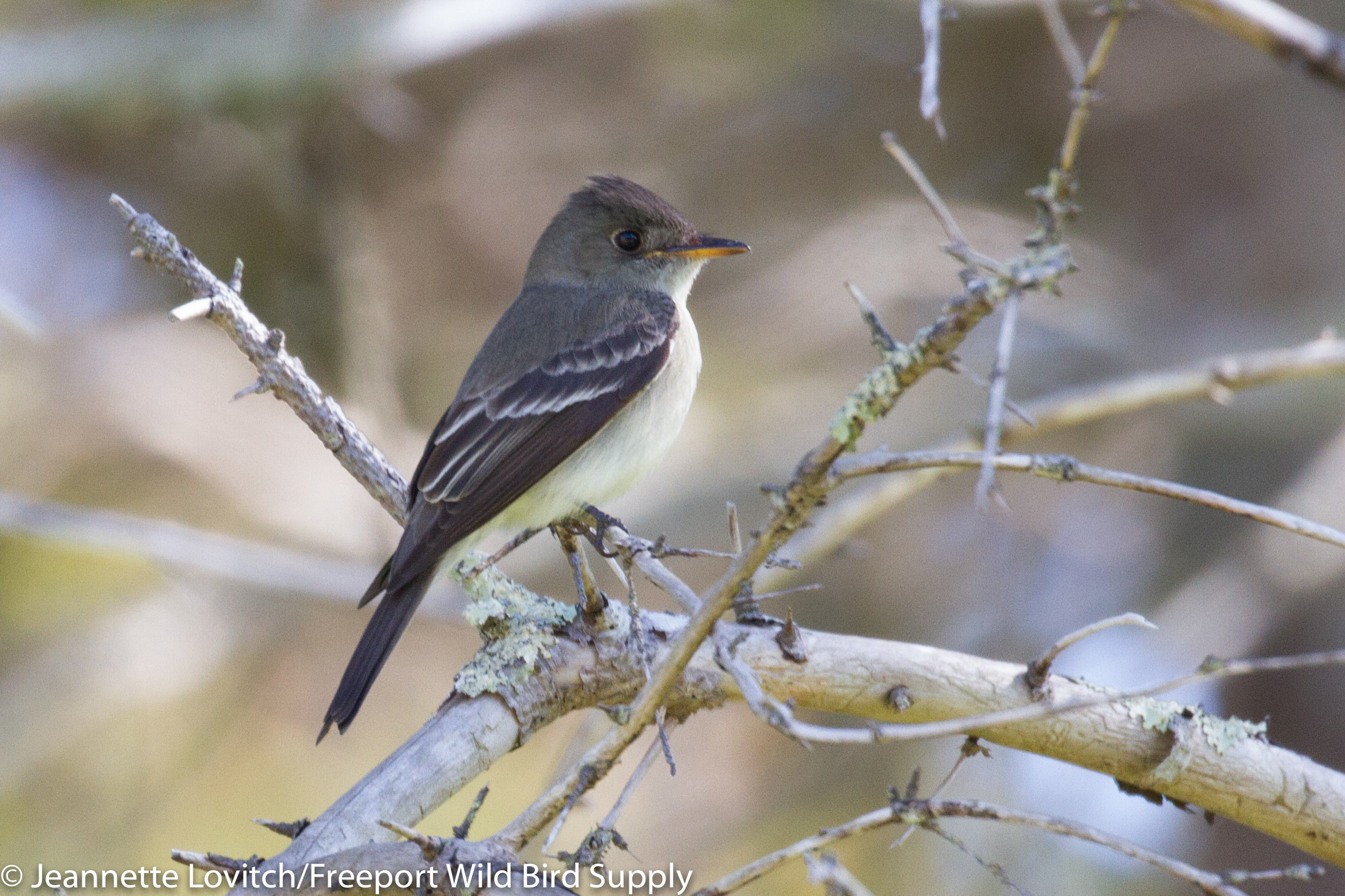
While also practicing our field ID skills, such as Eastern Wood-Pewee.

And enjoyed whatever warblers we did encounter, including this male Black-throated Green Warbler.

Monday saw even further reduced activity, with a very summer-like feel to the birding. The migrant flock of Blue Jays built up to at least 46, a Pine Siskin must have just arrived, and some of us even spotted the Virginia Rail!  While passage migrants were few – almost all Blackpoll Warblers – we still had a great day of birding thanks to continued great views of most of what we were finding. There was a Northern Parula nest that a friend found for us to marvel at, and we had quality time once again with a family group of Red Crossbills. Watching them, especially the juveniles, eating buds and cones of Red Spruce at close enough distance to see if they were “righties” or “lefties” was memorable, and more than worth the visit. We had the male Orchard Oriole again, and paid the Blue Grosbeak another lengthy visit.

We took some time to scan the skies over the marsh while also enjoying “Lefty,” the Red-winged Blackbird with white outer primaries on only his left wing. He’s back for the second year.

One of the few birds we missed as a group all weekend was a long-staying but frustrating Snowy Egret that never seemed to stay in the same place long. It was reported at the Ice Pond while we were having breakfast, and Jeannette and I raced down to see it. The “racing” part after the new and ample breakfast buffet at the Trailing Yew may not have been the best decision, however, we got the bird! It was another island bird for me (#226) and I am glad I made the decision to skip the break to chase it, as it was long gone by the time our group arrived at the Ice Pond. I always like to get those chases out of my system before making a bad leadership decision and marching people across the island for a bird that only I cared about!  (Since they are locally common on the mainland, only an island-lister cares about such silliness).

As the afternoon wore on, the group slowly moseyed away from the Blue Grosbeak-evolving-into-a-flycatcher and made our way back to town to catch the last ferries of the weekend, bringing the tour to a close.

A friend found a Northern Parula nest under construction that we took time to marvel at. Here, the female brings some more material in to line the nest, which is nestled in a woven basket inside of large clumps of down-hanging Old Man’s Bear lichen.

However, as usual, Jeannette and I stayed around for another 24 hours to have a day off together and with friends. Leaving the brewery with one friend, I found a male Eastern Bluebird- an odd “new bird” for the date. Where the heck has he been or where did he just come from? Another Monhegan bird mystery…their migration ended a month ago.

Later, as we walked back from dinner with other friends, we heard at least three displaying American Woodcocks. The sunset was quite the stunner, too.

I wasn’t upset to not have a group on Monday, because my goodness, it was slow! I think what was left of the passage migrants cleared out overnight, and little if nothing came in. There were a few Blackpolls here and there, and maybe a few more American Redstarts than usual in the summer, but in and around town, that was about all.

So Jeannette and I decided to take a longer hike and check some oft-productive-but-less-often-birded areas. In doing so, we found a Field Sparrow on Horn Hill, and had a singing Yellow-bellied Flycatcher between Burnt Head and White Head. An adult male Sharp-shinned Hawk was a surprise – was it breeding here? – and a visit into the shaded woods added Winter Wren and Swainson’s Thrush to our weekend list.

We got excited when we saw a gray-backed, white-bellied flycatcher over at Gull Pond, but alas, it had the expected short, not-forked tail that we were hoping for!

Not including the 7 species Jeannette and I saw between 3:00 on Monday and when we departed at 3:15 on Tuesday, the tour list for the 12th annual Monhegan Spring Migration Weekend ended up a goodly 90 total species, despite only 15 species of warblers.  The overall count was better than our last two tours, but still below our long-term average. But I cannot recall four (and five) days of simply gorgeous and warm weather on any of our prior tours!  While the benign weather of late reduced the volume of migrants yet to pass through, and allowed many recent migrants to pass unimpeded overhead, I was pleasantly surprised by the final tally. It was also a high-quality list, with lots of “good” birds not seen by many in Maine away from the island. Oh, and my two island birds were nice, too!

Blue Jays are not the biggest feeder bird on this island!

Even our most common and familiar birds present speciaal photographic opportunities out here!

Species5/265/275/285/29
Mallardx10108
Mallard x American Black Duck1000
Common Eiderxxxx
White-winged Scoter01000
Surf Scoter0600
Ring-necked Pheasantx665
Mourning Dove810810
Black-billed Cuckoo1000
Chimney Swift0010
Ruby-throated Hummingbird6431
Virginia Railh.oh.o11
Semipalmated Sandpiper0010
Greater Yellowlegs0100
Black Guillemot2030x20
Laughing Gull6*216
Herring Gullxxxx
Great Black-backed Gullxxxx
Common Tern1 + 5*000
Northern Gannet0001
Red-throated Loon0100
Common Loon3*100
Double-crested Cormorantxxxx
Great Blue Heron0013
SNOWY EGRET0001**
GLOSSY IBIS0090
Bald Eagle2100
Osprey0322
Red-bellied Woodpecker0010
Merlin2210
Peregrin Falcon0010
Eastern Kingbird0022
Olive-sided Flycatcher0100
Eastern Wood-Pewee2222
“Traill’s” Flycatcher2010
Least Flycatcher2110
Eastern Phoebe1111
Philadelphia Vireo1100
Red-eyed Vireo6844
Blue Jayx484752
American Crowx46x
Common Raven0110
Black-capped Chickadeexxxx
Tree Swallow0222
PURPLE MARTIN0010
Barn Swallow1011
Golden-crowned Kinglet0010
Cedar Waxwing30504030
White-breasted Nuthatch0111
Red-breasted Nuthatch1000
Carolina Wren3 h.o.443
Gray Catbirdxxxx
European Starlingxxxx
American Robinxxxx
HOUSE FINCH0022
Purple Finch0122
WHITE-WINGED CROSSBILL0330
RED CROSSBILL022420
Pine Siskin0001
American Goldfinch12101212
Chipping Sparrow0011-2
White-throated Sparrow2220
Savannah Sparrow3010
Song Sparrow10Xxx
Lincoln’s Sparrow0110
Bobolink1100
ORCHARD ORIOLE1102
Baltimore Oriole1433
Red-winged Blackbirdxxxx
Common Gracklexxxx
Northern Waterthrush0010
Black-and-white Warbler3443
Tennessee Warbler8430
Common Yellowthroatx8xx
American Redstart525168
Cape May Warbler1000
Northern Parula15101212
Magnolia Warbler10868
Bay-breasted Warbler11302
Blackburnian Warbler0100
Yellow Warbler10201515
Chestnut-sided Warbler2111
Blackpoll Warbler25602520
Black-throated Green Warbler1131
Wilson’s Warbler2220
SUMMER TANAGER0100
Scarlet Tanager0100
Northern Cardinalxxxx
Rose-breasted Grosbeak3220
Indigo Bunting0110
BLUE GROSBEAK0011
DICKCISSEL0110
Day Total60666954
Warbler Day Total13131210
Trip Total90
Warbler Trip Total15
Here is the trip list four the four-day tour. * = seen from ferry only. **=not seen with tour group.

2022 Monhegan Spring Migration Weekend Tour Report.

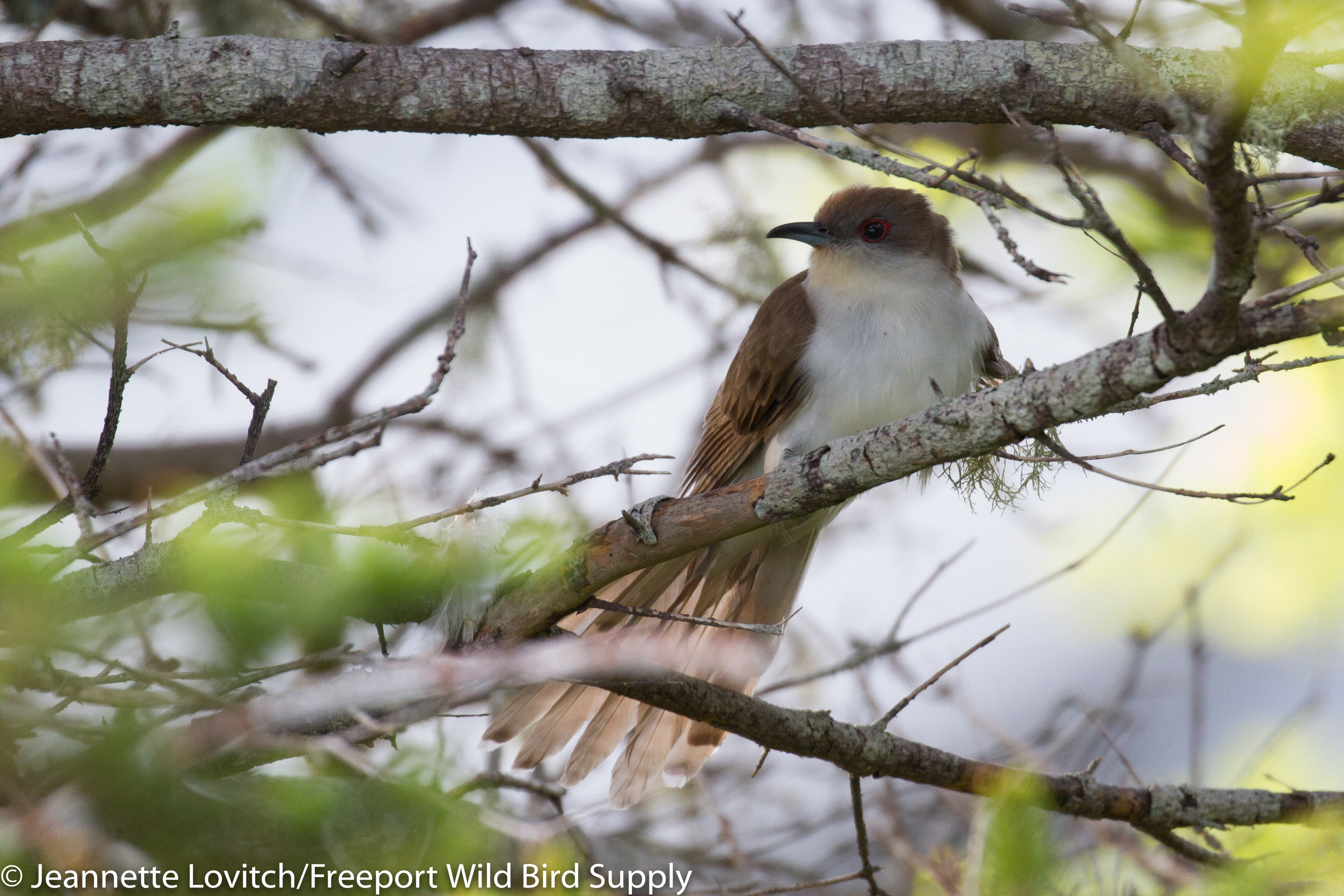
With so many great views of Black-billed Cuckoo(s) each day over the weekend, it was hard to argue against this being the bird of the trip. It was unusual how well, and how often, we saw this usually reclusive bird.

How about we just fast-forward to Sunday?  Sunday was delightful.

After two quiet days, which I will eventually confess to, we had a bunch of birds. And no fog. And colorful birds in good light. The pre-breakfast loop was actually downright great, with a good variety of warblers. One copse of trees alone featured 3 Blackburnian Warblers, 4+ Blackpoll Warblers, 2 each of Yellow, Common Yellowthroat, Northern Parula, American Redstart, and 1 Magnolia Warbler

It was nice and birdy after breakfast as well, with more Blackburnian fun, a single Cape May Warbler, and a nice birdy walk through the woods (Winter Wren, Carolina Wren, and House Wren singing one after another) to Whitehead where we actually got to see the ocean – and a Great Cormorant for those visiting from afar. Bird activity and birdsong was pleasantly consistent throughout the day, and in most places we visited.

We caught up with a continuing immature male Orchard Oriole for all to see, and while perhaps one could argue it was still fairly slow for Monhegan by Memorial Day Weekend standards, it was a lot better than Friday and Saturday! In fact, the 59 species and 11 species of warblers was more than the first two days combined. A few of us who stayed out late even got to see an American Woodcock as it displayed over Horn Hill at dusk. It was a good day. 

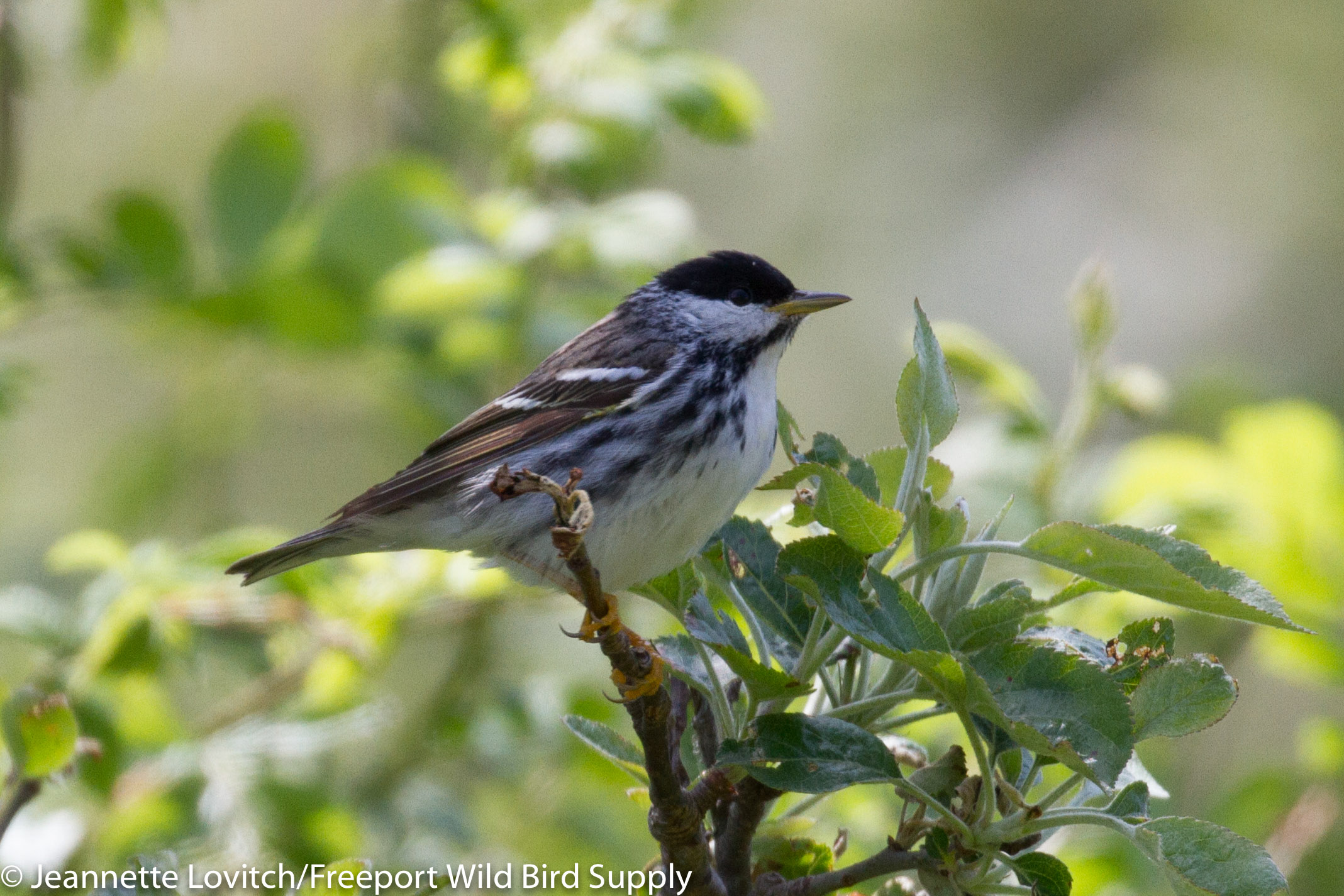
Blackpoll Warbler was definitely the migrant of the weekend. Besides being by far the most numerous passage migrant, they constantly offered crippling views throughout the tour. The male is above, and the female is below.
This American Robin nesting in lobster traps was a delight to watch. The parents had to run a gauntlet of 5 or 7 traps to enter and exit the nest. It was a great demonstration of how lobster traps work.
Laura shows off her handiwork. Hey, on a slow day, I’ll take all of the birds I can get!
Northern Parula
Immature male Orchard Oriole

Friday got off to a rocky start. Really rocky actually, as in few people were even able to keep their breakfast down on the two ferry rides. Dense fog and near-zero visibility resulted in virtually no birds being seen, and well, let’s just not talk about these boat trips anymore…it was one of the worst I have ever experienced on the way to or from. Thankfully, I am not predisposed to feeling how many people felt upon arrival, but it was still a challenge to shake it off, and all of us were moving slowly by day’s end.

The sheltered waters of Deadman’s Cove were deceiving, but I think you get the idea!

Of course, it didn’t help that there were so few birds around! The huge wave of birds that arrived the previous weekend had cleared out, and nothing had arrived to take their place over the last few nights. With such strong winds, it was a challenge to find sheltered pockets, and when we did, we didn’t find many with many birds.  Only Blackpoll Warblers were to be seen in numbers.

That being said, what we did see – especially the aforementioned Blackpolls and the continuing world’s most cooperative Black-billed Cuckoo(s) – we saw really well. A few of us even saw the Virginia Rail for a second. The dense fog also precluded scanning the water, so our checklist is even more pitiful for the day. Ring-necked Pheasants put on a show though, from confiding snazzy males to adorable little chicks.

There was no shortage of Cedar Waxwings this weekend, with numbers growing in the final two days of our stay.
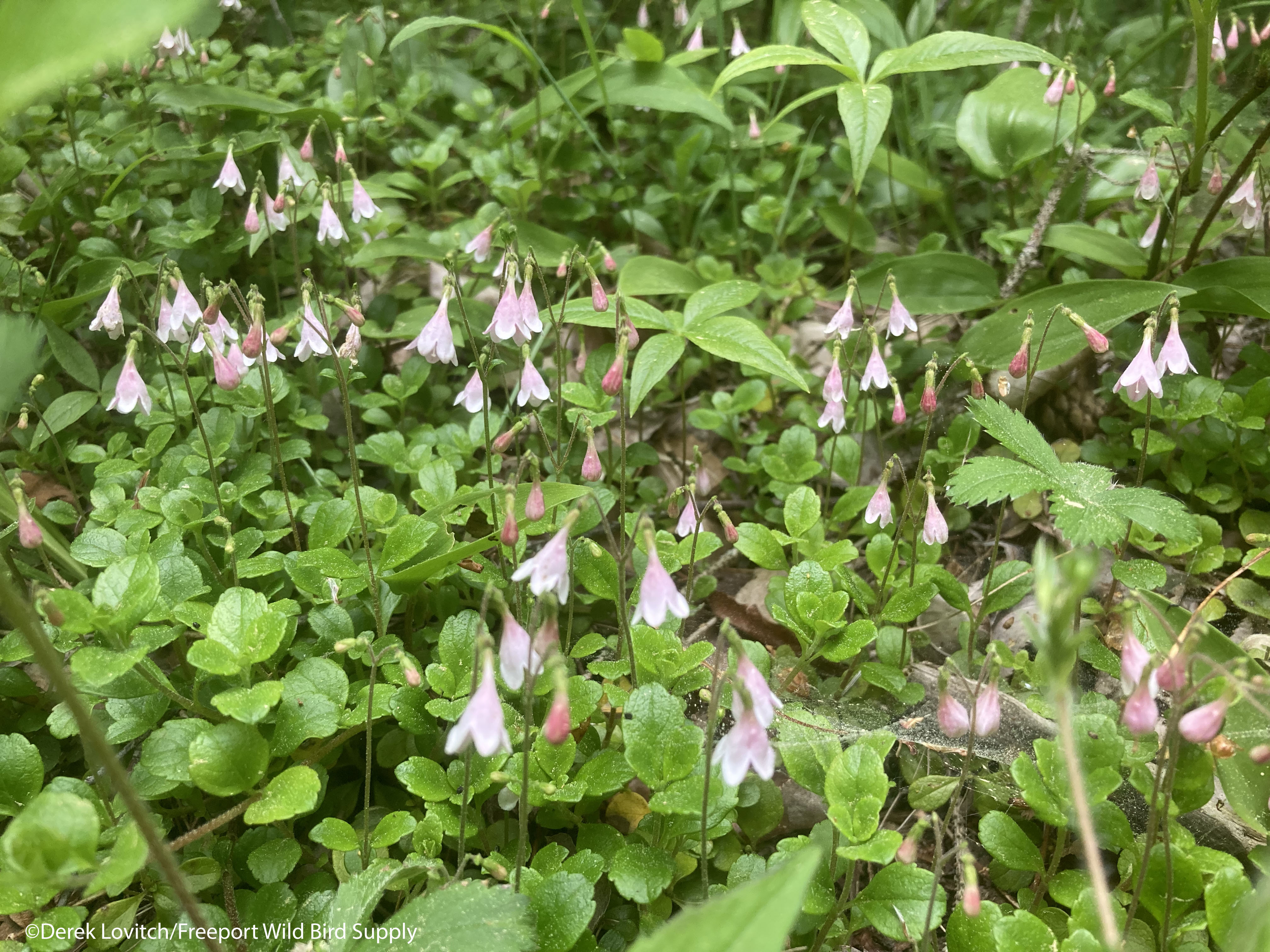
We definitely took advantage of the lull in birding to do some botanizing, including taking the time
to stop and smell the Twinflower (Linnea).
What migrants were around, however, were often low, close, and confiding, such as this Red-eyed Vireo.

I had hopes for Saturday – it really couldn’t be any worse than Friday anyway! – based on the forecast. However, only a light flight was detected on the radar overnight, despite light southerly winds. It was mostly cloudy, but I couldn’t help to wonder if we were just running out of migrants.

Rain that could have resulted in a fallout of what little was airborne overnight didn’t arrive until after sunrise, but it only caused a 20-minute delay to the start of the day. That was it though, and certainly we were lucky that Saturday was not the washout that was predicted as of a few days prior. It was still slow, but once again, we had exceedingly great looks at everything that we did encounter, including more quality cuckoo time, a stunning male Indigo Bunting that was just glowing in the soft light, Blackpoll Warblers, Northern Parulas, American Redstarts, and more colorful splashes to brighten another gray day. And it wasn’t raining.

But it’s hard to sugarcoat just how slow it was – like Mid-June-kinda slow. Luckily, the fog lifted just long enough to see some waterbirds, and we took advantage of that for an impromptu gull workshop. 

A tease. The fog returned shortly thereafter.
It was news to me that Red-backed Salamanders were on the island. Upon finding that out, our Saturday afternoon walk in the woods featured a lot of log-rolling to sample. Apparently, they are rather widespread, as we found them throughout the spruce forest of the next few days.
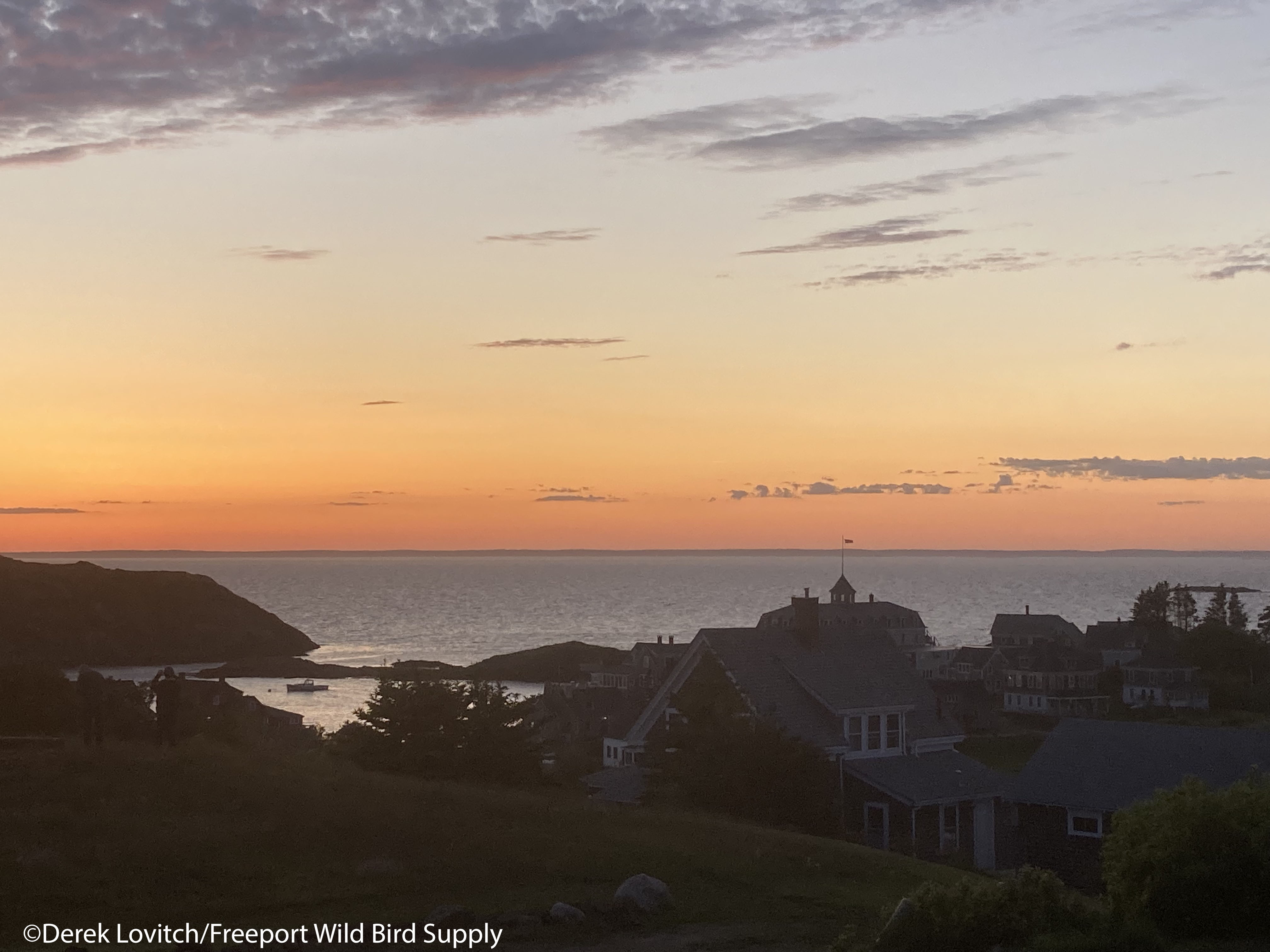
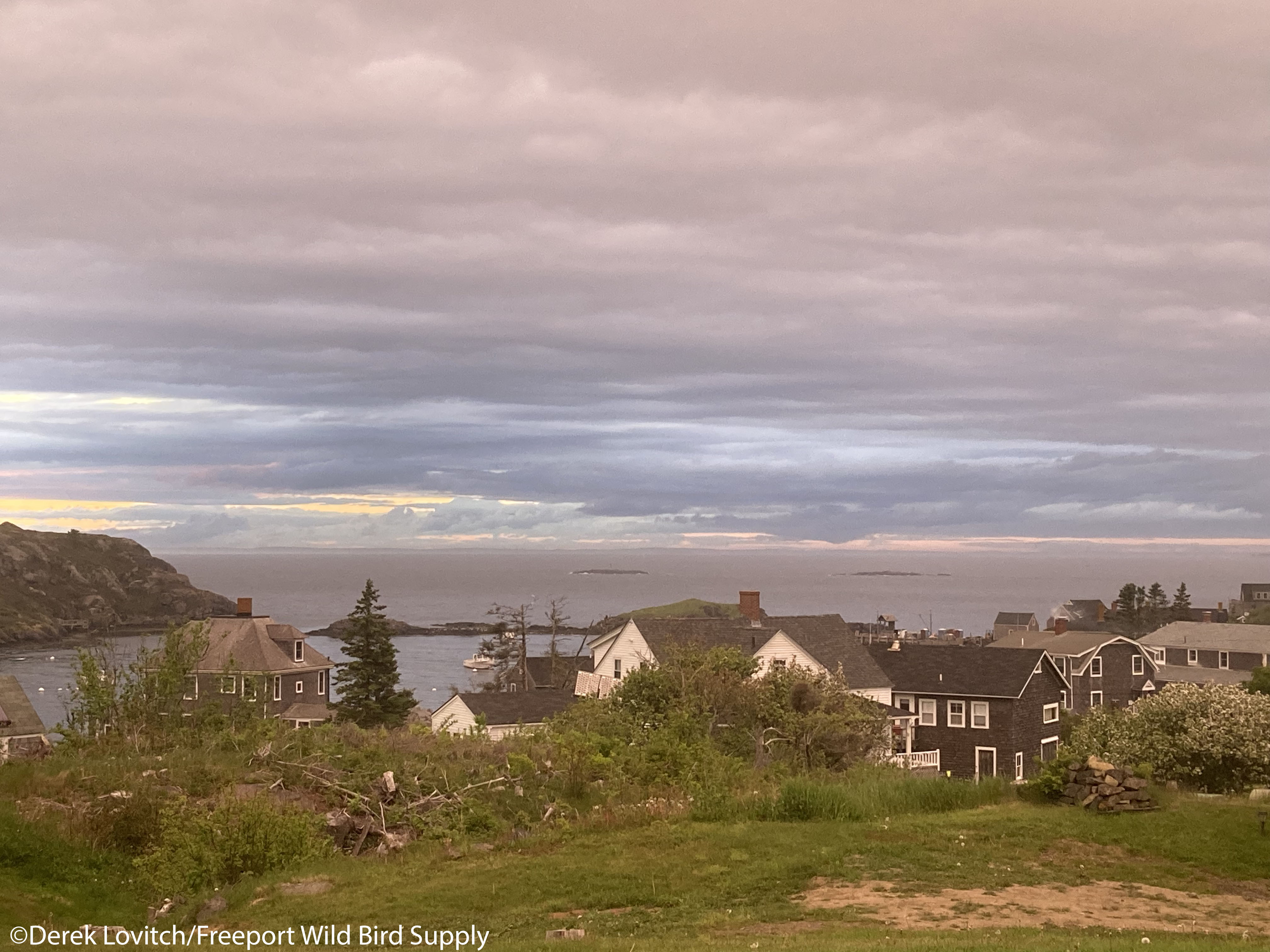
Sunsets on Monhegan are always memorable, but Saturday night’s was even more exciting
as it meant an end to two days of solid fog.
Tomorrow would be better, this scene promised. And it most certainly was!

A brief shower at dinnertime ushered in a cold front and skies began to clear at dusk, with the fog finally lifting.  That led to the delightful Sunday I was talking about.  And Monday wasn’t too shabby either, as we again started the day without fog, a very light wind, and evidence of some bird migration on the radar overnight. And, with the southwesterly flow continuing, we had even higher hopes for finding the “mega” that would make up for the so-far lackluster species list.

Starting the morning with a Black-billed Cuckoo sunning itself in a tree right in front of the Trailing Yew was a solid start, and there were more Eastern Wood-Pewees and a decent number of Blackpoll Warblers around.  Again, a rather slow day by Monhegan standards, but we really had more great looks at everything we did see. Today’s magic tree was by the Ice Pond, with a pair of Blackburnian Warblers, a pair of Blackpoll Warblers, Yellow Warbler, Common Yellowthroat, and finally a Bay-breasted Warbler.

We also finally had some rarity excitement. First, a Spizella sparrow flushed in front of us and a very quick glimpse in the scope suggested a Clay-colored Sparrow, which is a great bird in the spring. But just to be sure, we searched for it, but to no avail. Luckily, its identity was confirmed the next morning went it put on a show in the exact same spot it didn’t want to return to today.

Later, a female Purple Martin made an appearance…OK, fine, I could not completely rule out a Gray-breasted Martin. I was trying.

The tour officially concluded in the afternoon, but Jeannette and I remained to enjoy a 24-hour vacation.  Don’t worry, you didn’t “just miss” something, as all we had new in the afternoon was a Savannah Sparrow.

It’s already baby bird season!
Cedar Waxwings were the most numerous passerine on the island – or at least, the most obvious, with a flock of 60 that grew to at least 150 by Tuesday afternoon.
Common Yellowthroat.
Eastern Kingbird

Also, don’t worry that you missed the day Monhegan legends are made of on Tuesday. You did not.  It was still fairly slow, but we had a little uptick in diversity. The pulse of late-migrating flycatchers that I had expected finally arrived, there was a good Northern Gannet show off Lobster Cove in the morning, and a steady trickle of commuting Atlantic Puffins in a small sample of afternoon Lobster Cove seawatching.  

Eastern Wood-Pewee

We picked up three Willets well offshore to the south from Lobster Cove in the morning, eventually following them into the harbor where they landed for a spell.  As for that “probable” Clay-colored Sparrow that was nagging me all afternoon and night, well, I am thankful that it returned to the exact same spot as where we first glimpsed it. I received a text that it had been observed, photographed, and confirmed by others, and it obligingly remained long enough for us to catch back up with it.

Clay-colored Sparrow

Overall, there were many fewer warblers around on Tuesday, likely as many of the passage migrants had departed overnight.  But it would have been nice if this diverse day with several quality birds and good seawatching fell during the official tour!

The 11 species we added after the group tour ended therefore were as follows:

  • Savannah Sparrow
  • White-winged Scoter
  • Surf Scoter
  • Atlantic Puffin
  • WILLET
  • Alder Flycatcher
  • Yellow-bellied Flycatcher
  • Bobolink
  • Pine Siskin
  • Hermit Thrush
  • Red-bellied Woodpecker (where were you hiding these past 4 days?)
Common Eiders
Black Guillemot
American Redstart
Northern Parula
Ring-necked Pheasant. No need to work on primary projection beyond the tertial step to identify this one!

Furthermore, on the Hardy Boat back to New Harbor, we added 2 Red-necked Phalaropes (personal first-of-year) and a Razorbill.  With those 13 species, we had a total of 88 species over the 5 days, with a couple of more “quality” birds and that would have produced a much more respectable tour list! But alas.

So yes, by Monhegan standards, it was a pretty slow weekend. In fact, the 75 species on Friday through Monday was a record low (by two) for this annual tour. 16 species of warblers wasn’t too bad (last year’s soaker only produced 10), and we had some great birds. We also had such good looks at so many things, especially those – like Black-billed Cuckoo – that just don’t give such great looks very often, let alone daily! 

Here is the official trip list (not including the 13 additional species from Monday afternoon through Tuesday evening when we got off the boat in New Harbor):

*denotes ferry ride only
27-May28-May30-May31-May
American Black Duck1+chicks1+chicks1+chicks1+chicks
Mallard14+chicks16+chicks12+chicks10+chicks
Common Eiderxxxx
Ring-necked Pheasant6+chicks6+chicks4+chicks5+chicks
Mourning Dove810616
Black-billed Cuckoo1121
Chimney Swift0010
Ruby-throated Hummingbird1121
Virginia Rail1h.o.h.o.2
Sora0h.o.h.o.h.o.
Greater Yellowlegs0101
American Woodcock0010
Black Guillemotx83050
Laughing Gullx*164
Herring Gullxxxx
Great Black-backed Gullxxxx
Northern Gannet1*010
Double-crested Cormorantxxxx
Great Cormorant0011
Osprey0013
Belted Kingfisher0011
Merlin0010
Eastern Kingbird4466
Eastern Wood-Pewee1138
Willow Flycatcher0122
Blue-headed Vireo00h.o.0
Red-eyed Vireo23410
Blue Jay44148
American Crowxxxx
Common Raven0001
Black-capped Chickadeexxxx
PURPLE MARTIN0001
Barn Swallow0022
Golden-crowned Kinglet01081
Cedar Waxwing60606080
Red-breasted Nuthatch0221
House Wren2242
Winter Wren00h.o.0
Carolina Wren0h.o.21
Gray Catbirdxxxx
Brown Thrasher0022
European Starlingxxxx
Eastern Bluebird0001
Swainson’s Thrush0h.o.00
American Robin888x
Purple Finch0121
American Goldfinch681015
Chipping Sparrow0010
CLAY-COLORED SPARROW0001
Song Sparrowxxxx
Red-winged Blackbird8151515
Common Gracklexxxx
ORCHARD ORIOLE0011
Baltimore Oriole0010
Ovenbird0001
Northern Waterthrush0h.o.00
Black-and-white Warbler0132
American Redstart56128
Common Yellowthroat10151515
Cape May Warbler0010
Northern Parula48108
Magnolia Warbler1163
Bay-breasted Warbler0001
Blackburnian Warbler0043
Yellow Warbler34810
Chestnut-sided Warbler0021
Blackpoll Warbler1083020
Black-throated Blue Warbler00h.o.0
Black-throated Green Warbler0414
Canada Warbler0100
Northern Cardinal6445
Indigo Buntingh.o.112
Day Total37486259
Warbler Day Total6101212
4-Day Tour Total=75
Total Warblers=16
A cuckoo a day keeps the birders….coming back.

Derek’s Birding This Week (including Monhegan Island), 5/28-6/4/2021

My annual Monhegan Spring Migration Weekend Tour report, including species lists, can be found here:

Back on the mainland, my observations of note over the past seven days included the following:

  • 2 Blue-gray Gnatcatchers, Green Point WMA, Dresden, 6/1 (with Jeannette).
  • 1 LOUISIANA WATERTHRUSH, Hedgehog Mountain Park, Freeport, 6/2. Surprising and out of place in a seasonal stream in the deep woods. My 152nd Patch Bird for the Hedgehog complex.
  • 1 Red Crossbill, Otter Brook Preserve, Harpswell, 6/3 (with clients from Maine).
  • Handful of passage migrants around Biddeford Pool on 6/4 including a female MOURNING WARBLER (FOY) and an immature male Bay-breasted Warbler.

And FYI, we still have some room on Monday’s mini-pelagic out of Boothbay Harbor! Come join me! All the details, as well as reservation information, is here: https://www.freeportwildbirdsupply.com/pelagics

2021 Spring Monhegan Migration Weekend

Hmm…how do I spin this one? Well, it could have been colder, and it could have been a lot wetter. The crossbills were pretty amazing, and it was fun to find that Purple Martin. 

But yes, as far as Monhegan Spring Migration Weekends go, this was a pretty slow and cold one.  In fact, the 77 total species and only 10 species of warblers were both record lows (in 10 years of doing these trips on the last weekend of May).  But it is not spin to say a slow day of birding on Monhegan is better than a great day of birding most everywhere else.

The very early spring this year had rapidly advanced vegetation. On many of our Memorial Day weekends, apple trees – one of the most important bird-magnets out here – are not yet blooming. This year, they were just about finished.  Meanwhile, the dry and benign weather of the past few weeks have allowed migrant birds to proceed unimpeded. They were either going right overhead or stopping on the island only briefly before continuing onward. No traffic jams of birds held up by unfavorable weather, no concentrations at few and isolated foodstuffs, and certainly no fallouts. Well, at least the abnormally dry conditions we have been experiencing began to break this weekend.

More importantly, while the above complaints made for slow birding, they really made for a great migration for birds who don’t want to get stuck on an island or other migrant trap. Instead, they got to where they needed to go and many seemed to get right to work in order to catch up with the advanced season.

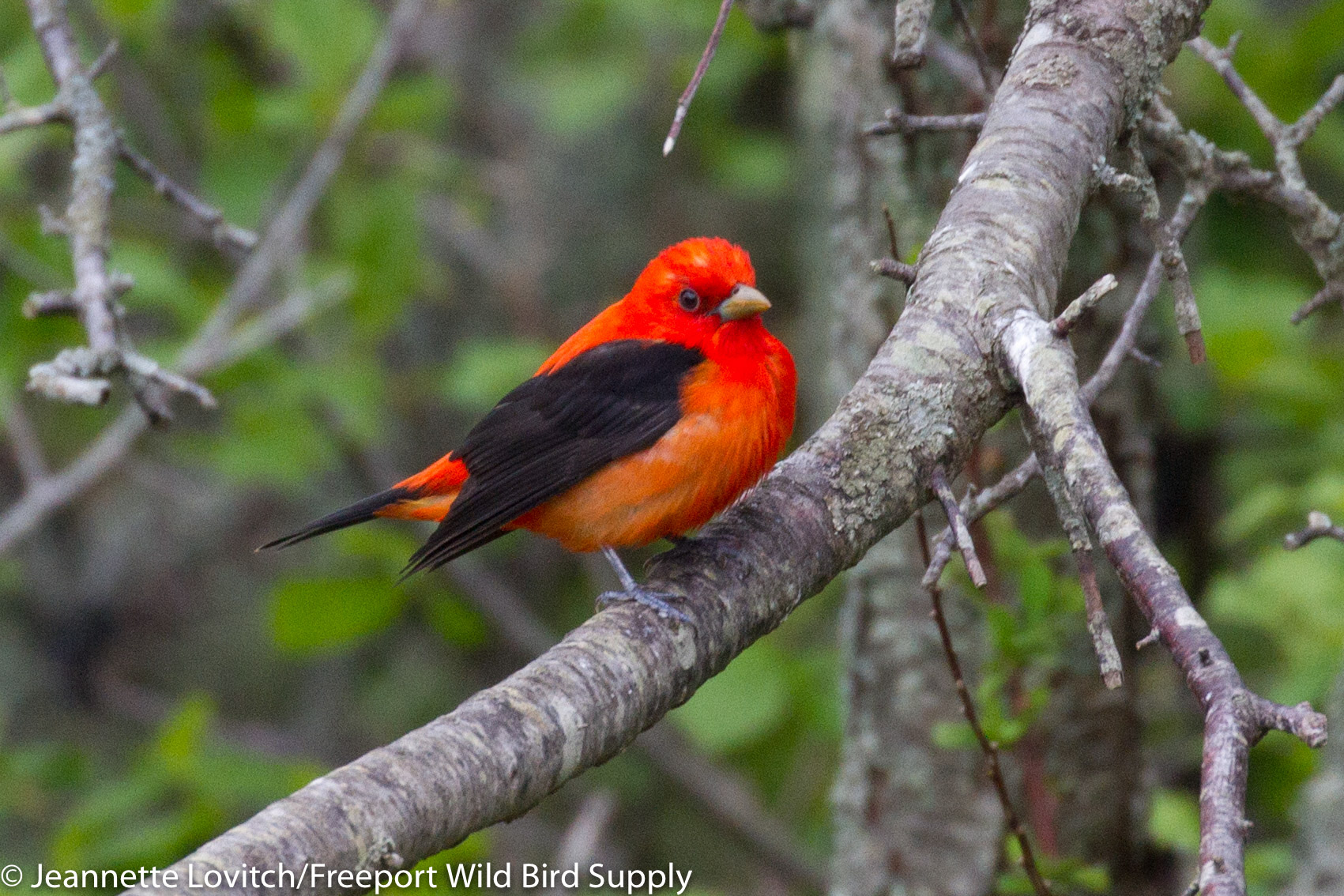
When we arrived on Friday, we found relatively few birds as expected given the preceding week’s beautiful weather. We quickly caught up with the pair of Blue-winged Teal that have been hanging around and possibly breeding out here – a very good bird on offshore islands. I was also happy to finally see my first Tennessee Warblers of the spring. And while diversity was not overly high, it was really nice out and we enjoyed really good looks at a lot of what we encountered, including the aforementioned Tennessee Warblers, Blackburnian Warblers, and our daily dose of the confiding and stunning Scarlet Tanager that was lingering around the village’s south end.

Scarlet Tanager
Tennessee Warbler.

Cedar Waxwing.

I had really high hopes for Saturday morning. With very light southerly winds and partly cloudy skies at dusk (I enjoyed a Common Nighthawk and an American Woodcock while watching the sunset with a friend), the winds became very light southwesterly after dark.  Then, around 2:00am, some light rain began to fall, and the winds shifted to the northeast.  The hopes for a fallout kept me awake as I listened to those first showers in the early morning hours.

Upon sunrise, it soon became clear that my hopes and dreams had been dashed. There was minimal bird movement visible on the NEXRAD radar before the rain arrived. A large area of low pressure passing to our south, with the northern edge of rain moving much further north than forecast, suggested the possibility of fallout conditions. But were there even any birds on the move before the rain? Or, were they cut off to our south by the approaching storm? Or – as we have been surmising on the mainland as well – have they just mostly passed by already?.

Light rain continued for our pre-breakfast walk, and it was very slow. There was definitely not a fallout, and there did not seem to be many birds around at all.  That Scarlet Tanager stole the show again though. Great looks at things like Yellow-bellied Sapsucker, American Redstart, and Northern Parula soon followed.

Rain slowly tapered off during the morning, and while cameras were mostly sealed away, it was more than birdable. We heard a Yellow-bellied Flycatcher (my first of the year), a Virginia Rail, and even briefly saw the vociferous Sora that incessantly called from the marsh throughout the weekend.  Then, just before lunch, we found a female Purple Martin. Unexpectedly late, and rare out here in general, this was a nice find, and when we relocated it at Swim Beach, we had some great views to make sure it was indeed a Purple Martin.

The afternoon was dry, but the birding remained slow. We did get a better view of the dapper male Blue-winged Teal, and spent some real quality time with the flock of 18 Red Crossbills that contained a single White-winged Crossbill.  Many folks got one, if not two, life birds in this flock, and we saw them as well as one could ever hope.

With a light northeasterly wind overnight, little to no migration was detected on the radar Saturday night into Sunday morning, but it was not yet raining. It was a little birdier than the day before, but the pre-breakfast walk only yielded two new species for us: a fleeting glimpse of a Lincoln’s Sparrow and a fly-by American Black Duck.  But the crossbills entertained us once again! Also, Smooth Green Snake and Redbelly Snake side-by-side.

A large area of low pressure was rapidly developing off the mid-Atlantic coast, and the rain was heading our way. So we were grateful for another dry – albeit chilly – morning.  A couple of late Bobolinks and a Merlin were new for us, and we glimpsed a less-than-cooperative Short-billed Dowitcher that had arrived and played hard to get for the next couple of days. With so little shorebird habitat out here, most shorebirds are noteworthy, even species common on the mainland. According to Brett Ewald, this was only the 16th record for the island, and 10th for spring. In fact, this was my 218th species on Monhegan! Even on a slow day, you never know what might show up out here. 

Light rain had arrived by the time we regrouped after lunch and the northeasterly wind was picking up. We called it quits as the rain picked up in earnest around 3:00pm, retiring to our respective rooms – or, mostly, heated common areas – and got some reading and relaxation time in.

Overnight rain ended just about as our pre-breakfast walk got underway on Monday, with only light showers and a little drizzle for the next couple of hours. Given the forecast, this was most definitely a win. We checked gull roosts and other sheltered harbor nooks, turning up only a Savannah Sparrow as a new addition to our list. The rest of the morning was spent enjoying some of the birds we have been seeing for the past days, like the Blue-winged Teal and Yellow-bellied Sapsucker.

American Redstart
Ring-necked Pheasant.
Yellow-bellied Sapsucker

After the weekend tempest, those of us who survived were rewarded with calm, following seas for our ride back to New Harbor. It was foggy, but we had some great sightings on the easy ride back with single fly-by Razorbill, Atlantic Puffin, and a feeding Bonaparte’s Gull. Adding these three excellent birds helped our paltry list to a total of 77 species. With a long-term average of about 95 species in four days, you can see that we really did have a weekend of low avian diversity.

So alas, the weekend came to a close. A few good birds, lots of great looks at regular birds, and a few lingering chills. But, as usual, we ate well. Perhaps too well. But hey, we were burning off calories thermoregulating! Hey it happens, and the regulars all know that there will be a “bad” weekend once in a while to make the “best” tours that much sweeter.

Read

Since folks who have been reading several years of these trip reports, I figured I would include the gratuitous food porn photo as usual. However, without the Novelty open, there was no pizza. Besides, we like to class it up once in a while, in this case, at the Island Inn.

(* denotes seen from the ferry only. **Seen only by the leader outside of group time)

5/285/295/305/31
BLUE-WINGED TEAL2211
American Black Duck0010
Mallardxxxx
Common Eiderxxxx
White-winged Scoter1*000
Ring-necked Pheasant3468
Mourning Dove10888
Common Nighthawk1**000
Ruby-throated Hummingbird1000
Virginia Rail0110
Sora1110
Black Guillemotxxxx
ATLANTIC PUFFIN0001*
Razorbill0001*
American Woodcock1**000
SHORT-BILLED DOWITCHER0010
Bonaparte’s Gull0001*
Laughing Gullx* + 2221+ 14*
Herring Gullxxxx
Great Black-backed Gullxxxx
Common Ternx*006*
Northern Gannet1*120
Double-crested Cormorantxxxx
Great Cormorant1001
Osprey1000
Bald Eagle2210
Sharp-shinned Hawk2000
Red-bellied Woodpecker1100
Yellow-bellied Sapsucker0111
Merlin0011
Eastern Wood-Pewee5011
Yellow-bellied Flycatcher0100
Alder Flycatcher0201
“Traill’s” Flycatcher1000
Least Flycatcher0010
Eastern Kingbird4020
Red-eyed Vireo4122
Blue Jay44104
American Crowxxxx
Common Raven1110
PURPLE MARTIN0100
Tree Swallow2211
Barn Swallow0210
Black-capped Chickadee2xxx
Winter Wren0010
Carolina Wren0001
Golden-crowned Kinglet0211
American Robinxxxx
Gray Catbirdxxxx
Brown Thrasher0014
European Starlingxxxx
Cedar Waxwing40604030
Purple Finch1213
RED CROSSBILL18181818
WHITE-WINGED CROSSBILL1111
American Goldfinch810128
Chipping Sparrow4222
White-throated Sparrow0001
Savannah Sparrow0001
Song Sparrowxxxx
Lincoln’s Sparrow0010
Black-and-white Warbler0112
Common Yellowthroat6101215
American Redstart0330
Northern Parula0233
Magnolia Warbler0132
Blackburnian Warbler2000
Yellow Warbler10868
Chestnut-sided Warbler2101
Blackpoll Warbler4886
Black-throated Green Warbler0121
Scarlet Tanager1111
Northern Cardinal6866
Bobolink0020
Red-winged Blackbird10101010
Common Gracklexxxx
Baltimore Oriole2222
Day Total51505652
4-DAY TOTAL77

2019 Monhegan Spring Migration Weekend Tour Report

L1140408_SUTA_SCTA1a-editedA spiffy adult male Summer Tanager(middle) joined a small flock of Scarlet Tanagers and was one of the stars of the weekend’s show.

More and more we, as birders, lament “they way it used to be.” Declining populations of so many birds, especially our long-distance Neotropical migrants often leaves us longer for yesteryear. Even a good day can turn wistful as we think of what “a lot” of birds once were. On some of our recent tours to Monhegan Island, even the good days felt lackluster; it was missing the “oomph” of what Monhegan legends are made of.

This was NOT one of those trips.

It was awesome. It felt like it “used to be.”  It was great, it was fun, and at times, the birding was just darn easy!

Most of the first day’s group joined me on the 9:00am departure out of New Harbor. I was amped up. A strong flight on the radar overnight developed between evening showers and thunderstorms, with another line of showers ushering in a shift in the winds from the south to the west by morning. This was a recipe for a fallout – or at least a lot of birds on Monhegan.

A Yellow Warbler – the 124th species in our wooded yard – greeted me as I topped off the feeders, and a couple of Blackpoll Warblers were singing. At Pemaquid Point, Erin Walter and I had several warblers, including one Cape May, in the small grove of spruces near the lighthouse.  These were very good signs.

As we endured a swelly ride on the ferry, an unidentified thrush streaked by, another good sign. Unrelated, but no less exciting, was a single fly-by Atlantic Puffins, a couple of Roseate Terns, and three tardy White-winged Scoters. A pair of Red-breasted Mergansers at Neigh Duck was intriguingly late.

We arrived on the island shortly after 10:00am, and Phil Brown – just finishing up a New Hampshire Audubon tour – informed me that all of the signs of a big day were right. In fact, he was clearly having trouble tearing himself away. So we hit the ground running.

Over the next hour and a half, we saw a lot of birds…and we had still not even made it to the end of Dock Road!  For those of you not familiar with the island, that’s about an 1/8th of a mile. We hadn’t even checked in yet, and we had a dozen species of warblers and at least 4 Philadelphia Vireos.
BLBW_dock_road_Erin-editedBlackburnian Warblers along Dock Road was a nice welcome!
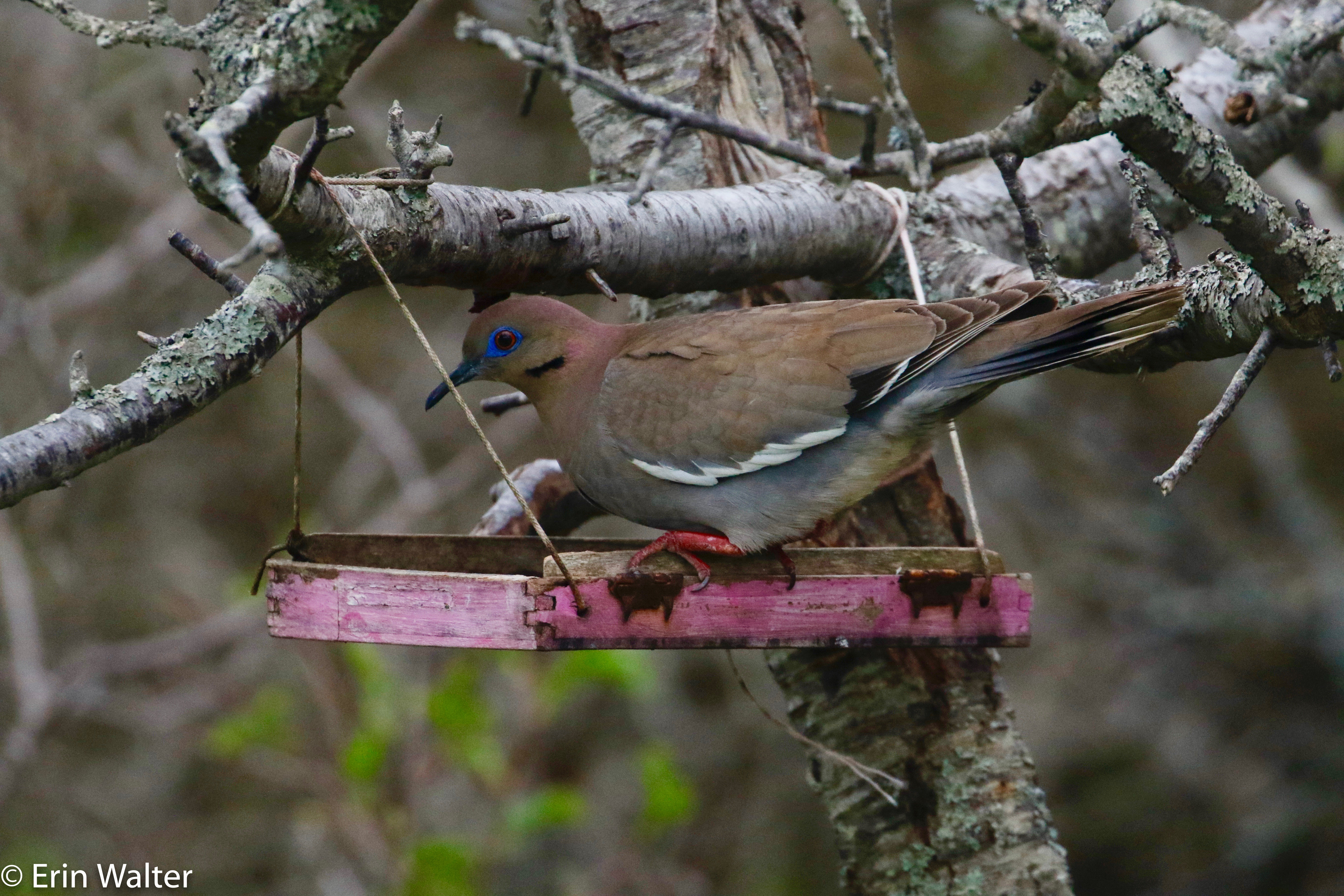
The only reason we made it across town was that a White-winged Dove (my first for the island and one of only a handful of previous island records) was just found at Donna Cundy’s famous feeders.  But not even a new island bird for myself could get me to hustle…there were too many birds to pass by; I apparently already had hit the MonhegZen!
WWDO_feeder_Erin-edited

But we did see the dove, and it was great. However, I think it was upstaged for all of us by the 6 Scarlet Tanagers (5 males) that were also at the feeders!  We eventually stopped for a quick lunch, checked in briefly at the Trailing Yew, and slowly made our way down to the south end of the island where warblers were feeding on rocks at the water’s edge.
L1140378_2SCTA1a-edited

And it’s not often you finish the day with 6 Blackburnian Warblers below you!

BLBW_rocks_Erin-edited

In fact, the day was so amazing that I barely even made it to the brewery with enough time to get a growlette to go for dinner!  (Sorry, people who know me and this tour should have been told to sit down before I said that)> Birds were simply everywhere. Tennessee Warblers – a lifer for some of the group were in impressive numbers, and was likely the most common migrant of the day. Blackpoll Warblers were common, but normally-uncommon migrants such as Blackburnian, Bay-breasted, and Cape May Warblers were unusually numerous and conspicuous.  We finished our first day with 19 species of warblers. It was like the good ol’ days.
MAWA_Erin-editedMagnolia Warblers were common and conspicuous all weekend.
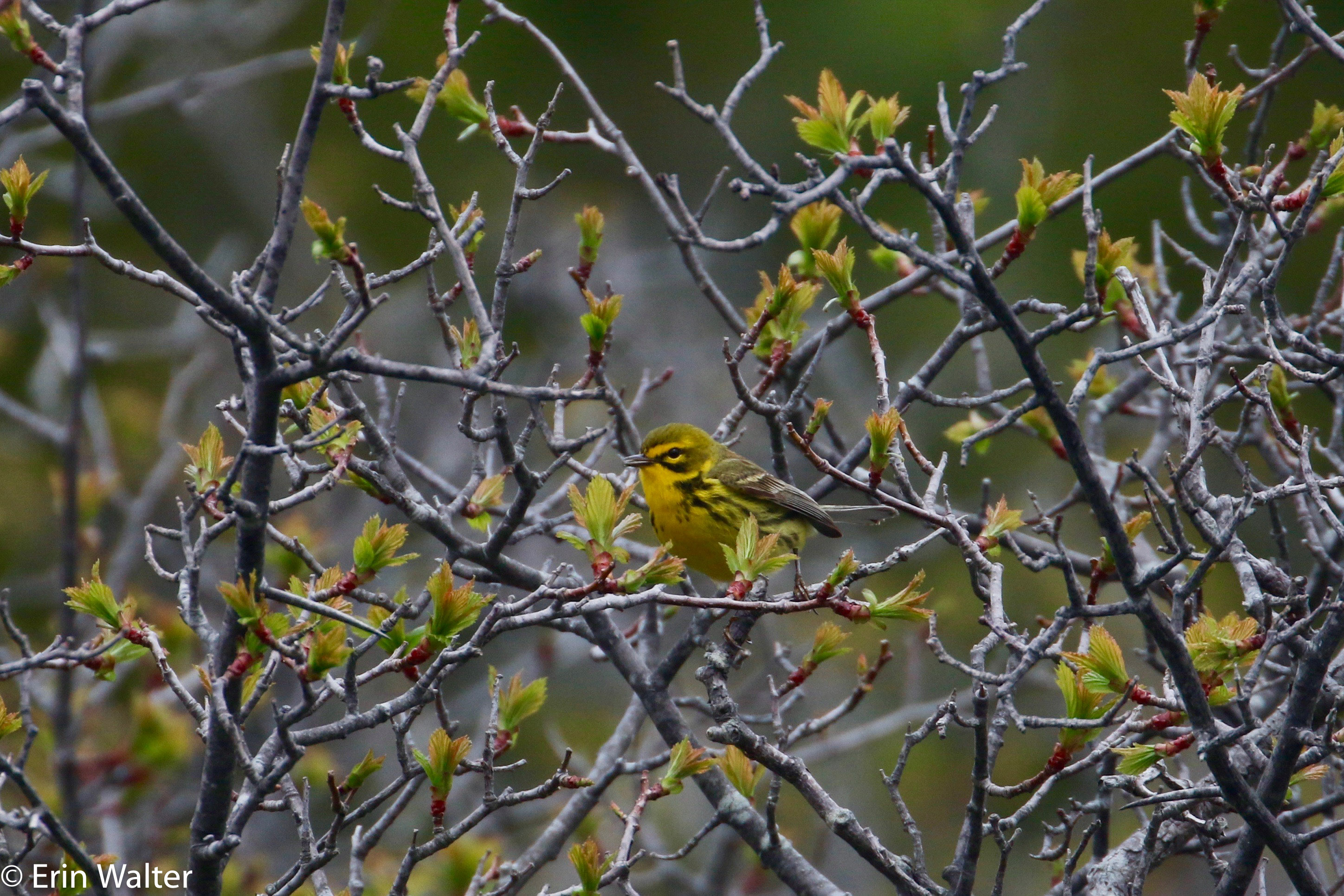
PRAW_Erin-editedFinding an uncommon-on-the-island Prairie Warbler (and hearing another or the same on the island’s East side the next day was a good addition to our impressive tally of 22 species of warblers. 

pizza-edited

The only concern I had was would the rest of the trip be anti-climatic?

With light northwesterly winds overnight Friday into Saturday, more birds departed than arrived, but there were still plenty of birds to be seen.  A single singing Ovenbird and a quick sighting of a Nashville Warbler put us to 21 species of warblers, and a Blue-gray Gnatcatcher was a good find.  A singing Sora, a soaring Peregrine Falcon, and a silent Northern Mockingbird were some of the species added to our list, but we continued to enjoy countless warblers. Sure, we “only” estimated 25 Tennessee Warblers today, but remember yesterday when they were a life bird?  Better looks at the White-winged Dove (it was much healthier-looking today, too) were had as well.
L1140315_WWDO2A-editedL1140309_WWDO1A-edited

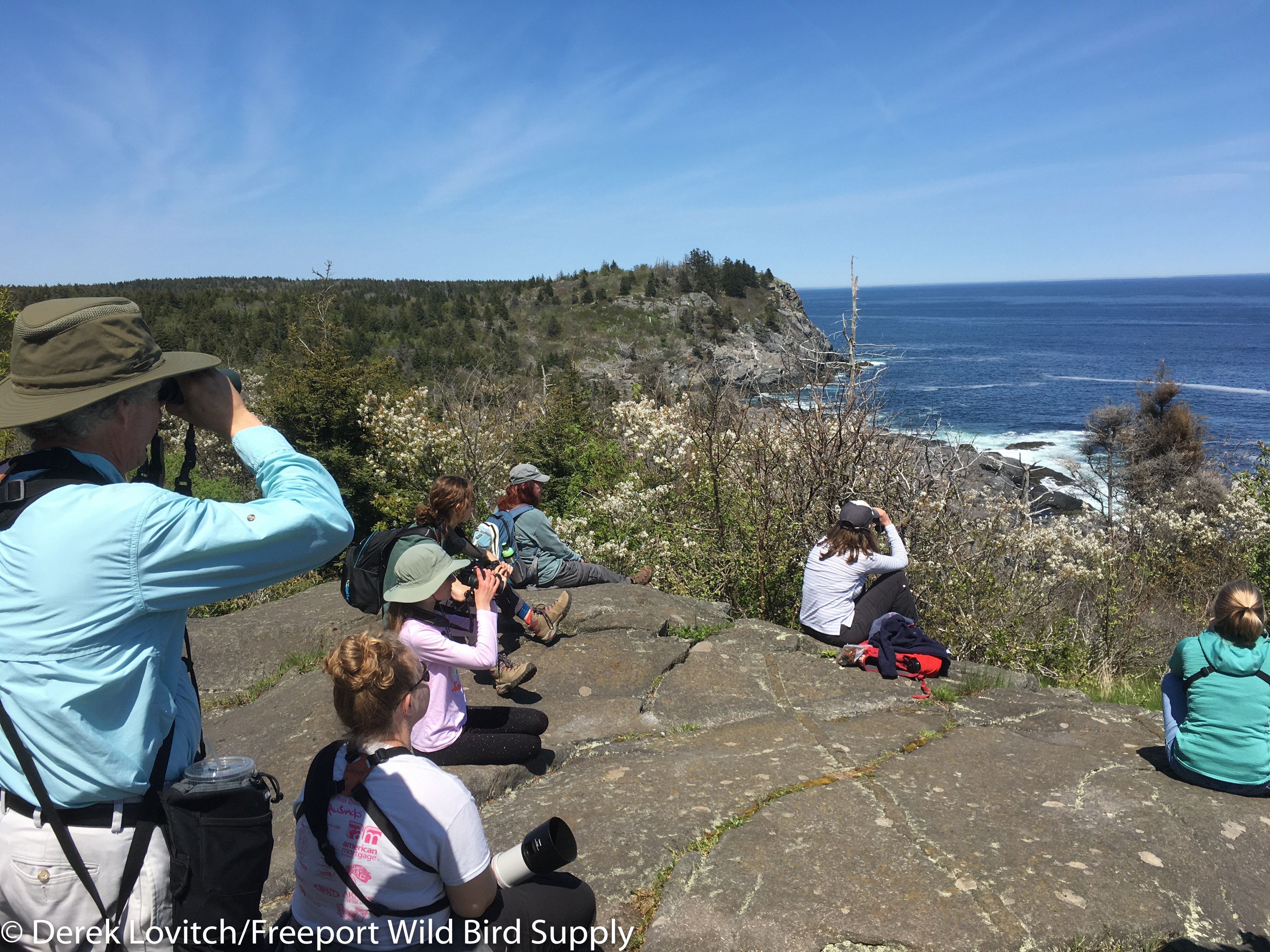
L1140355_SUTA1a-editedThe Summer Tanager eventually found his way to the Tanager Festival at Donna’s feeders. And you really won’t find more cooperative Lincoln’s Sparrows than one of the two (below) that was also at the feeders – for those who appreciate the more subtle beauties!

L1140346_LISP2-edited

L1140335_LISP1-edited

With a slower afternoon, we took a little hike to take in the views from Burnt Head and worked various under-birded nooks and crannies. And it was hard not to enjoy a Novelty pizza dinner because: 1) Novelty pizza and 2) we finished our second day of birding with a stunning adult male Summer Tanager joining the Scarlet Tanager convention at Donna’s feeders.
Group_BurntHead-edited

We went to bed Saturday night with light southerly winds and rain on its way, with dreams of another fallout dancing in our bird-filled heads.  We awoke to light rain, fog, but still a light to moderate southerly wind. There was another strong flight overnight, according to the radar – at least until rain overspread the area by 2:00am.  But alas, whether ushered overhead by the southerly tailwinds, or unable to notice the island as they flew over the fog, there was no fallout, and in fact, there were actually fewer birds around in the early morning.

However, the rain ended as we ate breakfast, and the sun rapidly came out, optimism –and perhaps a little Rarity Fever – reigned supreme. And while numbers were a little low, diversity was excellent, and our trip list grew rapidly with a series of quality birds: Virginia Rail (heard only as usual), Green Heron, Black-billed Cuckoo, Warbling Vireo, and a rare-on-the-island Hairy Woodpecker. I also made friends with a couple of Chestnut-sided Warblers that were calling Swim Beach home.
feedingCSWA-J-mo
CSWA_mealworms1_J-moCSWA_mealworm_Erin-edited
CSWA_J-Mo

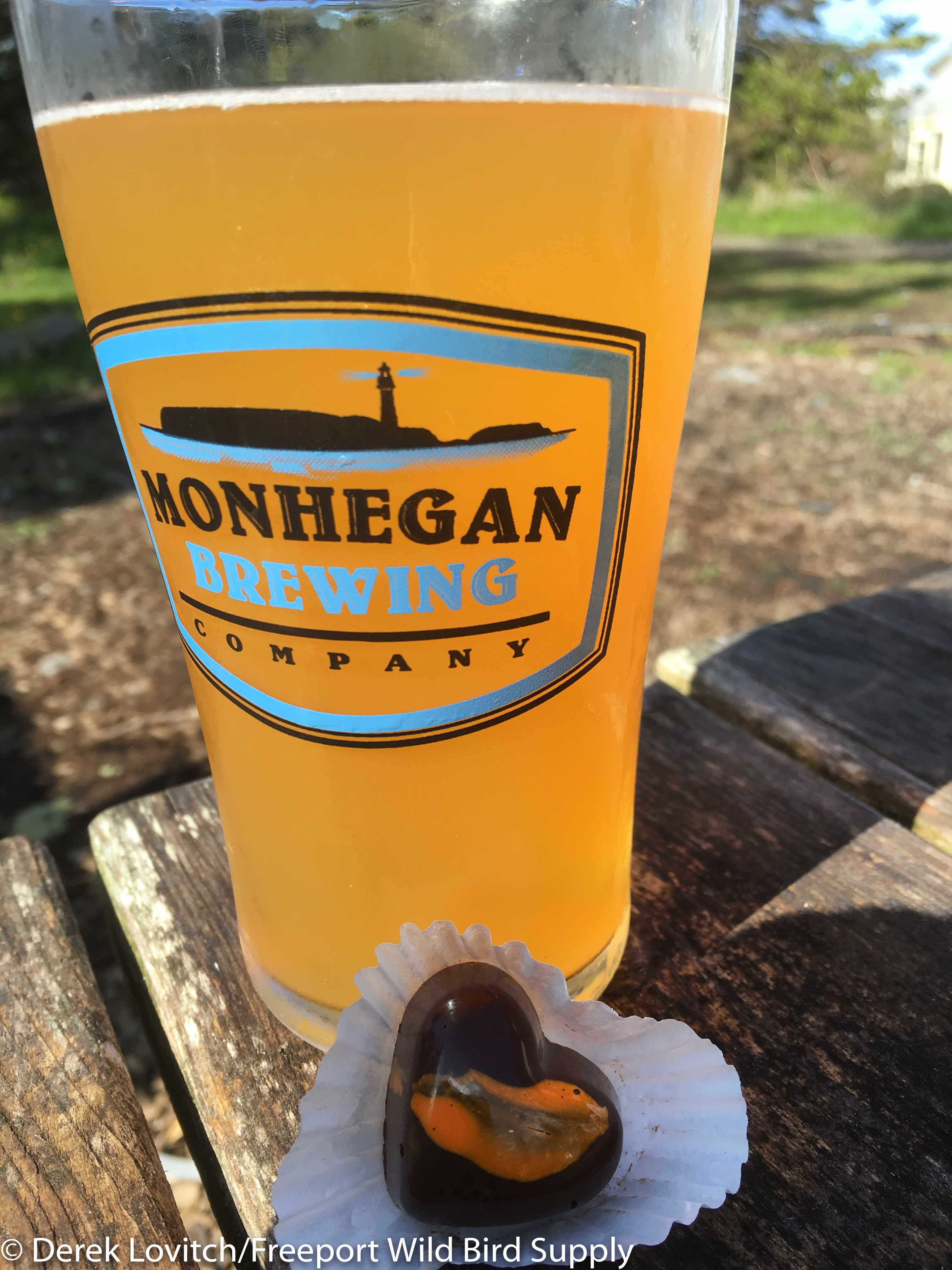
But unlike the forecast, it was a rather nice day! It did cloud up again after lunch, but rain was limited to a narrow line of showers ahead of the afternoon cold front. And where else but on Monhegan do you end your day with a beer and chocolate pairing at Monhegan Brewing, with lobster rolls and bratwurst…and Tennessee Warblers still singing away!
Group_Ice_Pond-edited
SCTA_perched_Erin-edited
stump_garden_J-Mo
Red_Admiral,Marion_Sprague-editedRed Admirals were quite abundant, increasing as the weekend went on. 

chocolate-edited
beer_chocolate-edited

At dusk, I took a walk to catch up with a friend, listening to the Sora and Virginia Rail in the marsh, and several American Woodcocks going wild.

On Monday, the last day of the tour itself, we awoke to moderate fog but very light winds. The radar return was somewhat ambiguous, but it could have been strong in the first 2/3rds of the night despite light easterly winds shifting to the west and then northwest by morning. And very few flight calls were heard overhead before coffee, suggestive of less of a migration overnight as we had hoped.

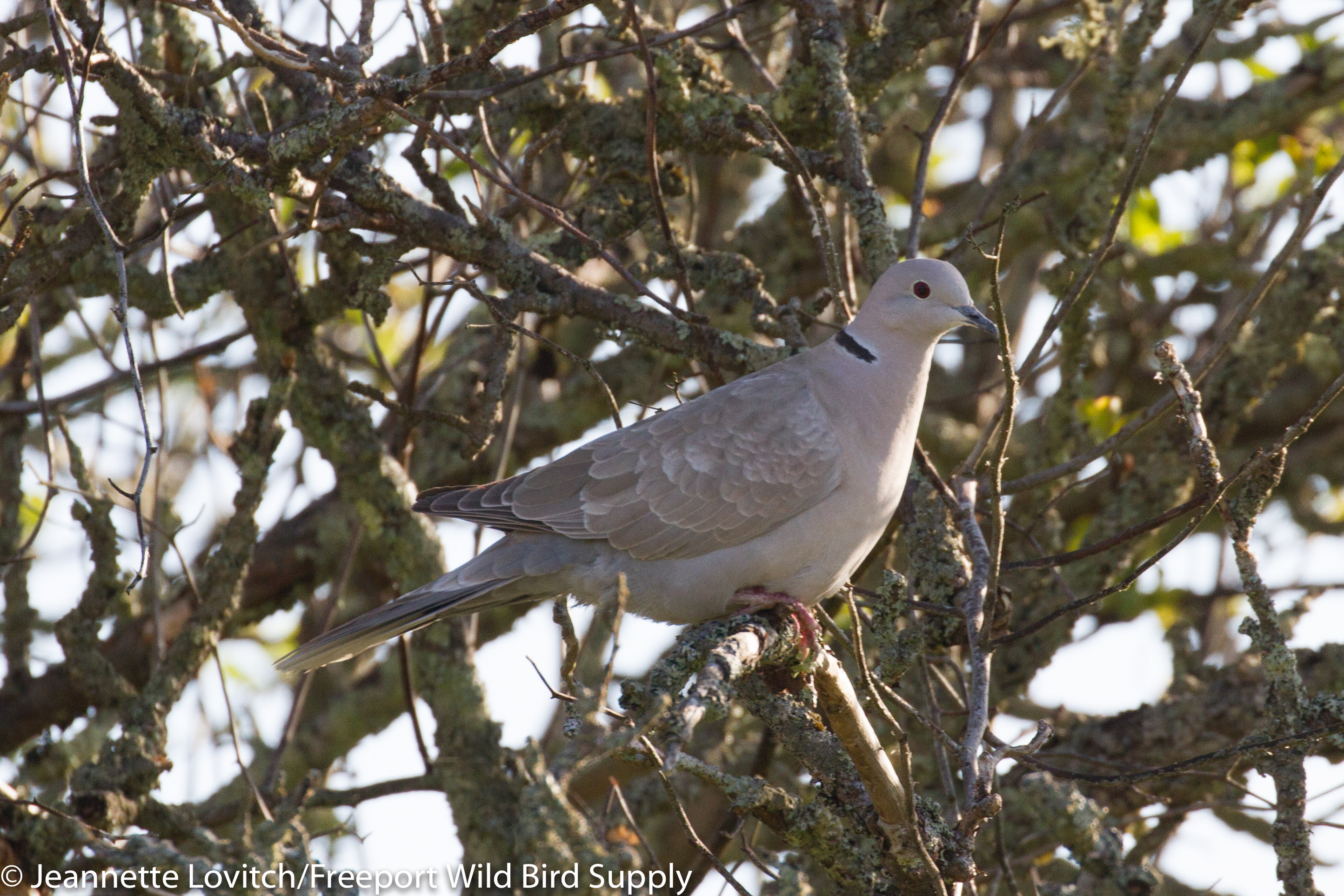
Immediately, however, we found a nice pocket of mixed warblers right behind the Trailing Yew, so we jumped right into enjoying them.  Then, I got a text that right around the corner – in the direction I usually walk before breakfast! – the state’s second ever Eurasian Collared-Dove was just discovered.  We zipped over to immediately hear and see it – not just another new island bird, but a new Maine bird for me!  And another life bird for most of the group. And it wasn’t even time for breakfast yet.
EUCD_Erin-edited

Light northeast winds slowly shifted the southeast over the course of the day, but while the day remained rather raw, it was once again precipitation-free. Unfortunately, overall, the birding was on the slow side. Well, even in the good ol’ days there were slow days!
LighthouseHill-edited
LighthouseHill2-edited
IMG_6296-edited-edited
cemetery-editedEAKI_J-MoEastern Kingbird.

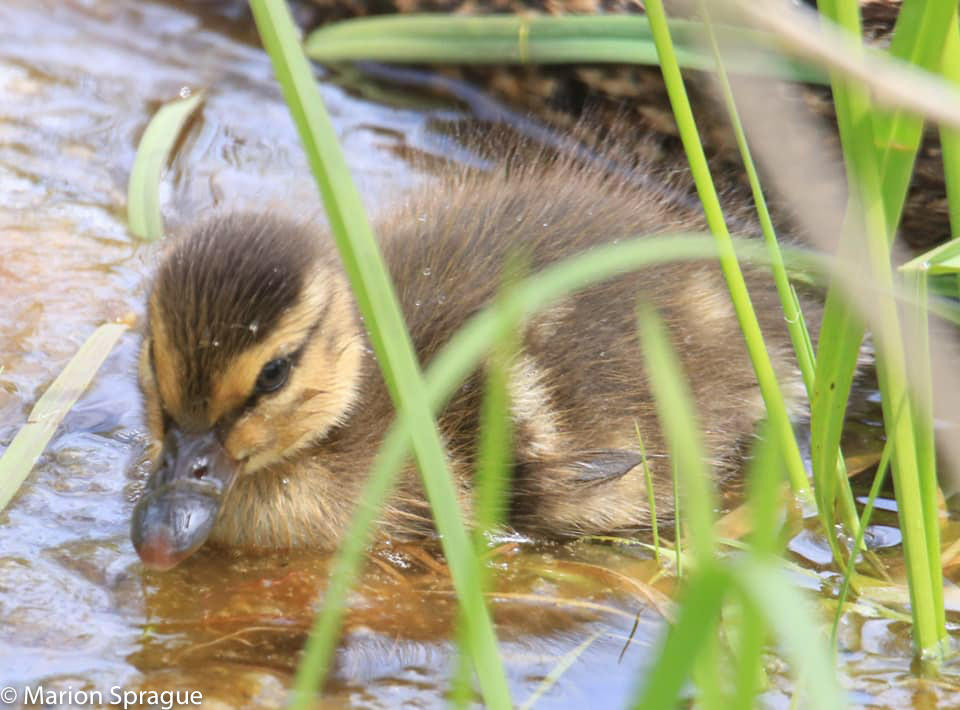
ducking_Marion_Sprague-editedFuzzy baby ducks!  This chick’s mom was a Mallard x American Black Duck hybrid. 

female_SCTA_J-Mo
SCTA_perched_JMO1Female (top) and male Scarlet Tanagers were omnipresent at Donna’s feeders. #MonheganBirdingProblems

While the tour officially came to an end, Jeannette and I remained on the island – joined now and again by a few friends – and enjoyed a relaxing evening and another amazing Island Inn dinner. Winds were forecast to remain northwesterly overnight, with precipitation and fog developing. Our hopes for one last big day were not high as we turned in.
Sunset-edited

Winds were northeasterly at dawn, but most of the night saw northwesterly winds – unfavorable to migrants heading northward. Not surprisingly, there was little or no visible migration on the radar overnight. So why was there a morning flight when I finally stumbled outside at 6:15?  A flock of 38 Blue Jays swirling about, more Bay-breasted Warblers than in the last 3 days combined, lots of Blackpoll Warblers, and Eastern Wood-Pewees seemed to be everywhere.

In fact, it was really birdy again (nothing like Friday, mind you). There were active pockets of birds almost everywhere. Blackpoll Warblers were common, and flycatchers had arrived en masse: while there had been plenty of Least Flycatchers and Eastern Wood-Pewees around, Alder Flycatchers were not conspicuous, and I had my first Willow Flycatcher of the year.

EWPE_J-MoEastern Wood-Pewee (from the previous, sunny day).

Jeannette and I enjoyed a great view of the Eurasian Collared-Dove in the morning, but later it was upstaged by a sighting of it flying together with the re-appearing White-winged Dove. I finally saw the one Pine Warbler that had been around; my 22nd warbler species of the trip, but I did miss a Morning Warbler at the ice pond in the morning. Blackpoll Warblers, American Redstarts, and about as many Eastern Wood-Pewees as I have ever seen in a day were among the impressive tallies.
BLPW_J-MoBlackpoll Warbler (male, above) in comparison to Black-and-white Warbler (female, below).
BAWW_J-Mo

Why were there so many more birds around? Where did they come from, and how? Well, predicting bird migration and analyzing it via NEXRAD radar is far from an exact science, and part of the thrill of the day was how unexpected it was. It was thought-provoking at least.
clouds-edited

Unfortunately, shortly after noon, it began to rain, and rain steady enough that bird activity was reduced dramatically. But, with final preparations – such as goodbyes to friends and beer to go – to leave the island, this wasn’t necessarily a bad thing. But with a little time to spare, Jeannette decided we should do one more walk around the southeast corner of the island, from the cul-de-sac to the Wyeth House, just to see if the concentration of warblers that my group and I saw on Friday had returned in the inclement weather.

So off we went. We were pretty much soaked by now anyway, so why stop now. And good thing that we did. While warblers on the rocks were limited to just a couple immature male American Redstarts, flycatchers were all over the place. Several Alder Flycatchers joined at least a dozen Eastern Wood-Pewees in foraging for flies right at the water’s edge. I thought I spotted another Yellow-bellied Flycatcher heading away, but when it landed, I noticed it was nearly as big as the Alders, and not at all yellow-bellied. The size, fairly long bill, coupled with primary projection almost as long as a pewee and a greenish back with off-white underparts was obviously – well, obvious through the fog and drops of rain on our binoculars – an Acadian Flycatcher. One was reported here the day before – but met with skepticism by me and several others I spoke with, after several exhaustive searches failed to turn it up. But alas, presumably, here it was!

My second on the island, and another southern vagrant that was part of this recent “overshooting” event, it was an exciting way to finish the trip. While I bounced around the rocks trying to photograph the bird with a wet phone held up to equally-wet binoculars, time was ticking, and we really needed to go. In the end, I think my one photograph of the bird might actually just be seaweed on a rock, as I was shooting blindly with a touch screen that was too wet to be much use.

It’s sometimes hard to leave on such a good day, but with so many good birds and excitement over the past five, I could not get too greedy. And a close-up Razorbill and Atlantic Puffin on the ride back helped, too.

As did the feeling that it was, once again, and at least for one long weekend, just like it was in the good ol’ days!
MAWA_J-MoMagnolia Warbler

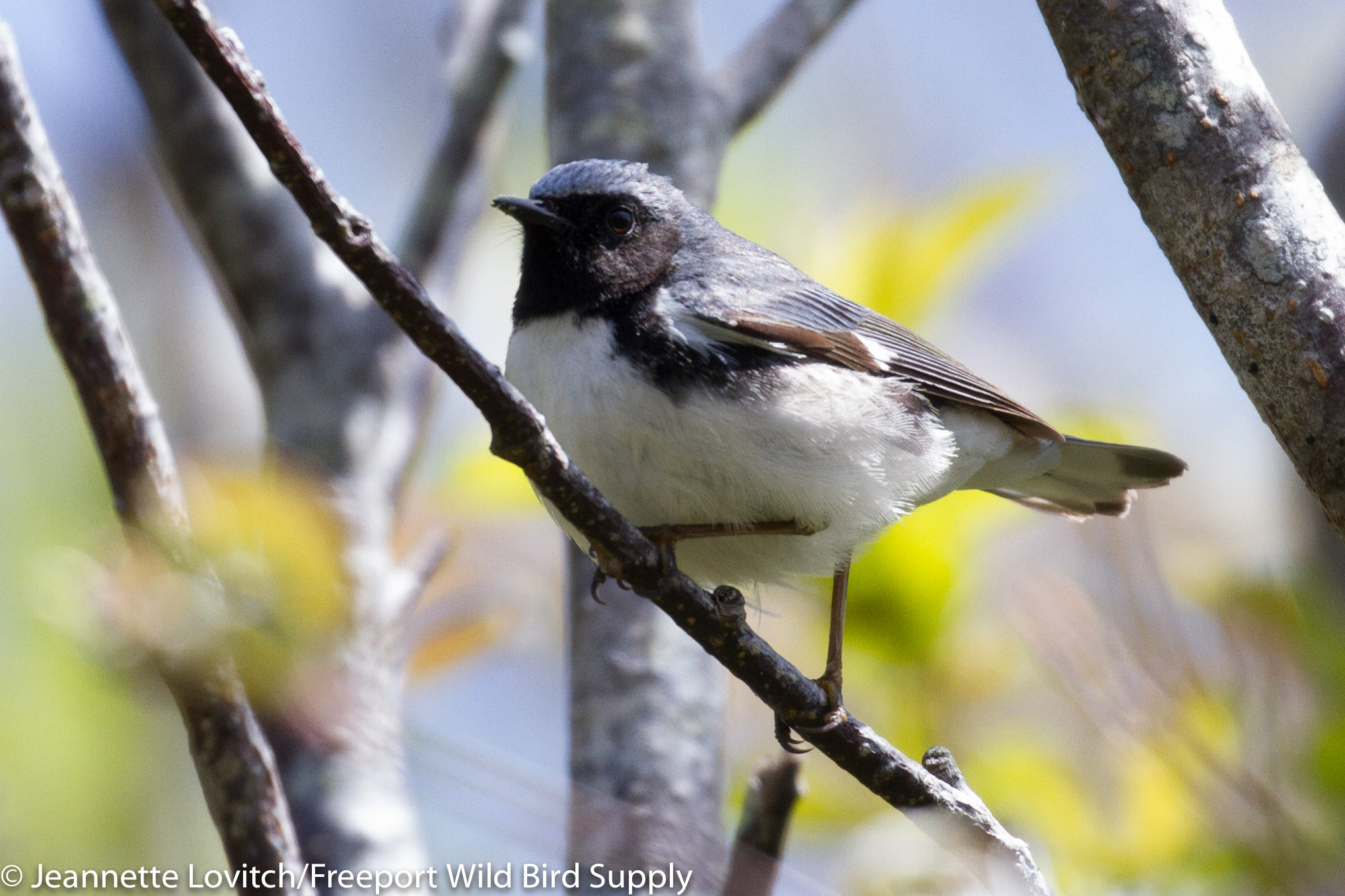
BTBW_J-MoBlack-throated Blue Warbler

5 days, 112 total species (minus 3 for the Tuesday-only birds) and plus 4 for ferry-only birds with the group. Not bad!

* denotes ferry ride only
24-May 25-May 26-May 27-May 28-May
Wood Duck 0 0 1 0 0
American Black Duck x Mallard hybrid 1 1 1 1 1
Mallard x x x x x
Common Eider x x x x x
Surf Scoter 0 0 0 0 0
White-winged Scoter 3* 0 0 0 1
Red-breasted Merganser 2 0 0 0 0
Ring-necked Pheasant 0 1 0 1 2
EURASIAN COLLARED DOVE 0 0 0 1 1
WHITE-WINGED DOVE 1 1 1 0 0
Mourning Dove 4 4 8 6 8
Black-billed Cuckoo 0 0 1 0 0
Chimney Swift 6 1 2 0 2
Ruby-throated Hummingbird 8 4 8 6 6
Virginia Rail 0 0 1 1 1
Sora 0 1 1 1 1
Black Guillemot x x x x x
ATLANTIC PUFFIN 1* 0 0 0 1*
Razorbill 0 0 0 0 1*
Semipalmated Plover 1 0 0 0
American Woodcock 0 0 3 0
Spotted Sandpiper 0 2 1 0
Greater Yellowlegs 0 0 1 1 1
Laughing Gull x* 2 2 3 6
Ring-billed Gull 0 0 0 0
Herring Gull x x x x x
Great Black-backed Gull x x x x x
Common Tern x* 0 0 0
Roseate Tern 2* 0 0 0
Common Loon 2 (10*) 0 0 1 4 (4*)
Northern Gannet 2* 2 6 0
Double-crested Cormorant x x x x x
Great Blue Heron 0 2 1 0 0
Green Heron 0 1 0 0 0
Osprey 1 0 0 1 0
Bald Eagle 0 2 0 1 1
Belted Kingfisher 1 0 1 0 0
Red-bellied Woodpecker 0 1 0 1 1
HAIRY WOODPECKER 0 0 1 0 1
Merlin 2 1 0 0 0
Peregrine Falcon 0 1 0 0 0
Eastern Wood-Pewee 4 2 4 5 40
Yellow-bellied Flycatcher 2 0 0 0 2
ACADIAN FLYCATCHER 0 0 0 0 1
Alder Flycatcher 1 1 0 2 10
Willow Flycatcher 0 0 0 0 1
“Traill’s” Flycatcher 0 0 0 0 5
Least Flycatcher 15 12 12 10 15
Eastern Kingbird 5 3 2 5 6
Blue-headed Vireo 0 0 1 0 0
Philadelphia Vireo 6 1 0 0 0
Warbling Vireo 0 0 1 0 0
Red-eyed Vireo 4 4 10 4 20
Blue Jay 4 48 12 25 38
American Crow x x x 6 x
Common Raven 2 0 0 2 2
Tree Swallow 0 2 2 5 4
CLIFF SWALLOW 0 0 0 0 1
Barn Swallow 2 2 4 6 6
Black-capped Chickadee x x x x x
Red-breasted Nuthatch 2 6 6 10 4
Winter Wren 0 1 1 2 0
Carolina Wren 0 1 1 2 2
Golden-crowned Kinglet 0 0 0 8 0
Eastern Bluebird 0 0 1 0 0
Swainson’s Thrush 3 3 2 2 0
American Robin 8 8 x x x
Gray Catbird 4 x x x x
Northern Mockingbird 0 1 0 0 0
Brown Thrasher 0 0 0 1 1
European Starling 8 8 x x
Cedar Waxwing 200 80 100 125 100
Purple Finch 1 1 1 3 2
Pine Siskin 0 1 1 2 0
American Goldfinch x x 10 10 8
CLAY-COLORED SPARROW 0 1 1 0 0
White-crowned Sparrow 1 1 0 0 0
White-throated Sparrow 1 0 0 0 0
Savannah Sparrow 1 3 2 1 1
Song Sparrow x x x x x
Lincoln’s Sparrow 2 2 0 0 0
Swamp Sparrow 0 0 0 0 0
Ovenbird 0 1 0 0 0
Northern Waterthrush 2 1 0 2 1
Black-and-white Warbler 4 6 3 3 4
Tennessee Warbler 40 25 20 15 10
Nashville Warbler 0 1 0 0 0
Common Yellowthroat x x x x x
American Redstart 25 10 15 10 60
Cape May Warbler 2 4 4 2 8
Northern Parula 20 10 6 8 6
Magnolia Warbler 30 10 10 6 30
Bay-breasted Warbler 10 4 2 0 6
Blackburnian Warbler 20 6 6 3 5
Yellow Warbler 15 15 20 20 25
Chestnut-sided Warbler 6 20 25 15 15
Blackpoll Warbler 40 10 15 25 80
Black-throated Blue Warbler 1 0 1 2 0
Palm Warbler 0 0 0 0 0
PINE WARBLER 0 0 0 0 1
Yellow-rumped Warbler 4 8 4 4 3
PRAIRIE WARBLER 1 1 0 0 0
Black-throated Green Warbler 1 10 3 12 2
Canada Warbler 6 2 5 1 1
Wilson’s Warbler 2 1 1 0 2
SUMMER TANAGER 1 1 1 0 0
Scarlet Tanager 7 7 6 4 1
Northern Cardinal 5 4 6 4 4
Rose-breasted Grosbeak 1 2 2 2 2
Indigo Bunting 1 2 3 0 1
Bobolink 7 4 4 4 1
Red-winged Blackbird x x x x x
Common Grackle x x x x x
Baltimore Oriole 1 1 2 1 0
Day Total 70 77 73 67 71

EUCD_J-Mo