Tag Archives: migration

Taking Action to Save the Birds of Monhegan Island

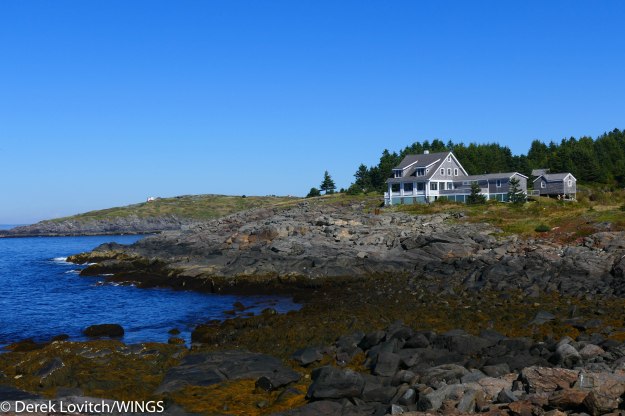
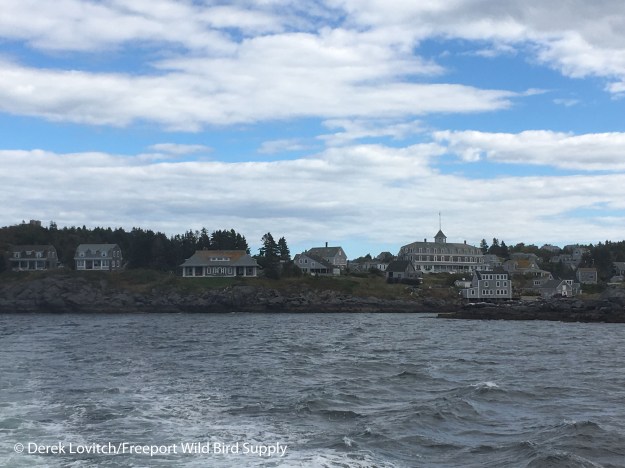
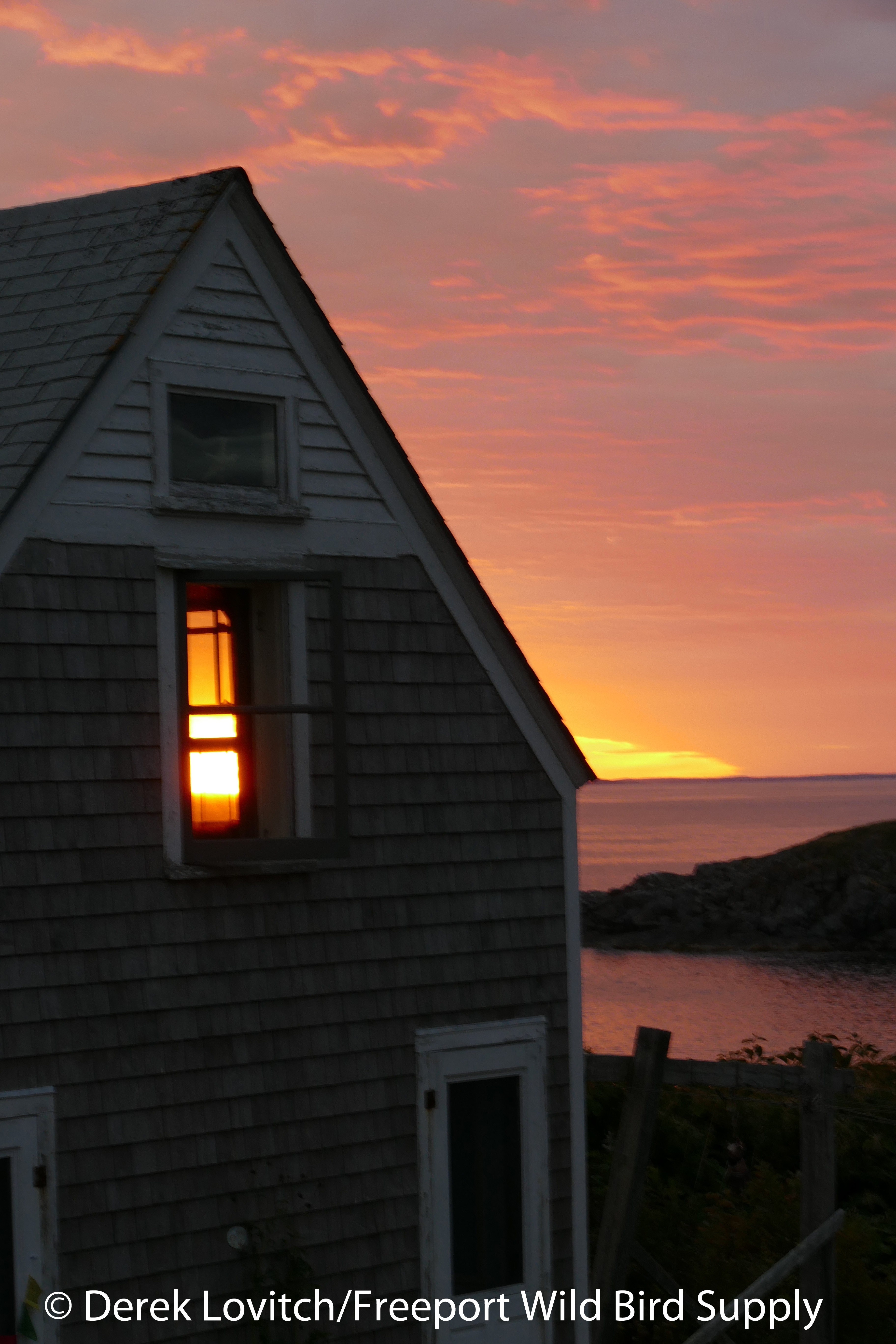
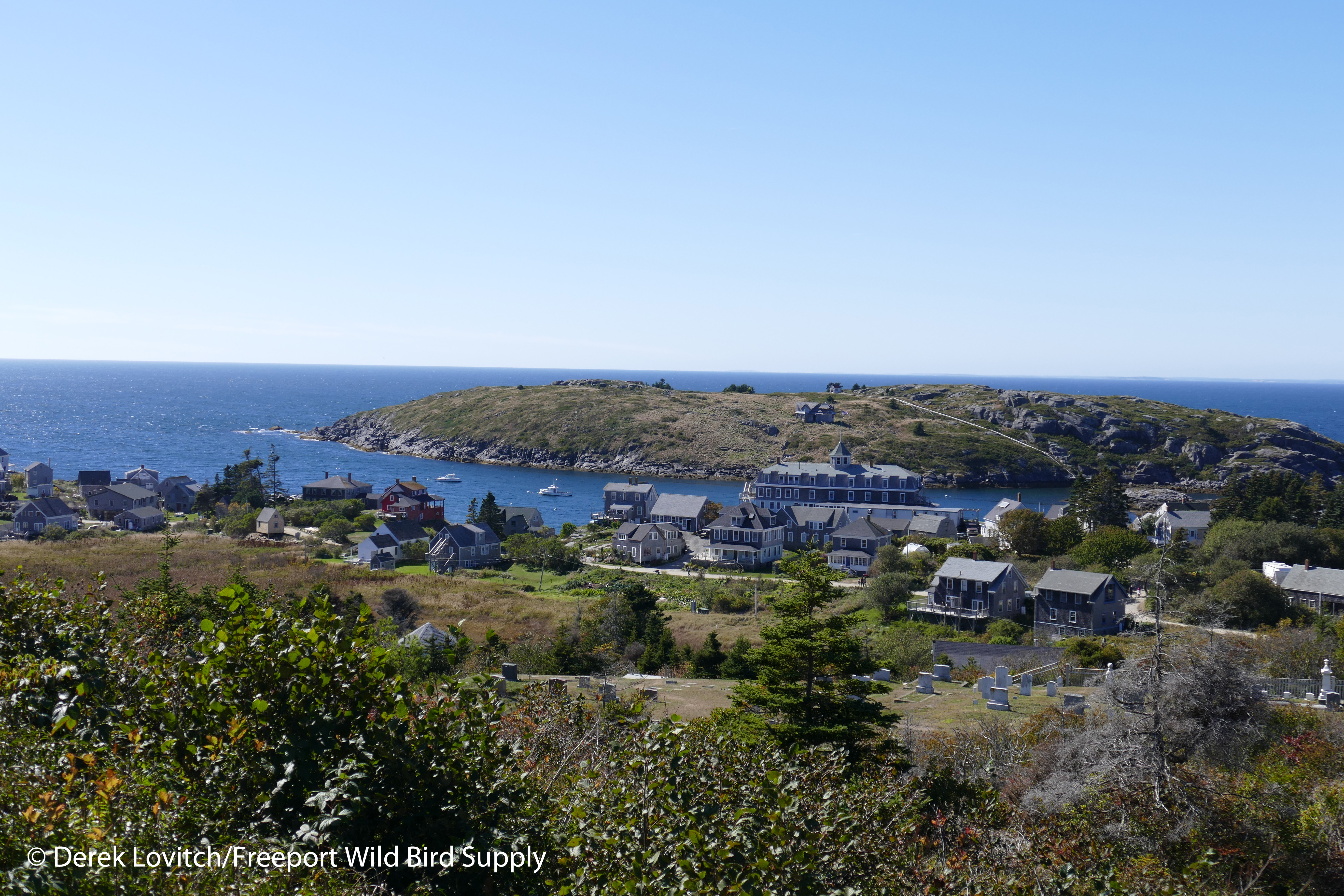
As many of you know by now, Monhegan Island has become near and dear to our hearts. It is an iconic birding destination in spring and fall which we, and many other birders, enjoy frequenting on our own as well as while leading tours. Unfortunately, the construction of wind power turbines within 3 miles of the island is closer to becoming a reality, and now more than ever requires action!

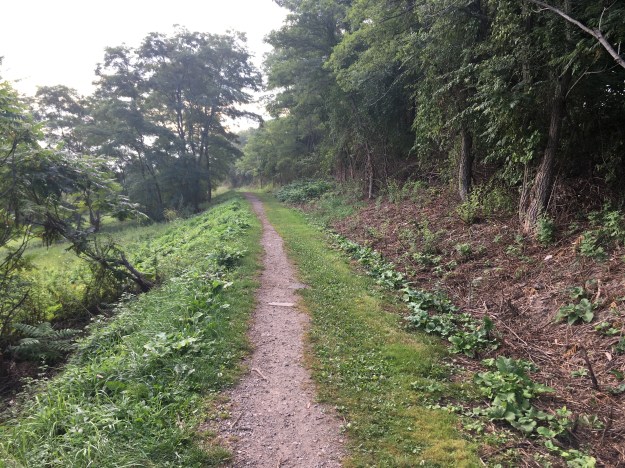
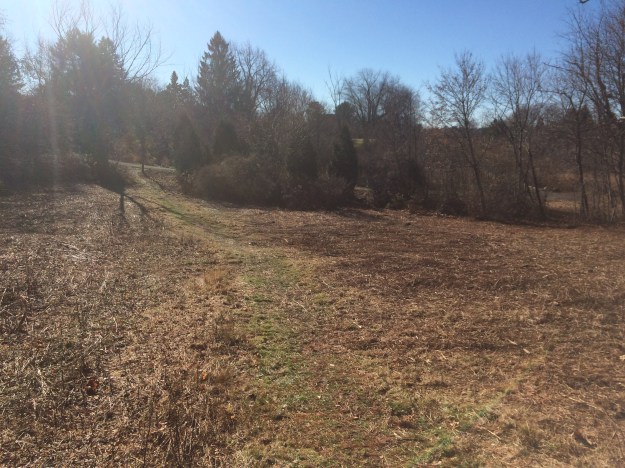
Hiking_East_Side,5-19-15

We are not opposed to wind power. But we are opposed to poorly-sited projects that put inordinate numbers of birds at risk. This is quite possibly the worst place in the state of Maine for such a wind power project due to its concentrations of migratory birds. And therefore we feel personally and professionally obligated to do whatever we can to defeat the plan, change the design and lighting to minimize impacts, or, if all else fails, mitigate the potential consequences.

Our most recent statement was posted to the blog this past December, as this misguided project was resurrected from the dead.

Our initial concern about the project was described in this letter and press release from 2013. The link includes our letter, as well as some links to press coverage of our concerns.

In the case of Monhegan, aesthetic concerns are directly tied to not just a sense of place, but the tourism economy. Jobs and livelihoods are put at risk – along with property values – if there is an outsized visual or auditory impact. The visual impact on some of the best views from the island – many of which have been made famous by some of the region’s most famous artists – will be negatively impacted by the placement of this project.

Additionally, while I will not speak for others, suffice it to say that birding tourism will decline. In addition to the direct mortality of birds that is likely, especially under the weather circumstances that cause “fallouts” that are the thing Monhegan birding legends are made of, there are no small number of birders who simply won’t want to look at those blinking lights atop the turbine towers (the biggest direct threat to migratory birds as it will attract and disorient already stressed and confused migrants). I for one will be forgoing my 2-3 tours annually to the island – I simply cannot imagine looking out at those blinking lights knowing the conditions that we are hoping for to bring countless birds on the island for our enjoyment will result in the death of countless birds as they collide with the turbines or simply drop dead of exhaustion. I’ll have to go somewhere else.

Instead of addressing the impacts that such projects cause, the wind industry simply denies the problem exists, suppressing data that proves otherwise, and hiding the facts behind a cloak of “proprietary information.” We know what they are hiding, and they are hiding the massive destruction of birds and bats from poorly sited projects (not all projects, if sited correctly and operated accordingly, will have a sizeable impact). We have the knowledge and expertise to reduce, if not eliminate, much of the direct threat that lighted structures of all kinds have on birds. But instead of addressing lighting color, intensity, and flash interval, the wind industry (unlike the communications industry), simply denies the problem exists.  Just like Big Tobacco and Bog Oil, it’s cheaper (or something) to deny, deny, deny than do anything at all.

Unfortunately, due to false pretenses and false promises, the project was approved and is once again on its way to becoming a dreadful reality. Luckily, people who believe in the island – its people, its birds, its economy, and everything that makes Monhegan, Monhegan, are not lying down as the University of Maine and Aqua Ventus clearly hoped. They are not willing to give up everything that makes this place so special for some free electricity and internet (maybe).

Below, I have copied the statement released on July 5, 2016 by the Monhegan Energy Action Coalition. Jeannette and I, and our business, Freeport Wild Bird Supply are fundamentally opposed to the construction of industrial wind turbines and towers in close proximity to Monhegan Island. Therefore, we are willing to put our money where our mouth is (this gets expensive; I have a big mouth!) and we will be supporting the campaign to raise money for the defense of the birds that pass through Monhegan Island.

First of all, Freeport Wild Bird Supply will be donating $500 to the fight. We urge you to consider a donation, of any size, to protect the birds and the way of life on Monhegan Island (see the letter below for instructions).

Additionally, we will donate 100% of the proceeds of EVERY optics sale in July to the cause. In other words, every cent we would earn from selling any pair of binoculars, spotting scope, phone-scoping adapter, or tripod through the end of the month will go to the fight. So if you have been thinking of a new pair of bins, do it this month, and help us save the migrants of Monhegan in the process.

We will also, personally, and professionally, be continuing to support the Monhegan Energy Action Coalition in any way we can, and we urge you to join us. Please, for the sake of the birds and birding on Monhegan, read the following statement that was released yesterday by Travis Dow for the Monhegan Energy Action Coalition, and we encourage you to add to the support.

“Hello Everyone…Travis, here. A new group is forming. Here is a statement (and a plea for donations) that we put out today. We have yet to have a name, but here is our intent:

A group of concerned Monhegan community members have sought legal advice concerning the Maine Aqua Ventus wind turbine project. This project would place two 585 foot wind turbines 2.7 miles off the southern coast of Monhegan. The information about potential impacts from the project on our unique and iconic island has been contradictory and incomplete. Given the possibility of too many unknowns and unintended consequences, we are compelled to protest the siting of this experiment.

Our objective is to uphold and protect Monhegan’s environmental, historical, and social legacy:

* In 1954, a Certificate of Organization was issued to the Monhegan Associates and was registered with the State of Maine. The Associates have been charged with a mission to preserve Monhegan’s environs, “as well as the simple, friendly way of life that has existed on Monhegan as a whole.” The Associates own approximately 380 acres of land, comprising about two-thirds of the island;

* In 1966, Monhegan was designated a National Natural Landmark by the National Park Service.

* In 1997, the waters around Monhegan were designated a Lobster Conservation Area by the State of Maine, and have had a regulated fishing season since the early 1900’s;

* Monhegan is an important landfall for migrating birds along the North Atlantic flyway;

* Monhegan is home to the highest ocean-side cliffs on the eastern seaboard. The island’s iconic vistas have been recorded by some of the most important artists and writers of our time, including, George Bellows, Edward Hooper, N.C., Andrew and Jamie Wyeth, Rockwell Kent, and many others;

* Monhegan is one of the last year-round island communities in Maine and is heavily supported by an active tourism economy.

* Monhegan is home to many of us.

It must be emphasized that we are not against the wind turbine project itself, just the siting of the project. We are not willing to risk Monhegan’s extraordinary legacy for an experimental wind project. The project can move. Monhegan’s character is irreplaceable.

Legal counsel has informed us that Monhegan may not have been afforded due process and that there is likely a case to be made that a variety of legal procedures were not properly followed. It is also clear that we cannot delay.

We are in the process of raising $25,000 to retain Doyle & Nelson as legal counsel. Jon Doyle is the attorney that helped Monhegan establish the Lobster Conservation Area. We have already raised over $13,000.00, from a large number of people, and your contribution will help reach this goal. Any amount will help. Checks can be made out to Doyle & Nelson, and sent to Travis Dow at P.O. Box 132, Monhegan, Maine 04852. Checks will not be cashed until reaching this funding goal. For more information, contact Travis at tgdow@hotmail.com, .”

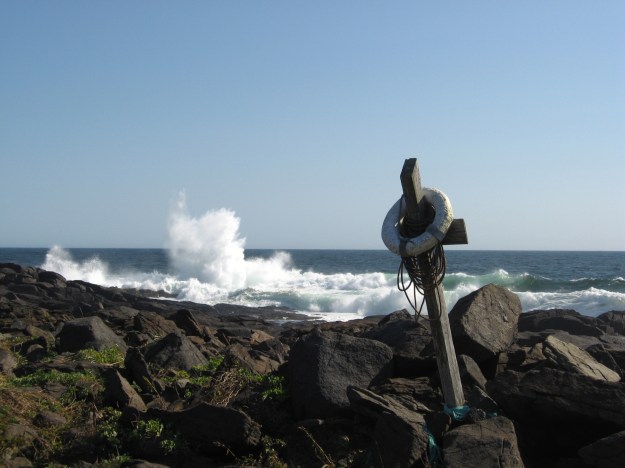
surf at Lobster Cove

2016 Bradbury Mountain Spring Hawkwatch Season In Review

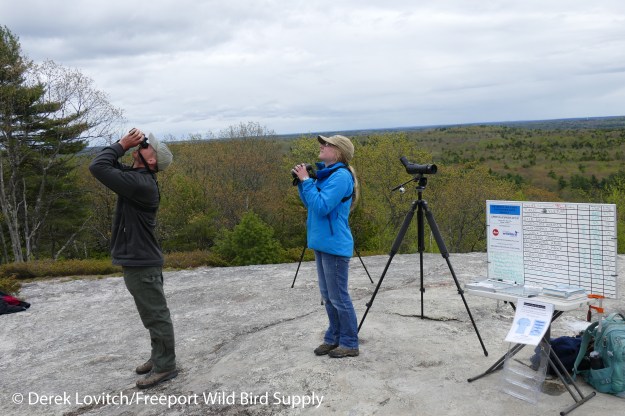
Hawkwatch_last_day_2016
The 10th annual Bradbury Mountain Spring Hawkwatch wrapped up on May 15th, bringing a remarkable season to a close. Although I did go up for two hours to hope for a vagrant Mississippi or Swallow-tailed Kite on the 20th, netting five migrants (2 Sharp-shinned Hawks and 1 each of Broad-winged Hawk, Cooper’s Hawk, and Merlin. All immatures as expected on the late date). It was worth a try!

Anna Stunkel, a College of the Atlantic graduate and veteran of the Lucky Peak hawkwatch in southwestern Idaho, was the 2016 Official Counter, and she did an incredible job. A tireless observer and interpreter, she introduced hundreds of visitors to the project, and to our numerous local Bald Eagles! While Jeannette and I covered her days off – when rain didn’t do the job for us – or whenever else we got a chance, our many volunteers, especially Zane Baker, Tom Downing, Dave Gulick, Chuck Barnes, and Rick Hartzell were priceless. No hawkwatch is successful without a loyal cadre of assistants – spotting birds, answering questions, and bringing food – so thanks to you all!
L1040575_edited-1

The 2016 season total of 4,785 between March 15th and May 15th was our second highest total in the ten years of the project, and an impressive 17.6% above average (we exclude 2007 from our data analysis due to a change in methodology after this “trial” year).

Oddly enough, we amassed this tremendous total despite losing 16.5% of our possible coverage hours (9am to 5pm EDT) to weather, including fog, rain, snow, or high winds. The 414 total hours of observation was actually 6.6% below our average.

343 raptors passed the watch on April 17th, topped by the 980 tallied on 4/22 and 585 on 4/23. Those two amazing days changed our season dramatically – we went from worrying about a record low count to dreaming about a record high! 3,165 of our raptors passed through between April 16th and April 28th, accounting for 70% of our total flight.

Two rarities were recorded, headlined by a Black Vulture (our 7th of all time) on May 12th, and perhaps even rarer according to the season, a Broad-winged Hawk on March 20th (our previous earliest date was April 3rd, 2008 which itself was an outlier). We hypothesize that this was not a vanguard of the usual long-distant migrants arriving from Central America so early, but rather a bird that wintered either in South Florida or perhaps even well north of usual range thanks to the mild winter over the East.

Although southwesterly winds – our best conditions – were rare this spring, numerous days of west and light northwest in April, combined with sunny conditions and few weather systems during the peak weeks of our flight produced our great count, led by above average numbers of Osprey, Northern Harrier, Sharp-shinned Hawk, Broad-winged Hawk, American Kestrel, and Merlin. On our biggest day (4/22), light westerlies eventually turned to the southwest, and westerlies rotated around to the southeast on the following day.
IMG_4644_edited-2

However, the mild winter and early onset of early spring – including snow-free conditions over much of the area on the first day of the count and ice-out already occurring on larger rivers – got the season off to a quick start, but also meant we missed a number of birds that had already continued north before the count started on March 15th. Below average numbers of Turkey Vulture, Bald Eagle, Cooper’s Hawk, Northern Goshawk, Red-shouldered Hawk, and especially Red-tailed Hawks were the result. “Locals” of each from Day 1 also affected our count as we had to err on the side of caution early on to not overcount local birds (especially vultures and eagles) every time they flew around the mountain. It was a very, very different season from the 2015 count, in which winter never seemed to want to go away.

However, our record low 1 Peregrine Falcon is not as easy to explain – perhaps the constant westerlies just kept this predominately more coastal migrant far enough towards the coastline of Casco Bay.

As always, we also keep track of non-raptor migrants to the best of our ability.
2,010 Double-crested Cormorants, 1457 Common Grackles, 1028 Canada Geese, 918 Tree Swallows, and 747 unidentified/mixed blackbirds led the way.

Sandhill Cranes are now an annual occurrence, and this year we tallied four birds: 2 on 3/26, and one each on 4/16 and 4/25. The expansion/colonization/recolonization of Maine by this magnificent species continues, and our hawkwatch is apparently well placed to sample their return flight. Other noteworthy migrants included a White-winged Crossbill on 3/17, migrant Bohemian Waxwings on 3/26 (50) and 4/19 (29) with numerous visits by small flocks to the Common Juniper at the summit, and two Blue-gray Gnatcatchers (4/22 and 5/3).

A total of 92 species were seen and/or heard from the summit, including regular vocalizations from local Barred Owls and a variety of warblers.

IMG_4638_edited-2

  2016 Avg. 2008-2015 difference from average
Black Vulture 1 0.8 33.3%
Turkey Vulture 260 272.5 -4.6%
Osprey 513 431.1 19.0%
Bald Eagle 68 77.6 -12.4%
Northern Harrier 132 98.6 33.8%
Sharp-shinned Hawk 744 715.1 4.0%
Cooper’s Hawk 69 74.1 -6.9%
Northern Goshawk 2 7.9 -74.6%
Red-shouldered Hawk 75 91.4 -17.9%
Broad-winged Hawk 2123 1545.0 37.4%
Red-tailed Hawk 245 270.4 -9.4%
Rough-legged Hawk 0 0.9 -100.0%
Golden Eagle 0 0.5 -100.0%
American Kestrel 429 359.3 19.4%
Merlin 76 69.1 9.9%
Peregrine Falcon 1 5.4 -81.4%
       
Unidentified Raptor 47 47.3 -0.5%
Total 4785 4067.9 17.6%
       
Hours 414.25 443.5 -6.6%

Of course, this project doesn’t happen without your support of Freeport Wild Bird Supply, but we can’t do this without the support of Bradbury Mountain State Park and our co-sponsors, Leica Sport Optics. Our sincerest thank you goes out to Sunshine Hood, the new park manager at Bradbury (we can’t wait to grow the project with you!), and Jeff Bouton and Stan Bucklin of Leica.
L1040577_edited-1

But most importantly, this project doesn’t happen without all of you joining our counter at the summit, learning about raptors, migration, and conservation. To show your support for the project, and to raise funds for future needs (counter’s salary, new signage, etc), check out the exclusive Bradbury Mountain Hawkwatch t-shirt by North Yarmouth’s Coyote Graphics. It features Michael’s original artwork of the view from Bradbury within the outline of raptor on the front, and raptor silhouettes by the 2016 Official Counter, Anna Stunkel on the back.

We look forward to seeing you at the summit again beginning on March 15th, 2017 – or perhaps sooner if weather conditions align (like more kite weather!)
L1040752_edited-1

Portland Eviscerates Capisic Pond Park

Several years ago, I joined a group of concerned residents in working for substantial restoration of Capisic Pond Park following the necessary – and federally mandated – replacement of the sewer line that runs the length of the park. The post-construction restoration plan was essentially “spread some grass seed.”

After countless meetings, public hearings, and workshops, a plan was implemented that not only limited damage from the construction process, but improved it. Over $150,000 was spent on restoration, including extensive planting of native plants to not only beautify the park, but improve biodiversity. Birds, and the many birders who frequent this little treasure of an urban park, would benefit.

Over the years, as those plantings have slowly come into their own, and began to bear fruit (literally!), bird diversity has only continued to increase. From the continued presences of Orchard Orioles – the only breeding pair known in the state, to a wealth of migrant sparrows, to rarities (including just last month, one of only 6 or so Ash-throated Flycatchers to ever be seen in Maine) have attracted birders from far and wide.

On Monday, Jeannette and I headed to Portland to work the productive micro-habitats and micro-climates in urban areas to search for rarities, and “lingering” migrants. We began our day at Capisic Pond Park.

And we were greeted by this:
IMG_6887IMG_6888IMG_6889IMG_6890IMG_6891

We were appalled. We were horrified. We were saddened.

What the hell has happened?

According to the Facebook page for the Friends of Capisic Pond Park, posted on October 31st:
“Don’t be alarmed by the mowing and cutting that will be done in the first week or so of November. It is important to mow the park for several reason. First, and most important, if the small trees and brush aren’t mowed and cut periodically the meadow environment will transform (in time) into a forest. Just like the open farm fields of the 19th century that covered virtually all of Maine are now woods, Capisic Pond Park will move from field to brush to forest unless it is mown and tended. Second, regular cutting will spread seeds and improve the habitat overall. Lastly, we will again be able to see the pond (what’s left of it, anyway) and access the ice (!) during the months before everything regrows next Spring and Summer. FOCP members Donna and Steve Williams and Andy Graham met with Jeff Tarling of Public Services on Friday October 30th to walk the park and talk about what should and should not be cut – we are fortunate to have Jeff as a knowledgeable and caring partner.

“Also – if you were wondering about the trees being cut on Capisic St near the pond, this is the first preparation for the pond restoration work to be done next year. Apparently this will be an access point for the equipment needed to dredge and remove the spoils next August and September.”

This wasn’t a “haircut.” This was a clear-cut.

Quite frankly, I am left to question either the motives or the expertise behind the decisions that were made – at least beyond the third rationales listed: “…we will again be able to see the pond.” And the reason I question whether that clear-cutting had anything to do with anything other than what site-lines some people preferred seems simple as the other reasons given are complete B.S.

1) Cutting is not necessary to spread seeds. Plants are built to do that on their own, either through wind, animals, or gravity.
2) Improve habitat? Granted this depends on what habitat you are trying to improve, but I would argue that this type of mechanized treatment did not in any way improve habitat for much of anything at Capisic. In fact, it damaged or even ruined the habitat for most of the species that frequent the park.
3) Selective cutting, girdling, or other low-impact methods are widely available to eliminate forest succession, especially on a scale as small as Capisic. Almost any other treatment would substantially improve and augment habitat, not ravage it. And that goes for the aesthetics, too – the place is a mess right now.

So I fail to see what was accomplished here, other than opening up some views or fitting in with some outdated philosophy that parks should be open. Actually, what was accomplished was that the value of Capisic Pond Park to most migratory (just about all passage warblers), breeding (including both Baltimore and the famous Orchard Orioles) and year-round resident species (i.e. Northern Cardinals) was severely, and very negatively, impacted.

The significant improvement in food source diversity (especially for frugivores) from the park’s restoration was set back by a decade – or permanently if native plants are not replaced and restored. This heavy-handed, unselective approach favors invasive species, as they out-compete regenerating natives. If left alone, Capisic will end up with significantly more Asiatic Bittersweet, bush honeysuckle, and Multiflora Rose after this misguided effort. Limited biodiversity begets limited biodiversity.

And we’ve seen this throughout the city, for example, the Eastern Promenade, where – despite the efforts of a handful of local residents attempting to stem the tide of invasives – city mismanagement continues to accelerate their spread and the degradation of the habitat. Portland has already ruined (for birds and birders) the “Dragon Field” (behind the Quarry Run Dogpark), annihilated critical migratory bird habitat along West Commercial Street and wiped out any shelter of any sort along the Fore River Parkway Trail, and continues to assault any sort of cover in roadside edges and overgrown lots (all critical for disoriented and exhausted migrants, and “pioneers” that are attempting to overwinter after possibly becoming “stuck” in the city. Portland stood by as Evergreen Cemetery had a road plowed through it and neglect continues to degrade the pond areas – despite being the most-visited birding location in that state. See a pattern here?

And through all this, little ol’ Capisic Pond Park stood as the lone bastion of hope. Residents, birders, engineers, and city officials came together to not only restore the park after the sewer reconstruction, but actually improve the habitat for migratory and resident birds. And birders have been reaping those dividends, as improved plant diversity continues to provide a greater array of native foodstuffs as the replanted vegetation matures. And that has meant more birds.

I was proud of what was accomplished at Capisic Pond Park. I – and many others – worked tireless to make that happen. A lot of time, effort, dedication – and yes, a substantial amount of money – was invested.

And then, with a few passes of a brush-hog mower, it was gone. All of that time, effort, dedication, money, and concern, wasted. Just like that. Poof.

I’m sickened by what I saw at Capisic Pond Park on Monday. And personally, it will be hard for me to go back. There will always be birds in the park – it’s truly an urban oasis, and some migrants will have no choice but to search for food here. However, the knowledge of how much better the bird habitat, and therefore the birding, should be will forever be a reminded to me about how much time and energy I have wasted fighting for birds in the City of Portland.

But at least I can simply go somewhere else. If you’re a bird in Portland, you’re running out of choices.

2015 MonhegZen Fall Migration Birding Weekend

As always, the last weekend in September finds me at one of my favorite birding locales in the world, Monhegan Island. My annual “MonhegZen Fall Migration Weekend” tour takes place then, and with it, a wealth of birds and good times are to be had.

Well, usually a wealth of birds are to be had! But yeah, this year was slow. As slow as I have ever seen it. But my goodness, was it nice out! Of course, this same pleasant, unseasonable warm and benign weather was exactly why there were so few (relatively speaking) birds out there. It seems that with night after night of great flying conditions, birds are proceeding unimpeded, with no fallouts, or even concentrations near the coast or offshore.

So in writing this blog, I was trying to figure out how to sugarcoat the weekend. Perhaps this will do it:
sunset1_edited-1

Or this?
Sunset2_edited-1

Beautiful sunsets, and wonderous moonrises:
group watching moonrise_edited-1

moonrise_edited-1

Or maybe this will help:
Monhegan_from_lighthouse_edited-1

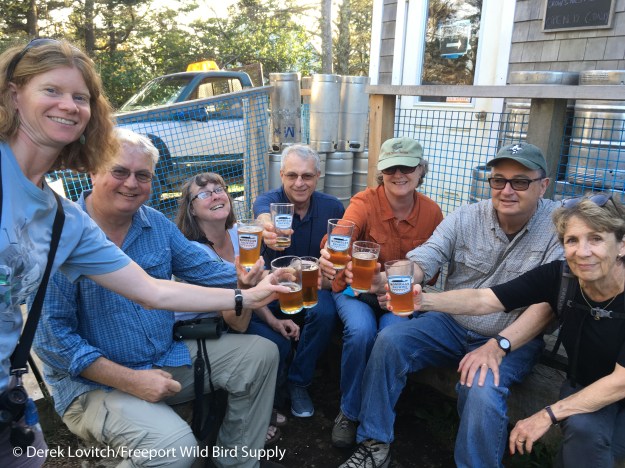
So yeah, it was gorgeous. Beyond gorgeous. And the Novelty Pizza was just as good, and Monhegan Brewing Company’s beer was just as great.

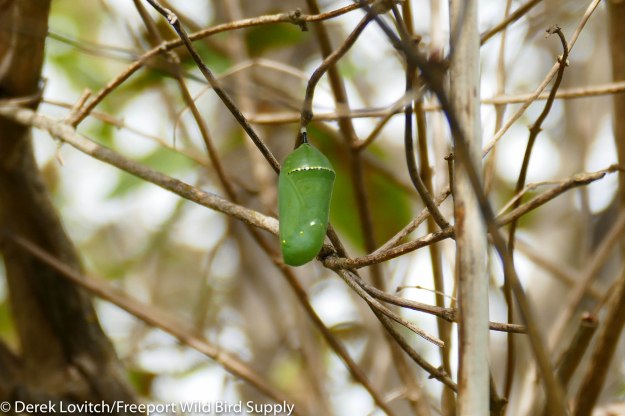
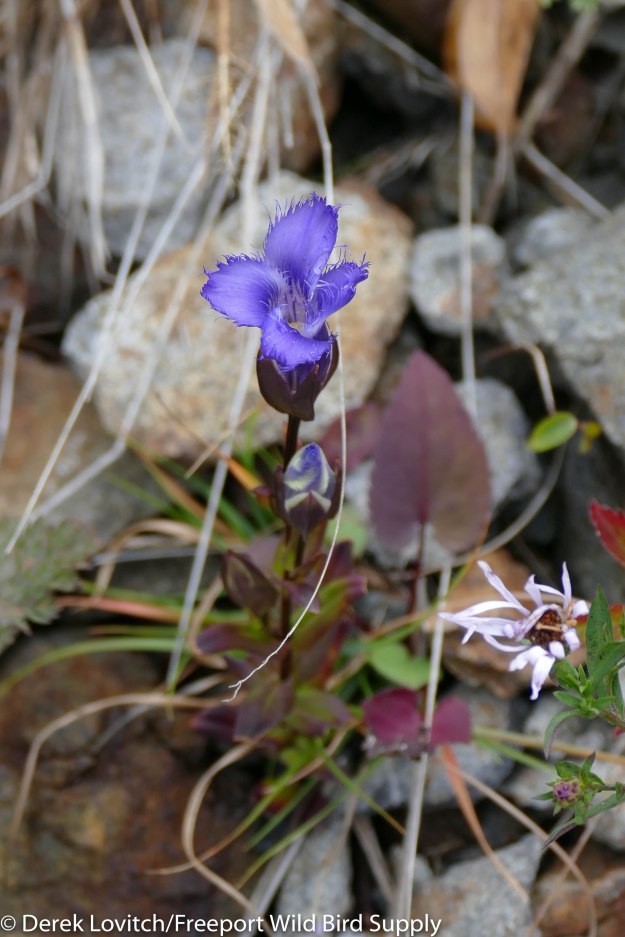
The butterflying was good, and the wildflowers were a nice distraction, especially the Fringed Gentian as always.
Fringed_Gentian1_edited-1

Fringed_Gentian2_edited-1

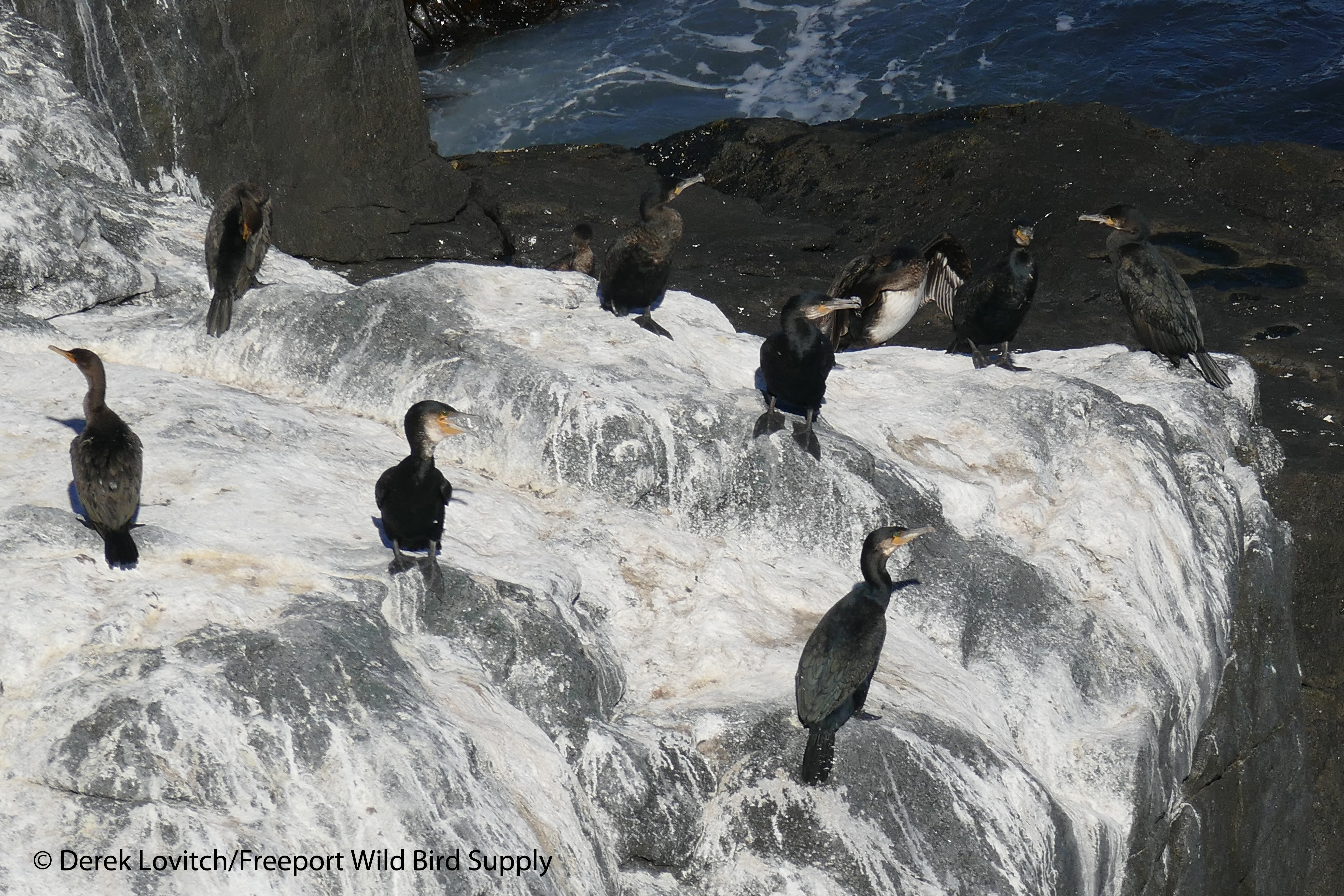
And don’t worry, there were still plenty of birds – just not as many as usual. We enjoyed some great studies of Great and Double-crested Cormorants…
GRCOs_withDCCO,Monhegan,9-26-15_edited-1

…and of course a few rarities were around. The two headliners were the two juvenile Yellow-crowned Night-Herons that would spend dawn at the Ice Pond. They would fly in just before 6 (presumably from feeding around the rocky shoreline), drink and preen a bit, and then shortly after sunrise, take off to roost in the trees. You needed to be here dark and early to get them, and on Sunday morning, the group made the lovely twilight walk (fly-by American Woodcock!) to reach the pond, and we arrived just a few minutes after the night-herons did. One lingered until it was just light enough to grab a snapshot.
YCNH,Monhegan, 9-27-15_edited-1

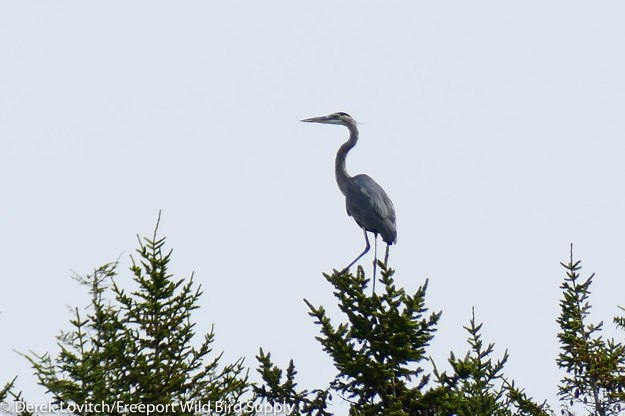
A Great Blue Heron kept watch as well.
GBHE_silhoutte1_edited-1

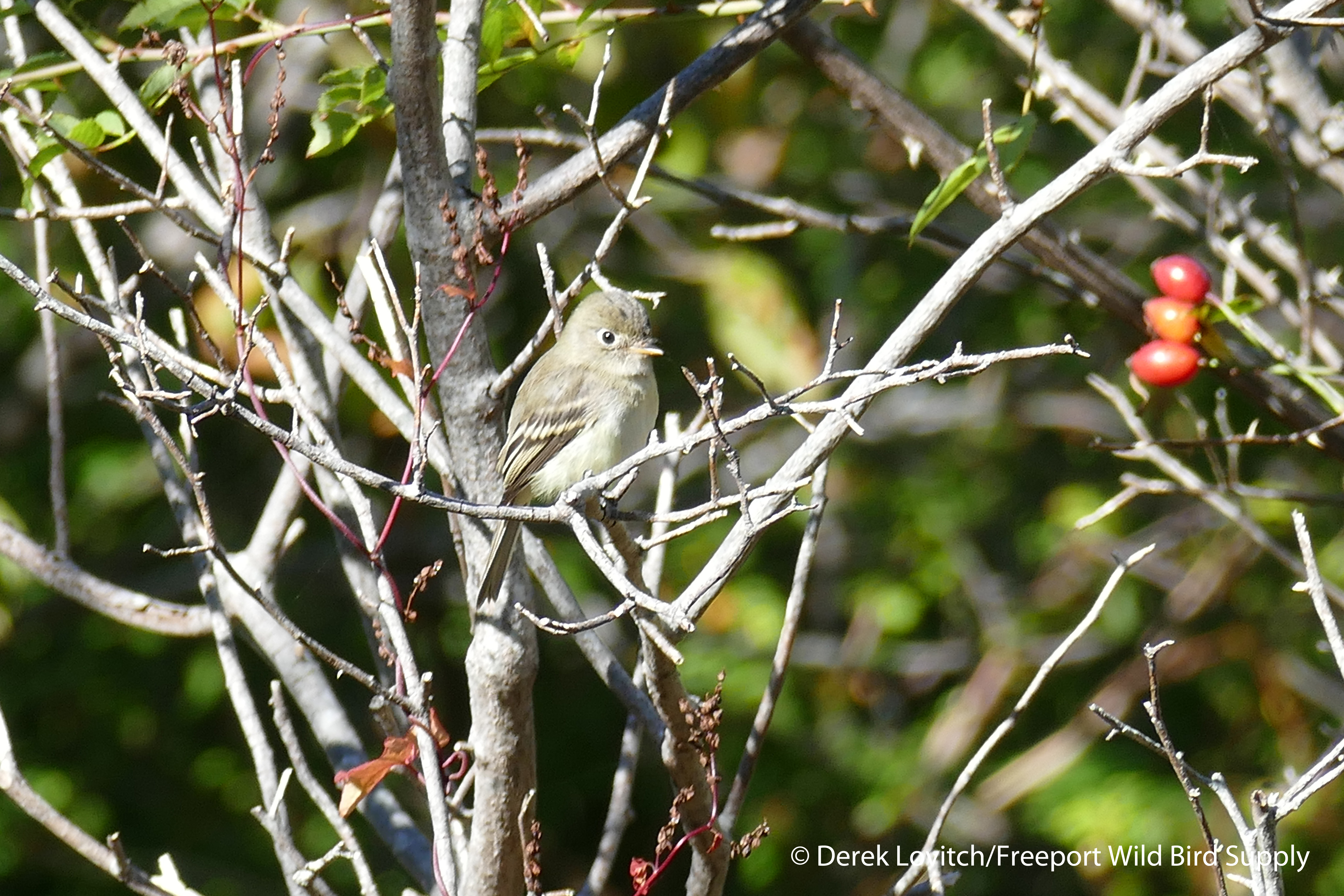
Of course, it wouldn’t be a Monhegan weekend if I didn’t attempt to string one Empidonax flycatcher. Of course, this one was a Least Flycatcher – as expected, and as usual. It did offer a very nice, prolonged study, however.
L1030231_LEFL1,Monhegan,9-26-15_edited-1

One of the other significant birding highlights was the seawatching from the tall cliffs. In the afternoon each day, we strolled over to White Head to enjoy Northern Gannets, study Great Cormorants, and do a little seawatching.
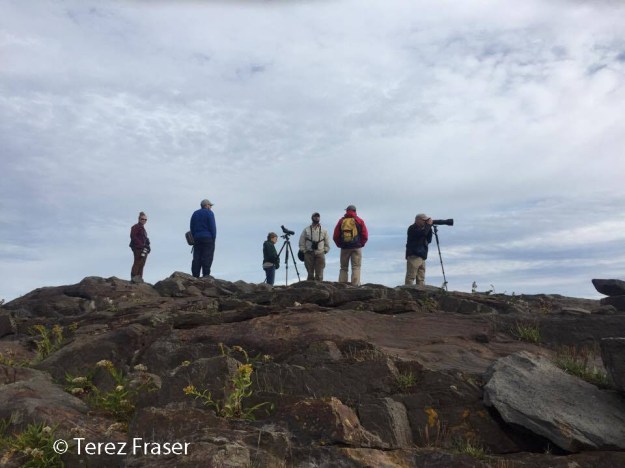
group_on_cliff,byKristen_edited-1

With northeasterly winds picking up Sunday afternoon, gannets were breathtakingly close. A little trickle of shearwaters, which included 2 Cory’s Shearwaters among a handful of Greats, were anything but near.

Here’s the three-day checklist of all birds seen:
American Black Duck: 0,1,0
Mallard: 6,6,6
American Black Duck x Mallard: 1,1,1
Green-winged Teal: 1,1,1
Common Eider: x,x,x
Surf Scoter: 0,1,8
Common Loon: 0,1,2
CORY’S SHEARWATER: 0,0,2
GREAT SHEARWATER: 0,0,6
Ring-necked Pheasant: 3,3,1
Northern Gannet: #,#,##
Double-crested Cormorant: x,x,x
Great Cormorant: 2,13,3
Great Blue Heron: 1,0,2,
YELLOW-CROWNED NIGHT-HERON: 0,0,2 (present all three days, but we only made it to the Ice Pond at dawn on the last day).
Osprey: 1,2,2
Bald Eagle: 1,2,1
Northern Harrier: 0,0,1
Sharp-shinned Hawk: 4,6,1
American Kestrel: 0,3,9
Merlin: ??,4,3
Peregrine Falcon: 0,2,1
Semipalmated Plover: 0,1,0
Laughing Gull: 1,1,0
Herring Gull: x,x,x
Great Black-backed Gull: x,x,x
Ring-billed Gull: 0,0,1
Black Guillemot: x,x,x
Mourning Dove: 6,4,6
Belted Kingfisher: 1,1,2
Yellow-bellied Sapsucker: 8,4,4
Downy Woodpecker: 0,2,2
Northern Flicker: 0,6,8
Least Flycatcher: 0,1,1
Eastern Phoebe: 0,3,3
Blue-headed Vireo: 0,1,0
Philadelphia Vireo: 0,1,0
Red-eyed Vireo: 0,6,3
Blue Jay: 4,8,15
American Crow: x,x,x
Common Raven: 3,2,2
Horned Lark: 0,1,0
Black-capped Chickadee: x,x,x
Red-breasted Nuthatch: 6,8,12
Brown Creeper: 0,1,2
Winter Wren: 0,1,0
Golden-crowned Kinglet: 15,20,40
Ruby-crowned Kinglet: 20,6,5
Swainson’s Thrush: 1,0,0
American Robin: 2,1,1
Gray Catbird: x,x,x
European Starling: 8,8,8
American Pipit: 3,1,0
Cedar Waxwing: 30,25,30
Nashville Warbler: 1,1,1
Northern Parula: 10,4,4
Yellow Warbler: 2,1,1
Magnolia Warbler: 1,0,0
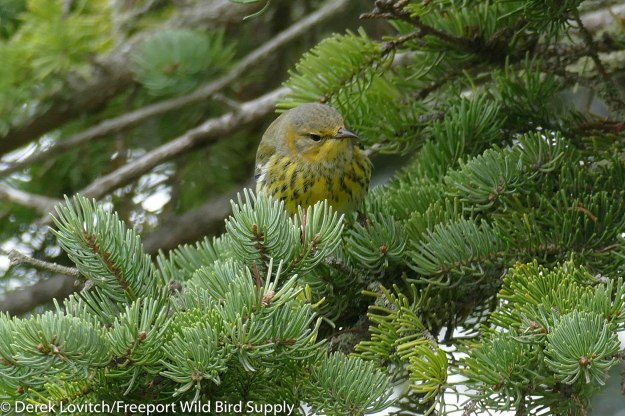
Cape May Warbler: 1,2,1
Black-throated Blue Warbler: 1,0,0
Yellow-rumped Warbler: 150,75,75
Black-throated Green Warbler: 6,2,2
PINE WARBLER: 1,0,0
Prairie Warbler: 1,0,1
Palm Warbler: 4,2,2
Blackpoll Warbler: 15,10,10
American Redstart: 0,1,1
Black-and-white Warbler: 1,0,1
Common Yellowthroat: 4,x,x
Chipping Sparrow: 1,4,4
Song Sparrow: x,x,x
Lincoln’s Sparrow: 2,1,1
Swamp Sparrow: 4,2,2
White-throated Sparrow: 10,10,10
White-crowned Sparrow: 0,1,1
Northern Cardinal: 10,8,8
DICKCISSEL: 1,1,1
Common Grackle: 10,29,29
Baltimore Oriole: 2,2,2
American Goldfinch: 2,4,4

Total species = 80
Total warbler species = 15

Although this year’s tour was one day shorter than usual (since Jeannette and I had to leave for a tradeshow on Monday), the 80 total species was a whopping 22% below the average of 102 species for my usual 4-day tour, and 16% below my average of 95 species for a three-day fall tour.

But the “MonhegZen Migration Weekend” isn’t called that for some existential reason – no meditation required. Instead, it’s a suggestion of the mindset of going with the flow, taking what the island gives us, and enjoying a truly unique and remarkable place that superlatives fail to completely describe.

So yeah, it was pretty slow. But it’s not just cliché: a slow day on Monhegan is better than a “good” day almost anywhere else. And not just for the birds! Don’t believe me? Well, how about joining us next fall to see for yourself? I mean, did you see those sunsets?

P.S. To get a better idea of what it’s usually like out there, check out my blog from last fall’s weekend tour.

Morning Flight Fail

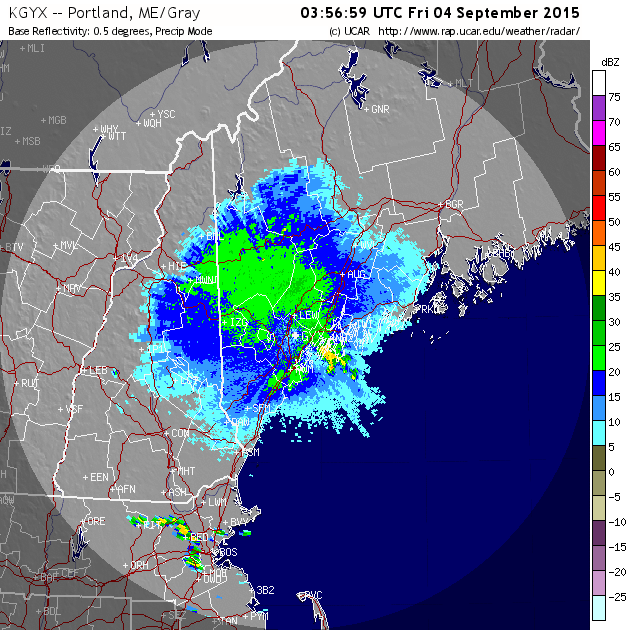
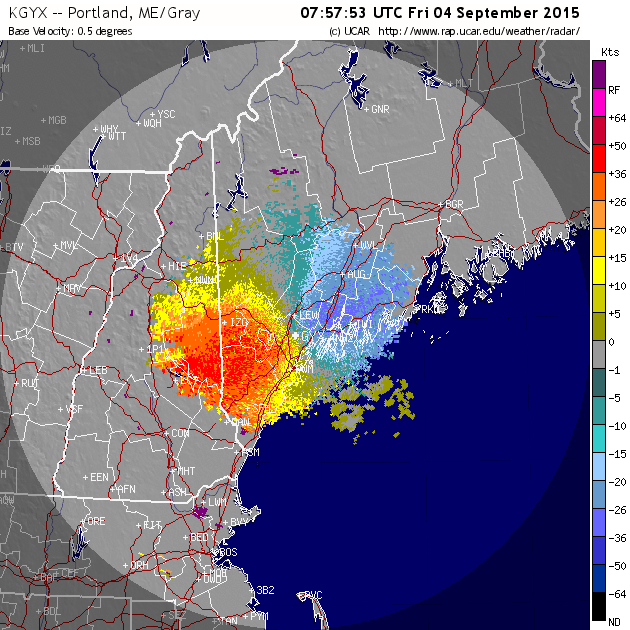
Following yesterday’s cold front, a huge flight was underway come nightfall. It was by far the biggest of the season to date, and one of the stronger (by density) flights as you can see around here.

Here are the midnight radar and velocity images, for example:
12am_radar

12am_velocity

Even as of 4:00am, with the eastern sky likely showing a little light, the flight was still strong:
4am_radar

4am_velocity

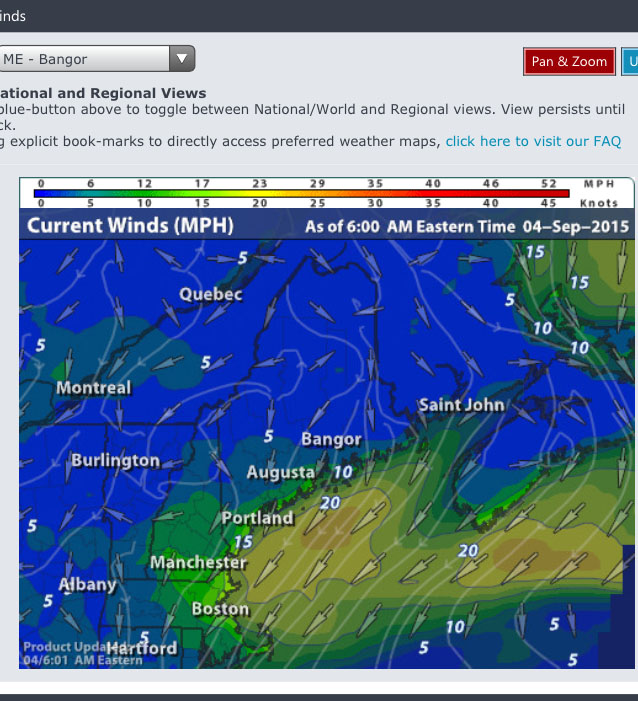
So of course I was up early to go to Sandy Point. However, the winds were forecasted to be out of the northeast, becoming easterly in the morning. And, the local weather stations I looked at (and my windometer at home ) were all reading north or northeast when I awoke a little before 5:00 this am. The 6:00am Intellicast “Wind cast” image shows this coastal northeasterly wind very well:
6amWIND_map

After almost any night in the fall with a little migration, there will be a few birds at Sandy Point. And after a migration as strong as last night’s, there were bound to be some birds. However, due to a combination of geography and the instinct to fly into the wind to compensate for overnight drift (to oversimplify things a bit), there are just never a lot of birds at Sandy Point on northeasterly winds.

On the other hand, on both north and northeast winds, I have witnessed good morning flights (aka Morning Re-determined Migration” or “Morning Reorientation”) in the south-facing peninsulas that reach into Casco Bay, including the dual peninsulas of Harpswell.  What I have not figured out yet, however, is which point is best, how, and when. This is mostly because I can’t tear myself away from Sandy Point long enough to find out!

But this morning, as I reached I-295, something made me turn north instead of south. With what was supposed to be an increasing northeasterly wind and a huge flight, this should have been a perfect morning to test my hypotheses at the tip of Harpswell.  So, with no small feeling of impending regret, I drove down to Pott’s Point at the end of Rte 24 for the dawn.

As birds that were over and beyond Casco Bay at sunrise begin to work their way inland and compensate for that drift, island-hopping to the north and northeast deposits birds in the long fingers of the Mid-Coast. Unlike Sandy Point on Cousin’s Island, however, there isn’t a single leading line, perfectly-pointing peninsula, narrow crossing, and raised bridge (for visibility) that combine to offer a perfect morning flight observation location.

So I thought today would have been a perfect morning to see if Pott’s Point was the answer on a northeasterly wind, even if it meant missing a few birds at Sandy Point.

I was wrong.

I arrived at the end of Pott’s Point at 6:27, 20 minutes after sunrise, but found the wind to not be northeast, or even north, but to be north-northwest. Uh-oh, I thought.

But since I have yet to find a way to be in two places at once, I settled in for the next hour at Pott’s Point (it would have taken at least 45 minutes to get from Pott’s Point to Sandy Point), and counted…very, very little:
16 Cedar Waxwings
11 American Goldfinches
5 American Redstarts
5 Unidentified
2 Yellow-rumped Warblers
1 Pileated Woodpecker

Now, all of those birds were doing the “right” thing, flying from over the bay or from Haskell Island just to the south, then over Pott’s Point and northward up the peninsula.  There were just so few of them!

CousinsIslandPowerPlant
If I only had a boat…

The view of the top of the power plant at the other end of Cousin’s Island was a reminder of what could have been, as Sandy Point is excellent in a NNW wind. Was I missing a huge flight? Or, were the winds northeasterly on the other side of the bay, and only a light flight was passing through there (although it would have undoubtably been better than the “flight” at Pott’s, I will convince myself of the latter!)?

In other words, I was here:
PottsPointMap

But should have been here:
SandyPointMap_edited-1

Besides, it’s a peaceful spot to spend the morning, with the only traffic being a few lobster boats.
panorama

And the narrow peninsula does have a Monhegan-esque feel to it and its birding (sometimes).
IMG_5997

So if the migrants were not at Sandy Point, where was the Morning Flight concentration this morning?  Looking back at the radar images, there was not a ton of offshore drift (due to the lack of a westerly component throughout the night), so maybe there just weren’t a lot of birds offshore come sunrise.  But there still looks like more than enough for a good reorientation flight at sunrise.

Bascially, I am not only left without an answer to my pursuit of a good Mid-Coast morning flight spot, but now I will no doubt spend the rest of the season being over-cautious about missing a flight at Sandy Point and therefore miss the next huge flight through Pott’s Point on a northeasterly wind!

There wasn’t much else left to do but go birding, so I poked my way up the peninsula and into Brunswick, checking a few of the hotspots. Some day I will find a rarity at Stover’s Point, but today wasn’t the day for that either. However, I did have some pretty good birding at Mitchell Field, including a trickle of warblers overhead. A Yellow-bellied Flycatcher and a Lincoln’s Sparrow were highlights, and other migrants present included seven species of warblers. OK, it was small consolation, but at least there were some migrants around Harpswell today!

Unfortunately, the wind and weather forecasts for the coming days hardly look good for Sandy Point, so it might be as much as a week before I am back to spending the sunrise at “my office” where I should be!

P.S. It’s not too late to sign up for my “Morning Flight Phenomenon on Cousin’s Island” workshop for RSU5 Recreation and Community Education next week. More information and registration details are here.

9/5 UPDATE: I received an email this morning from Bill Hancock who was at Sandy Point on Friday and reported it was “dead” and did in fact have a northeasterly wind. Phew!  Meanwhile, I tallied 110 migrants on calm conditions on Saturday morning – a very light flight, as expected this time.

2015 Bradbury Mountain Hawkwatch Season in Review

The 2015 Bradbury Mountain Spring Hawkwatch, co-sponsored by Freeport Wild Bird Supply and Leica Sport Optics, came to its conclusion on May 15th. This season was an interesting one, especially in how the weather affected our counts. During the 2-month period, the Official Hawkcounter, Andrew Wolfgang, tallied a total of 3628 raptors. This included vultures, hawks, eagles, and falcons. Over the 8-year span that we have conducted this standardized count, this year was the second lowest, coming in 12% below average.

Andrew_at_the_Brad,3-14-15

The_Brad,3-14-15
Welcome to spring hawkwatching in Maine, Andrew!

However, a single year’s count tells us little beyond what the weather conditions were like during the course of the season. The late arrival of spring was actually a benefit to the count at the start, as few early migrants had progressed north by March 15th. Therefore, we had very good counts of our earliest migrants: Bald Eagles, Red-shouldered Hawks, and Turkey Vultures. In fact, we set a new record for eagles deemed migrating, and vultures produced our second highest tally of all time. We simply didn’t “miss” any of these migrants before the project got underway.
IMG_0693_edited-2

IMG_0701_edited-2
Bald Eagles set a new all-time record this season.

However, as the season progressed, spring still didn’t seem to arrive. Lots of unfavorable (for viewing birds at Bradbury Mountain) winds meant that viewing migrating hawks past this mountain was not optimal. Strong and cold west winds, for example, push birds towards the coast beyond our view, while persistent easterlies seem to shunt birds inland before they reach the northern terminus of the coastal plain. Simply put, the poor conditions during the peak of our migration period in mid to late April really lowered the overall numbers and it’s those couple of weeks that can really make or break the overall count for the season. Therefore, the below-average numbers of our two most abundant migrants (Broad-winged Hawk and Sharp-shinned Hawk) combined to yield a below-average season total.

However, we had some great birds once again, highlight by our 4th record of a Golden Eagle.
Golden Eagle Bradbury 4 edit

Andrew also recorded a new record of 3 Rough-legged Hawks, no doubt due to the late onset of the spring’s flight (most Rough-legs probably move north before the start of the count in most years).

Meanwhile, a total of 85 species were recorded, including an ever-increasing number of Sandhill Cranes. This year a total of 11 migrant cranes were recorded. Other highlights included frequent visits by Bohemian Waxwings to the summit for much of the first half of the count, both Red and White-winged Crossbills. Fox Sparrow was recorded at the summit for the first time as well (two dates).

But, this hawkwatch is not just about the numbers. We also work hard to educate visitors to the park, both birders and non-birders. Every year we expose more and more people to the world of hawkwatching and bird migration in general. Bradbury Mountain is just one of many hawk migration sites throughout the continent. The data we collect becomes part of this vast network allowing researchers to determine population and geographical trends in particular species. So, even though our numbers this year were low relative to past seasons, it becomes no small part of building this data set. 1174 visitors were recorded at the hawkwatch (tabulated as coming specifically for the hawkwatch or spending time chatting with the counter), plus many hundreds more who at least briefly read the sign or asked a question or two. This was slightly below average, but likely due to the cool conditions for most of the season.
IMG_5373

There are few public projects where scientific data collection so effectively goes hand-in-hand with public outreach and education. With the growth of regular hawkwatch visitor volunteers, and especially the growth of the “Feather Over Freeport: A Birdwatching Weekend” festival, we look forward to many more years of introducing people to hawkwatching and hawk research and conservation.

Season Totals:
Turkey Vulture 374
Osprey 382
Bald Eagle 102*
Northern Harrier 101
Sharp-shinned Hawk 610
Cooper’s Hawk 85
Northern Goshawk 4
Red-shouldered Hawk 104
Broad-winged Hawk 1190
Red-tailed Hawk 236
Rough-legged Hawk 3*
Golden Eagle 1
American Kestrel 307
Merlin 75
Peregrine Falcon 8
Unidentified Hawk 46

Total 3628

*Denotes new season record

IMG_0846_edited-2
Peregrine Falcons just eclipsed our annual average this year; most migrants in this area stick closer to the coast.

Our ninth Spring Hawkwatch kicks off again on March 15th, 2016! We invite everyone, whether seasoned veteran hawkwatchers or casual nature enthusiast, to join our professional biologist and naturalist at the summit once again.

IMG_0733_edited-2
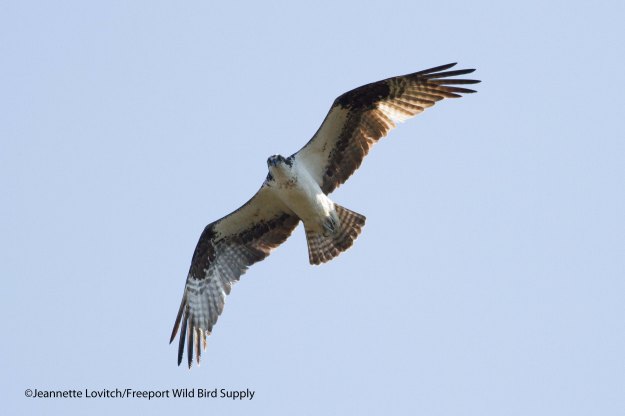
Ospreys are a fan favorite at the hawkwatch.

L1010831
It was quite a change in climate and the color of the scenery since the start of the count!

Monhegan Island, May 18-20, 2015.

Hooded Warbler, Yellow-crowned Night-Heron, Summer Tanager, Grasshopper Sparrow, 19 species of warblers and 89 species? All in 48 hours? It must be Monhegan!

Jeannette and I escaped for a quick trip to Monhegan Island this week. It was all-too-brief as usual, but we’re always happy for whatever short visit we can muster. With the early season ferry schedule still in effect, we couldn’t arrive until noon on Monday, and departed at 12:30 on Wednesday. That only gave us 48 hours of birding.

IMG_1020_edited-2
Northern Parulas were common and conspicuous – and looking mighty fine! – throughout the visit.

A strong flight overnight Sunday into Monday ushered in some new migrants to the island, but also ushered out several of the rarities that had been present over the weekend. Luckily, a few goodies lingered, including the adult Yellow-crowned Night-Heron that was seen almost all day for all three days of our visit in a corner of the Ice Pond. Our best discovery of the trip was a Grasshopper Sparrow that we kicked up near the microwave tower. Unfortunately, it was not seen again by us or anyone else.

The remnants of the good morning were present – it was decidedly birdy and we managed 16 species of warblers and 65 total species of birds before dinner…and with the pleasant surprise of finding Monhegan Brewing open, we may have spent a little afternoon time there instead of beating the bush.

Monhegan_Brewing,5-18-15_edited-1
FOY.

IMG_1030_edited-2
Magnolia Warbler was our most common warbler on Day 1.

Come nightfall, birds took the air on light southerly winds. However, after midnight, there were very few
birds on the radar near the coast, suggesting many more birds would have departed than arrived. And that certainly was the case!

It was a quiet morning, and in the dense fog, birds were few and far between. The Yellow-crowned Night-Heron was present and accounted for however. Then, in the afternoon, Jeannette and I (mostly) circumnavigated the island – a hike I haven’t done in a while, so that was a nice change of pace. The only Cape May Warbler we saw in the three days was during the hike, in one of quite a few small mixed-species foraging flocks that we encountered on the island’s east side.
Hiking_East_Side,5-19-15_edited-1

We also came upon a tired and wet Scarlet Tanager (I can’t believe I didn’t bring mealworms on this trip!), which was slowly working the rocks for seaweed flies. It was finding several, and after watching it for about 15 minutes, we can tell it was getting a little more strength.

Upon our return to town, we were alerted to the re-sighting of the weekend’s Summer Tanager, flycatching on Swim Beach. To say it posed for pictures would be an understatement.
J_SUTA,Monhegan,5-19-15_edited-1

IMG_1068_edited-2

IMG_1082_edited-2

Overall, it was a slow day of birding by Monhegan standards (55 species including 13 species of warblers), but a slow day of birding on Monhegan is a great day of birding most anywhere else!

Although we awoke to more dense fog on Wednesday (5/20), our last day on the island, there were soon peaks of sun overhead, and a lot of new birds were to be seen. A moderate flight overnight on light southwest winds then saw birds drift offshore a little more as the winds shifted to the west after midnight. This brought an array of new arrivals to the island, although nothing in exceptionally large quantities, but our trip list grew steadily.

Our morning began with a nice flight of Northern Gannets off Lobster Cove and ended with 17 total species of warblers. Personal first-of-years included the gannets, 1 American Pipit at Lobster Cove, and a singing Willow Flycatcher.  The Summer Tanager continued, and the Yellow-crowned Night-Heron was still standing guard.

And finally, we ran into the one rarity that we had not yet caught up with – a female Hooded Warbler that had been present since the weekend. In true MonhegZen birding style, after being told we “just missed it” several times, I played a hunch and gave one little thicket a quick check before we headed up to the Trailing Yew to grab our carry-on bags.

And sure enough, there she was!
IMG_1180_edited-2

While both a Wood Thrush and Snowy Egret that were seen on Tuesday would have been “Island Birds” for me, we managed to see all of three of the continuing rarities, plus finding our own in the Grasshopper Sparrow (a very good bird out here).

In other words, it was a great – albeit quick – trip. I look forward to returning no later than our MonhegZen Fall Migration Weekend, if not sooner.  And for the record, Monhegan Brewing’s new Flyway IPA – named for the birds and birders that descend on the island each spring and fall – is fantastic!

Sasha_and_Chaco,5-19-15_edited-1
The trip was also way too short for Sasha. Not only did she not get any lifers, but her little island romance with Chaco came to an all-too soon end.

Our full trip list was as follows:

Mallard: 6, 8, 10.
Mallard x American Black Duck hybrid: 0,0,2
Common Eider: x,x,x
Ring-necked Pheasant: 3,5,4.
Red-throated Loon: 0,0,1.
Common Loon: 2, 0,0.
Northern Gannet: 0,0,73
Double-crested Cormorant: x,x,x
Great Cormorant: 0,0,1.
Great Blue Heron: 0,0,1.
YELLOW-CROWNED NIGHT-HERON: 1,1,1.
Osprey: 0,0,1.
Merlin: 1,1 or 2, 1
Sora: 1,1,1 (calling incessantly all day long all three days!)
Greater Yellowlegs: 2,1,0
Spotted Sandpiper: 0,0,2
Laughing Gull: 0,0,4.
Herring Gull: x,x,x.
Great Black-backed Gull: x,x,x
Black Guillemot: x,x,x.
Mourning Dove: 6,6,6.
Ruby-throated Hummingbird: 0,1,2.
RED-BELLIED WOODPECKER: 1,1,0.
HAIRY WOODPECKER: 1,0,1.
Northern Flicker: 1,1,0.
Eastern Wood-Pewee: 1,0,3.
Alder Flycatcher: 0,0,2.
Willow Flycatcher: 0,0,1.
Least Flycatcher: 2,2,20.
Eastern Phoebe: 2,0,2.
Eastern Kingbird: 6,1,3.
Warbling Vireo: 0,0,2.
Red-eyed Vireo: 0,1,6.
Blue Jay: 4,5,5.
American Crow: x,x,x.
Common Raven: 2,2,2.
Tree Swallow: 10,6,8.
Cliff Swallow: 1,0,0
Barn Swallow: 2,0,2.
Black-capped Chickadee: x,x,x.
Red-breasted Nuthatch: 2,2,2.
Winter Wren: 0,1,1.
Golden-crowned Kinglet: 0,8,2.
Swainson’s Thrush: 0,1,1.
American Robin: x,x,x.
Gray Catbird: #,#,#
Brown Thrasher: 3,2,2.
European Starling: x,4,6.
American Pipit: 0,0,1.
Cedar Waxwing: 0,0,15.
Nashville Warbler: 0,0,2.
Northern Parula: 10,20,25.
Yellow Warbler: 10,10,20.
Chestnut-sided Warbler: 1,1,8.
Magnolia Warbler: 15,30,40.
Black-throated Blue Warbler: 5,3,2.
Yellow-rumped Warbler: 10,15,12.
Black-throated Green Warbler: 3,15,18.
CAPE MAY WARBLER: 0,1,0.
Blackburnian Warbler: 1,0,0.
Blackpoll Warbler: 2,2,10.
Black-and-white Warbler: 6,10,15.
American Redstart: 2,3,25.
Ovenbird: 1,0,1.
Northern Waterthrush: 3,1,2.
Common Yellowthroat: #,#,#.
HOODED WARBLER: 0,0,1.
Wilson’s Warbler: 2,0,6.
Canada Warbler: 1,0,3.
SUMMER TANAGER: 0,1,1.
Scarlet Tanager: 0,1,0.
Eastern Towhee: 0,0,2.
Chipping Sparrow: 2,1,0.
Savannah Sparrow: 3,2,2.
GRASSHOPPER SPARROW: 1,0,0.
Song Sparrow: x,x,x
Lincoln’s Sparrow: 1,0,0.
Swamp Sparrow: 4,2,3.
White-throated Sparro: 15,10,10.
White-crowned Sparrow: 1,6,7.
Northern Cardinal: 4,6,6.
Rose-breasted Grosbeak: 4,5,5.
Indigo Bunting: 0,0,1.
Bobolink: 6,4,3.
Red-winged Blackbird: 4,4,8.
Common Grackle: x,x,x.
Baltimore Oriole: 2,1,4.
Pine Siskin: 0,0,1.
Purple Finch: 1,0,0.
American Goldfinch: 8,4,6.

Day totals: 65, 56,77

But most conspicuous in their complete absences was the lack of Carolina Wrens. The island usually has the densest population of this “southern” species anywhere in the state (although one neighborhood in Wells might rival it), but we did not have a single bird the entire trip! Same for everyone else we talked to. Apparently, the unusually harsh, long, and snowy (especially for out here) winter took its toll – as it is wont to do on Carolina Wrens pushing the northern limits of their range.

IMG_1175_edited-2
Chestnut-sided Warblers were one of many species that were more frequently encountered this morning that in the previous two days.

Departing_Monhegan,5-20-15_edited-1

Birding and Conserving Sandy Point and Knight’s Pond-Blueberry Hill

Warbler migration is in full swing right now, with at least 10 or more species easily found on most mornings at most productive patches. Nonetheless, I really hate to say it, but in less than 3 months, some of these birds will already be returning home to the Neotropics. In fact, in a little more than three months, I’ll be back at “my office” at the base of the bridge at Sandy Point on Yarmouth’s Cousin’s Island to count southbound migrants!

It’s true: the birds we think of as “our” birds that spend the winters in the tropics are actually tropical birds that spend a few months of the year taking advantage of the bounty of insects in the northern forests in the short summer. While it may feel like fall today (after yesterday’s 80-degre temps!), I only bring this up because the Morning Flight at Sandy Point was on my mind this morning, as I met with Central Maine Power and Lucas Tree.

As many of you will remember from the fall of 2011, enhanced maintenance (Federally required) of the high-tension powerline corridor through Sandy Point significantly impacted the most critical migratory bird habitat here. With the help of many of you also calling CMP and sending letters, the clear-cutting was stopped, but much to my chagrin, was resumed in the spring of 2012 without notice. To make a long story short, after several months, an agreement was reached. The agreement and essentially an apology from CMP has been posted on our website ever since.

The trees were planted, and the River Birch is doing well. While the Red Oak didn’t make it through last summer, a cherry has naturally resprouted nearby and is currently outperforming the other trees at the base of the bridge – the most critical trees for reorienting migrants. These trees are outside of the critical clearance area under the lines (one of my biggest arguments in the first place) and will continue to grow (excuse the pun) in importance to birds seeking shelter or rest before making the crossing to the mainland.Sandy Point1,5-8-15

An early spring view from “My Office.”

Knowing that Sandy Point was due for the three-year maintenance schedule, I sent a email to CMP this winter, just to check in. I was assured that someone would be in touch this year when this stretch of corridor was due to be cut. And sure enough, last week, Nicholas Hahn of the Vegetation Management division of CMP got in touch, and I met with him and a crew from Lucas Tree this morning to discuss the current cutting regime.

First, let me say that I am very happy that CMP honored their commitment to notifying me about upcoming maintenance, and I greatly appreciate the opportunity to offer input. We all agree it’s easier to get on the same page before any work is done. I’m not unreasonable, and I don’t need to get upset any more than I have to.

We walked through the site and the trees that needed to be removed or pruned (fast-growing trees that could get too tall before the next scheduled maintenance in three years, aka “capable”) were identified. It all seemed very reasonable to me, and I had no objections. I did make sure the cutting of the Staghorn Sumac patch was kept to a minimum, and Lucas Tree agreed to take out a few bush honeysuckles before they got any bigger and further impacted the valuable Arrowwood Viburnum stands.SandyPoint2,5-8-15

So all in all, it went very well, in my opinion. There wasn’t much that needed to be done, and this small stretch of corridor will continue to be maintained with the lightest hand possible, offering safety and refuge for tired birds, and exceptional opportunities for us birders.

After the meeting, I finally got over to the Knight’s Pond – Blueberry Hill property on the Cumberland/North Yarmouth border that the Royal River Conservation Trust and other organizations have been diligently working to preserve. It’s only my affinities for my local patches at this time of year that has kept me from checking out the preserve sooner.  But I am glad I finally did.

It was already 8:20am by the time I arrived, and therefore the sunny edges were less busy. And since the deeper woods are not yet too active, the overall birding was a little slow today. However, there’s clearly a lot of potential for birding opportunities here.

KnightsPond1,5-8-15

10 species of warblers were present this morning, including my first Chestnut-sided and, in the powerline corridor, my first Prairie of the season. My “FOY” Great Crested Flycatcher sounded off, and I was rather surprised to encounter a Black-crowned Night-Heron, a state Threatened (and proposed for upgrading to Endangered species). The pond is big enough to be worth a check in waterfowl migration, and I bet it can host a lot of swallows in early spring.  And there’s likely a lot more breeding around its edges and deeper in the woods than what I detected this (still) early spring day.

In other words, I will be back, and don’t be surprised to end up here on a future Saturday Morning Birdwalk. This property is a great addition to our local birding patches. Unfortunately, politics has put the purchase at risk. This is one of 30 projects at risk thanks to the Governor’s refusal to release voter-approved bond money for the Lands For Maine’s Future Program.

Voter-approved bonds are not political bargaining chips. These have been approved by voters and are not subject to the Governor’s personal approval – he’s not a king, although sometime he tries to act like it. The protection of Knight’s Pond has no relation at all to increased timber harvesting on state land (don’t get me started on that one…deer yard “thinning” anyone?). Hey, I get politics – things are negotiated and compromised. In theory. But as usual, with this “Governor,” it’s not about compromise – it’s about getting his way.

We all know how kids change the rules of the game when they’re not winning. I probably did, and you probably did too. And every neighborhood had that kid who, upon not getting his way, took his ball and went home. To me, this is akin to what the Governor is attempting to do – except this is not a child’s playground. There’s a reason it’s called the “Land for Maine’s Future” program. And the time is now for the Governor to grow up, act like a Governor and not a spoiled child, and release these bonds so this property and other valuable parcels can be conserved for all Mainers – forever – before it’s too late.

On Recent and Upcoming Weather, Vagrant Season, and Recent Great Birding

Late October through early November is traditionally the best “rarity season” in Maine, where vagrants from all directions are hoped for, and even expected. We’ve been in a rather active and dynamic weather pattern of late, and this may help to usher vagrants in our direction. While weather rarely “blows” birds off-course, winds and weather systems can certainly facilitate their arrival in far-flung places, especially when combined with some sort of misorientation (for a thorough discussion of the concept, see Chapter 7 of my book, How to Be a Better Birder).

As October progresses, the nights get longer, and the days (usually) get colder. The growing season comes to an end (although in many spots the killing frost has not yet reached the immediate coastline yet this year), and food sources become greatly limited. This can push vagrants that may have arrived over the course of the fall migration into favorable micro-climates and patches of seasonal food abundance. More recently-deposited vagrants, “late/lingering” migrants, and other more typical species can also concentrate in such prime areas, such as urban parks, coastal migrant traps, and so on.

Let’s take a look at some of the recent weather, and attempt to identify some possible species to consider.

Over the past ten days, above normal temperatures were regular, thanks to southerly winds. Take a look at the wind map from October 13th, for example.
wind map, 10-13-14

Strong southerly winds pumped warm air into the area from the Deep South and the Bahamas (and the South Atlantic Bight). These are favorable conditions for depositing “180-degree misoriented migrants” from the south, such as Summer Tanagers and White-eyed Vireos. I wonder if it’s a little too late for a big push of southern birds, however, as many of the Neotropical migrants have already departed the continent. Meanwhile, that extensive southerly flow all of the way into Mexico is the type of weather pattern that can facilitate the arrival of long-distance vagrants, such as Fork-tailed Flycatcher.

Sparrows are on the move now, and northerly winds with cloudy skies overnight on 10/18 to 19 resulted in a big push of sparrows. The low ceiling likely resulted in disorientation of these low-flying migrants by the big city lights, resulting in a massive flight of birds in Portland’s East End on the morning of the 19th. I estimated over 2000 White-throated Sparrows and 500 Song Sparrows just on the Eastern Promenade alone, with dozens more in almost every lot I checked. A hundred White-throats were in the North St Community Garden, and by the end of the morning, I had tallied 8 species of sparrows, and impressive numbers of Chipping Sparrows (76) and Eastern Phoebes (15) among others. Although 2 Red-bellied Woodpeckers were my 175th species on my Eastern Promenade Patch List, I was surprised that I could not tease out any rarities from the volumes of birds (the sheer number of birds plus gusty winds hampered detection, no doubt).

By 10/19, a strong cold front – a rare occurrence this season – pushed through, and with it, a huge flight of migrants. I tallied over 1100 birds at Sandy Point on the morning of the 20th, led by 461 Yellow-rumped Warblers and 159 American Robins.

You can see how strong and extensive these northwesterly winds finally were from the wind map that day.
wind map, 10-19-14

Rain began to arrive in the afternoon of the 21st, and it didn’t let up until this morning. This massive coastal Nor’easter drenched Maine with up to 5” of rain, and moderate to strong northeasterly winds battered the state, especially the coast.
wind map, 10-23-14

Birding was a challenge on Wednesday and Thursday, as strong winds and often-heavy rain made things difficult. Rain and coastal fog and mist precluded seawatching, and any lake-watching for grounded waterfowl was rendered impossible by visibility and waves. Essentially, feeder-watching was the best bet these two days, and a growing contingent of sparrows at both our home and here at the store provided the entertainment. About 200 Common Grackles descended into our Pownal yard on the 23rd as well.
But now, today (Friday), this massive storm is finally pulling away.
wind map, 10-24-14

And I had a great day of birding in Cape Elizabeth. I began with some seawatching at Dyer Point. From 7:50 to 9:50, I had moderate to good visibility for all but a total of 47 minutes as light showers and mist rolled through. Seas were down to 4-6 feet, and moderate north winds continued. Here’s the scorecard (all southbound unless otherwise noted) – which was actually a little lighter than I had expected:
317 Double-crested Cormorants
127 Northern Gannets (about evenly split between north and southbound)
77 Common Eiders (several hundred northbound)
20 White-winged Scoters
18 Black Scoters
17 Red-breasted Mergansers
16 unidentified ducks
16 Common Loons (plus 18 northbound)
15 Surf Scoters
10 “dark-winged” scoters
8 Long-tailed Ducks (first of fall)
8 Red-throated Loons
5 Great Blue Herons
5 Bonaparte’s Gulls
3 Red-necked Grebes
2 Green-winged Teal
2 Great Cormorants
2 Laughing Gulls
1 Black Guillemot
1 Peregrine Falcon
1 White-throated Sparrow (flew in off the water at 8:05am).

Next up was Kettle Cove, where a nice diversity of migrants, especially sparrows, also included an Orange-crowned Warbler and 3 Common Yellowthroats. Even more interesting was this gull, which appears to be a hybrid Herring x Great Black-back. Intermediate in size and shape between the two, and with an intermediate mantle color, the short wings and pinkish legs separate it from Lesser Black-backed.
DSC_0002_HERGxGBBG1,KettleCove,10-24-14_enlarged_edited-1

DSC_0001_HERGxGBBG2,KettelCove,10-14-14_edited-1

A local sparrow-rific patch of private property was fruitful as well. Although a very tardy Bobolink was the only surprise here, plentiful numbers of sparrows included 200+ White-throated, 100+ Song, 50+ Swamp, 50+ Savannah, 50+ Dark-eyed Juncos, at least 10 White-crowned Sparrows, and a single Lincoln’s Sparrow. A Red-bellied Woodpecker and my second Carolina Wren of the morning were added to the tally.
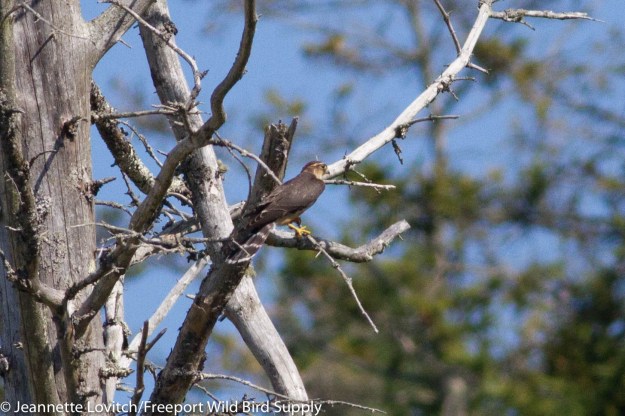
A male Black-throated Blue and a female Black-and-white Warbler joined Palm and Yellow-rumped Warblers feasting on seaweed flies in and near the wrack at Pond Cove, where another Red-bellied Woodpecker was sounding off.

On my way back, I swung through the goose fields, and clearly more Canada Geese have arrived in the last few days. 718 was a new season-to-date high count, with the most interesting new arrival being this spiffy leucistic Canada. Unlike a hybrid with a Snow or a Domestic Goose, this neat bird was the same shape and size as the average Canada, but with a dull brownish cast to the head, neck, and wingtips.
IMG_4625_leucisticCANG1,GreelyRd,10-24-14_edited-1

As this nasty low rides up into Atlantic Canada and beyond, strong wrap-around winds will offer the potential to displace Northern Wheatears or rare geese from Greenland. Meanwhile, next week, we’ll see unseasonable warmth return on southwesterly winds (“vagrant winds” as I like to call them), just the type of scenario that can facilitate the arrival of strays from the southwest, such as Cave Swallows and Ash-throated Flycatchers. They will also facilitate the survival for at least a little longer of vagrants that are still present but as so far gone undetected.

There isn’t one predominate pattern that yields a strong suggestion of any particular vagrant (or group of vagrants) from any particular direction. However, it is clear that we are getting a nice sample of different conditions that could produce some fun stuff.

At the very least, I expect some big flights of migrants, both day and night in the coming days. In fact, I think there will be a big one tonight. Check out these northwesterly winds that should be ushering in a big push of birds:
wind forecast, overnight

Sparrows will make up the bulk of the flight, especially White-throated Sparrows and Dark-eyed Juncos. If the clouds clear by dawn, I might get a big push at Sandy Point. If the ceiling stays low overnight, look for concentrations of sparrows in migrant traps, especially in and around bright cities. Meanwhile, during the day, a lovely weather forecast should get plenty of birders out into the field.

Needless to say, I will be out looking, and I hope you will to! I look forward to what the coming days and weeks will bring.

October Birding in Maine.

October is my favorite month of birding in Maine. Great diversity, opportunities for observing the thrilling phenomena of migration, an increased chance for rarities, and often-beautiful weather combine to make for exciting times in the field.  I keep my schedule as free as possible for the month to maximize my birding time, and luckily, a current project dictates even more time in the field for me. For the past five days, October birding was at its finest, and my adventures nicely summarized what this glorious month has to offer.

On Friday, I spent the morning exploring 8 preserves of the Harpswell Heritage Land Trust. Six hours and about 5 miles of walking later, I had a better feel for the properties on Harpswell Neck, and their (significant) birding potential.

IMG_4568
Widgeon (sic) Cove Preserve.
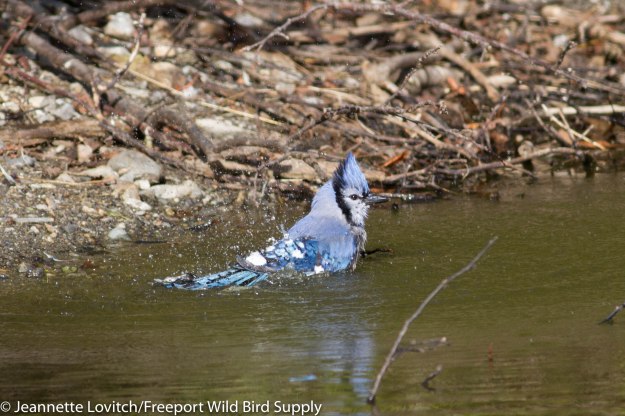
I didn’t find anything out of the ordinary today – best birds were probably the Carolina Wren at Pott’s Point, a Red-bellied Woodpecker at the Skofield Shore Preserve, and a Nelson’s Sparrow at Stover Point – but almost all sites were delightfully birdy. Yellow-rumped Warblers were in abundance (especially at Mitchell Field) and there were plenty of Palm Warblers around (again, especially at Mitchell Field).  Other then a few Blackpoll Warblers, my only other warblers were single Pine at Skofield and a Black-throated Blue at the Curtis Farm Preserve.

Sparrows were widespread, as were Purple Finches and Pine Siskins, Red-breasted Nuthatches, and increasing waterbirds including a few groups of Surf Scoters. Mitchell Field was definitely the hotspot today, with good numbers of all expected migrants, along with migrant Osprey, a Sharp-shinned Hawk, a single Indigo Bunting, 3 Gray Catbirds, and 5 Monarchs.

After several nights with little visible migration (although there’s almost never “no” migration at this time of year!), clear and mostly light westerly conditions overnight Friday into Saturday produced a huge flight. Unfortunately, come dawn, clouds had rolled in and winds immediately shifted the northeast. Combined, the Sandy Point Morning Flight was reduced to a mere dribble totaling 91 birds, led by 36 Yellow-rumped Warblers. I was then shocked by a relatively slow birdwalk (even sparrow numbers were far lower than I would have expected) at Old Town House Park – where did all of the migrants overnight go? A Brown Thrasher was a good bird for here though.

Luckily, Saturday was the anomaly. After another very strong flight overnight, Sunday morning finally featured a light northwesterly wind.  Therefore, I finally got my fix in at Sandy Point, with my largest flight of the season.  9 species of warblers and a few new records highlighted the flight, with the following tally:

6:49-9:35am.
38F, clear, NW 5.1 to calm to WNW 4.7mph.

768 Yellow-rumped Warblers (*New Record).
421 Ruby-crowned Kinglets (*2nd highest).
179 Dark-eyed Juncos
116 Unidentified
87 Pine Siskins
79 American Robins
62 Black-capped Chickadees (*New a Record).
31 Golden-crowned Kinglets
26 Purple Finches (*New Record High).
21 Palm Warblers
20 Rusty Blackbirds (*Tied Record High).
17 Canada Geese
14 Blue-headed Vireos
14 Red-breasted Nuthatches
14 White-throated Sparrows
12 Chipping Sparrows
11 Savannah Sparrows (*New Record).
9 Northern Flickers
7 Eastern Phoebes
6 Black-throated Blue Warblers
5 Gray Catbirds
5 Swamp Sparrows
4 Unidentified kinglets
4 Black-throated Green Warblers
3 Brown Creepers
3 Hermit Thrushes
3 Nashville Warblers
3 White-crowned Sparrows
2 American Black Ducks
2 Blue Jays
2 WHITE-BREASTED NUTHATCHES (*tied record high).
2 Unidentified Catharus thrushes
2 Common Yellowthroats
2 Black-and-white Warblers
2 Lincoln’s Sparrows
2 American Goldfinches
1 Osprey
1 Yellow-bellied Sapsucker
1 Unidentified vireo
1 TUFTED TITMOUSE
1 Swainson’s Thrush
1 Nashville/Orange-crowned Warbler
1 Northern Parula
1 Blackpoll Warbler
1 MAGNOLIA WARBLER
1 Cedar Waxwing

Total = 1798 (*3rd Highest October Count).

Afterwards, I began a quick trek east, visiting a friend in Camden, and having dinner with friends in Bar Harbor. In between, I enjoyed a little casual birding, and the fall foliage.
IMG_4574
The Penobscot Narrows Bridge.

On Sunday, Rich MacDonald and I did a little birding on the western half of Mount Desert Island.  An “interior/bay” subspecies of Nelson’s Sparrow at Back Beach in Tremont was a highlight, as was a nice variety of birds off Seawall Beach, including an unseasonable 148 Laughing Gulls.  20 Red-necked Grebes and about a dozen White-winged Scoters were also present.
IMG_4586

At noon, we boarded the Friendship V of the Bar Harbor Whale Watch for 3.5 hours offshore. I was really hoping for a Great Skua – my real reason (legitimate excuses aside) for this trip, afterall – but it was a rather slow day on the water. But hey, any day with a jaeger is a good day in my book, and we saw 3 Pomarines. 18 Northern Fulmars were a treat, but birds-of-the-trip honors goes to a rather unseasonable Manx Shearwater.  A single Great Shearwater, Black-legged Kittiwake, and a measly 3 Northern Gannets were all we could muster. Apparently, those northwesterly winds that finally gave me my flight at Sandy Point also pushed sea creatures out from these waters!
IMG_4591

DSC_0003_subadultPOJA,BarHarbor,10-13-14_edited-1
Subadult Pomarine Jaeger.

It was a quick trip Downeast, so I was home by Monday night, and in the morning – following a night with a return to southwesterly winds and no visible migration on the radar – Jeannette and I headed in the other direction. A ridiculously gorgeous day (light winds, temps in the low 70’s!) encouraged us to spend all daylight hours outside and birding hard, covering our usually route between Kittery and Wells.

As usually, Fort Foster provided the highlights, led by a White-eyed Vireo and an Orange-crowned Warbler.  Another Orange-crowned was at Seapoint Beach, an “Ipswich” Savannah Sparrow was in The Nubble neighborhood, 12 Brown-headed Cowbirds were at the feeders behind The Sweatshirt Shop in Wells, and Community Park hosted a Nelson’s Sparrow (ssp. subvirgatus).

Ten (and a half) species of sparrows (Eastern Towhee, Chipping, Savannah – plus “Ipswich,” Nelson’s, Song, Lincoln’s, Swamp, White-throated, White-crowned, and Dark-eyed Juncos) and six species of warblers (Orange-crowned, Black-throated Blue, Pine, Palm, Yellow-rumped, and Common Yellowthroat) were tallied, along with six species of butterflies (including a few dozen Monarchs).  Throughout the day we encountered lots of Yellow-rumped Warblers, Song and White-throated Sparrows, along with most of the regular October migrants from Horned Grebes (FOF) to Ruby-crowned Kinglets.

So there you have it. That’s just a sample of what mid-October has to offer here in Maine.  What’s left?  Finding that “Mega” rarity of course!