Tag Archives: Durham

A Month of Birding Out the Window.

Sharp-shinned Hawk drama has been keeping me entertained for the past month.

For the most of the past four weeks, my birding has been exclusively at our feeding station at our home in Durham as I recover from shoulder surgery.  We designed our house to maximize feeder- and yard-viewing opportunities, and I am sure thankful that we did! It will come as no surprise to anyone who knows me that I don’t sit still well, so my extended feeder-watching sessions have been both mentally and physically therapeutic. It has also been quite productive! And keeping track of daily numbers has been quite elucidating.

Despite our new construction being completed (well, mostly!) in October and virtually no landscaping occurring, we have been very pleasantly surprised by the diversity and activity – a reflection of the quality of the habitat on our property (and hence why we purchased it).  Nonetheless, I did not expect to be hosting 19-22 species a day at the feeding station in our first winter!

My feeder-watching vigils began the day after my surgery, on January 19th. The ebbs and flows during that first week were quite insightful. With three storm systems and snow piling up, the daily changes were noticeable, and mostly predictable. Our feeders were busiest with 22 species on 1/23 as over 14”of snow accumulated here in Durham. Numbers of ground-feeders peaked that day, with the week’s high counts of Mourning Doves (27), American Tree Sparrows (9), Northern Cardinals (11-12), and White-throated Sparrows (3). The 22 Dark-eyed Juncos was down a bit from a high of 25 following the first snowfall on the 20th.

Despite adding a third platform feeder, some ground-feeders had moved on by week’s end: 24 Mourning Doves, 14 Dark-eyed Juncos, 10 Northern Cardinals, and only 1 White-throated Sparrow remained, although American Tree Sparrows bumped back up to 9 with the snowfall of the 25th.

Eastern Bluebirds, meanwhile, had been increasing, with 4-6 daily becoming 14 by week’s end. Two House Finches became 5; they often travel with bluebirds in winter, so their simultaneous rise is not surprising. A single European Starling on 1/24 was unwelcome.

We picked up a second Red-breasted Nuthatch by week’s end, while one each of Red-bellied Woodpecker and Carolina Wren continue.  Resident woodland birds that travel together in a mixed-species foraging flocks are notoriously hard to count, as it’s often impossible to know whether you are looking at the same flock or multiple flocks as they come and go throughout the day. Therefore, we are left to take the daily “high count” (maximum number of birds seen at one time) only as our “total,” so trends are harder to detect. My high count of Black-capped Chickadees did increase from 6 to 10 by week’s end, however, while a pair of White-breasted Nuthatches, 2 Downy Woodpeckers, 2-4 Hairy Woodpeckers, and 4 Tufted Titmice remain the same.

We also have a single American Crow that visits daily, an irregular visit from a male Pileated Woodpecker, and I’m trying to get a feel for the wide variation in daily Blue Jay high counts (between 1 and 10).

The only disappointment so far this winter had been our finch diversity so far. A single Pine Siskin 1/19-20 and female Purple Finches during the storm on the 23rd were our only non-goldfinches in that first week. However, our American Goldfinch flock has more than made up for it with between 32 and 74 (1/25).

But speaking of finches, the “birds of the week” those first seven days were 5 fly-over Pine Grosbeaks on the 25th. Bald Eagles and a Red-tailed Hawk regularly fly past the windows, as does the daily commute of Herring (and a few Great Black-backed Gulls) moving up and down the Androscoggin River; hoping to tease out a white-winged gull for the yard list. We’ve also had a small flock of American Robins (up to 18) feeding on Winterberry and Multiflora Rose in the past few days.

By the second week, a relatively deep, now-frozen snowpack, and only a couple of weak weather systems, resulted in less daily variation in the numbers at our feeders here in Durham. Fluctuations in counts had more to do with the day’s weather and the presence of a Sharp-shinned Hawk (see below), rather than the seasonal movements of species as had occurred with the onset of “real winter” the week prior.

A lot of species counts stabilized, such as the daily average of about a dozen Eastern Bluebirds and up to 46 American Goldfinches.  However, some changes were noticeable, especially the ebbs and flows of ground-feeders: 6 American Tree Sparrows increased to 9, as many as 24 Dark-eyed Juncos decreased to 14, and after entertaining a third White-throated Sparrow for a couple of days, we are back down to two.

An impressive 13 Northern Cardinals on 1/29 was a seasonal high count, but otherwise most counts of the 18-21 species each day remained about the same. I had still not confirmed the presence of a second mixed-species foraging flock, for example, and our only finches remain the aforementioned impressive number of American Goldfinches and 4 House Finches. 

Since my “observation week” begins on Saturdays, Week 3 began the morning of February 4th with some extreme cold weather. And, wow, that was some cold!  Wind chill records (e.g. -45F in Portland and an astounding -108 at Mount Washington) Friday night into Saturday were thankfully short-lived. Here at our home, our windchill was “only” -21 on a low of -16F, as our anemometer was not receiving the full force of the wind.

The short duration of the cold snap – as extreme as it was – didn’t seem to have much impact on feeder birds, especially as the rest of the week’s weather was rather benign. Our Carolina Wren made it through, and overall activity and diversity was similar to last week (scroll down for previous posts). 

American Goldfinches slowly declined at our feeders this (from 46 to a low of 22), likely as our birch crop is being picked clean. Sparrows were up again, however, with 15 American Tree Sparrows now after starting the week with 6.  Dark-eyed Juncos spiked again to 20 on 2/5-6 before settling back down to 18; three more than we started the week with.

A female Purple Finch returned, and a Brown Creeper was now spotted daily in the trees immediately behind the feeding station. And a single Wild Turkey has returned to the feeders after being absent since early winter. Unfortunately, a pair of European Starlings were now present.

Two noticeable declines this week were in Northern Cardinals (from 11 to 7) and Mourning Doves (from 28 to 14). Meanwhile, Eastern Bluebirds have been far less frequent at our feeders as the week went on. This is all likely the result of direct and indirect (disturbance) effects of the continuing Accipiter saga. Daily high counts of other species were similarly affected by the presence of two different Sharp-shinned Hawks this week (see below).

Not surprisingly, the spring-like weather (including two days of record warmth) and very little precipitation reduced overall activity at the feeding station during Week 4, beginning on 2/11. We now have some bare spots on a slope now, where birds have been foraging, and the snowpack is much reduced in the woods. There’s more natural food available and less calories burned, so there’s less need for supplemental food – it’s long past time to put the “dependency on feeders” myth to bed!

Nonetheless, this week saw another uptick in Mourning Doves (high of 27) and American Tree Sparrows (of 10). Dark-eyed Juncos returned to a high of 21, but they have been spending as much time on the bare slope of our berm then at the feeders.

Eastern Bluebirds have been much less frequent this week, with a high of only 3 and they’re not visiting everyday. Same for the House Finches they usually travel with in winter –it’s just a sporadic pair now. American Goldfinches, however, remain strong, with a high of 32 this week. Our latest singleton Purple Finch has apparently moved on.

Winter flocks are breaking up, and that’s likely why the bluebirds have been less frequent; they might be spreading out already. The mixed-species foraging flock of residents are breaking up as well, and “bickering” is increasing among them, especially the Black-capped Chickadees. Meanwhile, Hairy Woodpeckers are courting now, and territorial drumming is frequent.

And then, with temperatures spiking to over 50 degrees on the 16th, Jeannette had the first Red-winged Blackbird of the year flying north overhead!  Already. I expect diversity and daily counts to change more often in the coming weeks now.

Meanwhile, birdwatching is not just about counting, so I kept notes of interesting observations and behaviors through the duration of my time stationed in front of the window (and short walks up and down the driveway, weather and ice permitting). I enjoyed seeing the slow but sure progression of the season, as Downy and especially Hairy Woodpeckers became more territorial, and male Hairys especially began drumming, accelerating this week. A pair of Common Ravens was regularly observed, with pair-bonding flight displays increasing. Tufted Titmice and Black-capped Chickadees began singing more, too.

I’ve also conducted an experiment with some suet products that we may bring into the mix at the store. None of which, however, has come close to being as popular as our current offerings, however.

A few of my most interesting behavioral and natural history observations were:

1. 1/28: I watched a Dark-eyed Junco that was foraging along our foundation grab a large cutworm-like-caterpillar and smack it on the snow. As it began to eat it, a bluebird flew down and grabbed the caterpillar. I had not observed kleptoparasitism in bluebirds before!

2. 2/2:  The male Sharp-shinned Hawk that has been hanging around was pursued and killed by a second accipiter that had been undetected by us. The brutal end to the chase took place within 10 feet of me. It was quick, I was in shock, neither a camera nor binoculars was within reach of my working arm, and I was afraid to move as I didn’t want to disrupt the proceedings – it’s the worst feeling to flush a predator from its hard-earned prey and see that prey item suffer and go to waste. 

The thing is, I think the only-marginally larger predator was actually an adult female Sharp-shinned Hawk as opposed to the far more likely adult male Cooper’s Hawk. Cooper’s Hawks are known to kill Sharpies, but I am unaware of published accounts of cannibalistic Sharpies. It all happened too quickly, and accipters are much easier to identify in flight three miles away than when they are sitting in front of your face (at least as adults). Apparently I was too traumatized by the event (and/or slowed mentally by painkillers) to look at details of face pattern. But the relative size and the paler chest and less steely-back were highly suggestive of an adult female Sharp-shinned.  Hopefully, it will take up the territory and I will be able to confirm its ID circumstantially.  But it was a rather violent end to my feeder-watching week!

Although only circumstantial evidence, an unequivocal female Sharp-shinned Hawk was spotted (and positively identified!) the next day thereafter, leading credence to the rare cannibalism theory. It’s only circumstantial evidence, but I have little doubt this is the bird that took the male the prior day. Furthermore, I have not seen a Cooper’s Hawk here all winter. Absolutely fascinating, and I wish I had photos to document the gruesome event.

The plot thickened even further on the 8th, when I spotted (and photographed this time) a second-winter male (subadult) Sharp-shinned Hawk hunting the feeders in the morning.  He better be careful out there! The woods of Durham are unforgiving!

The next week, I didn’t see him as only the adult female was around.

3. I’ve been sorting through as many of the daily commuting gulls as possible, and finally on the 15th, I picked out an Iceland Gull for our 122nd Yard Bird!  Interestingly, it was an adult or near-adult, different from the 1st winter birds that have been frequenting the Lewiston-Auburn riverfront a few miles upriver.

For almost three weeks, I left the house or driveway exactly three times (a follow-up appointment, a field trip to see Avatar, and a successful chase of the Common Ringed Plover at Timber Point in Biddeford on 1/31. Jeannette dumped me in the car and we drove down – me fully reclined and with an icepack strapped on. The bird was present as we arrived, and since the word was just getting out, we even had a parking spot. She set me up behind the scope (I had to ask a fellow birder for assistance in moving it!) and then took some photos.  I was pretty uncomfortable on the way home – to put it lightly – but it was absolutely worth it!

It wasn’t until Monday, February 6th (just under three weeks since my surgery) that I went out for a little birdwalk with Jeannette at the Auburn Riverwalk. It was a lovely day, and it was fantastically birdy!  We found a hen Northern Pintail amongst nearly 500 Mallards, and had three 1st-winter Iceland Gulls – the most I have had here in several years.  The overall bird activity was quite a bit above average, as the cold snap finally put some ice on the river and helped to concentrate birds here. Unfortunately, we did not see the Harris’s Sparrow in Turner before my body had enough of being upright.

The next day’s outing, however, was for an easy twitch.  I only had to get out of the car and find some open space along the railing of the Arrowsic-Georgetown bridge over the Back River.

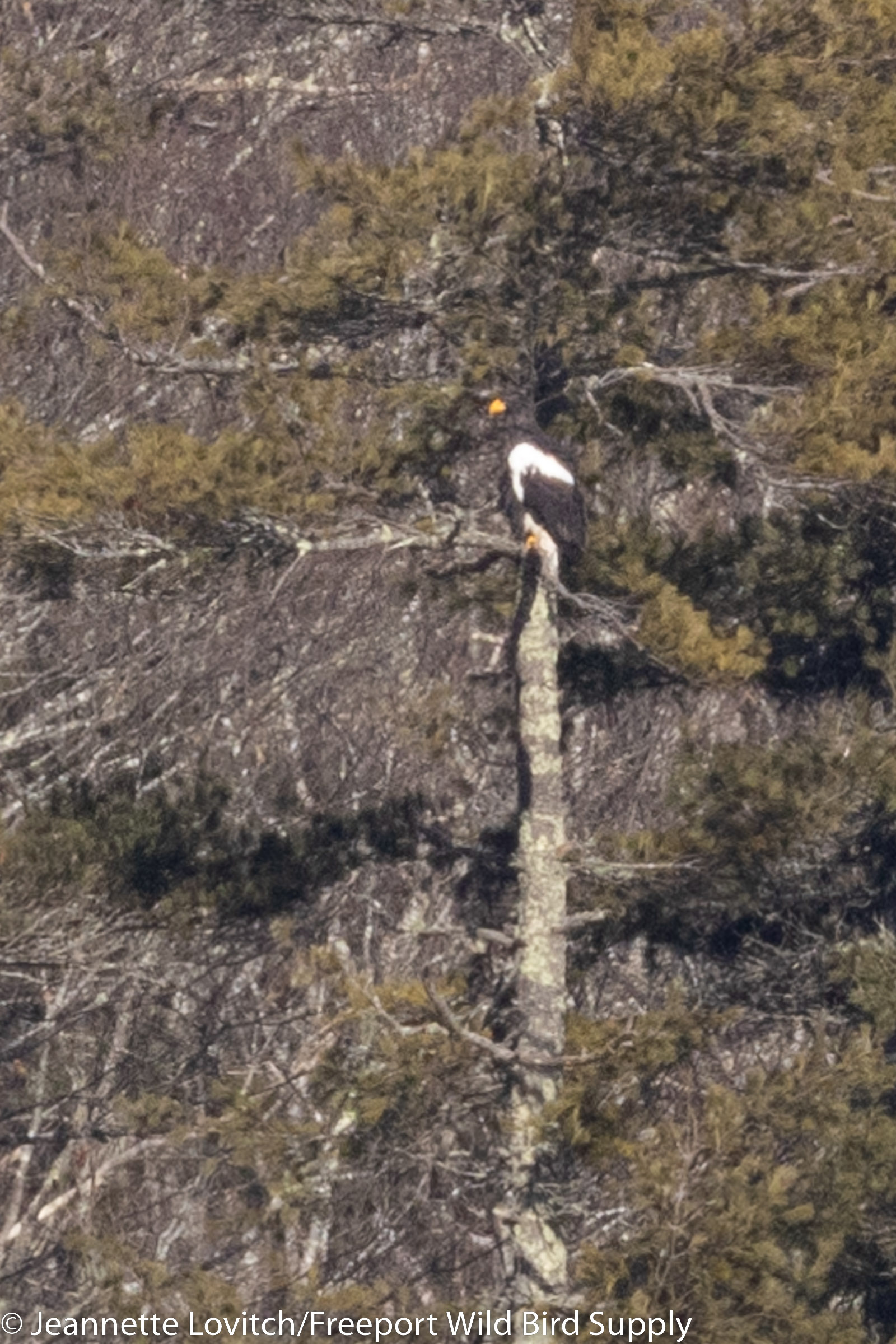
So yeah, the Steller’s Sea-Eagle is back, and it was in full (albeit fairly distant) view in our first visit with it of the year. I’ll get out of my recliner for a Steller’s Sea-Eagle any day!  It was also good to catch up with a friend and get out of the house for the second day in a row.

A few days later, Jeannette and I took a walk at Winslow Park in Freeport (2/9) where we were thrilled to find 7 Barrow’s Goldeneyes (3 drakes and 4 hens), the second highest count that I have had here in nearly a decade. They put on a great show, too.

A visit to the Auburn Riverwalk on the 13th yielded only one 1st-winter Iceland Gull, while a walk along Brown’s Point Road in Bowdoinham the next day produced a couple of pioneering Northern Flickers.

So there ya have it…my last month of birdwatching. With slow progress on my recovery, I expect feeder-watching will dominate my activity for a few more weeks, but temperature swings will make that interesting…and hopefully another snowstorm or two. I need to be out and about with few limitations by the time spring is here to stay!

This Week’s Highlights: November 11 – November 18, 2022

I found this presumptive BLACK-HEADED X RING-BILLED GULL HYBRID along Greely Road in Cumberland during steady rain in the late morning of the 13th. It looks very similar to the individual of this hybrid pair that wintered on the Falmouth waterfront for at least two years, 2019-20, and 2020-21. Could it be the same bird with a little more black on the head due to the earlier date?

Rarity season is upon us, but most of my birding this week was in and around our yard. Not that that wasn’t extremely enjoyable though!  A few forays afield did not produce those hoped-for November “Megas,” but I did see a few things of note over the past eight days including:

  • Evening Grosbeaks have been present daily at our feeders in Durham all week. 7 on 11/11 peaked at 32 on 11/12 (with Saturday Morning Birdwalk group).
  • 1 Lapland Longspur (FOF), over our yard in Durham, 11/11.
  • 1 RUSTY BLACKBIRD, our feeders in Durham, 11/12 (with Saturday Morning Birdwalk group).
  • 1 first-winter Iceland Gull (FOF), Thornhurst Farm, 11/13.
  • 1 PUTATIVE BLACK-HEADED X RING-BILLED GULL HYBIRD, Greely Road, Cumberland, 11/13. First distant observation in driving rain suggested a much, much darker head and mantle, but finally relocated closer to the road. Joined by Nick Lund and Reed and Laura Robinson. 
  • Red Crossbills have been regular fly-overs in our Durham yard this week, but 10 were feeding on Eastern Hemlocks on 11/17.
  • 3 continuing CANVASBACKS, 398 Ruddy Ducks, 320 mixed scaup (too far to reliably sort through, 1 Evening Grosbeak, 1 Winter Wren, etc, etc, Sabattus Pond, Sabattus, 11/17.

This Week’s Highlights: October 29 – November 4, 2022

Evening Grosbeaks are predicted to head south in good numbers this fall and winter, and the first indications of that are appearing locally. Here’s one of the 8 that arrived at our
Durham feeders on the morning of the 3rd.

My observations of note over the past seven days included the following:

  • 2 Rusty Blackbirds, Wolfe’s Neck Center, 10/29 (with Saturday Morning Birdwalk group).
  • 4+ Red Crossbills and 1 Eastern Phoebe, Morgan Meadow WMA, 10/31 (with Jeannette).
  • 1 “Ipswich” Savannah Sparrow (FOF), 1 Semipalmated Plover, etc, Reid State Park, Georgetown, 11/1 (with Jeannette).
  • Sandy Point Morning Flight, 11/2: 154 individuals of 18 species in what was likely my last visit of the season. Complete count here.
  • Sabattus Pond, 11/3 (with Dan Nickerson): 469 Ruddy Ducks, 79 Greater Scaup, 55 Lesser Scaup, 2 Common Goldeneyes (FOF), etc.
  • 8 EVENING GROSBEAKS, our feeders in Durham, 11/3 (first of fall locally; photo above).

This Week’s Highlights: October 15 -21, 2022

I spent a lot of time looking at sparrows this week, as I love to do in October. This snappy immature White-crowned Sparrow was at Wolfe’s Neck Center on the 16th.

My observations of note over the past seven days included the following:

  • 1 continuing HUDSONIAN GODWIT, Wharton Point, Brunswick, 10/15 (with Saturday Morning Birdwalk group; the 247th all-time Saturday Morning Birdwalk species!). Observed at closer range later from the Maquoit Bay Conservation Land.
  • 1 Indigo Bunting, Wolfe’s Neck Center, Freeport, 10/16.
  • Incredibly morning at Bailey Island, Harpswell with Jeannette on 10/17: 1 ORANGE-CROWNED WARBLER, 1 CAPE MAY WARBLER, 1 Blue-headed Vireo, 1 Red-eyed Vireo.  6 total species of warblers; 7 species of sparrows. 400+ Dark-eyed Juncos, 200+ Yellow-rumped Warblers, 150+ White-throated Sparrows, 150+ Song Sparrows, etc, etc.
  • 1 ORANGE-CROWNED WARBLER, our yard in Durham, 10/17.
  • 1 Red Crossbill, our yard in Durham, 10/19.
  • 353 Ruddy Ducks, 1 Spotted Sandpiper, 61 Lesser Scaup, 18 Greater Scaup, etc, Sabattus Pond, Sabattus, 10/20.
  • 2 EVENING GROSBEAKS, 1 Common Yellowthroat, 50+ Swamp Sparrows, etc, Old Town House Park, North Yarmouth, 10/21.
I whiffed on phone-binning an Orange-crowned Warbler at Bailey Island on the 17th as I apparently followed the wrong bird. Turned out the other bird was this tardy Blue-headed Vireo, however.

This Week’s Highlights: September 22- October 7, 2022.

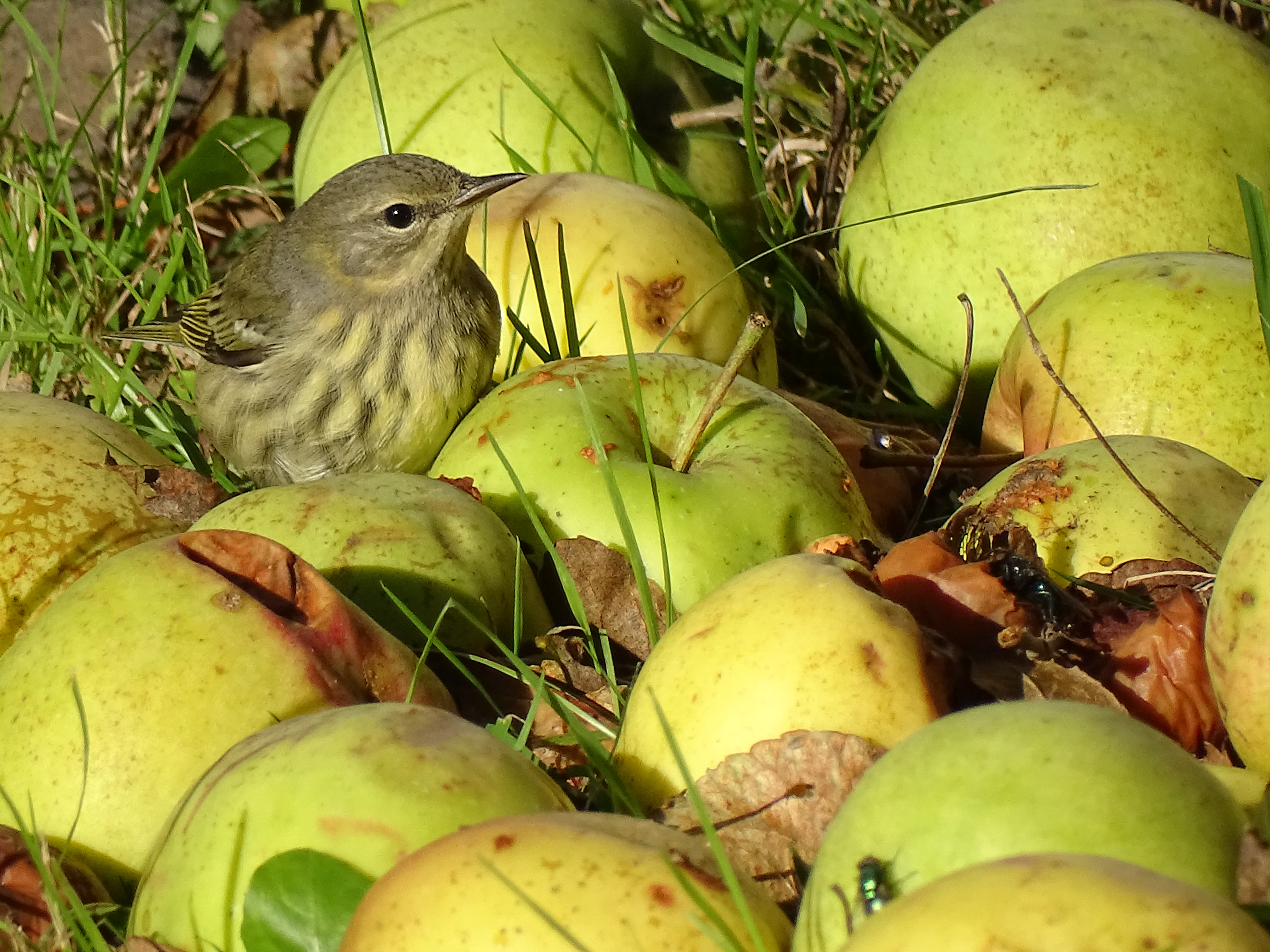
“Warblers on the ground” was the theme of this year’s Monhegan Fall Migration Weekend tour. While Blackpoll Warblers dominated the apple piles, this Cape May Warbler was my favorite photo subject.

It’s been a crazy two weeks! Other than two wonderful weekends on Monhegan – personal and professional – and an incredibly Sandy Point Morning Flight last week, my birding has been seriously limited. With the weather pattern and so many rarities around, this was frustrating, but as of today, we have (mostly) completed our move from Pownal to Durham. 

  • Monhegan Island, 9/22-9/26. Highlights included 1 LARK SPARROW, 6 LESSER BLACK-BACKED GULLS, 3 CLAY-COLORED SPARROWS, 2 DICKCISSELS, 1 ORANGE-CROWNED WARBLER, 16 species of warblers, and an insane falcon show. Complete Tour Report and daily checklist here. 
  • Sandy Point Morning Flight, 9/29: 6,183 migrants of 69 species highlighted by 1 BLUE GROSBEAK, 20 species of warblers, and my 195th all-time patch bird in 2 high-flying Little Blue Herons!  It was a great enough day to deserve its own blog, which can be found here.
  • 1 Brown Thrasher, here at the store, 9/29. Our second ever in the garden here.
  • Pownal Morning Flight, 9/30: 289 individuals of 29 species. Complete list here. Our last morning flight at our old property, with a final yard list of 136.
  • Monhegan Island, 9/30-10/2 with Jeannette. We were here for a friends’ event, so birding was not always the priority. Nonetheless, we had some good birds included the continuing juvenile RED-HEADED WOODPECKER, at least one continuing CLAY-COLORED SPARROW and DICKCISSEL, 1 Red-bellied Woodpecker, our first coastal Pine Siskin of the fall, a late Veery, Yellow-bellied Sapsuckers in every apple tree, warblers on the ground, and a big Yellow-rumped Warbler morning flight on the 1st

This Week’s Highlights, May 27-June 3, 2022

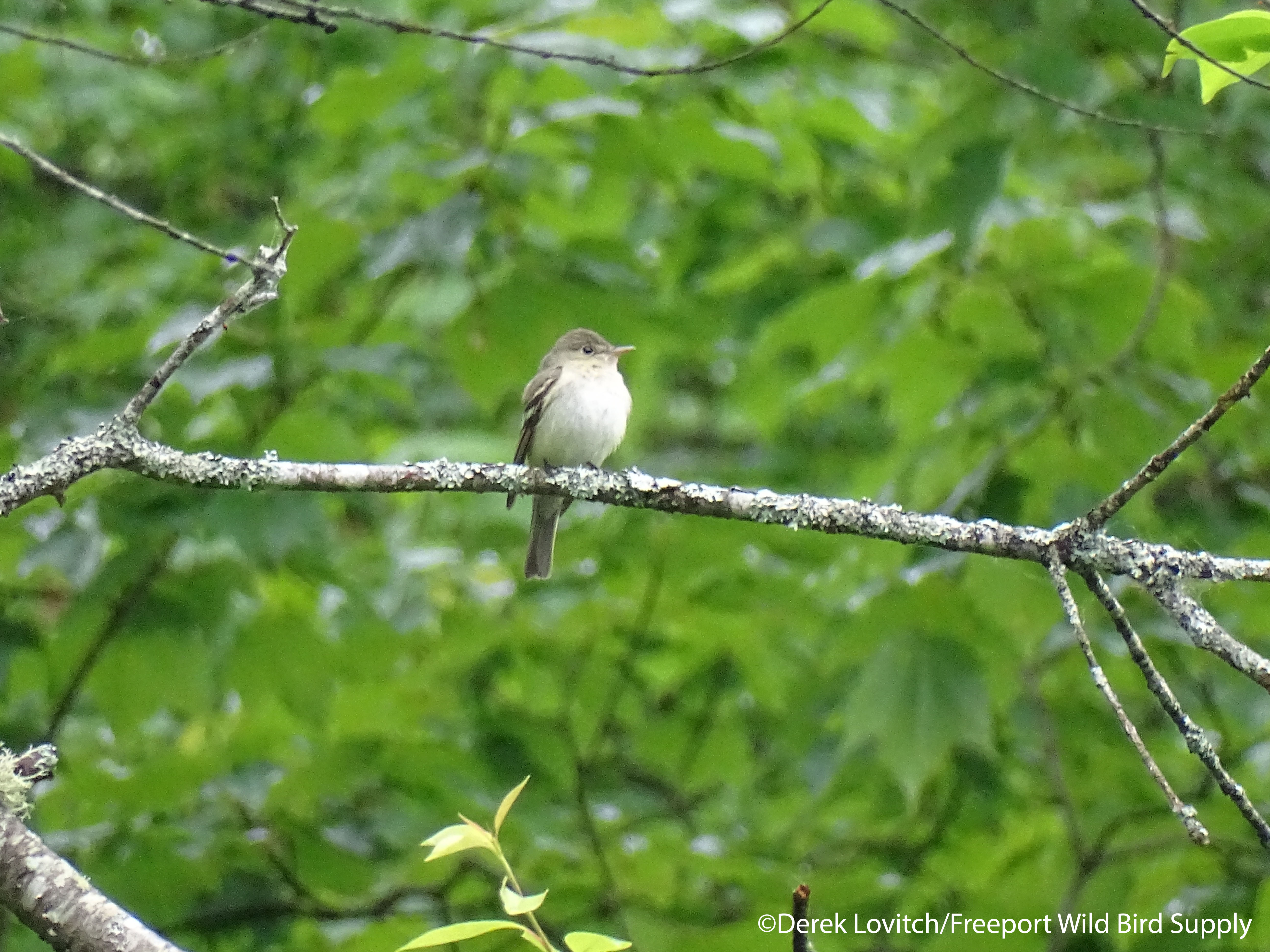
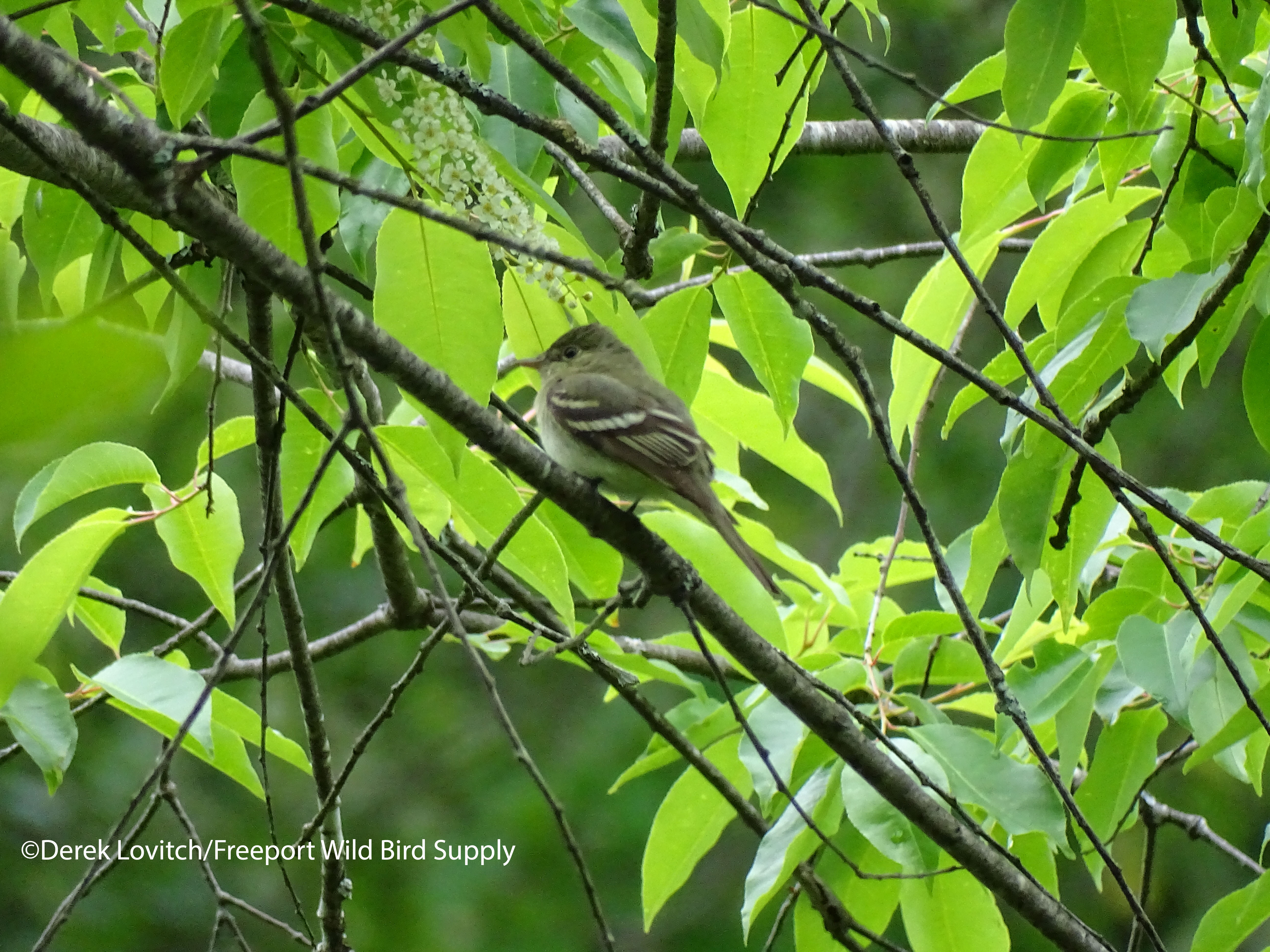
After trying to string one on Monhegan, an Acadian Flycatcher found me!  A friend heard it first as he joined me for a bird survey on private, posted property in Durham on 6/2.  This was an incredible record for Androscoggin County and really shocked me.  It continued at least as of the next morning.
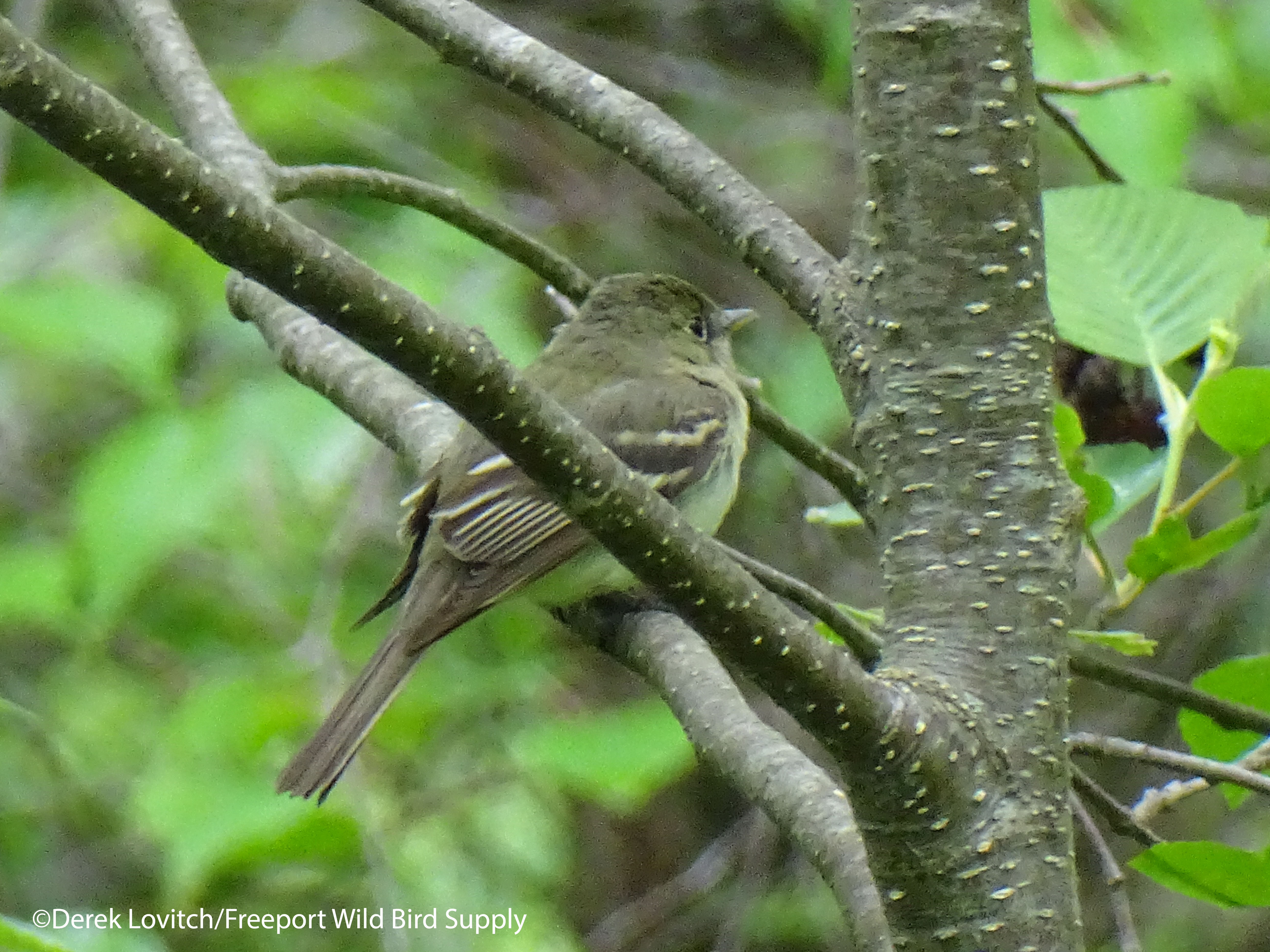
This photo nicely shows the very long (for an Empid primary projection, the greenish tone to the upperparts, the complete eyering, and the large, wide and orange mandible. It took a while to see all of the pertinent details,
even though the song is so distinctive.
When we first saw it, the appearance of no green above and no yellow below through us for a loop, but once we got into the shade with it, those diagnostic tones were readily apparent.
  • My annual Monhegan Spring Migration Tour took place on 5/27 through 5/30, followed by another day on the island with Jeannette. It was very slow, and significant highlights were few. However, it was still, well, birding on Monhegan for five days, so I am not complaining. I’ll have a full tour report and checklist in the coming days.  Highlights included daily crippling views of Black-billed Cuckoo; a CLAY-COLORED SPARROW that we found on 5/30 but was seen by all on 5/31; 3 WILLETS that arrived from the open ocean south of Lobster Cove before landing in the harbor on 5/31; a good Atlantic Puffin commuting flight in the morning of 5/31, and an immature male ORCHARD ORIOLE each day.

Other non-Monhegan and non-flycatcher highlights this week included:

  • 2 RED-NECKED PHALAROPES, Hardy Boat from Monhegan to New Harbor, 5/31 (with Jeannette).
  • 1 LOUISIANA WATERTHRUSH, Mill Brook Preserve, Westbrook, 6/1.
  • 3 AMERICAN OYSTERCATCHERS, 1 Dunlin, 8 Ruddy Turnstones, 26 Black-bellied Plovers, 1 adult Little Blue Heron, etc, Pine Point, Scarborough, 6/1.

It’s June, so we are busy with events and tours here at the store and beyond:

  • Tomorrow is Zeiss Day at the store, with events including a whole range of products to try on our Saturday Morning Birdwalk, free optics cleaning, and a digiscoping demonstration. Check it out here.
  • Our first pelagic with our partners Cap’n Fish’s Cruises out of Boothbay Harbor will run on Monday, June 6th. It includes a visit to Eastern Egg Rock and chumming deeper offshore.  Info here.

This Week’s Highlights, April 2-8, 2022.

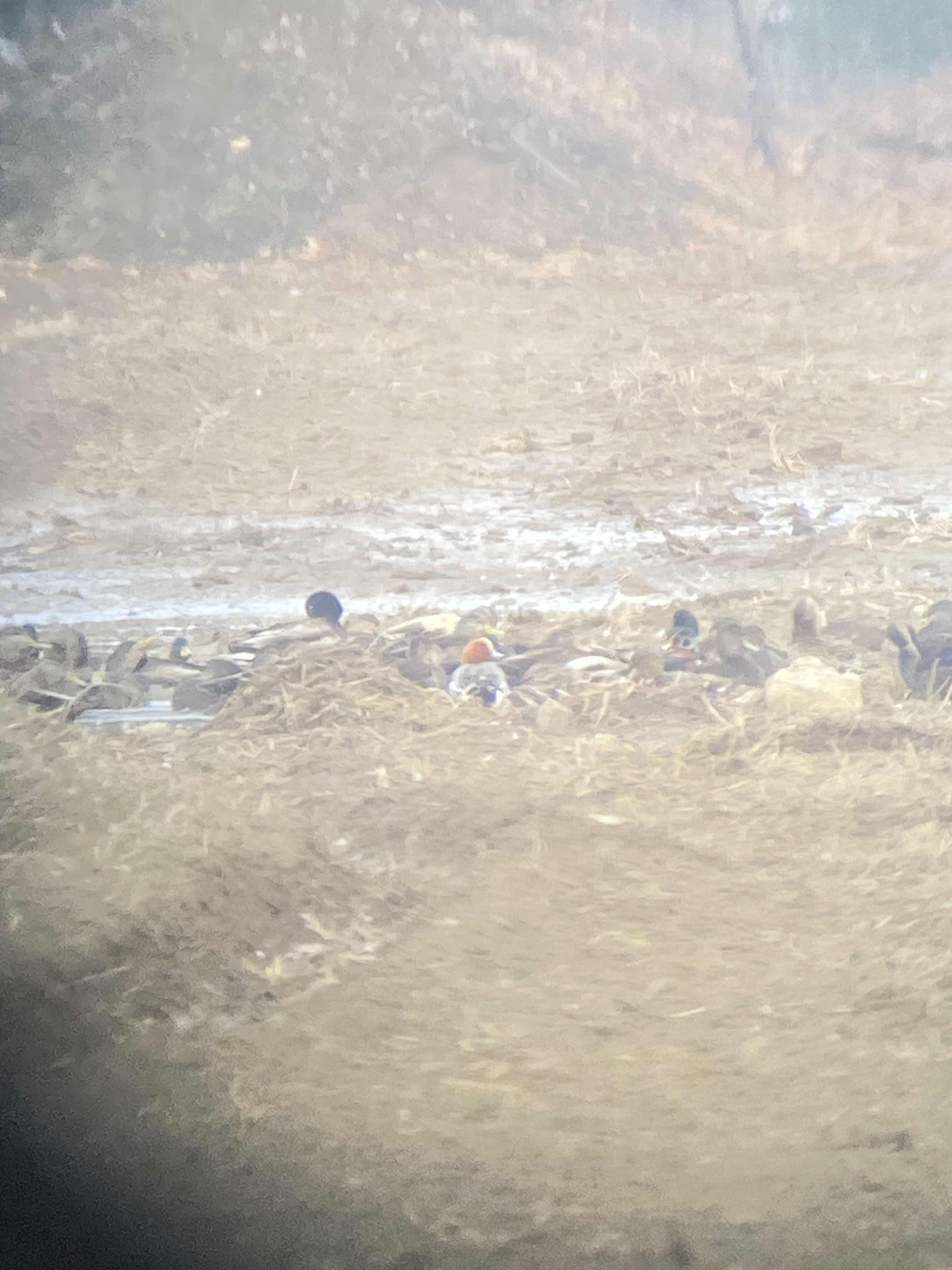
A distantly-phone-scoped photo of a drake Eurasian Wigeon does not do this spiffy bird justice!

A few “good” ducks, an increasing roster of new arrivals, and a successful tour were my sightings of note over the past seven days:

  • 12 NORTHERN SHOVELERS (one of my highest Maine counts), Maquoit Bay Conservation Land, Brunswick, 4/2 (with Saturday Morning Birdwalk group).
  • 1 continuing drake EURASIAN WIGEON, Route 136, Durham, 4/7 (photo above). Originally found by N. Gibb on 4/3.

New Arrivals this week:

  • 2 Pied-billed Grebes (FOY), Florida Lake Park, Freeport, 4/3 (with Levi Burford and Katrina Fenton).
  • 5 Tree Swallows (FOY), Morgan Meadow WMA, 4/4 (with Jeannette).
  • 8 Great Egrets (FOY), Scarborough Marsh, 4/4 (with Levi Burford and Katrina Fenton).
  • 1 Snowy Egret (FOY), Scarborough Marsh, 4/4 (with Levi Burford and Katrina Fenton).
  • 1 Greater Yellowlegs (FOY), Scarborough Marsh, 4/4 (with Levi Burford and Katrina Fenton).
  • 1 Double-crested Cormorant (FOS), Scarborough Marsh, 4/4 (with Levi Burford and Katrina Fenton).
  • Big arrival of more Eastern Phoebes and Song Sparrows in particular night of 4/5-6.
  • 1 Yellow-bellied Sapsucker (FOY), private property in Durham, 4/7 (with Jeannette).

This Week’s Highlights, 1/8-14, 2022


My observations of note over the past seven days are as follows. With the first real cold spell of the winter, it’s not surprising that many of the noteworthy observations this week were of “lingering” or “pioneering” individuals that were moving around or seeking more tolerable locales. Of course, my two (almost) full days of birding this week were focused on the Boothbay area.

  • 1 American Pipit, 1 Turkey Vulture, 100+ distant scaup, etc, Maquoit Bay Conservation Trail, Brunswick, 1/8 (with Saturday Morning Birdwalk Group).
  • 1 Double-crested Cormorant, inner harbor, Boothbay Harbor, 1/10 (with Jeannette).
  • 1 Double-crested Cormorant, Knickercane Island, Boothbay, 1/10 (with Jeannette).
  • 1 drake Greater Scaup, Swinging Bridge, Brunswick, 1/10 (with Jeannette).
  • 1 drake NORTHERN PINTAIL, 29 Horned Larks, and 8 Snow Buntings, Rte 136, Durham, 1/13.
  • 1 GADWALL, unexpected fly-by at the Maine State Aquarium, Boothbay, 1/14.
  • After not seeing it on Monday, I went back to the Boothbay area today, 1/14 to see the Steller’s Sea-Eagle again, because, well, there’s a Steller’s-friggin-Sea-Eagle in Maine. Luckily, I was rewarded with a 20-25 minute observation of it perched and in flight from Spruce Point. The more I see this bird, the more I want to see this bird!
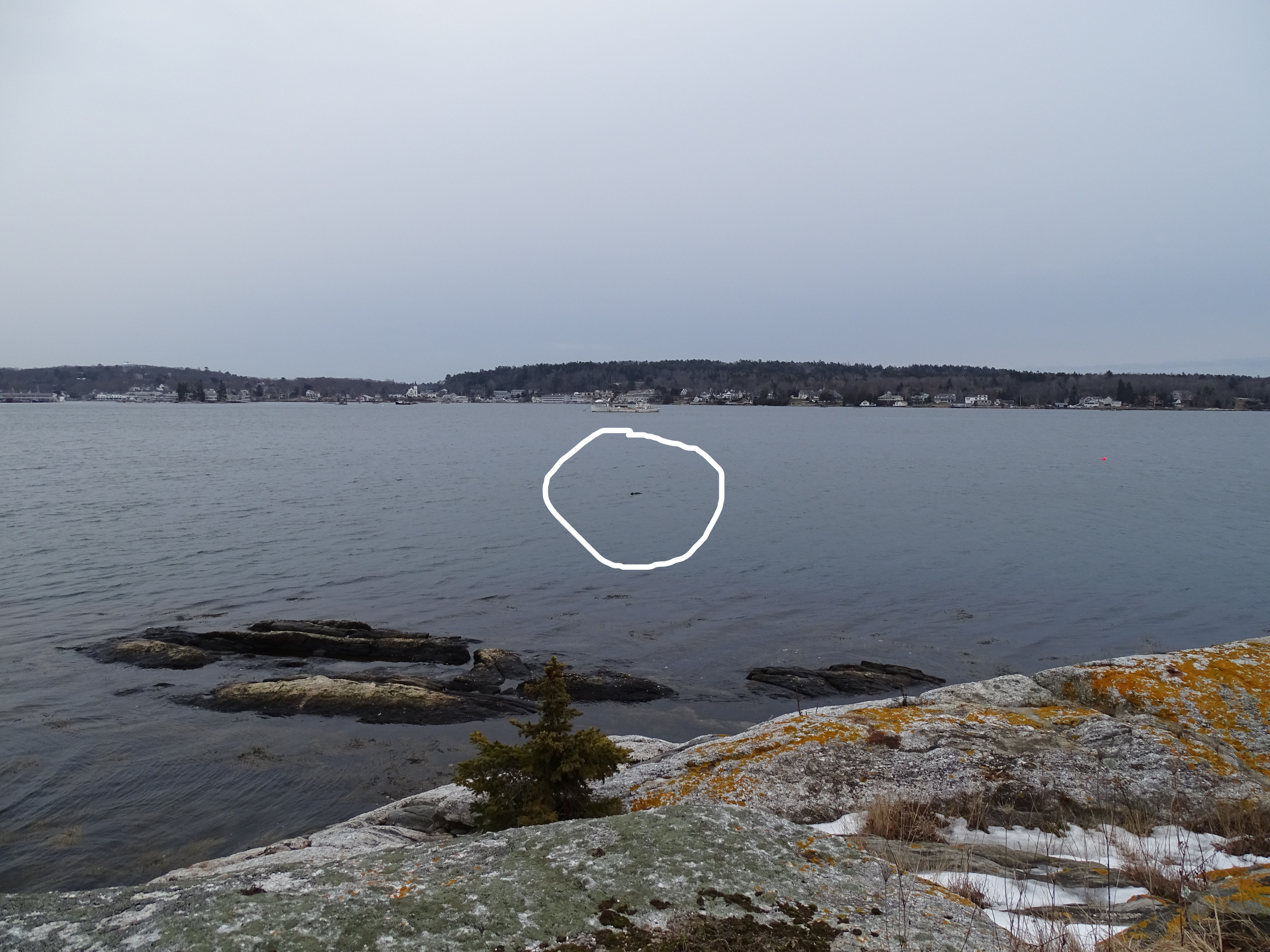
  • Unfortunately, I did not get any photos of it – it was too far, and I was just enjoying it in the scope. But I got a new camera, and I did take it out to play for the first time! This Common Loon made for an excellent subject for a test-drive.
No Zoom.
Camera-only Zoom. Not additional cropping. My first impression is that it’s much slower than my previous camera, and the resultant image is not as crisp. But, the zoom is stronger, and the maximum optical + digital zoom produces a better image, at least for “documentation.”

Brunswick-Freeport Christmas Bird Count: “West Freeport Sector,” 1/3/2021

On Sunday, Jeannette and spent the day participating in the annual Brunswick-Freeport Christmas Bird Count. For 14 out of the past 16 years, we have covered the “West Freeport” territory, which includes all of Freeport west of I295, with a corner of Yarmouth, a sliver of Pownal, and a notch of Durham.

As I have written about before, this suburban and exurban route covers a lot of ground. We walk miles upon miles of backroads, and we sample the public open spaces of Hedgehog Mountain Park, Florida Lake Park, and Hidden Pond Preserve. Our only waterfront is the Cousin’s River marsh complex, which was mostly open today – as were almost all flowing streams, woodland drainages, and the outlet channel at Florida Lake.  This was the most open water we have had in some time.

The weather was fantastic: after a chilly start, bright sunshine and virtually no wind made for a pleasant, temperate day, and aided detection. The lovely morning even led to singing from some of our resident species, especially White-breasted Nuthatch, and territorial drumming by Hairy Woodpeckers.

By doing this route consistently year in and year out, Jeannette and I can use it to compare winter seasons. We like to compare the tallies to test our preconceived notions of the season, and we can even use it as a sample to gauge seed sales at the store for the coming months! 2019 was a good example of that.

Yesterday, we did confirm several recent trends and hypotheses that we have seen so far this winter. Native sparrows including Dark-eyed Juncos are very low, woodpeckers are above average, and “winter finches” have really cleared out. Even Pine Grosbeaks are now diminishing, but the bulk of other nomadic species have either moved through (Pine Siskin; Evening Grosbeak) or are just not around in large numbers (Common Redpoll).

Meanwhile, the very mild fall and early winter has helped “half-hardies,” like our first sector records of Hermit Thrush and – finally a – Carolina Wren survive.  The minimal snow cover and mild temperatures usually keeps a lot of ground-feeding sparrows around through the winter, but this is not the case this year – low “weed” seed crops due to our summer-long drought continues to be my hypothesis. 

Fruit crops, especially crabapples, are being rapidly depleted as Pine Grosbeaks and American Robins have moved through en masse of late. It will be slim pickings for Bohemian Waxwings if they arrive.

But perhaps most relevant was the fantastic numbers of birds that make up our “mixed-species foraging flocks.”  I was surprised to tally only our average number of Black-capped Chickadees (310 compared to an average of 307.9), but Tufted Titmouse, Red-breasted Nuthatch, White-breasted Nuthatch, and Downy Woodpeckers were well above average (see below). Blue Jays were a little above average (but that number fluctuates widely based on acorn crops), as were Northern Cardinals.  Cardinals, Red-bellied Woodpeckers, and especially Eastern Bluebirds reflected their continuing steady increase as wintering species in the region.

These are also many of the most common and conspicuous visitors to feeding stations, and our survey correlated with what we have been hearing at the store all season. We also noted that neighborhoods with well-stocked feeders had far more birds than wooded parks, neighborhoods with few or no feeders, or other less developed stretches. Clearly, feeders and their supplemental food are important to our resident birds this year. And our bird seed sales, even after the massive finch flight of the fall has moved on, reflect that as well.

But yeah, our first-ever Hermit Thrush, Carolina Wren, and Pine Siskins, plus our first Ruffed Grouse in 11 years, and yeah, Pine Grosbeaks, were all nice, too!

Here is our full, annotated checklist:

  • Begin: 7:19am. 20F, clear, calm.
  • End: 3:45pm. 30F (high of 31F), mostly cloudy, calm.
  • Party Miles/foot: 22.5
  • Party Miles/car: 23.5

American Black Duck: 2

Mallard: 2

Ruffed Grouse: 1

Wild Turkey: 0

Rock Pigeon: 20

Mourning Dove: 46

Herring Gull: 11

Cooper’s Hawk: 2

Red-tailed Hawk: 3 (*tied highest count)

Red-bellied Woodpecker: 3

Downy Woodpecker: 30

Hairy Woodpecker: 13

Pileated Woodpecker: 5

Blue Jay: 94

American Crow: 115 (*new record high)

Common Raven: 2

Black-capped Chickadee: 310

Tufted Titmouse: 53

Red-breasted Nuthatch: 28

White-breasted Nuthatch: 47 (* 2nd highest)

Brown Creeper: 3

Carolina Wren: 1 (*1st sector record, finally!)

Golden-crowned Kinglet: 3

Eastern Bluebird: 31 (* New record high count…old record was 10!)

HERMIT THRUSH: 1 (Hunter Road, Freeport; 1st sector record).

American Robin: 13

NORTHERN MOCKINGBIRD: 1

European Starling: 28 (*new record high count)

Cedar Waxwing: 1

House Sparrow: 2

PINE GROSBEAK: 8 (4, Tidal Brook Rd, Yarmouth; 2. Eider Pt Road, Yarmouth; 1 Hunter Road, Freeport; 1 Murch Road, Freeport; first since 2008).

House Finch: 22

Common Redpoll: 2

Pine Siskin: 2 (* 1st sector record, surprisingly).

American Goldfinch: 53

American Tree Sparrow: 4

Dark-eyed Junco: 18

White-throated Sparrow: 1

Song Sparrow: 2

Northern Cardinal: 18

  • 39 total species (*new record)
  • 1,001 total individuals.

Common Teal to Northern Lapwing; American Woodcocks to Wood Ducks: 5 Great Days of Spring Birding!

Well, that was a helluva good five days of birding! And, I covered a heckuva lot of ground in the process. Yes, spring – and spring birding – is finally upon us.

After checking local hotspots on Thursday morning (lots of Killdeer and my first Eastern Phoebes), I began my trek eastwards after lunch. I was giving a presentation and book signing at the Maine Coastal Islands NWR headquarters in Rockland, thanks to an invite from the Friends of Maine Seabird Islands. On the way, I hit a handful of water overlooks, with the only birds of note being my FOY Fish Crows in downtown Brunswick and FOY Double-crested Cormorant in Damariscotta Harbor.

But then I arrived at Weskeag Marsh, and that was most productive. Highlighted by two drake “Eurasian” Green-winged (aka “Common”) Teal, a nice diversity of waterfowl also included two pairs of American Wigeon and a pair of Northern Pintail. I flushed two American Woodcocks and four Fox Sparrows from the short trail that leads to the viewing blind. Afterwards, I found a single 2nd-Cycle Glaucous Gull with four 1st-cycle Iceland Gulls still at Owl’s Head Harbor.

Here’s a poorly phone-scoped image of one of the Common Teal, showing the bold horiztonal white bar across the wing and the lack of a vertical white bar on the side of the chest.
COTE,WeskeagMarsh,4-5-14

Spending the night with friends, I then met up with staff from the Coastal Mountains Land Trust for a walk around their Beech Hill Preserve to discuss and offer suggestions as to augment and improve bird habitat there. A spiffy male Northern Harrier and a Northern Shrike (my 11th of the season!) were me rewards.

I then took the (very) long way home, checking farm fields on my way to the Hatch Hill Landfill in Augusta. Although 900-1000 gulls were present at the dump – a nice number for here – all but 5 were Herring Gulls (plus three Great Black-backed and 2 Ring-billed). At least 10 Bald Eagles were still present however.

Working my way down the Kennebec, I checked the mouth of the Abagadasset River in Bowdoinham, which I found to still be frozen. Nearby Brown’s Point, however, had open water, and duck numbers were clearly building, including 44 Ring-necked Ducls and 50+ Green-winged Teal. Back at the store soon thereafter, I found our Song Sparrow numbers had grown from four to 12 overnight.

As the rain and drizzle ended on Saturday morning, the birdwalk group convened, and we headed inland (for the first time since December!) to work the “Greater Yarmouth Goose Fields.” Highlighted by two Cackling Geese that were first located on Thursday (a couple of hours after I checked the fields in the fog, dammit!) and yet another Northern Shrike (our third week in a row with a shrike on the birdwalk!), this very productive outing is fully covered on our website, here – as are all of our birdwalk outings.
IMG_3244_CACG,GreelyRd,Cumberland,4-5-14One of the two Cackling Geese, phone-scoped through the fog.

Normally, the birdwalk’s return to the store is the end of my birding on Saturday, but not this week. Soon, Kristen Lindquist, Barb Brenneman, and I raced off to Jordan Farm in Cape Elizabeth to twitch a real “mega,” the stunning Northern Lapwing! Discovered Friday evening, the bird was enjoyed by many throughout the day on Saturday, but it was not seen again on Sunday despite much searching. This is the 4th record of lapwing in Maine, and the third in just three years! I consider myself exceedingly fortunate to have seen the last two. My distantly-phone-scoped photos of the Cape Elizabeth bird hardly do this stunner justice.
IMG_3262_NOLA1,JordanFarm,4-5-14  IMG_3264_NOLA2,JordanFarm,4-5-14

Yet even still my birding day was far from over, as Saturday night was our annual “Woodcocks Gone Wild at Pineland Farms” dusk trip. Keeping an eye on the weather (the rain had cleared, but increasing winds were a concern), Jeannette and I wondered if we should postpone the outing. Moments after we decided to give the go-ahead in the afternoon, the winds began to gust – a lot. Then, at about 5pm, they died. When our walk got underway at 6:30, there was a little breeze once again, but it was not enough to keep the woodcocks from going wild! In fact, it’s possible that a little wind kept the birds’ display a little lower – especially the first handful of flights – which resulted in quite possibly the best show we’ve ever had here! At least 7 males were displaying, including one repeatedly right over our heads – and at least two more silent birds were observed flying by. Add to this lots of American Robins and a Northern Shrike before the sun set, and the group was treated to a wonderful spring evening performance!

Next up was Androscoggin County on Sunday with my friend Phil McCormack. While our primary target was a pancake breakfast at Jillison’s Farm in Sabattus, we were also hoping for a Redhead that was discovered on the outlet stream at Sabattus Pond a few days ago. Well, the pancake chase (the more important one!) was successful, but the Redhead chase was not. However, a very good day of birding was enjoyed nonetheless.

Scattered ducks on the river including Ring-necked Ducks and Common Mergansers, a couple of pockets of Tree Swallows, and other assorted species were trumped by two flooded fields along Rte 136 in Durham. With ponds and marshes still frozen, ducks are stacking up at more ephemeral – but unfrozen – habitats.  Thousands of ducks and geese were present, mostly Canada Geese, Mallards, and American Black Ducks.  However, between the two fields, we tallied an unbelievable 273 Wood Ducks (probably about quadruple my previous high count in the state). Two immature Snow Geese were my first of the year, and very rare away from the coastal marshes in the spring. 18 Green-winged Teal, 12 Ring-necked Ducks, 10 Northern Pintail, and two pairs of American Wigeon were also among the masses.
IMG_3271_WODUs2,Durham,4-6-14  IMG_3282_WODUs1,Durham,4-6-14_edited-1

Although these phone-scoped photos hardly do the scene justice, they should at least give you a taste of what things looked like.

After brunch, we birded the west side of the Androscoggin River (more Ring-necked Ducks and Common Mergansers, etc) before spending our last hour of our birding (half) day at Bradbury Mountain.  Our disappointment over missing an unprecedented 9 Sandhill Cranes was alleviated when #10 was spotted, along with my first two Ospreys of the year.

After four days of extensive birding, my Monday agenda at the store was lengthy, but the weather in the morning was just too good to pass up!  A spin of the local waterfowl hotspots was fruitful.  The Goose Fields yielded the two continuing Cackling Geese along Greely Road, along with my first American Kestrels of the year, and my FOY Wilson’s Snipe, also along Greely.

No luck finding a lingering Barrow’s Goldeneye in the Harraseeket River, but at Wharton Point, a group of 7 Northern Shovelers was one of the largest flocks of this species I have seen in Maine. My first Greater Yellowlegs of the year was also present, as were 60+ Green-winged Teal, 16 Ring-necked Ducks, about 30 distant scaup, 8 American Wigeons, and 1 Northern Pintail among several hundred American Black Ducks.

Two joyous hours at the Brad were full of raptors: 127 birds had past the watch when I departed at noon, including 4 Osprey. Red-tailed and Red-shouldered Hawks continue to add to their all-time record tallies. Hundreds of Canada Geese were sorted through, hoping for a rarity, while other migrants included Tree Swallows, American Black Ducks, Common Mergansers, and Great Blue Herons.

Furthermore, signs of a good flight last night included the return of Golden-crowned Kinglets to the area – after we were virtually devoid of them this winter, and an increase in Red-breasted Nuthatches (relatively few and far between this winter as well), Song-Sparrows, and at the store, a Fox Sparrow – a bird we don’t get here every spring due to our open habitat.

So long story short, it’s been a great few days of birding!  But now, I should probably get some work done!