Swamp Sparrows have been common and conspicuous on our Durham property, and elsewhere this week. I feel this, like most sparrows, is an underappreciated beauty!
My observations of note over a very productive and exciting eight days of birding included the following:
Highlights from our Durham property this week included near-daily American Woodcocks and Rusty Blackbirds, and a nice little arrival of more Swamp Sparrows and Purple Finches in particular on 10/21.
Sandy Point Morning Flight, 10/15.
A very light flight passed over and through Sandy Point Beach, Cousin’s Island, Yarmouth this morning.
6:55-8:30 (with Bill Thompson).
48F, mostly cloudy to partly cloudy, NW 1.7-2.5mph diminishing to calm.
51 American Robins
33 Yellow-rumped Warblers
28 Dark-eyed Juncos
17 American Goldfinches
16 Ruby-crowned Kinglets
8 Eastern Bluebirds
7 White-throated Sparrows
6 Chipping Sparrows
5 Palm Warblers
4 Hermit Thrushes
4 Golden-crowned Kinglets
3 Blue-headed Vireos
3 Purple Finches
3 Swamp Sparrows
2 Pine Siskins
2 Rusty Blackbirds
2 Tufted Titmice (4 false-starts and counting)
1 Red-breasted Nuthatch
1 Blackpoll Warbler
1 White-breasted Nuthatch
1 Downy Woodpecker (2+ false-starts)
1 House Finch
1 American Pipit
1 Northern Flicker
1 Magnolia Warbler
1 unidentified
Total = 203
1 continuing CACKLING GOOSE, Thornhurst Farm, North Yarmouth, 10/15 (with Bill Thompson).
1 Least Sandpiper, 1 White-rumped Sandpipers, and 2 Pectoral Sandpipers, Walsh Preserve, Freeport, 10/15 (with Bill Thompson).
Sandy Point Morning Flight, 10/16.
An excellent flight passed over and through Sandy Point Beach, Cousin’s Island, Yarmouth this morning.
6:55 to 10:40am.
44F, Mostly cloudy, NW 4.3 – 9.0 increasing to 15.1 – 19.7mph with higher gusts.
2186 American Robins (*NEW RECORD! – just barely).
1776 Yellow-rumped Warblers
167 unidentified
127 Dark-eyed Juncos (One was quite likely not a Slate-colored, but my photos of it are not useful)
61 Common Grackles
48 Cedar Waxwings
43 Canada Geese
31 Chipping Sparrows
21 Ruby-crowned Kinglets
19 Rusty Blackbirds
18 White-throated Sparrows
13 Northern Flickers
11 Golden-crowned Kinglets
11 Purple Finches
9 Pine Siskins
7 Palm Warblers
4 Blue-headed Vireos
4 unidentified finches
4 Hermit Thrushes
4 Song Sparrows (crossed together at 8:29. This is only my second or third observation of SOSP engaging in Morning Flight after sunrise here; plenty more in and around the parking lot as usual)
3 Merlins
3 Common Loons
3 Turkey Vultures
2 Red-winged Blackbirds
2 White-crowned Sparrows
2 Eastern Phoebes
1 Northern Parula
1 Blackpoll Warbler
1 Brown Creeper
1 Peregrine Falcon
1 Yellow-bellied Sapsucker
1 Cooper’s Hawk
1 American Goldfinch
1 Red-shouldered Hawk
1 Cape May Warbler
1 Red-breasted Nuthatch
1 Sharp-shinned Hawk
1 Tennessee Warbler (from Bill Thompson’s photo review)
1 Black-throated Blue Warbler (from Bill Thompson’s photo review).
Total = 4,592
Notables from a delightfully birdy morning on Bailey Island, Harpswell on 10/17 included a decent, and relaxingly unquantified, morning flight mostly of Yellow-rumped Warblers; 1 ORANGE-CROWNED WARBLER, and 1 Cape May Warbler among the migrants found here and there around the island.
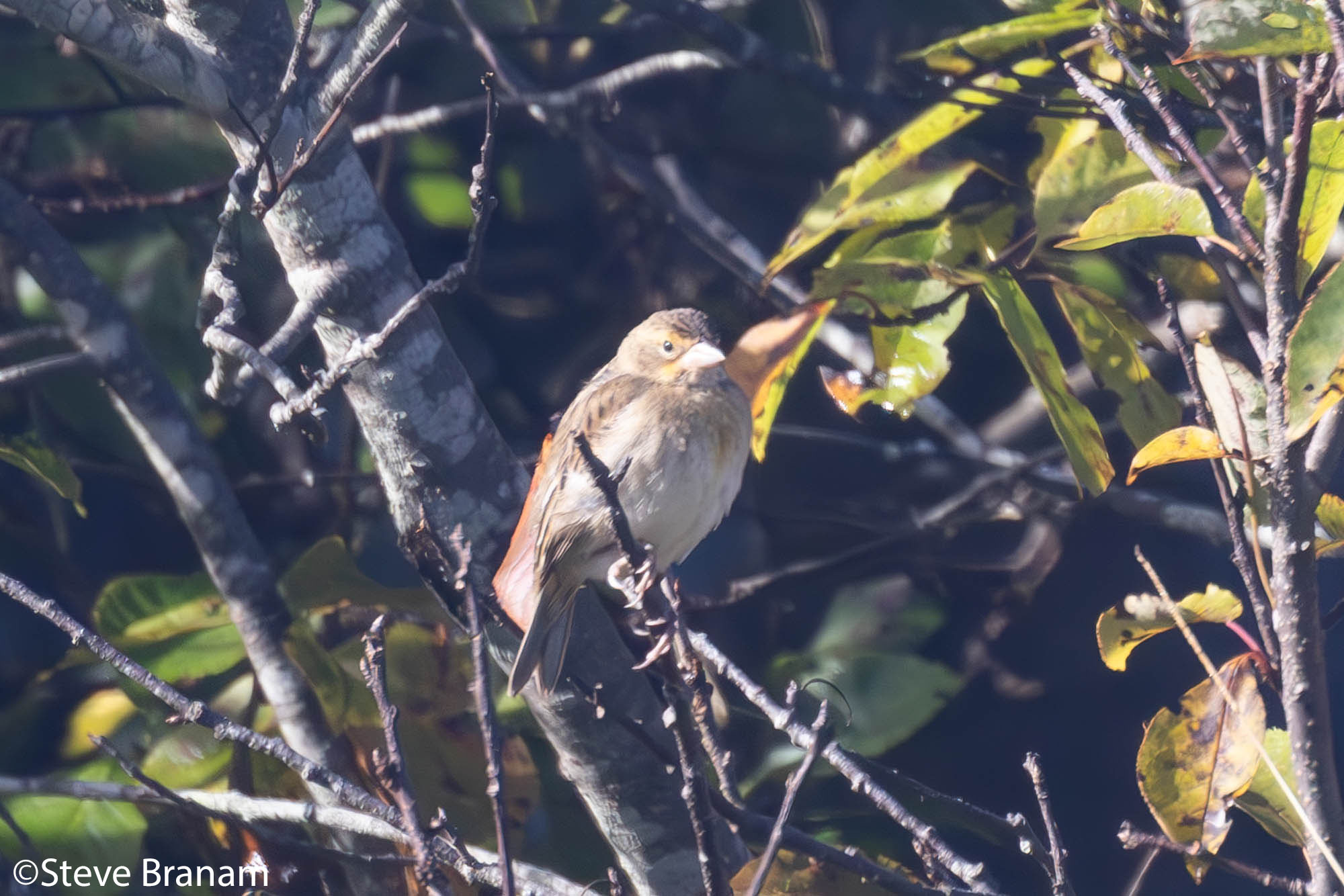
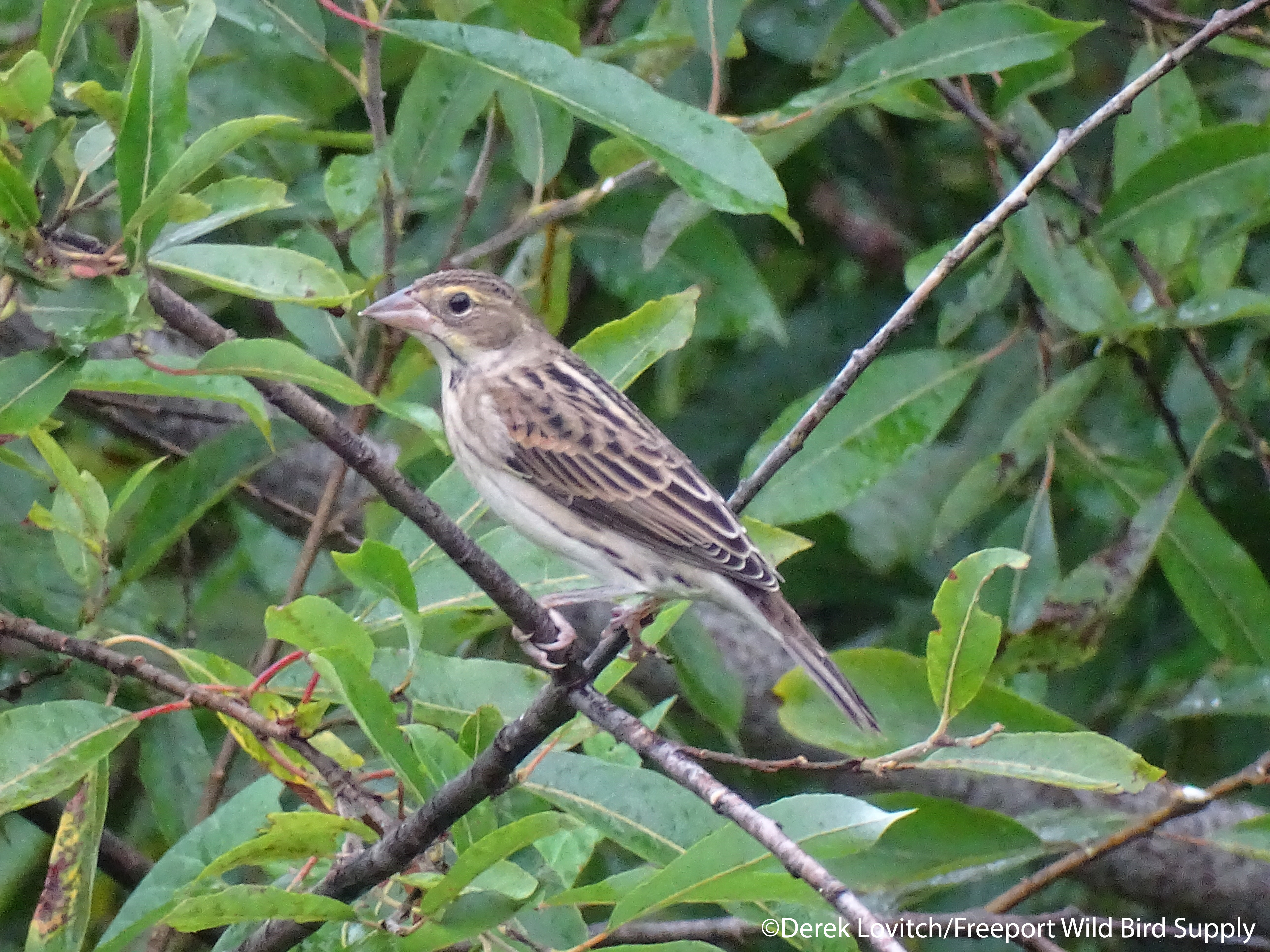
1 DICKCISSEL, feeders here at the store, 10/19, continuing through at least 10/21. Was this the same bird seen on 10/4 and then again on 10/13-14?
4 continuing FORSTER’S TERNS, Pine Point, Scarborough, 10/20 (with clients from California and Massachusetts).
2 “Ipswich” Savannah Sparrows, Eastern Road Trail, Scarborough Marsh, 10/20 (with clients from California and Massachusetts).
Our Last Tour of 2025 still has some space remaining!
Birds on Tap℠ – Roadtrip! Rarity Roundup
November 9, 2025; 8:00am – 3:00pm
Cost – $125
Portland Explorer (formerly Maine Brews Cruise) and Freeport Wild Bird Supply are excited to continue our collaboration for six very special outings in 2025.
These unique, relaxed birding and beer-ing adventures that you have come to love combine great local birding at seasonal hotspots with visits to sample the delicious creations of some of our favorite local breweries. These tours are a perfect introduction to birding and/or craft beer, and a great opportunity to travel with significant others, friends, and family that have interest in one topic, while your interest is primarily in the other (for now!). Seasonal birding hotspots and great local beer – a perfect combination, and we’ll even do all of the driving!
Early November is a fantastic time of year in Maine for vagrants – birds normally seen in far-off places. Due to a combination of weather patterns, changing seasonal food resources, falling temperatures, and other factors – some of which are not completely understood – birds that may have ended up in Maine by “accident” begin to concentrate at the coast in “migrant traps” and “hotspots.” In other words, this is the time of year to expect the unexpected.
A traditional “Rarity Roundup” involves teams of birders heading out on a given day during rarity prime time, looking for species that are not supposed to be around. And in honor of that tradition, that’s exactly what we are going to do on this unique tour. We may “chase” a rarity (go to see something that has already been found, aka “twitch”) or we might choose a destination known for rare birds in an attempt to find one of our own. Or perhaps, we’ll do both!
Anything between Portland and Kittery is fair game, and we might not even know where we will head until we are on the bus and the latest rare bird alert is received. For those who love adding a bird to your Life or State List, and/or basking in the thrill of discovery, well then this is the tour for you! In between seeing great birds, we’ll discuss the complex factors that are involved in delivering rarities to an area, and how we go about finding them.
After about 3-4 hours of birding, depending on drive time, we will be transported to two of our great local producers to sample their offerings and learn their styles.
We were surprised to find a tarrying American Oystercatcher still hanging out on Upper Green Island (where we documented them breeding once again this summer) during our Birds of Casco Bay Boat Tour on the 6th.
My tour report from Monhegan, 9/26-9/30, including lots of rarity photos can now be viewed here. Sorry for the delay here, especially for those waiting for the trip list.
Then, my observations of note over the last seven days included the following:
Highlights from our Durham property this period included a Tennessee Warbler on 10/2, 1 Rusty Blackbird on 10/3, and 4 American Woodcocks on 10/7.
Sandy Point Morning Flight, 10/1.
North to north-east winds are usually not very productive for the Morning Flight at Sandy Point, but the radar images showed a huge flight overnight, so I decided to give it a try. Good thing I did! A northwesterly component inland must have “stacked” birds up against the coast, where they were then influenced by the increasing northeasterly component offshore, producing a better than expected push across the channel. The more I observe the flight here, the more I have to learn! In the end, an unexpectedly good flight passed over and through Sandy Point Beach, Cousin’s Island, Yarmouth, this morning.
6:38-10:00am
46F, Clear, N 8.2-10.4 increasing to NNE 13.3-16.9mph.
238 Cedar Waxwings
222 Yellow-rumped Warblers
73 Blue Jays
64 unidentified
39 Black-throated Green Warblers
35 Dark-eyed Juncos
34 Canada Geese
33 Northern Parulas
28 Yellow-bellied Sapsuckers
27 Palm Warblers
26 Savannah Sparrows
23 Blackpoll Warblers
16 White-throated Sparrow (3 may have crossed at first light)
14 Northern Flickers
12 American Robins
10 Golden-crowned Kinglets
9 Ruby-crowned Kinglets
9 Chipping Sparrows
6 Nashville Warblers
6 Rusty Blackbirds
6 American Goldfinches
5 Magnolia Warblers
3 Scarlet Tanagers
2 Common Loons
2 Ospreys
2 Cape May Warblers
2 Tufted Titmice (5+ false starts)
2 Hermit Thrushes
1 Pine Warbler
1 Downy Woodpecker
1 American Pipit
1 Baltimore Oriole
1 Red-breasted Nuthatch
1 Sharp-shinned Hawk
1 Brown Creeper
1 Merlin
1 Blue-headed Vireo
1 Swamp Sparrow
1 Cooper’s Hawk
T= 959
2 Monarchs
Whale Watch with Cap’n Fish’s Cruises out of Boothbay Harbor on 10/3: 15 NORTHERN FULMAR, 13 Great Shearwaters, 1 Cory’s Shearwater, 3 Red Phalaropes, 1 Lesser Black-backed Gull, etc.
1 DICKCISSEL, garden here at the store, 10/4 (with m.obs).
Freeport Wild Bird Supply/Cap’n Fish’s Cruises ½ Day Pelagic out of Boothbay Harbor on 10/5 was incredible. Highlights included 18 Northern Fulmar, 29 Atlantic Puffins, 1 Pomarine Jaeger, 55 Great Shearwaters, 2 Razorbills, 54+ Red-necked Phalaropes, 3 Red Phalaropes, 4 Lesser Black-backed Gulls, a Peregrine Falcon driving an Ovenbird into the ocean, and a playful pod of Common Dolphins. Full trip report with photos soon.
1 AMERICAN OYSTERCATCHER (Upper Green Island; photo above), 125+ Laughing Gulls, 126 Black-bellied Plovers, 3 Long-tailed Ducks, etc, Casco Bay, 10/6, via Birds of Casco Bay boat tour with Seacoast Tours (Photo above).
These unique, relaxed birding and beer-ing adventures that you have come to love combine great local birding at seasonal hotspots with visits to sample the delicious creations of some of our favorite local breweries. These tours are a perfect introduction to birding and/or craft beer, and a great opportunity to travel with significant others, friends, and family that have interest in one topic, while your interest is primarily in the other (for now!). But this time we’re leaving the van in the garage, and hitting the water! That’s right, we’re taking a cruise, and we’re returning to the private House Island in Porland Harbor twice in 2025.
During last year’s wildly successful outing in which we became the first birding group ever on the island, we found oodles of Yellow-rumped Wabrlers, an uncommon Field Sparrow, and other migrants. But we were truly captivated by Captain Pete, who guided us through the historic fort, sharing a wealth of historical knowledge and fascinating stories. The beer was pretty darn good too, as we sampled the history of Maine’s craft beer scene.
Building on that success, we’re visiting the private House Island in Portland Harbor twice in 2025. We’ve been granted special permission to come ashore and scour the island here in the peak of fall migration. We’ll follow well-maintained trails through the island’s mosaic of open habitats, scrub, and young woods. These are great habitats to search for a variety of migrants, and perhaps even a rarity!
Returning in late October, once again rarities will be on our mind. While rare birds are rare, we are still going to expect the unexpected. But more likely are regular migrants of the season such as Yellow-rumped Warblers, a variety of sparrows, and a growing diversity of waterbirds. At the very least, we’ll have resident waterbirds and several species of gulls to sort through. We are having daydreams of a rare flycatcher!
As we motor back across the harbor, we’ll continue to familiarize ourselves with some of the common waterbirds, such as Common Eiders, Common Loons, and the vanguard of our winter diving ducks while enjoying a local craft beverage produced in the city of Portland. While the exact plan is subject to change, we’ll be sure to come up with a plan to adequately celebrate our discoveries – or the one that got away!
This Northern Wheatear graced Scarborough Marsh from 9/15 through 9/17. For some reason, there are only about 4 records in the last ten years, as this spiffy and charismatic bird has become even more rare in the state, or perhaps, just more rarely detected. Jeannette and I caught up with it here on the 16th although it didn’t want to come to close to the trail for us that afternoon.
My observations of note over the last seven days included two light Morning Flights at Sandy Point and a rarity chase.
Birding our property in Durham this week was once again very productive. Several Lincoln’s Sparrows were in the yard on the 16th and 17th, and the first White-throated Sparrows appeared at the feeders on the 17th. Other highlights include a continuing juvenile Red-shouldered Hawk; a vole- and frog-stalking Great Blue Heron all week; a tarrying immature male Ruby-throated Hummingbird from 9/17 through the 19th; several Lincoln’s Sparrows daily; a Brown Thrasher and Scarlet Tanager on 9/18; and a really nice variety of warblers.
A light flight over and through Sandy Point Beach, Cousin’s Island, Yarmouth on 9/15 (with apologies for all of this superfluous spacing…I’m trying to figure this out!)
6:19-8:50am
55F, mostly clear, NNW 5.3-6.6 to N 6.5-7.2mph
103 Northern Parulas
29 Unidentified
8 Red-eyed Vireos
8 Blue Jays
7 American Redstarts
6 Black-throated Green Warblers
4 Yellow Warblers
4 White-throated Sparrows
3 Purple Finches
3 Red-breasted Nuthatches
3 Blackpoll Warblers
2 Ruby-crowned Kinglets
2 Palm Warblers
2 American Goldfinches
2 Blue-headed Vireos
2 American Robins
1 Magnolia Warbler
1 Indigo Bunting
1 Common Loon
1 Merlin
1 Osprey
1 Savannah Sparrow
1 Baltimore Oriole
1 Cape May Warbler
1 Prairie Warbler
1 Eastern Phoebe
1 Northern Waterthrush
1 American Pipit
1 Nashville Warbler
1 Peregrine Falcon
1 Yellow-rumped Warbler
1 Bay-breasted Warbler
1 Northern Flicker
X Common Yellowthroats
Total = 205
This Savannah Sparrow appeared to be contemplating walking across the bridge instead of taking to the air yet again.
1 continuing NORTHERN WHEATEAR, Eastern Road Trail, Scarborough Marsh, 9/16 (with Jeannette). Present since the morning of the 15th, we successfully visited the bird on the afternoon of the second day of its stay. Photo above.
A light but rewarding flight passed over and through Sandy Point Beach, Cousin’s Island, Yarmouth on 9/19.
6:24-9:24am (with Bill Thompson)
55F, mostly clear. NW 4.3-5.2 increasing to 5.1-11.0mph.
99 Northern Parulas
44 unidentified
32 Blackpoll Warblers
18 Black-throated Green Warblers
14 White-throated Sparrows
8 Red-breasted Nuthatch
6 Magnolia Warblers
6 Blue Jays
6 Red-eyed Vireos
4 American Redstarts
4 Purple Finches
4 American Goldfinches
2 Chipping Sparrows
2 Baltimore Orioles
2 Cedar Waxwings
1 American Pipit
1 Palm Warbler
1 Blue-headed Vireo
1 American Kestrel
1 Merlin
1 Red-bellied Woodpecker (four “false starts”)
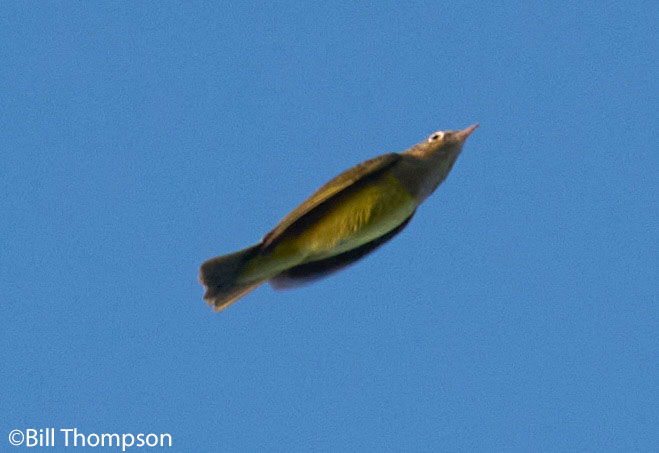
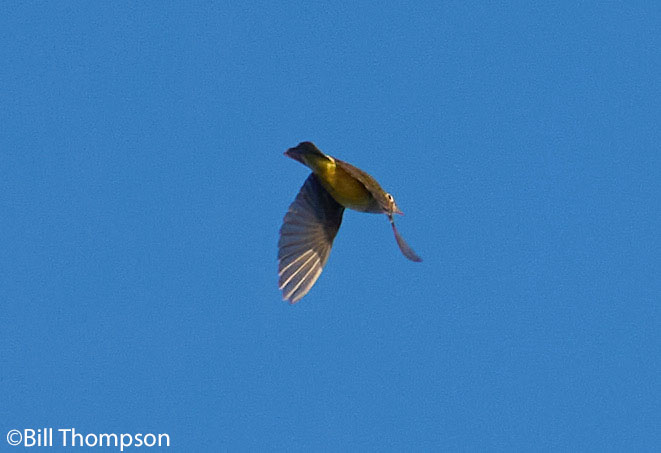
1 CONNECTICUT WARBLER (photo below)
1 Yellow-rumped Warbler
1 Ruby-throated Hummingbird
1 Scarlet Tanager
1 Nashville Warbler
1 Tufted Titmouse (5 “false starts”)
1 Bay-breasted Warbler
Total = 266
Connecticut Warblers are essentially annual at Sandy Point, but I never get a photo off and am often reticent to pull the trigger on the call without a really good look. Luckily, Bill Thompson joined me in “my office” this morning and was at the ready for the large yellowish warbler with long wings barreling towards us. This stellar photo shows the diagnostic complete eyering, pale throat, and long yellow undertail coverts of this robust warbler.
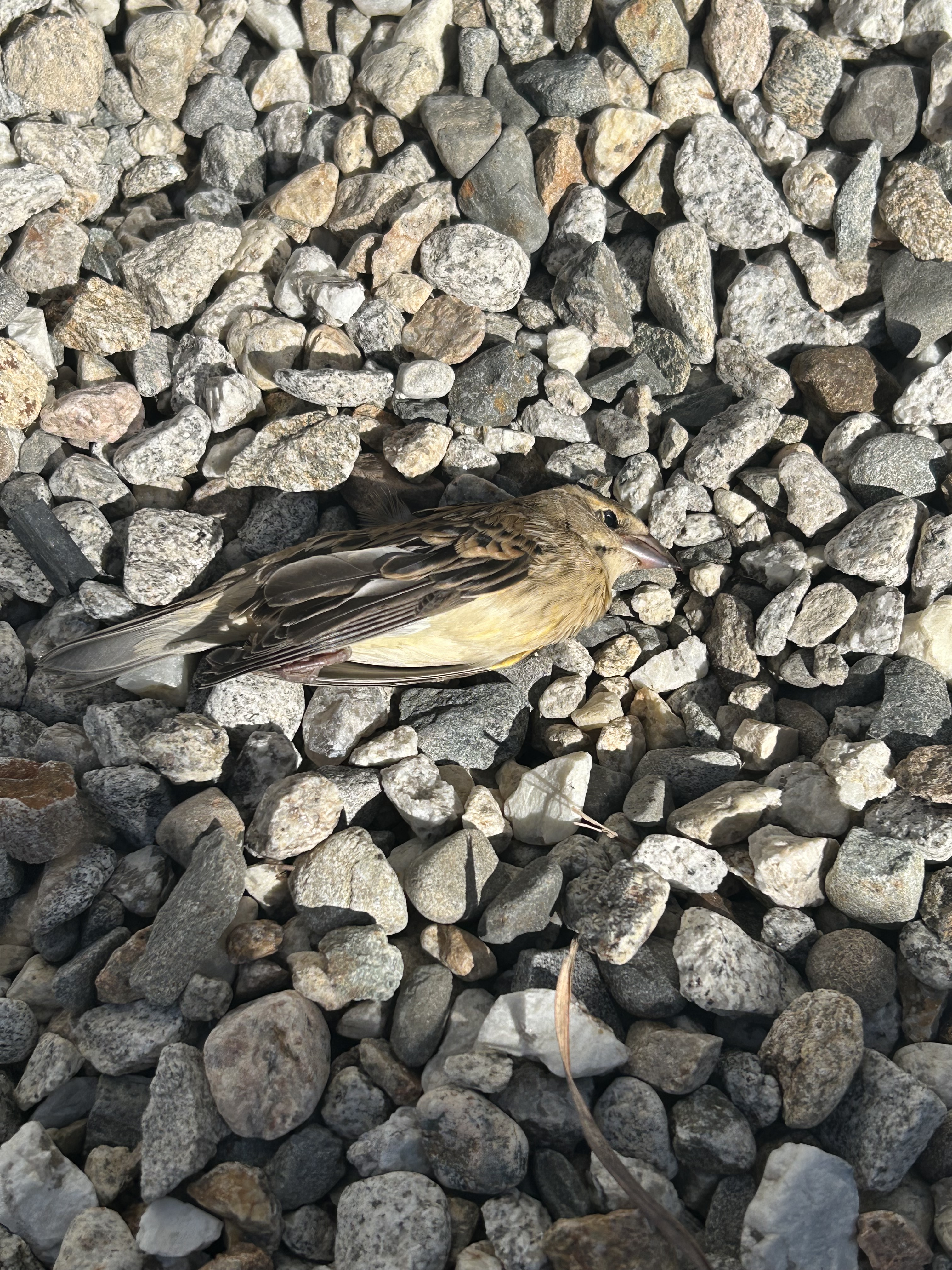
1 dead DICKCISSEL, killed by unprotected windows at the Smith Center at Wolfe’s Neck Center for Agriculture and the Environment. More info here.
Join me on Monhegan during the height of migration for 1-4 days searching the island for regular visitors, rarities, and vagrants. If you haven’t experienced Maine’s Migration Mecca, now is the time! And if you’re like many of our regular travelers, you know you can’t wait to get back.
This is a casual outing, with boat and hotel reservations, as well as meals, on your own. Also, you can come and go as you please, based on whatever boat and departure times and locations suit you best. Sign up for 1,2, 3, or 4 days, we will give you the time and place to meet us on the island based on when you arrive. In the eleven years we have run this trip on this weekend, we have averaged 95 species, including 17 species of warblers!
Join us on a special cruise dedicated to off-shore birding: a collaboration with Cap’n Fish’s Cruises offering half-day “mini-pelagics!” We’ll seek out the rare and common seabirds that occur in our nearshore waters, but we will always have the hope for something unexpected. Derek will team up with the boat’s expert naturalists to spot, identify, and point out pelagic seabirds. Chumming efforts will provide opportunities to attract the birds in for better photo ops and viewing. While we’ll stop to look at any whales and whatever other interesting sea life we encounter along the way, it is the feathered wildlife we’re searching for, and will be focused on.
This annual fall excursion gives a chance at some very sought after pelagic species, such as Great and South Polar Skua. More likely species include Northern Fulmar; Black-legged Kittiwake; Pomarine and Parasitic Jaeger; shearwaters – Great, Sooty, Cory’s, and possibly even Manx; Leach’s Storm-Petrel; Razorbill and Atlantic Puffin; Red and Red-necked Phalaropes, and much more. With the later departure date this year, we hope for more jaegers and a better chance at Great Skua, along with the chance at more early-arriving alcids.
Each of our four October trips have been very different, with each year providing some unexpected highlights. Once again, we will be chumming at at least one hotspot, and we’ll have an additional spotter who will keep dedicated eBird lists for those who so desire and want it shared with them.
These unique, relaxed birding and beer-ing adventures that you have come to love combine great local birding at seasonal hotspots with visits to sample the delicious creations of some of our favorite local breweries. These tours are a perfect introduction to birding and/or craft beer, and a great opportunity to travel with significant others, friends, and family that have interest in one topic, while your interest is primarily in the other (for now!). But this time we’re leaving the van in the garage, and hitting the water! That’s right, we’re taking a cruise, and we’re returning to the private House Island in Porland Harbor twice in 2025.
During last year’s wildly successful outing in which we became the first birding group ever on the island, we found oodles of Yellow-rumped Wabrlers, an uncommon Field Sparrow, and other migrants. But we were truly captivated by Captain Pete, who guided us through the historic fort, sharing a wealth of historical knowledge and fascinating stories. The beer was pretty darn good too, as we sampled the history of Maine’s craft beer scene.
Building on that success, we’re visiting the private House Island in Portland Harbor twice in 2025. We’ve been granted special permission to come ashore and scour the island here in the peak of fall migration. We’ll follow well-maintained trails through the island’s mosaic of open habitats, scrub, and young woods. These are great habitats to search for a variety of migrants, and perhaps even a rarity!
Returning in late October, once again rarities will be on our mind. While rare birds are rare, we are still going to expect the unexpected. But more likely are regular migrants of the season such as Yellow-rumped Warblers, a variety of sparrows, and a growing diversity of waterbirds. At the very least, we’ll have resident waterbirds and several species of gulls to sort through. We are having daydreams of a rare flycatcher!
As we motor back across the harbor, we’ll continue to familiarize ourselves with some of the common waterbirds, such as Common Eiders, Common Loons, and the vanguard of our winter diving ducks while enjoying a local craft beverage produced in the city of Portland. While the exact plan is subject to change, we’ll be sure to come up with a plan to adequately celebrate our discoveries – or the one that got away!
To “count it” or “not to count it,” that is the question. Regardless, what’s more iconic about birding on Monhegan Island than a Ring-necked Pheasant?
My observations of note over the last seven days included my first two Morning Flights of the season at Sandy Point and 3 days on Monhegan included the following:
A light flight over and through Sandy Point Beach, Cousin’s Island, Yarmouth on 9/8:
6:12 to 8:00am.
50F, mostly clear, calm.
57 Northern Parulas
31 American Redstarts
17 unidentified
8 Cedar Waxwings
6 Magnolia Warblers
5 Black-throated Green Warblers
4 Red-breasted Nuthatches
3 Yellow Warblers
3 American Goldfinches
2 Swainson’s Thrushes
2 Bobolinks
1 Black-and-white Warbler
1 Purple Finch
1 Cooper’s Hawk
1 Bay-breasted Warbler
1 Yellow-rumped Warbler
1 Northern Flicker
1 Black-throated Blue Warbler
1 Osprey
1 Rose-breasted Grosbeak
Total = 147
1 DICKCISSEL, Wharton Point, Brunswick, 9/9.
2-3 Red Knots, Wharton Point, Brunswick, 9/10.
A very good flight over and through Sandy Point Beach, Cousin’s Island, Yarmouth on 9/11 featured over 1,000 migrants and 16 species of warblers.
6:13-10:20
46F, mostly clear. NW 1.8-2.8 increasing to 6.1-8.8mph.
312 Northern Parulas
272 American Redstarts
144 unidentified
81 Cedar Waxwings
34 Red-eyed Vireos
25 Red-breasted Nuthatches
25 Black-throated Green Warblers
24 Magnolia Warblers
23 Yellow Warblers
16 Blue Jays
11 American Goldfinches
10 Black-throated Blue Warblers
9 Canada Geese
8 Swainson’s Thrushes
7 Northern Flickers
7 American Kestrels
7 Black-and-white Warblers
5 Yellow-rumped Warblers
4 Eastern Wood-Pewees
4 Purple Finches
4 Ospreys
3 Bay-breasted Warblers
3 Wilson’s Warblers
3 Blackpoll Warblers
3 Mourning Doves
2 Blackburnian Warblers
2 Common Loons
2 Bay-breasted/Blackpoll Warblers
2 Blue-headed Vireos
2 Philadelphia Vireos
1 Palm Warbler
1 Pileated Woodpecker
1 Savannah Sparrow
1 Tennessee Warbler
1 “Traill’s” Flycatcher
1 House Finch
1 Hairy Woodpecker (6 “false starts”)
1 Sharp-shinned Hawk
1 Pine Warbler
1 Ruby-throated Hummingbird
1 unidentified Empid
1 unidentified flycatcher
1 Turkey Vulture
1 unidentified vireo
1 Merlin
1 Cape May Warbler
1 White-throated Sparrow
Total = 1,069
Monarch 1
Green Darner 2
Monhegan Island 9/12-14 (with Down East Adventures tour group):
Very slow by Monhegan standards, only Merlins and especially Red-breasted Nuthatches and Ruby-throated Hummingbirds were above average (significantly so for the hummingbird) for the date. Island notable species for us were limited to 2 DICKCISSELS all three days; 1 ORCHARD ORIOLE, 2 adult Lesser Black-backed Gulls, and 1 Marsh Wren on 9/13; and 1 Mourning Warbler on 9/14. Great insect-watching though.
Upcoming Tours:
Birds on Tap℠ – The Boat Trip! Migrant Birds and Island Exploration
September 21, 2025; 9:00am to 2:00pm
These unique, relaxed birding and beer-ing adventures that you have come to love combine great local birding at seasonal hotspots with visits to sample the delicious creations of some of our favorite local breweries. These tours are a perfect introduction to birding and/or craft beer, and a great opportunity to travel with significant others, friends, and family that have interest in one topic, while your interest is primarily in the other (for now!). But this time we’re leaving the van in the garage and hitting the water! That’s right, we’re taking a cruise, and we’re returning to the private House Island in Porland Harbor twice in 2025.
Building on that success of last year’s tours, we’re visiting the private House Island in Portland Harbor twice in 2025! Once again, we’ve been granted special permission to come ashore and scour the island here in the peak of fall migration. We’ll follow well-maintained trails through the island’s mosaic of open habitats, scrub, and young woods. These are great habitats to search for a variety of migrants, and perhaps even a rarity!
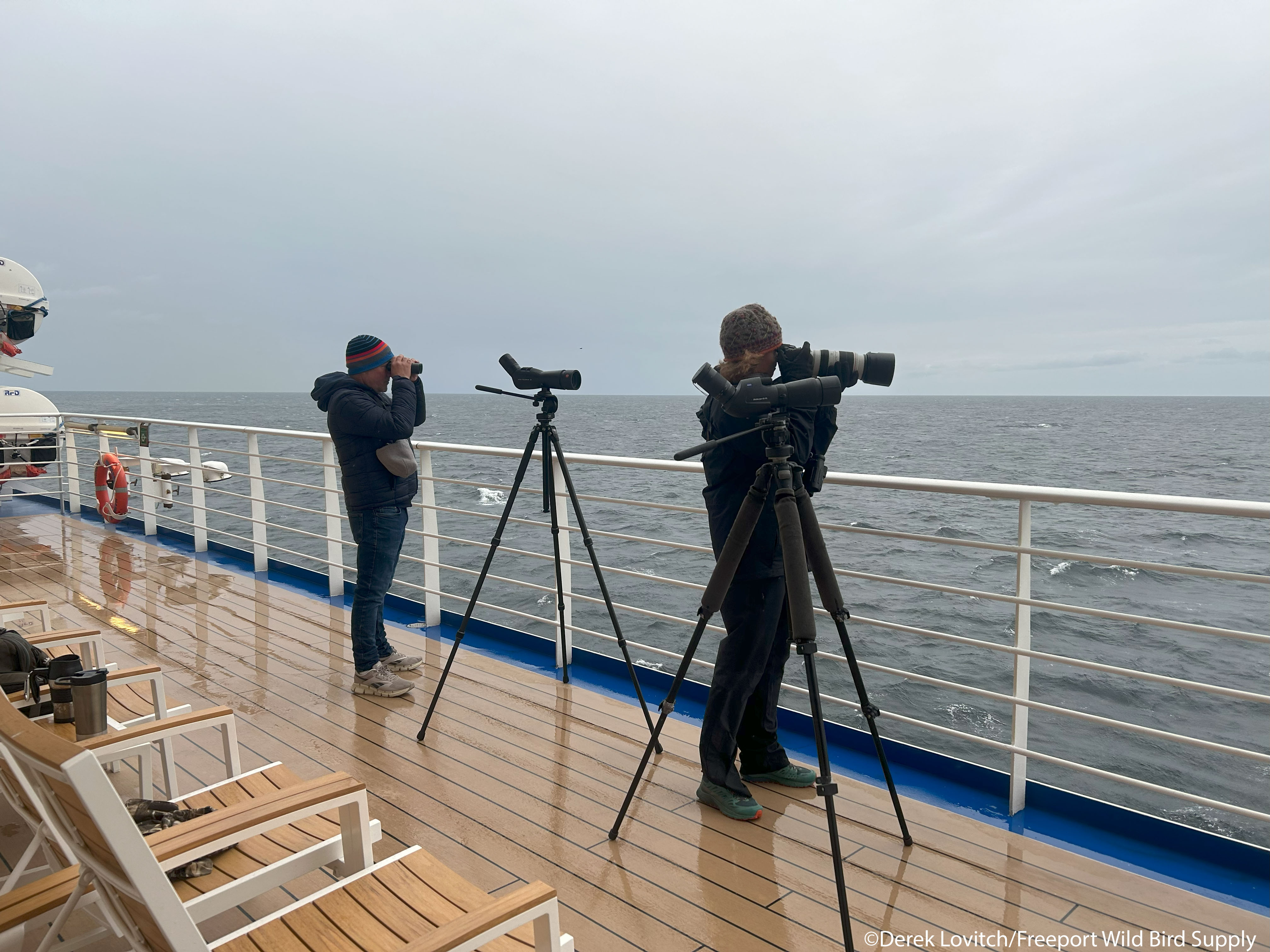
Cruise ships are big, stable platforms that allow for pelagic birding in comfort and with the use of spotting scopes!
In 2019, Jeannette and I took a cruise through the Gulf of Maine and northwestern Atlantic Ocean in the hopes of finding Great Skuas in particular. It was wildly successful, and if we could repeat this success, perhaps there would be a cruise-ship-based tour to offer. At least it would be more comfortable than last week’s attempt!
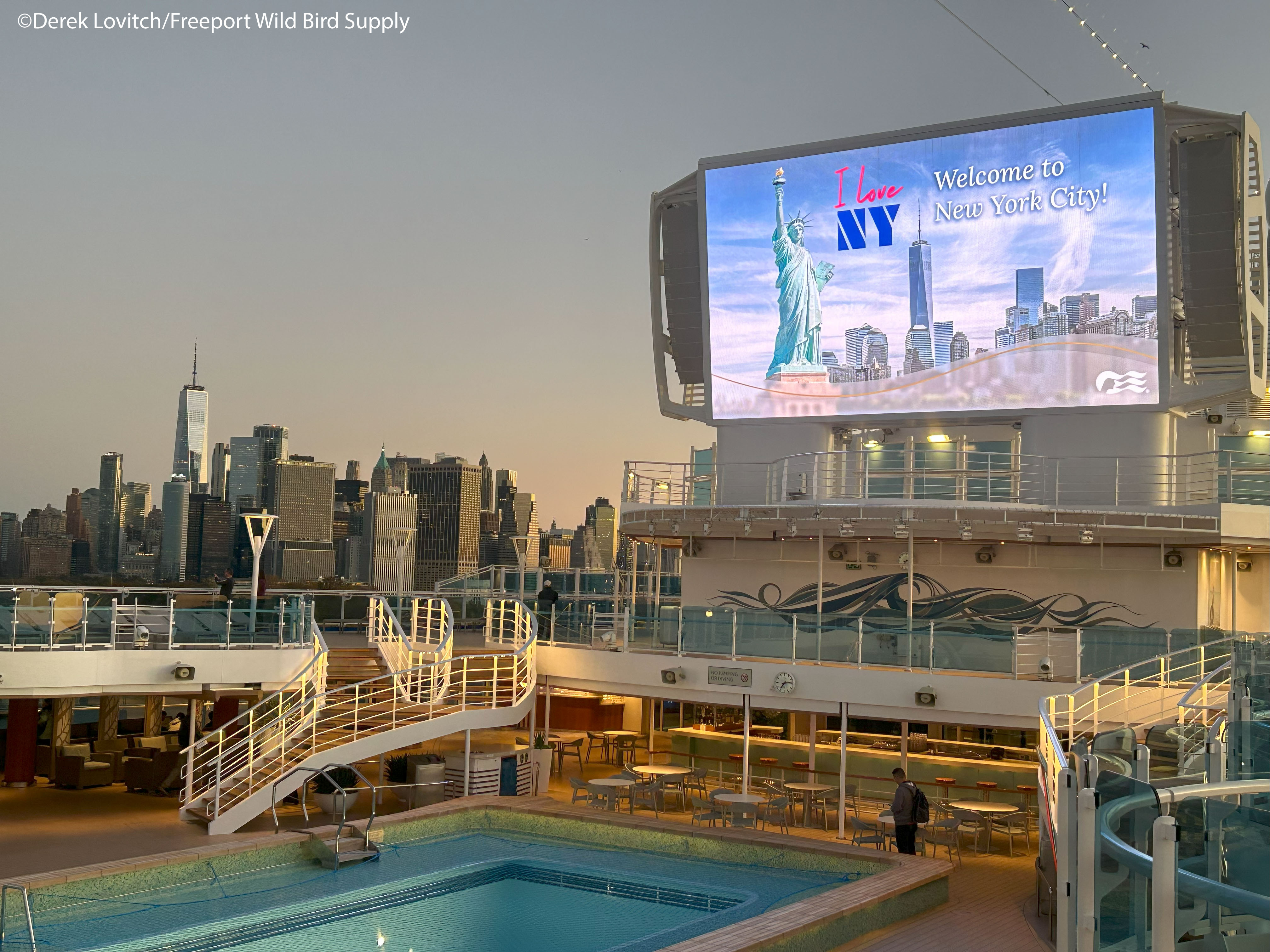
Therefore, on the evening of 10/26, Jeannette and I boarded Princess Cruises’s Enchanted Princess out of Brooklyn, New York. Our hope was to replicate the success of our 2019 trip. We were planning on a second scouting trip in the fall of 2020, but then COVID.
After finally feeling ready to consider a cruise again, we found the itinerary had changed, and we would need to spend seven days to get two full days offshore..we even needed to come back home first! But alas, we had pandemic-era credit that was going to expire, so off we went. Is this a reliable way to see Great Skuas in North America? Could I document a Barolo’s Shearwater this time?
We started our birding, however, at Brooklyn’s Greenwood Cemetery, home of this massive Monk Parakeet colony.
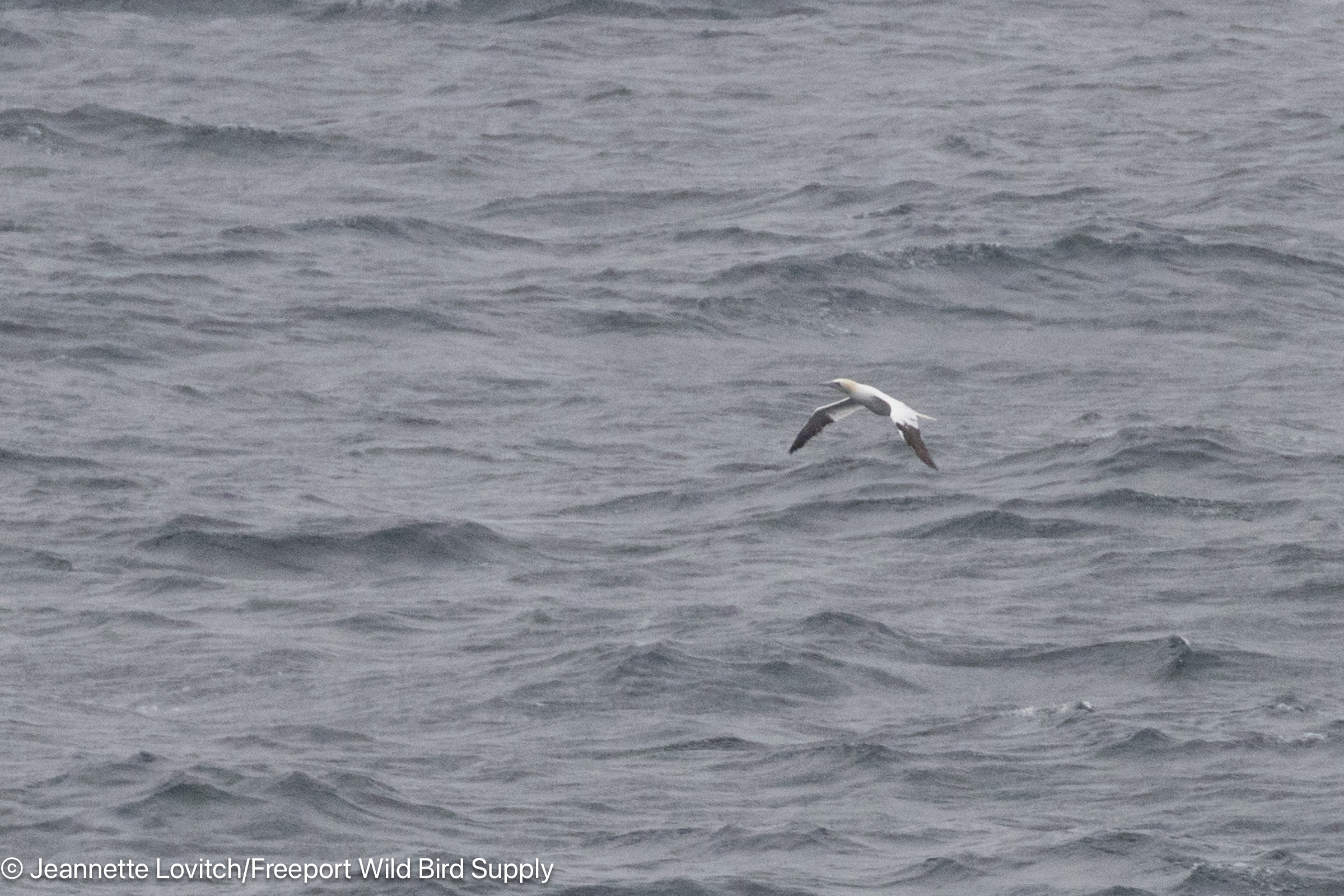
We departed New York Harbor with about an hour of usable daylight, picking up a single Cory’s Shearwater and plenty of Northern Gannets.
Screenshot
Arriving off Newport before dawn the next morning, we got the first shuttle to town, where our friends Bill and Jess picked us up for a lovely day of birding (Clay-colored Sparrow, Orange-crowned Warbler, late Nashville Warbler) before returning to the boat. About 45 minutes of deck time produced 8 Cory’s and a single Great Shearwater.
Newport arrivals. “Western” Palm Warbler at Sachuest NWR.
Unfortunately, this particular boat offered less-than-ideal viewing opportunities compared to our first trip, with the best deck space on Deck 7 (a great height) but way too aft. Even with our scopes on the steady platform, this was going to be a challenge.
Approaching Boston on the morning of 10/28, we checked the decks for passerines (none) before taking our place on Deck 7. There were a lot of Northern Gannets, 4-5 Cory’s Shearwaters close enough to identify as borealis, and a pod of Atlantic White-sided Dolphins. A Song Sparrow flew aboard just outside the outer harbor islands, but before that, our first real surprise of the trip: an American Woodcock appearing from the north and cruising alongside the length of the boat before disappearing. That’s not a “pelagic” we expected!
We birded Boston’s Greenway a bit, but returned to the boat well after dark. Sailing slowly overnight, we returned to Portland (the original itinerary had us visiting Bar Harbor), where a long, thorough check of the Eastern Promenade yielded two Orange-crowned Warblers and a very late Red-eyed Vireo.
Darkness reached us a tantalizingly-short distance to Cash’s Ledge, so we retired to rest up for the big day at sea tomorrow (finally!).
Waking up in Maine waters about 16.5 nautical miles southeast of Mt Desert Rock, I stepped outside well before first light at 6:05am. I immediately texted Noam, the other birder on board that we rapidly had become friends with, and I hustled Jeannette outside. With some drizzle arriving ahead of approaching light rain, we had ourselves a fallout!
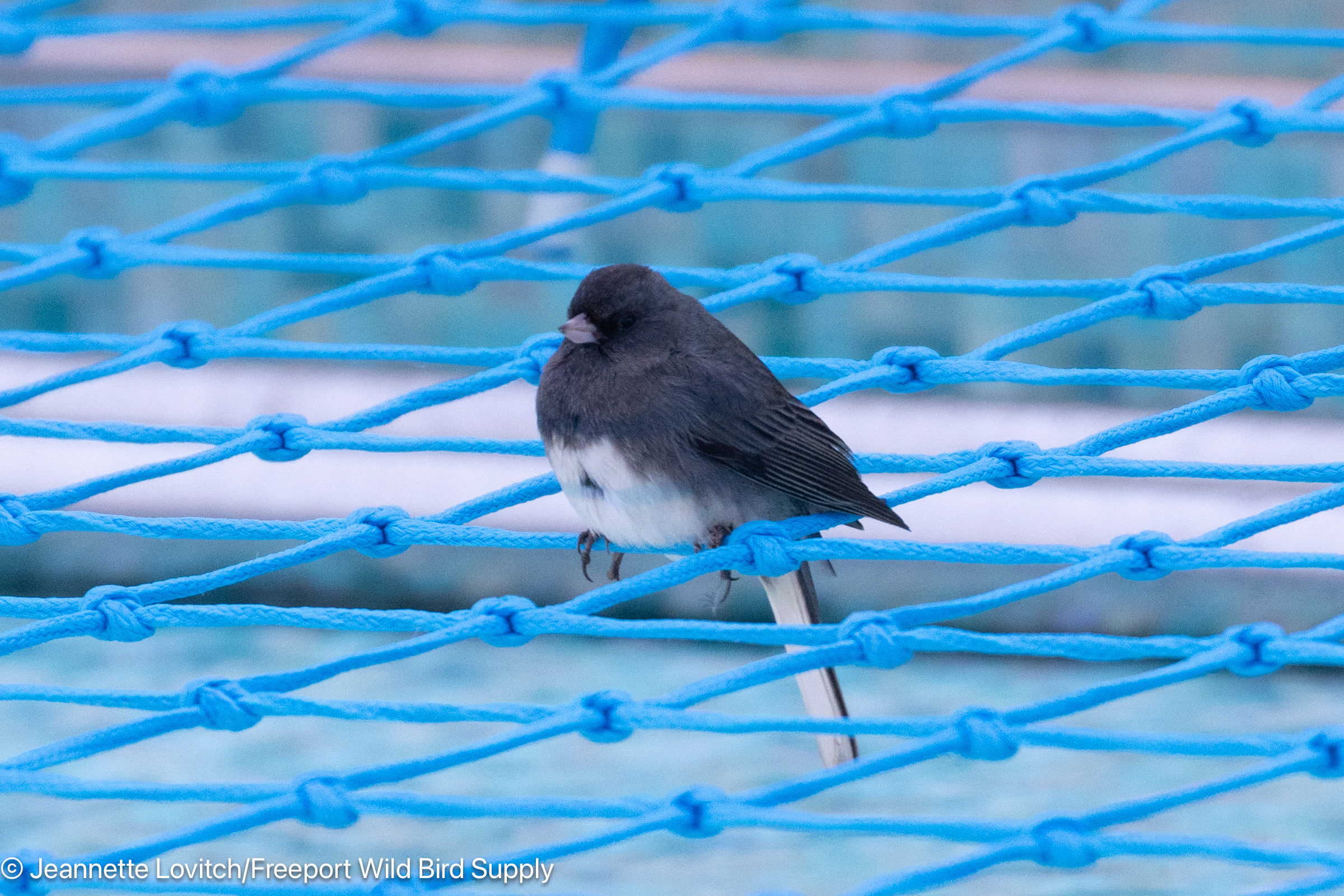
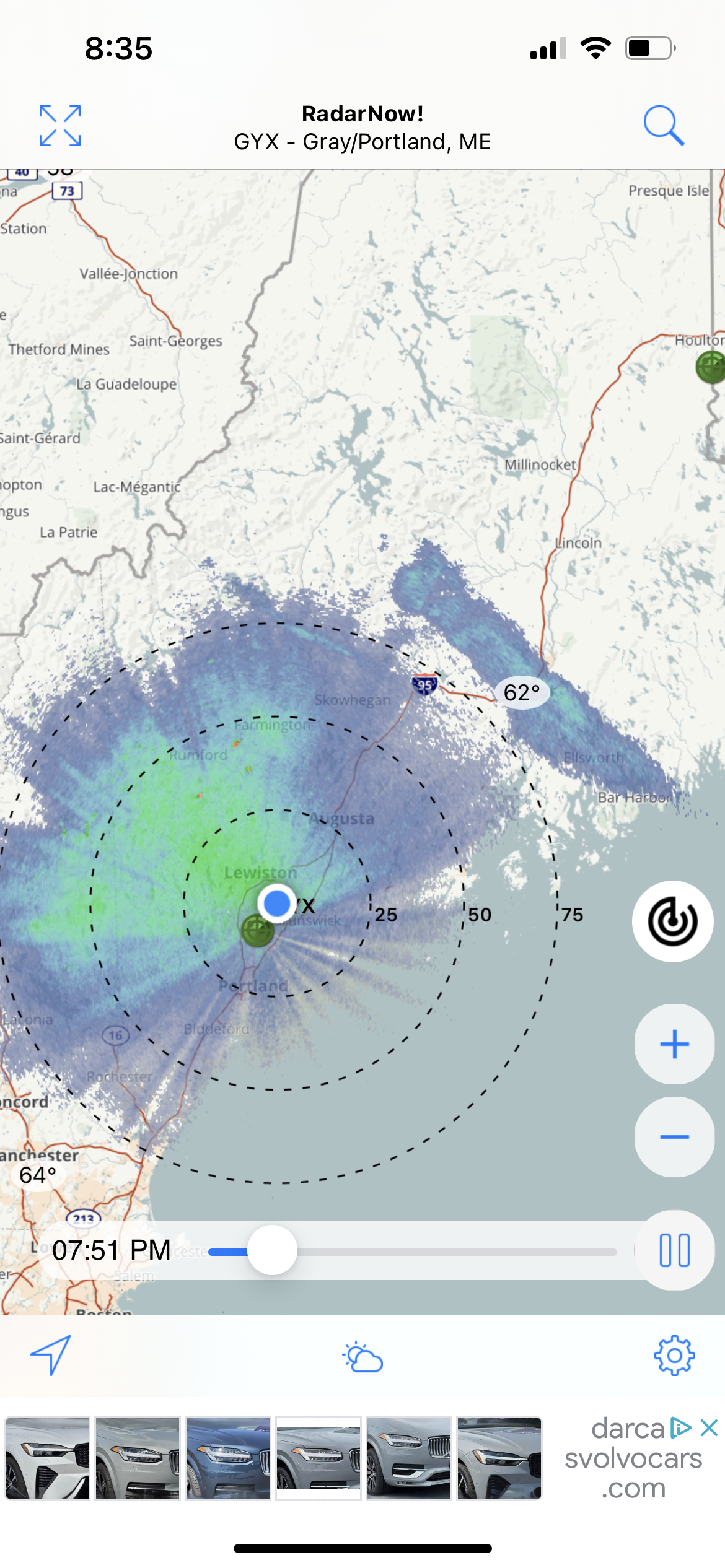
Unexpected considering there were little to no birds on the Maine radars overnight, and with a south wind through most of the night, I was surprised to immediately hear the flight calls of several Yellow-rumped Warblers. Sparrows were scattered about on the open decks. Noam and I had to usher a Rusty Blackbird out of a foyer, while Jeannette had to steer a Dark-eyed Junco down a hallway.
“Ipswich” Savannah Sparrow – that was an unexpected migrant, but makes sense considering we were southwest of Sable Island!
Clearly disoriented by the obnoxiously superfluous lighting of the ship, dozens of birds were around…often being flushed by now-awakening crew and passengers. Luckily, few birds seemed to be in dire straits – only one Yellow-rumped Warbler looked to me to be thoroughly exhausted, thankfully. In fact, most birds were leaving the boat as the sun rose and they were able to reorient themselves. While some birds seemed to arrive in the 15 or so minutes after sunrise, just about all passerines had departed the boat by 7:30 or so.
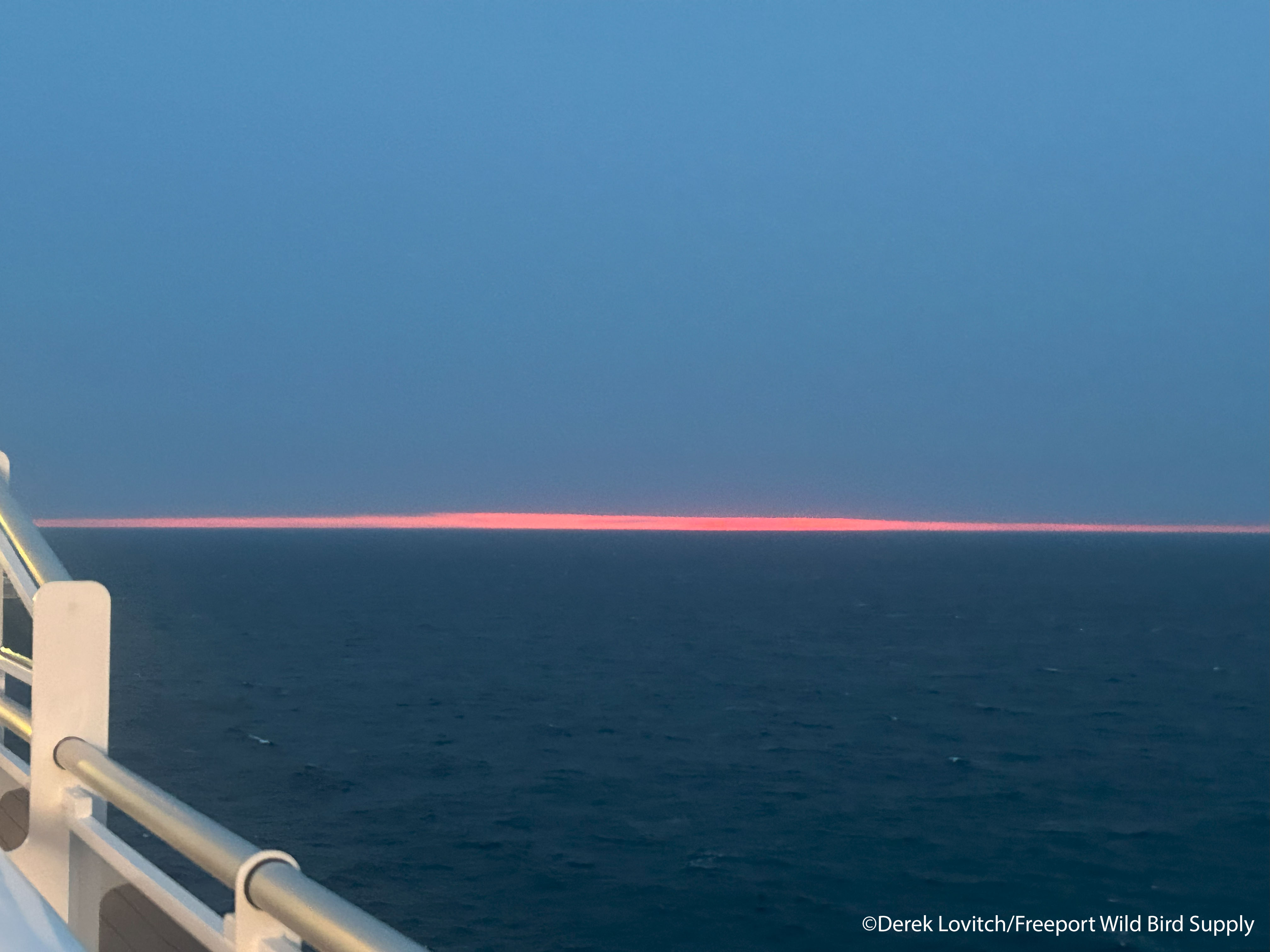
This photo, taken from off Eastern Point in Gloucester, MA the night before shows just how bright these ships are, and how disorienting they can be to birds.
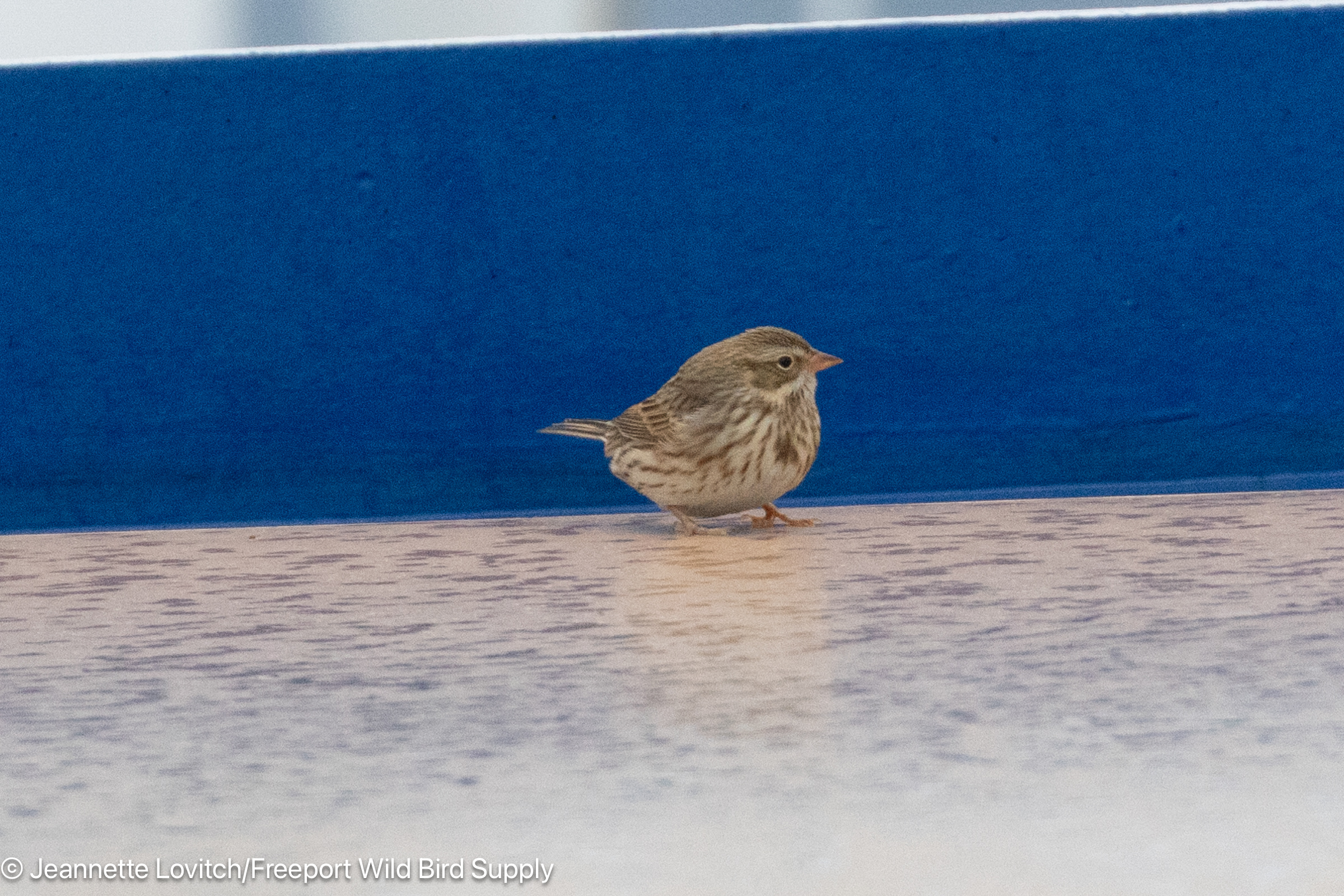
With birds circling the boat before dawn, calling continuously, and others hiding in corners before being flushed to another corner, it was tough to count, but I estimated and counted a bare minimum of 8 Yellow-rumped Warblers, 8 American Robins (mostly overhead), 7 European Starlings (surprisingly), 6+ Dark-eyed Juncos, 2 Purple Finches, 2 fly-over American Pipits, 2 Savannah Sparrows, and one each of Palm Warbler, Snow Bunting, White-throated Sparrow, Cedar Waxwing, and Rusty Blackbird. Additionally, Noam photographed a Pine Warbler.
The three of us were in place on Deck 7 by 7:30, but the passerine show continued. A flock of 12 Red-winged Blackbirds flew by, while a flock of 14 American Robins joined by two more red-wings flew alongside the boat for several miles later in the morning before overtaking us and heading back to Nova Scotia.
Throughout the day, other passerines appeared and disappeared, some of which could easily have been sheltering out of sight somewhere inaccessible on the boat. These included a few more robins, 3+ Yellow-rumped Warblers, 2 Dark-eyed Juncos, and one each of Palm Warbler, Song Sparrow, Cedar Waxwing, Snow Bunting, American Pipit, and Lapland Longspur.
American PipitHarlequin Duck (L) with Black Scoters
But this was a seabird trip, and so we remained vigilant over the water. While we only had a few minutes in Maine waters once we began our vigil, the rest of the day was productive overall, although the afternoon was quite slow. As we passed the southern tip of Nova Scotia (we even spotted Seal Island Light that we were lucky enough to visit with a group of birders about 20 years ago), we finally called it quits at 5:45 pm when cloud cover accelerated the falling of darkness.
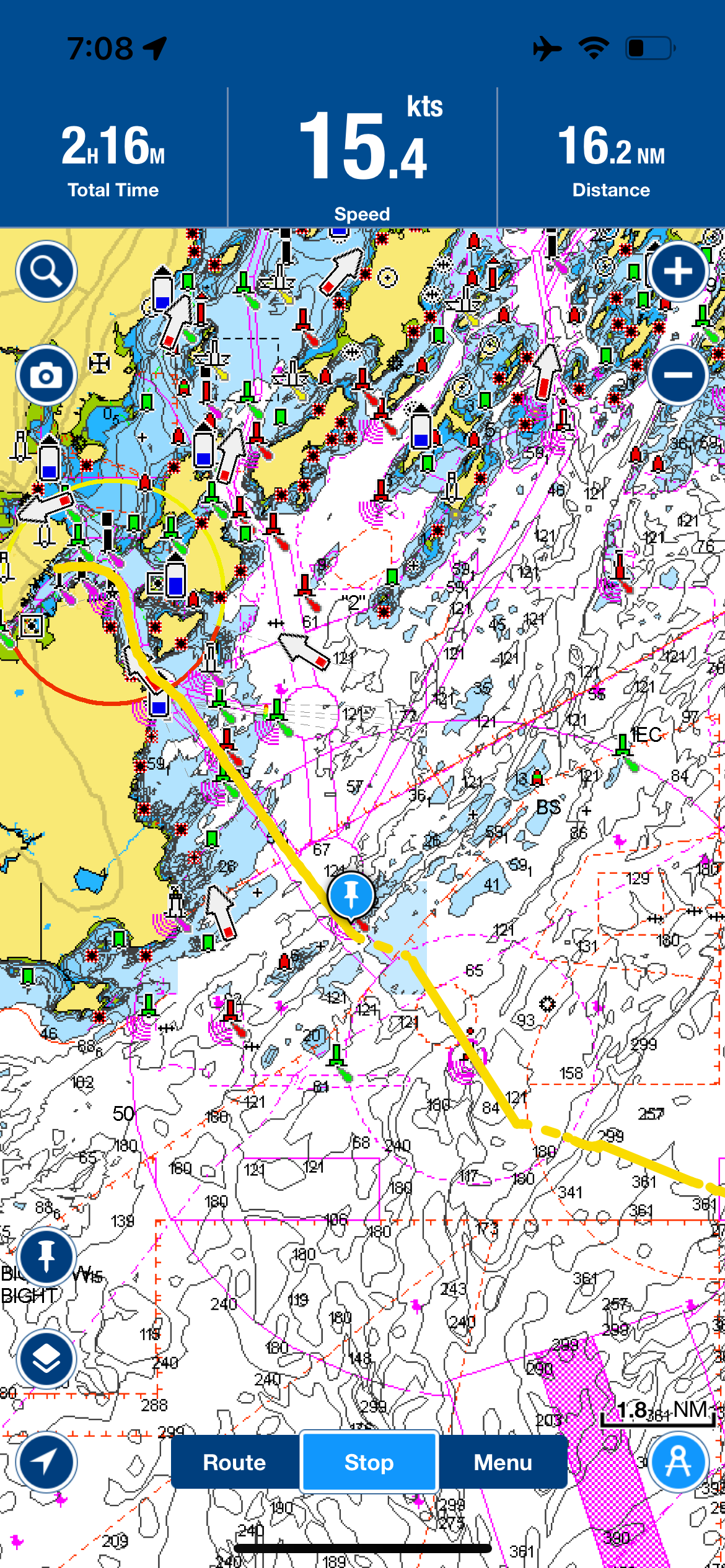
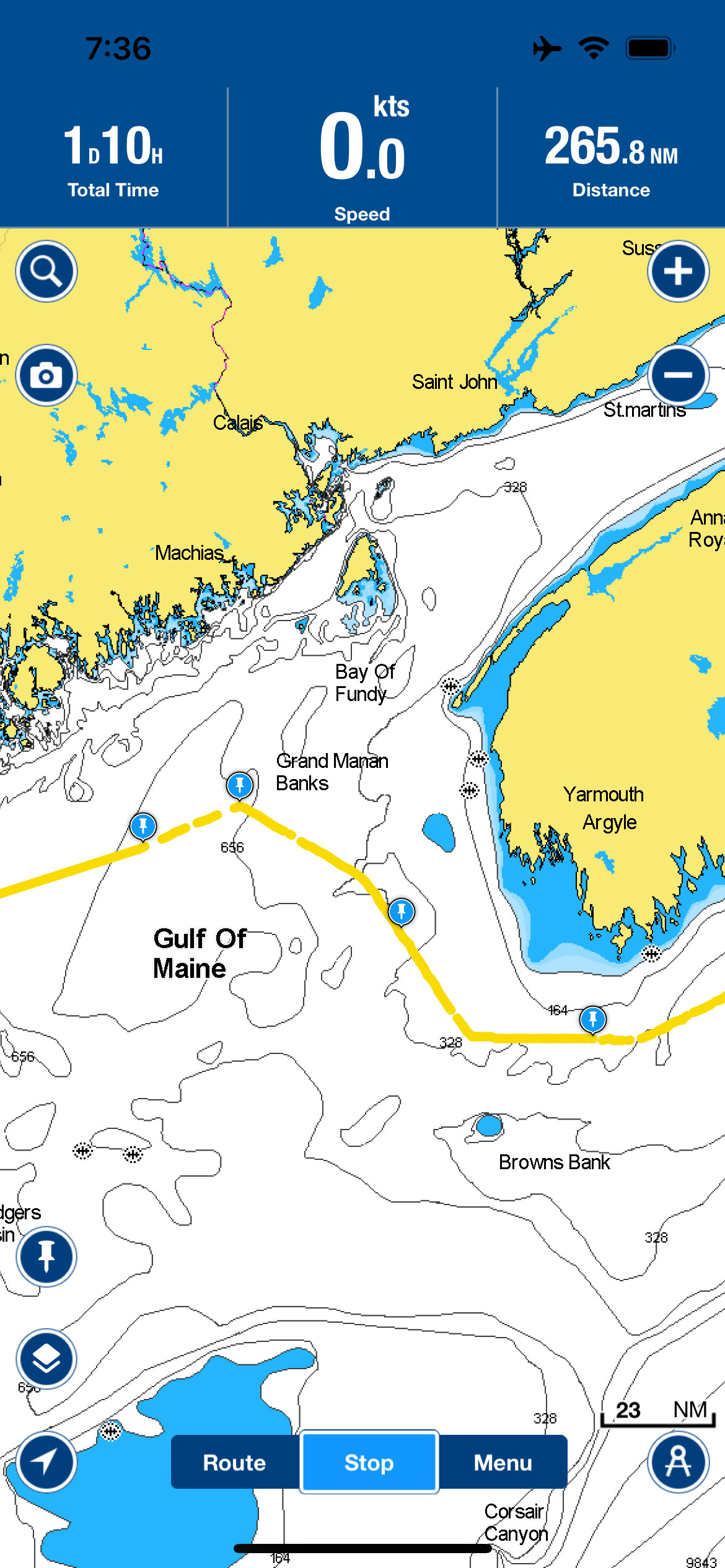
Here’s our route (left pin to right pin) for the day, thanks to the Navionics Boating app by Garmin.
From start to finish, our respectable – albeit not breathtaking – seabird tallies included oodles of Northern Gannets (including a steady southbound trickle almost all morning), and occasional southbound flocks of all three scoters and Common Eiders. Specific counts included:
47 Black-legged Kittiwakes
36 Razorbills
13 Northern Fulmars
10 Great Shearwaters
6 DOVEKIES (one flock landing off to the side of the boat)
3 ATLANTIC PUFFINS
3 American Black Ducks
3 unidentified large shearwaters
2 Harlequin Ducks
1 Greater Scaup
Great Shearwater
So all in all, not a bad day, but the passerines stole the show, and while Dovekie is one of the target birds of this trip, we didn’t see a skua…or even a jaeger, surprisingly.
The next day we awoke well within Halifax Harbor, but a sunrise passerine check yielded two birds: a White-throated Sparrow, and of all things, a rare Dickcissel!
Local friends Eric and Anne once again rescued us for a day of casual birding and good conversation, but the ship departed after dark; just more time to rest for our second full day at sea!
Halifax Public GardenNorthern Flicker
The morning of 11/1 found us between Downeast Maine and the northern corner of Georges Bank. The rest of the day would be in the same waters of our great success on our trip five years ago. After a passerine check which didn’t turn up anything (which meant nothing was disoriented by the ship overnight or desperate for a place to land come dawn, so this is never a bad thing), it was time to get to work in our usual spot.
Unfortunately, strong southwesterly winds and growing seas, with haze and light fog in the distance, made birding challenging. We worked hard though, but it was slow. We did have some excitement from two Dovekies that landed fairly close to the boat, and two Manx Shearwaters that, thanks to the lighting, I was absolutely sure were not Manx Shearwaters until we carefully reviews Noam’s photos later.
With glare and haze becoming problematic, we broke for an early lunch at 11:30, with the previous 4.5 hours of observation producing only the following, plus two Humpback Whales:
12 Northern Gannets
7 Great Shearwaters
6 Red Phalaropes
4 unidentified large shearwaters
2 DOVEKIES
2 Northern Fulmars
2 Manx Shearwater (after review)
2 Black-legged Kittiwakes
2 Lesser Black-backed Gulls
2 unidentified large alcids
1 unidentified small black-and-white shearwater.
Unfortunately, with increasing wind (that we were heading straight into) and seas growing up to 7-10 feet (barely noticeable on a ship this big though, thankfully!), the lower deck was closed off for safety. Later, even the upper decks were closed off due to the very high winds, which were now blowing nearly 30mph out of the southwest.
Screenshot
Luckily for Jeannette and I, we had scored a forward-facing room, and although we were high up on Deck 17, we could see forward. Haze and the angled window were problematic, but we could see birds close to the ship, and we could relax, remove layers, and even crack open a beer. This is pelagic birding in style!
From 1pm to 5pm, when we finally called it a day, the afternoon cabin-watch netted:
11 Great Shearwaters
9 Northern Gannets
5 Cory’s/Cory’s-type Shearwaters
3 unidentified phalaropes
2 Manx Shearwaters
Screenshot
And so our two days at seas concluded without a Great Skua, our primary target species for a future cruise..and perhaps a future tour. Alas, we’re only 1 for 2 in seeing skuas from the boat, and we would need a different class of ship (and, a shorter itinerary with more time at sea and less time in multiple ports) if we were to do this again. We’ll be keeping an eye out from other companies and other Princess ships to see if there’s a more skua-tactic itinerary in the future, but until then, our northeast Atlantic cruisin’ days may have come to a close.
Arriving in New York harbor before dawn, our last sunrise deck check yielded a single Dark-eyed Junco, Yellow-rumped Warbler, and White-throated Sparrow, bringing our more-productive passerine birding cruise to a close.
It might not “count,” but the Ring-necked Pheasants on Monhegan are iconic!
Approaching the island on Friday, 9/27, the fog was rapidly lifting on the mainland, and the skies were clearing. High seas from the previous days were steadily diminishing. An offshore fogbank reduced our chances to see many birds during the boatride, but by the time we reach the island, the sun was shining through.
Things seemed fairly slow, but there were birds here and there. One single bush hosted all three Melospizas: Lincoln’s, Swamp, and Song Sparrows, and one of the tarrying Baltimore Orioles soon joined them. It was a relaxed start to the weekend, affording us time to check in and enjoy lunch before returning to the birding.
We don’t just look at rare birds, we study the common ones…at least on a slow day! Like this cooperative Song Sparrow
The afternoon was quite slow, as expected from the preceding nights with little or no migration on unfavorable winds, but we had birds to look at: Yellow-rumped Warblers sallying for midges at the top of spruces, scattered assorted sparrows, lots of great Merlin performances, and no shortage of Ring-necked Pheasants.
As usual for the end of September, Yellow-rumped Warblers were the most abundant migrant. This one was nicely demonstarting what makes it a “Myrtle Warbler.”
As the sun set, a huge flight was taking off and continued throughout the night. Very light northwesterly winds overnight were a little lighter than I would have preferred, but there was just a massive amount of birds on the move, and a great Morning Flight on Saturday morning to start our day was indicative of that.
The radar return was huge overnight, with lots of birds on the move. We did wonder, however, if that blob over the Mid-Coast was an isolated shower…or perhaps it was “Independence Day!“
Yellow-rumped Warblers filled the air, with handfuls of Blackpoll Warblers and a small number of Northern Parulas. After the morning flight settled down, the rest of our am was also very good. While the very light winds allowed much of the birds partaking in the Morning Flight to leave the island, there were plenty of birds remaining on the island to be seen. In addition to Yellow-rumps, there was a good arrival of White-throated and other sparrows, and pockets of activity were sifted through, producing a wide array of fun birds.
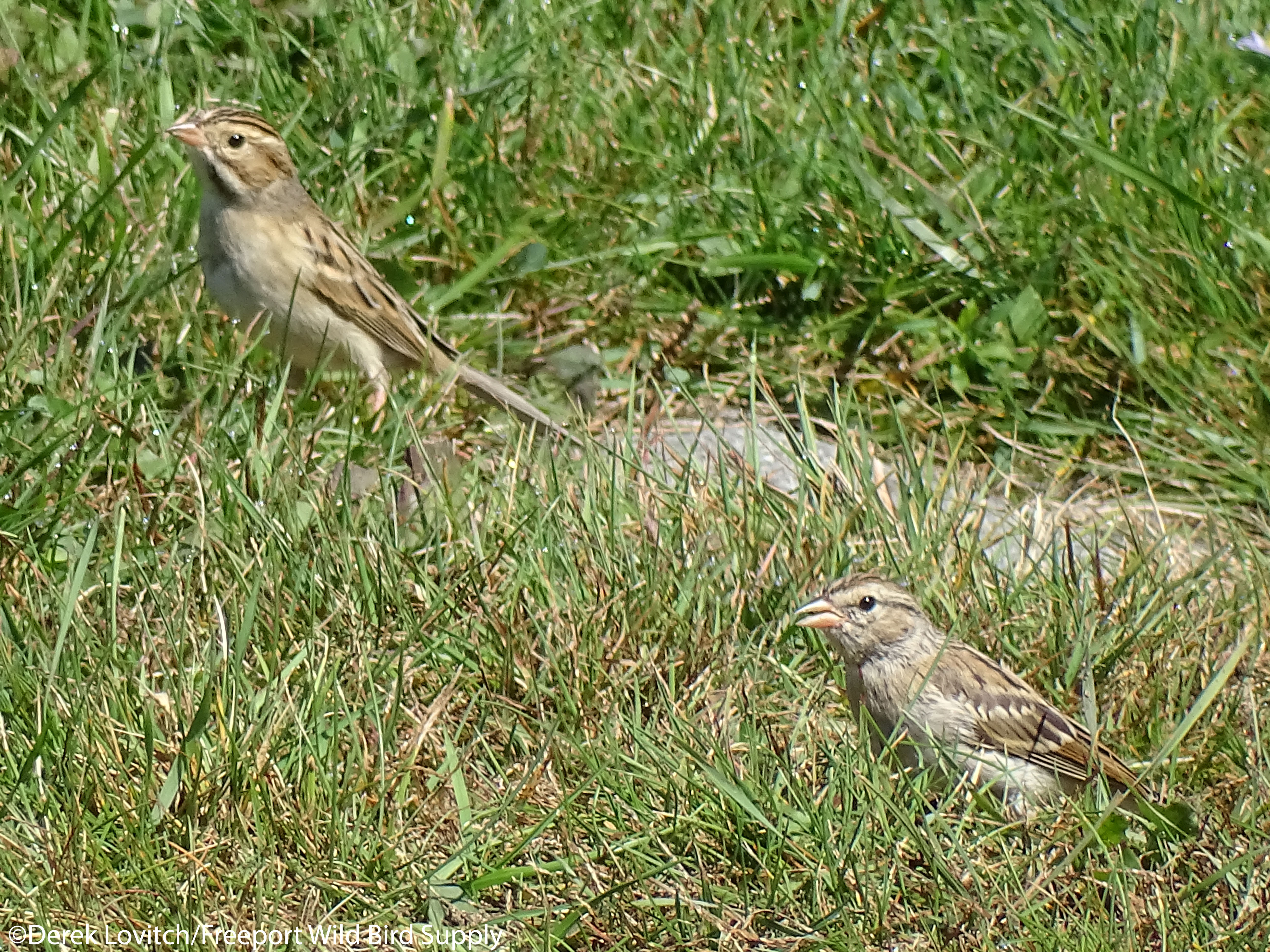
A Dickcissel in the community farm and a total of 6-7 Baltimore Orioles nearby were soon trumped when a first fall female Mourning Warbler actually walked into the open for all to see (for a change) …on a plywood garden table nonetheless! We found a Clay-colored Sparrow feeding amongst Chipping Sparrows, discovered a rather rare on the island Pine Warbler, and enjoyed a nice variety of the expected seasonal migrants.
Clay-colored SparrowClay-colored Sparrow with a molting juvenile Chipping Sparrow in the foreground.
Lovely weather all day encouraged us to enjoy an afternoon on Burnt Head, were we picked up a tardy Chestnut-sided Warbler and a rather rare in the fall on the island juvenile Ring-billed Gull. We also noticed a lot more Red-eyed Vireos during the course of the day, with many at and below eye level.
While a rare Yellow-crowned Night-Heron called over the harbor at nightfall, I was wandering on my own so it doesn’t count for the group, unfortunately. I was still pleasantly surprised by it, and it punctuated the calls of songbirds departing the island.
Luckily, a moderate flight occurred throughout the night (the overall intensity was a little obscured by fog on the radar images) on light west winds that had become calm by morning. Those calm and cooling conditions allowed fog to roll back in, and the Morning Flight was just a trickle to start on Sunday morning, our last morning together.
However, once the sun burned through, birds were in the air and appearing out of nowhere, and the birding really picked up. In flight, it was mostly Yellow-rumped Warblers, but there were more Palm Warblers involved today. We began finding “new” species for the trip list, like a Cape May Warbler, some recently-arrived American Robins, and we enjoyed watching a swirling flock of 16 migrant Black-capped Chickadees.
Late Blackburnian Warbler
After breakfast, the birding was overall quite a bit slower than Saturday, but the quantity was replaced by quality! An Orange-crowned Warbler at the Ice Pond, a continuing female Dickcissel in the cul-de-sac, two different Clay-colored Sparrows. Pockets of activity offered up nice views of a male Cape May Warbler, a few Blackpoll Warblers, and then we found not one, but 3 Nelson’s Sparrows in the Lobster Cove meadow – one even perched conspicuously enough to be viewed by all!
Nelson;s Sparrow sitting in what passes for “the open” with this species!Dickcissel
As the group trickled home, the last participants standing joined me in a little longer hike from Lobster Cove to Burnt Head, which yielded two Lesser Black-backed Gulls, more Great Cormorants, and yet another Orange-crowned Warbler to bring the official tour to a productive conclusion.
I remained on the island overnight, and with light southerly winds and a return of the fog, there was very little in Morning Flight and to start the day. But the day had a “rarity” feel to it (southwest winds overnight will do that!), and my Rarity Fever was soon stoked by a wayward Yellow-billed Cuckoo that sat still for me, gaining the first rays of sunshine of the morning, in a small tree in the Monhegan House lawn. Two Rusty Blackbirds were foraging on the lawn, and once the sun came up, a few more Yellow-rumped Warblers began to appear.
Yellow-billed Cuckoo
But as Jessica Bishop and I began a post-breakfast search, the What’s App began to ping. Ken and Sue Feustel had just found an Ash-throated Flycatcher on Wharton Ave, and we did a quick 180 and began the march back across town. The ample Trailing Yew breakfast was weighing on me, however, so my speed could have been improved. Nonetheless, the bird had disappeared before we arrived, so we fanned out to search.
After a short spell, I relocated the bird behind the Trailing Yew, and Jess rushed over and we began photographing it as the rest of the island’s remaining birders convened, including Donna the last member of my to depart. And she was quite happy with the decision to linger to say the least! (The tour was officially over, so this gem doesn’t count for the official triplist…darn!)
We studied the flycatcher, and I made sure to get a shot of the tail that would be adequate for identification confirmation (to rule out an even rarer Myiarchus flycatcher). Here, you can see the outer tail feather on one side, showing the dark brown of the outer web intruding into the end of the inner web – diagnostic for Ash-throated.
This was my 227th Monhegan Bird, and the island’s 3rd-ever, of this southwestern vagrant. What a bird!
While the rest of the day was a little anticlimactic from a birding perspective, Jeannette arrived and we set out to search for the now-missing Ash-throat and whatever else we might stumble upon. Two Clay-colored Sparrows were now together, one of the Orange-crowned Warblers was still at the Ice Pond, and at least one Nelson’s Sparrow was still at Lobster Cove. At dusk, two Wilson’s Snipe launched out of the town marsh, and at sunset, a migrant Great Blue Heron flew over. No sign of the Ash-throat for the rest of the day, unfortunately.
Orange-crowned WarblerPeregrine Falcon
On Tuesday, Jeannette and I awoke to a strong flight on the overnight radar image, but as expected on a north to north-east wind by dawn, only fairly a light Morning Flight occurred. Made up of at least 95% Yellow-rumped Warblers, it was a little busier than I expected, but it ended by about 7:00am. Granted, at least two hunting Peregrine Falcons may have had something to do with that.
We watched a Wilson’s Snipe evading a Merlin in flight, and some more new species for the weekend were overhead, including a Horned Lark, an Osprey, and a Semipalmated Plover. There were at least a half-dozen American Pipits in morning flight, and a new-to-us Brown Thrasher put in an appearance.
Red-eyed Vireo
After breakfast, it was exceeding slow, but we did have a Dickcissel in the garden, and a Scarlet Tanager joined the remaining Baltimore Orioles in the grapes. But most of our morning was spent chasing a reported Yellow-headed Blackbird (seen by two and never again) and Will Russell briefly relocated the Ash-throated Flycatcher – which looked much healthier today and was much more active. In other words, it was soon once again melting away into the scrub. It kept us occupied until it was time to depart, however.
Yellow-bellied Sapsucker
A very pleasant boat ride back to the mainland for Jeannette and I was far too nice to produce any seabirds of note, but it was a lovely way to finish up a delightful and fruitful fall weekend.
Here’s the official tour checklist:
27-Sept
28-Sept
29-Sept
American Black Duck
0
0
1
Mallard
8
12
16
Green-winged Teal
0
0
1
Common Eider
x
x
x
Black Scoter
0
0
8
Ring-necked Pheasant
15
15
25
Mourning Dove
10
15
12
Black Guillemot
x
x
x
Laughing Gull
8*
0
2
Ring-billed Gull
0
1
0
Herring Gull
x
x
x
LESSER BLACK-BACKED GULL
0
0
2
Great Black-backed Gull
x
x
x
Common Loon
1*
0
0
Northern Gannet
2*
0
1
Double-crested Cormorant
x
x
x
Great Cormorant
0
1
5
Bald Eagle
2*
0
1
Sharp-shinned Hawk
2
4
4
Belted Kingfisher
1
0
1
Yellow-bellied Sapsucker
0
20
20
Downy Woodpecker
2
4
3
Northern Flicker
3
15
15
Merlin
6
8
6
Peregrine Falcon
2
3
4
Eastern Phoebe
0
3
3
Blue-headed Vireo
0
3
4
Red-eyed Vireo
1
30
25
Blue Jay
9
13
9
American Crow
4
4
4
Common Raven
0
1
1
Black-capped Chickadee
x
x
30
Golden-crowned Kinglet
4
15
40
Ruby-crowned Kinglet
2
10
20
Cedar Waxwing
30
40
40
Red-breasted Nuthatch
2
8
6
Brown Creeper
0
4
4
House Wren
0
1
0
Carolina Wren
5
10
10
Gray Catbird
10
x
x
Northern Mockingbird
2
2
3
European Starling
x
26
26
Hermit Thrush
0
1
0
American Robin
0
0
2
American Pipit
0
3
3
Purple Finch
0
4
5
American Goldfinch
10
10
8
Chipping Sparrow
0
10
12
CLAY-COLORED SPARROW
0
1
2
Dark-eyed Junco
0
4
2
White-throated Sparrow
15
50
60
NELSON’S SPARROW
0
0
3
Savannah Sparrow
1
6
10
Song Sparrow
x
x
x
Lincoln’s Sparrow
1
5
4
Swamp Sparrow
2
15
20
Rusty Blackbird
0
4
2
Common Grackle
2
20
20
Baltimore Oriole
2
7
6
Northern Waterthrush
0
1
0
Black-and-white Warbler
0
0
3
ORANGE-CROWNED WARBLER
0
0
2
Nashville Warbler
0
3
0
American Redstart
0
1
0
MOURNING WARBLER
0
1
0
Common Yellowthroat
0
8
10
Cape May Warbler
0
1
3
Northern Parula
1
15
15
Blackburnian Warbler
0
0
2
Yellow Warbler
0
2
1
Chestnut-sided Warbler
0
1
1
Blackpoll Warbler
6
25
15
Black-throated Blue Warbler
0
0
1
Palm Warbler
1
30
20
PINE WARBLER
0
2
1
Yellow-rumped Warbler
20
150
100
Black-throated Green Warbler
0
10
3
Wilson’s Warbler
0
1
0
Northern Cardinal
8
10
6
Rose-breasted Grosbeak
1
0
1
Indigo Bunting
0
1
1
DICKCISSEL
1
1-2
1
Day Total
44
68
73
Warbler day total
4
15
14
3-Day Tour total=
81
Plus with Jeannette after the group and on my own =
13
Total warblers =
19+1
Molting juvenile Cedar Waxwing learning how to eat Winterberry.
And the additional species seen by me without the group, on Monday, and on Tuesday:
I tried birding less (Doctor’s orders!) recently, but it’s such a tough time to do that. Luckily, this time of year is so fruitful that even reduced birding resulted in a number of sightings of note. Between rest days and a shelter-in-place order, I minimized birding to aid in my recovery. Slowly, however, I was getting out more and for more time.
1 Red Crossbill, Otter Brook Preserve, Harpswell, 10/29 (with Harpswell Heritage Land Trust tour group).
2 Field Sparrows and 5 Horned Larks, Pott’s Point, Harpswell, 10/29 (with Harpswell Heritage Land Trust tour group).
Sabattus Pond, Sabattus, 11/2 (with Dan Nickerson): 591 Ruddy Ducks, 289 Mallards, 107 American Black Ducks, about 80 mixed Lesser and Greater Scaup, 68 Buffleheads, 19 Canada Geese, 15 Northern Pintails, 13 Hooded Mergansers, 8 Common Mergansers, 7 American Wigeon, 7 Green-winged Teal, 6 Common Goldneyes, 2 Horned Grebes, 1 female Long-tailed Duck, 1 female Red-breasted Merganser, etc. etc.
Meanwhile, here in the yard, the season was rapidly changing. Starting this period with lots of Savannah and Swamp Sparrows around, they had mostly petered out by week’s end. Song Sparrows remain strong, albeit in somewhat reduced numbers, but White-throated Sparrows and Dark-eyed Juncos have finally begun to increase.
We’re down to just a couple Yellow-rumped Warblers in the yard now, but a few late-ish migrants have included a Red-eyed Vireo and Common Yellowthroat on the 25th, and the occasional small group of Red-winged Blackbirds and Common Grackles are still trickling through.
Pine Siskins and Purple Finches have been near-daily fly-overs, with the occasional Purple Finch visiting the feeders, building to 8 by 10/26 and a few Pine Siskins finally visiting the feeder on 11/1. Our American Goldfinch flock remains strong, however, with 20-25 continuing, splitting time between the feeders and the weedy margins of the property (especially Evening Primrose). Siskins and Purple Finches continued to pour into the area in the last days of October. Multiple large flocks of siskins and at least 20+ Purple Finches were in the Otter Brook Preserve in Harpswell, on the 29th, for example, and more are being reported at feeders in the area now.
Now that we are in November, the attention turns towards the water…and migrant traps for rarities!
TOURS and EVENTS:
All of our tours for 2023 are now complete, not including Saturday Morning Birdwalks of course. Keep an eye on the Tours page of our website, as we’ll soon begin adding more 2024 outings.
Although around in excellent numbers, goldfinches are not inundating feeders despite a bumper crop of juveniles thanks to the abundance of natural food resources from our exceptional growing season.
If you think it’s slow at your feeders right now, you are not alone. We are being swamped with reports and concerns here at Freeport Wild Bird Supply of “no birds,” “slow,” “they all disappeared” etc. In fact, they are so frequent – and causing so much consternation – I decided to write this blog to help further explain the observations (or lack there of).
So the first thing to know is: don’t worry. This is normal, this is natural, and it happens on a fairly regular basis. There is a lot of concern, even panic, going on right now, fueled by misinformation, inadequate answers, and downright fear-mongering on the internet (I know, shocking!).
I think the success of the 3 Billion Birds campaign, which analyzed and publicized the finding that North America has lost one in four birds since 1970, has greatly heightened awareness about the plight of the continent’s birds. Media coverage of disease in birds has increased in recent years, which is both good and bad (good in the awareness about the issues, bad in the misleading, misguided, and often irrational coverage). So we are hyper-aware.
But yes, your feeders have been slow. Our feeders have been slow. And feeders throughout the state have been slow. But let me assure you that this is OK. In fact, it’s very OK. It is not a sign of the sky falling, the Rapture, or another disease outbreak. While the overall decline of songbirds is dramatic and palpable, many resident feeder bird species are actually increasing over the long term. While I don’t want to talk you out of being concerned about the general welfare of all birds, I want to assure you that what your feeders are experiencing right now is nothing to be worried about. It’s impacting our enjoyment, yes, but it’s not a bad thing for the birds!
The most important thing to remember is that birds always prefer natural food sources (our feeders are only a helpful supplement) so if they can find what they need in their natural habitats, they do not need to visit our feeders nearly as often. If there’s ever proof-positive to finally kill this silly myth about birds being dependent on feeders, seasons like this are it! (If they were dependent, there would be the same amount of birds at feeders all the time).
So let’s talk about what’s really happening. And as usual in nature, it’s not completely simple. It’s a myriad of issues and events that have once again collided in a “perfect storm” of low feeder activity scenarios. And every yard is different, so there are exceptions to each and every rule.
Yes, it has happened before!
In fact, it happened as recently as 2017 and 2019. In 2017, the lack of feeder birds was so widespread that it was making the TV news, and it was even registering in the region-wide wholesale market. It was not just in Maine. That fall, I took to my blog to explain it and ease concerns. Interestingly, this was my most popular (by views and shares) blog entry of all time, meaning people found it valuable. I hope this blog helps in the same way, and since many of the circumstances are the same, you’ll see more similarities than differences in the explanation.
Likewise, in the winter of 2019, I put together a little Christmas Bird Count case study to explain the perceived lack of birds at that time – to put a small amount of data into the equation.
2.Abundance of Natural Food Sources. For the most part, it is the abundance – or paucity – of natural food that determines how much activity you will have in your yard. This is particularly significant for our seed-eaters, like finches and sparrows, and fruit-eaters, like waxwings. Many trees go through “masting” cycles. This is a survival strategy in which a tree will produce a huge amount of fruit or seed one fall, followed by one or more years of very little production. Therefore, in the high production years, there is so much seed/fruit that predators cannot possibly consume it all, and the tree is all but guaranteed that a large number of its seeds will survive to germinate.
This fall has been a high production year for several common tree species. Acorns, beechnut, and other foods are in good supply, keeping Blue Jays busy. Balsam fir and Red Spruce are in good to great supply, keeping Red-breasted Nuthatches and Black-capped Chickadees happy. In fact, the mast of balsam fir is one of the components that has led to minimal southbound movements of Red-breasted Nuthatches and chickadees that would augment our local populations in winters where they move south out of the boreal, according to the Winter Finch Forecast (more on that later
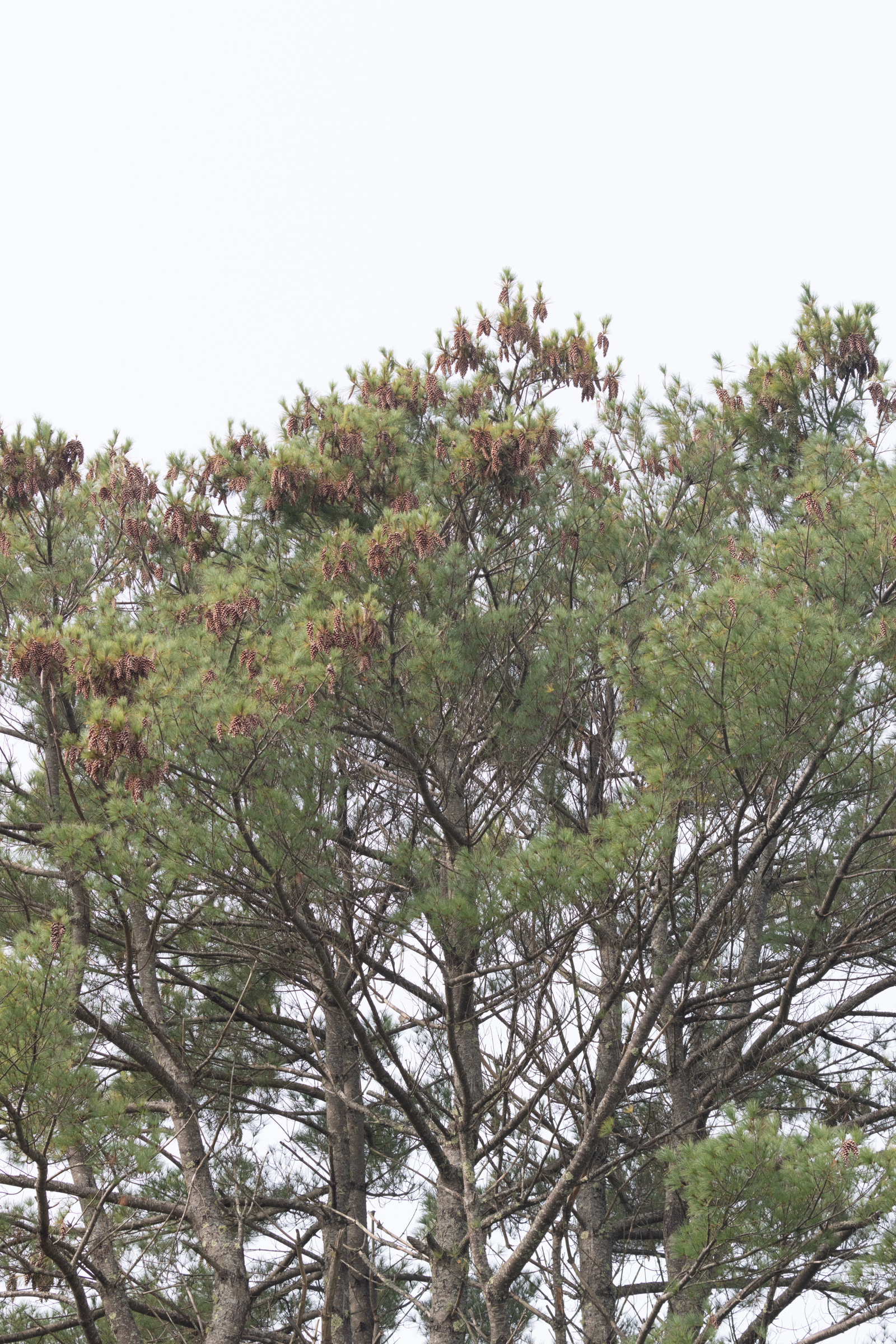
Elsewhere..my goodness are Eastern White Pines laden! I mean like fall-over-from-the-weight-laden. There are so many cones that it looks like the crowns of healthy White Pine are dying.
And the soft cones and abundant seeds of White Pine are just as important to Maine’s birds as the trees are to our cultural heritage, and when there’s a mast, there’s a lot of nutritious food for our resident and migratory seed-eaters alike. There’s so much of it that Red Crossbills all the way from the Rockies are spreading east to take advantage of it (and other conifer crops), and keeping a lot of our “Northeastern” (aka Type 12) Red Crossbills around, hopefully to breed this fall and winter. Unfortunately, few if any will visit feeders as usual, at least in most of the state.
In addition to these important tree food resources, you may have noticed a wee bit of rain this summer. All summer. Record amounts. And after a slow start to the breeding and growing season (why you were feeding so much more seed than normal back in June and into July), the productive growing season has produced a whole lot of soft seeds: grasses, “weeds,” wildflowers – the natural food that our resident and migratory sparrows depend on. And goldfinches…there are A LOT of goldfinches around right now, but they are more frequent on native wildflowers such as Evening Primose that are abundant right now.
For example, in Durham, our yard is hosting 30-40 American Goldfinches daily. They’re spending most of their time in the weedy edges, meadows, and birches around our property. But since there are so many, they are constantly coming and going from our feeding station. Hulled Sunflower and Nyjer – both seeds that need to be constantly refreshed if not consumed rapidly – are by far our most popular feeders, and the two tubes dedicated to hulled sunflower have to replenished daily here. I’ve been enjoying them feasting on Evening Primrose, peeling the seed pods like a banana, then hopping over to the feeders, and after a few minutes, plopping right back into the patch of primrose (the opposite of what dependency would look like!).
2) Mild and Benign Weather. After an often miserable summer, we have earned a lovely fall, and the last few weeks have been delightful! But the mild weather also means birds eat less supplemental food as they don’t need to burn as many calories to make it through the night. There’s also a lot of insects still available – no killing frosts yet, and none on the horizon at least here in Southern Maine.
3) Facultative and Long-Distance Migrants While most of our long-distance migrants (like warblers and orioles) are departing rapidly, many of our later-season migrants (like blackbirds and most of our native sparrows, as well as most of our waterfowl) are facultative (or “flexible”) in their timing. They can adjust their respective arrival and departures based on abundance and/or access to food. Dark-eyed Juncos, White-throated Sparrows, Fox Sparrows, and the last wave of blackbirds are still not here in Southern Maine, lingering as far north as they can for as long as they can. These birds will move a short distance south as soon as they have to, and if the winter is a short one, they will begin to work their way north earlier – or even “overwinter” further north than normal. Not even a freak snowstorm will affect them – they are built for it, and will make range adjustments as needed. With so many hayfields unmowed, corn still being harvested, and lack of urgency, the usual fall complaint about being overwhelmed by flocks of voracious blackbirds have not been heard. Enjoy it while you can!
As for long (and medium-distance obligate migrants), it just so happens many of them clear out in late September. While there are still scattered Ruby-throated Hummingbirds around the state, a large portion of the population cleared out in the last two weeks. Adding to the perception that “all the birds have disappeared” was the reality that many of our migrants took advantage of favorable conditions to be on their way.
Another example of this is that here at our feeders in Durham, at least three Gray Catbirds have remained loyal and persistent. Thanks to the abundance of Arrowwood Viburnum on our property, they are still around, and between bouts of berry-harvesting, they continue to visit our suet and nut feeders. They will depart any night now, and when they do, the feeding station will be much quieter. Woodpeckers are taking advantage of all of the natural food and insects out there, so they are – as usual in the fall – making less frequent visits to the suet feeders. Our suet will be depleted much less quickly when the voracious trio of fat-deposting catbirds departs!
Also here in Durham, the first few White-throated Sparrows have finally arrived, and the first wave of Dark-eyed Juncos will be here soon. However, our extensive grassland restoration project and weedy edges have produced a bumper crop of Song Sparrows, which will mostly leave our yard before the winter. If your Song Sparrows have left already and you don’t have White-throats or juncos yet, then your white millet is not being used as quickly. Here, our millet platform is one of our feeders that we have to still fill daily (plus more on the ground) as we continue to improve our already sparrow-rific yard.
4) Irruptives, or Lack There Of.
The venerable Winter Finch Forecast (WFF) lights our way here. As predicted, Purple Finches have been slow to arrive outside of the Boreal and Boreal transition belts. “In the east, many Purple Finches are expected to overwinter in southern Canada and the northeastern United States… Don’t be surprised if, as winter progresses, a late movement in January and February occurs into the Carolinas as eastern crops are depleted.” Here at our feeders in Durham, a male Purple Finch arrived this weekend – our first in a couple of weeks here.
The WFF however, is predicting a flight of Pine Siskins, possibly in large numbers. We’re starting to see a few here and there in Southern Maine, and a massive flock of 200+ showed up on Monhegan mid-week before dispersing. However, with the aforementioned abundances of natural food sources for them (hemlock, birch, alder, weeds, etc), few have been reported at feeders which will likely be the case for a while.
There may be other birds arriving in the coming months, according to the WFF, but those will be a topic for another time.
5) Predators.
Many people have said that the birds “disappeared all at once.” And while for the most part, it is just a combination of the various topics discussed above, there are instances when feeder activity does in fact grind to a sudden halt.
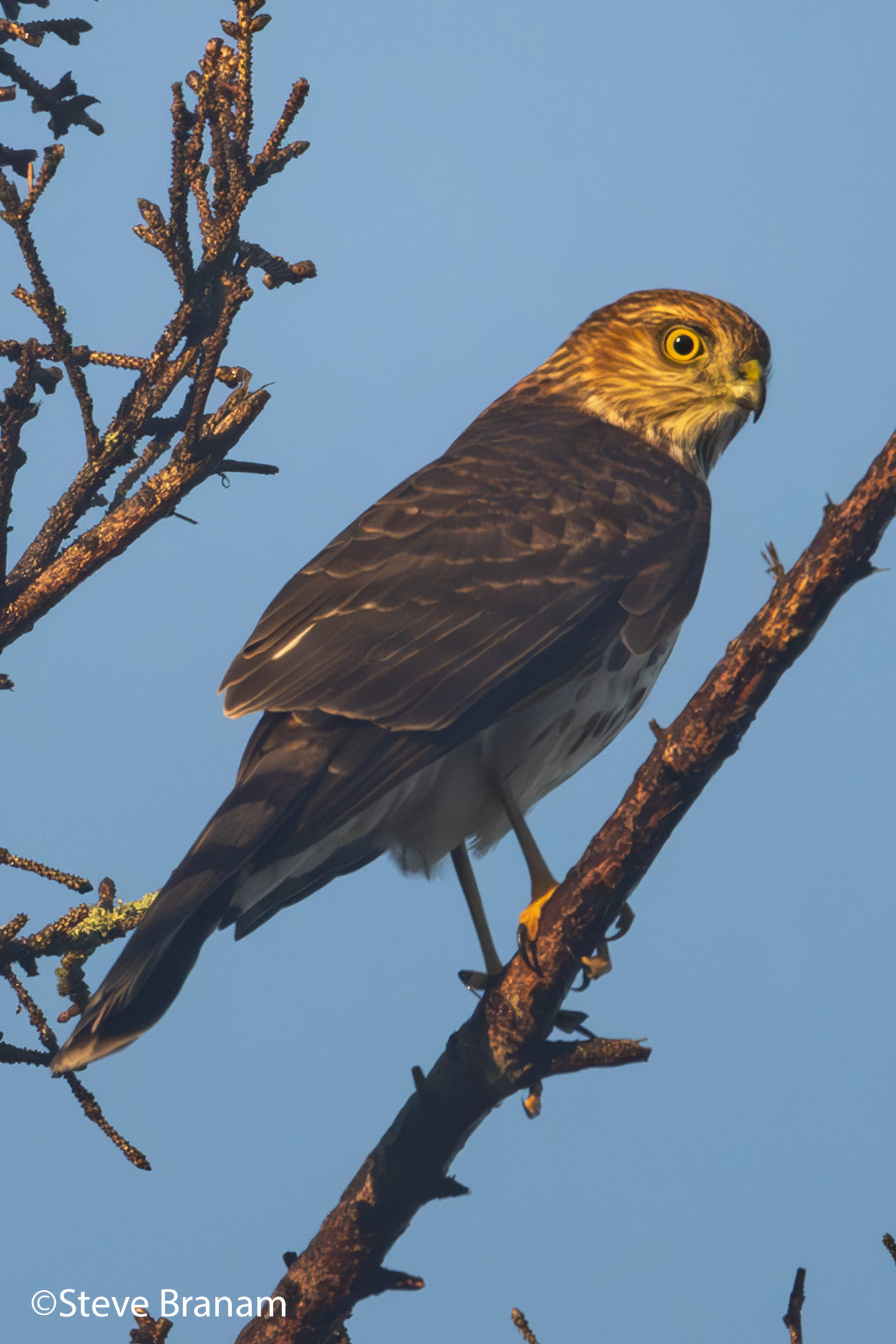
There are two reasons birds stop coming to a feeder all of the sudden: the food has spoiled or is no longer accessible (the feeder clogged up) or there’s a new predator on the scene. Hopefully there’s not a new outdoor cat in the neighborhood, but it’s also the peak of raptor migration. A transient or winter resident Cooper’s or Sharp-shinned Hawk setting up camp near your feeders will indeed reduce activity suddenly. Hey, if you want to feed the small ones, you’re going to feed the big ones, so this is an important part of the cycle and should be celebrated (but yes, we all have our rooting interests). Especially young, inexperienced juvenile birds don’t always make good decisions about where to perch and give up their presence too easily. However, as soon as the local birds figure this out, they’ll stop coming and the raptor will move along and look for another concentration. And your songbirds will be back soon thereafter. That cat is a bigger problem, however.
6) Memory Bias. Humans inherently think of the recent past first (“recency bias), and so we find ourselves often comparing this fall to last fall, which saw exceptionally high feeder visitation thanks to the prolonged drought we had experienced throughout the summer, greatly reducing perennial seed crops (exactly as we had seen in the summer of 2017). Some of the masting trees were at cyclical lows, and cyclical lows of many cone and seed crops. And irruptions of Red-breasted Nuthatches, and to a lesser extent Purple Finches, were already underway by now. Especially if you have only been feeding birds – or paying more attention to your feeder birds – in the past two years, this fall would seem like a striking anomaly.
6) The Filthy Feeders and Stale Seed Catch-22. When activity is low at feeders, we can become a bit blasé about maintenance. Not keeping feeders clean and filled with fresh seed will only make it less likely that birds will want to frequent your yard. And, with ridiculously prolonged wet weather of the summer, seed went bad out there – even if it was fresh when you bought it. And unusually high humidity for much of the summer meant the “cool, dry” place you tried to store seed in was anything but. Seed spoils. It gets stale. And it did that more quickly this summer than most. Unless you have it stored in a climate controlled silo and bagged a couple of days before its ship like our exceptional seed distributor does, the seed that you have had since the spring is now worthless. And the birds know this.
No one likes to waste seed, but if it has been sitting in a feeder untouched for a month or so, it is time to toss it and start over. This is especially true for Nyjer, hulled sunflower, and shelled peanuts, which are most susceptible to the elements. (If you dump it in the woods, rest assured that something will eat it, or at the very least nothing will be harmed by it. If mold is visible, however, it is best to bury it). Clean your feeders, and disinfect them with a mixture of one part white vinegar to four parts water if mold was present. Fill your feeders halfway until activity builds up again if you are concerned about waste. When birds return and they find stale or spoiled seed in your feeders, they’ll continue right on by. Toss that saved seed. Start fresh. The birds will start coming back, but the longer you wait to restock, the longer it will take for your feeder activity to return.
7) The Big Picture We certainly do not want to downplay the significance of population declines in many of our bird species due to a whole host of large-scale issues (a topic for a different article), but rest assured that “your” birds are probably doing just fine from one year to the next over the short term. In fact, most of our resident “feeder birds” have steady, if not in some cases, increasing populations. Climate Change is affecting bird populations. Habitat loss is affecting bird populations. Cats are killing up to 4 BILLION birds a year. Windows are killing up to 1 BILLION birds a year. We could go on.
However, this has not changed in the past few weeks. Those long-term declines are often subtle and hard to detect without coordinated scientific investigation. All it takes is a walk in the woods and fields to see that the birds are out there. In fact, there are a lot of them out there, and they are doing just fine. They just don’t need our feeders as much right now.
And because of that, consider working on adding more native plants and natural food sources to your yard. That will keep more birds around more of the time, and – like our goldfinches and sparrows at our home in Durham – augment feeder activity in what is otherwise a slow season.
8) It WILL Change! Natural food supplies will slowly get used up, nights will get colder and longer, and our facultative migrants will come. A frost will come, ending the growing and insect seasons. Eventually, we’ll see some snow and ice that will make it harder to find the remaining natural food, and when all of those things happen, our feeders will be ready for them!
White-throated Sparrows have just returned to our feeders in Durham.
In a few weeks, the comment about Blue Jays “eating me out of house and home” will begin as they ramp up their winter caching. They’ll focus mostly on acorns as usual, augment it with pine nuts, but also supplement that with nuts and seeds from our feeders. Blackbirds flocks will begin to depart the farmlands and stop by feeding stations for some refueling. Weed seeds will begin to be used up, pushing more arriving sparrows and goldfinches back to feeders more of the time.
9) In sum.
This is normal, explainable, and predictable. It happens every now and then. It will change. Refresh your seed, adjust your offerings, and clean your feeders. Quality seed matters, especially when there are other options around for birds to choose instead. Make a planting plan for next year to improve the quality of your surrounding habitat. Keep cats indoors, windows treated to prevent strikes, and support bird conservation efforts. We want more birds around us, for our pleasure and for the ecological benefits. And as this fall demonstrates, feeders are only a small part of the equation.
We hope this helps clear up some of the misinformation out there. And please do share this widely – we want to get the word out. And finally, if you have any additional questions, feel free to drop by the store.
And never stop looking! You never known what might show up out there, even on the slow days, like this young female Dickcissel that graced the feeders at the store for a week earlier this month.
10/7 Update:
A lot of people have asked about Hurricane Lee and its effect on birds, so just wanted to comment about that here. Simply put: Lee had NOTHING to do with it; it was irrelevant. However, in the days before and after the storm’s passage, there was excellent conditions for migration (the first in a while), so many migratory birds did clear out at that time. And yes, the amount of rain likely clogged some feeders and spoiled some seed, too, but no more than any other storm would. So basically, I believe the passage of Lee was merely coincidental at best.
On the other hand…here come the Pine Siskins! Reports of huge numbers pouring out of the boreal are being received, and birds are arriving in northern and eastern Maine. Be sure you have fresh Nyjer ready to go!
11/15 Update:
With the onset of colder weather, feeder activity is picking up dramatically. More and more folks are reporting “the birds are back” at their feeding stations. At our home in Durham, we never “lost” feeder activity, but it has certainly picked up over the past two weeks. We’ve had 50+ American Goldfinches scarfing Nyjer and hulled sunflower the last few days, up from the 20-30 that have been frequent for most of the fall.
Dark-eyed Juncos and Eastern Bluebirds are returning to feeders, but sparrow numbers overall remain low…I think most of the White-throated Sparrows have gone over and through, but American Tree Sparrows have not yet arrived.
Here at the store, the feeder activity remains below normal, however, but Eastern Bluebirds have just returned here as well. But our surrounding habitat doesn’t hold nearly as many birds as our yard in Durham, so this is a big part of the equation.
So to sum it up: it’s getting better, more active, and more diverse at the feeders. And I think fresh seed is a big part of the equation, so if you’re waiting for birds to return with only old, stale (or worse) seed to offer, I think you’ll be waiting even longer (more on this soon, as I am playing around with another blog on the topic).
Our Durham yard has been incredibly birdy this week. The most unexpected migrant was this American Bittern that dropped into our new pond for the morning of the 28th.
I didn’t get out to shorebird hotspots as much this week, but still ended up with 17.5 species and some solid high counts. However, much of my best birding this week was from our yard, which apparently is a fantastic fall migration hotspot. And my first visit of the season to Sandy Point on 8/31 produced a new August record!
Black-bellied Plover: 142, The Pool, Biddeford Pool, 9/1.
Killdeer: 3, United Ag and Turf, Auburn, 8/31 (with Jeannette).
Semipalmated Plover: 150+, The Pool, 9/1.
Piping Plover: 1, The Pool, 9/1.
Whimbrel: 4, The Pool, 9/1.
RED KNOT: 16 juv, The Pool, 9/1.
Sanderling: 1, The Pool, 9/1.
Least Sandpiper: 32, Eastern Road Trail, Scarborough Marsh, 8/31.
White-rumped Sandpiper: 11, Wharton Point, Brunswick, 8/28 (with Jeannette).
Pectoral Sandpiper: 2, Eastern Road Trail, 8/31.
Semipalmated Sandpiper: 450-500, Wharton Point, Brunswick, 8/28 (with Jeannette).
A handful of non-shorebird highlights this week also included:
A productive week of birding on our Durham property produced a number of highlights. In fact, most mornings, it was hard to pull myself away from the yard. At least 11 species of warblers have been in our yard daily this week, with a high count of 12 on the 28th. A female MOURNING WARBLER was present 8/27-8/29. A Phildelphia Vireo on the 28th-29th was our 144th yard bird, followed moments later by the arrival of #145: An American Bittern (photo above). A DICKCISSEL (FOF) briefly paused in the yard on the morning of the 1st for our 146th yard bird! 32-38 Common Nighthawks were feeding over the yard late in the day on 9/1 as well.
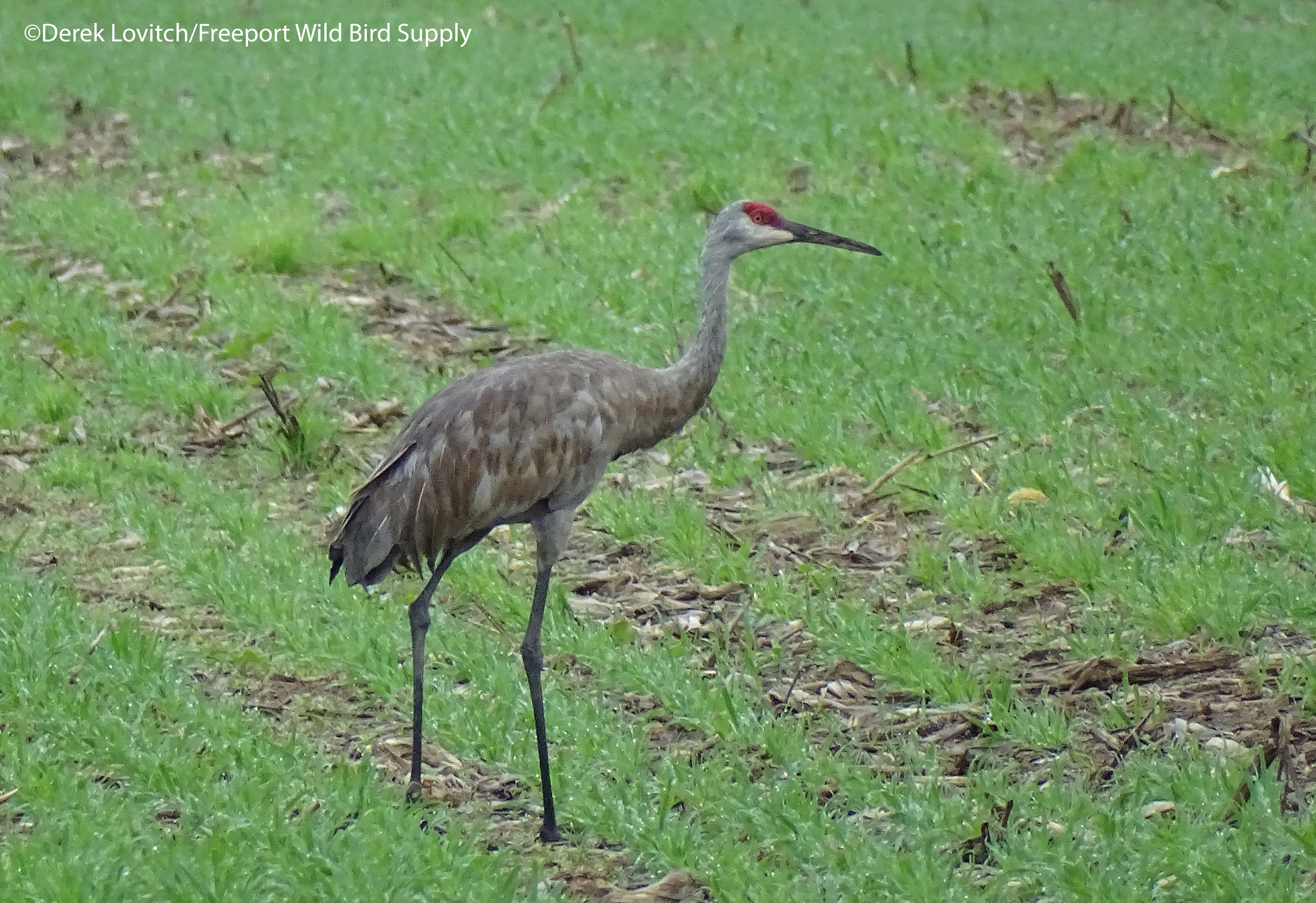
12 adult SANDHILL CRANES, Mayall Road, Gray/New Gloucester, 8/30 (site high count and noteworthy that no juveniles were present – failed breeding season due to high water and flooding?)
Sandy Point Morning Flight, 8/31 (FOY):
6:00-9:15am
57F, mostly clear, NE 4.7-7.6 increasing to 7.3-9.8 and gusty.


























 Maine Birding Field Notes