Tag Archives: Canvasback

This Week’s Highlights, 5/10-5/16/2025.

The 2025 Bradbury Mountain Spring Hawkwatch came to a close on Thursday. It did not exactly end with a bang, but we had a great flight for the this late in the season on Monday, including a good movement of immature Broad-winged Hawks and Merlins, such as this one. It, and everything else that has passed over or by the summit for the last two weeks has only added to our record-breaking season.

After last week’s rarity insanity, this was a tamer, more “normal” week for mid-May. While several great songbird flights occurred this week, concentrations were few, but there were “new” birds arriving most every day. Here are my observations of note over the past seven days.

  • 1 continuing RUFF (REEVE), Walsh Preserve, Freeport, 5/10 (with Saturday Morning Birdwalk group).
  • 1 ORCHARD ORIOLE (FOY), 2 Blue-gray Gnatcatchers, etc, Green Point WMA, Dresden, 5/13 (with Jeannette).
  • 1 immature male ORCHARD ORIOLE, feeders here at the store, 5/14.
  • 1 continuing hen CANVASBACK, Great Pond, Biddeford Pool, Biddeford, 5/15.

My personal “first of years” this week also included:

  • 1 Bobolink, Thornhust Farm, North Yarmouth, 5/10 (with Saturday Morning Birdwalk group).
  • 1 Red-eyed Vireo, Florida Lake Park, Freeport, 5/12 (with Jeannette).
  • 2 Spotted Sandpipers, Florida Lake Park, 5/12 (with Jeannette).
  • 1 Canada Warbler, Florida Lake Park, 5/12 (with Jeannette).
  • 2 Green Herons, Green Point WMA, Dresden, 5/13 (with Jeannette).
  • 7 Short-billed Dowitchers, Walsh Preserve, Freeport, 5/13 (with Jeannette).
  • 1 Scarlet Tanager, our property in Durham, 5/14.
  • 1 Blackpoll Warbler, Florida Lake Park, 5/14.
  • 4 Laughing Gulls, East Point, Biddeford Pool, Biddeford, 5/15.
  • Numerous Common Terns, Biddeford Pool environs, 5/15.
  • 2 AMERICAN OYSTERCATCHERS, Ocean Avenue, Biddeford Pool, 5/15.
  • 5 Roseate Terns, East Point/Ocean Ave, Biddeford Pool, 5/15.
  • 26 Ruddy Turnstones, The Pool, Biddeford Pool, 5/15.
  • 2+ Semipalmated Plovers, The Pool, 5/15.
  • 82 Black-bellied Plovers, The Pool, 5/15.
  • 150 Semipalmated Sandpipers, The Pool, 5/15.
  • 4 Marsh Wrens, Cobboseecontee Lake Causeway, 5/16.

Bradbury Mountain Spring Hawkwatch

The Week 8 report can be found here. The report for the final week, finishing on Thursday, can be found here.

Upcoming Tours (with space available):

Rangeley Birding Festival, June 5-8

This Week’s Highlights: December 3 – 9, 2022

The still-unfrozen waters of Sabattus Pond were fantastic this week. One of the highlights was this continuing drake Canvasback.

So-called “half-hardies” dominated my highlights away from a still-productive Sabattus Pond, as if often the case this time of year.

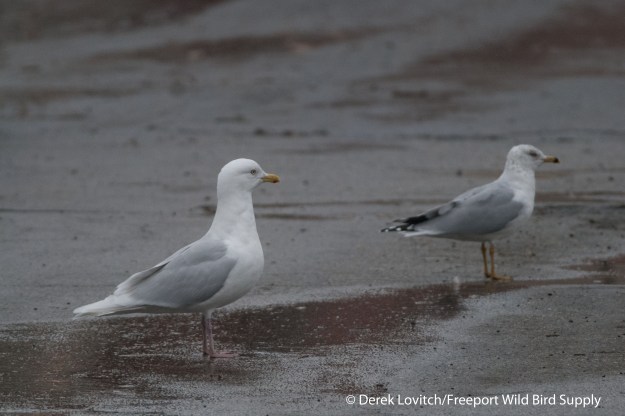
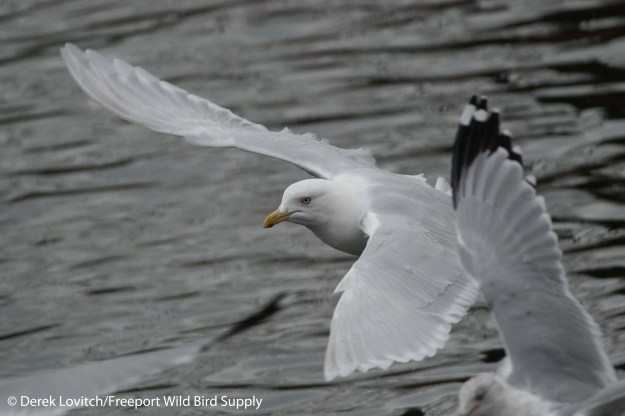
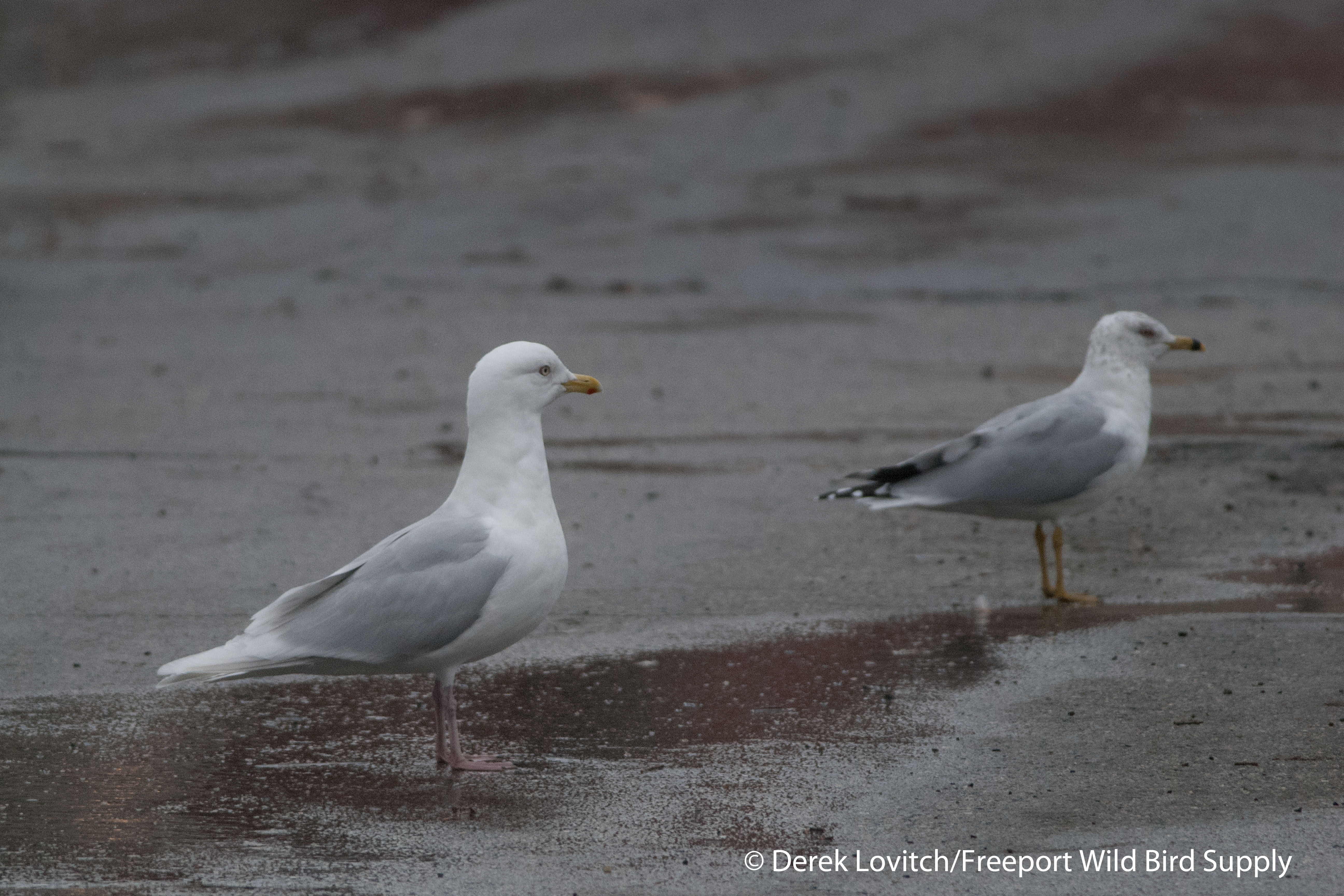
  • 1 adult Iceland Gull, Yarmouth Town Landing, 12/3 (with Saturday Morning Birdwalk group).
  • Sabattus Pond, 12/5: 1 continuing immature male EURASIAN WIGEON, 1 continuing drake CANVASBACK, 1 PIED-BILLED GREBE, 1 1st winter Iceland Gull, ~350 Ruddy Ducks, 3 Northern Pintails, 2 Ring-necked Ducks, 1 Horned Grebe, etc.  Full waterbird list here.
  • 1 Winter Wren, 1 Hermit Thrush, 1 Northern Flicker, and 3 Red Crossbills, Bailey Island, Harpswell, 12/5.
  • 1 Evening Grosbeak, our yard in Durham, 12/6.
  • 1 Fox Sparrow, feeders here at the store, 12/6-7.
  • 1 Gray Catbird, 3 Ruby-crowned Kinglets, and 1 Swamp Sparrow, Saco Riverwalk, Saco, 12/9 (with Allison Anholt).

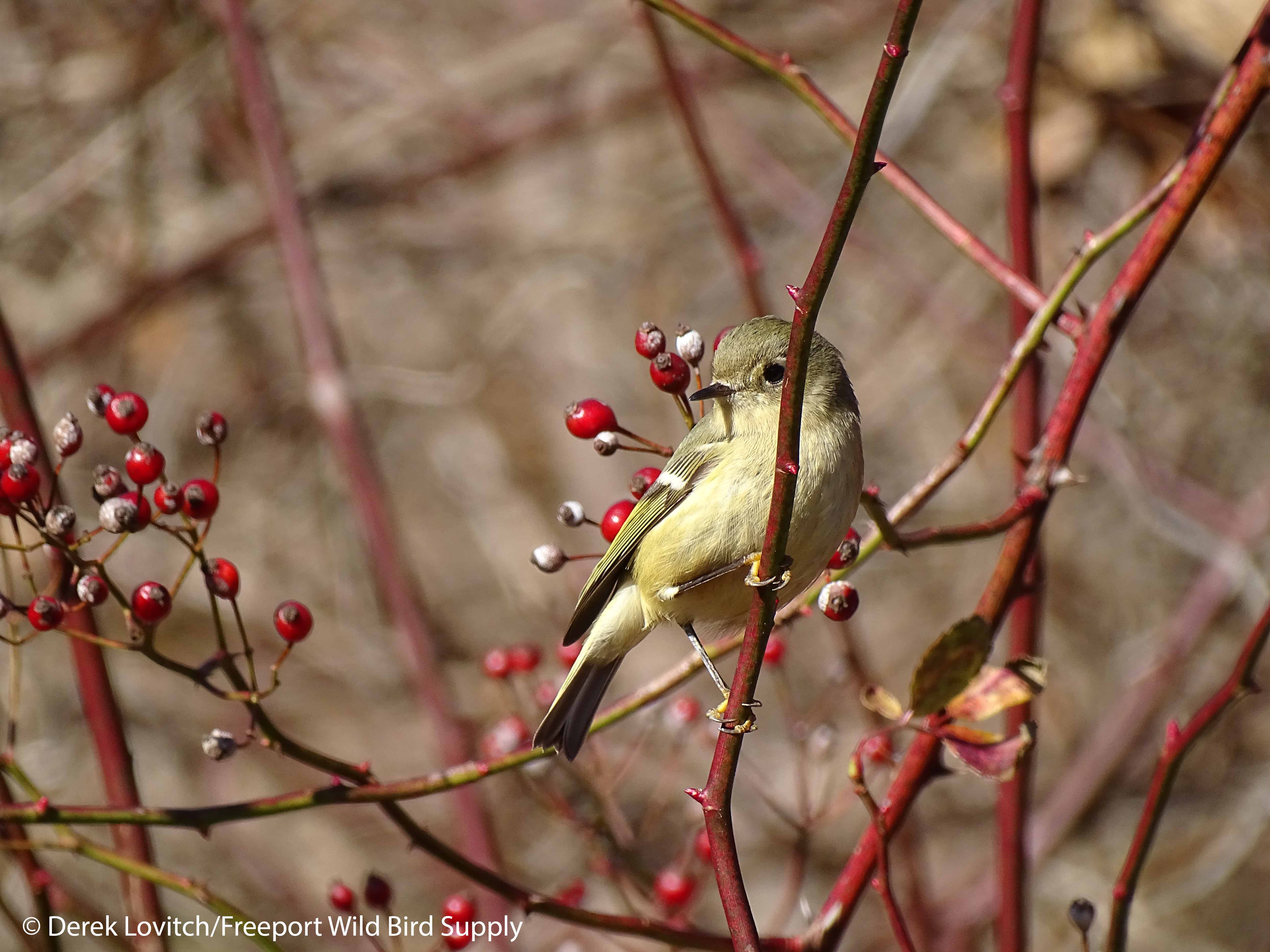
I take a lot of photos this time of year of birds with Multiflora Rose stems in front of their faces. Like this – and every other – Ruby-crowned Kinglet shot from the Saco Riverwalk on 12/9.

This Week’s Highlights: November 11 – November 18, 2022

I found this presumptive BLACK-HEADED X RING-BILLED GULL HYBRID along Greely Road in Cumberland during steady rain in the late morning of the 13th. It looks very similar to the individual of this hybrid pair that wintered on the Falmouth waterfront for at least two years, 2019-20, and 2020-21. Could it be the same bird with a little more black on the head due to the earlier date?

Rarity season is upon us, but most of my birding this week was in and around our yard. Not that that wasn’t extremely enjoyable though!  A few forays afield did not produce those hoped-for November “Megas,” but I did see a few things of note over the past eight days including:

  • Evening Grosbeaks have been present daily at our feeders in Durham all week. 7 on 11/11 peaked at 32 on 11/12 (with Saturday Morning Birdwalk group).
  • 1 Lapland Longspur (FOF), over our yard in Durham, 11/11.
  • 1 RUSTY BLACKBIRD, our feeders in Durham, 11/12 (with Saturday Morning Birdwalk group).
  • 1 first-winter Iceland Gull (FOF), Thornhurst Farm, 11/13.
  • 1 PUTATIVE BLACK-HEADED X RING-BILLED GULL HYBIRD, Greely Road, Cumberland, 11/13. First distant observation in driving rain suggested a much, much darker head and mantle, but finally relocated closer to the road. Joined by Nick Lund and Reed and Laura Robinson. 
  • Red Crossbills have been regular fly-overs in our Durham yard this week, but 10 were feeding on Eastern Hemlocks on 11/17.
  • 3 continuing CANVASBACKS, 398 Ruddy Ducks, 320 mixed scaup (too far to reliably sort through, 1 Evening Grosbeak, 1 Winter Wren, etc, etc, Sabattus Pond, Sabattus, 11/17.

Yup, More About the “Westbrook Gull.”

DSC_0001_Westie1_edited-1

A great day of birding on Friday included new arrivals and migrant waterfowl around Scarborough Marsh (oh yeah, and two more Snowy Owls), continuing good numbers of white-winged gulls in Portland Harbor, and “quality time” with “Westie,” the still unidentified white-winged gull in Westbrook (highlights posted to the store’s Facebook page as usual).

As for this frustrating, fun, and challenging obsession of mine with the “Westbrook Gull,” I won’t rehash the entire story here, but for that please visit this blog entry from January.

During our outing on Friday, Kristen Lindquist and I enjoyed my best photo session of the season with the bird. I’ve posted a variety of photos of the bird into the growing gallery of photos of this bird on our store’s Facebook page, here.

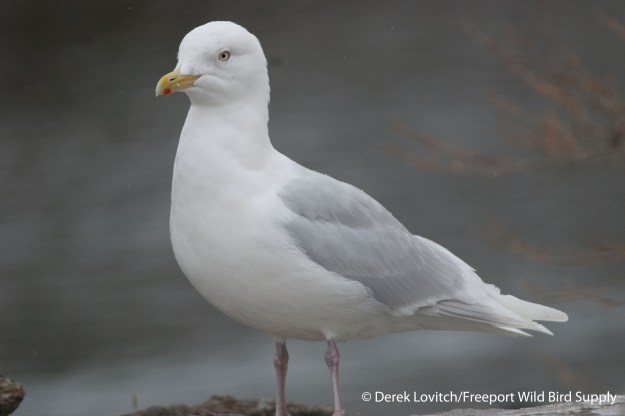
But here I want to discuss a few of the more pertinent images, and explore some of the still-unanswered questions about this bird. First and foremost, and perhaps the single most critical factor in being able to simply dismiss this as an Iceland Gull – likely (due to its pure white wingtips and pale mantle) of the nominate subspecies glaucoides – is the fact (not subject to interpretation) that the wings are short: only two primaries extend beyond the tail, as with Glaucous Gull, and unlike the long, four-primary extension of Iceland Gull of either subspecies. No photo of this bird in four years has shown the typical “long-winged” appearance of Iceland Gull of either subspecies.
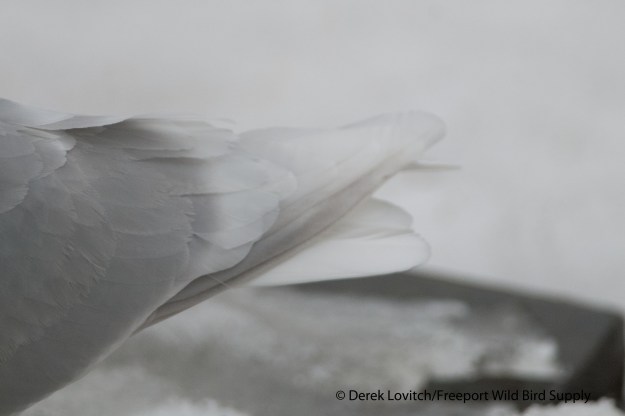
DSC_0028_Westie5_edited-1

It’s impossible to ignore this significant structural feature, but of course, we never base an identification (or lack thereof!) on any one particular characteristic. Unfortunately, nothing else is this clear and distinct.

As the bird reached adulthood, I had hoped that the orbital ring – the narrow band of bare skin that surrounds the eye – might yield a clue, and now that we are in late spring, the bird’s head is pure white and the brighter bill suggests that it is now in “high breeding” (or at least close to it), the color should be as true as possible. Howell and Dunn list the orbital ring of Larus glaucoides glaucoides as pinkish to red, turning brighter reddish by spring. L.g kumlieni is described as purplish-pink to reddish, brightening by spring. As for Glaucous Gull: orange to pale pink flesh, brightening in spring to “orange or chrome yellow.” As for Westie?
DSC_0009_Westie3_edited-1

I call that simply “pink.” But does that only mean that this bird is not in high breeding yet (which is suggested by the still-brightening yellow of the bill)? If this is as colorful as it gets, it’s a significant strike against a Glaucous Gull, or at least a pure one, but it is not clinching for Iceland Gull of either subspecies, either.

DSC_0039_Westie7_edited-1
Westie’s dominance of the park leads to aggressive behavior towards other gulls, especially anything of similar size or larger. While the aggressive behavior is more typical of Glaucous Gulls, I think the rather unnatural environment, along with the decided “home-turf’ behavior negates the value of this circumstantial evidence. What it does mean, however, is that it is a royal pain in the ass to get this bird next to something else other than a smaller Ring-bill. I would like to see it next to an adult Herring Gull to compare grayscale, but especially an Iceland Gull of any shape, size, or variety! This was the closest I have come to that goal.
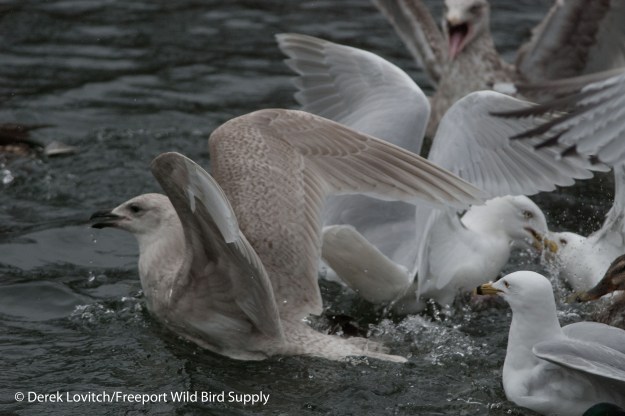
DSC_0048_Westie and ICGU_edited-1

DSC_0018_Westie and RBGU_edited-1

As for Herring Gulls, this youngster was tolerated for a few seconds.
DSC_0068_Westie and HERG_edited-1

In other words, I still don’t know what this is. But at least it gives me something to do in the winter, and offers a really good exercise in studying the finer points of the endless variation in “large white-headed gulls.” Oh yeah, and it’s a pretty bird, too. Might just have to leave it at that…for now.
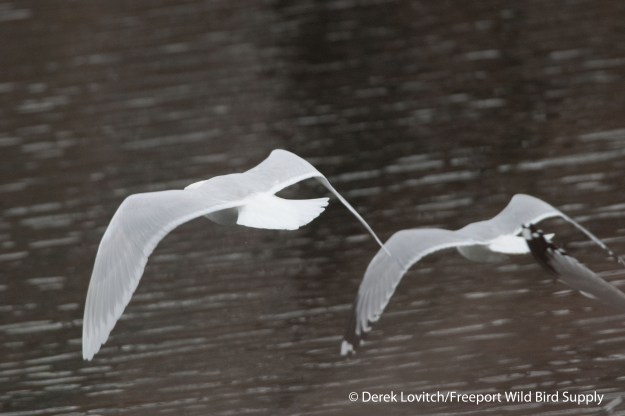
DSC_0073_Westie and RBGU 6_edited-1

DSC_0071_Westie and RBGU 5_edited-1

DSC_0026_Westie4_edited-1

And believe it or not, there are other birds at Riverbank Park and the adjacent Westbrook Riverwalk.  On Friday, this included one of the continuing Canvasbacks (a rarity in Maine), and a handful of ultra-cooperative Cedar Waxwings!
DSC_0077_CANV,Westbrook,3-18-14_edited-1

DSC_0074_CEDW,Westbrook,3-28-14_edited-1