Tag Archives: Bradbury Mountain State Park

2015 Bradbury Mountain Hawkwatch Season in Review

The 2015 Bradbury Mountain Spring Hawkwatch, co-sponsored by Freeport Wild Bird Supply and Leica Sport Optics, came to its conclusion on May 15th. This season was an interesting one, especially in how the weather affected our counts. During the 2-month period, the Official Hawkcounter, Andrew Wolfgang, tallied a total of 3628 raptors. This included vultures, hawks, eagles, and falcons. Over the 8-year span that we have conducted this standardized count, this year was the second lowest, coming in 12% below average.

Andrew_at_the_Brad,3-14-15

The_Brad,3-14-15
Welcome to spring hawkwatching in Maine, Andrew!

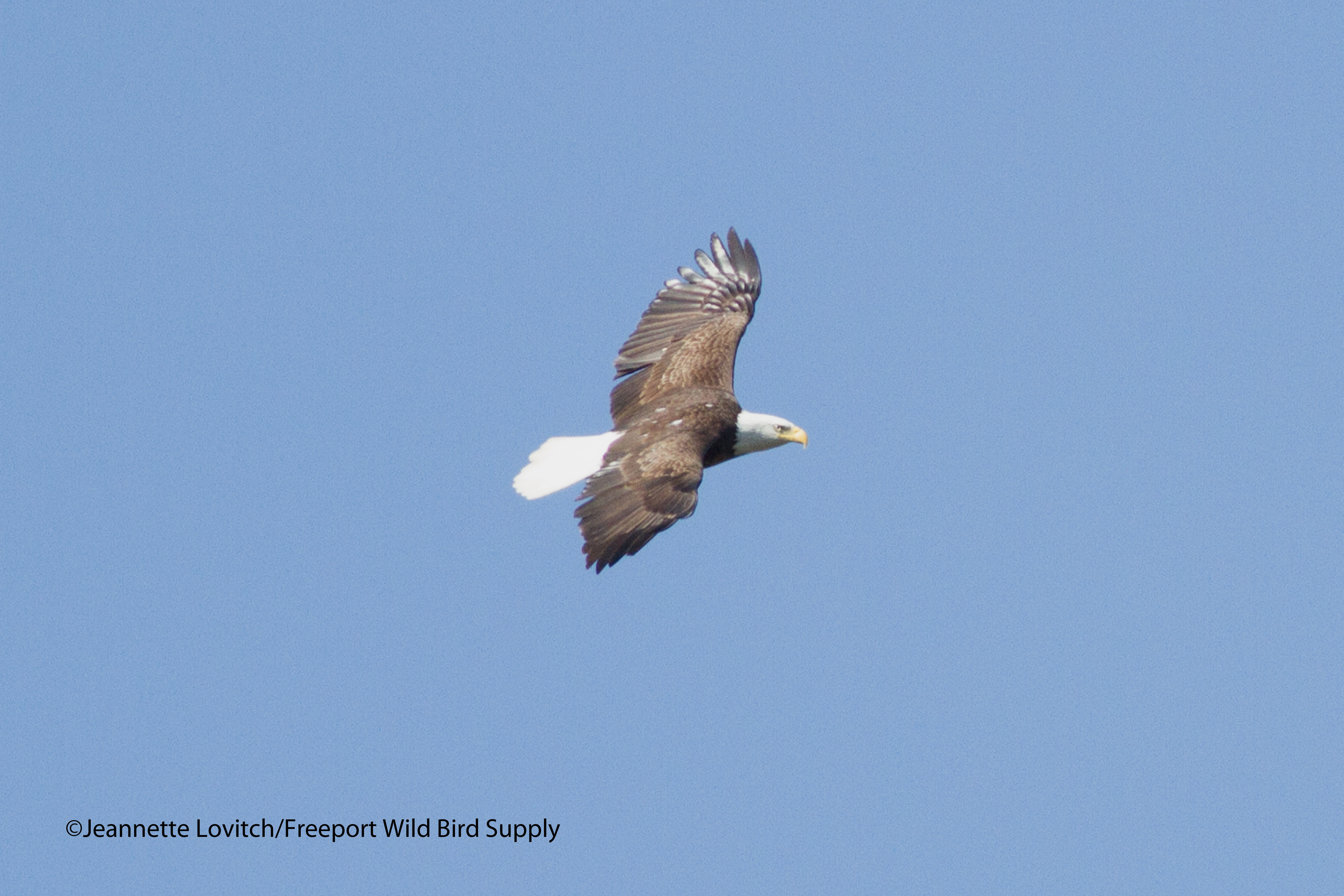
However, a single year’s count tells us little beyond what the weather conditions were like during the course of the season. The late arrival of spring was actually a benefit to the count at the start, as few early migrants had progressed north by March 15th. Therefore, we had very good counts of our earliest migrants: Bald Eagles, Red-shouldered Hawks, and Turkey Vultures. In fact, we set a new record for eagles deemed migrating, and vultures produced our second highest tally of all time. We simply didn’t “miss” any of these migrants before the project got underway.
IMG_0693_edited-2

IMG_0701_edited-2
Bald Eagles set a new all-time record this season.

However, as the season progressed, spring still didn’t seem to arrive. Lots of unfavorable (for viewing birds at Bradbury Mountain) winds meant that viewing migrating hawks past this mountain was not optimal. Strong and cold west winds, for example, push birds towards the coast beyond our view, while persistent easterlies seem to shunt birds inland before they reach the northern terminus of the coastal plain. Simply put, the poor conditions during the peak of our migration period in mid to late April really lowered the overall numbers and it’s those couple of weeks that can really make or break the overall count for the season. Therefore, the below-average numbers of our two most abundant migrants (Broad-winged Hawk and Sharp-shinned Hawk) combined to yield a below-average season total.

However, we had some great birds once again, highlight by our 4th record of a Golden Eagle.
Golden Eagle Bradbury 4 edit

Andrew also recorded a new record of 3 Rough-legged Hawks, no doubt due to the late onset of the spring’s flight (most Rough-legs probably move north before the start of the count in most years).

Meanwhile, a total of 85 species were recorded, including an ever-increasing number of Sandhill Cranes. This year a total of 11 migrant cranes were recorded. Other highlights included frequent visits by Bohemian Waxwings to the summit for much of the first half of the count, both Red and White-winged Crossbills. Fox Sparrow was recorded at the summit for the first time as well (two dates).

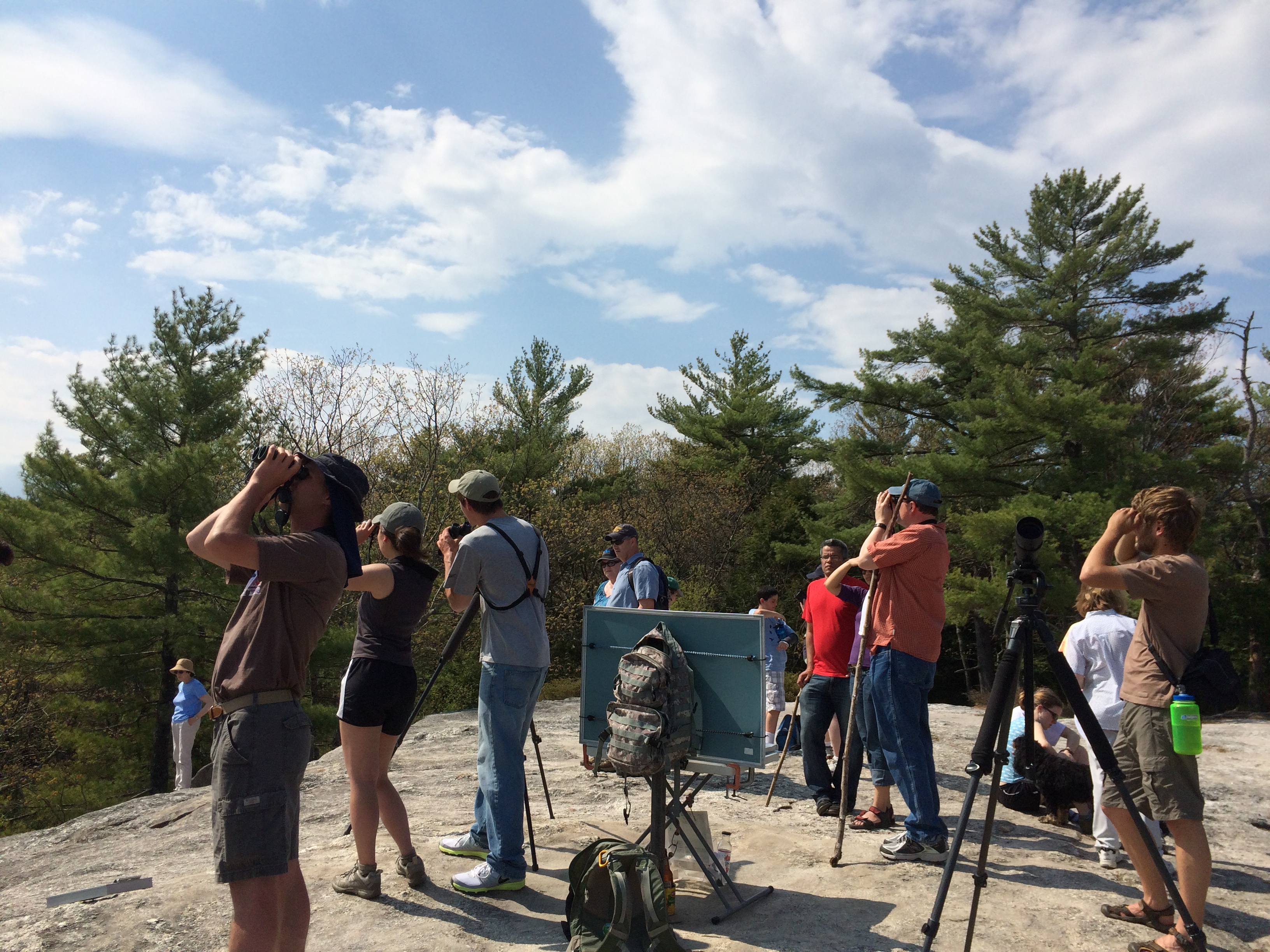
But, this hawkwatch is not just about the numbers. We also work hard to educate visitors to the park, both birders and non-birders. Every year we expose more and more people to the world of hawkwatching and bird migration in general. Bradbury Mountain is just one of many hawk migration sites throughout the continent. The data we collect becomes part of this vast network allowing researchers to determine population and geographical trends in particular species. So, even though our numbers this year were low relative to past seasons, it becomes no small part of building this data set. 1174 visitors were recorded at the hawkwatch (tabulated as coming specifically for the hawkwatch or spending time chatting with the counter), plus many hundreds more who at least briefly read the sign or asked a question or two. This was slightly below average, but likely due to the cool conditions for most of the season.
IMG_5373

There are few public projects where scientific data collection so effectively goes hand-in-hand with public outreach and education. With the growth of regular hawkwatch visitor volunteers, and especially the growth of the “Feather Over Freeport: A Birdwatching Weekend” festival, we look forward to many more years of introducing people to hawkwatching and hawk research and conservation.

Season Totals:
Turkey Vulture 374
Osprey 382
Bald Eagle 102*
Northern Harrier 101
Sharp-shinned Hawk 610
Cooper’s Hawk 85
Northern Goshawk 4
Red-shouldered Hawk 104
Broad-winged Hawk 1190
Red-tailed Hawk 236
Rough-legged Hawk 3*
Golden Eagle 1
American Kestrel 307
Merlin 75
Peregrine Falcon 8
Unidentified Hawk 46

Total 3628

*Denotes new season record

IMG_0846_edited-2
Peregrine Falcons just eclipsed our annual average this year; most migrants in this area stick closer to the coast.

Our ninth Spring Hawkwatch kicks off again on March 15th, 2016! We invite everyone, whether seasoned veteran hawkwatchers or casual nature enthusiast, to join our professional biologist and naturalist at the summit once again.

IMG_0733_edited-2
Ospreys are a fan favorite at the hawkwatch.

L1010831
It was quite a change in climate and the color of the scenery since the start of the count!

2015 Bradbury Mountain SPRING Hawkwatch starts Sunday!

IMG_0485_edited-2
Bald Eagles are already on the move, but the delayed start to spring have kept most of the birds to our south…just waiting to be tallied as they begin to push north.

Hawkwatching season is here! Freeport Wild Bird Supply (FWBS) will once again be partnering with Leica Sport Optics to sponsor the Spring Hawkwatch at Bradbury Mountain State Park in Pownal, beginning on March 15th. 2015 marks the ninth consecutive season for this project through which valuable data is collected while providing an enjoyable and educational experience for visitors. Not only does it feel like spring today, but in a mere four days (weather permitting), spring hawkwatching will be underway!

This year, we welcome Andrew Wolfgang as our official Hawkcounter. Andrew is a Biology graduate of Millersville University of Pennsylvania where he created two research projects studying bird diversity in riparian habitats and bird vocalization detection. Most recently, he worked as an environmental educator at Chincoteague Bay Field Station in Virginia. He is an experienced birder and hawkwatcher with a particular interest in Raptor Ecology. He’ll be stationed at the summit from 9:00am to 5:00pm daily from March 15th to May 15th.

IMG_8481_edited-2
Sharp-shinned Hawks shattered their previous record count last season. What will this season’s totals look like?

Rising 485 feet above the southern coastal plain, Bradbury Mountain provides unimpeded views to the south and east all the way to the islands of Casco Bay. Whether using updrafts off the mountain, gliding overhead, or soaring over the plains, observers watch raptors utilizing a variety of migratory methods as they work their way north. The goal of the project is to document this migration by identifying and counting all raptors that pass by the mountain. Last year’s count was record-setting, with 6,015 hawks tallied, including 97 Bald Eagles, 724 Ospreys and 2,357 Broad-winged Hawks. All but two of our regularly occurring species were counted in above average numbers, with seven species showing record season highs. We were particularly excited to count 190 Red-shouldered Hawks (160% above the average) – a species that had not been known to migrate through Maine in any significant numbers before the start of this project nine years ago. Over a period of years, these data can be analyzed to determine trends in species numbers as well as changes in distributions, which when studied in conjunction with other monitoring sites across the continent, give us a broadscale idea of what is happening with raptor populations.

Last year’s record-shattering season got off to a great start thanks to the late arrival of spring. Late snowfall well to our south, cold temperatures and ice cover on lakes and rivers, and the lack of favorable southerly winds greatly limited the number of birds (especially Turkey Vultures, Bald Eagles, and Red-tailed Hawks) that pushed north before the beginning of our count season. We would expect a similar situation this spring – there hasn’t been a whole lot of spring prior to March 15th this year once again. That should get things off to a great start.

But, it is not just about the numbers. Hawkwatching is a very social activity that is accessible to birders of all abilities. Last spring, we interacted with more than 1500 visitors! Seeing your first kettle (group of birds rising up on an updraft or thermal) of 50+ Broad-winged Hawks, or learning how to tell the difference between a Bald Eagle and a Turkey Vulture several miles away is an eye-opening experience for many folks. Organized hawkwatch sites, like Bradbury Mountain, are great places to meet new people and learn about raptors and the conservation issues they face at the same time.

So, grab your binoculars and join us atop Bradbury Mountain this spring. Andrew will gladly answer questions about the raptors you will see and help visitors learn what to look for to identify the 18 species that may pass by. The hawkwatch is free, though there is an entry fee to the park.

Also, be sure to mark your calendar for Feathers Over Freeport: A Birdwatching Weekend on April 25th – 26th. The Hawkwatch will be one of many featured activities during this family-oriented event at Bradbury Mountain and Wolfe’s Neck Woods State Parks.

More information about the hawkwatch, including a link to daily counts, can be found on our website, here.

And to read about last spring’s record-shattering season, check out this blog entry on Leica’s blog.

And you know where to find me on most birding days for the next two months!

IMG_8556_edited-2
Northern Harrier was also among the eight species that set a new record last season.

Three Days of Migration Watching in May -Day and Night.

In my blog last Wednesday, I made some prognostications about what we might expect for birds in the coming days. Let’s see how I did so far.

Rain began to fall Wednesday evening, and continued, heavy at times, through Thursday morning. With a persistent easterly wind, overnight migration was non-existent. In the rain on Thursday morning, Katrina and I checked out Florida Lake Park, but found only about 20 Yellow-rumped and 10 Palm warblers – fewer than in recent days. The local River Otter pair, however, put on a great show. Nothing new under the feeders at home (or at the store), either.

Afterwards, I took a spin through the local farms and fields, but found nothing out of the ordinary; it’s too early for most shorebirds anyway. Admittedly, however, I had vagrants on my mind (and still do! As usual). Although the southerly winds conducive to southern overshoots (as I discussed in the aforementioned blog) had yet to kick in, the deep easterly flow that we have been ensconced within could offer up its own surprises. With reports of the “largest incursion of Icelandic/European birds to Newfoundland in recent memory,” including amazing tallies of European Golden-Plovers, 9 Black-tailed Godwits, North America’s 4th (or so) Common Redhank…yeah, the “Rarity Fever” in me can’t help but kick up. Perhaps something will ride one of those Iceland-Portland cargo ships that are in service these days!

Light rain continued through Thursday morning, diminishing to drizzle and fog until the afternoon, when a shift to westerly winds began to clear things out. Overnight, light and variable winds suggested a good migration should occur, but the radar wasn’t showing more than a light flight.
1am radar, 5-2-14  1am velocity, 5-2-14

However, it was foggy for much of the night, and fog can obscure the image of birds on the radar, especially if they are flying low. “Birding by radar” is not infallible, and I had a feeling it might have been a little misleading this morning. A steady trickle of Yellow-rumped Warblers moving over the yard at dawn confirmed this. The weather was just too-not-terrible for there not to be a lot of birds on the go.

So off to Florida Lake I went.  And, for a change this spring, I was not disappointed.  100+ Yellow-rumped Warblers, 20+ Palm Warblers, my first Northern Waterthrush and Black-throated Green Warbler (finally!) of the year, a singing migrant Greater Yellowlegs, and much, much more. I caught the lingering pair of Green-winged Teal copulating; are they going to breed here? Ring-necked Ducks had increased to 16 and there is still a pair of Common Mergansers here.

As the fog burned off, the sun shone brightly, and heat began to rise in swirling thermals, hawks took to the skies on the light westerly wind. I had to pull myself away from the hawkwatch kicking and screaming at 12:30, but by then we had eclipsed (at 10:35) our all-time record count of 4,474 birds when a Merlin streaked by. 388 Broad-winged Hawks and 22 Sharp-shinned Hawks were included in the total of 429 migrant raptors when I departed.

Last night’s passerine migration – yup, the fog on the radar definitely obscured the intensity of the flight! – was still evident well past noon, as Yellow-rumped Warblers were still on the go, reorienting inland after last night’s flight. Well over 200 had passed the summit by the time I departed, as did my first two Chimney Swifts and Eastern Kingbirds (also 2) of the year. And by day’s end, 705 raptors led by 583 Broad-wings were tallied, adding to our record totals. Around 4:00pm, our 5000th raptor had passed – a milestone we never thought we would reach.

Come nightfall, the radar was active once again.  Here are the 1am reflectivity and velocity images for example:
1am radar, 5-3-141am velocity, 5-3-14

Notice the dark greens in the center of the return, but overall the rather narrow diameter of the image?  My guess is that mostly overcast skies and a light westerly winds, perhaps including some turbulence from the passing cold front, kept birds low once again.  But, without fog around, it was certain that this was birds – confirmed by the distance SW-NE pattern of the velocity image, and its speed. I think it was actually a lot of birds.

And come morning, Yellow-rumped Warblers were overhead as I stood on the back porch at dawn, and the Saturday Morning Birdwalk group and I headed over to Florida Lake.  Yeah, it was good.  Very good.

In the past few days, we’ve also finally had the first couple of reports of Ruby-throated Hummingbirds and Baltimore Orioles, so that those have just begun to arrive.  As I mentioned the other day, food is in short supply for these backyard favorites, so feeders are going to be important for the first arrivals.

But no vagrants from the south, or East …yet!