
One of the many stunning Baltimore Orioles that performed for us on our visit to Capisic Pond Park in Portland during May’s “Warblers and Wort” tour.
Join us for the much-anticipated return of the Birds on Tap series, a unique collaboration between Maine Brews Cruise and Freeport Wild Bird Supply. In 2024, we’re excited to bring back these special birding and beer tours, perfectly blending nature exploration and craft beer tasting.

These unique, relaxed birding and beer-ing adventures that you have come to love combine great local birding at seasonal hotspots with approachable opportunities to sample the delicious creations of some of our favorite Maine breweries. These events are a perfect introduction to birding and/or craft beer, and a great opportunity to enjoy our favorite pastimes with significant others, friends, and family that have interest in one topic, while your interest is primarily in the other (for now!). Educational, enjoyable, and eye-opening, our unique Birds on Tap series enters its 10th Year!
Seasonal birdwatching meets Portland Maine’s finest craft beverages–all with the convenience of being chauffeured!
We’re offering three tours this year, with each trip report being posted here.
- Warblers and Wort, May 25th.

May means warbler migration, and the destination for Warblers and Wort visited two of Maine’s most famous springtime migrant traps, Portland’s Evergreen Cemetery and nearby Capisic Pond Park. Oases in the urban jungle, featuring water sources and a mix of various habitats, help concentrate migrant birds that found themselves in or over the city come sunrise. After migrating all night, tired travelers look for refuge: food, water, and shelter, and urban greenspaces are absolutely critical for refueling.
Beginning at Evergreen Cemetery, we confirmed our suspicions from the overnight radar images that it was going to be a slow morning for migration. But wow, it was slow! We enjoyed some good looks at Red-eyed Vireos and lots of Gray Catbirds, practiced our birding by ear, and discussed urban ecology, but I had seen (not) enough.
We then ventured over to Capisic Pond Park, where our luck instantly changed. While passage migrants were still few, it was downright pleasantly birdy. And birdy with vivid colors from some of our most beautiful birds. Blinding Baltimore Orioles were everywhere as expected, but we had some great quality time with battling males and affectionate pairs. We had lots of great views of male and female Yellow Warblers and the range of plumage variation in American Redstarts. Great looks at Warbling Vireos were enjoyed, but orioles kept distracting us! Northern Cardinals refused to be ignored.
In addition to a couple of Wilson’s Warblers and an uncooperative Magnolia Warblers, passage migrants included the world’s worst look at the awesome Mourning Warbler as it darted down the trail, never to be seen again, but also one of the best looks you’ll ever get at a Cape May Warbler as a female foraged in the grass and low branches of a grove of Eastern White Pine. You don’t often look down on a Cape May Warbler!

We saw a lot of birds well at Capisic today, using even the most common birds to hone our identification skills while taking the time to appreciate the beauty of even some of the most common birds around us. For example, we became intimately familiar with how Common Grackles are anything but black birds! This particular individual stood out because of the perfect lighting showing off it’s glossy, structural colors, but also the unusual white flecks in the head caused by some limited leucistic feathers.
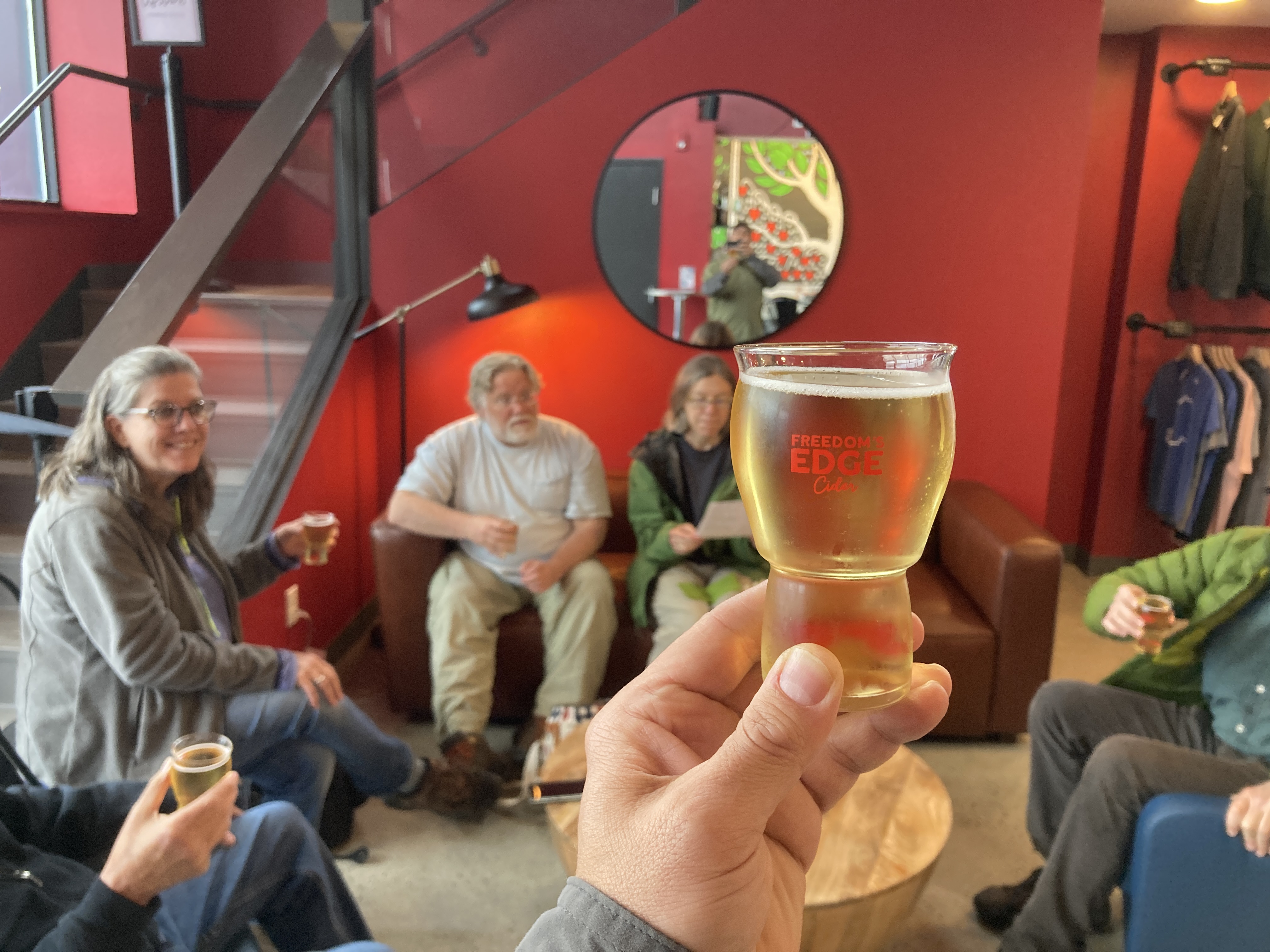
After struggling to see birds at Evergreen, we struggled to leave Capisic on time! It was a lot of fun, but it was time for the second half of the tour as we made the short trip across town to the Bayside neighborhood. Our first stop on the beverage portion of the tour was Freedom’s Edge Cider. After observing migrant birds in the crabapple trees at Capisic, it was only appropriate to enjoy cider, as the creation of hard cider was what led to the creation and diversity of crabapple trees! Focusing on the traditional, drier range of ciders, we began our tasting with their flagship “Original,” a nicely balanced semi-dry cider with a crisp finish. The unfiltered, modern “The Juice” was a touch sweeter thanks to the concentration of sugar via the freezing and thawing of the apples. I definitely picked up musty grape in the “Marc de Marquette,” a very flavorful cider aged over Marquette grapes. And finally, we were able to pick our own fourth sample. I am a sucker for maple, so I went for the “Pick Your Own” (coincidentally and appropriately) that complemented our birds of spring with flavors of spring in Maine: maple syrup and strawberries. The flavors were subtle, but the maple was really evident on the nose. However, the “Sweet Mullet,” a delicious cider steeped with mulling spices seemed to be the crowd favorite.
We’re all about the new and different on these Roadtrips, and our second stop was the very new (opened about 3 months ago) Argenta Brewing, Portland’s first lager-only brewery. Their delightfully named “Generic American Lager” had all the crushability and cleanliness of a traditional American Lager, but with a focus on Maine-grown ingredients. Learning the difference between lagers and ales while discussing topics ranging from glassware to bird conservation, we also learned all about Portland’s newest brewery. We were able to choose our second (very!) generous pour, and I joined others in the “Dark Lager” which had those nice roasted chocolate and malty flavors but with the lighter body and clean finish of a lager.

And with that, our first Birds on Tap – Roadtrip! Came to an end, but it’s not the last one in 2024, and definitely not the last one in years to come. It was good to be back on the road, and the combination of introductory birding with an introduction to Maine’s finest craft beverages is a recipe that has not lost its luster after a COVID-years hiatus.
- Shorebirds and Steins, Aug 11.

We began our introduction to shorebirds with the basics, such as plover verses sandpiper, before moving into great depth such as yellowlegs vs Willet. Shape, size, and especially bill size and length are among the “bigger picture” tools we have to learn our shorebirds, such as with some close Willets – the “tringas of the 90’s steroid era in baseball.”
The original BoT Roadtrip! in 2015, our most popular tour returned to Scarborough Marsh at prime time for a good variety of migrant shorebirds. We learned how to identify our common species and searched a bit for the rare.
Birding began at Pine Point as the tide just began to flow. And as the mudflats were slowly inundated, a nice diversity of shorebirds soon appeared, and with each inch of incoming water, many of the birds moved closer and closer.
In Jones Creek, we were able to closely study the eastern subspecies of the Willet, later in close proximity to the closely related Greater Yellowlegs. And wow, did these two yellowlegs put on a show! Demonstrating their entertaining, aggressive feeding style that is highly suggestive of the species, they chased baitfish through the shallows. They were eventually so satiated that they sat down within about 15 feet of us and allowed for close looks at their bill structure and color without any straining through the scope. One spiffy Black-bellied Plover was joined by several dozen more in all stages of molt, and two awesome Whimbrels dropped in for the duration of our stay, nicely demonstrating the wide differences in shape and bill structure of our sandpipers.
Short-billed Dowitchers demonstrated their sowing-machine feeding technique – helpful as feeding style is an important part of the shorebird identification toolkit. But before we got that far, we started with the basics of plover vs sandpiper, nicely demonstrated by a flock of 150+ Semipalmated Plovers and 100+ Semipalmated Sandpipers that were concentrated before us by the incoming tide.
Two additional stops at the outskirts of the marsh gave us a sample of a different micro-habitat at high tide, yielded some Lesser Yellowlegs for our shorebird list, and gave us more looks at non-shorebirds, such as Great and Snowy Egrets, Glossy Ibis, and much more.
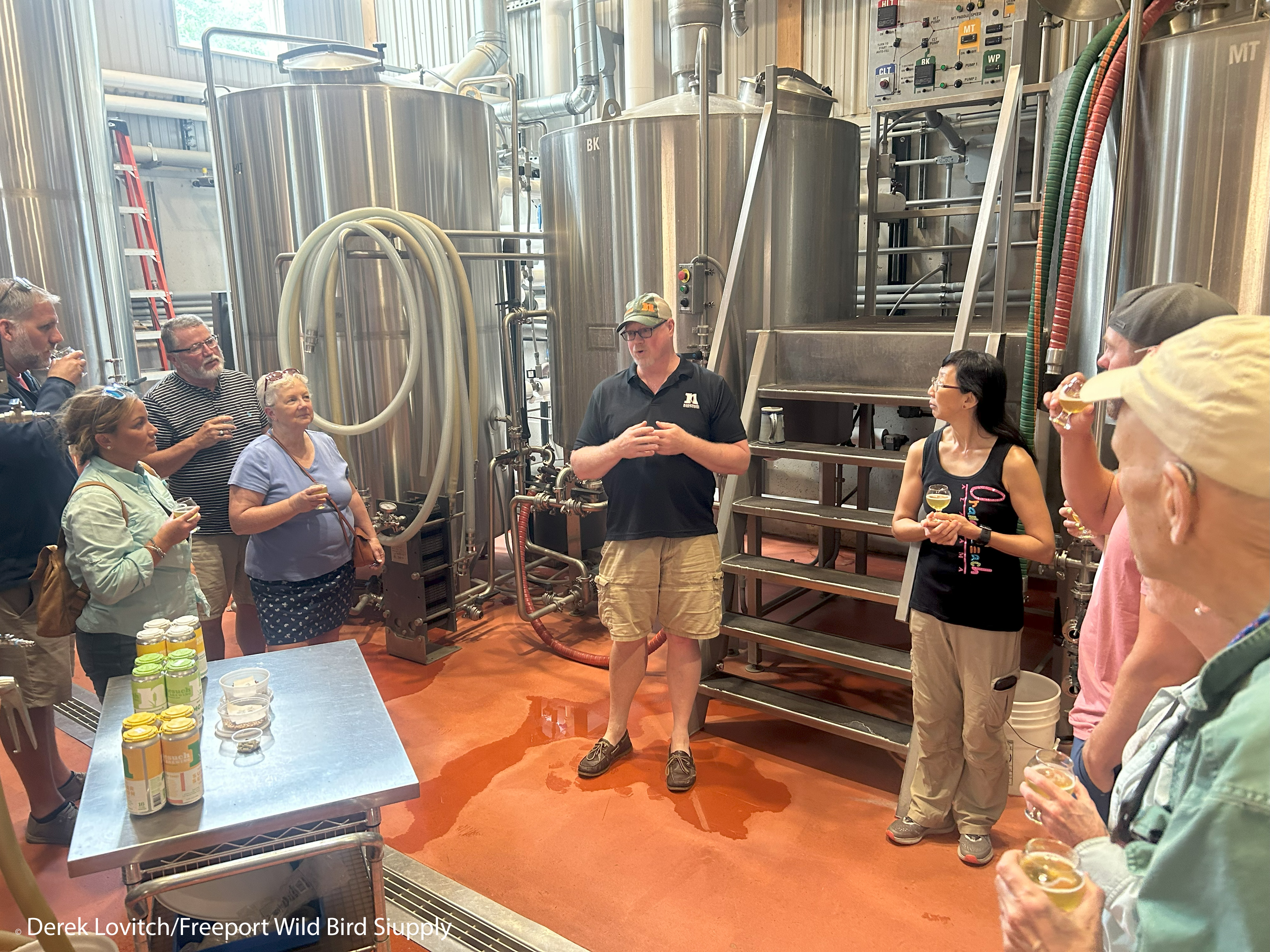
Then it was time to head over to Nonesuch River Brewing, where owner Michael and his wife Kristen graciously greeted us with a sample of their Summer Session – a nice light, refreshing welcome. We then enjoyed sips of their summery and bright Mojito IPA with lime and mint, followed by their Solstice hefeweizen with a little bit of ginger prickliness and hint of lemon. As we enjoyed those beverages, we thoroughly enjoyed an all-in tour in the brewhouse, learning the basics of brewing, and some of the house techniques to make Nonesuch such a popular brewery. I saw several four-packs of Mojito return to the bus with us, and the location can’t be beat for a post-Scarborough Marsh celebratory toast!

Returning to Portland, our second beverage destination was the newly expanded home of Blue Lobster Urban Winery. Once again, we felt privileged to get the tour from the owner and winemaker! Chris walked us through the winemaking process, the rational for canning it, and the history of the company. We began with a taste of their Tightline cider, a very dry cider made from local apple juice and wild yeast from the winery. Their sparking Rose was up next: very lightly carbonated with a strong strawberry nose but just a slight sweetness on the palate. Bayside Blend red was nice and dry, as I prefer my reds.
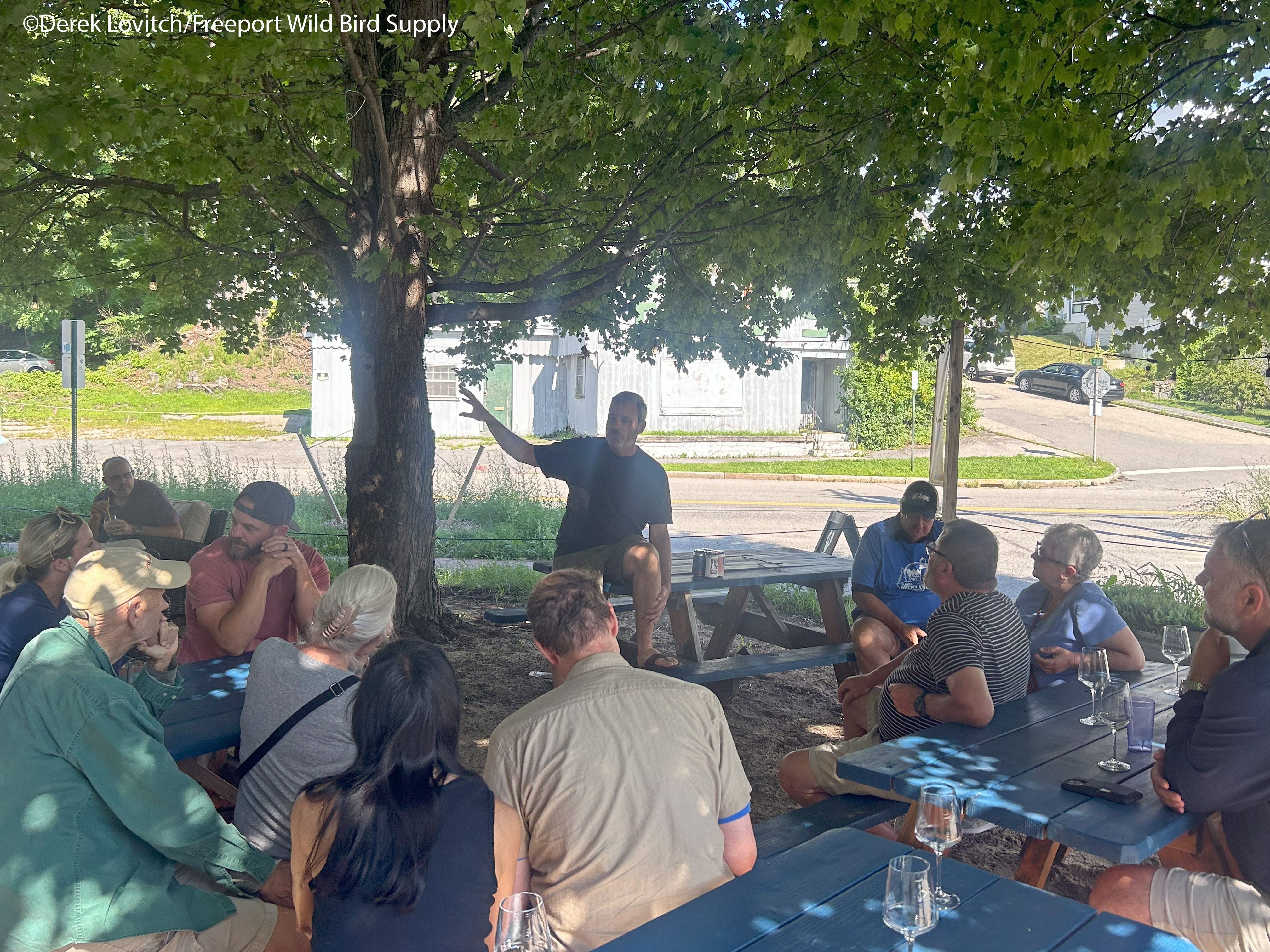
Chris then treated us to a special surprise – a barrel tasting, where we were privileged to be the first member of the public to sample an upcoming bottle release that has been conditioning for two years, and was made from grapes grown on 121 year-old vines in California. This was a special wine, and it was absolutely delightful. Our only complaint was we couldn’t buy any yet! Last but not least, we tried their blueberry infused red, with Syrah and merlot grapes infused with Maine blueberry juice. Especially after Chris suggested making a spritzer or Sangria with it, multiple four-packs were purchased to go.

Nice species of shorebirds, three beers, 4 wines, and 1 cider -now that’s a well-rounded Birds on Tap – Roadtrip!
- Birds on Tap – The Boat Trip! Rare Birds and Island Exploration.

The final Birds on Tap event of 2024 was a special one indeed. This day, we not only took to the water for the first time in the series, but we were able to visit the private House Island and its historic Fort. In fact, we were the first birding tour ever on the island! But this trip was not just about the birds.
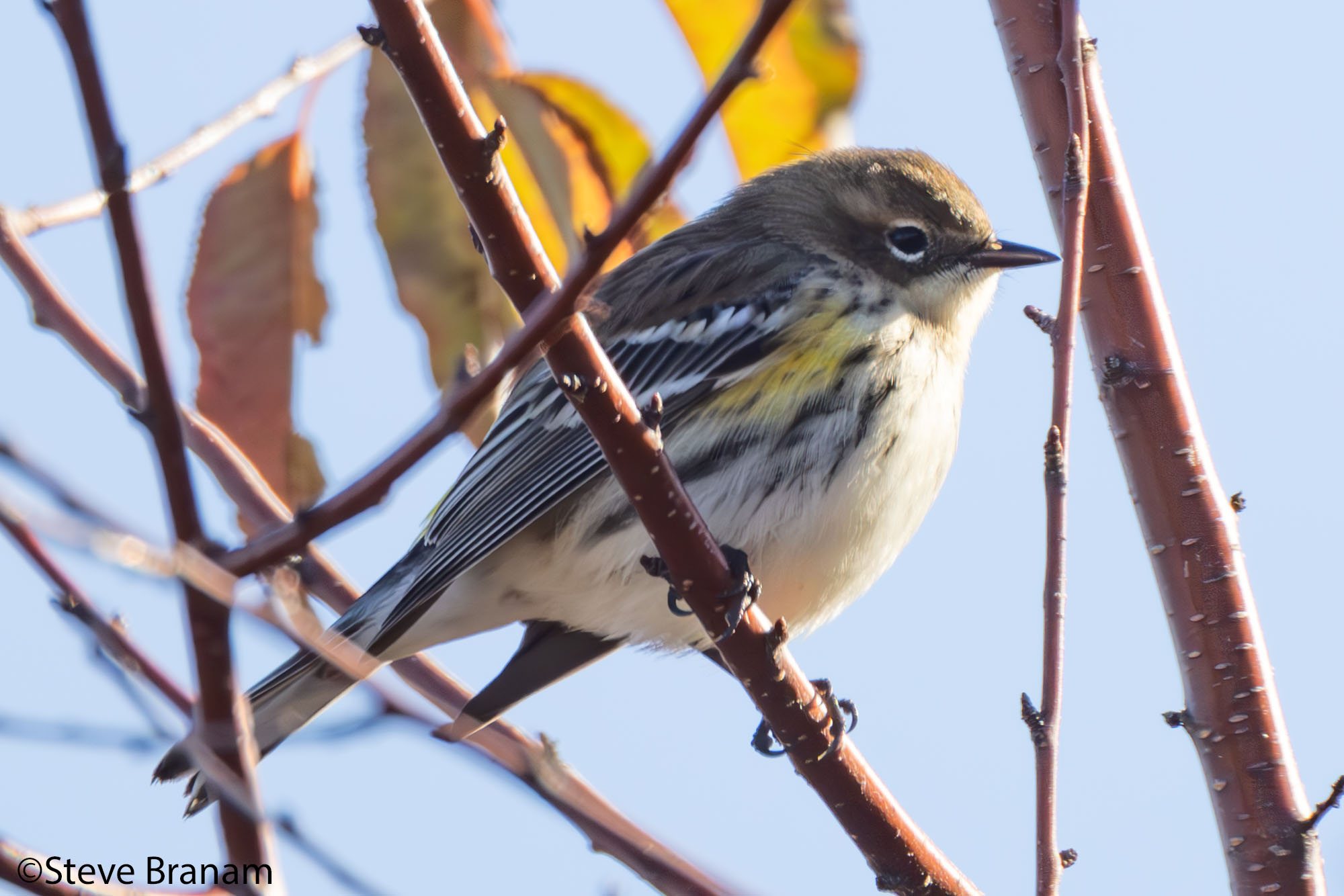
We began with some birding, walking the trails and checking all of the nooks and crannies the island and fort had to offer. Yellow-rumped Warblers were simply everywhere, with dozens popping up with limited pishing, and countless others darting around. A few Song and White-throated Sparrows were here and there, and 1-2 Northern Mockingbirds were perhaps delineating winter territories on the island.
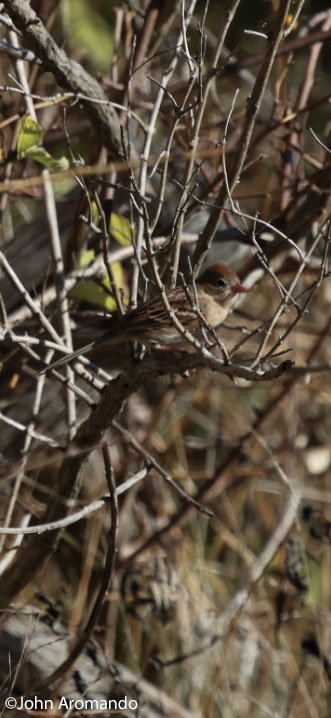
Surf Scoters and Common Eiders were offshore, a pair of Common Ravens flew by, and then, in the cemetery, we found an uncommon migrant: a single Field Sparrow.
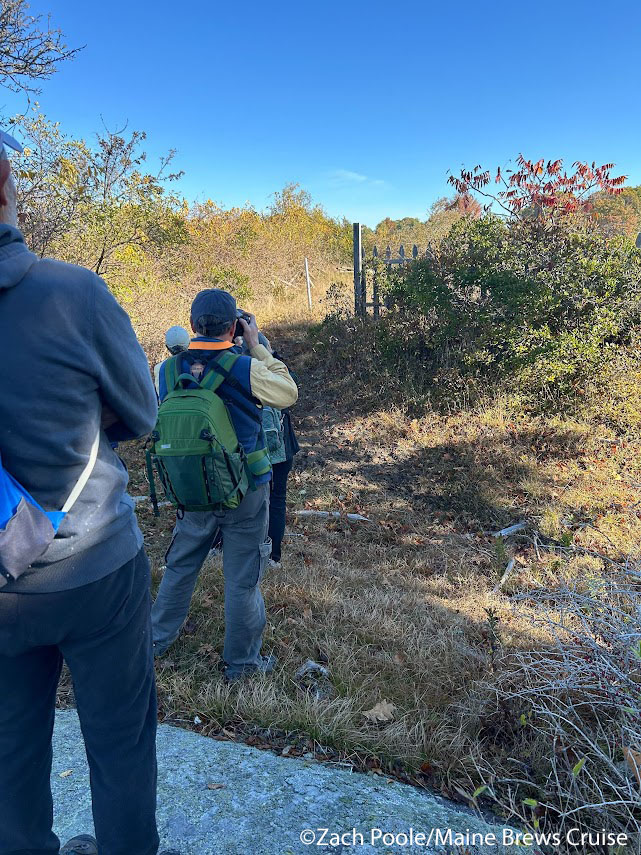
We also learned about the food resources of the island, such as native Arrowwood Viburnum and especially the Northern Bayberry that all of these Yellow-rumped Warblers depend on and the invertebrates that can be found in the wrack line on the tiny beach.
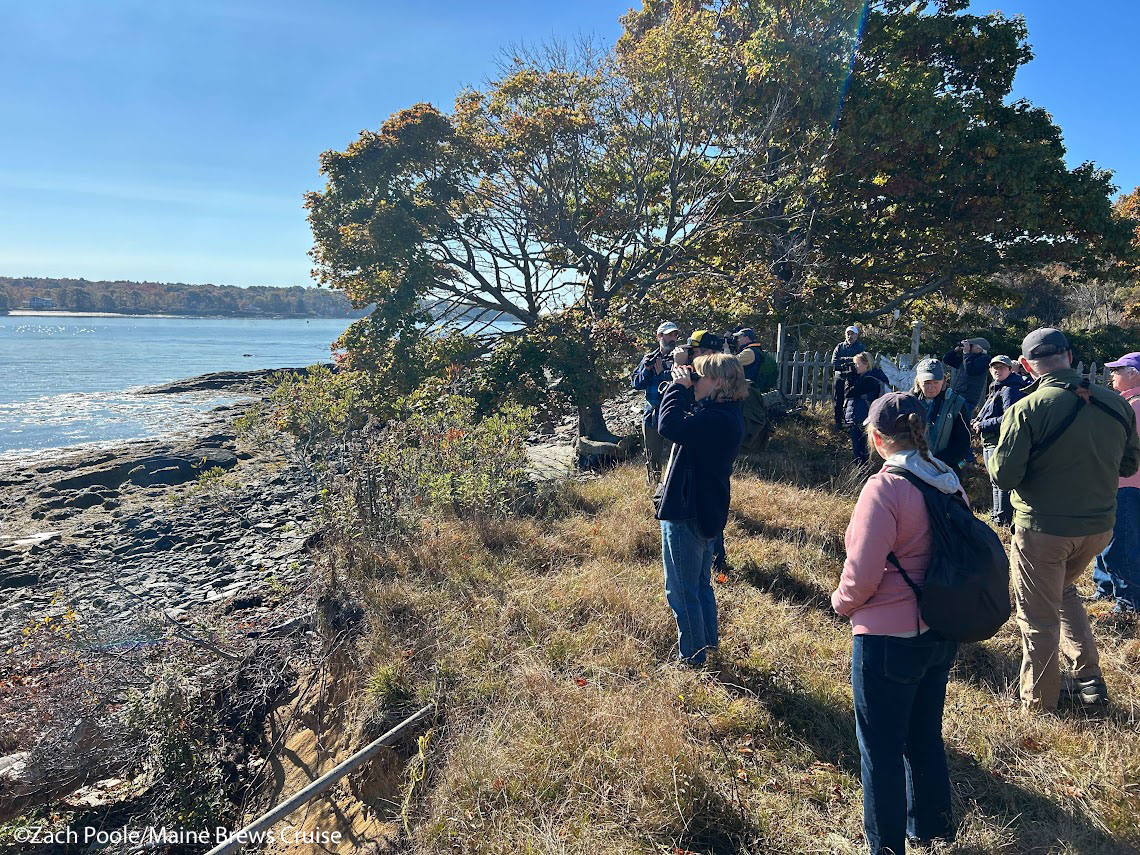
Pete then expertly guided us into and through the historic Fort Scammel and the history of House Island. The first English settlement in Maine, it was the only island with a house on it, hence the name of the island. While primarily used for drying cod, fishing operations continued through 1907, when the buildings became part of an immigration station that operated until 1931. On the other half of the island, Fort Scammel was constructed in 1808. Four years later, it became Maine’s only coastal defense fort to fire a shot in aggression when it fired on a British privateer in the War of 1812.
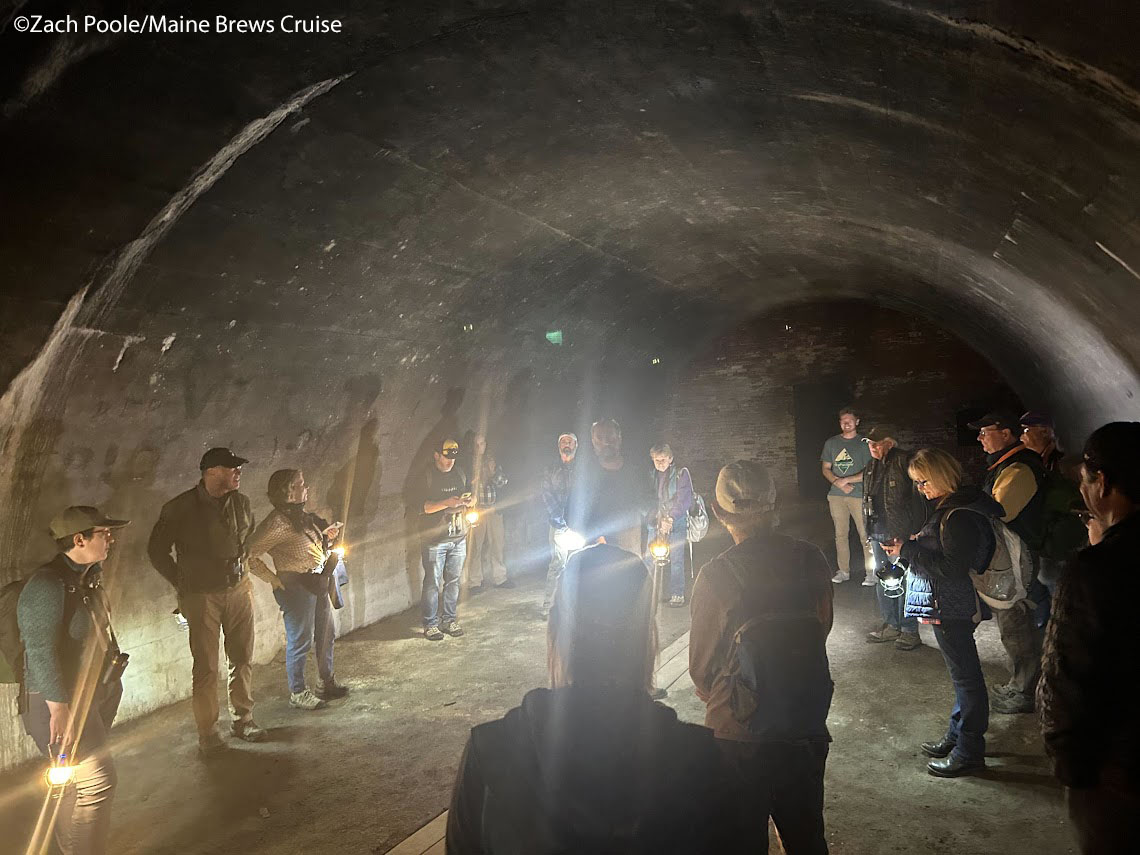
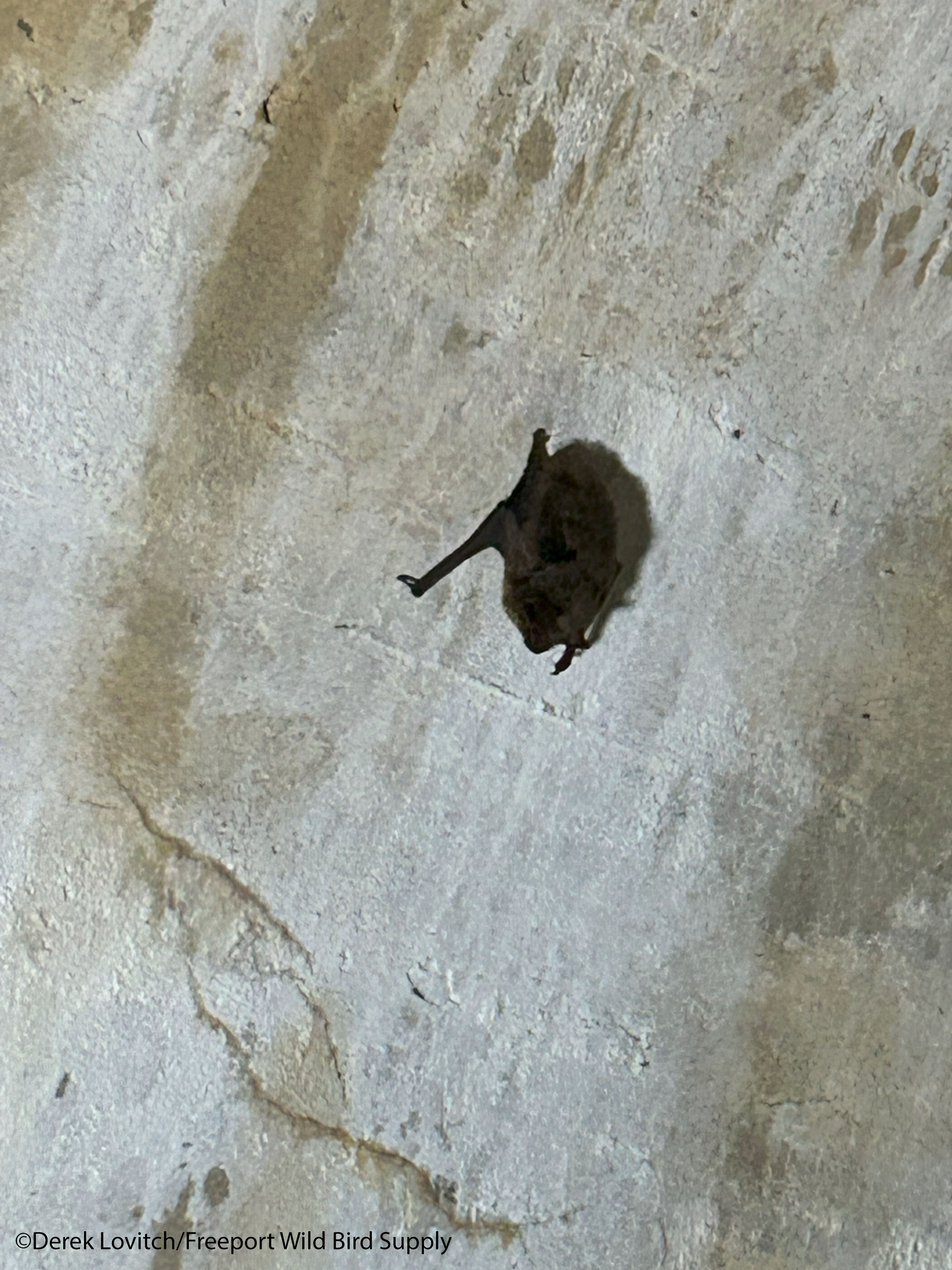
The fort was upgraded in 1840 and again in 1870, when a concrete cap was added, and it was insulated with dirt and sand. While the fort was obsolete by the Spanish-American War, anti-aircraft guns were placed here in World War 1, and in WWII, anti-submarine nets were stored here. Pete guided us through its corridors, described the cannon placement and usage, and we checked out the gunpowder magazines. We learned about the Battle of Portland Harbor, the furthest north battle of the Civil War, and we even found a roosting Big Brown Bat. Even though this was my second visit to the Fort, I was still in awe of the handiwork and the pristine condition.

Then it was Tom’s turn to take over, and on such an insanely beautiful day, we took advantage of the comfy chairs above the parade ground for some more Portland history…but this time, it was the history of craft beer in the area. While Orange Bike is one of Portland’s newest breweries, this gluten-free brewery was developed with the help of Alan Pugsley – one of the Godfathers of the Maine craft beer movement. Starting with a refreshing and crisp pilsner, we also paid homage to a classic style.

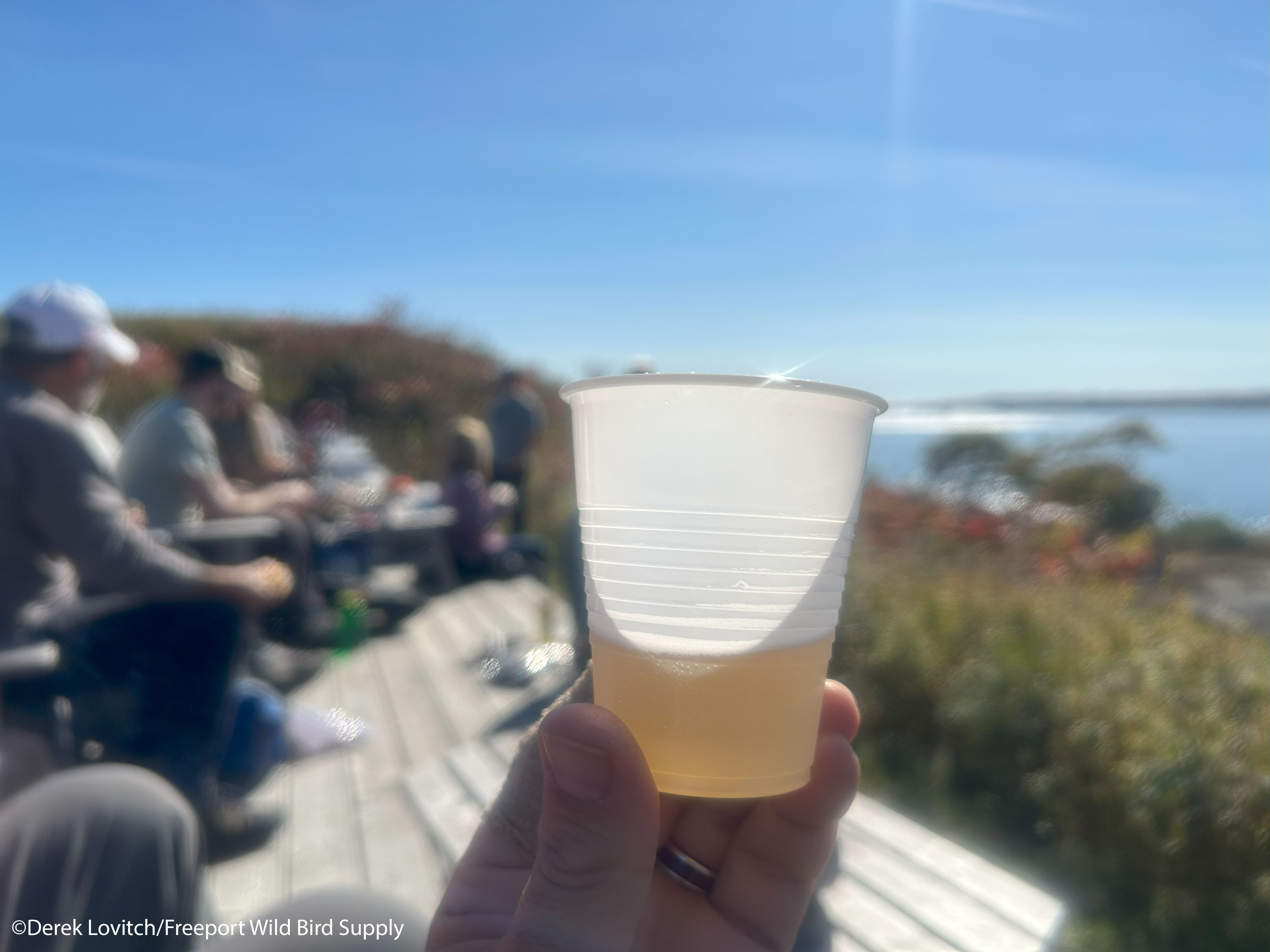
Few beers say Portland more than Allagash White, and this was up next. The flagship of Maine’s largest brewer, its countless national and international accolades helped put Portland, Maine on the beer map. Speaking of, our next beer was Bissell’s flagship The Substance, one of the pioneers of the “New England IPA,” the hazy, juicy regional endemic that has since colonized the world.
A Horned Lark called as it unfortunately departed the island as we sampled our last beer, Mast Landing’s famous Gunner’s Daughter. A peanut-flavored stout rich in coffee, chocolate, and peanut butter notes, this was a perfect example of how creative modern beer has become.
While it was all-too-soon time to depart the island, our special tour was far from over. With such a gorgeous day (it was in the low 70’s with very little wind), Captain Pete decided to take a little ride out to the mouth of Portland Harbor. We motored past Chief Whitehead…

…and over to Ram Island Light, where Great Cormorants lined the old walkway. We compared their shape and size to the smaller, more common Double-crested Cormorants we passed on our way back inshore, while taking the time to enjoy the view, more Common Eiders and Surf Scoters, and scattered Black Guillemots.


Productive birding, history, beer, and a boat ride on a gorgeous day? What could be better? And, I think it’s safe to say this itinerary (and team!) is a keeper, so we’ll look forward to welcoming you aboard next year. While this is the final Birds on Tap! event for 2024, look for our 2025 offerings coming soon!
 Maine Birding Field Notes