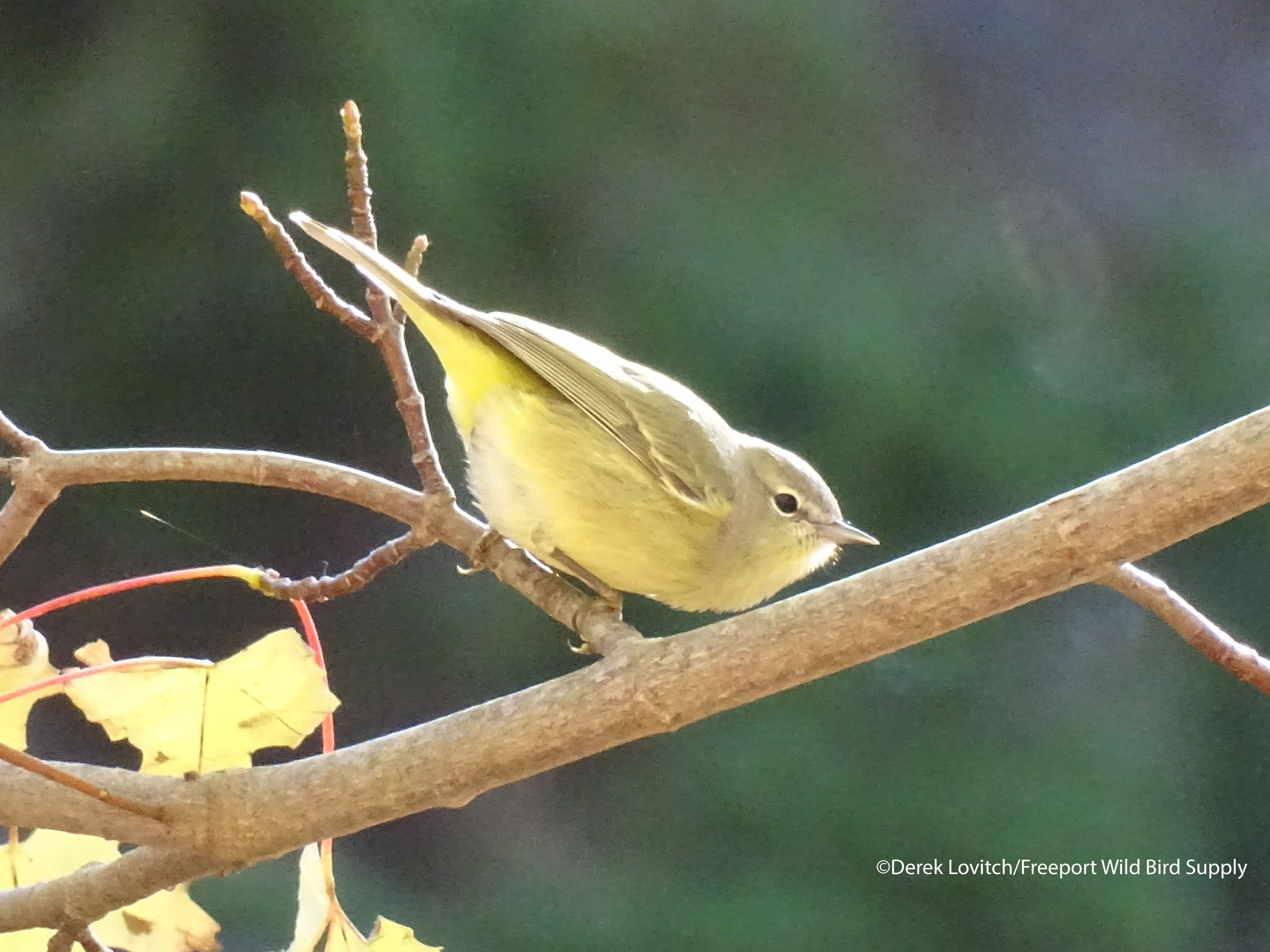
This Orange-crowned Warbler was an “expected surprise” as we birded the Rarity Season nooks and crannies of Bailey Island in Harpswell on a Harpswell Heritage Land Trust tour this past Sunday.
What an incredible week of birding in Maine! Rarity Season is off to a roaring start, and notable birds are being reported around the state. As usual, I spent as much time as I could bird-finding. OK, I chased a little, too, because ‘tis the season! While I didn’t add to the list of Megas this week, I encountered a number of notable seasonal observations, especially “late/lingering/pioneering” migrants. Here are my observations of note over the past seven days:
4 Semipalmated Sandpipers, 18 Pectoral Sandpipers, 18+ White-rumped Sandpipers, 12 Semipalmated Plovers, 2 Snow Buntings (first of fall), 1 American Tree Sparrow (FOF), 4 Great Egrets, etc, Eastern Road Trail, Scarborough Marsh, 10/30.
18-21 continuing RED KNOTS, 10 White-rumped Sandpipers, etc, Ferry Beach, Scarborough, 10/30.
1 1st cycle Iceland Gull (first of fall), Trundy Point, Cape Elizabeth, 11/1 (with Bill Thompson).
1 LONG-BILLED DOWITCHER and 1 Lesser Yellowlegs with 14 Greater Yellowlegs, Walsh Preserve, Freeport, 11/1 (with Saturday Morning Birdwalk group).
1 Fox Sparrow (FOF), our property in Durham, 11/1-3.
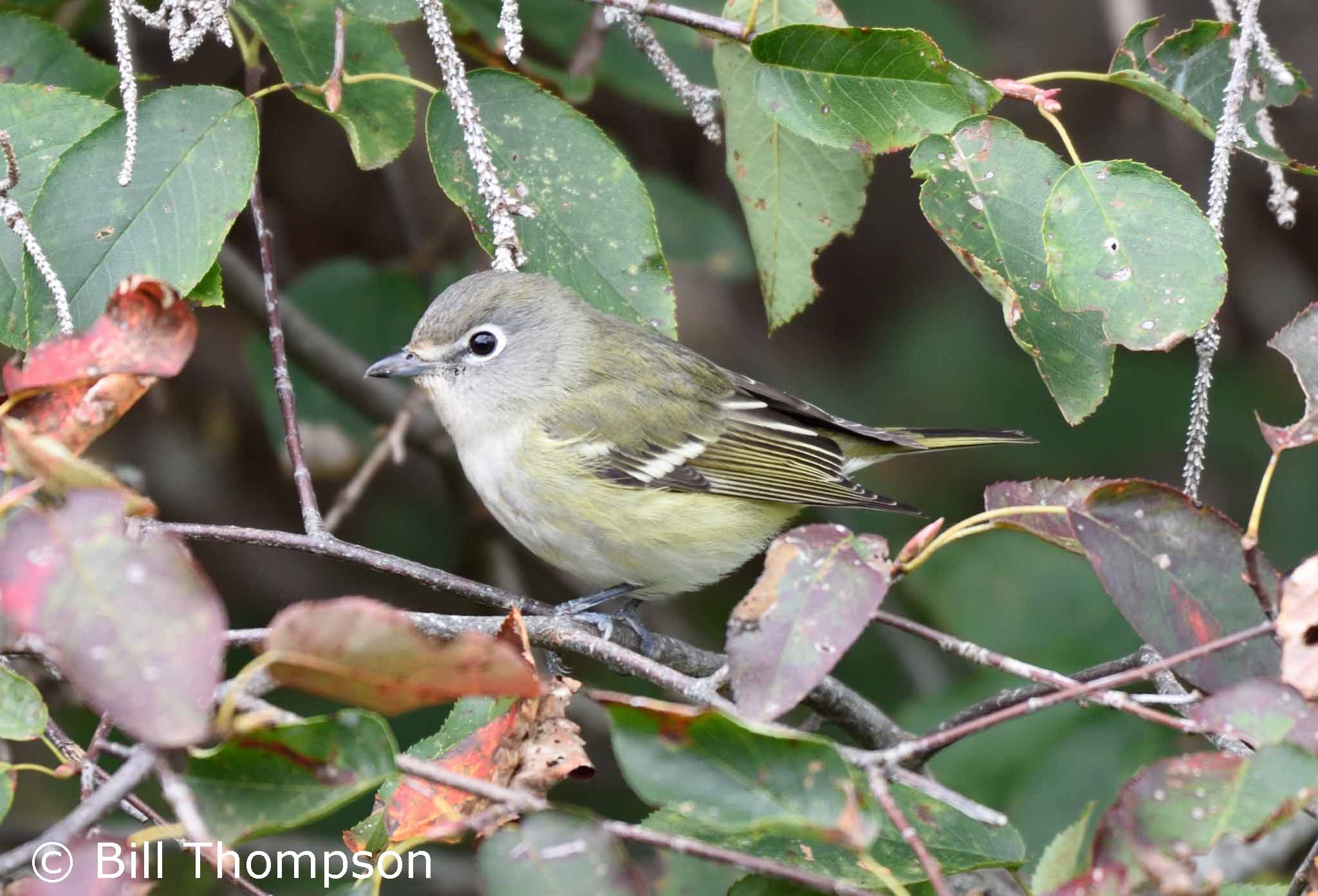
1 NORTHERN PARULA, 1 ORANGE-CROWNED WARBLER, 1 Blue-headed Vireo, etc, Bailey Island, Harpswell, 11/2 (with Harpswell Heritage Land Trust tour group).
1 continuing MACGILLIVRAY’S WARBLER, Grist Mill Park, Yarmouth, 11/3 (with Jeannette and m.obs). Found on 11/2 by Noah Gibb and Stacey Huth, this western vagrant was typical for members of its genus during migration. In other words, it was wicked hard to photograph, even when it popped out into the open. Over the course of an hour, Jeannette and I enjoyed some fantastic views, but they were all fleeting, and too quick for her camera! It continues through at least today, 11/5.
1 BLACK-THROATED GREEN WARBLER, 11/3, Grist Mill Park, Yarmouth, 11/3. First spotted by Jeannette and I, a few people glimpsed it and then several others independently relocated it later. Interestingly, we saw it fly across the river, almost exactly where we watched the MacGillivray’s cross several hours later. Both happily, came back, suggesting birds are foraging in a wide area here, which suggests the need for patience when seeking the MACW! Two fly-over Evening Grosbeaks there as well were my FOF.
18 Evening Grosbeaks and 2+ Red Crossbills, Florida Lake Park, Freeport, 11/5.
Our Last Tour of 2025 still has some space remaining, speaking of rarity season!
Birds on Tap℠ – Roadtrip! Rarity Roundup
November 9, 2025; 8:00am – 3:00pm
Portland Explorer (formerly Maine Brews Cruise) and Freeport Wild Bird Supply are excited to continue our collaboration for six very special outings in 2025.
These unique, relaxed birding and beer-ing adventures that you have come to love combine great local birding at seasonal hotspots with visits to sample the delicious creations of some of our favorite local breweries. These tours are a perfect introduction to birding and/or craft beer, and a great opportunity to travel with significant others, friends, and family that have interest in one topic, while your interest is primarily in the other (for now!). Seasonal birding hotspots and great local beer – a perfect combination, and we’ll even do all of the driving!
Early November is a fantastic time of year in Maine for vagrants – birds normally seen in far-off places. Due to a combination of weather patterns, changing seasonal food resources, falling temperatures, and other factors – some of which are not completely understood – birds that may have ended up in Maine by “accident” begin to concentrate at the coast in “migrant traps” and “hotspots.” In other words, this is the time of year to expect the unexpected.
A traditional “Rarity Roundup” involves teams of birders heading out on a given day during rarity prime time, looking for species that are not supposed to be around. And in honor of that tradition, that’s exactly what we are going to do on this unique tour. We may “chase” a rarity (go to see something that has already been found, aka “twitch”) or we might choose a destination known for rare birds in an attempt to find one of our own. Or perhaps, we’ll do both!
Anything between Portland and Kittery is fair game, and we might not even know where we will head until we are on the bus and the latest rare bird alert is received. For those who love adding a bird to your Life or State List, and/or basking in the thrill of discovery, well then this is the tour for you! In between seeing great birds, we’ll discuss the complex factors that are involved in delivering rarities to an area, and how we go about finding them.
After about 3-4 hours of birding, depending on drive time, we will be transported to two of our great local producers to sample their offerings and learn their styles.
Not surprisingly for the end of May, Blackpoll Warblers were the dominate migrant on Monhegan this weekend. However, we never tired of seeing both males (above) and females (below) so well each and every day.
A point-blank Bay-breasted Warbler. Up close and personal Magnolia Warblers, Northern Parulas, and 9 other species of warblers including more Blackpoll Warblers than we knew what to do with…and we hadn’t even made it up the hill of Dock Road yet!
In other words, our 2023 Spring Monhegan Migration Weekend tour got off to a great start as we really hit the ground running. Then, a calling Evening Grosbeak. A fly-by Black-billed Cuckoo…more. Hmm… it was time to check in, and happily, shed a few layers.
After lunch, the excellent birding continued, with highlights including a flock of 10 Bay-breasted Warblers, a spiffy male Orchard Oriole, and great looks at a Philadelphia Vireo. By day’s end, we had 59 species including 13 species of warblers – not bad for a mid-morning arrival!
Yellow Warblers (above) and Common Yellowthroats (below) were common and conspicuous in and around town and other scrubby environs as expected.
It was cool and clear on Saturday morning, and the overnight radar image was a little ambiguous. Did the light westerly wind overnight push birds offshore as they approached from the south, or was that all just pollen and smoke haze in the atmosphere? However, the radar return did suggest birds offshore in the early morning, so we were excited to find out. Afterall, I did not expect yesterday to be so good, and it was excellent.
While only a few warblers were overhead by the time we assembled around the coffee pot at 6:30, it took a while for us to leave the spruces behind the Trailing Yew, as we had a nice pocket of warblers and good early-morning activity. We teased out a Blackburnian Warbler – the only one of the weekend, and the 3 White-winged Crossbills that have been on the island paid us a visit. Later in the morning, we caught up with the stunning male Dickcissel that has been around for a while, and were among the first to see a pair of recently-arrived House Finches (a surprising rarity on the island!). We also found a flock of 10 tardy White-winged Scoters and a total of 6 Surf Scoters that briefly visited Deadman’s Cove.
After lunch, we had the female/immature Summer Tanager, a female Orchard Oriole, found an Olive-sided Flycatcher, and while the afternoon was overall rather quiet, we had lots of great studies of a variety of birds, especially Blackpoll Warblers.
Although far from one of our best birding days on the island, it was noteworthy how well we saw just about everything. Even with a full group, birds were overwhelmingly cooperative, and everyone thoroughly enjoyed the birding…and another beautiful day of weather!
Many of our common warblers were easy to see, photograph, and enjoy throughout the weekend, such as this Northern Parula (above) and Black-and-white Warbler (below).
Saturday night into Sunday morning saw another ambiguous radar image, but the overall small number of new arrivals suggested that most of the return was something other than birds this day.
That being said, we started the day with one of the birds of the trip when I nearly spit out my coffee when I realized that flock of cormorants that looked strange was actually a flock of 9 Glossy Ibis. They circled the town, looked to be pondering the town marsh, and then soared up high and over Lighthouse Hill. Incredibly rare for the island, these were a new “island bird” for me, and we felt very fortunate that we were one of the only birders (I believe only one other birder saw them at all) on the island that got to see them. The “lingering around the coffee pot at the Yew” strikes again!
As expected, it was relatively slow overall, but even after the excitement of the ibis, we continued to enjoy ourselves. We had great looks at a lot of things all morning, including common warblers like American Redstarts and oodles of Blackpolls. We had our best looks yet of feeding Red Crossbills – they were all over the island this spring! – spotted a Peregrine Falcon, and continued to marvel at the growing flock of swirling Blue Jays contemplating a trip back to the mainland.
Ring-necked Pheasants kept us entertained as always, however.
After breakfast, we had another good find when a Purple Martin flew over us, and a bigger flock yet of Red Crossbills entertained us for a while. Jeannette arrived and joined the group to help carry my scope and to take photographs for this trip report, as well as help us find more birds.
Juvenile Red Crossbill.
It was warm and fairly slow, so I needed all the help I could get. Regardless, we added species to our trip list here and there in the afternoon, with quality surpassing quantity. We visited the long-staying 1st year male Blue Grosbeak that has taken up residence at Lobster Cove, where, unlike most Blue Grosbeaks, it has taken to flycatching for seaweed flies in the wrack. Why it is doing this no one knows, but it was a fascinating behavior to watch. Birds and birding on Monhegan never cease to amaze!
The Blue Grosbeak.
A little later, we found an immature Broad-winged Hawk, or again, it found us, as it passed right over us as we poked around the Underhill Trail to find some birds in the shade and in cover. It was often a struggle to find birds this afternoon, and it was downright hot! But I heard very few complaints compared to the slow days when it’s 45-degrees, windy, and raining!
We spent a lot of quality time observing birds today, getting to know their behavior and natural history, such as these courting Cedar Waxwings.
While also practicing our field ID skills, such as Eastern Wood-Pewee.
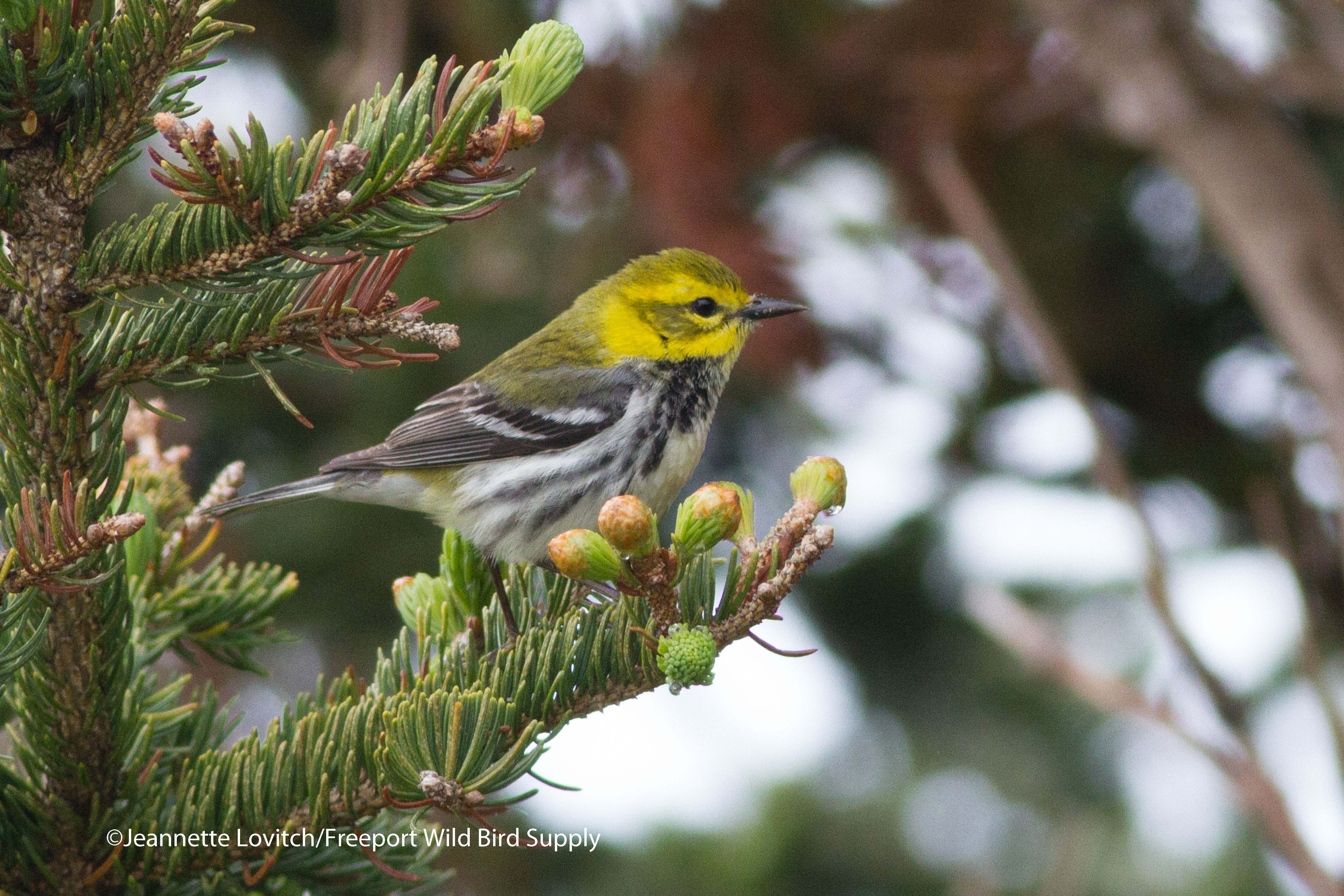
And enjoyed whatever warblers we did encounter, including this male Black-throated Green Warbler.
Monday saw even further reduced activity, with a very summer-like feel to the birding. The migrant flock of Blue Jays built up to at least 46, a Pine Siskin must have just arrived, and some of us even spotted the Virginia Rail! While passage migrants were few – almost all Blackpoll Warblers – we still had a great day of birding thanks to continued great views of most of what we were finding. There was a Northern Parula nest that a friend found for us to marvel at, and we had quality time once again with a family group of Red Crossbills. Watching them, especially the juveniles, eating buds and cones of Red Spruce at close enough distance to see if they were “righties” or “lefties” was memorable, and more than worth the visit. We had the male Orchard Oriole again, and paid the Blue Grosbeak another lengthy visit.
We took some time to scan the skies over the marsh while also enjoying “Lefty,” the Red-winged Blackbird with white outer primaries on only his left wing. He’s back for the second year.
One of the few birds we missed as a group all weekend was a long-staying but frustrating Snowy Egret that never seemed to stay in the same place long. It was reported at the Ice Pond while we were having breakfast, and Jeannette and I raced down to see it. The “racing” part after the new and ample breakfast buffet at the Trailing Yew may not have been the best decision, however, we got the bird! It was another island bird for me (#226) and I am glad I made the decision to skip the break to chase it, as it was long gone by the time our group arrived at the Ice Pond. I always like to get those chases out of my system before making a bad leadership decision and marching people across the island for a bird that only I cared about! (Since they are locally common on the mainland, only an island-lister cares about such silliness).
As the afternoon wore on, the group slowly moseyed away from the Blue Grosbeak-evolving-into-a-flycatcher and made our way back to town to catch the last ferries of the weekend, bringing the tour to a close.
A friend found a Northern Parula nest under construction that we took time to marvel at. Here, the female brings some more material in to line the nest, which is nestled in a woven basket inside of large clumps of down-hanging Old Man’s Bear lichen.
However, as usual, Jeannette and I stayed around for another 24 hours to have a day off together and with friends. Leaving the brewery with one friend, I found a male Eastern Bluebird- an odd “new bird” for the date. Where the heck has he been or where did he just come from? Another Monhegan bird mystery…their migration ended a month ago.
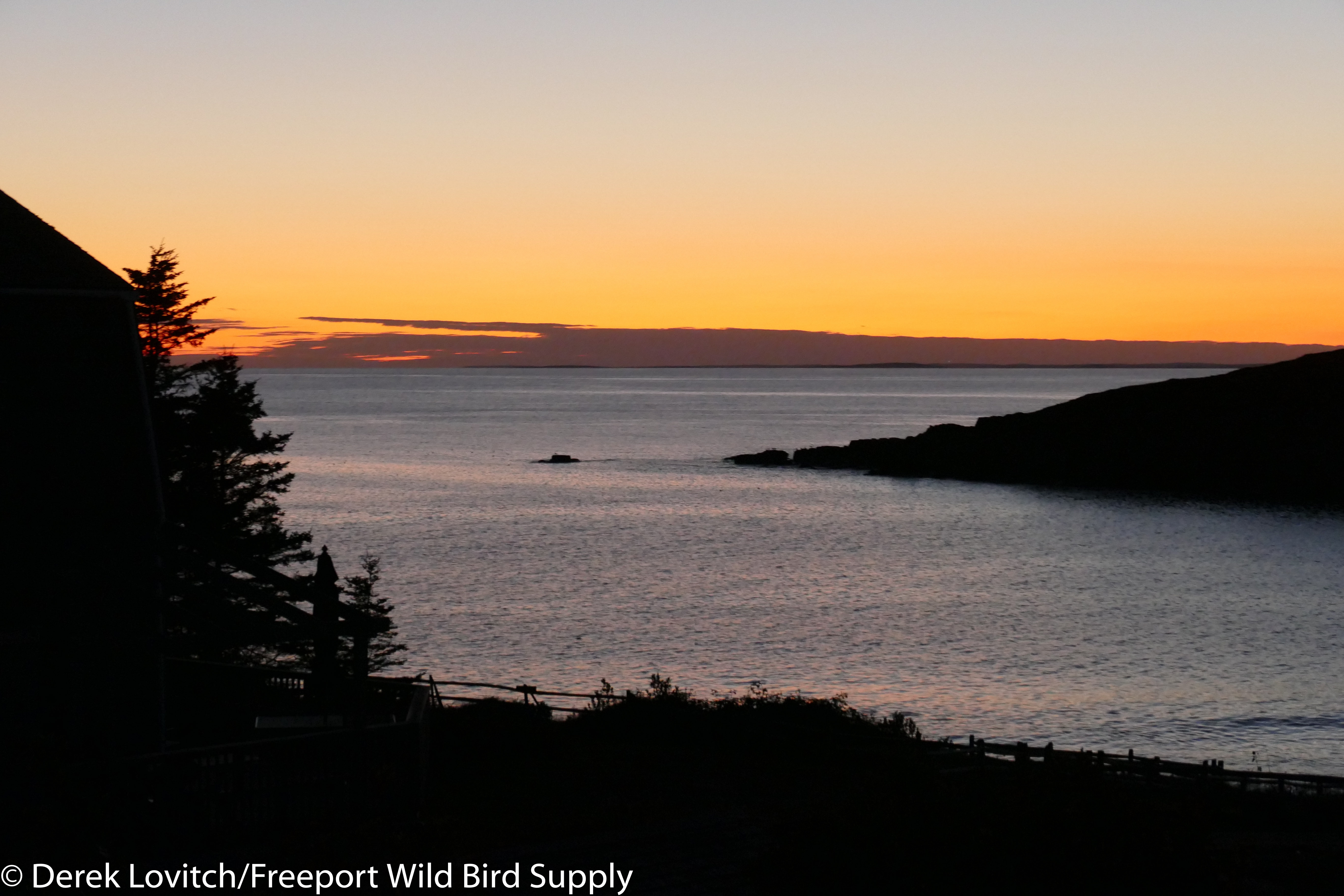
Later, as we walked back from dinner with other friends, we heard at least three displaying American Woodcocks. The sunset was quite the stunner, too.
I wasn’t upset to not have a group on Monday, because my goodness, it was slow! I think what was left of the passage migrants cleared out overnight, and little if nothing came in. There were a few Blackpolls here and there, and maybe a few more American Redstarts than usual in the summer, but in and around town, that was about all.
So Jeannette and I decided to take a longer hike and check some oft-productive-but-less-often-birded areas. In doing so, we found a Field Sparrow on Horn Hill, and had a singing Yellow-bellied Flycatcher between Burnt Head and White Head. An adult male Sharp-shinned Hawk was a surprise – was it breeding here? – and a visit into the shaded woods added Winter Wren and Swainson’s Thrush to our weekend list.
We got excited when we saw a gray-backed, white-bellied flycatcher over at Gull Pond, but alas, it had the expected short, not-forked tail that we were hoping for!
Not including the 7 species Jeannette and I saw between 3:00 on Monday and when we departed at 3:15 on Tuesday, the tour list for the 12th annual Monhegan Spring Migration Weekend ended up a goodly 90 total species, despite only 15 species of warblers. The overall count was better than our last two tours, but still below our long-term average. But I cannot recall four (and five) days of simply gorgeous and warm weather on any of our prior tours! While the benign weather of late reduced the volume of migrants yet to pass through, and allowed many recent migrants to pass unimpeded overhead, I was pleasantly surprised by the final tally. It was also a high-quality list, with lots of “good” birds not seen by many in Maine away from the island. Oh, and my two island birds were nice, too!
Blue Jays are not the biggest feeder bird on this island!
Even our most common and familiar birds present speciaal photographic opportunities out here!
Species
5/26
5/27
5/28
5/29
Mallard
x
10
10
8
Mallard x American Black Duck
1
0
0
0
Common Eider
x
x
x
x
White-winged Scoter
0
10
0
0
Surf Scoter
0
6
0
0
Ring-necked Pheasant
x
6
6
5
Mourning Dove
8
10
8
10
Black-billed Cuckoo
1
0
0
0
Chimney Swift
0
0
1
0
Ruby-throated Hummingbird
6
4
3
1
Virginia Rail
h.o
h.o
1
1
Semipalmated Sandpiper
0
0
1
0
Greater Yellowlegs
0
1
0
0
Black Guillemot
20
30
x
20
Laughing Gull
6*
2
1
6
Herring Gull
x
x
x
x
Great Black-backed Gull
x
x
x
x
Common Tern
1 + 5*
0
0
0
Northern Gannet
0
0
0
1
Red-throated Loon
0
1
0
0
Common Loon
3*
1
0
0
Double-crested Cormorant
x
x
x
x
Great Blue Heron
0
0
1
3
SNOWY EGRET
0
0
0
1**
GLOSSY IBIS
0
0
9
0
Bald Eagle
2
1
0
0
Osprey
0
3
2
2
Red-bellied Woodpecker
0
0
1
0
Merlin
2
2
1
0
Peregrin Falcon
0
0
1
0
Eastern Kingbird
0
0
2
2
Olive-sided Flycatcher
0
1
0
0
Eastern Wood-Pewee
2
2
2
2
“Traill’s” Flycatcher
2
0
1
0
Least Flycatcher
2
1
1
0
Eastern Phoebe
1
1
1
1
Philadelphia Vireo
1
1
0
0
Red-eyed Vireo
6
8
4
4
Blue Jay
x
48
47
52
American Crow
x
4
6
x
Common Raven
0
1
1
0
Black-capped Chickadee
x
x
x
x
Tree Swallow
0
2
2
2
PURPLE MARTIN
0
0
1
0
Barn Swallow
1
0
1
1
Golden-crowned Kinglet
0
0
1
0
Cedar Waxwing
30
50
40
30
White-breasted Nuthatch
0
1
1
1
Red-breasted Nuthatch
1
0
0
0
Carolina Wren
3 h.o.
4
4
3
Gray Catbird
x
x
x
x
European Starling
x
x
x
x
American Robin
x
x
x
x
HOUSE FINCH
0
0
2
2
Purple Finch
0
1
2
2
WHITE-WINGED CROSSBILL
0
3
3
0
RED CROSSBILL
0
2
24
20
Pine Siskin
0
0
0
1
American Goldfinch
12
10
12
12
Chipping Sparrow
0
0
1
1-2
White-throated Sparrow
2
2
2
0
Savannah Sparrow
3
0
1
0
Song Sparrow
10
X
x
x
Lincoln’s Sparrow
0
1
1
0
Bobolink
1
1
0
0
ORCHARD ORIOLE
1
1
0
2
Baltimore Oriole
1
4
3
3
Red-winged Blackbird
x
x
x
x
Common Grackle
x
x
x
x
Northern Waterthrush
0
0
1
0
Black-and-white Warbler
3
4
4
3
Tennessee Warbler
8
4
3
0
Common Yellowthroat
x
8
x
x
American Redstart
5
25
16
8
Cape May Warbler
1
0
0
0
Northern Parula
15
10
12
12
Magnolia Warbler
10
8
6
8
Bay-breasted Warbler
11
3
0
2
Blackburnian Warbler
0
1
0
0
Yellow Warbler
10
20
15
15
Chestnut-sided Warbler
2
1
1
1
Blackpoll Warbler
25
60
25
20
Black-throated Green Warbler
1
1
3
1
Wilson’s Warbler
2
2
2
0
SUMMER TANAGER
0
1
0
0
Scarlet Tanager
0
1
0
0
Northern Cardinal
x
x
x
x
Rose-breasted Grosbeak
3
2
2
0
Indigo Bunting
0
1
1
0
BLUE GROSBEAK
0
0
1
1
DICKCISSEL
0
1
1
0
Day Total
60
66
69
54
Warbler Day Total
13
13
12
10
Trip Total
90
Warbler Trip Total
15
Here is the trip list four the four-day tour. * = seen from ferry only. **=not seen with tour group.
Yellow-bellied Sapsucker, one of the more common and conspicuous migrants all weekend.
After spending what was probably the slowest week of birding I have ever experienced in fall on Monhegan with my WINGS tour a week prior, I was even more anxious to get back to the island. I know what this island can offer (well, besides great food, beer, and friends, that is)!
Because of ferry schedules, we added a new wrinkle this year, meeting for a birdwalk in Port Clyde before the mid-am ferry to the island (9/29). Golden-crowned Kinglets were particularly abundant and some Yellow-rumped Warblers were around, hinting at the amount of birds that arrived overnight. On the trip out, Northern Gannets were scattered about, and a flock of 7 probable American Pipits zipped by. When passerines are encountered on the ferry, as they return to the mainland, it’s usually a good sign that there are a lot of newly-arrived birds on the island.
When several Yellow-rumped Warblers were darting around near the dock, I thought it might be worth swinging into The Barnacle for a quick, early lunch so we could hit the ground running. And we are all glad we did, as it took us 2 ½ hours to walk from the dock to our lodging at the Trailing Yew!
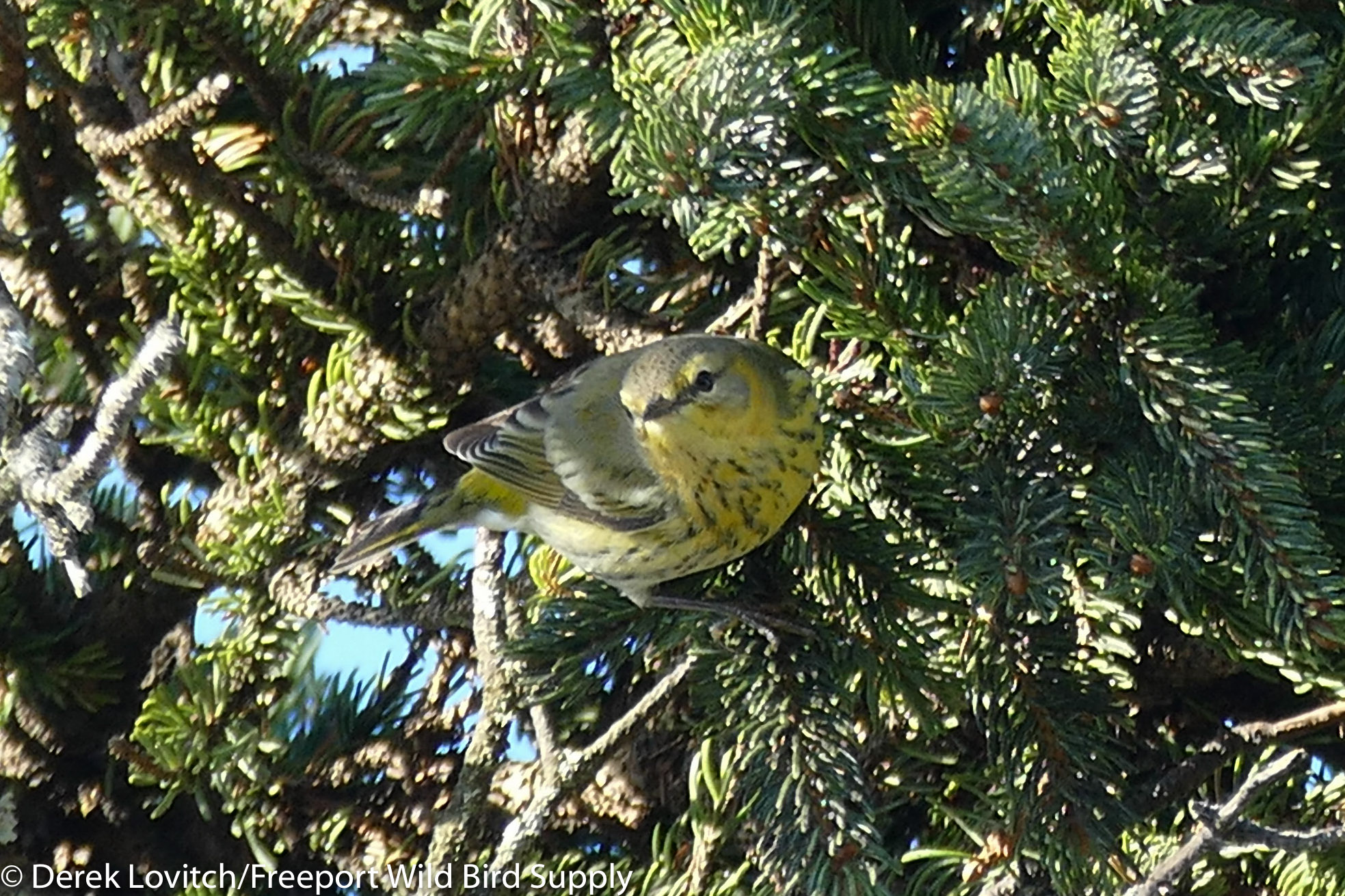
It was fantastic…birds were everywhere. While it wasn’t a fallout with birds dripping out of the trees, every cluster of trees and bushes had some migrants in it. The “Cape May Spruces” on dock road hosted several Cape May Warblers and an immature male Pine Warbler – a rarity on the island. We soon tracked down a continuing Orange-crowned Warbler, and we slowly made our way through town, pausing at every apple tree and every weedy garden. Cape May Warbler Pine Warbler
A lot had changed in the 5 days between my visits, with many more sparrows, and a much greater percentage of Yellow-rumped Warblers and both Ruby- and Golden-crowned Kinglets. Overall warbler diversity was down, but Yellow-bellied Sapsuckers were everywhere! The raptor show wasn’t half-bad, either. Peregrine Falcon
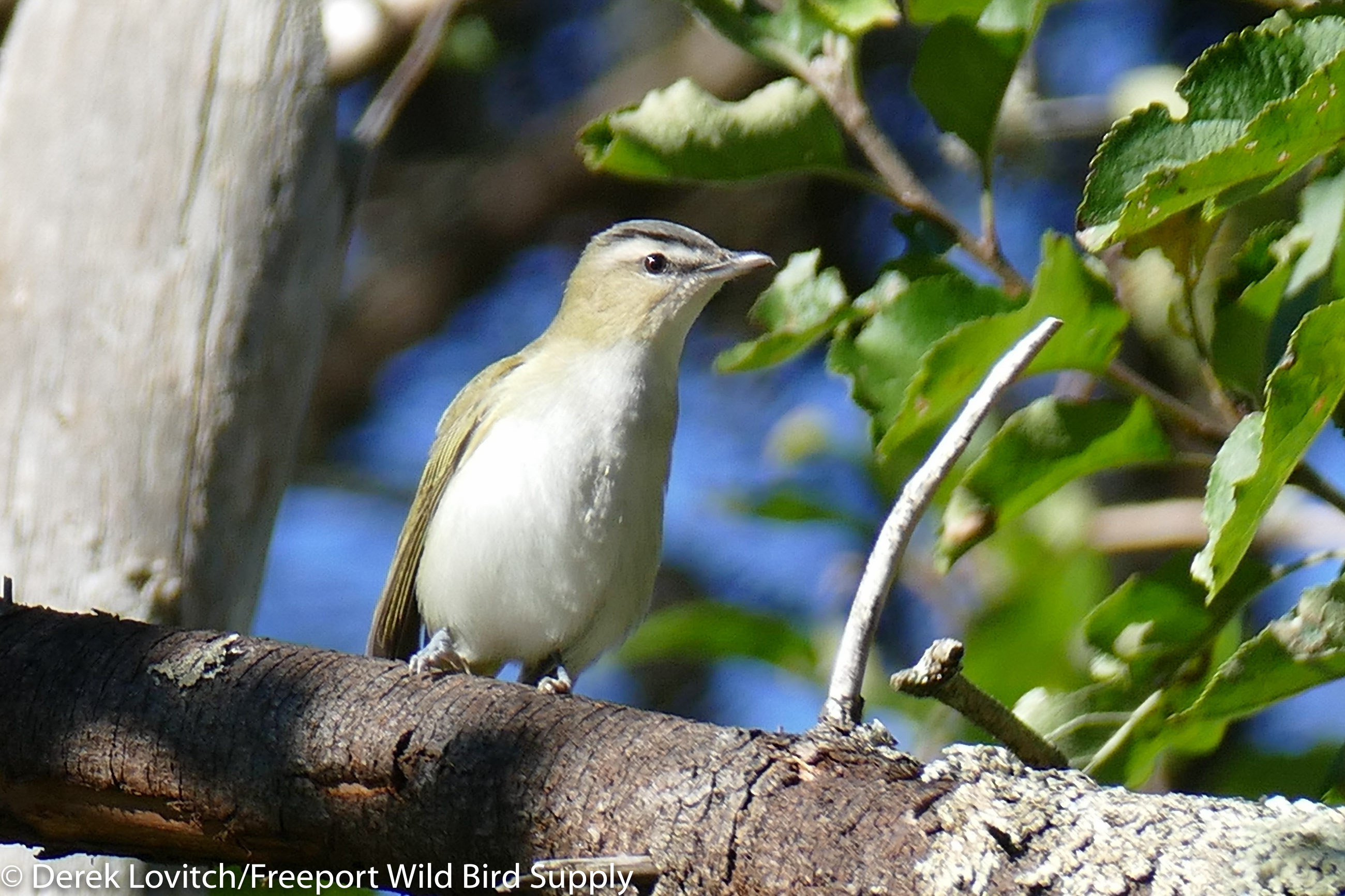
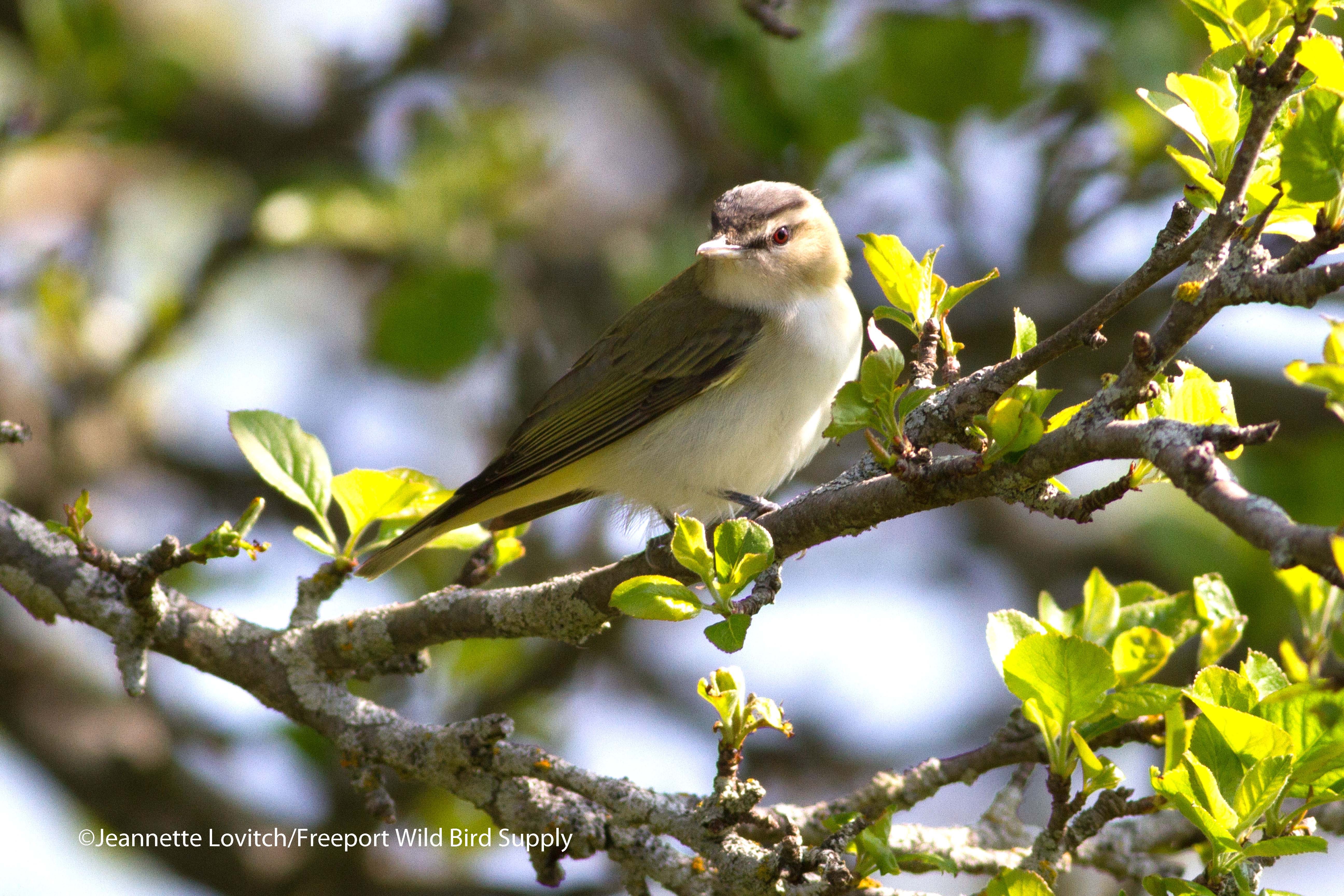
I think I saw more birds today, even though we didn’t arrive until 11:30 than I did all week with my other tour! And 60 species by day’s end wasn’t too shabby either. Red-eyed Vireo Black-throated Green Warbler
Friday night featured a very strong flight on the radar, but with a light winds becoming northeast after midnight, many fewer birds were around come morning (thanks to Hurricane Jose, this was the bane of our existence during the aforementioned tour), and the morning flight was very light. The afternoon was quite slow, but we continued to encounter new birds here and there. An unexpected surprise was a Wood Thrush calling at dusk. Although we never saw it, the calls are distinctive, and they were close by, and this was my 208th Monhegan bird (They’re usually long gone by the time I get here in mid-September).
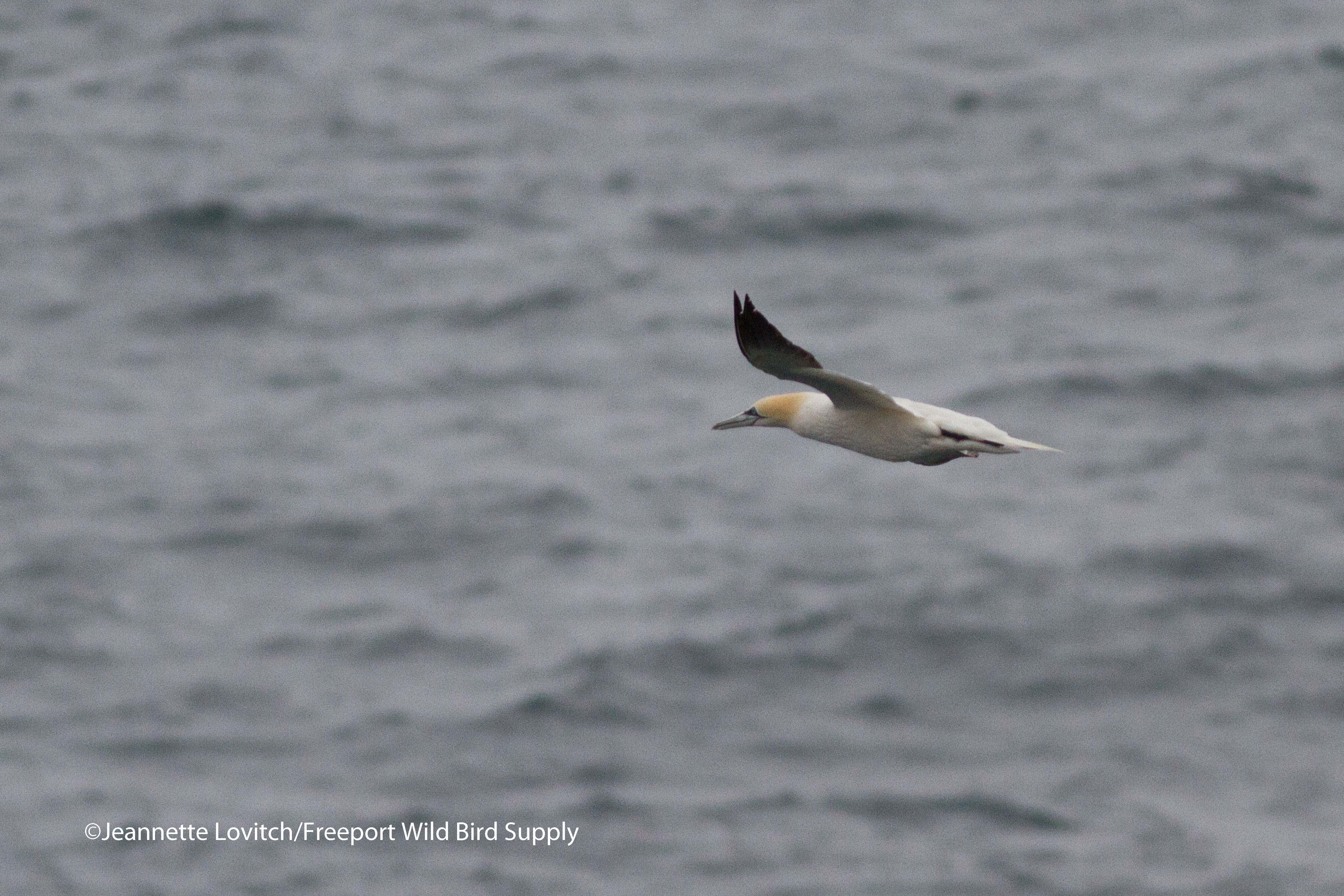
Northern Gannet
Red-eyed Vireo
But this was only a fraction of the day’s excitement. First, a Bell’s Vireo was reported just as we arrived at breakfast. I thought about skipping the meal (it’s really a good bird if I consider passing on a Trailing Yew breakfast!) but after hearing about how chaotic it was (lots of owl calls and counter-productive tape use – tell me why a bird, exhausted from migration and without any hormonal urge to breed would come out in the open because you are playing an adult male’s territorial song? Especially when vagrants are often immature birds, the last thing they are looking for is a conflict; it’s amazingly ignorant…but I digress) down there, we decided to let the masses subside and fuel up for the hunt.
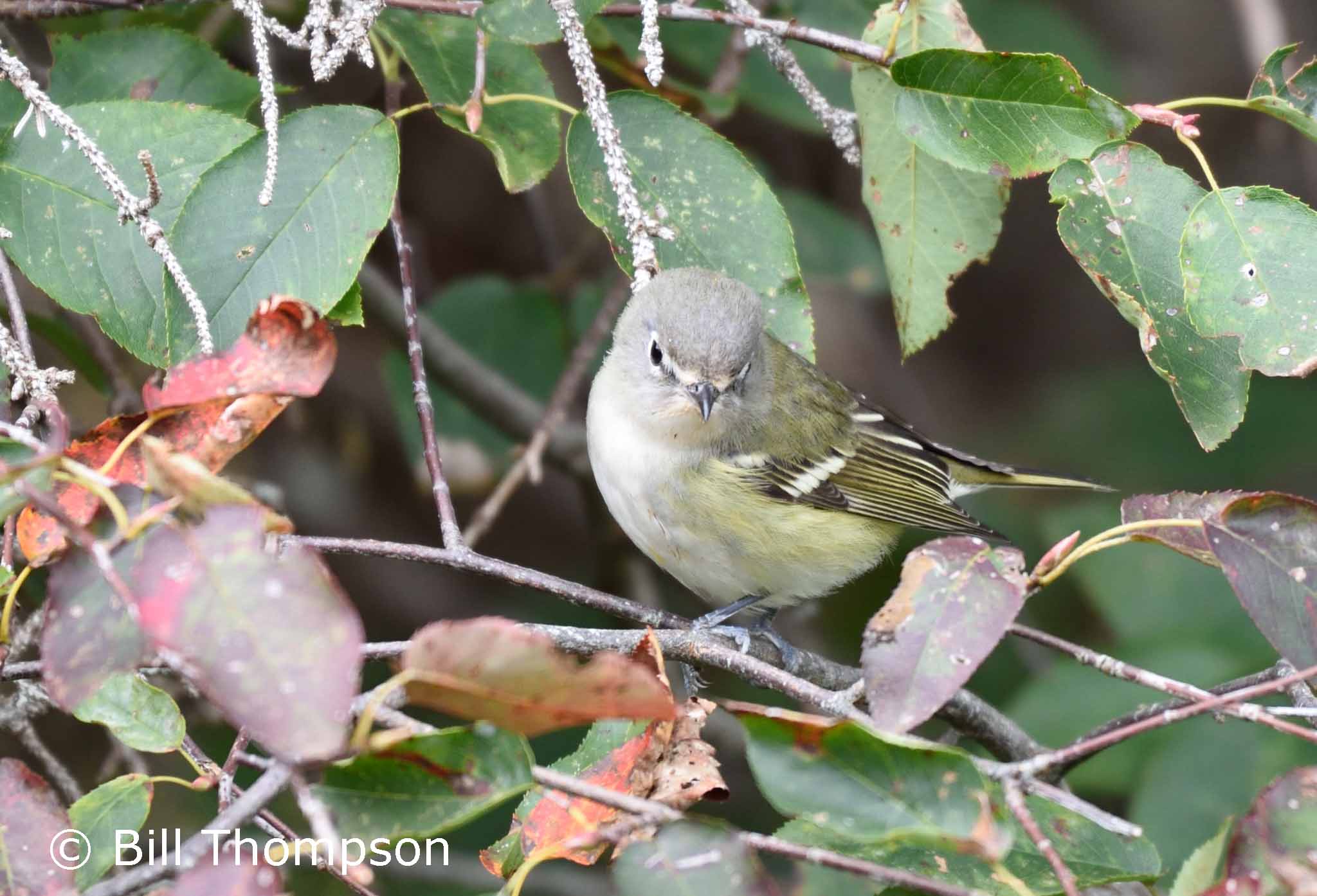
By the time we arrived, almost everyone had dispersed, and no sign of a Bell’s Vireo. But Pumphouse Road and the nearby yards were birdy, so we just started working the thickets. We had dispersed up and down Pumphouse Road, joined by several friends and fellow birders, including Kristen Lindquist and Bill Thompson. I was with just two members of our group, when a small flock of five or so vireos came in. There were three Red-eyed, but then I spotted what I thought could have been the Bell’s -a very pale, dull vireo creeping around the understory, with its tail cocked. With no one else around, I took off to assemble the group, and to get Bill to secure the documentation photos. When guiding, a bird doesn’t count unless the group is with you, so before I had anything definitive, I started running (only then remembering my ankle was still in a brace)!
Barb and Terez were still on what she thought was the bird in question, but as we all returned, it was clearly just a normally-pale, immature Blue-headed. Did I screw this up that badly? But wait, where was that 5th vireo?
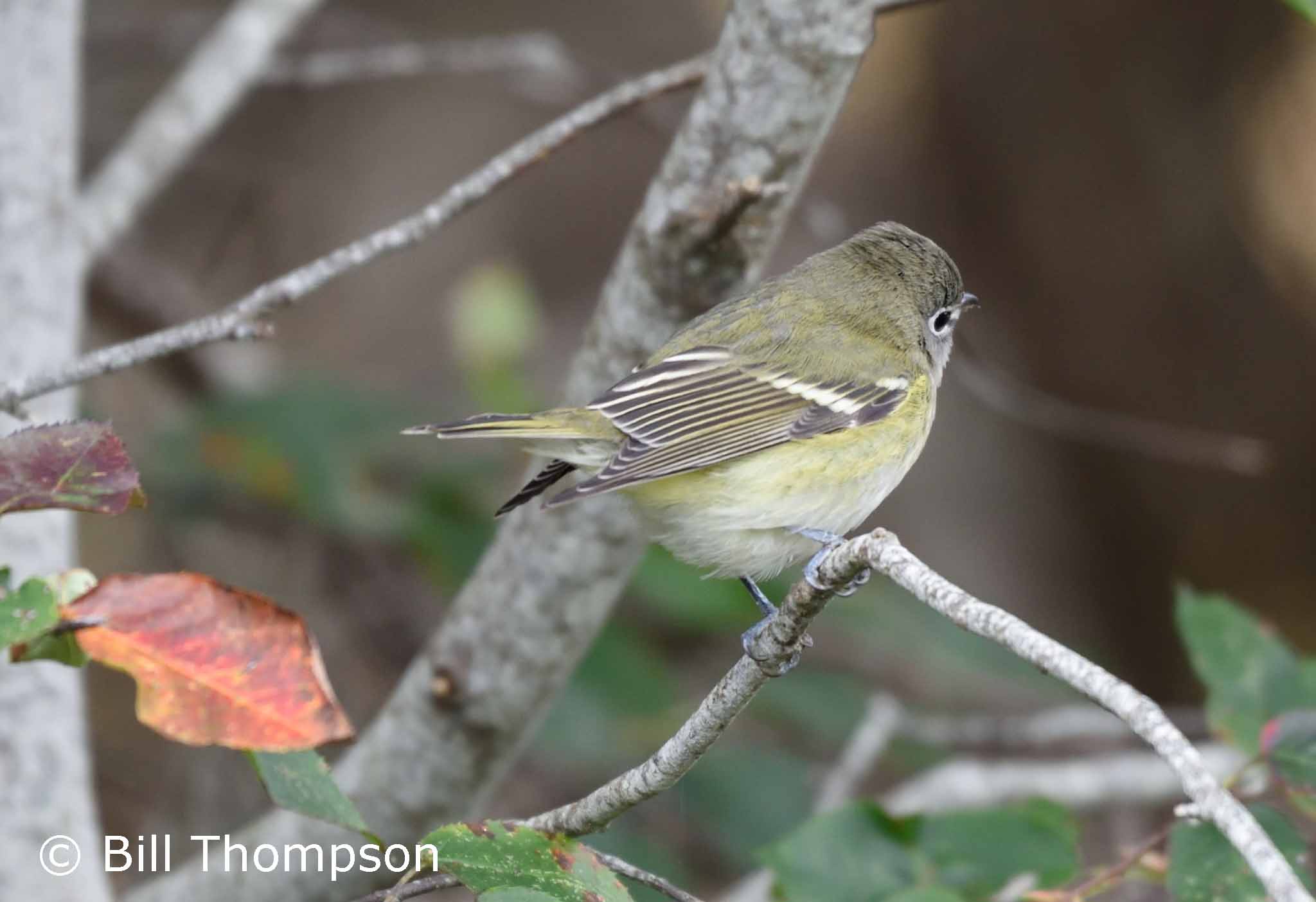
I don’t remember who spotted it next, but when we did, it was clear it was not a Bell’s, but wow, that was pale. Like really, really, pale, and as we began studying it, we realized this may be even rarer!
At one point, I made eye contact with Marshall Iliff, and we both kinda smiled and nodded. We were on to something. Bill began to fire away. We watched. And then we began to discuss. And discuss. And at the brewery later, discuss some more. And the next day, yup, we were still talking about this bird. Almost two weeks later, as well.
Bill sent me his photos the next day, and on Sunday evening – at the brewery, of course, it’s where all great conversations occur – we realized that every single feature of this bird was consistent with Cassin’s Vireo, the member of the “Solitary Vireo Complex” that breeds in the west, and can be virtually indistinguishable from our regular Blue-headed. However, this bird had every feature perfect for Cassin’s, and as we sent around photos, everyone agreed that “if this isn’t a Cassin’s, then we can’t identify a bird as a Cassin’s.”
This would be the first record for Maine, and one of very, very few records for all of the East Coast. See, this is what a “slow” day on Monhegan should be like.
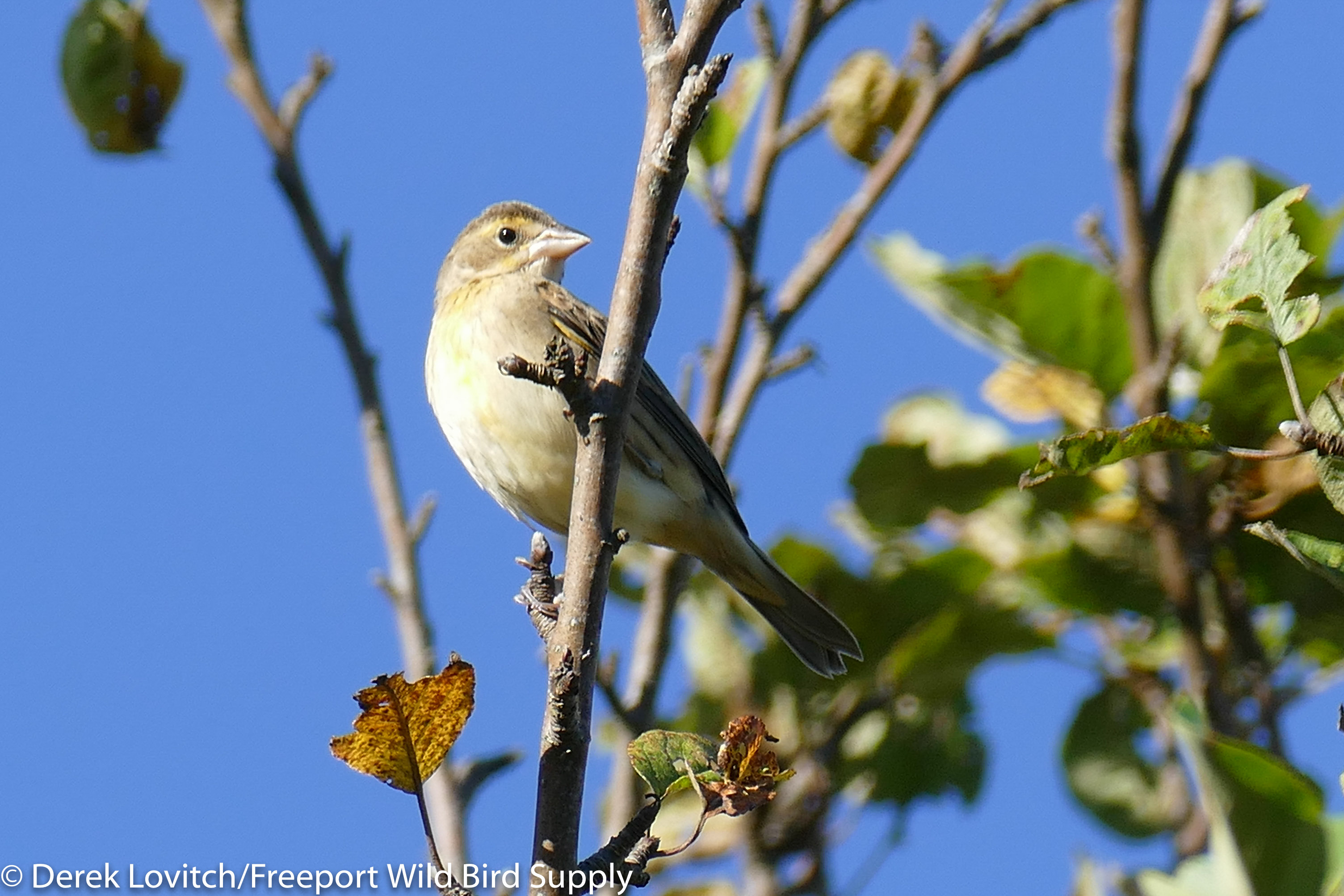
Anyway, back to the actual birding on Sunday. After only a surprisingly moderate flight overnight on light westerly winds, only a light morning flight was over the island, and it was almost exclusively Yellow-rumped Warblers. Increasing south winds helped keep activity reduced through the afternoon, when most of the group slowly departed on their respective ferries. We had great looks at the two continuing Dickcissels, more great views of Cape May Warblers, and finished the day off with the last member of the group by enjoying the long-staying Yellow-crowned Night-Heron at the Ice Pond. Dickcissel
That chase and discussion of the vireo was exhausting!
It was just me and group-holdover John Lorenc on Monday morning, when Jeannette joined us for the day on the early Port Clyde boat. Her visit during my WINGS tour yielded fog and little else, so she was anxious to see and photograph some birds!
Interestingly enough, despite a rather light flight on the radar overnight (which really surprised me) on a light northwesterly wind, a strong morning flight developed come sunrise. As expected by the date, it was mostly Yellow-rumped Warblers, but there were many more kinglets and sparrows around. It was very busy before breakfast, and quite birdy – if rather homogenous – through lunch, with “new” birds scattered about. Even the early afternoon was pleasantly birdy, with pockets of activity here and there.
At least 4 Dickcissels were now present, and likely a new Clay-colored Sparrow. We had a fly-by of a Northern Pintail at Lobster Cove, one of very few records for the island. A calling Greater Yellowlegs, a flushed Wilson’s Snipe, and large flocks of southbound Canada Geese high overhead were among the additions to the weekend’s checklist. Two Dickcissels
When all was said and done, and Cassin’s Vireo was (fairly) confidently added to the list, a total of 89 species (including 15 species of warblers) were recorded in these four days, a respectable if not overwhelming total for a long weekend on the island.
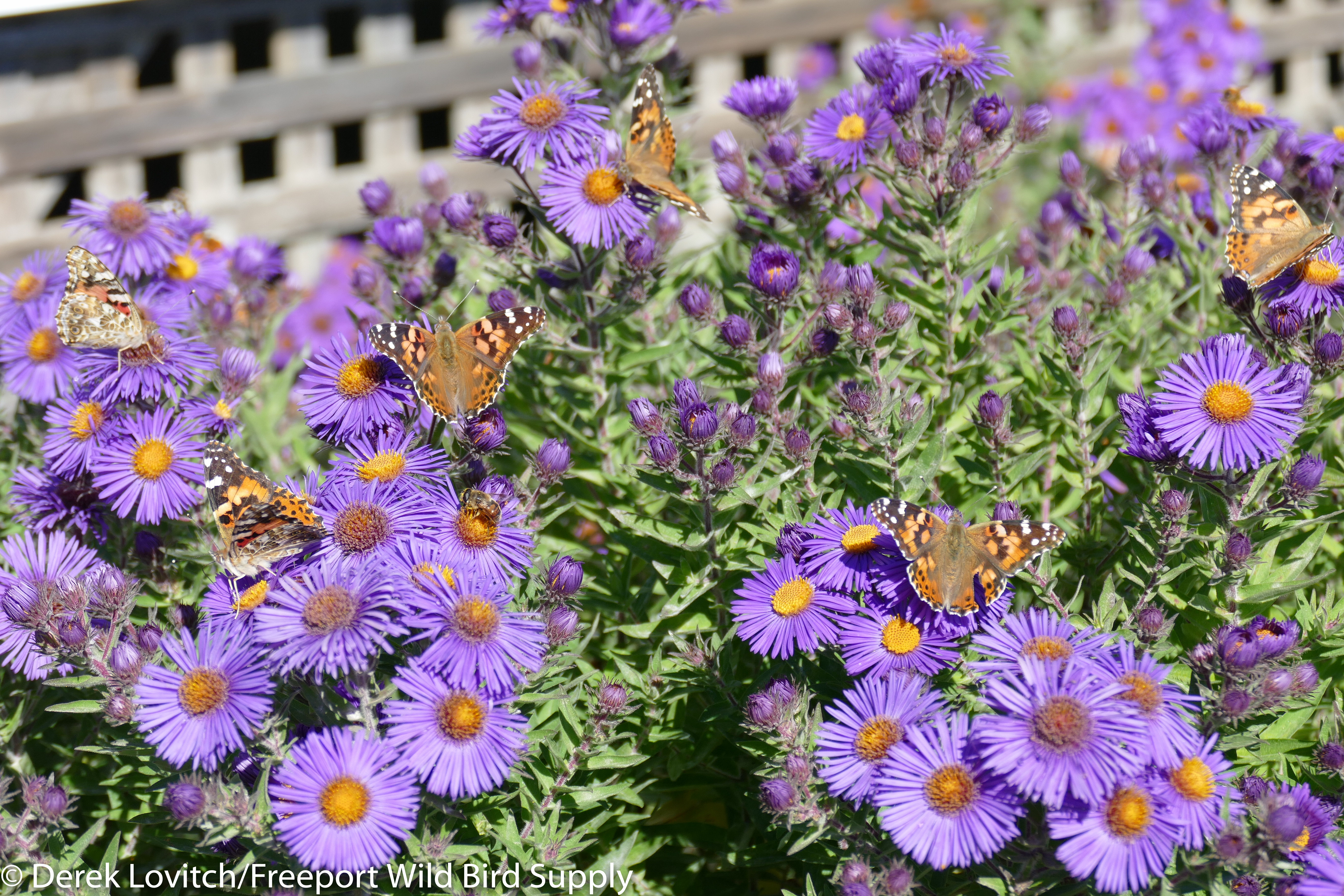
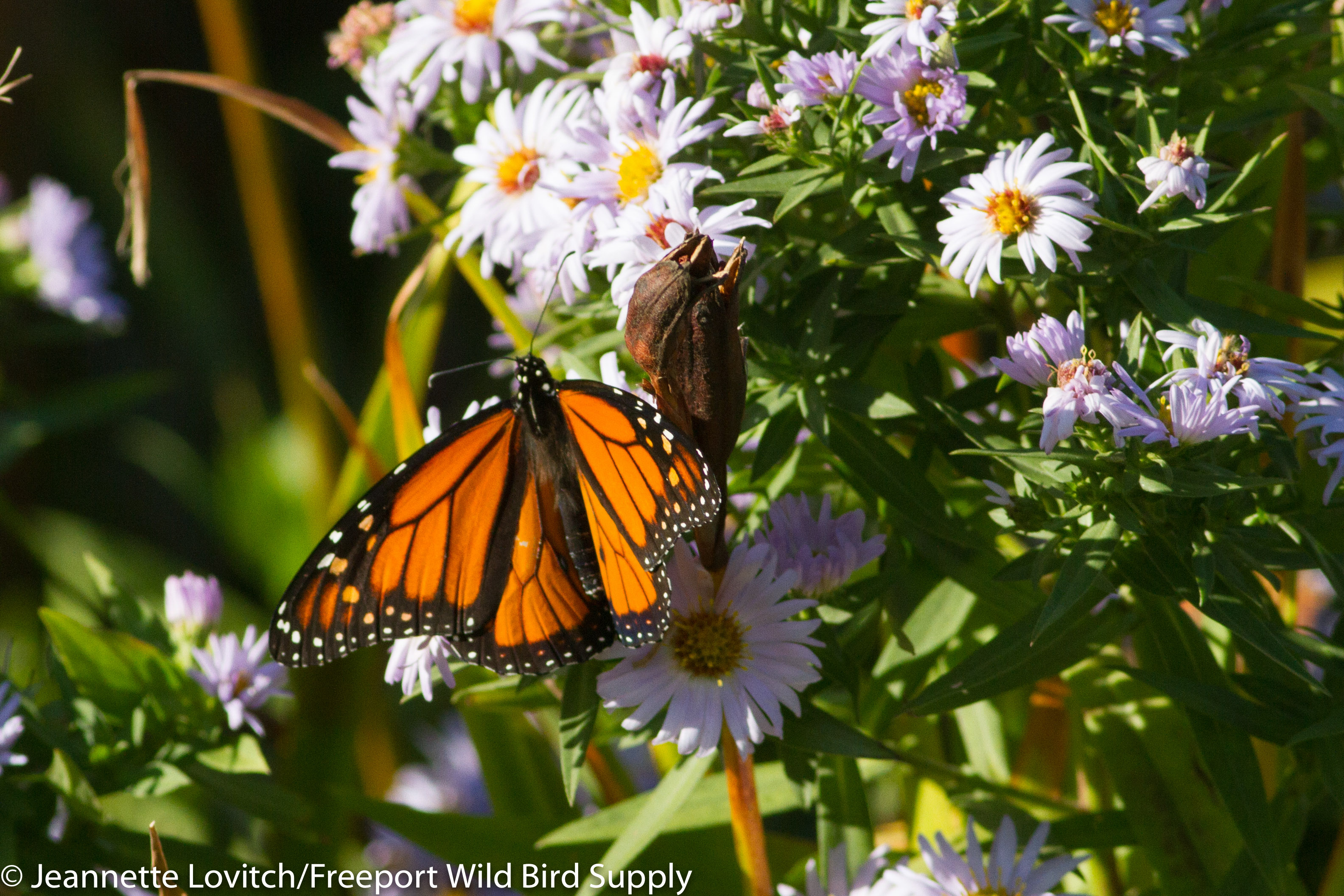
And the food, beer, and conversation were great as always. And the butterflies, my goodness the butterflies. Monarchs were common, but Painted Ladies were downright abundant…
Here’s the full scoreboard, not including birds seen in Port Clyde or from the ferry en route:
As I do most Memorial Day weekends, I head to Monhegan Island with a tour group for my “MonhegZen Spring Birding Weekend.” But this was not going to be “just” a weekend on this wonderful, joyful, and bird-filled place. This was going to be truly special – it was “Birds on Tap – Monhegan!”
A small group arrived with me on Friday, and boy did we hit the ground running. The first bird we saw off the boat was a Purple Martin zipping overhead – a nice rarity to get things started. As if my usual Monhegan-stoked Rarity Fever wasn’t already in full effect, the next bird we saw was a wet Empid. And let the games begin! Of course, this one was a pretty straightforward Alder Flycatcher after we got good looks at it and heard it call.
American Redstarts, Northern Parulas, and Blackpoll Warblers were common and conspicuous as it took us over an hour just to walk up Dock Road! A great look at a male Bay-breasted Warbler near the Ice Pond was a treat, and we caught up with part of the small flocks of Red and White-winged Crossbills that have been wandering around the island. We saw at least 8 Red and at least 6 White-winged, including fresh juveniles of each – likely having bred out here in the late winter and early spring.
A Sora calling in the marsh didn’t really stop all weekend, and Yellow Warblers were particularly conspicuous around town.
And our FOY Novelty pizza.
While I – and the group – were hearing a little too much “you should have been here yesterday,” we were pretty content with the leftovers of the fallout, with 16 species of warblers by day’s end, including impressive numbers of Northern Parulas.
A rare-in-spring Dickcissel flew over the Trailing Yew as we awaited coffee, soon followed by a close-passing Yellow-billed Cuckoo. After a strong flight overnight, there were a lot of new birds around. Fueled by the delicious Birds & Beans coffee being brewed by the Trailing Yew all weekend, we began our birding, soon picking up lots of new arrivals including Cape May Warbler and Swainson’s Thrush.
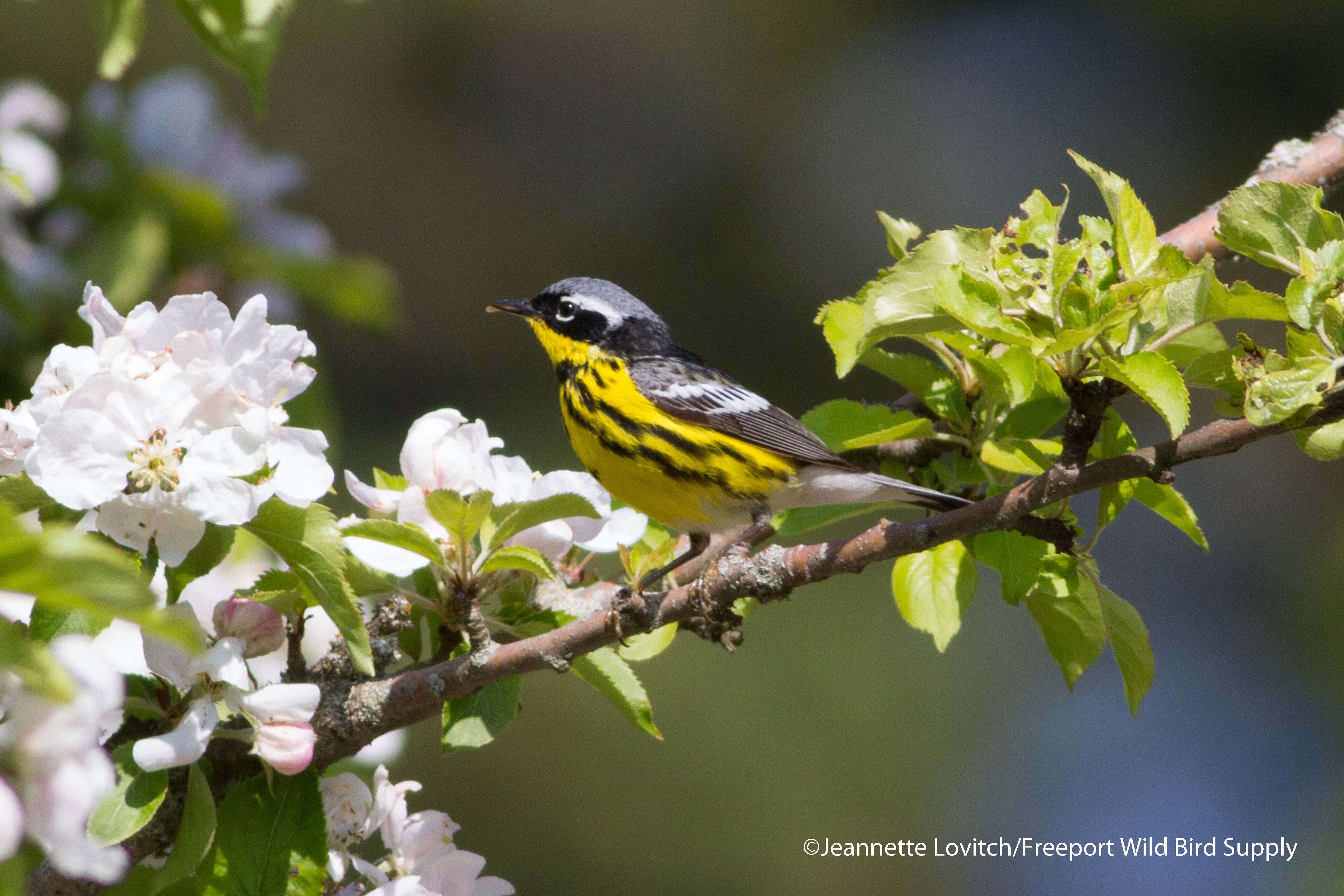
Apple trees in full bloom all around town were one of the major draws for birds and birders. In fact, you could basically pick an apple tree and sit in front of it long enough to see at least one of all of the common migrants that were about, such as Magnolias Warbler…
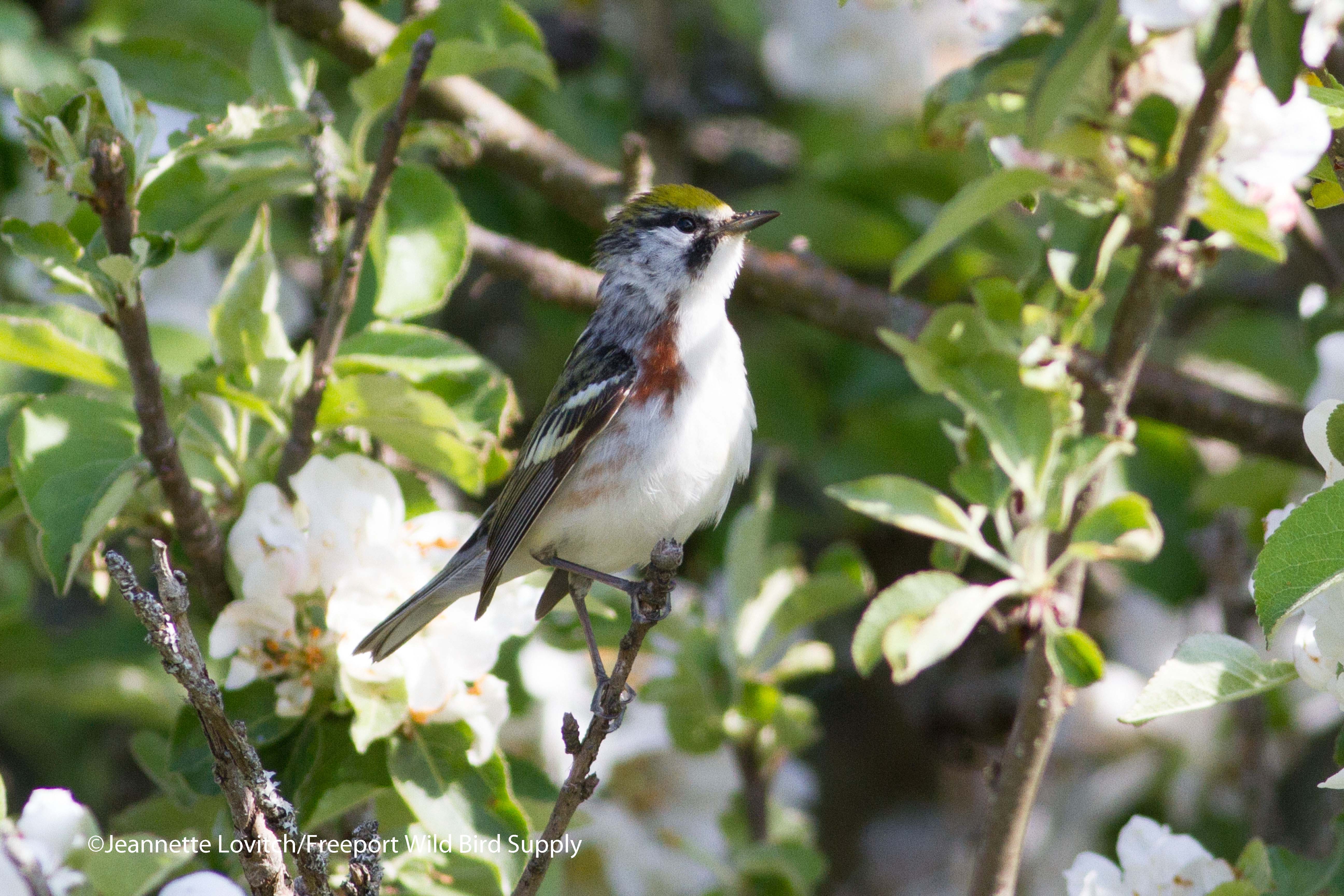
…and Chestnut-sided…
Jeannette met up with the rest of the tour group arriving on the first boat from New Harbor, and caught up with us after catching up with two of the most cooperative Philadelphia Vireos you’ll ever meet that we all enjoyed along Dock Road.
In town, we heard a White-eyed Vireo, another rarity (although one of the expected ones out here), ran into a few more of both species of crossbills behind the Ice Pond, and spotted the young Humpback Whale that has been making regular appearances close to shore off the island’s western shore! And this Scarlet Tanager…which seemed an appropriate find since we have been consuming the coffee named for it!
After hearing a singing Mourning Warbler earlier in the day for our 20th species of warbler on the trip, we had a handful of glimpses of a skulking female near the Yew. I turned around to follow a flitting Yellow-bellied Flycatcher. Training my bins on the flycatcher, I first focused on the branch behind it, which turned out to be hosting a roosting Common Nighthawk!
83 species of birds on the day, including 19 species of warblers made for one helluva day, but the fun was just beginning! In addition to my annual tour, this was the weekend of Birds On Tap – Monhegan!
A collaboration between our Freeport Wild Bird Supply, Trailing Yew, Birds & Beans, and Monhegan Brewing, we took our “Birds on Tap” series of events offshore to celebrate birds, migration, bird conservation (especially through consumer choices like what coffee to drink), and, yes, beer!
And one of the truly special events was a limited, 31-gallon batch of a special coffee-infused milk stout from Monhegan Brewing, featuring a pound and a half of the dark roast Scarlet Tanager coffee from Birds & Beans!
I had the honor of announcing the official release, taking some of the first sips of this delicious light-bodied stout featuring a subtle sweetness from lactose perfectly balanced with a bitter roastiness from the coffee.
Of course, we were also still birding. I promise!
In fact, we momentarily cleared out the brewery when a possible Orange-crowned Warbler (one was seen by others over the past two days) was spotted nearby. Rushing over, we carefully studied the bird before reaching the conclusion that it was indeed a pale Tennessee Warbler.
After an unfortunate but necessary cancellation from our original speaker, Dr. Steve Kress arrived to save us – admittedly a feat marginally less heroic than what he did for puffins and endangered seabirds all over the world!
Giving the weekend’s keynote presentation on his work to bring Atlantic Puffins back to nearby Eastern Egg Rock, Steve explained the challenges he and the puffins faced before finally realizing his novel approach finally bore fruit, or should I say, pufflings.
Overnight, a back door cold front sagged southward, shifting the winds to an easterly direction and limiting the arrival of new migrants to the island. Our “Morning Flight Watch” with plentiful free Birds & Beans coffee for all at the Trailing Yew wasn’t too eventful, but things definitely picked up for the post-breakfast walk.
Jeannette led my tour group, and the birding was still a bit slow, relatively speaking. But, they finally made their way down to the pump house to see Eastern Kingbirds flycatching in the marsh. And, up to the lighthouse for the first time which was highlighted by a fantastic view of a female Blackburnian Warbler.
Meanwhile, Kristen Lindquist assisted me in leading the free, open-to-all birdwalk as part of the weekend’s special events. A nice mix of birders, residents, and visitors enjoyed a casual stroll. We chatted as we went, covering a variety of topics from bird migration to conservation to coffee to the ill-conceived industrial wind development scheme for the island’s southern waters.
Some folks, new to birding, may have left with the impression that Red-eyed Vireos were about the most common bird in the world, as quite a few were calmly and methodically foraging through apple trees in and around town.
But perhaps this male Blackburnian Warbler would end up being a “spark” bird for someone! Because male Blackburnian Warbler!
With a light easterly wind continuing, and our group back together after more Novelty pizza, we walked up to Burnt Head, where we enjoyed some nice close passes from Northern Gannets
Jeannette and I spent an extra night on the island, knowing we would need a little time to unwind after the even-more-chaotic-than-expected weekend of events. After a great dinner with friends, we listened to two Soras calling from the marsh and an American Woodcock still displaying somewhere overhead before turning in.
We awoke on Monday to dense fog and no visible migration on the radar, but the birding was actually quite good. We found a Nelson’s Sparrow in the Lobster Cove marsh, but also enjoyed how the damp weather (mist, drizzle, and a few showers) were keeping activity low and close, easily viewed in the blooming apple trees around town once again.
As a warm front passed through, with only a little more drizzle but rapidly warming temperatures and clearing skies, we took a post-pizza hike, heading deeper into the woods, which netted more of the island’s breeding species, such as many more Black-throated Green Warblers.
Somehow – now how did this happen? – our hike ended at the brewery, where another pour of the Birds & Beans-infused beer was in order.
Unfortunately, especially since the sun was now shining brightly, it was indeed time for us to head back to the real world, so Jeannette and I begrudgingly plodded down to the dock and boarded the Hardy Boat for the return. It’s never easy saying goodbye to the island – its birds and our friends there – but today was especially challenging as we know a fight about the future of the island – including many of the migratory birds that pass over and through here – is looming.
Here’s the complete daily checklist for the weekend:
26-May 27-May 28-May 29-May
1 Canada Goose 0 0 1 0
American Black Duck x Mallard 0 1 0 0
2 Mallard 2 10 12 8
3 Common Eider x x x x
4 Ring-necked Pheasant 3 3 3 4
5 Common Loon 1 1 0 1
6 Northern Gannet 0 0 12 0
7 Double-crested Cormorant x x x x
8 Great Cormorant 0 0 0 1
9 Great Blue Heron 0 1 0 0
10 Green Heron 1 0 0 0
11 Osprey 0 1 0 0
12 Bald Eagle 2 1 0 0
13 Merlin 0 1 0 1
14 Virginia Rail 0 0 0 1
15 Sora 1 1 2 1
16 American Woodcock 0 0 1 0
17 Black Guillemot x x x x
18 Laughing Gull x x 12 4
19 Herring Gull x x x x
20 Great Black-backed Gull x x x x
21 Common Tern 2 0 0 0
22 Mourning Dove 8 10 4 6
23 YELLOW-BILLED CUCKOO 0 1 0 0
24 Common Nighthawk 0 1 0 0
25 Ruby-throated Hummingbird 2 3 2 2
26 Yellow-bellied Sapsucker 0 1 0 0
27 Downy Woodpecker 4 4 2 0
28 Northern Flicker 0 1 1 1
29 Eastern Wood-Pewee 2 10 4 6
30 Yellow-bellied Flycatcher 1 4 0 5
31 Alder Flycatcher 1 2 0 0
32 Willow Flycatcher 0 4 0 1
33 “Traill’s” Flycatcher 0 6 2 1
34 Least Flycatcher 5 8 2 5
35 Eastern Kingbird 8 14 7 6
36 WHITE-EYED VIREO 0 1 0 0
37 Philadelphia Vireo 2 3 0 0
38 Red-eyed Vireo 15 100 30 25
39 Blue Jay 4 4 6 6
40 American Crow x x x x
41 Tree Swallow 8 2 2 2
42 Cliff Swallow 0 1 0 0
43 Barn Swallow 0 0 2 0
44 PURPLE MARTIN 0 0 0 0
45 Black-capped Chickadee x x x x
46 Red-breasted Nuthatch 2 4 2 3
47 House Wren 0 2 2 2
48 Winter Wren 0 0 0 1
49 Golden-crowned Kinglet 2 2 2 4
50 Swainson’s Thrush 0 1 0 0
51 American Robin 10 8 10 8
52 Gray Catbird x x x x
53 Brown Thrasher 1 0 2 0
54 Northern Mockingbird 0 1 0 0
55 European Starling x x x x
56 Cedar Waxwing 30 80 60 40
57 Ovenbird 0 1 0 0
58 Northern Waterthrush 1 1 0 0
59 Black-and-white Warbler 8 10 6 3
60 Tennesee Warbler 1 10 1 1
61 Nashville Warbler 1 1 1 2
62 MOURNING WARBLER 0 3 0 0
63 Common Yellowthroat x x x x
64 American Redstart 25 40 10 15
65 CAPE MAY WARBLER 0 1 0 0
66 Northern Parula 40 50 20 20
67 Magnolia Warbler 5 15 12 20
68 Bay-breasted Warbler 1 0 0 0
69 Blackburnian Warbler 3 3 2 2
70 Yellow Warbler 20 20 25 20
71 Chestnut-sided Warbler 15 15 10 15
72 Blackpoll Warbler 20 70 30 40
73 Black-throated Blue Warbler 1 3 1 2
74 Yellow-rumped Warbler 0 4 1 2
75 Black-throated Green Warbler 6 7 10 30
76 Canada Warbler 0 1 1 0
77 Wilson’s Warbler 1 0 0 1
78 Eastern Towhee 0 1 0 0
79 Chipping Sparrow 4 1 1 0
80 NELSON’S SPARROW 0 0 0 1
81 Song Sparrow x x x x
82 Lincoln’s Sparrow 0 1 0 1
83 Swamp Sparrow 0 1 0 1
84 White-throated Sparrow 1 2 2 1
85 Scarlet Tanager 0 2 0 0
86 Northern Cardinal 4 4 8 8
87 Rose-breasted Grosbeak 0 1 0 1
88 Indigo Bunting 1 3 1 0
89 DICKCISSEL 0 1 0 0
90 Bobolink 2 6 3 0
91 Red-winged Blackbird x x x x
92 Common Grackle x x x x
93 Baltimore Oriole 4 2 2 1
94 Purple Finch 2 2 2 1
95 RED CROSSBILL 8 2 3 ?
96 WHITE-WINGED CROSSBILL 6 8 0 12
97 Pine Siskin 15 30 30 40
98 American Goldfinch 6 4 4 4

















 Maine Birding Field Notes