This Week’s Highlights, 9/19-22, 2023

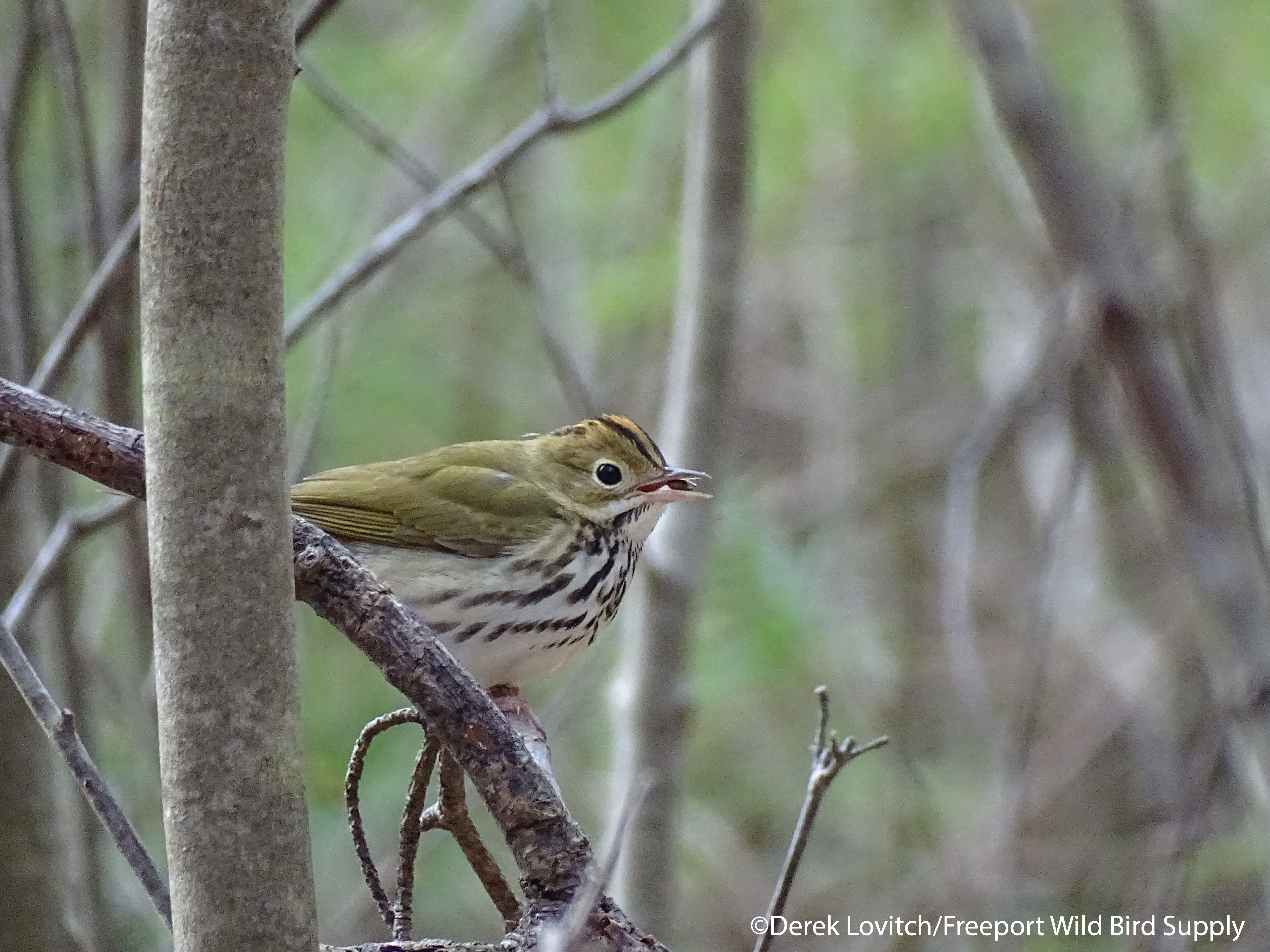
This delightful Black-and-white Warbler hung out with me for a spell in “my office” at Sandy Point during the huge flight on the morning of the 21st.

While Hurricane Lee was a birding dud here in Maine, I did miss two great flights at Sandy Point and three overall fantastic days of migration while we were out of town.  But some good migration over the past four days since our return helped make up for it. Meanwhile, I also posted a blog recounting a little about what I (did not) miss during the passage of Lee.

  • While there has not been a hoped-for morning flight of consequence over or through our Durham property, it continues to be much better for fall migration than we even imagined.  Limited effort produced 12 species of warblers on both 9/19 and 9/22 – which included tardy Northern Waterthrush and Canada Warbler.
  • Sandy Point Morning Flight, 9/20.

With winds mostly westerly overnight, and very light westerly winds in the morning, the flight was lighter than I expected. It was also high and distant to the south, so I likely missed a lot of birds, and certainly identified less than I would have liked – both typical on such conditions.

6:23-9:15am55F, mostly clear, W 2.8mph-4.1Decreasing to WSW 0.6 to 1.9
Unidentified164Eastern Phoebe2
Northern Parula84Eastern Bluebird2
Blackpoll Warbler56DICKCISSEL2
Cedar Waxwing22Bay-breasted/Blackpoll2
Yellow Warbler19Osprey1
American Redstart12Black-throated Blue Warbler1
American Goldfinch9Red-breasted Nuthatch1
Common Loon5Wilson’s Warbler1
Red-eyed Vireo 5Baltimore Oriole1
Cape May Warbler4American Robin1
Ruby-crowned Kinglet3Common Yellowthroatx
Black-and-white Warbler3
Nashville Warbler3TOTAL405
Black-throated Green Warbler3
Horned Lark2
  • Sandy Point Morning Flight, 9/21.

Wow!  Although there was an absolutely huge flight overnight on the radar, the calm winds by dawn lulled me into a false sense of security. But as soon as the sun broke the horizon, birds started flowing. At first they were very high and in very large, dense aggregations, rendering identification impossible for me. Later, as the northwesterly wind picked up, many birds were considerably lower and landing in trees. Based on the date, there’s no way American Redstarts were the second most numerous warbler (they’re just easy to identify), and I would be a large proportion of those early, high migrants were strong-flying Blackpolls. But parulas definitely dominated, and at times, a dozen would be in the trees around me. Even as of 10:00am, a trickle of birds continued overhead.

6:26am to 10:26am.51F, mostly clear, calm.Increasing to NW 5.5-7.8mph
Unidentifed1878Bay-breasted Warbler2
Northern Parula947Palm Warbler2
Red-eyed Vireo97* new recordAmerican Goldfinch2
American Redstart88Blue Jay2
Blackpoll Warbler74Prairie Warbler2
Yellow-rumped Warbler59Savannah Sparrow1
Black-throated Green Warbler53DICKCISSEL 1
Ruby-crowned Kinglet47CONNECTICUT WARBLER!1 (plus one probable)
Yellow Warbler43Bobolink1
Black-and-white Warbler41Brown Creeper1
Cape May Warbler16Chestnut-sided Warbler1
American Robin12American Pipit1
Northern Flicker11Ruby-throated Hummingbird1
Scarlet Tanager10Unidentified Empid1
Magnolia Warbler9Mourning Dove1
Black-throated Blue Warbler8Probable Blue-winged Warbler1
Blue-headed Vireo7Rose-breasted Grosbeak1
Swainson’s Thrush6* including two high overhead almost an hour after sunrise!RED-SHOULDERED HAWK1 Juv. My 196th all-time Patch Bird!
Horned Lark6Sharp-shinned Hawk1
Red-breasted Nuthatch5Baltimore Oriole1
Nashville Warbler5House Wren1
Common Loon4Common Yellowthroatx
Eastern Phoebe4
Philadelphia Vireo3
American Kestrel3TOTAL3,467
Rusty Blackbird2
Golden-crowned Kinglet2

This cooperative Prairie Warbler was one of 18 species of warblers that passed over and through Sandy Point Beach, Cousin’s Island, Yarmouth, on the morning of the 21st.

  • Hawkwatching over the store, 9/21!  The big migration day continued, with Jeannette tallying 752 Broad-winged Hawks, 4 Bald Eagles, 3 Turkey Vultures, 2 American Kestrels, 2 Sharp-shinned Hawks, and 1 Cooper’s Hawk in just over 2 hours of observation right out our front door!

TRIPS AND TOURS.

In case you are looking for a last-minute weekend activity, it appears that we still have one space remaining on this weekend’s Monhegan Weekend with Down East Adventures.  For those who need a little more time to plan, I have a very limited number of spaces on my per diem Monhegan Fall Migration tour NEXT weekend 9/29-10/2.

Hurricane Lee Birding in Maine FOMO – or not!

As Jeannette and I boarded our plane at the Portland Jetport on Thursday the 14th, I had a sinking feeling of future regret. While I was very much looking forward to attending my cousin’s wedding, seeing family, and spending some time in Philadelphia, I could not help but wonder if I was about to miss the birding event of a lifetime in Maine.

While concern about lives, property, and environmental damage of course reign supreme, birders can repress that as the “rarity fever” symptoms surge and dreams of vagrants and storm-tossed seabirds dance in our minds. As with any storm, safety comes first, but as soon as it’s reasonably safe to venture outside, birders hit the ground. Birders along the Gulf Coast and Florida are used to gearing up for this. We here in New England are not.

Hurricanes are rare this far north – at least for now – and few have been as big as Hurricane Lee. Lee was barreling straight for Downeast Maine as of Thursday morning, with a possible direct hit on Washington County or the Bay of Fundy.  Had I not had family obligations (family first! Although, yes, I did wonder for a second if I should claim COVID and run out of the airport) I would have been heading to Lubec this weekend without a doubt. I’ve never done a bonafide storm (bird) chase, and this would be the chance.

While an upper-level trough could still push Lee well to our east, it seemed clear we would be seeing some impacts here in Maine regardless.  Be that a strong northeasterly wind producing exceptional -but perhaps rarity-free seawatching – or first state records from a direct hit (White-faced Storm-Petrel anyone?), I would have liked to be in position to find out.

Instead, I’ll watch from afar as events unfold, and hope either 1) I have less regrets, or 2) a vagrant or two stick around until Tuesday! 

Several friends and I had been discussing the possible rarity potential of Hurricane Lee, and Luke Seitz immediately pointed out the similarity to the track of Hurricane Fiona that slammed into eastern Nova Scotia in September of 2023.

Making landfall in the early morning hours of September 23rd between Canso and Guysborough, Fiona caused unprecedented damage throughout a large portion of Atlantic Canada. It also yielded some unprecedented birding.

The summary of the storm’s windfall (pardon the pun) is summarized by this American Birding Association blog post.

But there are two particularly epic eBird checklists, here and here, that captured the moment.

Was this about to happen in Maine? Would I be missing it? Arrgh!

While birding at the John Heinz National Wildlife Refuge on the outskirts of Philly on Friday morning helped take my mind off of it, my thoughts were often wandering to my friends Downeast. First and foremost was their safety and well-being. A distant second, however, was the birding. By Saturday morning, when we took a walk around Independence National Historic Park, I waited for my phone to blow up.

And then…crickets.

Before making landfall, Hurricane Lee had transitioned to a post-tropical cyclone over the Gulf of Maine. It also had shifted slightly east – making a direct hit on Nova Scotia now seem more likely. The storm was now absolutely massive in size, with tropical storm-force winds from New Hampshire to Cape Breton. A little wobble in the stormtrack in the late morning shifted the center of the storm into the Bay of Fundy, skimming Nova Scotia’s southwest coast.

But I heard nothing from back home, so I just couldn’t take it anymore and began checking in via text messages. Chris Barlett was stationed on the seawall at Eastport, where he spent “5 hours watching the ocean…during the worst weather on Saturday in hopes of seeing just one rare bird.  Torrential rain and 60mph gusts rocked my vehicle.  Dozens of Bonaparte’s gulls and up to 20 common terns flew against the wind and fed in the waves beside my truck, but no rarities joined the fray.  We lost power at home for about 12 hours. “

Luke and cohorts were heading east into New Brunswick. Evan Obercian was out checking for grounded shorebirds in the Mid-Coast. Nova Scotia birders were repositioning. I decided to drown my expected sorrows in cheese whiz.

With a strong northeasterly wind, seawatching along Maine’s southern coast was about average for the conditions. No rarities; just a few more pelagic species closer to shore than normal – although all within the expected birds for a good onshore blow. And while there were a few more shorebird reports inland than average, nothing was suggestive of a major grounding.

By Saturday afternoon, with the storm making its landfall Nova Scotia (officially on Long Island), a few reports started to make it in – but nothing of even a remotely tropical nature in Maine. In southern Maine and the mid-coast, winds were already whipping out of the northwest, ushering any seabirds further from shore. Seawatching was a bust. In other words, it was a non-event.

In New Brunswick, Luke reported “a few storm birds on the Saint John River in the afternoon and on Sunday Morning” but just the regular Bay of Fundy species and not in any unusual numbers, and rare bird reports from the province were non-existent.

It remained a non-event in Maine through Sunday morning. Here’s Chris’s report from Eastport: “I went back to the breakwater on Sunday morning and watched the sunrise as I scanned the waters between Campobello Island , NB and Eastport, Maine.  There weren’t many birds flying and low tide was around 7am (no rips), so I decided to launch my little skiff.  At 9am Doug Hitchcox and I took a cruise through choppy seas in Head Harbor Passage.  We found a few hundred Bonaparte’s gulls and a handful of common terns feeding in the tidal rips but, alas, no rarities.  I kept an eye out throughout the day for vagrant seabirds while I was cleaning up the yard and mowing the lawn.  Oh well, at least there wasn’t widespread damage!”  Seawatching elsewhere was similarly uneventful.

There weren’t even a lot of reports of concentrations of common birds during the storm. An exception was the group of 50+ Snowy Egrets seeking shelter in a small pond in Freeport.

In Nova Scotia, however, birders were finding a few things thanks to the more eastern arrival of the storm, including a couple of tropical Bridled and Sooty Terns (the expected and hoped-for low-hanging fruit of tropical waifs). A Least Tern and a Gull-billed Tern were intriguing, as Lee never skimmed a coastline where these birds would be expected to be picked up from. Leach’s Storm-Petrels were being reported from a number of locations, especially in the afternoon.

By Sunday morning, Nova Scotia birders were out in force, with seawatching being productive. “Tons” of seabirds were passing the Cape St. Mary’s lighthouse on the southwest coast of Nova Scotia according to one report, as birds were pushed up against the shoreline on that side (as opposed to Maine) by the strong westerly wind. A few Leach’s Storm-Petrels were being found, included one found grounded on a lawn in Bedford and one passing the Cape D’or lighthouse near the head of the Bay of Fundy.  While I did not do an exhaustive search, displaced tropical or even true pelagic birds remained very few and very far between.

Even as of Monday, Leach’s Storm-Petrels were still being reported from the shore in Nova Scotia. A Gull-billed Tern continued in Grand Pre.  So birds were definitely displaced by the storm, but they were mostly non-tropical in nature…and nothing like Fiona.

There were however, a lot of uncommon to rare passerines being reported in Nova Scotia since Sunday morning (such as a White-eyed Vireo and a Golden-winged Warbler), but without a careful analysis of radar images and broader-scale wind maps, I am unconvinced these birds were somehow entrained or displaced in the storm all the way from the open ocean south of Bermuda. Possible, for sure, but could it also have been nothing more than “detection bias” with some many birders out looking because of the hope for storm-blown vagrants? I’ll leave this debate for another time Furthermore, a little spate of “good” southern warblers on Monhegan could also be related, or it could just be Monhegan being Monhegan as usual. 9/28 edit: As reports of North American passerines (aka “Yanks”) continue to pour in from Great Britian, it seems clear that Lee displaced countless numbers of Neotropical migrant songbirds. Enough that it even made the NY Times! I retract my earlier skepticsm (I wasn’t alone at least!) in being wary of this, but presumably birds were displaced ahead of and around the massive storm after encountering it as they headed south while over the open Atlantic.

But back to seabirds…Sure, some hotspots were closed or inaccessible in southern Nova Scotia during the peak of the storm, and conditions often made viewing impossible as the storm came ashore, but there were just so few sightings of note anywhere, despite the massive size of the storm.  I heard little from Grand Manan, however, and observations during the storm from there would be most interesting.

While the storm was too far east to be of major consequence to Maine and New Brunswick, the lack of tropical birds in comparison to Fiona was remarkable.  While every storm is different, and we’re far from understanding exactly what makes for a great birding storm, a very detailed comparison of these two systems would be a worthy endeavor. 

Granted, it’s not over yet: a Brown Booby at Quaco Head in New Brunswick on the morning of the 18th could have been lingering from storm displacement, so maybe there are a few birds yet to be found. Also, the winds following the passage of the storm are perfect for producing Northern Wheatears in the following days and weeks after the storm (one was seen at Peggy’s Cove in Nova Scotia on the 17th), so you know I’ll be back looking…now that I am back in the state!

But in the meantime, I wanted to learn more about what happened with Lee. I reached out to my friend Meteorologist Mallory Brooke, in part to understand what happens when the tropical system undergoes its transformation to an extra-tropical, cold-core system, as happened with both Fiona and Lee: “When that (transition) happens, the core of intense wind spreads out rapidly; hence why a landfall in Nova Scotia was creating high wind in New Hampshire. In addition, the precipitation shield usually expands as well, but we didn’t see so much of that with Lee.” Lee had basically become a massive Nor’Easter.

I wondered if this transition was when we lost the entrained birds. Mallory suggested“…perhaps the timing to landfall made the difference – the transition took place very close to landfall for Lee whereas Fiona still had some distance to travel”   Was this the reason for the lack of tropical rarities?  Did they escape, or perhaps even perish as the eye collapsed and/or the core transition occurred? Would a close analysis, far beyond the scope of this blog, comparing the timing and location of the transition and the eye wall collapse between Lee and Fiona explain something? Was it time (or lack there of) spent in the Gulf Stream waters where the likes of White-faced Storm-Petrels reside?

While birds – especially strong-flying seabirds – are pushed ahead of a storm, especially by the strong winds in the northeast quadrant, we now know that birds riding the calm of the eye has a lot to do – if not more – with transporting birds far distances in tropical systems. The phenomenon, as well as some of the variables that could be at play in this case, are well-explained in this article.

In the case of Lee, the eyewall collapsed over the Gulf of Maine before landfall (at which point the eye structure had briefly returned)…perhaps if birders were in the middle of it (no thanks!) at the time we would know.

Regardless, it is interesting to speculate on what could have been. And I am sure others, especially in Nova Scotia will analyze the storm and its sightings in more detail. But it’s still worthwhile the exercise, if only to prepare for where to be when the next storm approaches. With more tropical storms expected in the Gulf of Maine due to climate change, we will have to be prepared to be in place for the next one (and I am out of cousins who are yet to be married).

So in the end, I wasn’t lamenting what I had missed. The “fear of missing out” was not realized. While I would have enjoyed the chase and collecting more “negative data,” I had no lingering regrets…except, perhaps, from all of the cheese whiz.

Thanks to Chris Bartlett, Mallory Brooke, and Luke Seitz for their assistance and insight while writing this essay.

This Week’s Highlights, 9/9-9/14, 2023

This presumed first fall female DICKCISSEL graced our feeders here at the store all week long.

An abbreviated, busy week nonetheless yielded a few observations of note.

  • 11-12 SANDHILL CRANES, Mayall Road, Gray, 9/9 (with Saturday Morning Birdwalk group).
  • 2 truant Glossy Ibis, 9 Northern Pintails, 1-2 American Wigeon (first of fall locally), 4 Pectoral Sandpipers, etc, Eastern Road Trail, Scarborough Marsh, 9/9 (with Lindsay Strout).
  • 1 first fall female DICKCISSEL, feeders here at the store 9/10 (pm through at least the afternoon of 9/13. See photo above.
  • 1 Red Crossbill, Wharton Point, Brunswick, 9/13 (Type 12 fide Matt Young).
  • 2 Red-necked Grebes and 1 Red-breasted Merganser (both first migrants of fall), Simpson’s Point, Brunswick, 9/13.
  • 2 ad. with 1 juv Common Tern, Sabattus Pond, Sabattus, 9/14. Late and unusual here, especially with dependent juvenile in tow.

Of course, we go out of town just before the potential for the birding storm of the century!

This Week’s Highlights, 9/2-9/8, 2023

It was a good week for Caspian Terns, and it’s always a treat to see one sitting still. This adult was on the Lubec Flats on the 4th.

A busy week of birding included our annual late summer/early fall trip to Washington County and a bunch of guiding, producing the following observations of note:

  • 25-30 Common Nighthawks, over Chebeague Island in the mid-morning, 9/3 (with The Chebeague & Cumberland Land Trust birdwalk group).
  • 1 juvenile LITTLE BLUE HERON, 1 CASPIAN TERN, 1 Great Egret, 5 Surf Scoters, etc, Lubec Flats, Lubec, 9/4 (with Jeannette).
  • A relatively slow morning in Head Harbor Passage from Eastport on 9/5 (with Beth Edmonds, Dan Nickerson, Jeannette, and friends) was most noteworthy for the continuing large numbers of COMMON MURRES. I tallied 109, but that seems very conservative. We only had 4 Razorbills and 1 adult Lesser Black-backed Gull. Quiet time with just us and a Fin Whale more than made up for it though.
  • The afternoon whale watch on Eastport Windjammers to the same waters that day (with Beth Edmonds, Dan Nickerson, and Jeannette) yielded an adult LITTLE GULL, 3 CASPIAN TERNS, 1 late ARCTIC TERN, 2 Great Shearwaters, etc. Incredibly experience with 2 Fin Whales, 1 Humpback Whale, and 1 Minke Whale though.

We always enjoy our quality time with Black-legged Kittiwakes in the Head Harbor Passage area at this time of year.

  • 2 American Pipits (FOF), Sanborn Cove, Machiasport, 9/6 (with Jeannette). Interestingly, we had pipits at a number of places throughout the day, with a high count of 22 at Addison Marsh, Addison.
  • 1 Great Egret, Addison Marsh, 9/6 (with Jeannette).
  • 1 Great Egret, Essex Marsh, Bangor, 9/6 (with Jeannette).
  • 3 SANDHILL CRANES, Plymouth Pond, Plymouth, 9/6 (with Jeannette).
  • High count for warbler species in our Durham backyard this week was 11 on 9/7 (with Angela Woodside).
  • 3 adult Lesser Black-backed Gulls, Popham Beach State Park, Phippsburg, 9/8 (with clients from Texas).
  • Great whale-watching trumped the bird-watching again this week with 3 lunge-feeding Fin Whales off of Boothbay Harbor aboard Cap’n Fish’s Cruises on 9/8 (with clients from Texas). 3 RED-NECKED PHALAROPES, 1 Great Shearwater, 1 adult Lesser Black-backed Gull, 10 Wilson’s Storm-Petrels and making it back to shore before the violent thunderstorms add to the success of the trip!

Meanwhile, my shorebird high counts this week were as follows. While reduced in diversity by a lack of visitation to southern Maine shorebird hotspots, Downeast yielded some excellent numbers and I found some uncommon species in unexpected places for a goodly total of 18 species (“shorebird season” is far from over!):

  • AMERICAN OYSTERCATCHER: 1, Popham Beach State Park, Phippsburg, 9/8 (with clients from Texas).
  • Black-bellied Plover: 75, Lubec Flats, Lubec, 9/4 (with Jeannette).
  • Killdeer: 56, Mayall Road, Gray, 9/6 (with Jeannette).
  • Semipalmated Plover: 600, Lubec Flats, 9/4 (with Jeannette).
  • Ruddy Turnstone: 1, flying 10 miles off of Boothbay Harbor, 9/8 (with clients from Texas). Odd sighting of a single juvenile bird circling the boat repeatedly in hazy conditions where the mainland was not visible.
  • Sanderling: 24, Popham Beach State Park, 9/8 (with clients from Texas)
  • BAIRD’S SANDPIPER: 1, Yarmouth Town Landing, 9/2 (with Saturday Morning Birdwalk group).
  • Least Sandpiper: 25+ Sanborn Cove, Machiasport, 9/5 (with Jeannette).
  • White-rumped Sandpiper: 125!, Lubec Flats, 9/4.
  • Semipalmated Sandpiper: 2500-3000!, Lubec Flats, 9/4 (with Jeannette).
  • WESTERN SANDPIPER: 1 juv, Lubec Flats, 9/4 (with Jeannette).
  • Short-billed Dowitcher: 4, Lubec Flats, 9/4 (with Jeannette).
  • American Woodcock: 1, over Rte 1, Pembroke, at dusk on 9/5 (with Jeannette).
  • Spotted Sandpiper: 1, multiple locations.
  • Solitary Sandpiper: 1, over our yard in Durham, 9/2.
  • Lesser Yellowlegs: 9, Yarmouth Town Landing, 9/2 (with Saturday Morning Birdwalk group).
  • Greater Yellowlegs: 2, Red Point Nature Preserve, Lubec, 9/4 (with Jeannette).
  • RED-NECKED PHALAROPE: 7, Passamaquoddy Bay, Eastport-New Brunswick, 9/5 (with Beth Edmonds, Dan Nickerson, Jeannette, and friends).

This Week’s Highlights, 8/26-9/1,2023

Our Durham yard has been incredibly birdy this week. The most unexpected migrant was this American Bittern that dropped into our new pond for the morning of the 28th.

I didn’t get out to shorebird hotspots as much this week, but still ended up with 17.5 species and some solid high counts. However, much of my best birding this week was from our yard, which apparently is a fantastic fall migration hotspot. And my first visit of the season to Sandy Point on 8/31 produced a new August record!

  • Black-bellied Plover: 142, The Pool, Biddeford Pool, 9/1.
  • Killdeer: 3, United Ag and Turf, Auburn, 8/31 (with Jeannette).
  • Semipalmated Plover: 150+, The Pool, 9/1.
  • Piping Plover: 1, The Pool, 9/1.
  • Whimbrel: 4, The Pool, 9/1.
  • RED KNOT: 16 juv, The Pool, 9/1.
  • Sanderling: 1, The Pool, 9/1.
  • Least Sandpiper: 32, Eastern Road Trail, Scarborough Marsh, 8/31.
  • White-rumped Sandpiper: 11, Wharton Point, Brunswick, 8/28 (with Jeannette).
  • Pectoral Sandpiper: 2, Eastern Road Trail, 8/31.
  • Semipalmated Sandpiper: 450-500, Wharton Point, Brunswick, 8/28 (with Jeannette).
  • Short-billed Dowitcher: 14, The Pool. 9/1.
  • Spotted Sandpiper: 1, Walsh Preserve, 8/26 (with Saturday Morning Birdwalk group).
  • Solitary Sandpiper: 1, Walsh Preserve, 8/26 (with Saturday Morning Birdwalk group).
  • Lesser Yellowlegs: 34, Eastern Road Trail, 8/31.
  • “Eastern” Willet: 6, The Pool, 9/1.
  • “WESTERN” WILLET: 1-2 juv, The Pool, 9/1.
  • Greater Yellowlegs: 28, Walsh Preserve, 8/26 (with Saturday Morning Birdwalk group).

A handful of non-shorebird highlights this week also included:

  • A productive week of birding on our Durham property produced a number of highlights. In fact, most mornings, it was hard to pull myself away from the yard. At least 11 species of warblers have been in our yard daily this week, with a high count of 12 on the 28th. A female MOURNING WARBLER was present 8/27-8/29. A Phildelphia Vireo on the 28th-29th was our 144th yard bird, followed moments later by the arrival of #145: An American Bittern (photo above). A DICKCISSEL (FOF) briefly paused in the yard on the morning of the 1st for our 146th yard bird! 32-38 Common Nighthawks were feeding over the yard late in the day on 9/1 as well.
  • 12 adult SANDHILL CRANES, Mayall Road, Gray/New Gloucester, 8/30 (site high count and noteworthy that no juveniles were present – failed breeding season due to high water and flooding?)
  • Sandy Point Morning Flight, 8/31 (FOY):
    • 6:00-9:15am
    • 57F, mostly clear, NE 4.7-7.6 increasing to 7.3-9.8 and gusty.
Unidentified633Scarlet Tanager2
American Redstart439Ruby-throated Hummingbird2
Northern Parula195Black-throated Blue Warbler2
Yellow Warbler51Rose-breasted Grosbeak1
Magnolia Warbler35Eastern Phoebe1
Cape May Warbler20Chestnut-sided Warbler1
Black-and-white Warbler17Merlin 1
Black-throated Green Warbler16Northern Waterthrush1
Red-eyed Vireo11Swainson’s Thrush1
Bay-breasted Warbler10Unidentified vireo1
Tennessee Warbler5Olive-sided Flycatcher1
Nashville Warbler4Common YellowthroatX
Least Flycatcher4
Blackburnian Warbler3TOTAL1,463*
Canada Warbler3*New August High Count!
American Goldfinch3
Red-winged Blackbird3

This Week’s Highlights, 8/19-25,2023

This juvenile Marbled Godwit continues at Hill’s Beach in Biddeford, making a nice addition to my “Shorebird Big Day” effort on Tuesday.

After being thwarted by weather on a couple of days recently, I conducted a “Shorebird Big Day” on Tuesday the 22nd. I birded between Sanford and Brunswick, seeking shorebirds from near-dawn to dusk. My goal was “at least 20” species of shorebirds, so I was happy to finish my day with 22 species.  Needless to say, that day dedicated to shorebirding produced the majority of my high counts this week:

  • AMERICAN OYSTERCATCHER: 6 adults, Ocean Avenue, Biddeford Pool, 8/22 (with Luke Seitz).
  • Black-bellied Plover: 126, Wharton Point, Brunswick, 8/22.
  • Killdeer: 17, Winding Brook Turf Farm, Alfred, 8/22.
  • Semipalmated Plover: 220, Pine Point, Scarborough, 8/20.
  • Piping Plover: 3, Hill’s Beach, Biddeford, 8/22 (with Luke Seitz).
  • Whimbrel: 3, Hill’s Beach/The Pool, 8/22 (with Luke Seitz).
  • Ruddy Turnstone: 6, Ocean Avenue, 8/22 (with Luke Seitz). One at Sanford Lagoons on 8/22 was quite out of place inland.
  • RED KNOT: 1 juv, Hill’s Beach, 8/22 (with Luke Seitz).
  • STILT SANDPIPER: 4 (2 ad, 2 juv), Sanford Lagoons, Sanford, 8/22.
  • Sanderling: 22, Hill’s Beach, 8/22 (with Luke Seitz).
  • BAIRD’S SANDPIPER: 1-2, Hill’s Beach, 8/22 (with Luke Seitz).
  • Least Sandpiper: 36, Eastern Road Trail, Scarborough Marsh, 8/20.
  • White-rumped Sandpiper: 8, Biddeford Pool Beach, 8/22 (with Luke Seitz).
  • Pectoral Sandpiper: 3, Sanford Lagoons, 8/22.
  • Semipalmated Sandpiper: 600, Biddeford Pool Beach, 8/22 (with Luke Seitz).
  • Short-billed Dowitcher: 51, Pine Point, Scarborough, 8/20.
  • Spotted Sandpiper: 4, Ocean Avenue, 8/22 (with Luke Seitz).
  • Solitary Sandpiper: 8, Sanford Lagoons, 8/22.
  • Lesser Yellowlegs: 83, Walsh Preserve, Yarmouth, 8/22.
  • “Eastern” Willet: 19, Pine Point, 8/20.
  • Greater Yellowlegs: 24, Walsh Preserve, 8/22.

A nice list of non-shorebird highlights this week also included:

  • At least 12 species of warblers have been in our yard daily this week, with a high count of 15 on the 24th. A Tennessee Warbler that I spotted while conducting our Bird Safe Open House birdwalk on the 19th was our 141st yard species.
  • Common Nighthawks have been on the move all week, with nightly sightings. My high counts included 16 over the Bates Mill in Lewiston on the 19th (with Dan and Renee Klem) and 244 in an hour over Wharton Point in Brunswick on the 23rd.
  • 1 continuing proposed TRICOLORED HERON X SNOWY EGRET X SMALL WHITE EGRET SP(P) HYBRID, Eastern Road Trail, Scarborough marsh, 8/20.
  • 3 BLUE-GRAY GNATCATCHER, Green Point WMA, Dresden, 8/21 (with Jeannette).
  • 1 ad. Lesser Black-backed Gull, Hill’s Beach, 8/22 (with Luke Seitz)
  • Continuing mid-summer scoter Hat Trick off Biddeford Pool Beach, 8/22 (with Luke Seitz): 2 White-winged Scoter, 2+ Surf Scoters, 75-100 Black Scoters.
  • 2 continuing adult RED-NECKED GREBES, Ocean Avenue, Biddeford Pool, 8/22 (with Luke Seitz).
  • 2 adult SANDHILL CRANES, Mayall Road, Gray/New Gloucester, 8/22.
  • 3 Great Egrets, southbound over the store on 8/24 during our Paul Doiron & Ron Joseph Maine Authors event. Yard Bird #134!

This Week’s Highlights, 8/12-8/18,2023

This juvenile Marbled Godwit posed nicely at Hill’s Beach in Biddeford early in the morning on the 17th.

I tried to squeeze in as much time with shorebirds as I could muster this week, resulting in the following tallies. 18 (and ½) species of shorebirds was a good week’s total, especially without a visit (due to high water) to the Eastern Road Trail.

  • AMERICAN OYSTERCATCHER: 5 adults, Ocean Avenue, Biddeford Pool, 8/17 (with Noah Gibb); 1, Pine Point, Scarborough, 8/15; 1 Hill’s Beach, Biddeford, 8/17.
  • Black-bellied Plover: 151, Wharton Point, Brunswick, 8/14.
  • Killdeer: 21, Crystal Spring Farm, Brunswick, 8/14.
  • Semipalmated Plover: 392, Pine Point, Scarborough, 8/15.
  • Piping Plover: 5, Hill’s Beach, Biddeford, 8/17.
  • Whimbrel: 2, Pine Point, 8/15.
  • Ruddy Turnstone: 8, Ocean Avenue, Biddeford Pool, 8/17 (with Noah Gibb).
  • Sanderling: 17, Biddeford Pool Beach, Biddeford, 8/17.
  • BAIRD’S SANDPIPER (FOY) 1, Hill’s Beach, 8/17.
  • Least Sandpiper: 30++, The Pool, Biddeford Pool, 8/17.
  • White-rumped Sandpiper: 2, Pine Point, 8/15.
  • Pectoral Sandpiper: 1, Hill’s Beach, 8/17.
  • Semipalmated Sandpiper: 1600, The Pool, 8/17.
  • Short-billed Dowitcher: 34, Biddeford Pool, 8/17.
  • Spotted Sandpiper: 4, Ocean Avenue, 8/17 (with Noah Gibb).
  • Lesser Yellowlegs: 79, Walsh Preserve, Yarmouth, 8/12 (with Saturday Morning Birdwalk group).
  • “Eastern” Willet: 14, The Pool, 8/17.
  • “WESTERN” WILLET: 1 presumably continuing, The Pool, 8/17.
  • Greater Yellowlegs: 36, Walsh Preserve, 8/12 (with Saturday Morning Birdwalk group).

A few non-shorebird highlights this week also included:

  • 6 Common Nighthawks, over Rte 136, Auburn, 8/15 (with Jeannette).
  • 1 3rd-cycle Lesser Black-backed Gull, Hill’s Beach, Biddeford, 8/17.
  • 2 White-winged Scoter, 2-3 Surf Scoters, 100+ Black Scoters – a rare mid-summer Scoter hat-trick!, Biddeford Pool Beach, 8/17.
  • 2 continuing adult RED-NECKED GREBES, Ocean Avenue, Biddeford Pool, 8/17 (with Noah Gibb).
  • 1 immature GREAT CORMORANT, East Point, Biddeford Pool, 8/17 (with Noah Gibb).
  • Passerine migration is really ramping up, for example, I had 3 Northern Waterthrushes on our Durham property on the morning of the 18th. They don’t breed here.

TOURS AND EVENTS:

  • Tomorrow is our Bird Safe Open House event, with everything from a birdwalk to a keynote speaker. No registration is necessary. Note the Saturday Morning Birdwalk that week meets in Durham at 9:00am.

This Week’s Highlights, 8/5-8/11,2023

One of two adult American Oystercatchers tending a downy, flightless chick (late) at Upper Green Island in interior Casco Bay, confirming our suspected breeding on this tiny island.

I have spent dreadfully little time enjoying, studying, and counting shorebirds so far this summer, so I tried to make up for that this week!  With many species approaching peak numbers, it was a good week to do so. High water in ponds and salt pannes from all of our recent rains impacted some locations and overall diversity, but my shorebird high counts this week were quite good overall:

  • AMERICAN OYSTERCATCHER: 2 ad with 1 downy juv, Upper Green Island, Casco Bay, 8/6 (with Birds of Casco Bay with Seacoast Tours). Confirmed breeding on this tiny island after finding a flighted juvenile with adults last summer at this time. See link below.
  • Black-bellied Plover: 62, Wharton Point, Brunswick, 8/9.
  • Killdeer: 41, Colonial Acres Sod Farm, Gorham, 8/8.
  • Semipalmated Plover: 400-500, Pine Point, Scarborough, 8/10 (with Down East Adventures Shorebird Workshop tour group).
  • Piping Plover: 1 juv, Hill’s Beach, Biddeford, 8/10 (with Down East Adventures Shorebird Workshop tour group).
  • Whimbrel: 1, Pine Point, 8/10 (with Down East Adventures Shorebird Workshop tour group).
  • Ruddy Turnstone: 2, Biddeford Pool Beach, Biddeford, 8/10 (with Down East Adventures Shorebird Workshop tour group).
  • Least Sandpiper: ~50, Royal River, Yarmouth 8/6 (with Birds of Casco Bay with Seacoast Tours).
  • White-rumped Sandpiper: 3, Pine Point, 8/10 (with Down East Adventures Shorebird Workshop tour group).
  • Semipalmated Sandpiper: 1500-2000, Pine Point, 8/10 (with Down East Adventures Shorebird Workshop tour group).
  • Short-billed Dowitcher: 59, Hill’s Beach, 8/10 (with Down East Adventures Shorebird Workshop tour group).
  • Spotted Sandpiper: 7, Ocean Avenue, Biddeford Pool, 8/10 (with Down East Adventures Shorebird Workshop tour group).
  • Solitary Sandpiper: 1, Walsh Preserve, Yarmouth, 8/7 (with Jeannette).
  • Lesser Yellowlegs: 71, Royal River, Yarmouth 8/6 (with Birds of Casco Bay with Seacoast Tours).
  • “Eastern” Willet: 7, The Pool, Biddeford Pool, 8/10 and Pine Point, 8/10 (with Down East Adventures Shorebird Workshop tour group).
  • “WESTERN” WILLET (FOY): 1, The Pool, 8/10 (with Down East Adventures Shorebird Workshop tour group).
  • Greater Yellowlegs: 24, Walsh Preserve, 8/7 (with Jeannette).

A few non-shorebird highlights this week also included:

  • 1 3rd-cycle LESSER BLACK-BACKED GULL, well inland at Colonial Acres Sod Farm, 8/8.
  • 1 female Black Scoter, Ocean Avenue, Biddeford Pool, 8/10 (with Down East Adventures Shorebird Workshop tour group).
  • Daily fly-overs of Red Crossbill continue in our Durham yard, but I never seem to have a phone handy for a recording.

TOURS AND EVENTS:

This Week’s Highlights, 7/30-8/4,2023

While by no means rare, a highlight for us this week was this Great Blue Heron stalking our pond in our Durham yard. It’s exciting to see the ecosystem we built here in less than a year! I’ve noticed a lot of Great Blue Herons undergoing post-breeding dispersal over the past week.

How is it that when you go away for a week, you fall three weeks behind? I’ve never understood that marvel of the universe. Anyway, catching up from our trip resulted in minimal birding for me over these last 6 days. However, a couple of highlights included the following:

  • Red Crossbills continue on the coastal plain. My high count this week were 7 flying over our yard on 8/1.
  • 1 House Wren, our property in Durham, 8/1 to present (our 140th Yard Bird!).
  • 1 RED-NECKED GREBE and 11 Piping Plovers, Popham State Park, Phippsburg, 8/3.
  • Oddly, a Black-billed Cuckoo was singing loudly at around 11pm on the night of the 3rd in our yard in Durham.

TOURS and EVENTS

  • Speaking of catching up, here’s (finally) my tour report from our July 22nd trip out to Seal Island.

And while observations were minimal this week, we do have a few events coming up that were worth posting.

Seal Island Tour Report, July 2023

On July 22nd we boarded the Isle au Haut Boat Service’s The Otter for our special annual charter out of Stonington to the raucous seabird colony on Seal Island.  Our partnership began while “Troppy” the world-famous Red-billed Tropicbird that called the area home for 17 years. Unfortunately, Troppy failed to appear last year, but we ran the trip anyway, and had an amazing time!

So we did it again this year. There’s just so much life out there, and it’s such an amazing place to visit, and so I needed an excuse for my annual visit. And sure, if that wily Tufted Puffin that’s been wandering the Gulf for the last two summers wants to be the new Troppy, that would be fine, too. But for now, we headed offshore with all sorts of high hopes.

As we left Stonington Harbor, the fog began to thicken, but not before we spotted a group of 15 Red-necked Phalaropes sitting on the water. Captain Tracy did a great job getting us closer, and then inching up to them when they relocated a short distance away. It’s a treat to get so close to phalaropes on the open water.

A handful of Wilson’s Storm-Petrels were bouncing around, but the action picked up as usual as we approached Saddleback Ledge Light. A 1st summer Great Cormorant was surveying the scene, and our first Atlantic Puffin circled around us for a couple of passes.  After we ourselves circled the small island twice, we turned for Seal and immediately ran into dense fog that had slowly been creeping in. The tradeoff for calm waters is often fog, and it was pea soup today.

Not surprisingly, we saw little en route, but soon enough, we were out at Seal. While we heard – and even smelled – the tern colony before we could see the island, once along its shores, visibility was adequate. Arctic Terns put on a particularly good show for us, with several near the boat feeding and bathing. Arctic and Common Tern fledglings were everywhere, and we enjoyed their antics.  There were plenty of Atlantic Puffins in the water and on land, including several groups that were remarkably confiding as we sided up to them in the glass-calm waters. And Black Guillemots were numerous, and very busy.

Razorbills were fledgling rapidly, so we only found two on the island, but later, we had great looks at one on the water, too.

We circled around the southern end, spending some time observing the state’s last colony of Great Cormorants (and Double-crested); nests were brimming with chicks! 

We kept an eye out for migrant shorebirds in addition to the locally breeding Spotted Sandpipers, but visibility remained a challenge: 4 Short-billed Dowitchers, 3 Least Sandpipers, and some unidentified peeps was the best we could do.  A Great Shearwater made a close, but brief, pass as we were on the east side of the island before vanishing back into the fog.

Somehow, it was even foggier on our way back, so seabird sightings – even with a second visit to Saddleback Ledge – were limited to just a couple more Wilson’s Storm-Petrels.

So yeah, the fog was annoying, and did impact photos and our search for the next mega-rarity. But it also produced one of the smoothest boat rides you’ll ever be on in the Gulf of Maine and yielded lots of close puffins and some great looks at phalaropes.  And besides, any day birding from a boat is a good day in our book! Especially when a few days prior we thought this trip was going to be cancelled due to wind and thunderstorms.

Harbor Seals on the way out of the harbor.