Despite being focuses on shorebirds this week, my most productive photo session were with Roseate Terns on Hill’s Beach on 7/30. This was my favorite shot, of a juvenile still hungry while its banded parent went out in search of more fish.
Shorebird season is in full swing, and since our return from our summer vacation, shorebirds have been my birding focus. As I often do at this time of year, I like to organize my weekly (or thereabouts) observations into a “high counts for the week” summary. This is really for my own organization of notes and allows me to quickly evaluate ebbs and flows across the summer, and across various years. To get a good sample, I need to hit at least one high tide and one low tide hotspot each week, along with one “grasspiper spot,” freshwater location, and “local hotspot.” I never accomplished that in any period in July before our trip, so I will start that pursuit this week. I hope you too find values from these brief syntheses.
This week’s non-shorebird highlights:
1 White-throated Sparrow, our property in Durham, 7/29. They don’t breed withing several miles of the property, and this was our first summer record. It was a molting adult. I think short-distance “molt migration” in songbirds of the Eastern Forest is under-appreciated (see, for example, recent spate of boreal warblers on offshore seabird islands).
1 1st-summer Lesser Black-backed Gull, Hill’s Beach, Biddeford, 7/30.
1 Black and at least 23 Surf Scoters, Wharton Point, Brunswick, 8/4.
Shorebird high counts this week:
AMERICAN OYSTERCATCHER: 3, Hill’s Beach, Biddeford, 7/30. Plus 1 at Pine Point on 8/1.
Black-bellied Plover: 44, Wharton Point, Brunswick, 8/4.
Killdeer: 32, Crystal Spring Farm, Brunswick, 8/4.
Semipalmated Plover: 343, Pine Point, Scarborough, 8/1.
Piping Plover: 6, Biddeford Pool Beach, Biddeford, 7/30.
Whimbrel: 3, Pine Point, 8/1.
Ruddy Turnstone: 11, Hill’s Beach, 7/30.
Sanderling: 8, Hill’s Beach, 7/30.
Least Sandpiper: 40+, Eastern Road Trail, Scarborough Marsh, 8/1.
Pectoral Sandpiper: 1, several locations this week.
Semipalmated Sandpiper: 800+, The Pool, Biddeford Pool, 7/30.
Short-billed Dowitcher: 88, Hill’s Beach, 7/30.
Spotted Sandpiper: 3, Eastern Road Trail, 8/1.
Solitary Sandpiper: 1, our property in Durham, 7/29.
The 20th Anniversary Celebration Month has begun here at the store. All the details can be found here, including free raffles for dinner, a silent auction for conservation, and several chances to win a new pair of binoculars!
Birds of Casco Bay with Seacoast Tours, originally scheduled for this morning, has been postponed until Sunday, 8/25. Call Seacoast Tours to see if any cancellations have opened up any spaces.
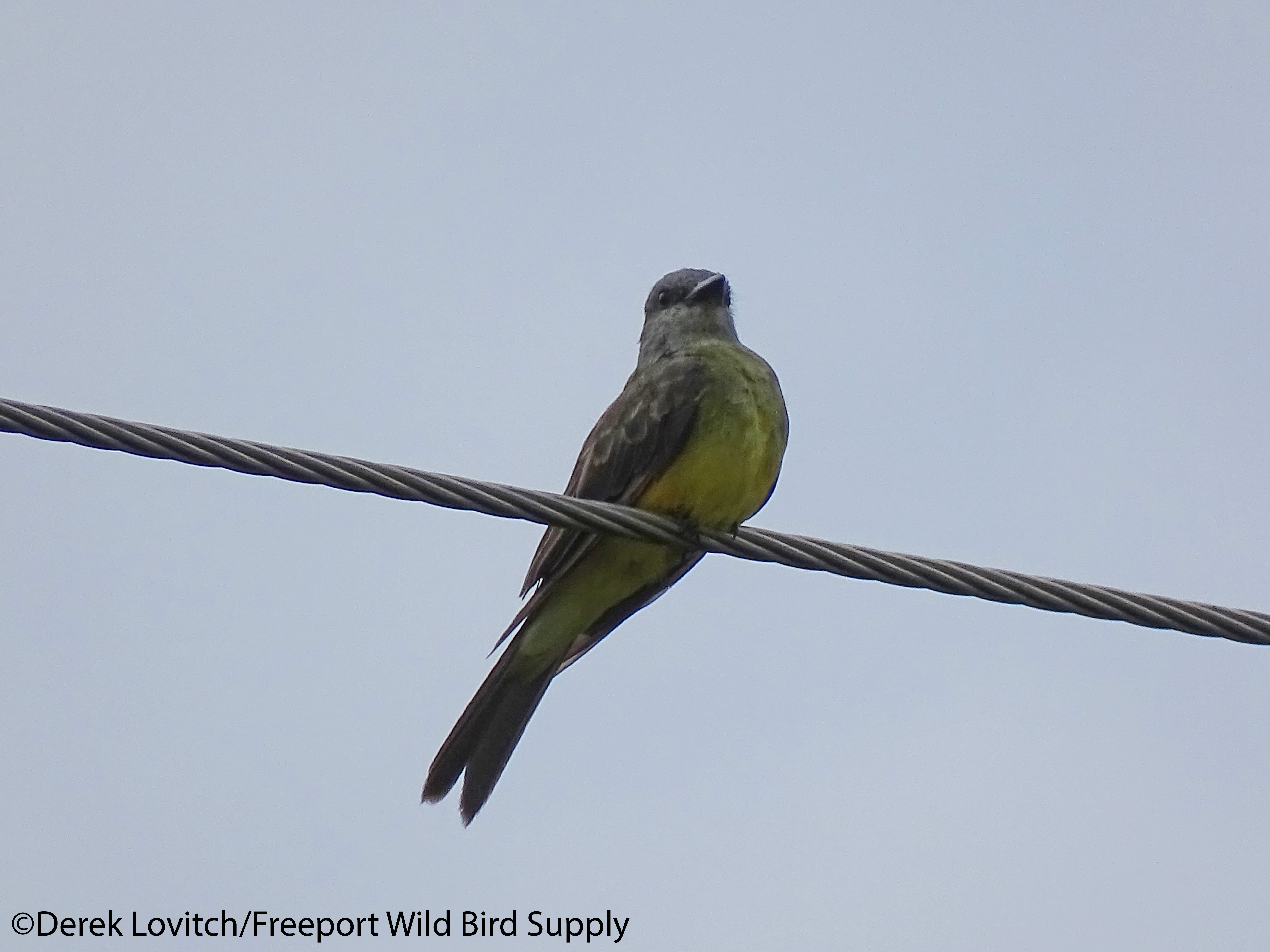
This Tropical Kingbird, a long-overdue third state record, was discovered at the Skelton Dam Boat Launch in Dayton. Many of us saw it on the morning of 7/18, but it may have been present for nearly three weeks before being identified!
It’s been a busy 12 days, with a weekend in Quebec City and summertime human visitors. Of course, the last day in Quebec City was when the Ferruginous Hawk was 20 minutes from our home. Oh well…brunch was absolutely fantastic. Sadly, life and work minimized my birding during this period, despite a suite of rarities now appearing around the Northeast. Luckily, I did have a couple of good mornings in the field before we head out on our summer vacation, including hours of quality time with a Tropical Kingbird in Dayton that was happily identified while I was around and somehow free of responsibilities for the morning! I wonder what will show up while we are gone this time!?
Both Yellow-billed and Black-billed Cuckoos have been calling on our Durham property all week.
2-3 Grasshopper Sparrows, Auburn-Lewiston Municipal Airport, Auburn, 7/15 (with Doug Hitchcox et all).
1 continuing TROPICAL KINGBIRD, Skelton Dam Boat Launch, Dayton, 7/18 (with m’obs). Third state record, first chase-able. Long overdue state bird for me! After years of expecting, predicting, and looking for one, in my frustration, I pulled it off my “Next 25 Predictions List” and so I don’t get any credit for this one. I still enjoyed it though. Photo above, and video here: https://www.facebook.com/share/v/4qyGf1VSmw1wpSon/
The salt pannes along the Eastern Road Trail in Scarborough Marsh are exceptional right now due to low water levels. On the morning of the 19th, a few of the tallies included 125+ Snowy and 50+ Great Egrets; 50+ Glossy Ibis; and 20+ Great Blue Herons. Shorebird numbers included a nice number of Least and Semipalmated Sandpipers; 50+ Greater and 30+ Lesser Yellowlegs; 16 Short-billed Dowitchers; and 2 Pectoral Sandpipers (FOF). Of course the highlight for me, however, was “Patches Jr, Jr” – the proposed HYBRID TRICOLORED HERON x SMALL WHITE EGRET(S) SPP back for another year. In fact, it’s already year 12 of this complex here. Unfortunately, it was too far for photos today. For more information, see: North American Birds, Volume 72: No 2, pp 28-40.
Jeannette and I spent a few days last week again assisting Dr. Adrienne Leppold of Maine IF&W with a project to put radio transmitters on Wood Thrushes, a species that is declining dramatically throughout its range. This one was particularly feisty, especially for a thrush!
Although breeding season is in full swing locally, it’s already “fall” for a number of species. Swallows are aggregating and some are heading south, some early and failed nesters are already departing, and the first wave of southbound shorebirds have now arrived! My observations of note over the past seven days including the following:
Cuckoos became more vocally-conspicuous as they usually do this time of year along the coastal plain, including a daily Black-billed in our Durham yard and 2-3 Yellow-billed at Suckfish Brook Conservation area in Falmouth on 7/8 (with Jeannette).
1 fresh juvenile Ring-billed Gull, Auburn Riverwalk, Auburn, 7/5 (seems really early to have one so far away from a breeding lake).
1 female ORCHARD ORIOLE, Old Town House Park, North Yarmouth, 7/6 (with Saturday Morning Birdwalk group).
1 Least Sandpiper (first southbound shorebird migrant of fall!), Green Point WMA, 7/7.
2 AMERICAN OYSTERCATCHERS, Pine Point, Scarborough, 7/9.
9 Lesser Yellowlegs (first of fall), 4 Greater Yellowlegs, and a smattering of Least Sandpipers, Pelreco Marsh, Scarborough Marsh, 7/9.
Tours and Events:
Please join me in Jay on Thursday at 4pm as I give a presentation and answer questions about Birdwatching in Maine: The Complete Site Guide at the Jay-Niles Memorial Library. Free and open to the public.
Tour itineraries are meant to be broken. Or is that “rules.” Well, those too.
We have offered some kind of “Bicknell’s Thrush Wekeend” tour for almost 15 years now. There was a hiatus for COVID, and last year – perhaps due to the uncertainty with travel planning – we pulled the plug on our weekend for the first time as registrations were slow to come in.
Therefore, for 2024, it was time to try something new and head into Northern New Hampshire for a new plan of attack. Two chances at Bicknell’s Thrush over the course of two days, with this one enigmatic bird the sole focus (well, at least until we see it) – that part of it had not changed. Everything else was new this year.
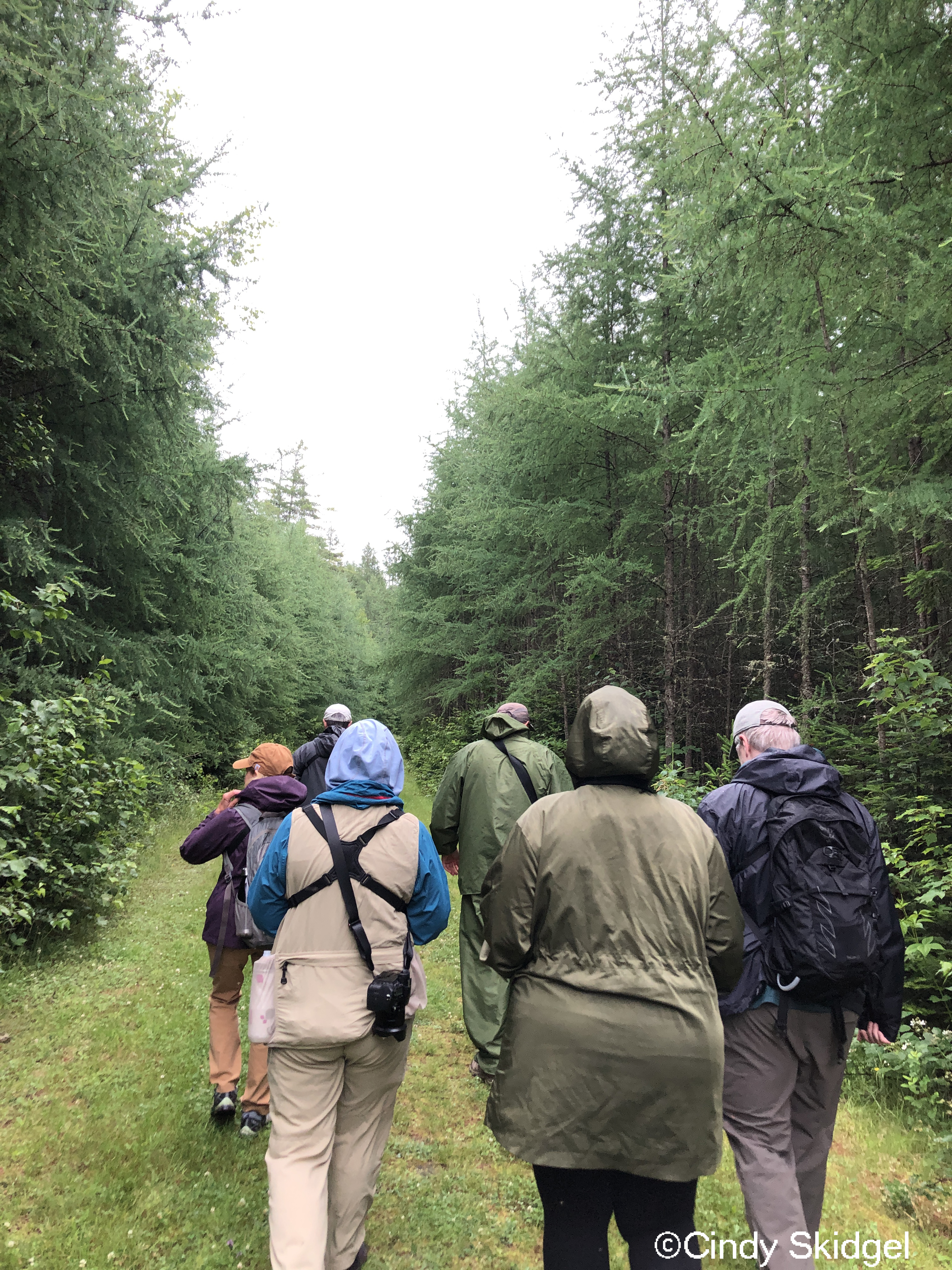
We assembled at 9:00am on Saturday, June 29th in Errol, New Hampshire. The itinerary? Well, never mind.
Several folks arrived to see their guide staring up at the sky and immersed in deep thought (you could smell the wood burning). It wasn’t raining, and it looked like we had a nice window of fair weather. But it was already 9:00am, and by the time we got up the mountain…
…but the forecast for tonight. And tomorrow morning.
…but it can’t be worth it to try for one of, if not the, most elusive of North American breeding songbirds in the middle of the day.
…and it’s getting warm.
…and there’s rain building to our west. The winds are picking up higher up.
…but let’s go for it!
So up the mountain we went. At least we would be trying. And that evening, with the risk of severe thunderstorms, we might not even have a chance to try. And the next morning didn’t look great.
But weather forecasts are fickle, especially up here in the mountains, so it’s hard to make plans. But it’s easy to look up and see what’s about to happen, or not. And when I looked up, my face didn’t get wet, so that’s the only forecast that’s dependable in these parts.
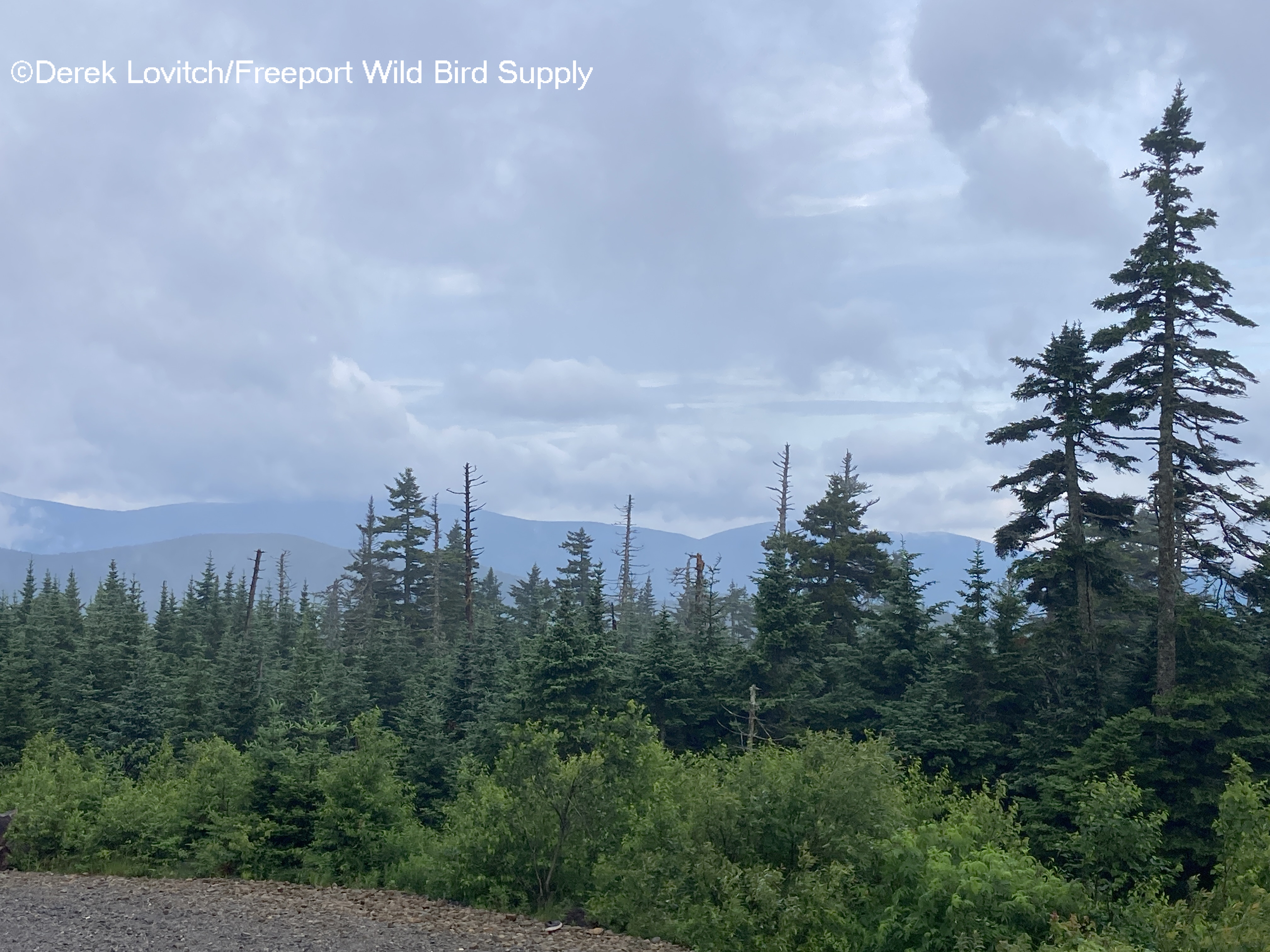
We raced up hill, arriving at about 3,000 feet and the realm of the Bicknell’s Thrush around 10:30, stopping for a Ruffed Grouse in the road escorting five chicks.
Southerly winds were increasing, blowing right up into and through our thrush territories. This was pointless. But hey, the rain was still across the valley. So we birded.
We heard the Fox Sparrow, spotted a couple of Blackpoll Warblers, and enjoyed the usual high-elevation species like Yellow-rumped Warblers and Dark-eyed Juncos.
Then, at the surprisingly late (or extremely early) time of about 11:15am, a Bicknell’s Thrush began to call. Over the next 15-20 minutes, we were treated to two birds counter-singing, and at least 3 or 4 birds calling. One bird silently flew across a clearing, as well seen as a thrush in flight can get. The two dueling birds darted between trees and occasionally paused in view of one or two people before melting back into the trees.
There weren’t photography opportunities, but everyone was more than satisfied with the sum of their views. And it was a tremendous auditory performance. Overall, it was actually a pretty good show, and really demonstrated the behavior of this fascinating bird. And since this is more than just a tick and run” tour, the birds’ behavior was instructional and of keen interest.
And after all being satisfied, the rain arrived.
We enjoyed a leisurely and delicious lunch, and then set out for a little more birding. Making up for the change of plans in the morning, we took a walk and a drive through some boreal habitats, but rain was becoming steadier now. We heard and saw a few common birds, but it was just some good quality time in the afternoon woods, absorbing our phytoncides. When the rain arrived in earnest, we called it quits and went to check in at our hotel.
The original plan was to have an afternoon break, early dinner, and then head up the mountain at dusk to take advantage of the evening activity of the thrush. Instead, we had a relaxing dinner, many of us enjoyed a beer or glass of wine, and we just chatted. Good conversation was enjoyed by all, and the rain kept falling.
At one point, the rain let up and I began to ponder a run up the mountain. Just in case the thought became serious, a downpour arrived. Dessert was ordered.
We were back in our hotel rooms at about the time I had planned to be on the mountaintop, so I didn’t know what to do with myself! I think I was stressed about having nothing to stress about. When a tour is solely dedicated to one species, a trip is a failure without that one species. But we already had our quarry, and if it was raining in the morning, oh well. And if it wasn’t, we would just go enjoy the bird some more. I think I had the longest and best night of sleep I can recall while leading a Bicknell’s Thrush weekend!
Well, it wasn’t that long. A “civilized” 5:30am departure from the hotel (thanks to our success the day before) found us free of the rain that was forecast, and there were even a few breaks of sun. It was rather breezy atop the mountain, and in almost two hours, we only had a couple of calls from Bicknell’s Thrushes. A simple continental breakfast was served from the back of my Subaru.
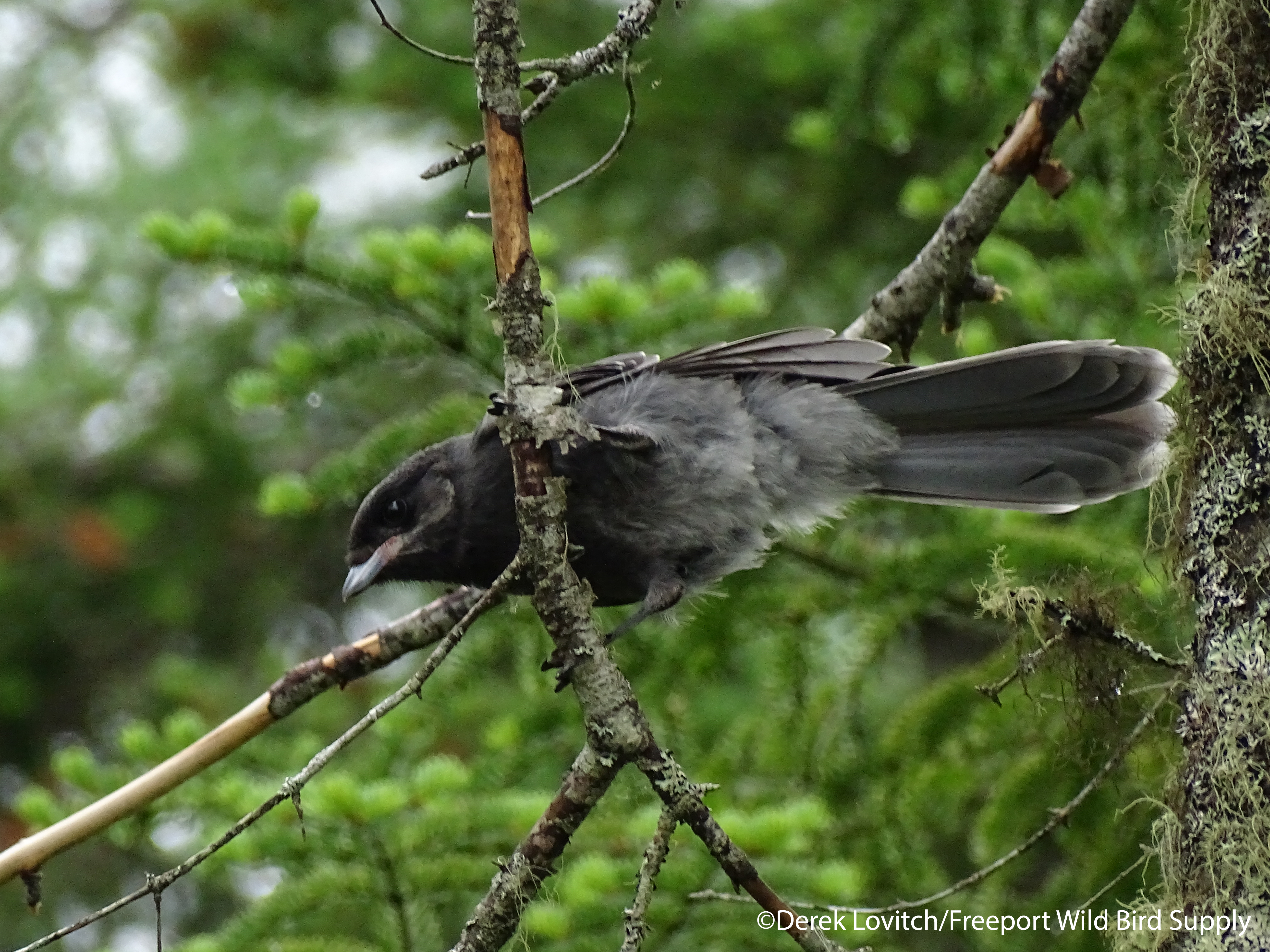
However, we had a Canada Jay (likely the last youngster in a family group that passed just downhill from us) in plain view, and spent some quality time with the local breeders like Blackpoll Warbler. Then, much to my disbelief, the second-most wanted bird on the tour (according to an unofficial survey), began to call very close to us. Could it be? I had to be mistaken. But not much else sounds like a Black-backed Woodpecker!
Then, with jaws dropping to the ground, it proceeded to fly overhead of us, heading up the mountain where it called a few more times. That was not something I was expecting – not just the species, but such a great look at it in flight (I can only recall one other time that I had seen one overhead) and far removed from the deep and dark bogs most of the local birds prefer.
Between yesterday’s thrush luck and today’s woodpecker fortune, not to mention another mountaintop visit devoid of the forecast rainfall, we were just ecstatic.
And then this happened…
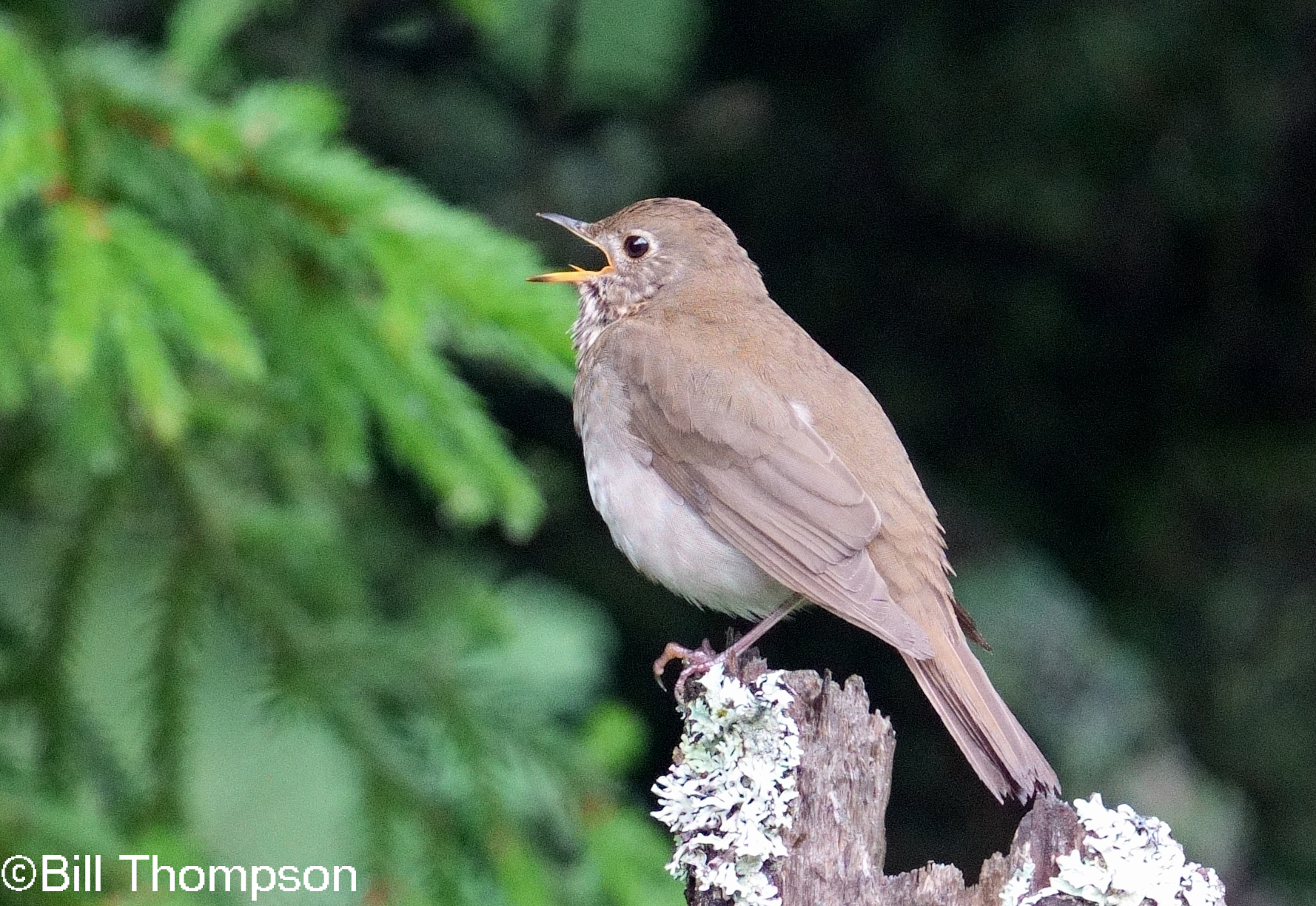
You get a photo, and you get a photo, and you get a photo!
Wow. Just wow.
And it was on a snag that I had just declared, “if this bird comes out, it’s going to perch here.” Most people thought I was joking.
The thrush didn’t. Now, I wish I could always control birds like this, but especially with this species, I have really come to know them and their behavior. To me, it did look perfect for one to sit on. But no, I did not expect it to be sitting on it, singing up a storm, about 30 seconds later. It truly is better to be lucky than good.
And it sat there for long enough to take your camera down, adjust your settings, and return to firing away. It was even there long enough for your dumbfounded guide to remember he had his camera with him for a change. My panicked photos did not do the bird justice, so I will let everyone else’s speak for themselves.
There wasn’t much left to do up here, so we began our trek downhill.
A Mourning Warbler cooperated nicely.
Then, returning to our cars a (the?) family group of Canada Jays returned and came to check us out. Kathy’s granola bar was clutch here as two adults had a snack, with 2-3 dusky juveniles looking on, learning the ways of the Camp Robber.
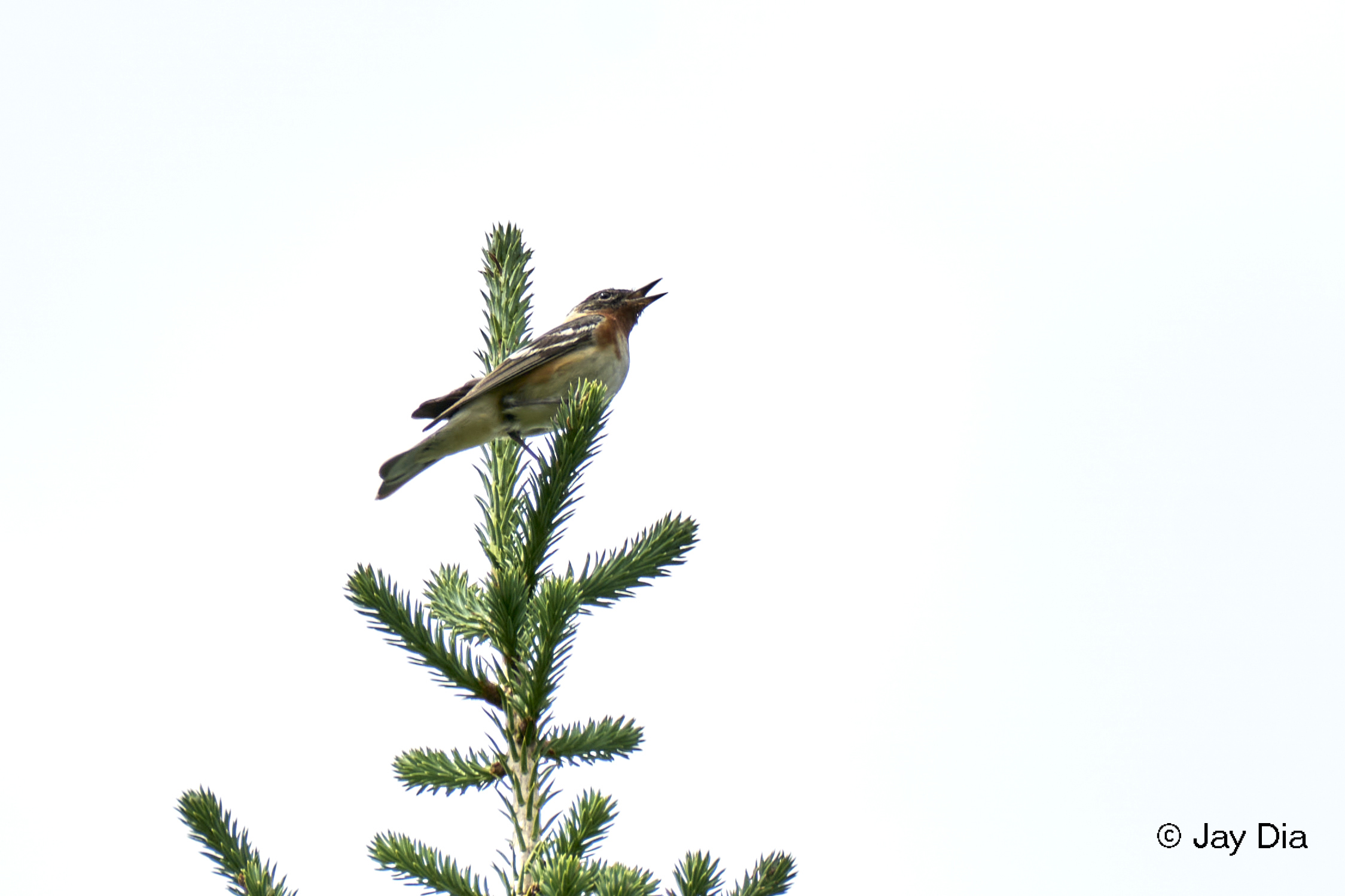
And then Kathy exclaimed “there’s a Bay-breasted!” and we all looked up to see a stunning male singing from a roadside fir right over our heads.
We heard or saw at least another 5 Mourning Warblers on the way down, glimpsed a busy Lincoln’s Sparrow (a Sharp-shinned Hawk passed overhead precluded a better observation, however), and took some time to enjoy and identify butterflies – even skippers (OK, only Bill actually identified said skippers) – and plants.
White Admiral
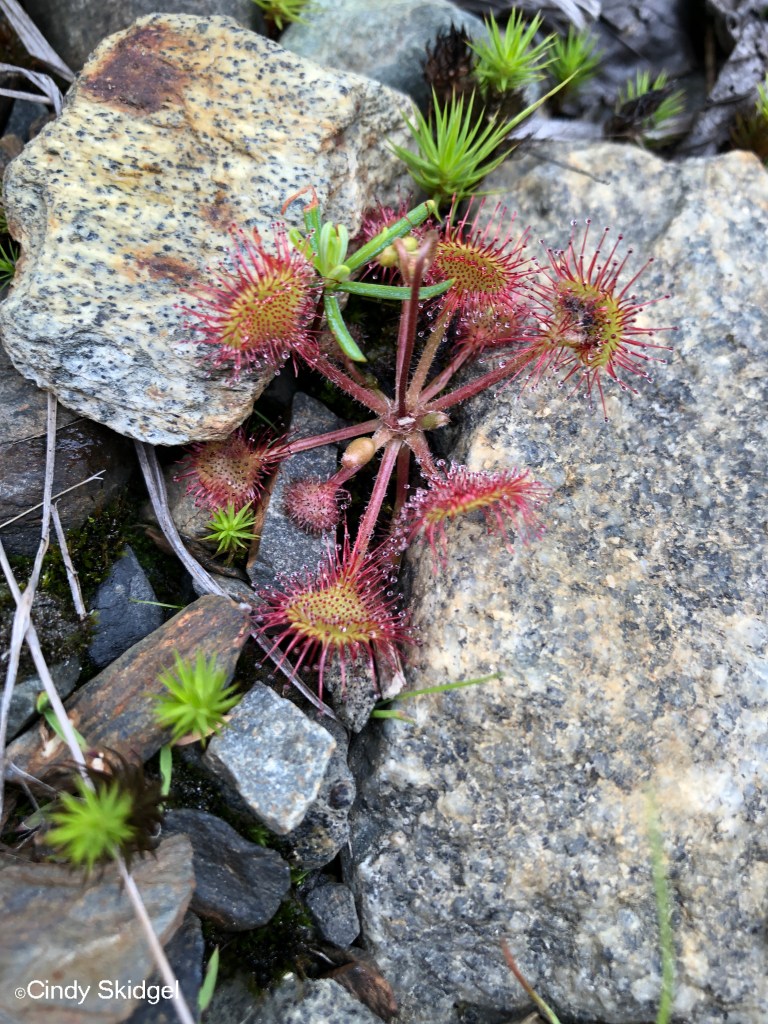
Round-leafed Sundew.
But as the winds began to gust, more rain was approaching, and ATVers were becoming overwhelming, we left the mountain and headed to Colebrook for a relaxed, celebratory luncheon as the rain began to fall and before we headed our separate ways.
As for this new Bicknell’s Thrush Weekend itinerary (with and without necessary audibles), well, I think you can assume we’ll see you here again next year!
I was so shocked how well we saw a particular Bicknell’s Thrush in New Hampshire over the weekend that I first forgot I had my camera on me, and then I butchered the settings and photographs. I refuse to share them as they don’t do the bird justice! Therefore, enjoy Jeannette’s photo of a productively provisioning Common Yellowthroat from Shirley Bog last week.
I covered a lot of ground over the past ten days, both personally and professionally. From two days in the mountains of New Hampshire with my annual Bicknell’s Thrush Weekend tour to an anniversary getaway in Monson for two days, I was lucky enough to spend lots of time in spruce forest this week. Outside of our wildly successful visit to New Hampshire (incredible views of Bicknell’s Thrush, Black-backed Woodpecker, Canada Jays, Boreal Chickadee, Bay-breasted and Mourning Warblers, and much more), my less expected observations of note over the past ten days also included the following:
1 adult Lesser Black-backed Gull and 1 American Oystercatcher, Hill’s Beach, Biddeford, 6/24.
1 adult LITTLE BLUE HERON and 8 Black-bellied Plovers, The Pool, Biddeford Pool, 6/24.
3-4 continuing RED-NECKED GREBES, 5 Red-breasted Mergansers, 2 Surf Scoters, and 1 Black Scoter, Ocean Avenue, Biddeford Pool, 6/24 (see last week’s report for notes on the grebes).
1 Greater Yellowlegs, Simpson’s Point, Brunswick, 6/26.
3-4 singing Tennessee Warblers, Shirley Bog and rail trail, Shirley, 6/28 (with Jeannette).
Scattered few Red Crossbills, Shirley-Greenville, 6/28 (with Jeannette).
A personal yard highlight was confirming a pair of Great-crested Flycatchers are occupying our kestrel box.
Tours and Events:
There will not be a Saturday Morning Birdwalk on 7/13.
Thanks to Mike Williams for allowing me to share his photos of this amorous pair of Red-necked Grebes along Ocean Avenue in Biddeford Pool. We’ve had 1-2 Red-necked Grebes “oversummering” here for the last few years, and last year I observed some rudimentary nest building from a pair (also with a stunned tour group). But we did not expect to see them, get, uh “that into it,” with courtship, nest-building, and even copulation. Unfortunately, as you could see, the “nest” was below the high tide line, so there’s not much chance of success here. A freshwater wetland breeder that nests no closer than central Quebec, this is odd behavior in a very odd place! It was amazing to watch though, and anytime we get to see Red-necked Grebes in full breeding plumage is a highlight on its own.
Like last week, much of my time was spent with our local breeding birds. From my personal “mini-breeding bird surveys” to a 7-day tour for Gulf Coast Bird Observatory, the birds that call Maine home in summer were once again the “targets” and the highlights, from Saltmarsh Sparrows and Roseate Terns to Grasshopper Sparrows and our wealth of warblers.
However, June is a good time for oddities. During the course of enjoying our usual species, I encountered the following observations of note over the past 10 days:
3 (!) RED-NECKED GREBES, 16 total Black Scoters, 3 Surf Scoters, etc, Ocean Avenue, Biddeford Pool, 6/16 (with Martin Hagne and Denise).
After being excited to find the 3 breeding plumage RED-NECKED GREBES the day before, we were shocked to find 4 the next day, all calling, and one pair courting and copulating! Photos and more details above. (with Gulf Coast Bird Observatory tour group).
2 American Oystercatchers, 1 Red-breasted Merganser, 1+ Black Scoter, Ocean Avenue, 6/17 (with Gulf Coast Bird Observatory tour group).
1 Surf Scoter, Dyer Point, Cape Elizabeth, 6/17 (with Gulf Coast Bird Observatory tour group).
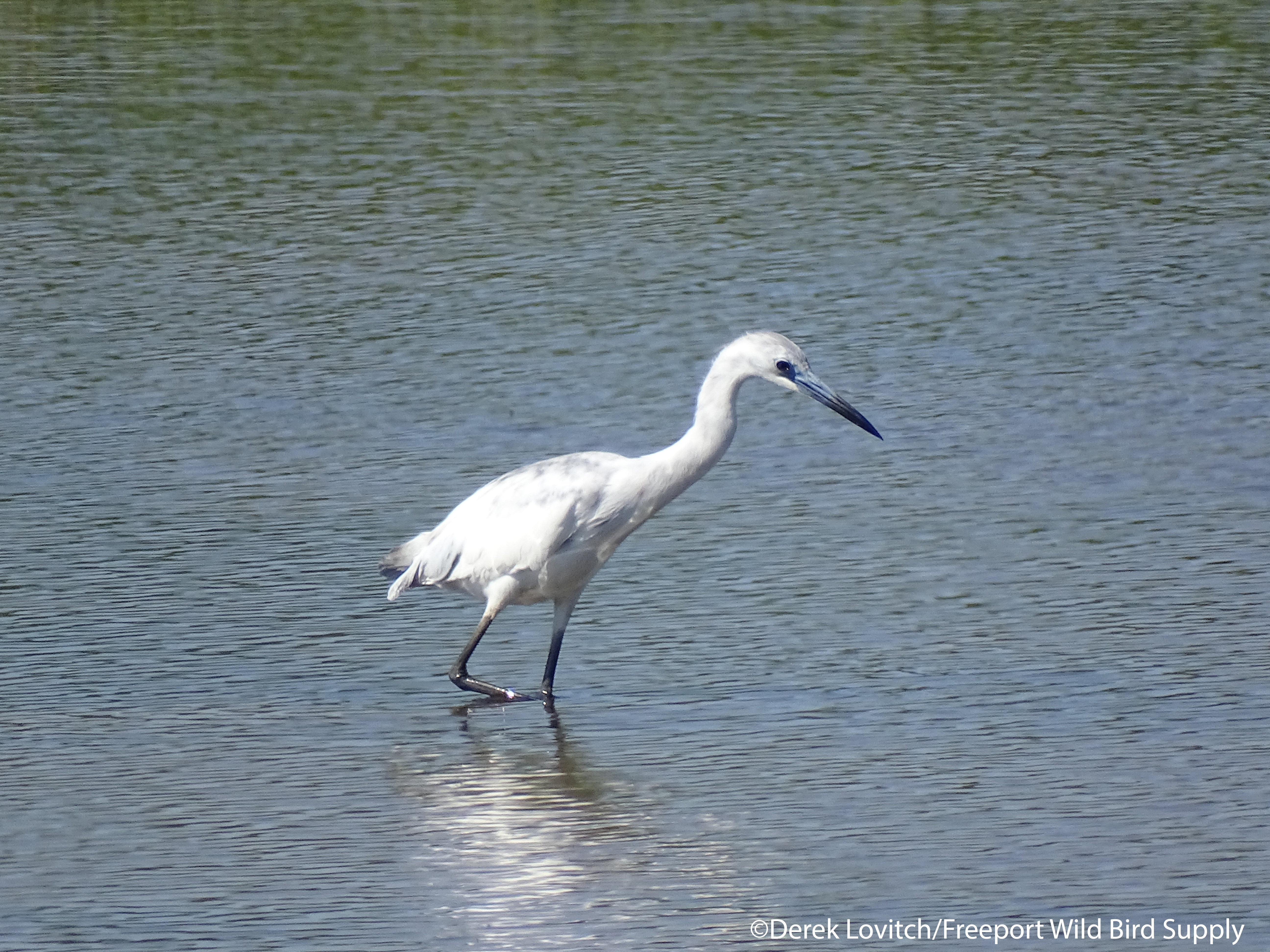
Little Blue Herons have declined in Maine, so it was nice to find my second of the year in an untraditional location. This 1st summer bird was in the marsh behind Seapoint Beach in Kittery on the 2nd.
Typical later migrants, such as Blackpoll and Magnolia Warblers, and a variety of flycatchers, were still moving in and through, especially during the first week of June. Then, my gears rapidly shifted to breeding birds on tours, events, surveys, and just general birding enjoyment. Quality time with boreal breeders in the Rangeley area and specialties such as Saltmarsh and Nelson’s Sparrows, Roseate Terns, etc here at the coast were the usual highlights of the first half of June, both personally and professionally.
In addition to the regular breeding birds we seek – again, both personally and professionally – it’s also a good time of year for unexpected birds in unexpected places, and just general good birding. Some of my additional, less expected observations of note over the past ten days included:
1 immature male and 1 female ORCHARD ORIOLE (FOY), and 1 late Red-throated Loon, Fort Foster, Kittery, 6/2.
1 1st summer LITTLE BLUE HERON, Seapoint Beach, Kittery, 6/2. Photo above.
A visit to the Kennebunk Plains on 6/4 with Jeannette yielded 2 singing CLAY-COLORED SPARROWS (one continuing male near “Clay-color Corner” and one about half-way between there and the main parking lot on the eastern loop trail). 2 UPLAND SANDPIPERS, 6 GRASSHOPPER SPARROWS, and at least 11 Red Crossbills were also detected.
1 pair Cape May Warbler, 1 Wilson’s Warbler, 1 Olive-sided Flycatcher, Palm Warblers, displaying Wilson’s Snipe, family of Canada Jays, etc, Dallas Plantation, 6/7 (with Matt Young).
Fun to be in the field with Matt Young for the Rangeley Birding Festival and hear him describe (and hopefully me learn!) Red Crossbill call notes. There weren’t many around, but we did encounter both Type 12’s and Type 4’s. Meanwhile, scattered birds continue to be widespread down here at the coast.
7 Turkey Vultures, over downtown Rangeley from porch of Parkside and Main, 6/7 (With Matt Young and Birds on Tap! event group for the Rangeley Birding Festival). Less than 10 years ago, a single was unheard of.
1 Semipalmated Plover, Eastern Road Trail, Scarborough Marsh, 6/11 (with clients from New Jersey).
Tours and Events:
Due to tours, there will not be a Saturday Morning Birdwalk on either 6/22 or 6/29.
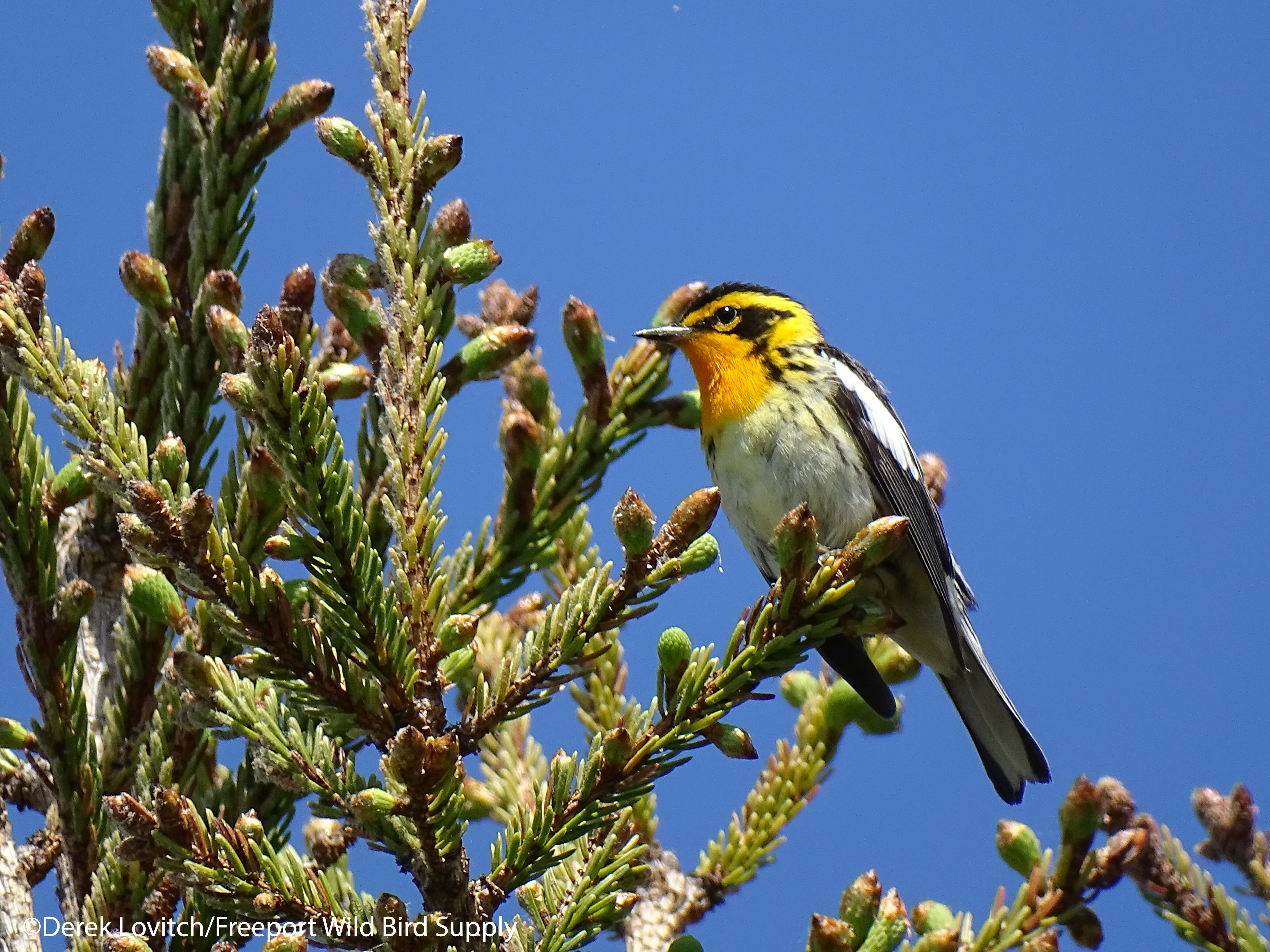
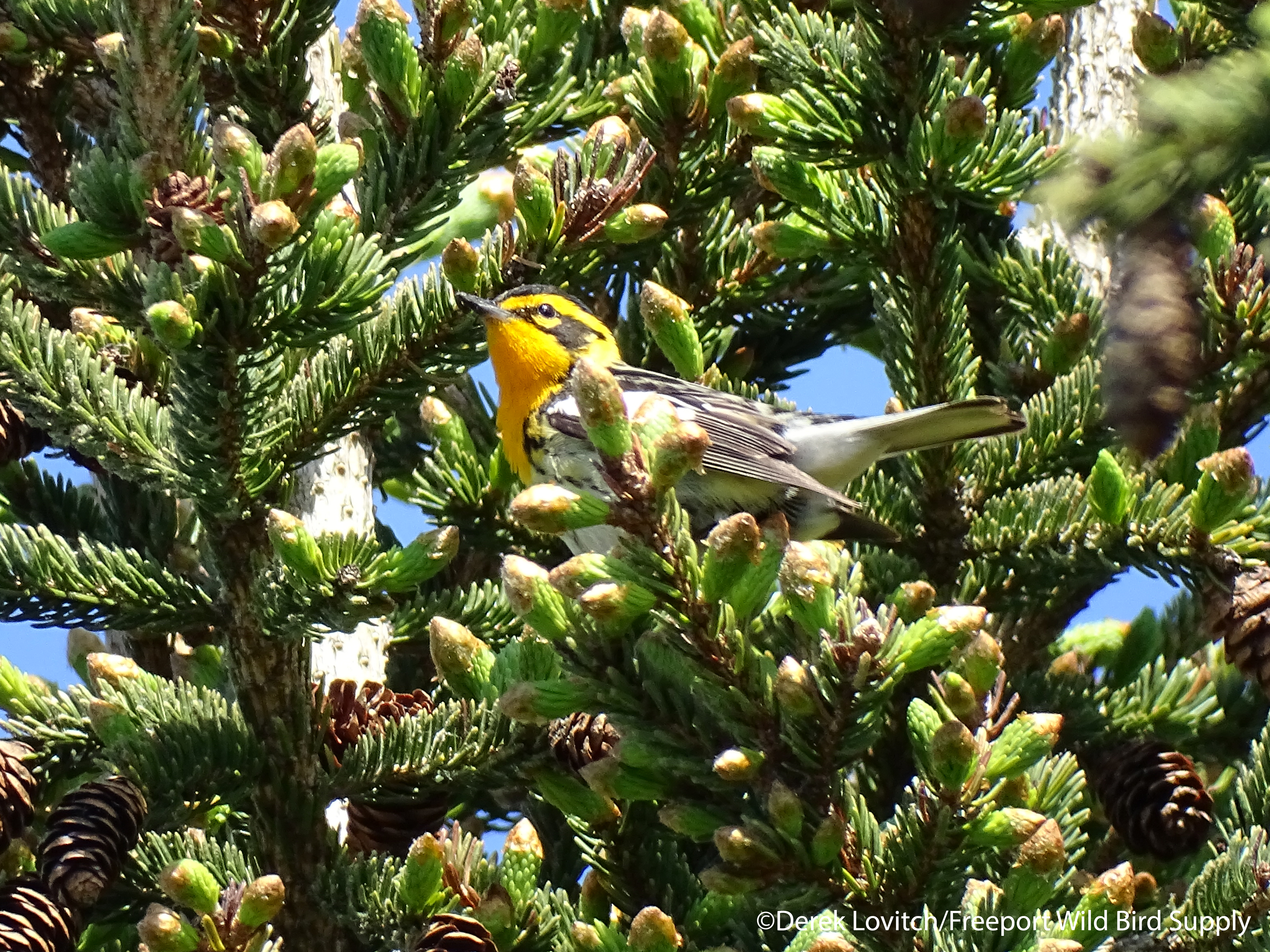
Blackburnian Warbler near and at eye-level were one of the many highlights during my annual Spring Monhegan Migration Tour.
Five days on Monhegan (four with a tour, one with Jeannette) from 5/24-28 had few rare bird highlights, but good overall diversity and generally very good bird watching opportunities. A total of 93 species in those 5 days included 1 BLUE GROSBEAK (5/25); 1 PURPLE MARTIN (5/24 and 5/26); impressive numbers of RED and WHITE-WINGED CROSSBILLS throughout the island; Yellow-bellied Flycatcher (FOY), Olive-sided Flycatcher (FOY), Tennessee Warbler (FOY), several Black-billed Cuckoos (FOY); 1 Razorbill in the harbor on 5/26; and 4 RED-NECKED PHALAROPES on the ferry ride home on 5/28. There were a lot of uncommon to rare-on-Monhegan migrants around, too, from Blue-winged Teal to Cliff Swallow. A complete report of our tour can be found here.
Back in the real world, my observations of note for the rest of the week included:
1 continuing GRASSHOPPER SPARROW, Auburn-Lewiston Municipal Airport, 5/30.
With my first visit in three weeks to Scarborough Marsh on 5/31, several personal first-of-years included Saltmarsh and Nelson’s Sparrow, Roseate Tern, and 4 White-rumped Sandpipers (Eastern Road Trail). Other migrant shorebirds included ~70 Semipalmated Sandpipers, 1 Dunlin, and 1 Greater Yellowlegs off Eastern Road, and 10 Ruddy Turnstones, 9 Black-bellied Plovers, and 1 Lesser Yellowlegs at Pine Point. Other observations of note included the continuing TRICOLORED HERON off of the Eastern Road Trail, and 2 PURPLE MARTINS at Pine Point.
2 Willow Flycatchers (FOY, finally), Old Town House Park, North Yarmouth, 6/1 (with Saturday Morning Birdwalk group).
Tours and Events:
There will not be a Saturday Morning Birdwalk on 6/8 as I’ll be in Rangeley guiding at the Rangeley Birding Fest. Note that there are still some spaces on a variety of tours still open. They can be found here.
Blackpoll Warblers were pleasantly ubiquitous over the weekend, with endless opportunities to view them without neck strain for a change.
I just can’t walk away from a male Blackburnian Warbler in the sun, especially at eye-level. Just can’t do it. While Blackpolls were the most numerous migrant of the tour, as expected for the end of May, Blackburnian Warblers consistently stole the show.
Our 14th annual Monhegan Spring Migration Weekend was highlighted by three days of insanely gorgeous weather, 18 species of warblers, and loads of crossbills. But what set this year’s tour apart was how consistently amazing the looks were at so many birds, especially both crossbills and some of our favorite warblers.
The tone was set on our Friday crossing from New Harbor, with lovely weather and 2 fly-by Atlantic Puffins. And once again, we hit the ground running after our 10:15 arrival, taking nearly an hour just to walk up Dock Road. One of our favorite corners was just hoppin’, with our first stellar looks at both Red and White-winged Crossbills and Blackpoll Warblers, as well as our only Canada Warbler of the tour.
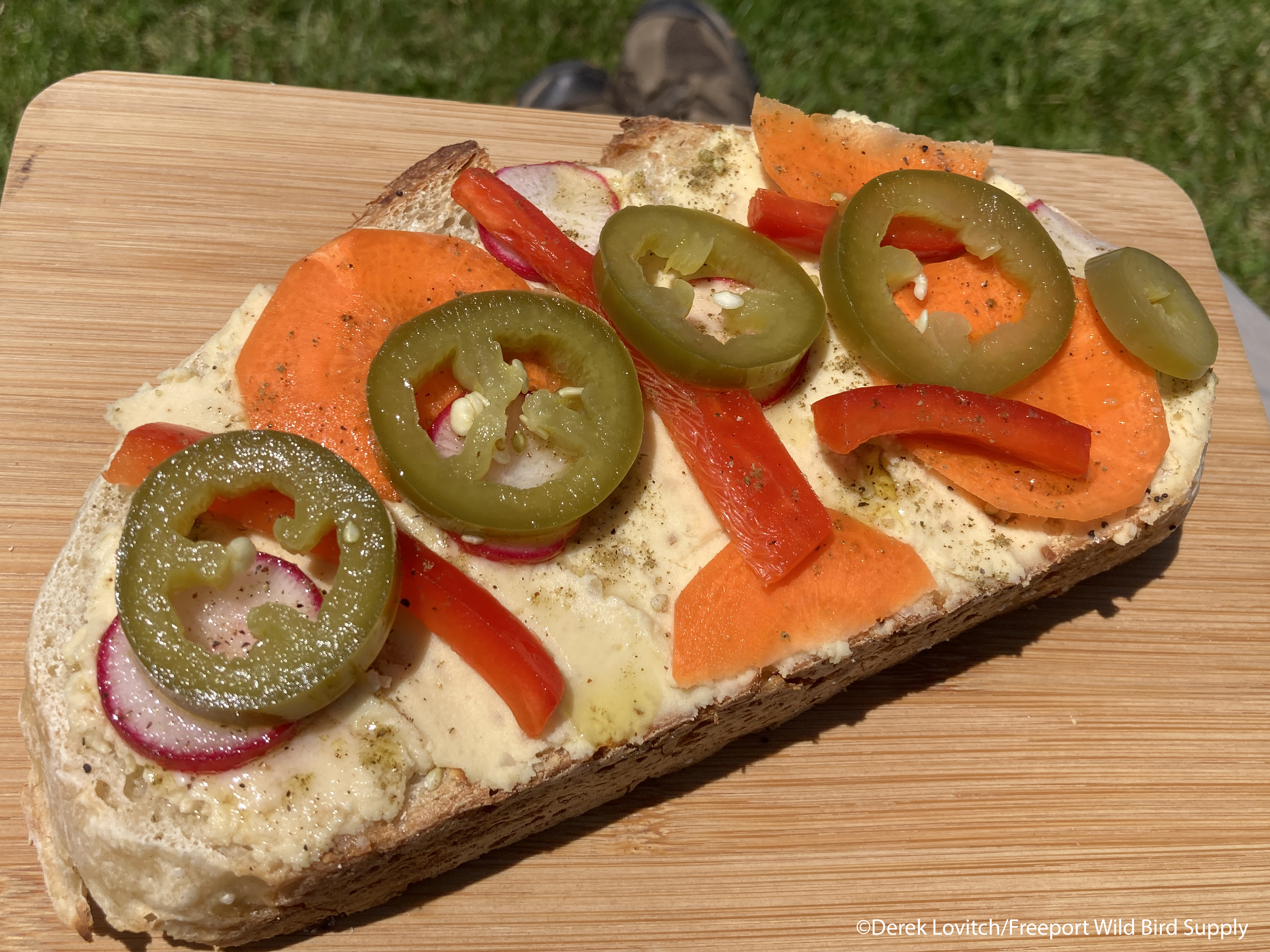
I ate a lot of hummus toasts for lunch at the Trailing Yew in an attempt to make up for copious breakfasts and decadent feeders.
The afternoon, and the next three days were filled with crippling view after crippling view. Blackpoll Warblers were everywhere, both males and females seen in close proximity repeatedly for good studies. American Redstarts were abundant, as were locally-breeding Common Yellowthroats and Yellow Warblers. But it’s been a long time since we have seen crossbills, especially White-winged, so well and so often everywhere around town and beyond. It’s hard not to name this species the bird of the tour this year.
Male White-winged Crossbills.
In that first afternoon, some of our other highlights were a fleeting glimpse of a Black-billed Cuckoo, and later we found a female Purple Martin. Birds were just unusually low and cooperative, despite the gorgeous weather, so that really set this first day apart.
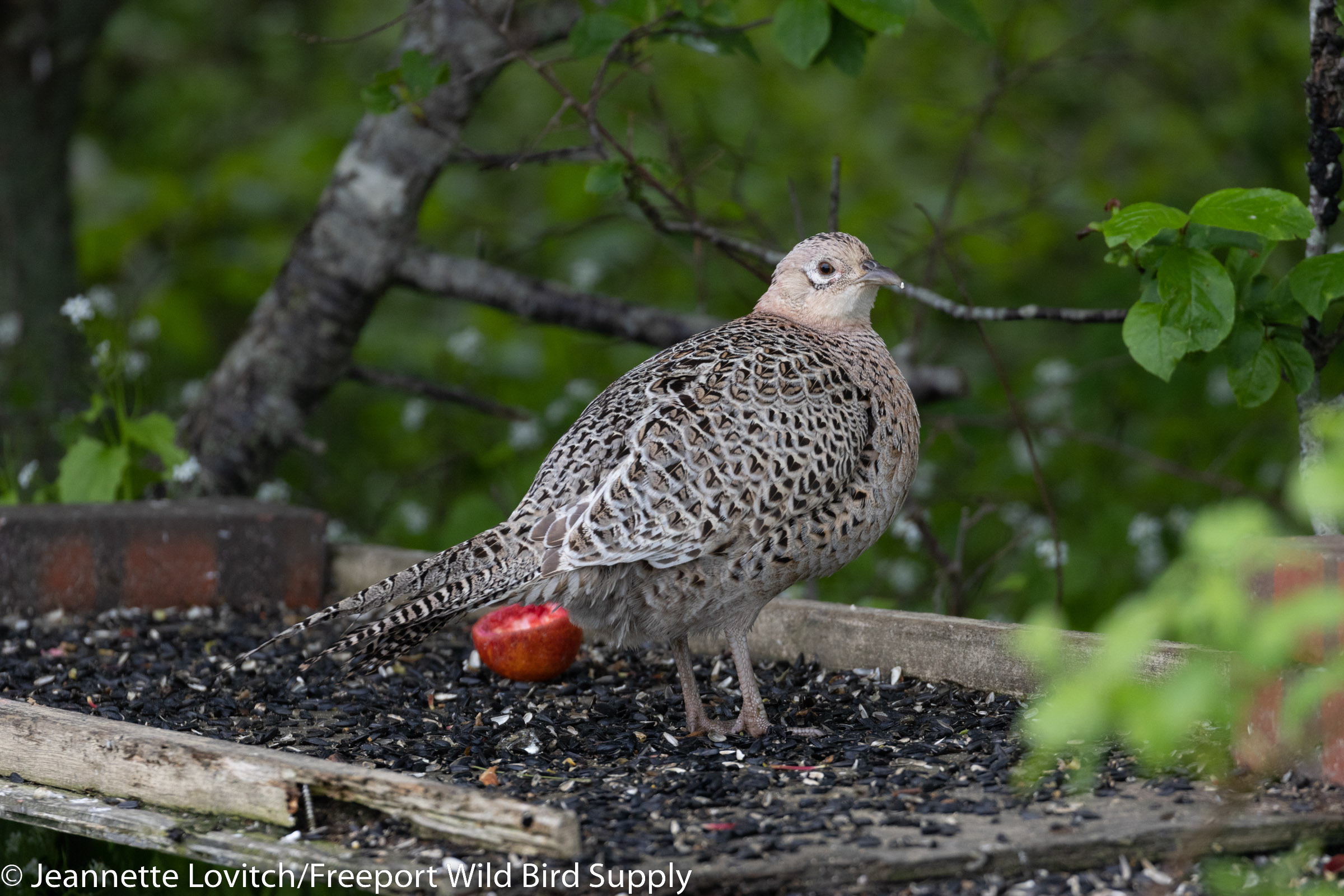
My days started even earlier than I would have liked as pheasants took to calling from the railing right outside my bedroom window. At 4am. 4am.
Unfortunately, the NEXRAD radar archive was down for the duration of our stay, so I can’t do my usual analysis here, but on Saturday morning, a light morning flight of mostly Blackpoll Warblers and American Redstarts suggested at least some birds had arrived on the light westerly wind overnight. There were also more Magnolia Warblers around, but overall, our two morning walks were slower than yesterday’s birding, but we would repeatedly find pockets of good activity with more great views of most of what we encountered.
This Cape May Warbler showed himself nicely, feeding on little midges/flies buzzing around the buds of this Red Spruce.
A Black-billed Cuckoo was as cooperative as they get, freezing on a bare branch for several minutes. Prolonged scope views of Red and White-winged Crossbills offered the chance to watch their amazing feeding behavior. The afternoon was a little slower, as expected, but still low and close Blackpoll Warblers and crossbills all around. Friends found a Blue Grosbeak that afternoon, which confirmed what I thought “had to be one” that flew across the marsh early in the morning but disappeared into brush before we could confirm its identity.
Of course we took some time to enjoy Rose-breasted Grosbeaks at Donna’s feeders, along with the omnipresent Ring-necked Pheasants.
Despite southerly winds overnight, Sunday morning was quite a bit slower, likely due to rainfall cutting off the flow of migrants from the south. We started the day with a bang though, as we moseyed down to the harbor to enjoy an up-close-and-personal Razorbill that ended up spending much of the day foraging in the harbor.
There was some passerine turnover overnight, however, and new birds this morning included an Alder Flycatcher, a calling Olive-sided Flycatcher, and finally a Tennessee Warbler – perhaps our first uncooperative warbler of the trip! The bird of the morning, however, was Blackburnian Warbler, as we started the day with amazing views just as we started and finished the morning with repeated great looks at males and females. Again, we were just in awe of the repeated great views we were getting of so many species, even if, yes, it was slow by Monhegan standards.
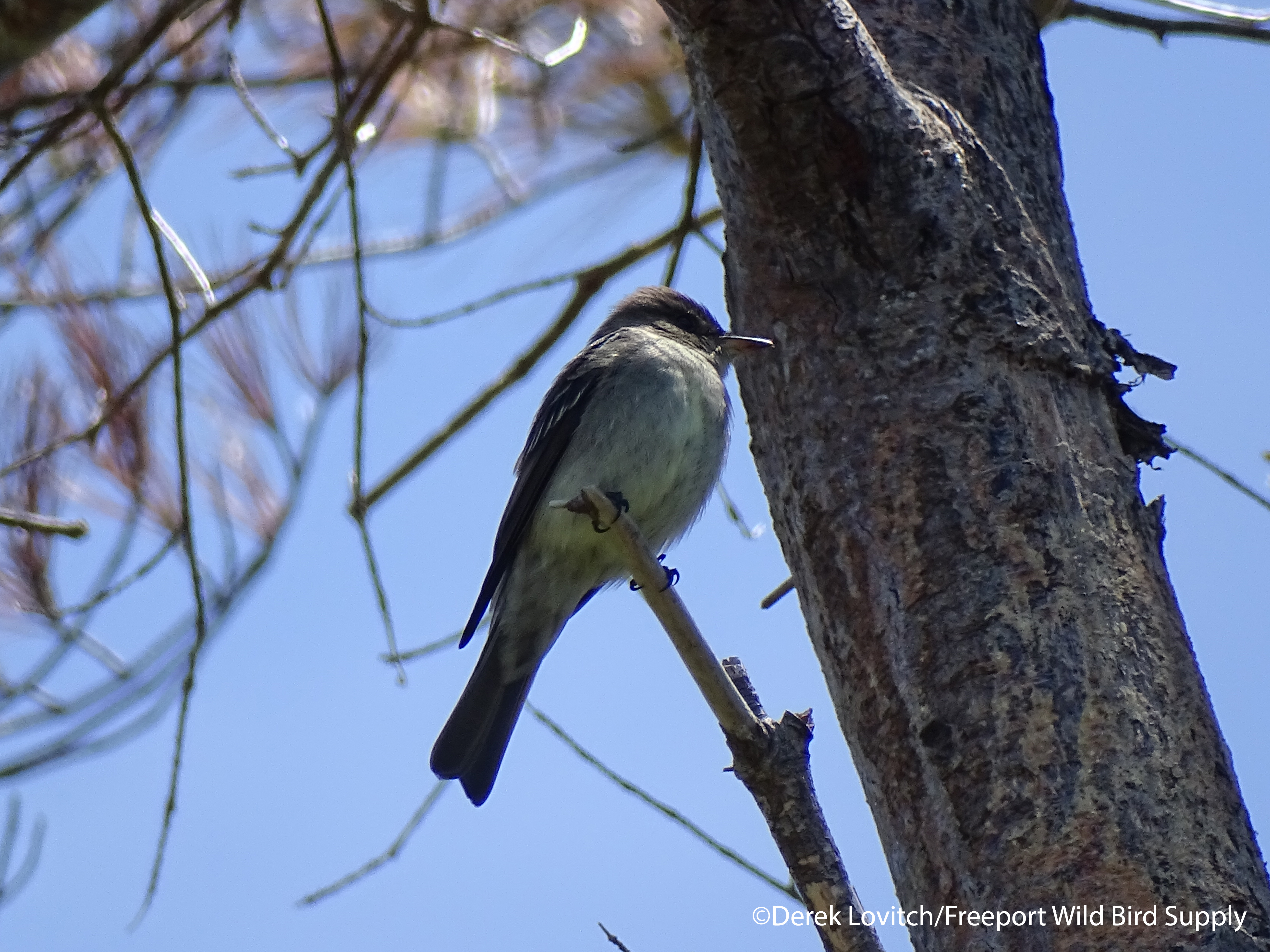
A nice selection of flycatchers over the weekend afforded the opportunity to learn how to break them down via primary projection, such as in this long-winged Eastern Wood-Pewee.
In the afternoon, we took the obligatory walk up to the lighthouse, both for some hawkwatching and snapshots. However, we ended up being enthralled (OK, I was enthralled) by a massive gull feeding frenzy that broke out over the lighthouse hill and beyond. It became clear that the gulls were not just enjoying the weather to soar on thermals but were feeding on some unseen flying insect. While a common event on the mainland, none of the birders present out here has ever seen anything like this over the island. The numerous Herring Gulls attracted a growing number of Laughing Gulls – the most I have ever seen out here (it’s usually just a few pairs around the harbor or fly-bys).
Northern Parula nest under construction.
Monday, the last day of the tour, unfortunately, did not see us go out with a bang. With light easterlies overnight and developing clouds and fog, not only did a new wave of migrants not arrive, but it seemed like just about every single passage migrant had departed! Even Blackpolls were few and far between, and the number of American Redstarts seemed only on par with the number that remain out here to breed.
Pink Lady’s Slipper in the woods.
But once again, White-winged Crossbills stole the show, with the pre-breakfast walk highlighted by incredible views of a feeding family group. And although slow all day, we covered some ground and slowly built up our triplist with everything from a Purple Finch to a calling fly-over Black-bellied Plover. We studied a Great Cormorant (and later, a second), and finally caught up with the long-staying Green Heron in the ice pond. Three tarrying Black Scoters were a surprise in Deadman’s Cove, but not nearly as surprising as the drake Green-winged Teal loafing with Common Eiders on Neigh Duck!
After lunch, an unusual-for-here assortment of swallows over the marsh included two Bank, one Cliff, joining the 2 Tree Swallows and more Barn Swallows that have been out here all weekend. Seawatching at Lobster Cove produced a hen Long-tailed Duck right off the rocks that somehow disappeared in front of our eyes.
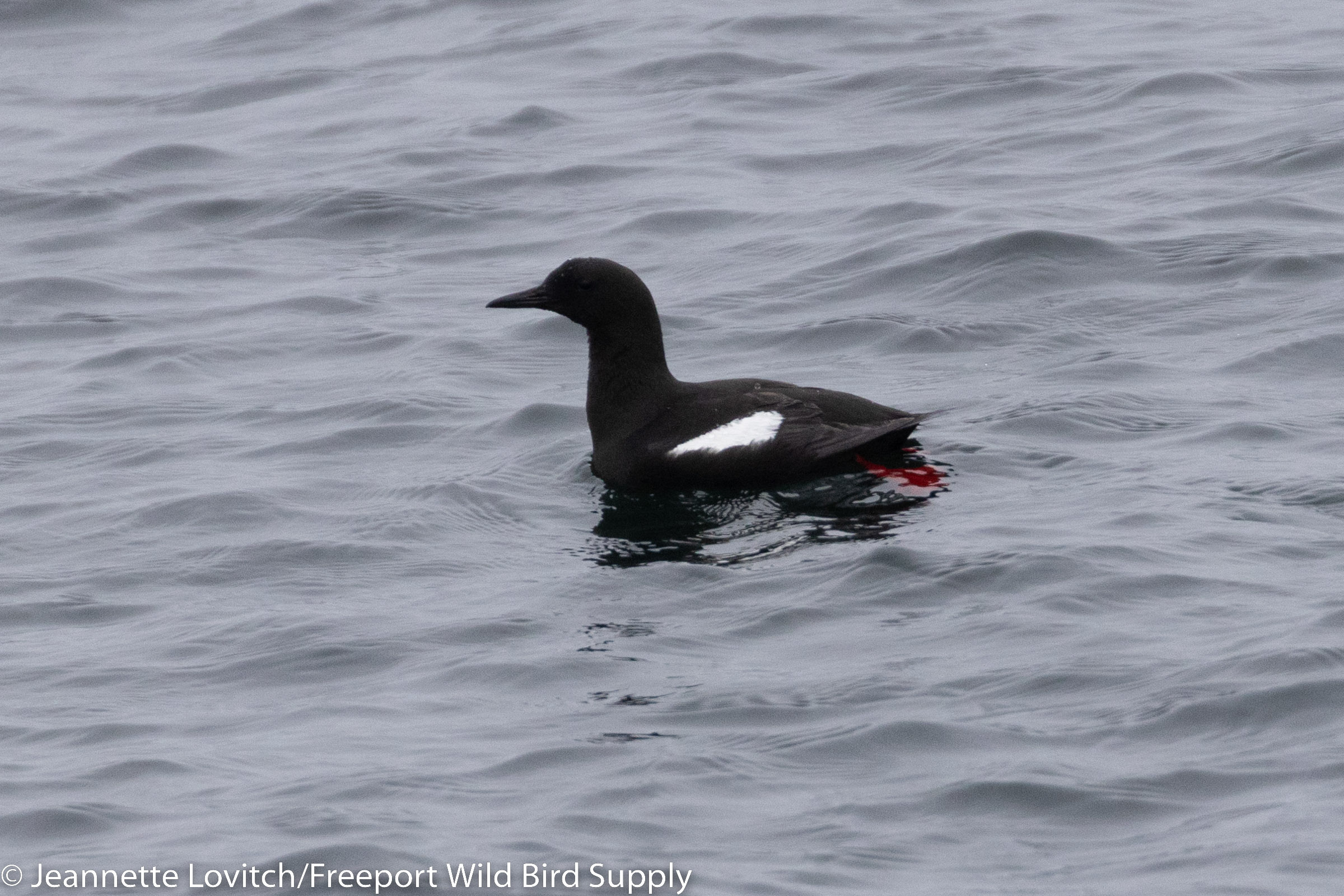
Black Guillemots were all around the island, including some close ones off of Lobster Cove that were close enough to see those vivid red feet.
“Lefty” the Red-winged Blackbird has returned for at least his third summer on territory in the marsh.
With the tour coming to an end at about 3:00pm as just about everyone readied to board the Hardy Boat, rain began to fall, bringing our tour to an official close. However, it wasn’t until dinnertime that a few downpours arrived, and so we squeezed out one more comfortable day of birding.
It was just Jeannette and me now, but “FOMO” was unwarranted. While a White-throated Sparrow outside of the Monhegan House after dinner was unexpected for the date, we didn’t add anything new to the trip list that evening, or the next morning. Rain, heavy at times overnight and a strong south wind with fog in the morning precluded any movement of birds, and our pre-breakfast walk was dreadfully slow. Passage migrants were few, just about 9 Blackpoll Warblers, 1 Canada Warbler, and 1 Northern Waterthrush, and it felt downright June-like with birdsong being almost exclusively breeding birds. We did have another look at uncommon Monhegan birds like the Blue-winged Teal, Green Heron, and Bank Swallow, but it wasn’t the hardest day to walk away from.
Juvenile White-winged Crossbill
…. Which was good, as we were forced to depart earlier than planned due to the cancellation of the afternoon Hardy Boat. With a low pressure system moving along the stalled front that likely reduced our flow of migrants over the second half of the weekend was also building the seas. Our 10:15 trip, however, featured following seas that made for a reasonable ride, but the fog remained thick until New Harbor. We did have 4 Red-necked Phalaropes materialize out of the fog, however, with one remaining on the water just long enough for Jeannette to reach for and get her camera ready.
So, while Monday – and our usual day off together on Tuesday – was lackluster overall, it was really hard to beat the weather, birding, and learning opportunities that this year’s tour offered. Hopefully, everyone will now know how to identify Blackpoll Warblers at least! Oh, and my goodness the crossbills…
We tallied a respectable 93 species, including 18 species of warblers, over the four-day tour. Although below our long-term average, this was slightly above recent spring weekends. The following counts are simply guesstimations of the number of each species we encountered each day. Not the number of observations (eg every time we passed the same singing Yellow Warbler) or even a guess as to how many were on the island on a given day, but some crude attempt to quantify how many individuals of each species we think we saw each day. The ebbs and flows and daily changes are more interesting than the undoubtedly inaccurate numbers. For species such as the two crossbills that move around, back and forth, all over each day, it was impossible to really know how many there were. “A lot” should suffice.
Here is the trip list four the four-day tour. * = seen from ferry only. **=not seen with tour group.
Species
5/24
5/25
5/26
5/27
Wood Duck
1
1
1
0
Blue-winged Teal
0
0
1
0
Mallard
15
20
20
15
American Black Duck
1
1
0
1
Green-winged Teal
0
0
0
1
Common Eider
x
x
x
x
Surf Scoter
2*
0
0
1
Black Scoter
0
0
0
3
Long-tailed Duck
1
0
0
1
Ring-necked Pheasant
8
10
10
10
Mourning Dove
8
10
8
8
Black-billed Cuckoo
1
1
0
0
Common Nighthawk
1
0
0
0
Chimney Swift
0
0
2
0
Ruby-throated Hummingbird
1
2
1
2
Virginia Rail
0
1
1
0
Black-bellied Plover
0
0
0
1
RAZORBILL
0
0
1
0
Black Guillemot
x
x
x
x
ATLANTIC PUFFIN
2*
0
0
0
Laughing Gull
6*
20
1
8
Herring Gull
x
x
x
x
Great Black-backed Gull
x
x
x
x
Common Tern
X*
0
0
0
Common Loon
5*
0
1
2
Northern Gannet
3*
0
1
0
Double-crested Cormorant
x
x
x
x
Great Cormorant
0
0
0
2
Great Blue Heron
0
0
1
0
Osprey
0
2
1
0
Sharp-shinned Hawk
0
1
2
0
Bald Eagle
2
2
2
2
Red-bellied Woodpecker
0
1
0
0
Merlin
0
1
1
1
Eastern Kingbird
3
4
5
5
Olive-sided Flycatcher
0
0
1
0
Eastern Wood-Pewee
4
4
4
3
Alder Flycatcher
0
0
1
0
“Traill’s” Flycatcher
0
0
1
0
Yellow-bellied Flycatcher
0
1
0
0
Least Flycatcher
0
4
5
1
Blue-headed Vireo
0
1
0
0
Red-eyed Vireo
8
15
10
3
Blue Jay
4
48
4
4
American Crow
x
x
x
x
Common Raven
1
1
1
1
Black-capped Chickadee
x
8
6
6
Bank Swallow
0
0
0
2
Tree Swallow
2
2
1
1
Northern Rough-winged Swallow
0
1
0
0
PURPLE MARTIN
1
0
0
0
Barn Swallow
4
1
1
6
CLIFF SWALLOW
0
0
0
1
Golden-crowned Kinglet
1
2
10
2
Cedar Waxwing
40
60
80
30
Carolina Wren
2
7
3
3
House Wren
1
1
2
1
Gray Catbird
x
x
x
x
Brown Thrasher
0
1
1
0
European Starling
x
x
x
x
Swainson’s Thrush
1
1
0
0
American Robin
10
12
8
10
Purple Finch
0
0
0
1
WHITE-WINGED CROSSBILL
6
12
20
25
RED CROSSBILL
4
15
12
4
American Goldfinch
10
10
10
10
Chipping Sparrow
2
0
0
0
Song Sparrow
x
X
x
x
Bobolink
1
1
1
1
Baltimore Oriole
2
2
1
2
Red-winged Blackbird
x
x
x
x
Common Grackle
x
x
x
x
Northern Waterthrush
0
0
0
1
Black-and-white Warbler
0
1
0
1
Tennessee Warbler
0
2**
2
0
Nashville Warbler
1
0
0
0
Common Yellowthroat
10
15
12
x
American Redstart
30
35
25
10
Cape May Warbler
2
1
1
0
Northern Parula
4
8
8
4
Magnolia Warbler
6
10
4
4
Bay-breasted Warbler
2
0
1
2
Blackburnian Warbler
3
3
5
1
Yellow Warbler
20
20
20
15
Chestnut-sided Warbler
6
8
6
3
Blackpoll Warbler
60
50
35
6
Yellow-rumped Warbler
0
1
0
0
Black-throated Green Warbler
3
8
10
1
Canada Warbler
1
0
0
0
Wilson’s Warbler
2
1
1
0
Northern Cardinal
x
10
8
6
Rose-breasted Grosbeak
2
2
0
1
BLUE GROSBEAK
0
1
0
0
Day Total
64
66
65
62
Warbler Day Total
14
14
13
12
Trip Total
93
Warbler Trip Total
18
The above birds follow the “guide plus one” rule, meaning both me and at least one client need to see the bird for it to go onto the list. I saw a Northern Mockingbird on three occasions, for example, but somehow never saw it during the tour! Likewise, an American Woodcock over the Island Inn after sunset on the 26th and the White-throated Sparrow that Jeannette and I heard after the tour ended on Monday, along with our Red-necked Phalaropes on our way home on Tuesday did not count for the official tour list.
We didn’t care how common Yellow Warblers are…they’re still always beautiful! As are the sunsets from the Trailing Yew.
Two Black-crowned Night-Herons, including this one, were a nice find for a South Portland Big Day on the 21st. Unfortunately, we didn’t have enough good finds to make up for a slow morning at the favored migrant traps.
I had just a handful of observations of note over the past six days before I head out to Monhegan, including the following:
On Tuesday, John Lorenc and I did a South Portland-only “Big Day,” trying to see as many species as we could within the city’s boundaries. With limited migrants at Hinckley Park, we clawed our way to a decent tally of 94 species by day’s end with a lot of regular migrants being undetected. Highlights for the city and the date were limited to Long-tailed Duck, Black Scoter, Glossy Ibis, Black-crowned Night-Heron, White-throated Sparrow, and Red Crossbill. We unfortunately did not turn up any rarities. My personal FOY’s were limited to Swainson’s Thrush (1 each at Clark Pond Trails and Trout Brook Preserve) and Common Nighthawk (two over John and Terez’s yard at dusk for our last species of the day, followed by 4 over our yard in Durham when I returned home).
Two tours over the weekend and private guiding on Monday were likewise fairly slow for passage migrants, but there was a distinct increase in territorial birds with each passing day, as it seemed birds were dropping into their desired habitats and not migrant traps. A big overnight flight on 5/22-23 yielded more territorial birds, but surprisingly few passage migrants on the ground.
2 American Bitterns, surprisingly high over the yard in the evening on 5/22. Really threw me off at that altitude!
3 Greater Scaup, Wharton Point, Brunswick, 5/23.
Additional personal first-of-years this week also included:
1 briefly glimpsed MOURNING WARBLER, Capisic Pond Park, Portland, 5/19 (with Birds on Tap Roadtrip! Warblers and Wort! Tour group).


























 Maine Birding Field Notes