Category Archives: Weather and Birding

2015 (Southern) York Co CBC: Moody Territory.

It’s Christmas Bird Count season!

The count period began yesterday (Monday, 12/14), and as usual, I participated in Maine’s first count of the season, the (Southern) York County Count. This year, I was joined by Kristen Lindquist and Jeannette, covering the “Moody Territory” that covers the marshes, beaches, thickets, and neighborhoods on the east side of Route 1, between Eldridge Road in Wells and the center of downtown Ogunquit, including Moody Point and Moody Beach.

Despite temperatures well above normal in the mid-40’s, a light east wind and persistent light drizzle made for a rather raw day. However, the continuing mild temperatures also reduced the concentration of birds in the warm microclimates and dense thickets that usually make this territory so, well, fruitful (pardon the pun!). And although we had a lot of birds overall, diversity was a little below average for me, and there were fewer concentrations of birds – many species were in fairly low numbers compared to what I usually find here.

The lack of snow and ice was certainly supporting plenty of birds in this area, but they weren’t concentrated at warm edges and seasonal hotspots like they usually are. In fact, the best days on this count are when it’s clear and cold, with seasonably cold (or colder) and snowy (or snowier) days and weeks prior. Check out my report from the frigid and snowy 2013 count, for example.

We began the day as usual, with a dawn seawatch at Moody Point, with several close alcids, fairly close Black-legged Kittiwakes, and decent numbers of all of the expected overwintering waterbirds. Three small flocks of Lesser Scaup (total of 21) migrating south were a surprise. We were even more surprised to later notice that not only was this just the 5th count record of the species, but it was also the first time more than 1 had been seen! These birds are no doubt late in departing their still-unfrozen northern lakes, bays, and rivers.

Conspicuous in their absence however, was the complete dearth of Yellow-rumped Warblers (almost no bayberry crop was seen at all), and Carolina Wrens (they really did get hammered over these last two winters), but our other “feeder birds” such as Black-capped Chickadee, Tufted Titmouse, and House Finch were actually above average.

Although our birdlist and respective counts grew steadily through the day, we were lamenting the lack of rarities that this territory has become known for. Granted, the bar was pretty high. But our perception changed over the course of about 5 minutes. First, I spotted the count’s second ever Clay-colored Sparrow (on Huckleberry St, and then later relocated and photographed on Cranberry St).

IMG_6964_CCSP,CranberrySt,Wells,12-14-15

As the sparrow flew from his original spot, I spotted a Baltimore Oriole as we searched for the sparrow on Huckleberry St. This was a 5th count record. But note that my phone-binning attempt was not nearly as successful (the real cameras were in the car due to the persistent drizzle). You can kinda see it’s a bird, and there are two wingbars, and if you look really, really hard, you can just barely make out a little bit of orange on the head and chest. A little imagination will help.
BAOR,HuckleberrySt,Wells,12-15-15

We also finished the day off with a continuing Dickcissel (6th count record) that has been present for several weeks now at The Sweatshirt Shop on Route One, a perfect way to end our birding day.

Hours by car: 1
Party hours by foot: 5.75
Miles by car: 12.7
Party miles by foot: 11

Start: 7:15 – 45F, very light E, cloudy.
End: 2:40 – 46F, very light E, drizzle.

Canada Goose: 27
Mallard: 161
American Black Duck: 51
LESSER SCAUP: 21
Common Eider: 36
Surf Scoter: 65
White-winged Scoter: 60
Long-tailed Duck: 166
Bufflehead: 37
Common Goldeneye: 62
Red-breasted Merganser: 43
Red-throated Loon: 7
Common Loon: 7
Horned Grebe: 3
Red-necked Grebe: 14
Northern Gannet: 10
Great Cormorant: 6
Northern Harrier: 1
Sharp-shinned Hawk: 1
Cooper’s Hawk: 1
Red-tailed Hawk: 1
Bonaparte’s Gull: 11
Ring-billed Gull: 29
Herring Gull: 180
Great Black-backed Gull: 29
Black-legged Kittiwake: 9
Black Guillemot: 1
Razorbill: 7
Mourning Dove: 49
Rock Pigeon: 40
Red-bellied Woodpecker: 4
Downy Woodpecker: 9
Blue Jay: 9
American Crow: 43
Black-capped Chickadee: 97
Tufted Titmouse: 18
Red-breasted Nuthatch: 2
White-breasted Nuthatch: 19
Golden-crowned Kinglet: 2
Eastern Bluebird: 1
American Robin: 1
Northern Mockingbird: 2
European Starling: 62
Cedar Waxwing: 12
American Tree Sparrow: 28
CLAY-COLORED SPARROW: 1
Song Sparrow: 17
Dark-eyed Junco: 42
White-throated Sparrow: 4
Northern Cardinal: 24
DICKCISSEL: 1
BALTIMORE ORIOLE: 1
House Finch: 96
Pine Siskin: 12
American Goldfinch: 76
House Sparrow: 229

Total species: 56 (just a little below average).

Not Your Usual December Highlights!

While this fall’s rarity season got off to a fairly slow start at the end of October, things have really heated up lately. In fact, it’s been a really outstanding couple of weeks.  And in the past few days, I have enjoyed some really great birding.

The mild temperatures have certainly played a role – while the southerly and southwesterly winds that have ushered in much of the unseasonably warm air may still be facilitating the arrival of some vagrants, at the very least the mild temperatures and benign weather are allowing vagrants and unseasonable “lingering” migrants to survive long enough to be found! And, the lovely weather is certainly keeping more birders out in the field. I have certainly been taking full advantage of this beautiful weather.

On Sunday, Ed Hess and I visited the Saco Riverwalk. While this is always a hotspot at this season, it is really extraordinary this year. After 8 species of warblers were seen there in November, the mild weather has allowed at least 5 species to continue – almost unprecedented for December. Ed and I saw the Tennessee Warbler, a really remarkable December record…
L1040092_TEWA,SacoRiverWalk, 12-6-15_edited-1

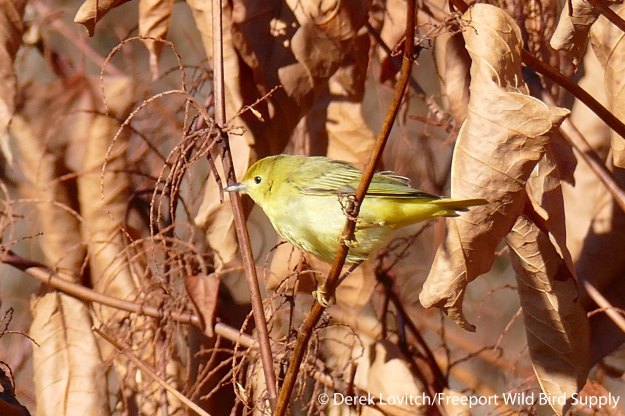
…both of the two continuing Yellow Warblers (the photos are of one of the two individuals), which is another exceptional species for the date…
L1040022_YWAR,SacoRiverWalk,12-6-15_edited-1

…the Nashville Warbler (and confirmed the continued presence of a second Nashville!)…
NAWA by Ed_edited-1

…the Common Yellowthroat (more expected for the season)…
L1040098_COYE1,SacoRiverWalk,12-5-15_edited-1

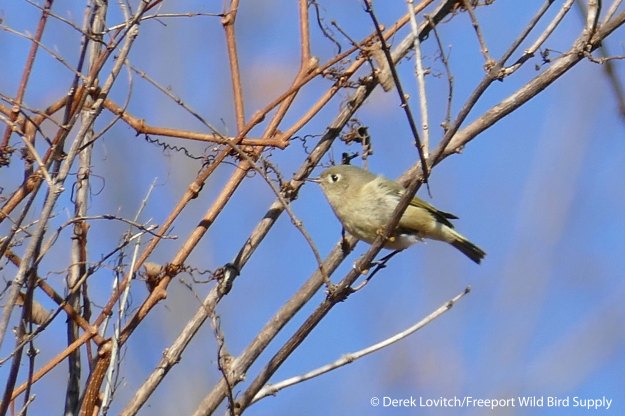
…and we saw one of the two Ruby-crowned Kinglets still present (much more regular in December than any warbler).
L1040116_RCKI,SacoYachtClub,12-6-15-edited

And although we didn’t see it, the most amazing of them all, a Blackburnian Warbler is still present. (Jeannette and I saw and photographed it earlier in the week, 11/30).
IMG_3040_edited-2

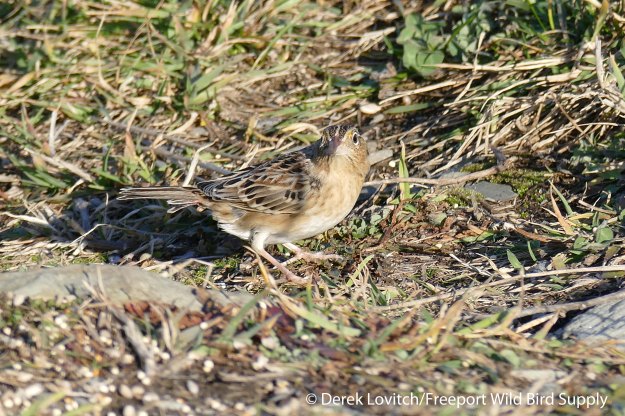
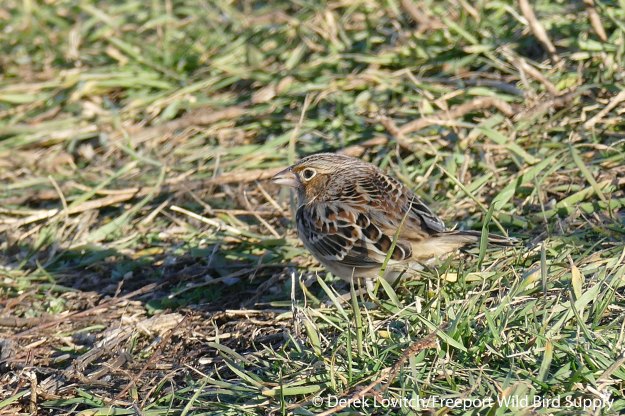
Ed and I then headed to Cape Elizabeth, where we photographed the continuing Grasshopper Sparrow at Dyer Point, and odd bird to see juxtaposed with Harlequin Ducks (18) and Purple Sandpipers (6)…
L1040136_GHSP2,DyerPt,12-6-15_edited-1L1040151_GHSP3,DyerPoint,12-6-15_edited-1L1040163_GHSP1,DyerPoint,12-6-15

…And we twitched a Wilson’s Warbler found earlier in the day nearby, just so we could say we saw five species of warblers in a day in December!  It cannot, however, be said that we “photographed” five species:
WIWA,CapeElizabethm12-6-15

The Grasshopper Sparrow was also our fifth species of sparrow on the day (Song, American Tree, White-throated, and Dark-eyed Junco) – I doubt I’ve had five species of warbler and 5 species of sparrows in the same day in December in Maine before.

Of course, that only somewhat consoled us about missing the vagrant Western Tanager that was found at the Riverwalk later in the afternoon. Damn.

On Monday, I headed over to Reid State Park in Georgetown with Kristen Lindquist. It was a rather quiet day here, but it’s always one of my favorite places to take a walk, especially on such (another) gorgeous morning.  43 Red-necked Grebes, a Northern Harrier, a flyover Red Crossbill (my first of the season), oh yeah, and another rarity: “Oregon” Junco.

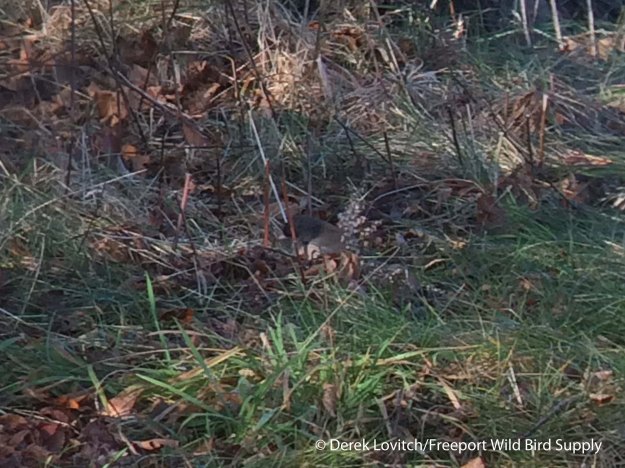
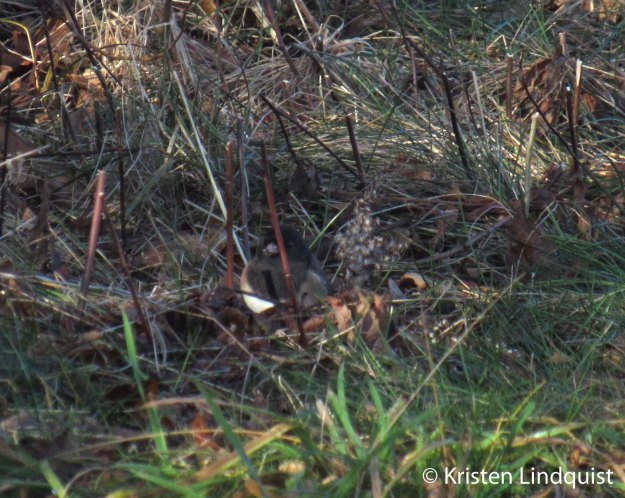
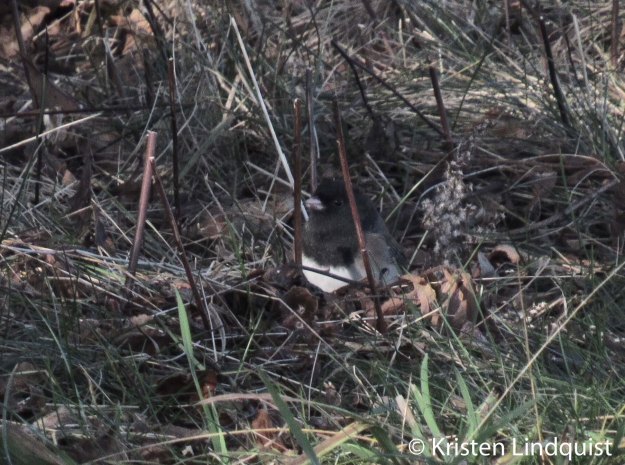
While some might dismiss it as “merely a subspecies,” the westernmost subspecies of the Dark-eyed Junco is truly a rarity in the Northeast, and this was the first definitive “Oregon” Junco that I have seen in Maine (although I have never chased one at a feeder, where they are usually seen). It was in a small flock of “Slate-colored” Juncos and an American Tree Sparrow in the scrubby central ridge in the middle of the Griffith’s Head parking lot.

The flock flushed from short grass at the edge as we rounded the corner, and as it briefly alighted in a shrub, I was shocked to see a black-hooded junco. Closer inspection as we followed it for about 20 minutes yielded all of the pertinent field marks for a “textbook” Oregon, nicely eliminating the intermediate “hybrid swarm” – or whatever it is – that we sometimes refer to as “Cassiar’s” Junco.

Note the complete, black (not dark gray) hood, lacking contrast in the supraloral area. Also, the hood is cleanly demarcated on the back of the head, contrasting crisply with the reddish-brown back. The flanks and sides are particularly pale salmon-buff, which is not atypical for adult males (although many are much brighter). At the lower margin of the hood, note the smooth, rounded margin across the chest and up to the “shoulder.”
IMG_6908_ORJU4,meIMG_6909_edited-1IMG_6910_ORJU1,K_edited-1IMG_6912_edited-1,K.Lindquist

Afterwards, Kristen and I birded around Bath – no white-winged gulls or Barrow’s Goldeneyes yet, no doubt related to the mild temperatures as well, but we did spot one of the Snowy Owls at Brunswick Landing – unlike warblers, a slightly more expected highlight for early December in Maine.

While Jeannette and I didn’t turn up any rarities – or much of anything else for that matter! – birding Harpswell Neck this morning, I very much look forward to what the coming weeks will produce, especially when it finally turns cold!