Category Archives: Uncategorized

 Recent Highlights, 3/11– 3/20/2024

The arrival of some early morning rain coupled with a decent overnight flight produced a “min-fallout” of Song Sparrows on our Durham property on the 17th. The first big movement of sparrows this spring was noticeable throughout the area this week.

Newly returning migrants and personal “first of years” led the list of my observations of note over the past 10 days, despite rather limited birding, including:

  • 28 Northern Pintails, 1 Green-winged Teal (FOY), 4 Ring-necked Ducks (FOS), etc, Mouth of the Abagadasset River, Bowdoinham, 3/11 (with Jeannette).
  • 36 RUDDY DUCKS, 10 Lesser and 3 Greater Scaup, etc, Sabattus Pond, Sabattus, 3/14.
  • 3 Red Crossbills (Type 12 fide Matt Young at Cornell), Lake Shore Drive, Auburn, 3/14.

Other personal “First-of-years” this week also included:

  • 1 Eastern Meadowlark, Upper Street, Turner, 3/14.
  • 1 pair Wood Ducks, our property in Durham, 3/15.
  • 7 male Brown-headed Cowbirds, feeders here at the store, 3/15.
  • 1 Eastern Phoebe, our property in Durham, 3/17.
  • 1 adult SNOW GOOSE (FOY), Thornhurst Farm, North Yarmouth, 3/17.

TOURS AND EVENTS:

  • No Saturday Morning Birdwalk on 3/23.

BRADBURY MOUNTAIN SPRING HAWKWATCH

We got underway for the 18th season on Friday, March 15th. Zane Baker, back for his record-shattering 6th season, kicked things off with two triple-digit counts in the first three days of the season.

Daily counts will be posted to Hawkcount.org and the BirdHawk listserve, while weekly summaries will be posted to the News Page of our website.

This Week’s Highlights, 8/12-8/18,2023

This juvenile Marbled Godwit posed nicely at Hill’s Beach in Biddeford early in the morning on the 17th.

I tried to squeeze in as much time with shorebirds as I could muster this week, resulting in the following tallies. 18 (and ½) species of shorebirds was a good week’s total, especially without a visit (due to high water) to the Eastern Road Trail.

  • AMERICAN OYSTERCATCHER: 5 adults, Ocean Avenue, Biddeford Pool, 8/17 (with Noah Gibb); 1, Pine Point, Scarborough, 8/15; 1 Hill’s Beach, Biddeford, 8/17.
  • Black-bellied Plover: 151, Wharton Point, Brunswick, 8/14.
  • Killdeer: 21, Crystal Spring Farm, Brunswick, 8/14.
  • Semipalmated Plover: 392, Pine Point, Scarborough, 8/15.
  • Piping Plover: 5, Hill’s Beach, Biddeford, 8/17.
  • Whimbrel: 2, Pine Point, 8/15.
  • Ruddy Turnstone: 8, Ocean Avenue, Biddeford Pool, 8/17 (with Noah Gibb).
  • Sanderling: 17, Biddeford Pool Beach, Biddeford, 8/17.
  • BAIRD’S SANDPIPER (FOY) 1, Hill’s Beach, 8/17.
  • Least Sandpiper: 30++, The Pool, Biddeford Pool, 8/17.
  • White-rumped Sandpiper: 2, Pine Point, 8/15.
  • Pectoral Sandpiper: 1, Hill’s Beach, 8/17.
  • Semipalmated Sandpiper: 1600, The Pool, 8/17.
  • Short-billed Dowitcher: 34, Biddeford Pool, 8/17.
  • Spotted Sandpiper: 4, Ocean Avenue, 8/17 (with Noah Gibb).
  • Lesser Yellowlegs: 79, Walsh Preserve, Yarmouth, 8/12 (with Saturday Morning Birdwalk group).
  • “Eastern” Willet: 14, The Pool, 8/17.
  • “WESTERN” WILLET: 1 presumably continuing, The Pool, 8/17.
  • Greater Yellowlegs: 36, Walsh Preserve, 8/12 (with Saturday Morning Birdwalk group).

A few non-shorebird highlights this week also included:

  • 6 Common Nighthawks, over Rte 136, Auburn, 8/15 (with Jeannette).
  • 1 3rd-cycle Lesser Black-backed Gull, Hill’s Beach, Biddeford, 8/17.
  • 2 White-winged Scoter, 2-3 Surf Scoters, 100+ Black Scoters – a rare mid-summer Scoter hat-trick!, Biddeford Pool Beach, 8/17.
  • 2 continuing adult RED-NECKED GREBES, Ocean Avenue, Biddeford Pool, 8/17 (with Noah Gibb).
  • 1 immature GREAT CORMORANT, East Point, Biddeford Pool, 8/17 (with Noah Gibb).
  • Passerine migration is really ramping up, for example, I had 3 Northern Waterthrushes on our Durham property on the morning of the 18th. They don’t breed here.

TOURS AND EVENTS:

  • Tomorrow is our Bird Safe Open House event, with everything from a birdwalk to a keynote speaker. No registration is necessary. Note the Saturday Morning Birdwalk that week meets in Durham at 9:00am.

This Week’s Highlights, 7/30-8/4,2023

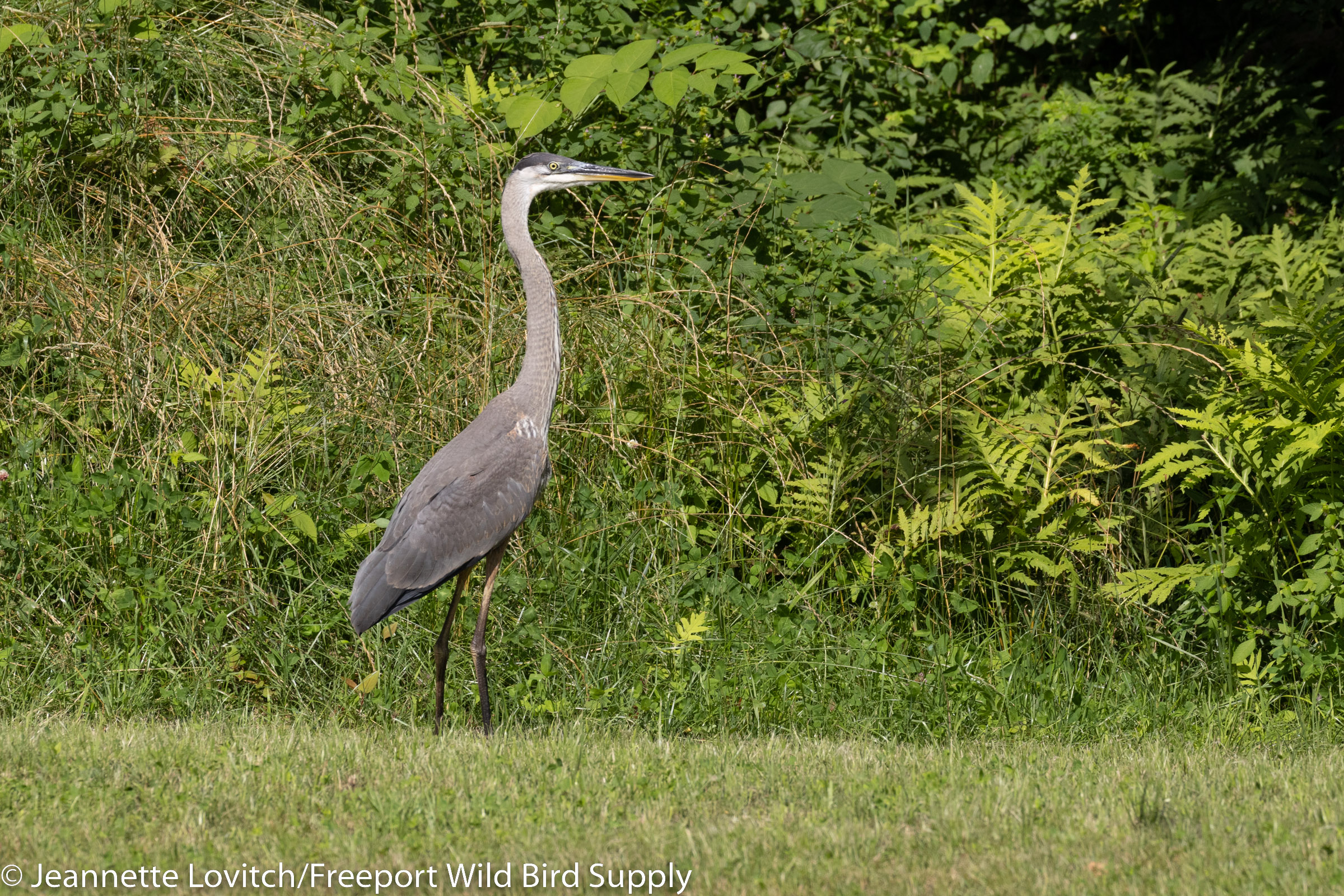
While by no means rare, a highlight for us this week was this Great Blue Heron stalking our pond in our Durham yard. It’s exciting to see the ecosystem we built here in less than a year! I’ve noticed a lot of Great Blue Herons undergoing post-breeding dispersal over the past week.

How is it that when you go away for a week, you fall three weeks behind? I’ve never understood that marvel of the universe. Anyway, catching up from our trip resulted in minimal birding for me over these last 6 days. However, a couple of highlights included the following:
  • Red Crossbills continue on the coastal plain. My high count this week were 7 flying over our yard on 8/1.
  • 1 House Wren, our property in Durham, 8/1 to present (our 140th Yard Bird!).
  • 1 RED-NECKED GREBE and 11 Piping Plovers, Popham State Park, Phippsburg, 8/3.
  • Oddly, a Black-billed Cuckoo was singing loudly at around 11pm on the night of the 3rd in our yard in Durham.

TOURS and EVENTS

  • Speaking of catching up, here’s (finally) my tour report from our July 22nd trip out to Seal Island.

And while observations were minimal this week, we do have a few events coming up that were worth posting.

This Week’s Highlights, 7/15-21,2023

A visit to Popham Beach State Park on the 19th produced more fog and fewer shorebirds than I had hoped, but a family of Piping Plovers provided plenty of entertainment. Note that I did not approach these birds, but instead sat in the sand (burying my feet and legs mostly to defend against Greenhead Flies!) and let them wander up to me. It was a wonderful moment.

A few observations of note over the past seven days included the following:

  • Red Crossbills continue to be widespread in small numbers around the state, by my high count this week was only 4 in Millinocket on 7/18.
  • 21 Lesser Yellowlegs, Yarmouth Town Landing, 7/16.
  • 1 Mourning Warbler, Knife Edge Brewing, T1-R8, 7/17 (with Jeannette).
  • 2 CANADA JAYS, 13 total WHITE-WINGED CROSSBILLS including several singing males, 1 out of place FIELD SPARROW, 1 Olive-sided Flycatcher, etc., Katahdin Woods and Waters National Monument, 7/18 (with Jeannette).
  • 2 Whimbrels, Popham Beach State Park, Phippsburg, 7/19.

TOURS:

We have some room available for tomorrow afternoon’s charter to Seal Island. With all of the rarities around offshore recently, who knows what we might find!  Hope to see you aboard!

This Week’s Highlights, 6/10 – 6/15/2023

Another busy week of tours and other things produced some interesting observations of note, including some late migrants. However, most of my birding this week was once again focused on our local summer favorites. More noteworthy over the previous six days as I head out on another long tour were the following:

  • 2 Red Crossbills, Hunter Cove Wildlife Sanctuary, Rangeley, 6/10 (with Michael Lanzone and Rangeley Birding Festival tour group).
  • 1 late Solitary Sandpiper, Rangeley sewerage facility, 6/10 (with Michael Lanzone).
  • 1 singing MOURNING WARBLER, our yard in Durham, 6/11.
  • 1 pair LOUISIANA WATERTHRUSHES, Big Falls Preserve, New Gloucester, 6/12 (with Jeannette) – I’ve been waiting for a pair here for years!

TRIP REPORTS:

TOURS AND EVENTS:

  • Our next tours with availability is our July 10th Eastern Egg Rock and Whale Watch with Cap’n Fish’s in Boothbay Harbor and our July 22nd charter to Seal Island via Stonington. You know we’ll be looking for that Tufted Puffin!

This Week’s Highlights: October 22-28, 2022

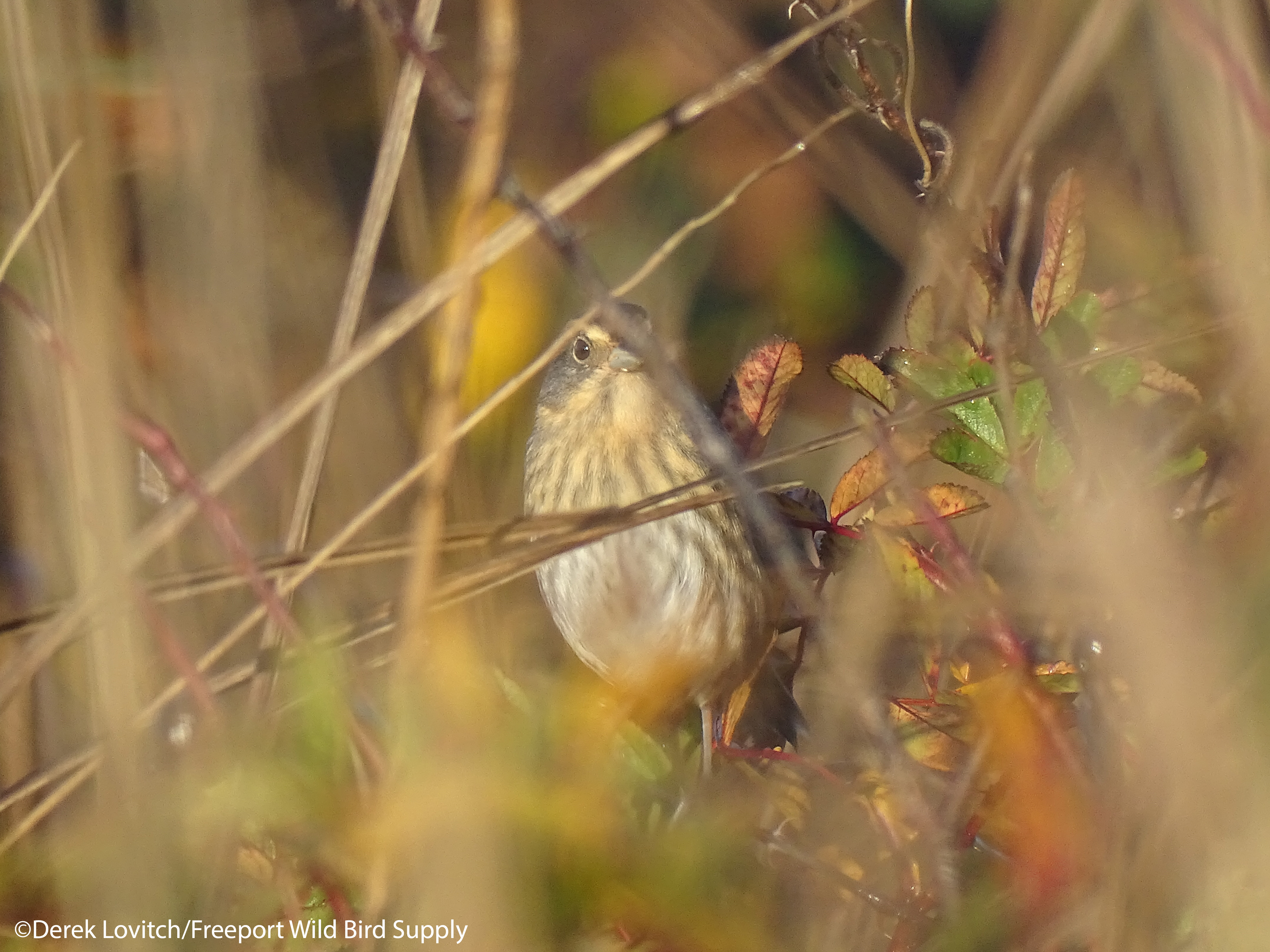
One of two Nelson’s Sparrows at Kettle Cove in Cape Elizabeth on Thursday, this one had much more well-defined streaking than the other. It doesn’t seem crisp and clear enough to be an “interior” subspecies, however, but I can’t help but wonder if there are Saltmarsh Sparrow genes in here, too.

A good week of October birding – at least when it wasn’t pouring again – included a goodly total of 5 Orange-crowned Warblers and a nice mix of “late” migrants. And finally, a morning at Sandy Point! My observations of note over the past seven days included the following:

1 CLAY-COLORED SPARROW and 1 BAY-BREASTED WARBLER, Wolfe’s Neck Center, Freeport, 10/22 (with Saturday Morning Birdwalk Group).

1 Orange-crowned Warbler and 1 Common Yellowthroat, Elphis Pond, Biddeford Pool, 10/23.

1 Orange-crowned Warbler and 1 Blackpoll Warbler, etc, East Point, Biddeford Pool, 10/23 (with clients from Maine and Pennsylvania).

Scoter sweep at Sabattus!  All three scoters were present on Sabattus Pond on 10/25 – perhaps only the second time I have ever had the hat trick here.  26 SURF SCOTERS, 21 BLACK SCOTERS, and 16 WHITE-WINGED SCOTERS joined 302 RUDDY DUCKS, 80 Greater and 44 Lesser Scaup, etc. (with Jeannette).

2 Orange-crowned Warblers, 2 Nelson’s Sparrows (see photo above), and 12 Semipalmated Plovers, Kettle Cove, Cape Elizabeth, 10/27.

1 Orange-crowned Warbler, 2 Indigo Buntings, 3 Lincoln’s Sparrows, etc, Private Property in Cape Elizabeth, 10/27.

Sandy Point Morning Flight, 10/28: 692 individuals of 37 species including late warblers and the first Morning Flight record of…House Sparrow! Full count here.

This Week’s Highlights: September 17-21, 2022

A horrific attempt at documenting a lovely Lark Sparrow that Jeanette and I found
on Bailey Island on Tuesday morning.

My observations of note over the past five days before I head out to Monhegan with my annual tour group included a Lark Sparrow, lots of vismig, and two stints (including one 3K bird day!) at Sandy Point.

Sandy Point Morning Flight, 9/17: 3,024 migrants of 39 species including 16 species of warblers including my second highest all-time count for Northern Parulas.  Full count here.

Hawkwatching at the store, 9/17: 1,708 raptors of 10 species. Full count here.

8 Red Crossbills and a deafening number of Red-breasted Nuthatches, Littlefield Wood Preserve, Chebeague Island, 9/18 (with Chebeague-Cumberland Land Trust tour group).

1 LARK SPARROW, intersection of Washington Street and Pasture Road, Bailey Island, Harpswell, 9/20 (with Jeannette). Photo above

Sandy Point Morning Flight, 9/21: 322 migrants of 32 species including 14 species of warbler and my second-ever Brown Thrasher.  Full Count here.

2020 Fall Monhegan Migration Weekend Tour Report

It sure felt good to have a normal tour run, well, normally, in 2020! Other than the requirement of wearing masks all day – despite the annoyance of fogged glasses in the 100% humidity, and some logistical and safety changes at mealtimes, it was as close to normal as 2020 gets. And that felt good.  The birding was great, too! 

Most of Friday’s participants arrived with me on the early Hardy Boat out of New Harbor, and we sure hit the ground running!  A strong flight the night before yielded tons of birds, and it was very birdy right off the bat.  Yellow-rumped Warblers were still darting overhead and were in every bush. White-throated Sparrows virtually littered the ground in places. Small flocks of Purple Finches seemed to be everywhere.

Yellow-rumped Warblers were definitely the migrant of the trip, as they often are at the end of September. Only White-throated Sparrows seemed to give them a run for their money on most days.

A continuing juvenile Cooper’s Hawk (a very good bird out here) and a Dickcissel got us started, while in the afternoon we found two Lesser Black-backed Gulls (a juvenile and a really messy 2nd Cycle) and at dusk, a fly-by from a late Common Nighthawk. We ended up with 63 species on the day, which isn’t bad for arriving at 10:15, and likely there were many other species around; we just couldn’t see them through all of the Yellow-rumped Warblers and White-throated Sparrows.

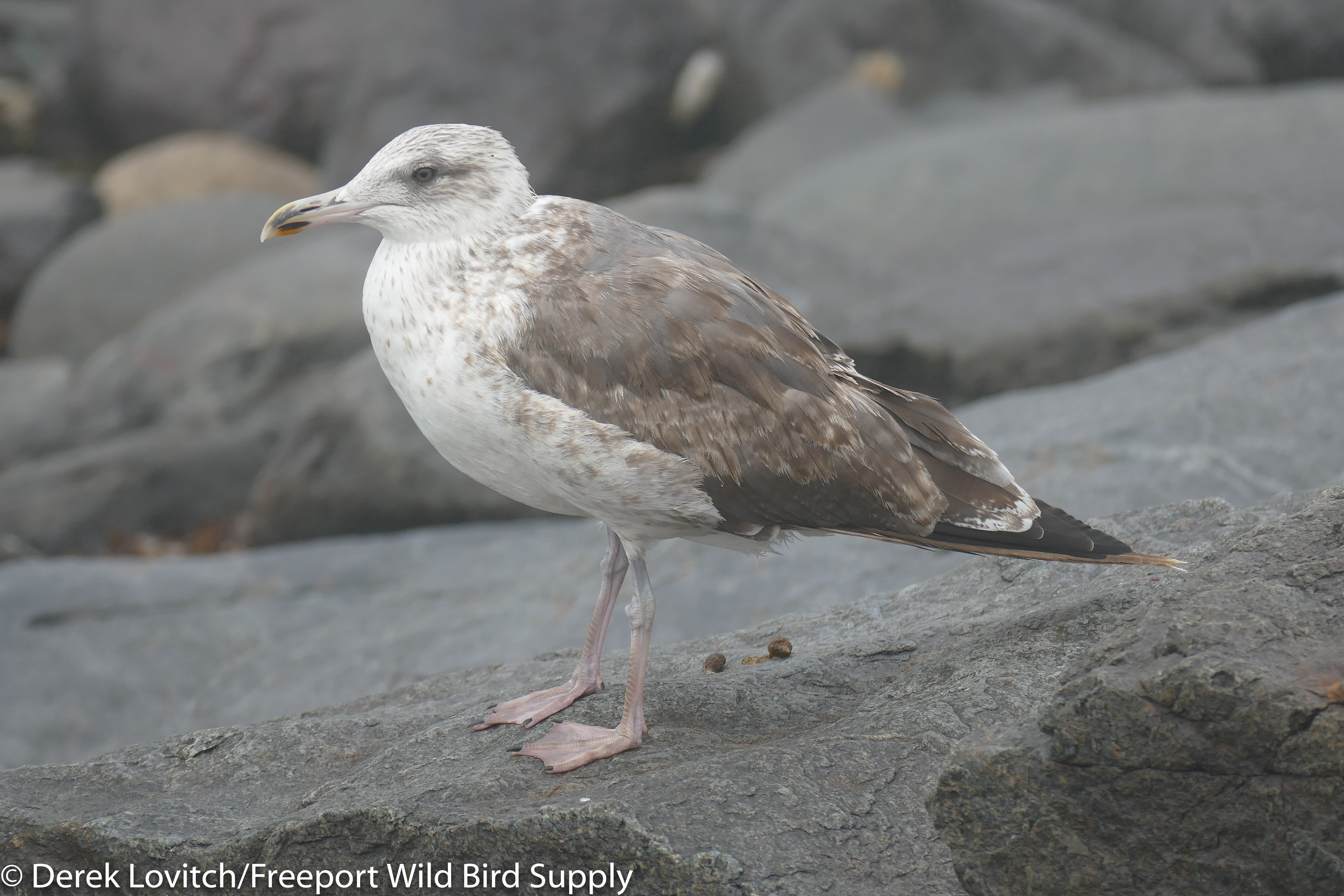
This Lesser Black-backed Gull was not exactly a stunning specimen of fresh feathers, but it was a very instructive study subject.

But before you ask, I’ll let you know: No, you will not find the gratuitous annual photo of Novelty Pizza in this blog this year. It was different, and it was terrible. I was sad. But the handpies for lunch at the Trailing Yew made up for it (but I repeatedly remembered to take the obligatory photo only after it was rapidly consumed in its entirety).

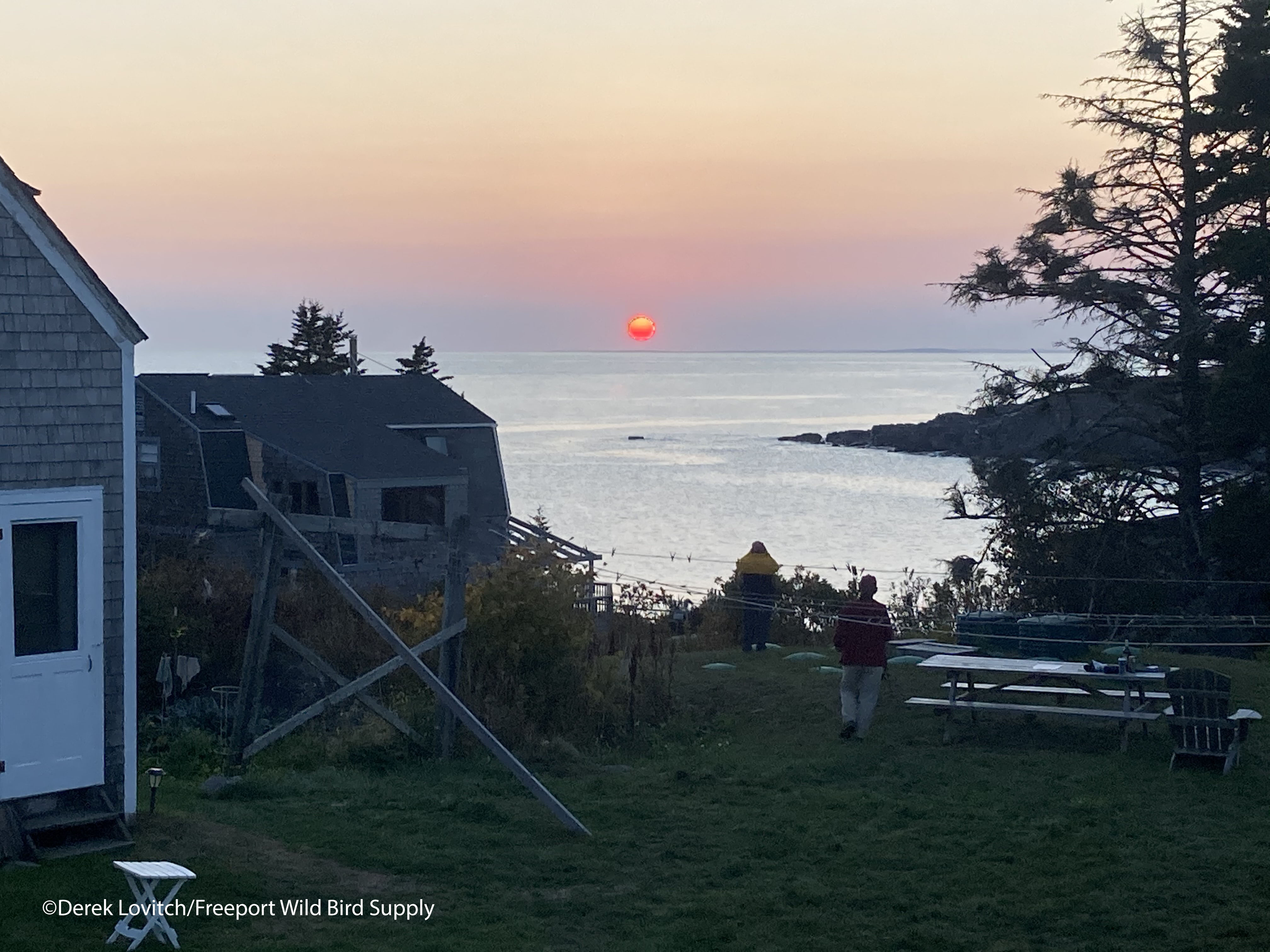
But that evening’s sunset was absolutely delicious!

We awoke to very dense fog on Saturday morning, and with very light southerly winds overnight, only a very light migration had occurred.  There was a decent amount of call notes overhead (mostly Yellow-rumped Warblers) at what was supposed to be the time of sunrise, but these birds could have just been moving around.  Nonetheless, throughout the day we found plenty of Yellow-rumped Warblers and White-throated Sparrows once again, along with ample number of Purple Finches and Red-breasted Nuthatches. It was birdy, but the diversity remained rather low.

Ring-necked Pheasants were mysteriously common and conspicuous all weekend, once again.

By the afternoon, things had slowed down quite a bit, but we grew our triplist steadily with pockets of activity here and there.  Two continuing Rusty Blackbirds put on a good show for us, as did an unusually cooperative Ovenbird. It’s always nice to see Indigo Buntings; we had two today.  Although it seemed rather slow and lacking in diversity, our thoroughness accumulated 64 species by day’s end.

Rusty Blackbird at the Ice Pond.

We awoke to more dense fog on Sunday morning, with no detectable migration overnight on a southwesterly flow.  But sometimes slower days allow us a chance to be more thorough, and by covering a good amount of ground today, we caught up with – and discovered – several very good birds.

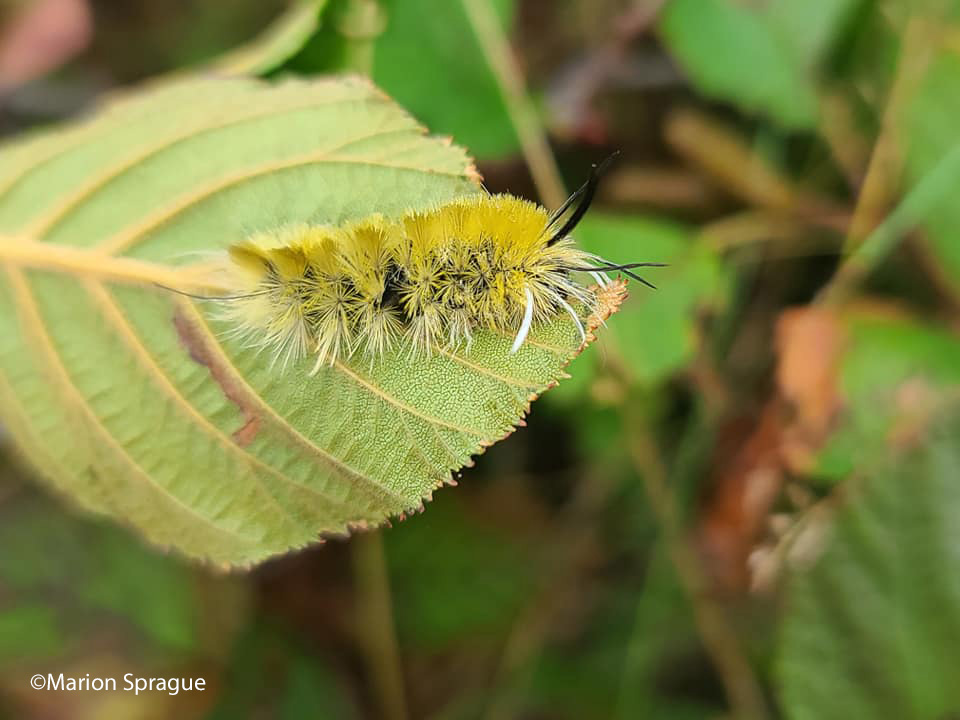
Banded Tussock Moth caterpillar.

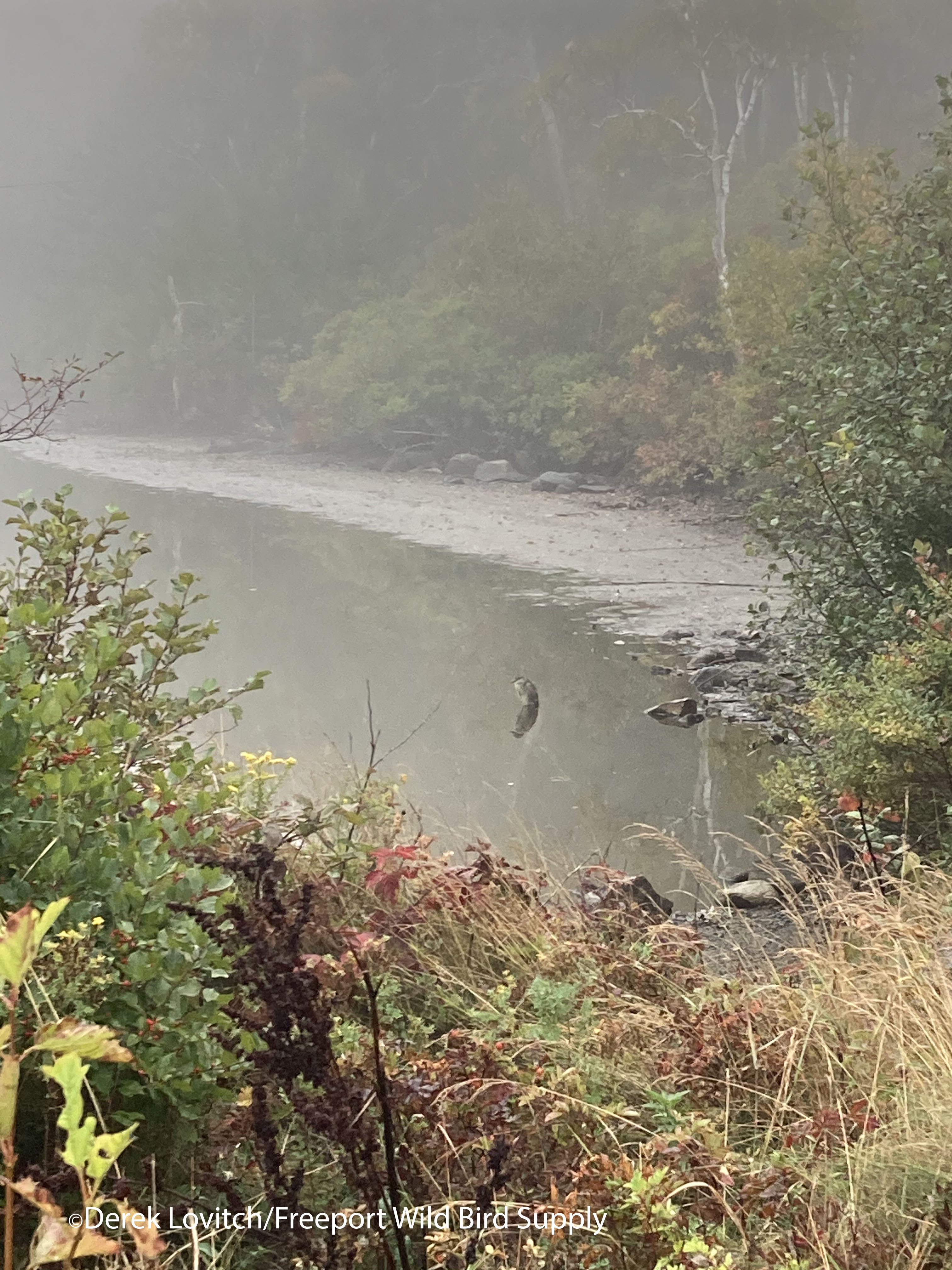
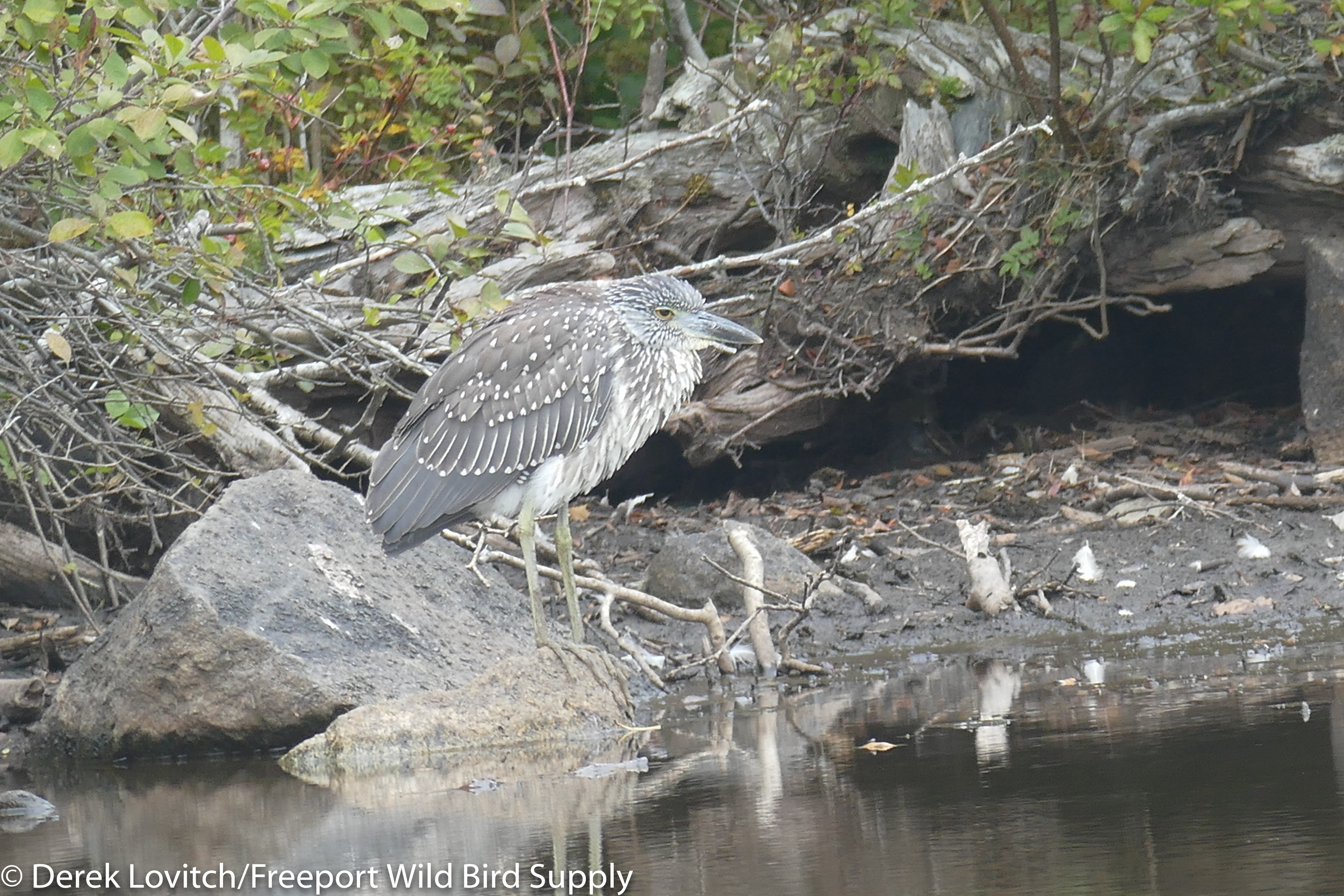
We began with coffee in hand as we marched down to the Ice Pond to catch up with the three continuing Yellow-crowned Night-Herons which we had someone missed each of the previous two days. The drake Wood Duck – very close now to full-spiffiness (technical term!) added to the joy.  Then, after breakfast we had the thrilling discovery (OK, Tom discovered it; he deserves the credit) of a Yellow-breasted Chat. Glimpses were fleeting, and through fogged glasses, were not always satisfactory.  We then found a Marsh Wren at Lobster Cove, and continued to slowly add birds to the list, such as an Eastern Towhee, a few more warbler species, and the fog finally lifted enough for us to see the water and nearby islands to sort out Great Cormorants from Double-cresteds.

Yellow-crowned Night-Herons. Now, just about annual on Monhegan in fall.
A Lobster Cove marsh stomp often produces a surprise or two, like today’s Marsh Wren.

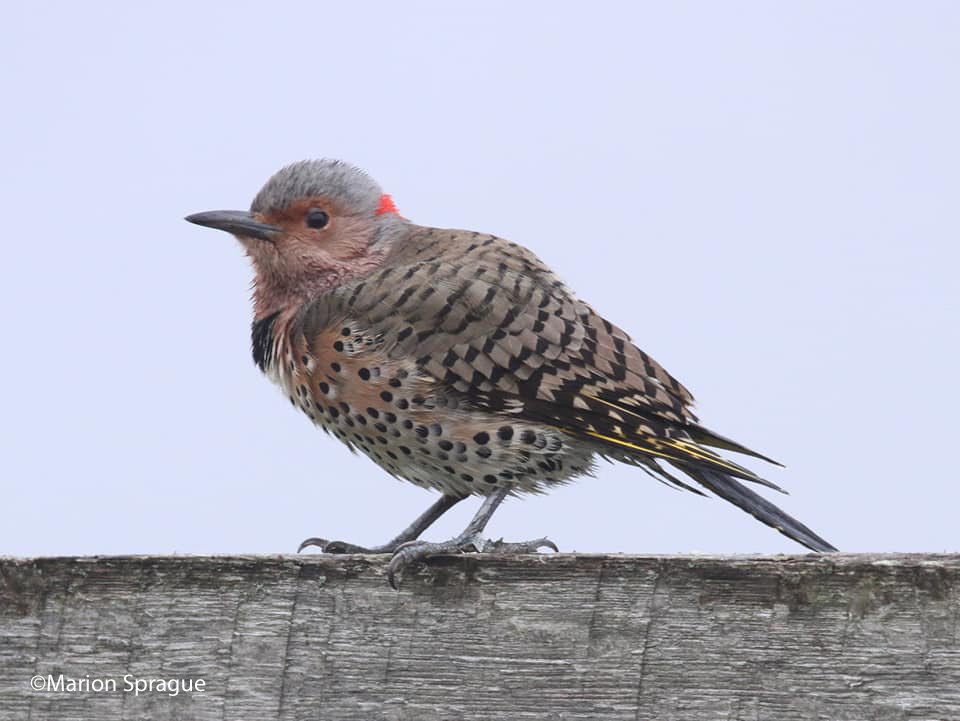
On Monday, our last day of the group tour, we had significant turnover in participants from the weekend, but less turnover in birds.  With another night with little to no nocturnal movement on persistent southerly winds and fog. Only a few Yellow-rumped Warblers were calling overhead at coffee pot o’clock, and it was very slow on our pre-breakfast walk. Northern Flickers were definitely moving around though, so it’s possible a few of these birds were new arrivals overnight. 

Like all of Maine, Monhegan is desperate for rain, but of course we selfishly were hoping it would not fall on us!  The forecast was looking good to get most of the day in, rain-free, but when we reconvened at 9:15, there was a steady light shower. It did not last long, however, and we continued on, unimpeded. Once again, we spent a lot of time sparrow-workshopping, as we regularly encountered fun mixed flocks all weekend of Song, White-throated, Savannah, and often one other species, be it Chipping, White-crowned, Swamp, or Lincoln’s. The side-by-side comparisons are very instructive, and as a guide, I tend to pivot to whatever the birds were offering, and this weekend, they were offering a chance to study, learn, and appreciate the diversity and beauty of sparrows.

We covered a fair amount of ground in the afternoon, checking in with two of the three Yellow-crowned Night-Herons, the continuing Wood Duck and 2 Rusty Blackbirds, and some blooming Fringed Gentian. At least 6 Baltimore Orioles were still present (we had a high of 9+ on Friday), and we had some really good looks at Cape May Warblers and others. Partial clearing in the later afternoon was just enough to get our first view of town from Lighthouse Hill. A mere 56 species by day’s end showed the lack of overall diversity after three full nights with some birds leaving, but very little arriving.

Autumn Meadowhawk (I believe) visiting Barb’s cap.

With the last boat of the day at 4:30, the Monhegan Fall Migration Weekend officially came to a close. However, one of Monday’s participants stayed on for a day of private guiding, so Kate and I continued on for a full day of birding on Tuesday. But, like the weekend, we awoke to more fog and another night of little to no migration on SSE winds. There was, however, some more swirling of Yellow-rumped Warbles around dawn, coming to and from Manana. It was very suggestive of zugunruhe (migratory restlessness) after four days of being stuck on the island with unfavorable winds.  Or, it could have been some birds had indeed arrived overnight.

The extensive southerly winds had finally started to pay dividends, however, with the delivery of a Blue-gray Gnatcatcher and a Yellow-billed Cuckoo. The Dickcissel continued, and we had our best look at it since Friday. With only two of us, we covered grown more quickly and efficiently, so we tallied several species that the group had not seen together, such as the two ridiculously cooperative Soras at the Pumphouse. We also found an unusually-cooperative Mourning Warbler, which is always a treat in migration.

Dickcissel.

With a storm a’brewing, Kate and I departed together on the 3:15 Hardy Boat, and were treated to a Cory’s Shearwater and a Northern Fulmar that materialized out of the still-thick fog. Once a rarity in these waters, the Cory’s was rather late in departing, while the fulmar was on the early side of their arrival. I don’t recall having seen both species on a boat trip on the same day before, and any tubenose is “good” in these nearshore waters.

So that officially brought the 2020 Monhegan Fall Migration Weekend tour to a close; ending on a real high note. Below, I will include Tuesday in the list, but I have separated out the species count for the four-day weekend for comparison sake. Please let me know if I missed something (it’s easy to do as I sit down and try to recall the day as the bed is calling my name!), but our tally for now was a solid 92 species – just two species below our average for the past 10 years.  

However, the 12 species of warblers were well below our 10-year average of 18 species for the weekend. But given the accelerated migration season (food supply shortages due to drought and/or benign weather allowing migration to proceed relatively unimpeded), this was expected. And we made up for it with more sparrows than usual, and an impressive irruption underway. This was the most Purple Finches and White-breasted Nuthatches I can recall on the island, and along with a goodly number of Red-breasted Nuthatches and the first few Pine Siskins of fall, our island sample reflected what we are seeing on the mainland, and throughout the East.

25-Sep26-Sep27-Sep28-Sep29-Sep**
Wood Duck01111
American Black Duck22233
Mallard1215121616
Mallard x American Black Duck Hybrid00011
Common EiderxxxxX
Surf Scoter6*0000
Ring-necked Pheasant71518189
Mourning Dove64141610
YELLOW-BILLED CUCKOO00001
Common Nighthawk10000
Sora00002
Black-bellied Plover01000
Wilson’s Snipe01000
Solitary Sandpiper10000
Black Guillemot2*0636
Laughing Gull01002*
Herring GullxxXxx
LESSER BLACK-BACKED GULL20101
Great Black-backed GullxxXxx
Common Loon00001*
Northern Gannet10*6248*
NORTHERN FULMAR00001*
CORY’S SHEARWATER00001*
Double-crested CormorantXxxxX
Great Cormorant00222
YELLOW-CROWNED NIGHT-HERON00320
Osprey03000
Bald Eagle11000
Sharp-shinned Hawk61221
COOPER’S HAWK10000
Belted Kingfisher11110
Yellow-bellied Sapsucker2088815
Downy Woodpecker00210
Northern Flicker4020152015
American Kestrel41000
Merlin106662
Peregrine Falcon62100
Least Flycatcher00100
Eastern Phoebe64462
Red-eyed Vireo86443
Blue Jay12812126
American CrowxxxxX
Common Raven42111
Black-capped ChickadeexxxxX
Red-breasted Nuthatch1515202015
White-breasted Nuthatch34578
Brown Creeper10000
House Wren00012
Marsh Wren00100
Carolina Wren21224
Golden-crowned Kinglet26208
Ruby-crowned Kinglet02100
BLUE-GRAY GNATCATCHER00001
Swainson’s Thrush20000
Hermit Thrush10000
American Robin02444
Gray Catbirdxx81010
Brown Thrasher11111
European Starling1622282424
Cedar Waxwing151616128
American Pipit01000
Purple Finch2040404040
Pine Siskin10111
American Goldfinch28663
Eastern Towhee00100
Chipping Sparrow66644
Dark-eyed Junco48441
White-crowned Sparrow63463
White-throated Sparrow7560503530
Savannah Sparrow10610810
Song Sparrow1520202025
Lincoln’s Sparrow22012
Swamp Sparrow41022
YELLOW-BREASTED CHAT00100
Bobolink11000
Rusty Blackbird12222
Common Grackle 4161818
Baltimore Oriole83669
Ovenbird01000
Northern Waterthrush10112
Black-and-white Warbler11000
Common Yellowthroat32661
Cape May Warbler11440
Northern Parula00102
Yellow Warbler11112
Blackpoll Warbler22863
Palm Warbler62112
PINE WARBLER10000
Yellow-rumped Warbler1501251006040
MOURNING WARBLER00001
Scarlet Tanager10000
Northern Cardinal22546
Rose-breasted Grosbeak01101
Indigo Bunting01011
DICKCISSEL11001
Day Total6765635865
*Denotes Ferry Ride Only. **Private Tour.
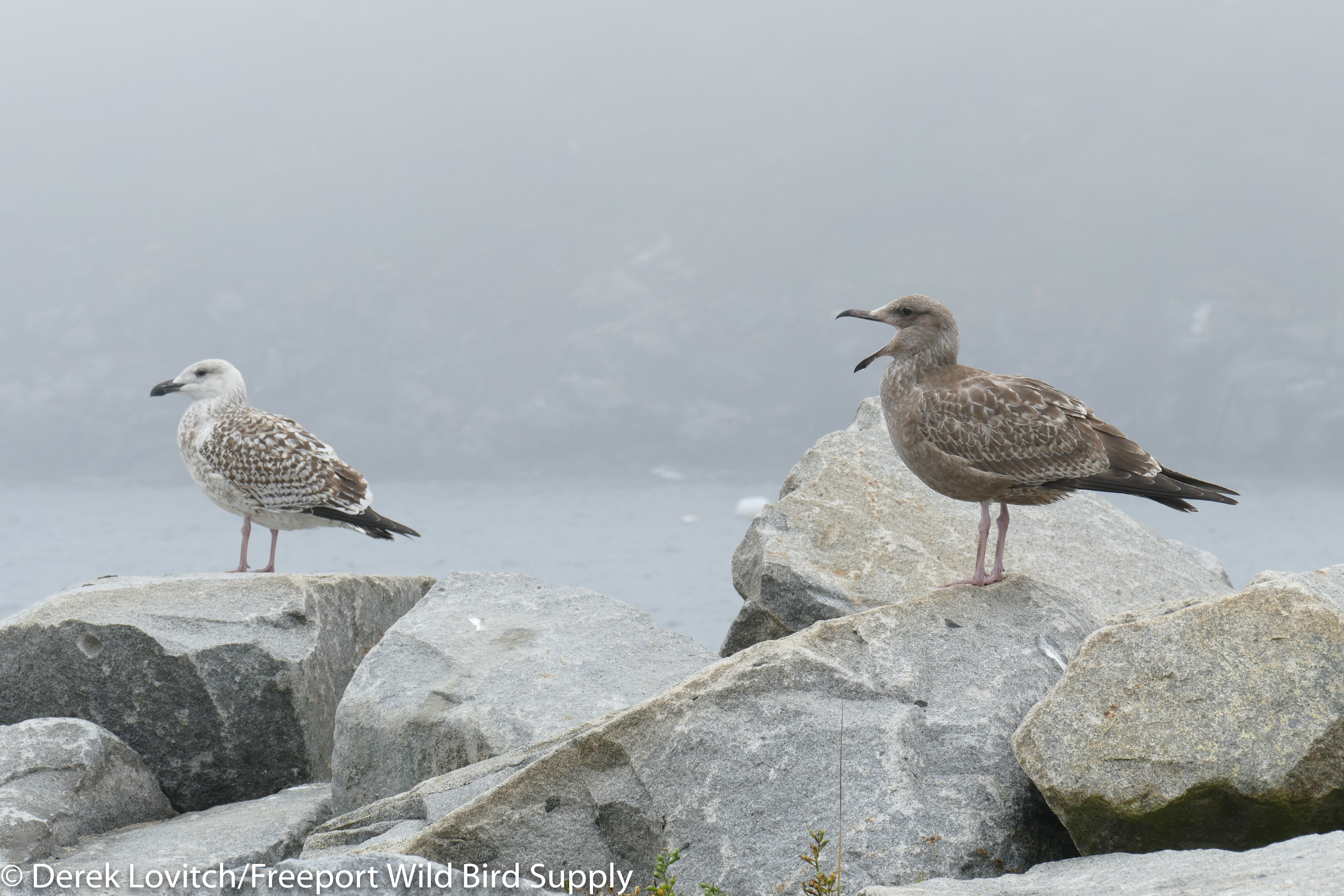
We enjoyed ample time to study many common species, such as separating young gulls. Here’s a juvenile Great Black-backed Gull (L) in the background showing its much whiter overall appearance with bold marbling above. Compare that to “the brown one,” the juvenile Herring Gull (R). It wasn’t the only one yawning from another gull lecture!

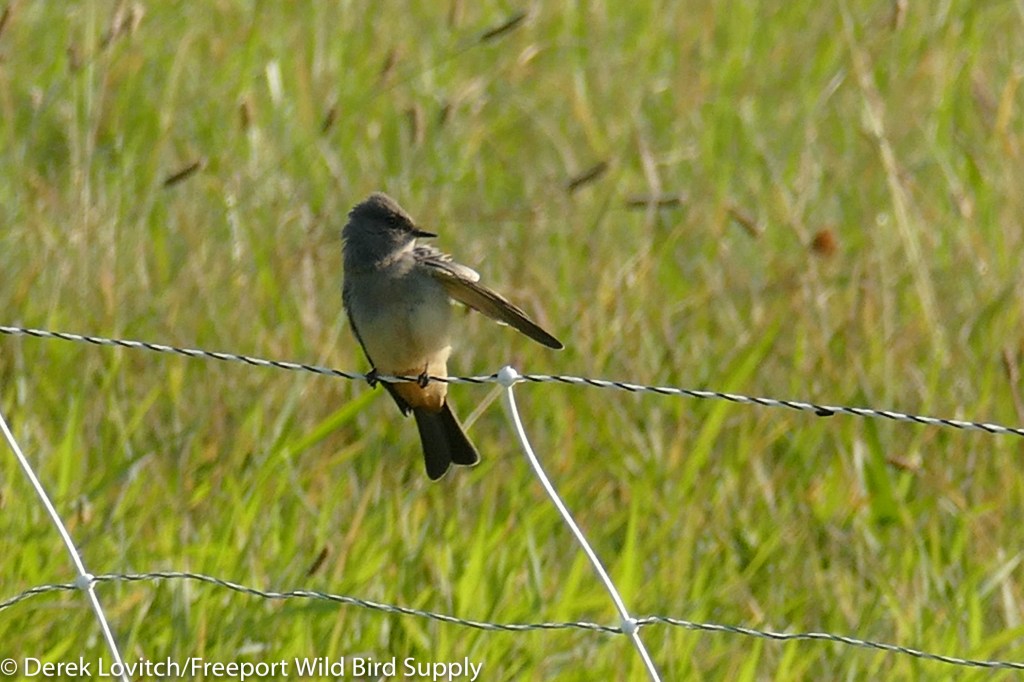
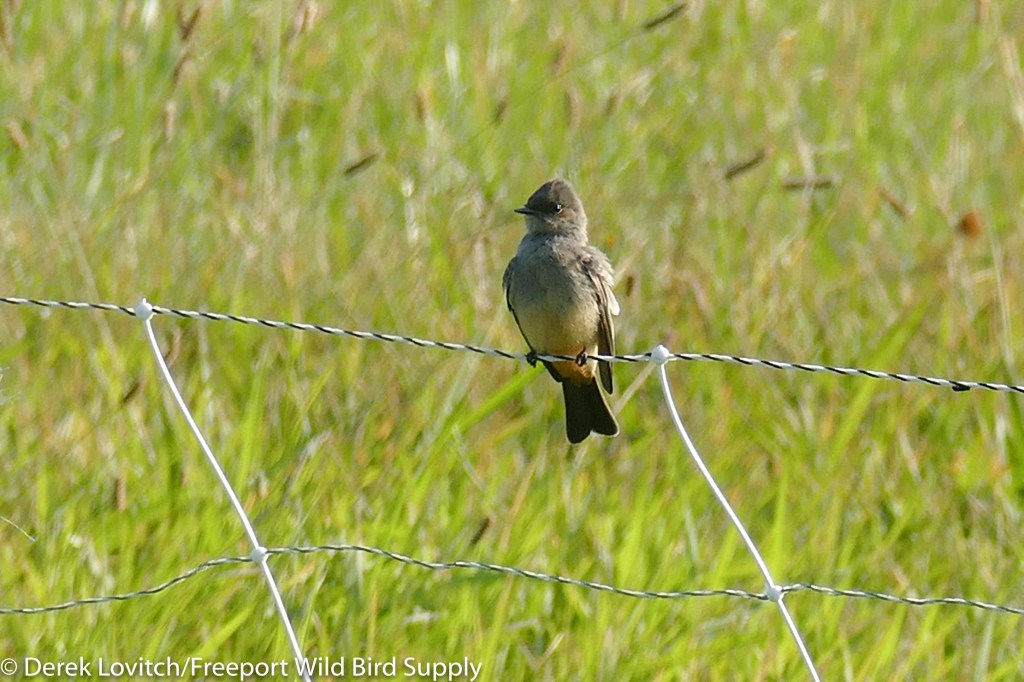
Say’s Phoebe – A Maine Nemesis No More!

While out to dinner last night (9/23/2020), I pulled my phone out to look up a couple of things on the menu Jeannette and I were perusing. I usually don’t bother clicking on an email with a subject line “Bird ID” when I am out to dinner; that’s for working hours. But I decided to click on this one from Dave Fensore.

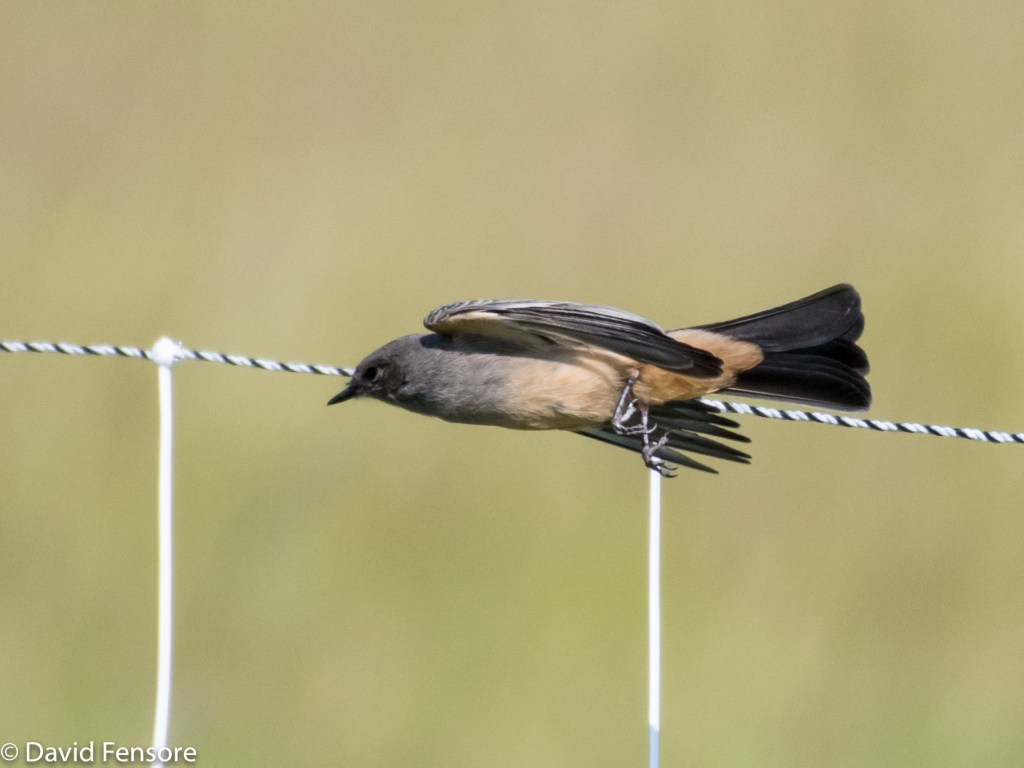
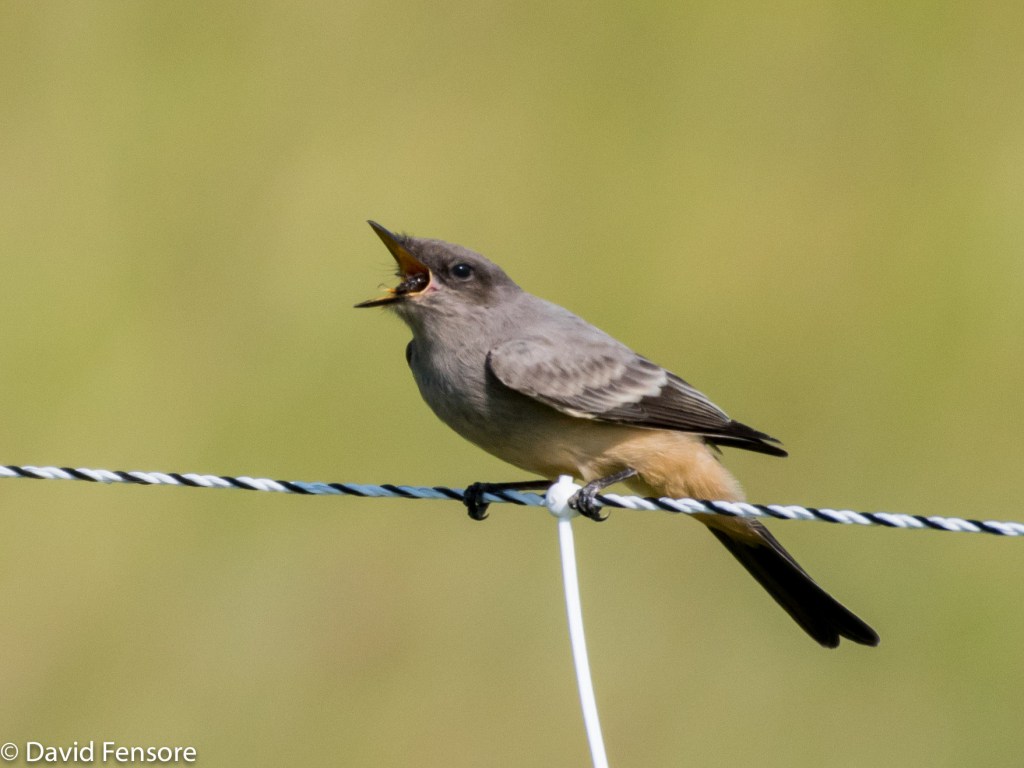
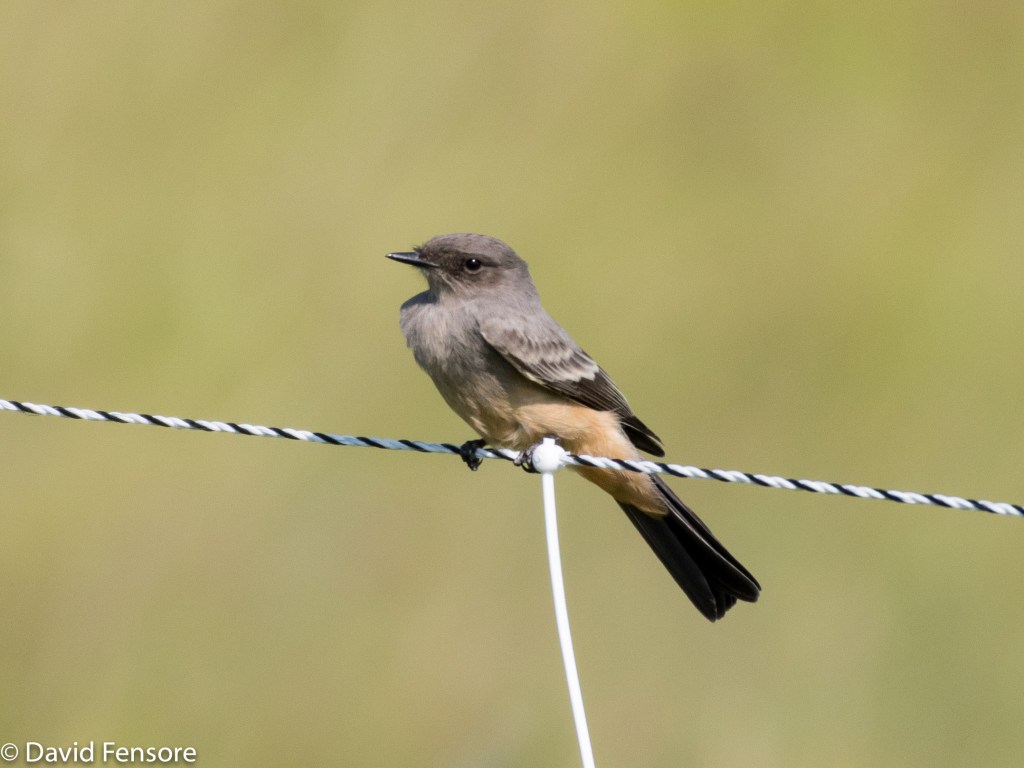
I am sure glad that I did, because those were the photos it contained. Dave and his daughter, Sarah, were out for an afternoon stroll when they found this bird which they identified as a Say’s Phoebe. But they also noted its range: breeding no closer than central North Dakota and winter no closer than southern Texas, they began to have their doubts. Luckily the Sibley Guide shows that they are rare throughout the East, so it is not without precedence, but still, rare birds are rare, and so they sent the photos to me to be sure.

Needless to say, there’s not much question about the birds identify from these stellar photos!

The only question I had was whether or not it would be there in the morning, because for me, the chase was on!

See, Say’s Phoebe (with over a dozen records in Maine) is what I can definitely call a “nemesis” bird in the state for me. I’ve missed three birds on Monhegan, by a sum of less than about 30 hours. One that I missed by a couple of hours resulted in a sprained ankle that lingers with the occasional flare-up of tendinitis. A few friends love to point out how many Say’s Phoebes they have seen in Maine (what are friends for, afterall!). So this bird has physically and mentally scarred me for some time. I also missed at least one on the mainland because I was on Monhegan for the week.

But not anymore.

Sure, I skipped another Morning Flight at Sandy Point, but as of 6:55am this morning, I had finally seen a Say’s Phoebe in Maine. Dave and Carolyn, and Matthew Gilbert, were waiting there, fingers pointing, as I rolled up.

Early morning backlighting made for challenging photography conditions, and my camera is having some front-focusing issues. So my photos are not very good. Dave’s are definitely better, and my flight shots turned out to be a complete disaster. But mine are sweet, oh, so sweet. And my ankle doesn’t even hurt today.

The bird can be observed from the quiet and safe side of Shaker Rd (Old Rte 26…note that Shaker Rd leaves the Rte 26 Bypass a short distance south of here), from the crest of the hill immediately south of the historic village.

Please note, the Village is currently closed. There is no parking there or trespassing into the fields. Luckily, there is plenty of roadside parking on a wide shoulder, and all of the fields are easily visible from the roadside, so this should not be an issue. In fact, it cannot be an issue here; we must respect the community.

The bird is moving around the various fence lines, with the temporary white fence through the closest field being one of its favorite haunts.

I got the word out and birders began to arrive. I departed, owing Dave a whole lot of thanks. And wondering if I’ll find a Say’s Phoebe on Monhegan this weekend, because once you see your nemesis…

2019 Maine Birds Predictions Blog

L1120975_GBHA_withbirdwalk1
Great friggin’ Black Hawk. In Maine. Nope, not on my predictions list. And not in a city. And not eating squirrels. And not in the snow…

Yup, it’s that time of year again. Hey, remember when we couldn’t wait for 2017 to end? And then 2018 happened? Yeah, well…come on 2019 – we need you! But 2018 did feature some incredible birding in Maine, with some “Mega” rarities that at least provided temporary distraction from everything else.

And as 2018 comes to a close, it’s once again time for my annual Predictions Blog, where I view into my crystal binoculars and attempt to forecast some of the “new” birds to grace the State of Maine, and my own personal state list, in the coming year.

But first, let us check in with my 2018 Predictions post, and see how I did.

For the second year in a row, an impressive five birds were new to Maine in 2018. The first new bird of the year was a Violet-green Swallow in Bar Harbor on April 14th. I had that on my long Honorable Mention list, but I did not have it ranked in the top 25.

But I did have Roseate Spoonbill at #4, and one arrived in a farm pond Sebec on August 27th (NOT where I would have predicted the first record to be!). I, and many others, were lucky enough to see this bird during its stay of several weeks.

A Western Wood-pewee in June in Jonesport on June 12th provided the state’s first confirmed record, but it wasn’t chaseable. This was #17 on my Predictions List, but it would have been much higher if it was easier to identify, and especially confirm!

Monhegan got on the scoreboard once again when it hosted the state’s first Gray Flycatcher on October 4th – #20 on my list. I feel western Empids are under-detected in Maine, so this was probably more overdue than unexpected.

And the fifth, and certainly not least, was the incredible and mind-blowing Great Black Hawk that first showed up in Biddeford on August 6th and remained for a few exciting days. After a tantalizing sighting on October 30th on Portland’s Eastern Promenade, the bird has called Deering Oaks Park – and nearby neighborhoods – home since November 29th! Thousands of birders from across the continent have been treated to this insane occurrence. Not only is it a first for Maine, but it has been conclusively identified as the SAME BIRD that provided North America’s (US and Canada in birder-speak) first record on South Padre Island in Texas in April of this year. And no, I have no explanation for this…or how it’s still alive.
GBLH-crowd_edited-1

So I went 3 for 5 on predictions for 2018. Not too bad! The Violet-green Swallow was on my Honorable Mentions list as well, but no, I – nor not another person on this planet – predicted a Great Black Hawk in Maine! And I was so very close on my #1: Neotropic Cormorant. Literally close, as in just a few miles, as New Hampshire’s first was discovered in Gorham in August, just up the Androscoggin River from the Maine border.

Therefore, my updated predictions for the next 25 species to occur in Maine for 2019 is now:

1) Neotropical Cormorant
2) Graylag Goose
3) California Gull
4) Spotted Towhee
5) Hammond’s Flycatcher
6) Bermuda Petrel
7) Black-chinned Hummingbird
8) Common Shelduck
9) Trumpeter Swan (of wild, “countable” origin)
10) Audubon’s Shearwater – on “hypothetical” list, but I think the record is good.
11) Little Stint
12) Anna’s Hummingbird
13) “Western” Flycatcher (Pacific-slope/Cordilleran)
14) Common Ground-Dove
15) Allen’s Hummingbird
16) Redwing
17) Spotted Redshank
18) Zone-tailed Hawk
19) Painted Redstart
20) Ross’s Gull (another one that was very close, being seen in NH/MA waters in November)
21) Lesser Nighthawk
22) Elegant Tern
23) Kelp Gull
24) Black-tailed Gull
25) Common Scoter

Personally, I added 3 species to my own Maine list this year as well. There was the aforementioned Roseate Spoonbill that we caught up with “on the way” back from a weekend of birding fun with friends in Washington County on August 29th. This was #22 on my predictions list for myself.
ROSP-best_edited-1

A territorial Chuck-will’s-widow that was found in Orland on June 9th luckily stayed around, singing its heart out, long enough for me, and a carload of friends, to enjoy it on the evening of June 26th. It was on my honorable mention list, but no credit is given for that.

Then there was the Great Black Hawk that I definitely dropped everything to chase back in August, and I have visited several times since in Portland. Just because it’s a Great Black Hawk in Portland! And no, it wasn’t on my personal predictions list either, obviously.
L1130103_GBLH_MaineMed

Then, as always, there were the misses. My Great Skua (#1) nemesis continues, with several weathered-out boat trips out of Bar Harbor late in the fall once again. But, I do have a Bonxie on my state list now!
IMG_2277

Rapidly rising up the list of nemesises, however, is American White Pelican (#5)! One was in Wells while I was leading a tour on on Monhegan in May, and then Jeanette and I dipped on one in December, also in the Webhannet Marsh in Wells. We got a chance to look for it the day after it left (and arrived in New Hampshire) after about 24 hours in the Maine. On Christmas Eve, it was spotted briefly about a half hour after we drove through Portland on our way south, and was seen by a lucky few on Christmas Morning. Jeannette and I go away on Thursday – I have no doubt it will show up and remain visible for several days while I am gone.

I missed another Slaty-backed Gull (#12) as well, one that showed up in February while Jeannette and I were on vacation. A Brown Booby (Honorable Mention) off Bar Harbor in June wasn’t chaseable.

So now, my updated list for my own next 25 species in Maine receives only minor changes:
1) Great Skua
2) Eurasian Collared-Dove
3) Graylag Goose
4) Say’s Phoebe
5) American White Pelican
6) Neotropic Cormorant
7) Tundra Swan
8) Franklin’s Gull
9) Brown Pelican
10) California Gull
11) Black-bellied Whistling-Duck
12) Slaty-backed Gull
13) Boreal Owl
14) Calliope Hummingbird
15) Cerulean Warbler
16) White Ibis
17) Gull-billed Tern
18) Hammond’s Flycatcher
19) Spotted Towhee
20) Wood Stork
21) Common Ringed Plover
22) Yellow Rail
23) Loggerhead Shrike
24) Virginia’s Warbler
25) Common Shelduck

But, we are in often-unpredictable times, and this includes the bird world. Increased trans-Atlantic shipping could offer respite for a bird to arrive “ship-assisted” (we’ll save that discussion for another day, but in my opinion, we’re in the Anthropocene, so riding a cargo ship is just as “natural” as flying a thousands miles in the wrong direction on its own). The globe is warming – droughts, fires, floods, extreme hot and cold temperatures, the opening of the “Northwest Passage…” Could pesticides impact a bird’s ability to navigate? Recent research suggests so. So really, I could probably put any of the world’s 10,000+ birds on my predictions list and have a chance at this point!

Without vagrancy, no remote islands would have birds. No Hawaiian honeycreepers or Darwin’s Finches. These anomalies that excite us birders are not always evolutionary dead ends, but perhaps the vanguard, the pioneers, of a new species that in 10,000 to 1 million or so years, might be added to my next 25 species in Maine list!