Category Archives: Morning Flight

Sandy Point Morning Flights: September – October, 2024.

For 2024, I decided to post my Sandy Point Morning Flight tallies here in one blog entry (instead of only to Facebook and the Maine Birds Google-group), or perhaps one entry per month. If nothing else, it helps me organize them, and my thoughts! Hopefully, you’ll enjoy reading them, too. A busy tour schedule this fall, a little personal travel, and the continued decline in the number of strong, sweeping cold fronts due to climate change are all conspiring to reduce the number of days I begin at “my office.”

The following lists are birds counted passing over and through Sandy Point Beach, Cousin’s Island, Yarmouth as part of the “Morning Flight” or Morning Redetermined Migration. For more information about this site, and my counts here, see Site C14 in Birdwatching in Maine: The Complete Site Guide (2024).

  1. September 3rd.

A light flight passed over and through this morning. It was my first visit of the season, as cold fronts have been few and weak so far this fall, so it was great to be back at my office. I was expecting a stronger flight, however. Perhaps the winds were just too westerly overnight, as the northwesterly component is so critical for pushing birds out over the bay and beyond, forcing them to reorient into the wind and concentrating here at the northwest tip of the island.

  • 6:02-8:20am
  • 48F, clear, light W increasing then decreasing.
  • 105 Northern Parulas
  • 88 Cedar Waxwings
  • 56 American Redstarts
  • 41 unidentified
  • 12 Yellow Warblers
  • 10 American Goldfinches
  • 7 Red-eyed Vireos
  • 5 Cape May Warblers
  • 4 Magnolia Warblers
  • 3 Eastern Wood-Pewees
  • 3 Chestnut-sided Warblers
  • 2 Nashville Warblers
  • 2 Red-breasted Nuthatches
  • 2 unidentified flycatchers
  • 2 Black-capped Chickadees
  • 2 Rose-breasted Grosbeaks
  • 1 Black-throated Blue Warbler
  • 1 Olive-sided Flycatcher
  • 1 Black-throated Green Warbler
  • 1 Baltimore Oriole
  • 1 Black-and-white Warbler
  • 1 Wilson’s Warbler
  • 1 House Finch
  • 1 Least Flycatcher
  • 1 Bay-breasted/Blackpoll Warbler
  • 1 unidentified Catharus
  • 1 BLUE-GRAY GNATCATCHER (4th Sandy Point Morning Flight Record).
  • Total = 351

2. September 10th Update.

Well, so much for this plan! A week has gone by and there hasn’t been a decent morning to try at Sandy Point. And, with a massive area of high pressure dominating our weather (and most of the Eastern US) for another week, the next possible day looks a long way off! While several nights have featured at least some northerly component, it has been dead calm by dawn. Most other nights have been calm, and while that’s great for migrants to make progress, it’s not so great for a concentration of birds along the coast. For example, a very weak – and mostly dry – cold front that passed on Monday night briefly changed winds, but they were mostly westerly, and were calm by dusk.

Good for the migrants, not great for the migration-watchers! Let’s hope for a change in the forecast; we need the rain, too!

3. September 11.

I probably should have gone this morning, just based on the huge flight that occurred overnight. But, as with most good nights of migration this season, winds were virtually calm. Maybe there was just enough of a puff from the west to make a count worthwhile, but alas, my schedule didn’t allow for a last-minute change. However, there were A LOT of birds in the air last night.

A huge flight overnight on 9/13-14 resulted in a lot of birds offshore, and while I couldn’t be at Sandy Point, I had an exceptional morning flight on Monhegan – dominated by Cape May Warblers – with my tour group that weekend.

4. September 18th Update.

Yup, another clear and calm night, with migrants passing high overhead. Fog at dawn, too. Another week with no morning flight. Goodness, this blog sucks!

5. September 25th Update.

OK, this is getting ridiculous! Another week with lots of nights of great migration, but with either calm conditions or a light north to northeasterly aloft, not one more was conducive to being on the bridge. Friday and especially Saturday look great though…but alas, I’ll be back on Monhegan. No complaints there. But I’ll go ahead and change this blog title to “September-October” and hope for better conditions next month!

6. October 2nd Update.

Two great flights over the weekend conducive to a good if not great flight at Sandy Point occurred, but my tour group on Monhegan once again reaped the benefits. Next favorable winds might not be until Sunday the 6th. Fingers crossed! Maybe I’ll have some real content for this blog then…and I really need my Sandy Point fix!

6. October 5 – Finally!

I was finally at “my office” on the bridge this morning. Unfortunately, with clouds in the eastern sky and a light northerly wind, only a light flight passed over and through the point this morning. Furthermore, the Caribou radar showed rain into the early night, and likely unsettled weather thereafter, reducing or even eliminating the arrival of birds from the north and northeast (the radar after midnight showed virtually nothing over northern Maine). Nonetheless, it was just good to be back!

  • 6:45-8:45am
  • 45F, partly to mostly cloudy, NNW 5.3-7.0 to N 6.7-8.2mph.
  • 60 Yellow-rumped Warblers
  • 15 Blackpoll Warblers
  • 9 American Robins
  • 7 Palm Warblers
  • 6 Ruby-crowned Kinglets
  • 5 unidentified
  • 4 Golden-crowned Kinglets
  • 4 Red-breasted Nuthatches
  • 4 Chipping Sparrows
  • 3 Northern Flickers
  • 3 Dark-eyed Juncos
  • 3 Common Loons
  • 3 Hermit Thrushes
  • 3 White-throated Sparrows
  • 3 unidentified blackbirds
  • 2 Rusty Blackbirds
  • 2 Blue Jays
  • 1 Blue-headed Vireo
  • 1 unidentified kinglet
  • 1 Tufted Titmouse (did not cross after 4+ false starts)
  • 1 Hairy Woodpecker (finally crossed after 7 false starts)
  • Total = 140

7. October 10.

A moderately-strong flight overnight on variable W to NW winds suggested many more birds departed last night than arrived. With a light W wind by dawn, only a light flight passed through the point.

  • 6:49-9:15
  • 41F, mostly clear, W 3.5 to 5.0 to W 4.4 to 7.7mph.
  • 116 Yellow-rumped Warblers
  • 39 Blackpoll Warblers
  • 24 White-throated Sparrows
  • 21 American Robins
  • 14 Palm Warbles
  • 13 unidentified
  • 8 Dark-eyed Juncos
  • 8 Ruby-crowned Kinglets
  • 8 Golden-crowned Kinglets
  • 5 Black-capped Chickadees
  • 3 Rusty Blackbirds
  • 3 Hermit Thrushes
  • 2 American Pipits
  • 2 Common Loons
  • 2 Nashville Warblers
  • 2 Chipping Sparrows
  • 2 Blue-headed Vireo
  • 2 Eastern Phoebes
  • 2 Yellow-bellied Sapsuckers
  • 2 Blue Jays
  • 1 Red-breasted Nuthatch
  • 1 Black-throated Blue Warbler
  • 1 Northern Flicker
  • 1 Northern Parula
  • 1 Baltimore Oriole
  • Total = 285

8. October 11th.

With only a light to moderate flight overnight in southern Maine and little being picked up on the Caribou radar with continued unsettled weather, it was not surprising that such a light flight passed through Sandy Point. Or so I thought. But then I found this article…yes, the absolutely amazing and awesome Aurora Borealis this night before may have indeed minimized the number of migrants taking flight. An increasing number of diurnal migrants helped make up for it, however.

  • 204 American Robins
  • 54 Yellow-rumped Warblers
  • 28 Blackpoll Warblers
  • 18 Blue Jays
  • 15 Eastern Bluebirds
  • 9 White-throated Sparrows
  • 8 Chipping Sparrows
  • 8 Cedar Waxwings
  • 8 unidentified
  • 5 Palm Warblers
  • 5 Golden-crowned Kinglets
  • 4 Nashville Warblers
  • 3 Northern Parulas
  • 3 Black-capped Chickadees
  • 3 Ruby-crowned Kinglets
  • 2 Tufted Titmice
  • 2 Dark-eyed Juncos
  • 2 Hermit Thrushes
  • 1 Red-breasted Nuthatch
  • 1 Yellow-bellied Sapsucker
  • 1 HOUSE FINCH (rare migrant high overhead)
  • 1 Black-throated Green Warbler
  • T=  385

9. October 17.

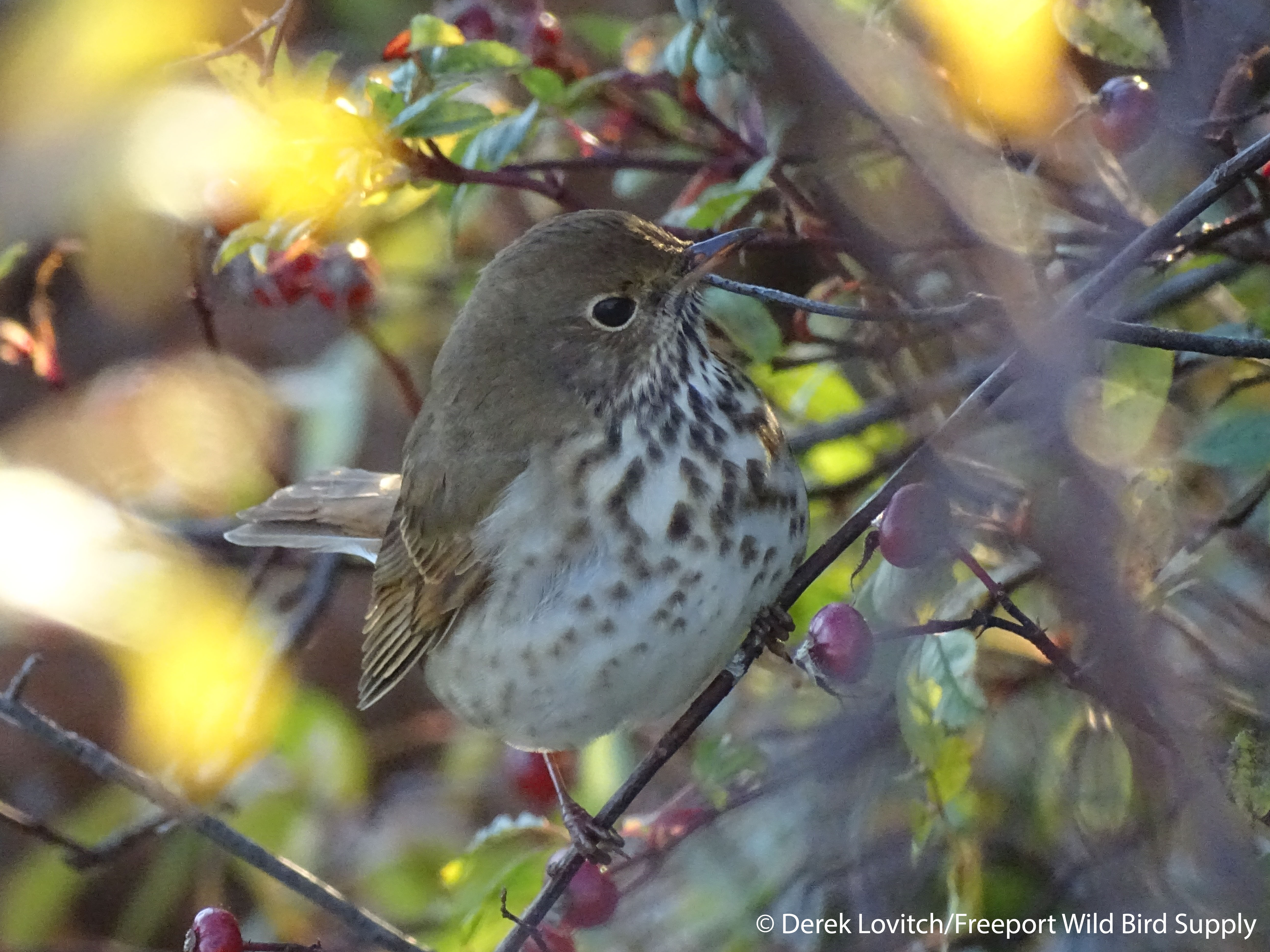
This Hermit Thrush kept me company at the point, alternating between snacking on Pasture Rose hips and contemplating crossing the channel (with Catharus thrushes rarely do after sunrise)

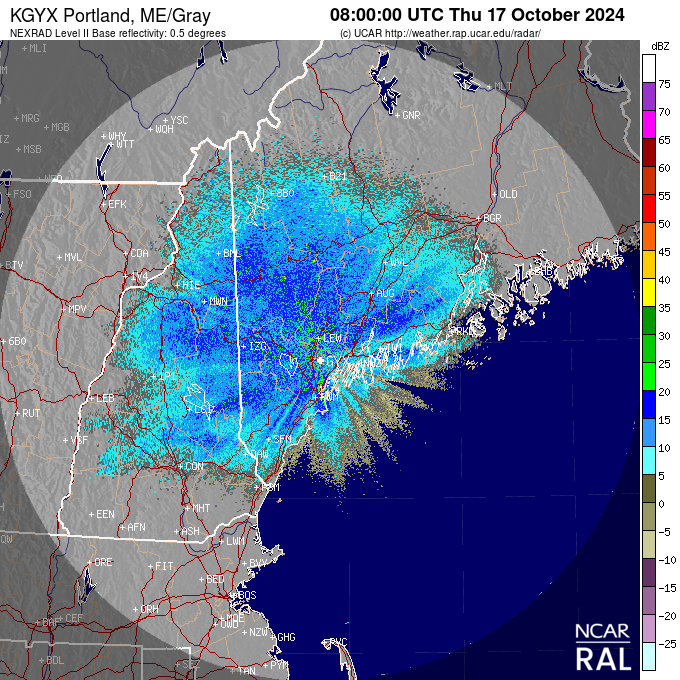
After a very slow start on a chilly morning, the flight picked up a bit in the second hour, but was still far lighter than I would have expected given the massive flight detected by the radar overnight. Even by 4:00am, the radar image was boomin’
  • 6:59-9:15
  • 31F, clear, NW 2.7-4.9 to W 1.2 TO 2.6mph.
  • 114 Yellow-rumped Warblers
  • 56 American Robins
  • 44 Golden-crowned Kinglets
  • 44 Blue Jays
  • 17 Ruby-crowned Kinglets
  • 14 Dark-eyed Juncos
  • 9 Hermit Thrushes
  • 8 Palm Warblers
  • 7 Black-capped Chickadees (still did not cross after 14 “false starts”)
  • 7 White-throated Sparrows
  • 5 Unidentified
  • 4 Nashville Warblers
  • 4 Blackpoll Warblers
  • 3 Swamp Sparrows
  • 2 Purple Finches
  • 2 Blue-headed Vireos
  • 2 Tufted Titmice (did not cross after 4 false starts)
  • 1 TENNESSEE WARBLER
  • 1 Northern Parula
  • 1 Eastern Bluebird
  • 1 Yellow-bellied Sapsucker
  • 1 Red-breasted Nuthatch
  • 1 Northern Flicker
  • 1 Savannah Sparrow
  • 1 Common Loon
  • 1 ORANGE-CROWNED WARBLER (in parking lot)
  • T=351

10. October 23rd.

With only a moderate flight overnight and very light winds, I didn’t have high hopes today for much of a flight. However, with the forecast for the next few days followed by a trip, this very well may be my last chance of the season, so off I went. Well, I was correct…there wasn’t much.

  • 7:10-8:30
  • 43F, mostly clear, NNW 2.7-3.2 to calm.
  • 10 Dark-eyed Juncos
  • 10 Yellow-rumped Warblers
  • 4 Golden-crowned Kinglets
  • 4 Hermit Thrushes
  • 3 Savannah Sparrows
  • 2 Palm Warblers
  • 1 American Rpbin
  • 1 Purple Finch
  • 1 Black-capped Chickadee
  • 1 Blue-headed Vireo
  • 1 Chipping Sparrow
  • 1 Red-breasted Nuthatch
  • 1 Blackpoll Warbler
  • Total = 42

11. November 6th.

I had every intention of trying one more morning at the bridge after we returned from vacation. Sunday the 3rd may have been the day. But, avoiding the painful early wake-up call of the end of Daylight Savings Time, I decided to twitch the Common Gull in Rockland instead. I feel a little guilty, but ya know, every now and then I like a little chase, and besides, it was kind enough to stick around until we returned, so I felt I owed it.

It wasn’t a great season for me at “my office,” as this was certainly a record low number of visits. And to not catch any big flights is of course disappointing. But it was a good fall for birding – and an especially good fall for birds with little to impede their migration – and I enjoy every chance I can get to be at Sandy Point. And with a lot less pain this year than last year when I was still recovering from complications following shoulder surgery.

So with that, the 2024 Sandy Point Morning Flight season is officially closed. Still plenty of migration left, but it’s mostly diurnal migrants now. There will be a Dark-eyed Junco flight or two, some great flights of American Robins, and likely one last little push of Yellow-rumped Warblers. However, Rarity Season is now in full swing, so it’s time to focus on other birding locations. See you in August! (If there are any real cold fronts).

(And now it’s time to see what Yarmouth’s plans are for the walkway repair and improvement. I’ll need to make sure birding opportunities are improved and vegetation is protecting. Stay tuned…I might need your help)

Sandy Point Morning Flight, 9/29/2022

There are some Morning Flights at Sandy Point that deserve their own blog. This was one of those. (I also haven’t finished my Monhegan Tour report blog yet, either).

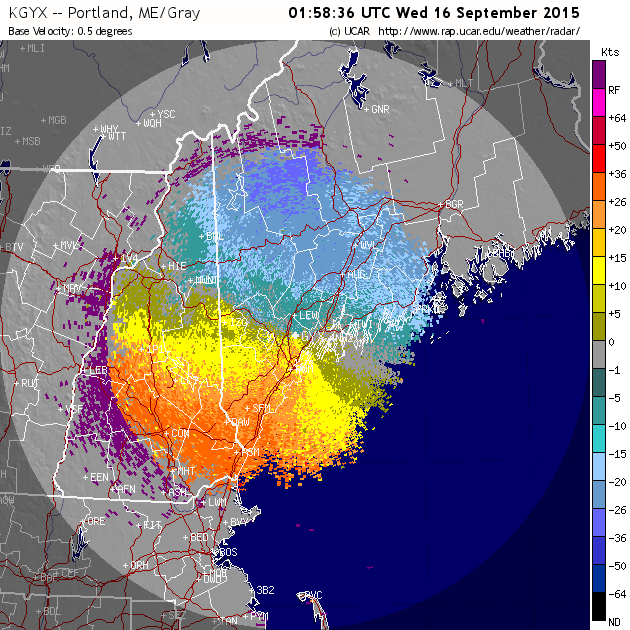
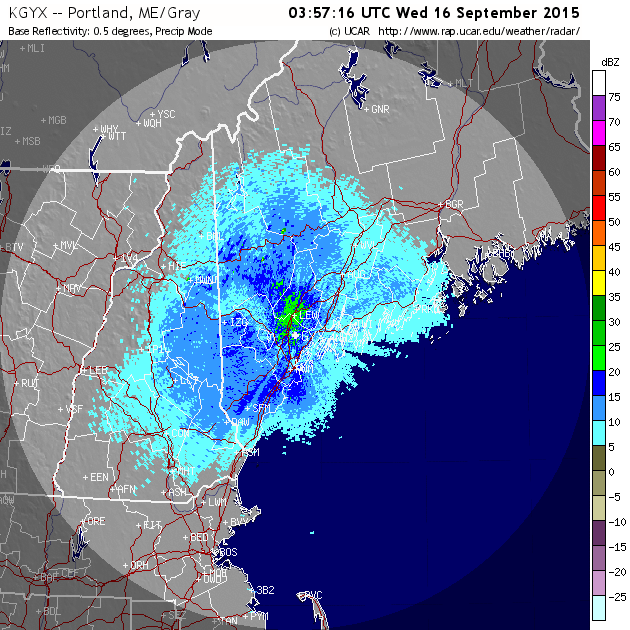
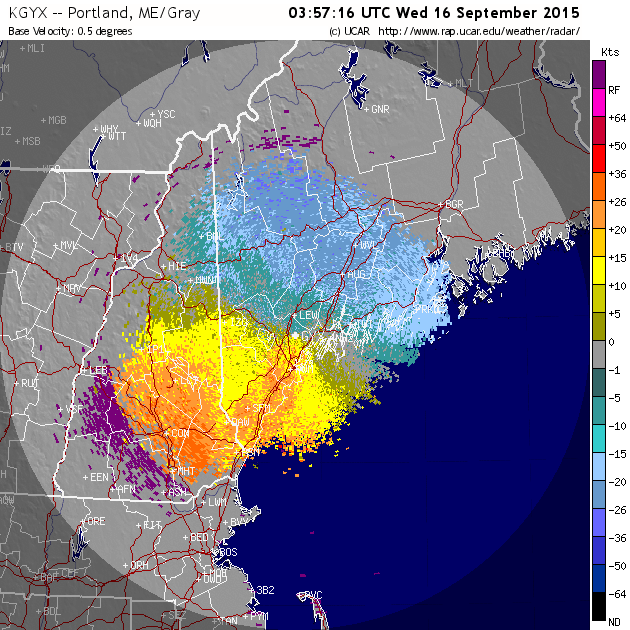
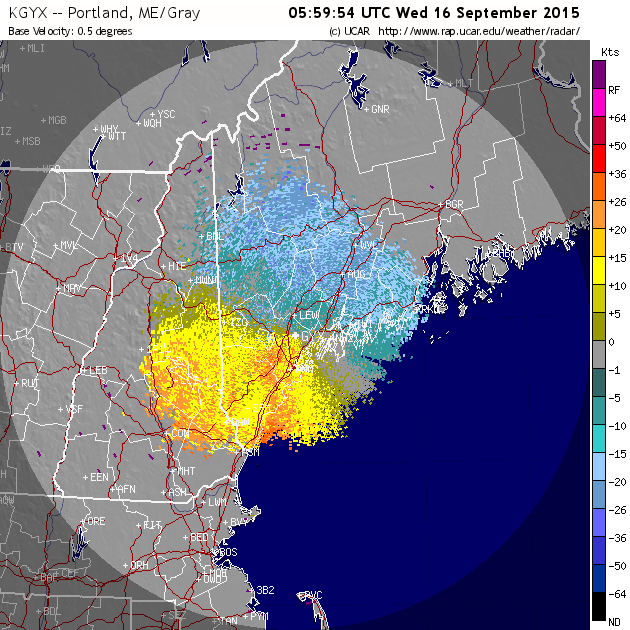
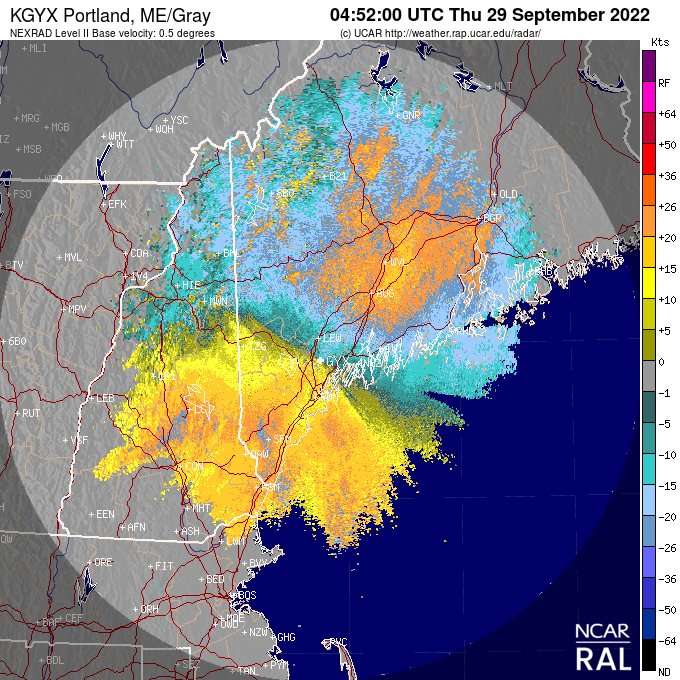
Let’s start with the 1:00am reflectivity and velocity images from the Gray NEXRAD station. I was very happy that the station was back online in time for this incredible large flight. In fact, it was one of the densest flights I have seen in the area, and you can see how much biomass was offshore.

For an explanation of just what this means, see the “Birding at Night” chapter in my first book, How to be a Better Birder. Furthermore, see previous Sandy Point posts on the topic – you can use the search box in the upper right-hand corner of this blog page, and search “Sandy Point” or “Morning Flight.”

That got my pretty darn excited for the morning. And, well, it was a lot of fun! OK, mostly…at times I was overwhelmed and early on, I just felt beat! For the first 30 minutes, I often just clicked waves of “unidentified” as I tried to keep pace. Luckily, after the massive early rush, the flight became more manageable, although bursts of activity were barely quantifiable.

20 species of warblers, a very rare Blue Grosbeak, and my 195th all-time Sandy Point birds: 2 Little Blue Herons! It was quite a day.

Thanks to Evan Obercian, I learned a ton and had some great species tallies. I have no doubt that some of the records set (e.g. 2nd-highest tally for Cape May Warbler) came from his exceptional auditory skills – some of those birds would have just went unidentified or not even detected by me! Of course, the more eyes (and ears) the better, and Reed Robinson and Weston Barker – splitting time on the “flicker clicker” and pointing out birds landing below – helped immensely as well. Assistance was critical today.

When Evan and I finally departed for desperately needed bagels and coffee at 11:45, there were still a few birds on the move. With some raptors in the air, I am sure that if we didn’t leave then, I would be there all day. I wish I could have been, because this morning was simply awesome. Here’s the scoreboard:

  • 6:36 to 11:45am
  • With Evan Obercian, Reed Robinson, and Weston Barker.
  • 50F, mostly clear, WNW 4.5-5.1 to NW 13.3-16.1
  • 2,389 unidentified
  • 1,036 Yellow-rumped Warblers (*2nd highest)
  • 449 Northern Parulas
  • 374 Ruby-crowned Kinglets (*3rd highest)
  • 286 Yellow-bellied Sapsuckers (*new record)
  • 251 Northern Flickers
  • 155 Blackpoll Warblers
  • 138 Eastern Phoebes (*new record. Previous high of 26! And this was very conservative as many were swirling, too. But at times, steady pulses of 2-6 were clearly crossing)>
  • 105 Black-throated Green Warblers
  • 93 American Robins
  • 75 White-throated Sparrows
  • 71 Black-and-white Warblers (*new record)
  • 65 Red-eyed Vireos (*new record)
  • 64 Red-breasted Nuthatches (*new record)
  • 58 Magnolia Warblers
  • 57 Cedar Waxwings
  • 44 Blue Jays
  • 41 Dark-eyed Juncos
  • 33 American Goldfinches
  • 31 Blue-headed Vireos (*2nd highest)
  • 26 American Redstarts
  • 25 Cape May Warblers (*2nd highest)
  • 25 Black-throated Blue Warblers
  • 25 Purple Finches
  • 23 Chipping Sparrows
  • 22 Rusty Blackbirds
  • 22 Nashville Warbler (*2nd highest)
  • 22 Broad-winged Hawks
  • 18 Tennessee Warblers (*3rd highest)
  • 18 Golden-crowned Kinglets
  • 16 Palm Warblers
  • 12 Scarlet Tanagers
  • 9 Yellow Warblers
  • 8 Savannah Sparrows
  • 7 Swainson’s Thrushes
  • 7 American Kestrels
  • 7 Turkey Vultures
  • 6 White-breasted Nuthatches (*tied highest)
  • 5 Baltimore Orioles
  • 4 Ospreys
  • 4 Philadelphia Vireos
  • 4 Bay-breasted Warblers
  • 4 Black-capped Chickadees
  • 3 Brown Creepers
  • 2 Rose-breasted Grosbeaks
  • 2 Chestnut-sided Warblers
  • 2 Orange-crowned/Tennessee Warbler
  • 2 Red-winged Blackbirds
  • 2 Eastern Wood-Pewees
  • 2 Sharp-shinned Hawks
  • 2 juvenile LITTLE BLUE HERONS (**high fly-overs. My first record for Sandy Point and Patch Bird #195.)
  • 2 Lincoln’s Sparrows
  • 2 White-crowned Sparrows
  • 1 Pine Warbler
  • 1 Least Flycatcher
  • 1 Northern Harrier
  • 1 Tufted Titmouse (did not cross after a few false starts)
  • 1 Red-bellied Woodpecker (crossed after three false starts)
  • 1 Common Loon
  • 1 Eastern Bluebird
  • 1 Hairy Woodpecker (crossed after 8 false starts)
  • 1 BLUE GROSBEAK (**My 3rd-ever at Sandy Point. Spotted by Evan, photographed by Weston Barker; photo below).
  • 1 Common Grackle
  • 1 Wilson’s Warbler
  • 1 Red-tailed Hawk
  • 1 American Pipit
  • 1 Blackburnian Warbler
  • 1 unidentified Empid
  • 1 Downy Woodpecker (did not cross after 2 false starts)
  • 1 Swamp Sparrow
  • 1 Hermit Thrush
  • 1 Ovenbird (in the woods; warbler #20!)
  • X Common Yellowthroat (I don’t try and count them in the brush here, but there were a lot around this morning and many more than there have been. None even attempted a crossing as usual).

***Total = 6,183 (2nd highest all time!)***

Exceptional Morning Flight at Sandy Point, 9/29/2021

The carnage of this morning’s Morning Flight.

I don’t usually post my Sandy Point Morning Flight totals here, but today was more than worthy of a little something extra.  After 8 nights with little or virtually migration (well, at least not a big flight on ideal winds), clearing skies and a light northwesterly breeze finally opened the floodgates.  Here are the 1:00am reflectivity and velocity images, for example.

I am sure Monhegan – where I just spent 5 glorious days (despite the lack of a huge flight; more on that soon!) – was great, Sandy Point was just outstanding.  In fact, it was my 3rd highest all-time flight!

Early on, clouds made everything into little black shapes as the intense flight proceeded at all levels. Wind, a cacophony of kinglets ringing in my ears, and the two loudest and most vociferous Tufted Titmice who just stayed screaming in the magic birch all conspired to further reduce my ability to identify birds. But mostly, waves of dozens at a time were simply clicked as “unidentified” as I tried to keep pace with quantifying the flight. Furthermore, there were at least 3-4 hunting Merling, a Cooper’s Hawk, and a Peregrine Falcon, which added to the swirling chaos. It was a challenge, that’s for sure. “I do this for fun?” I asked Matthew.

Here’s the scorecard from the Morning Flight of birds that passed over and through Sandy Point, Cousin’s Island, Yarmouth this am:

6:34-11:00am

50F, mostly cloudy NW 7.9-10.0 becoming mostly sunny, NW 10.9-12.5mph.

2,012 unidentified – *3rd highest

1,335 Yellow-rumped Warblers– *New Record High

445 Northern Parulas

324 unidentified kinglets

230 Cedar Waxwings

148 Golden-crowned Kinglets

139 Yellow-bellied Sapsuckers – *New record

109 Northern Flickers

108 Dark-eyed Juncos

92 Ruby-crowned Kinglets

77 Blackpoll Warblers

75 Black-throated Green Warblers

56 Palm Warblers

39 White-throated Sparrows

33 Black-throated Blue Warblers – *3rd highest.

33 American Robins

28 Rusty Blackbirds – *2nd highest

25 Red-eyed Vireos

22 Eastern Phoebes – *2nd highest

20 Blue-headed Vireos

20 Nashville Warblers  – *2nd highest

17 Chipping Sparrows

16 American Redstarts

13 Magnolia Warblers

12 Blue Jays

8 Black-capped Chickadees

6 Common Loons

5 Black-and-white Warblers

5 Sharp-shinned Hawks

4 unidentified blackbirds

3 Cape May Warblers

3 Swainson’s Thrushes  – including two observed crossing.

3 Tufted Titmice

2 Scarlet Tanagers

2 unidentified vireos

2 Yellow Warblers

2 Red-breasted Nuthatches

2 Tennessee Warblers

2 American Goldfinches

1 Chestnut-sided Warbler

1 Pine Warbler

1 White-crowned Sparrow

1 Broad-winged Hawk

1 White-breasted Nuthatch

1 Hermit Thrush

1 unidentified Catharus

1 Red-bellied Woodpecker

1 Osprey

X Common Yellowthroats

1 YELLOW-BILLED CUCKOO – my 7th all-time here. Made 4 “false starts” before crossing at 10:04am.

Cuckoos are such shape-shifters in flight that I feel like I could have counted each pass from the one bird as a different species each time it passed!

For a grand total of 5,487 birds, my *3rd highest all-time count.  So yes indeed, birds have very much been backed up.

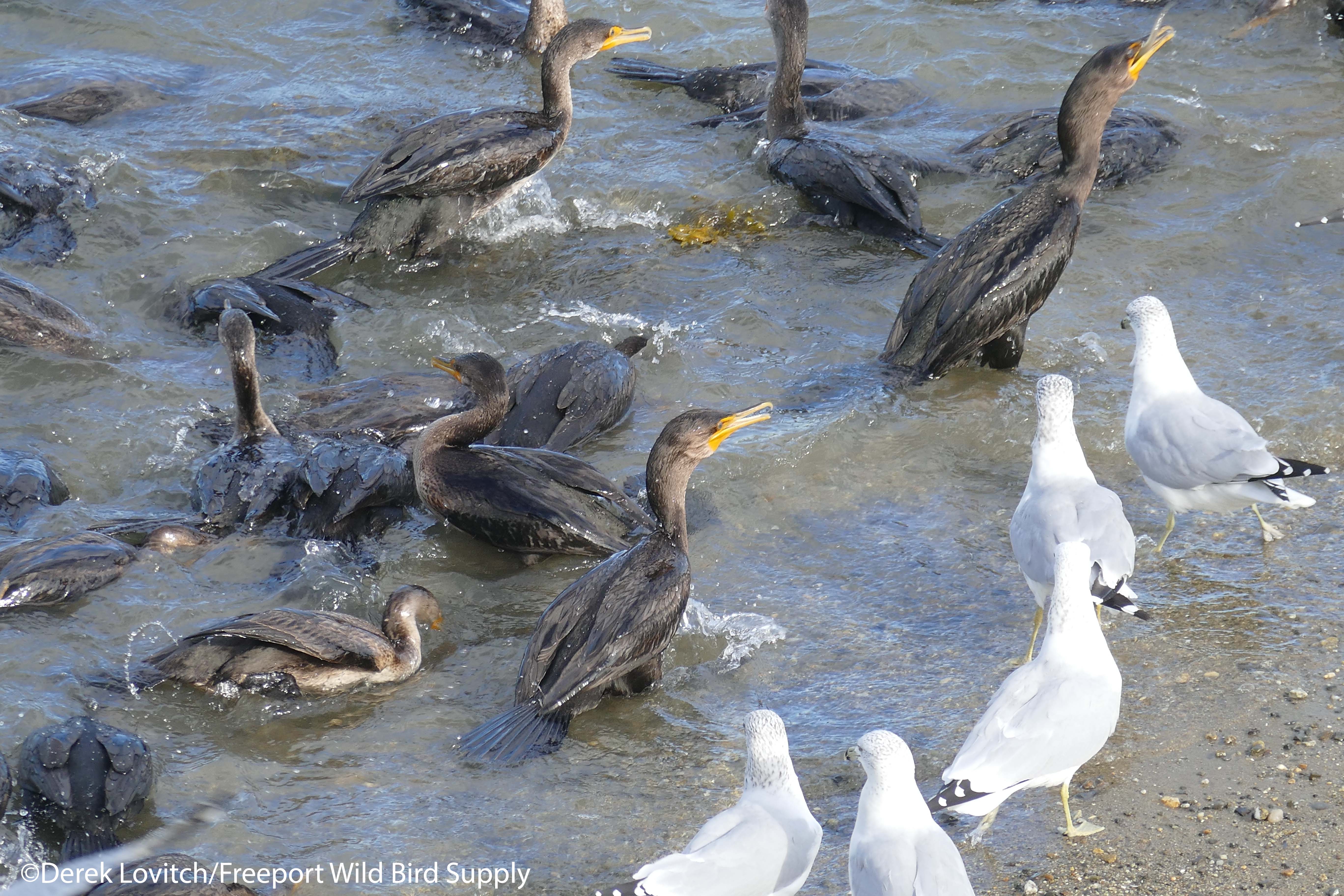
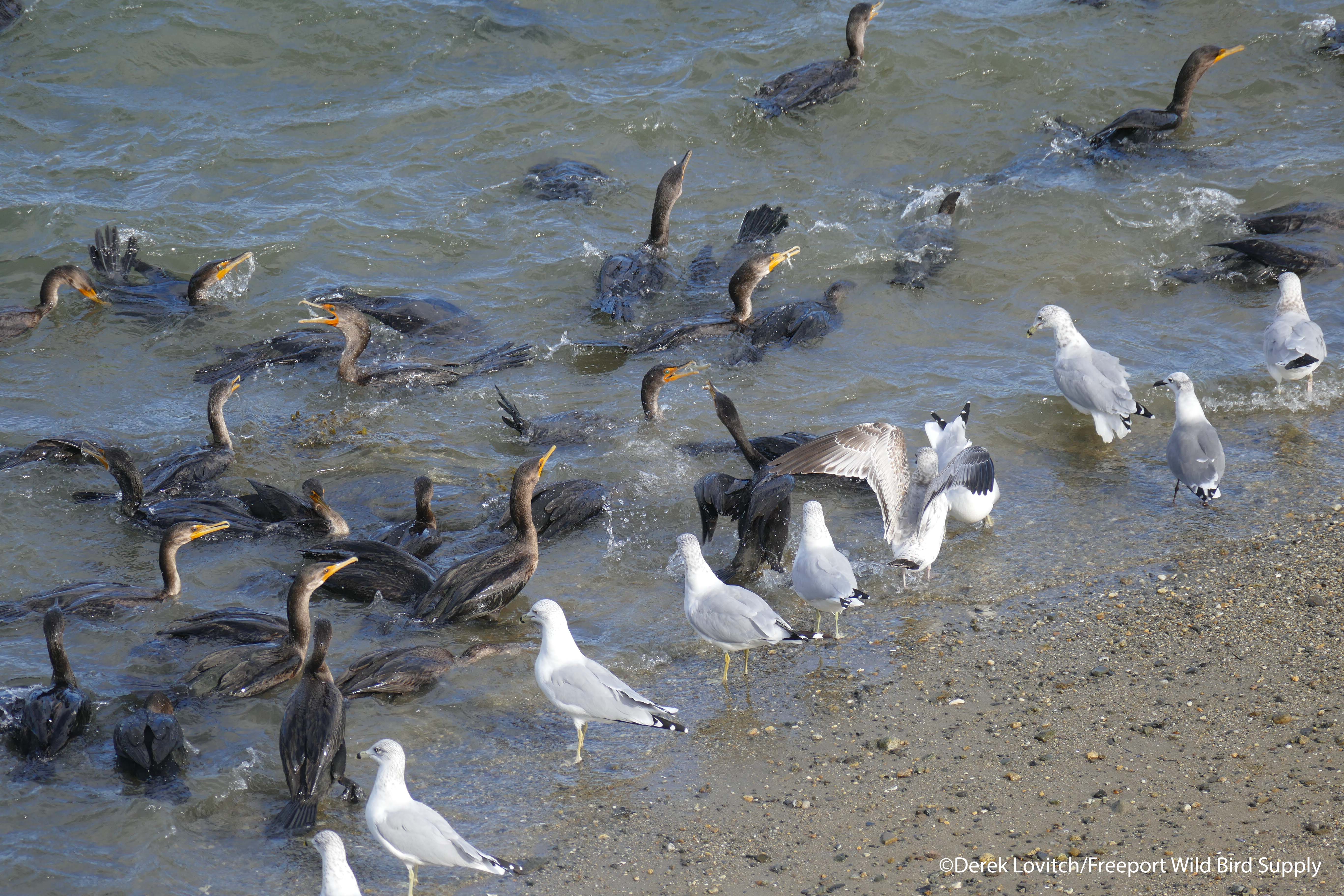
Meanwhile, adding to the excitement (and chaos) this morning was a massive feeding frenzy of Double-crested Cormorants and gulls. While I am sure a few migrants snuck by overhead, I couldn’t help but take a few moments to enjoy it…and make sure there were no rarities among the gulls!   15-20 Laughing Gulls and 4 Bonaparte’s Gulls joined 75-100 Ring-billed Gulls in snatching the baitfish that the Double-crested Cormorants had pushed right up onto the sandbar as it slowly emerged from the tide.  It was quite a show!

A Record-Shattering 5 Days at Sandy Point!

NOPA
Northern Parulas were certainly the “bird of the week” at Sandy Point.

It was a special five-day run at Sandy Point Beach on Cousin’s Island in Yarmouth. It was a record-shattering run in fact, in which I tallied nearly 18,000 migrants engaging in the “Morning Flight,” or “morning re-determined migration” when nocturnally-migrating passerines relocate (to drastically oversimplify things) come sunrise.
SandyPoint_sunrise,9-13-17

(To learn more about Sandy Point, check out the site entry in Birdwatching in Maine: A Site Guide, and for more on nocturnal migration, interpreting the radar, and the “morning flight” phenomena, check out Chapter 5 in my first book, How to Be a Better Birder. Whaddya mean you don’t have these two books!?)

I’ve had a handful of four-day runs, but I cannot think of a time when conditions were favorable – and I was actually present, and not leading tours on Monhegan for example – for five straight days. But I have most certainly never had five days like this!

I recorded 72 species “deemed migrating” through here, not including migrants that were in the bushes, such as the Gray Catbirds and Song Sparrows that are so abundant in the brush here. It does not include species like Osprey, in which some of the many I saw this week were likely southbound, but impossible to separate from the still-locals. And this tally did not include all of the waterbirds, from Common Eiders to herds of dabbling American Black Ducks, and from Bald Eagles to hunting Great Blue Herons, as well as resident species.

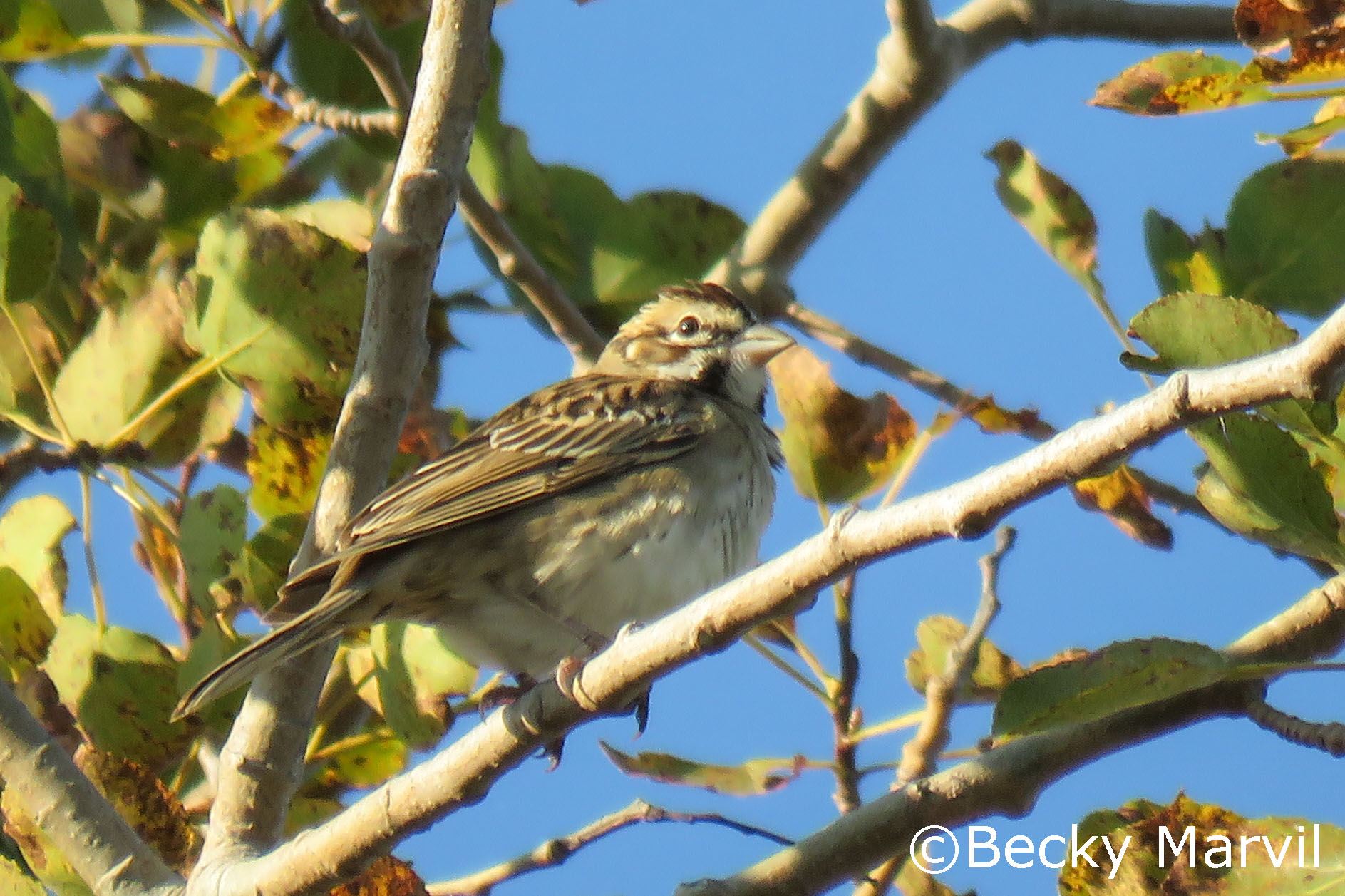
I tallied 25 species of warblers, including a single Connecticut Warbler, one of the most sought-after parulids in Maine. A Northern Mockingbird was only my 5th ever noted here, and two passing Dickcissels are always a treat. But certainly the icing on the cake of this great week was the Lark Sparrow found by the group in the parking lot on the relatively quiet morning of 9/13. This was a first record for Sandy Point, and my personal 184th species here.
LASP, Becky

But it was the morning of the 11th that will go down in Sandy Point history!  8,185 migrants was not only a new record, but almost doubled the previous record (4,346 on Sept 21, 2010). It was incredible. More on that epic morning later.

A number of records for high counts for individual species were set, and I am sure even more would have been shattered if I had a higher rate of identification during the onslaught of the 11th.   Other trends, typical of the season, were evident, such as the slow but steady change in the composition of the flight. The early migrants like Magnolia Warblers were giving way to a growing percentage of Yellow-rumped Warbles and Blackpoll Warblers for example. But it sure seems like we’re not yet running our of Yellow Warblers and American Restarts, however!
AMRE
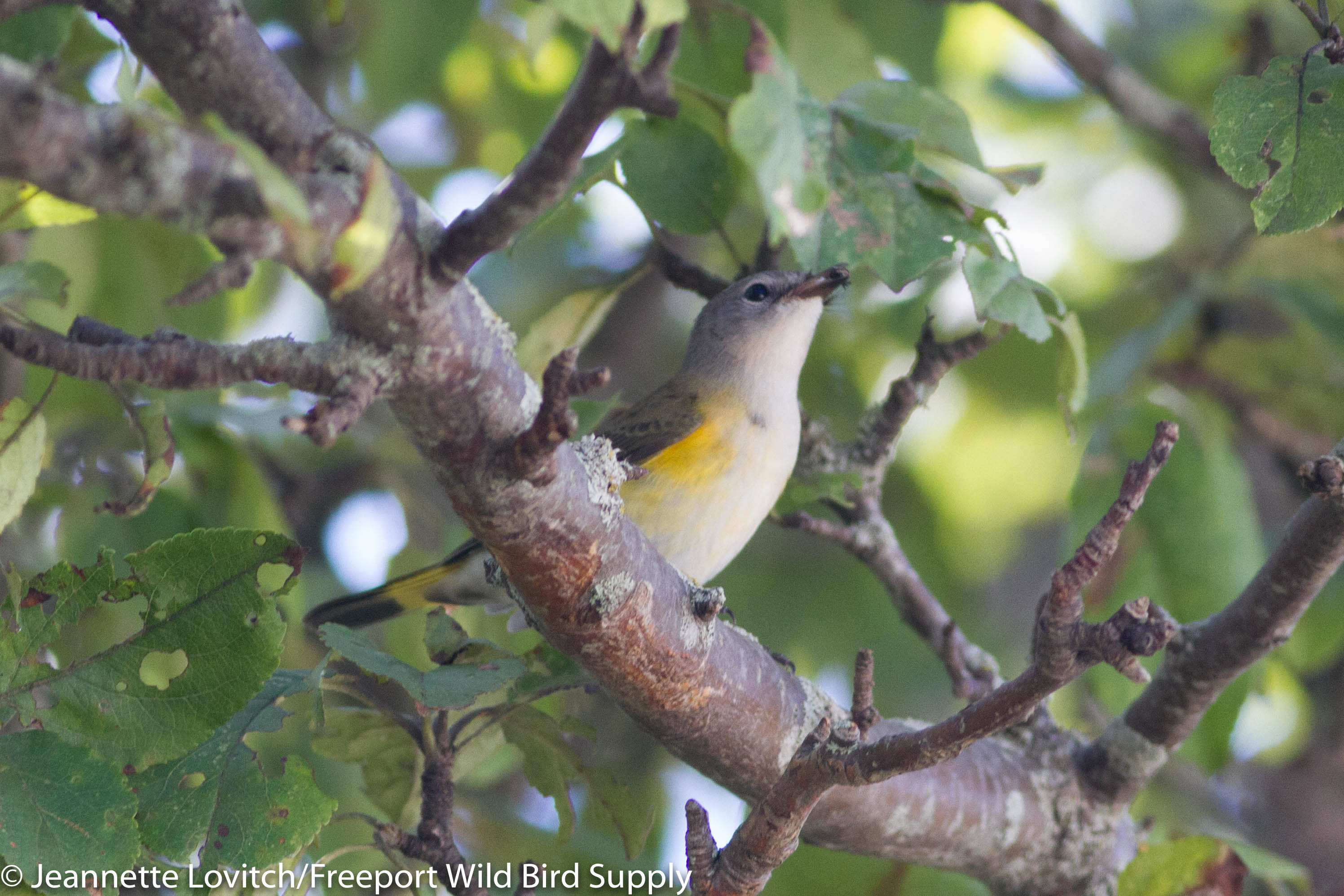
immature male American Redstart

YWAR
Yellow Warbler, adult male

So first, here’s the numbers (bold font indicates a new daily record).

 9/9 9/10 9/11 9/12 9/13
Blue-winged Teal 3 0 0 0 0
Unidentified teal 0 0 4 0 0
Surf Scoter 3 0 0 0 0
Common Loon 4 0 0 3 0
Northern Harrier 0 1 0 0 0
Killdeer 0 1 0 0 0
Lesser Yellowlegs 0 0 0 1 0
Mourning Dove 0 1 0 1 1
Ruby-throated Hummingbird 2 0 0 1 1
Hairy Woodpecker 0 1 0 0 0
Northern Flicker 1 256 68 26 12
Pileated Woodpecker 0 1 0 1 0
American Kestrel 0 0 3 0 1
Merlin 1 1 0 1 2
Eastern Wood-Pewee 3 4 0 0 0
Yellow-bellied Flycatcher 1 0 0 0 0
“Traill’s” Flycatcher 2 0 0 0 0
Least Flycatcher 9 11 3 2 0
Unidentified Empidonax 5 0 0 1 0
Eastern Phoebe 1 3 2 2 2
Eastern Kingbird 2 1 0 0 0
Unidentified flycatcher 6 1 1 0 0
Blue-headed Vireo 1 3 1 2 0
Philadelphia Vireo 3 4 2 1 0
Red-eyed Vireo 42 49 30 9 4
Unidentified vireo 1 2 0 0 0
Blue Jay 0 0 0 2 5
Barn Swallow 1 0 0 0 0
Red-breasted Nuthatch 1 1 2 1 0
Golden-crowned Kinglet 0 0 0 1 0
Ruby-crowned Kinglet 2 1 5 4 0
Swainson’s Thrush 10 0 0 2 0
American Robin 4 3 1 2 0
Unidentified thrush 0 1 0 0 0
Northern Mockingbird 0 1 0 0 0
Cedar Waxwing 21 265 377 54 0
Ovenbird 0 0 0 0 1
Northern Waterthrush 0 0 0 1 0
Black-and-white Warbler 33 59 41 32 5
Tennessee Warbler 4 2 2 8 0
Nashville Warbler 8 8 10 4 0
CONNECTICUT WARBLER 1 0 0 0 0
Mourning Warbler 0 1 0 0 0
Common Yellowthroat 2 1 5 5 2
American Redstart 602 550 844 119 16
Cape May Warbler 18 5 8 5 0
Northern Parula 705 630 692 612 205
Magnolia Warbler 66 117 32 23 2
Bay-breasted Warbler 5 3 1 1 0
Blackburnian Warbler 7 6 1 0 0
Yellow Warbler 19 52 38 67 8
Chestnut-sided Warbler 5 2 0 2 0
Blackpoll Warbler 9 3 27 25 35
Black-throated Blue Warbler 8 7 4 4 0
Palm Warbler 0 0 0 1 0
“Western” Palm Warbler 1 0 0 0 0
Pine Warbler 0 0 0 1 0
Yellow-rumped Warbler 3 6 3 19 11
Prairie Warbler 1 2 1 1 0
Black-throated Green Warbler 118 63 73 57 26
Canada Warbler 6 0 1 0 0
Wilson’s Warbler 12 17 7 4 0
Chipping Sparrow 2 0 1 3 1
LARK SPARROW 0 0 0 0 1
White-throated Sparrow 1 0 0 0 0
Savannah Sparrow 2 0 0 0 0
Scarlet Tanager 1 1 4 1 0
Rose-breasted Grosbeak 3 1 0 0 0
Indigo Bunting 0 0 1 1 0
DICKCISSEL 0 0 1 0 1
Bobolink 1 2 0 0 0
Red-winged Blackbird 1 2 0 0 0
Rusty Blackbird 0 1 0 0 0
Baltimore Oriole 2 1 1 1 1
House Finch 0 0 0 1 1
Purple Finch 0 0 0 8 0
American Goldfinch 5 12 3 6 4
Unidentified 1915 1887 5893 737 192
TOTAL 3705 4057 8185 1866 540


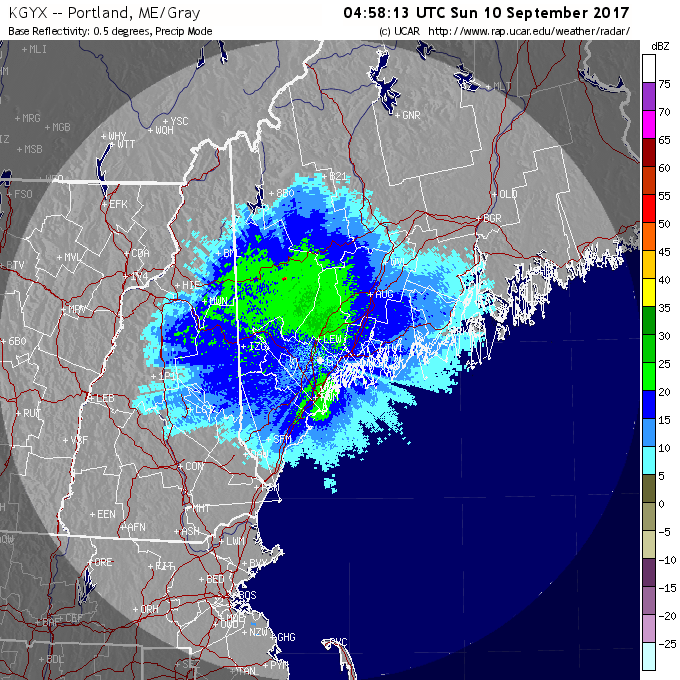
Now, let’s take a look at the radar. Here are the density and velocity images from 1am (as a sample) on 9/9 and 9/10. That’s a ton of birds on the radar.
1amRadar,9-09-17
1amVelocity,9-09-17

1amRadar,9-10-17
1amVelocity,9-10-17

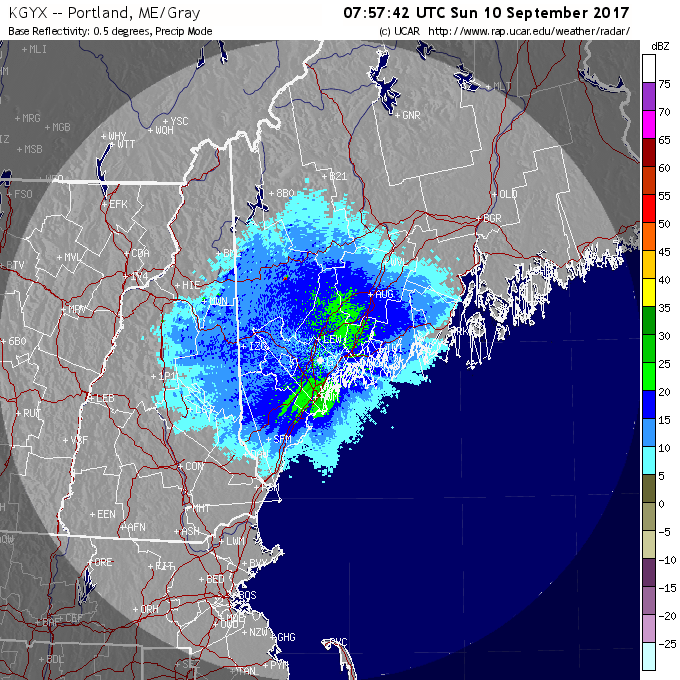
And even as late as 4:00am on each day, a lot of birds were visible, and a lot of birds were offshore.
4amRadar,9-09-17
4amRadar,9-10-17

The night of 9/8 through 9/9 featured light westerly winds, shifting to northwest by sunrise. And on the next night, light north winds became northwest overnight. Both, as expected, produced great flights over and through Sandy Point some dawn.

Weather patterns, especially at this time of year, rarely produce three great nights for migrants in a row. And when they do, it often results in fewer birds overnight (and therefore at Sandy Point) come sunrise; essentially, the well temporarily runs dry.

And as you can see by the 1:00am radar image from September 11th, the density was nowhere near the previous two nights, despite mostly light westerly winds overnight.
1amRadar,9-11-17
1amVelocity,9-11-17

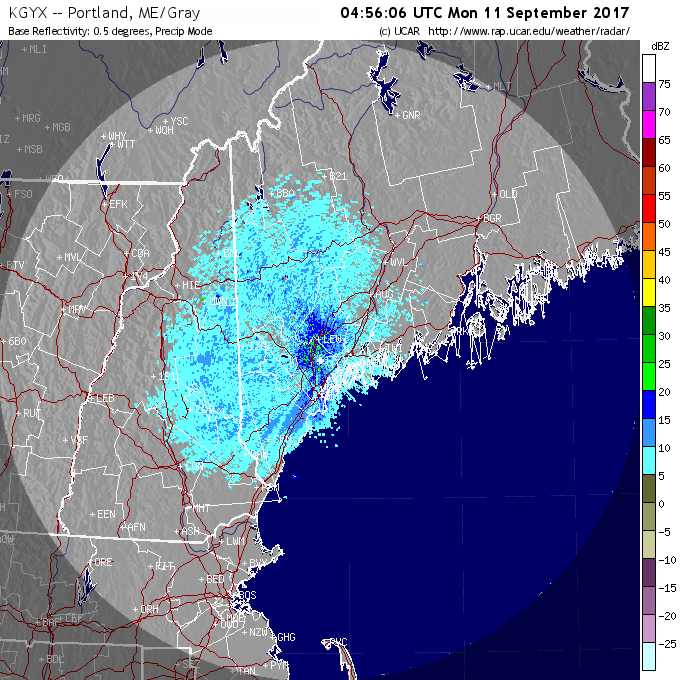
And by 4:00am, it was rather quiet.
4amRadar,9-11-17

Light northwesterly winds in the evening slowly gave way to light north, before becoming light and variable. After midnight, they became west but didn’t really increase until after 2:00am. Coupled with a lackluster radar return, this was not a recipe for a huge flight.

Nonetheless with a light westerly wind at sunrise, I was heading to Sandy Point anyway. If only because it was a day off, and I won’t have many more chances to visit “my office” this month. A milky sunrise further clouded (sorry) my optimism for a big flight, but there were plenty of birds in the air.
Sunrise_on_big_day_atSP,9-11-17

And then all hell broke loose.

It was incredible. It was frustrating. It was beautiful. It was painful. It was amazing. It was indeed overwhelming, and at times, my only hopes at quantifying the flood was to skip attempting identification and just click my unidentified clicker as fast as I could.

And I really can’t explain it. It “shouldn’t” have been this amazing.

Come nightfall, with high pressure remaining in control, and with light westerly winds and clear skies once again, a moderate to strong flight occurred overnight. Here are the 1:00am and 4:00am radar images from the wee hours of 9/12:
1amRadar,9-12-17
1amVelocity,9-12-17

4amRadar,9-12-17

With light westerly winds come dawn, I was once again stationed at the bridge, and what was – prior to three days ago! – considered a very good flight passed over and through. It was even downright relaxing – and manageable – after the chaos of the previous morning. I had fun.

Not surprisingly, after four consecutive nights, the flight was much lighter overnight on the 12th into the 13th, as evidenced once again by the 1:00am and 4:00am images.
1amRadar,9-13-17
1amVelocity,9-13-17

4amRadar,9-13-17

And despite very light westerly winds in the morning, and clear skies, only a light flight was to pass through the point. Of course, that Lark Sparrow more than made up for it. It was also nice to enjoy a slower flight – and identify many more birds than not!

So almost every morning made sense: radar plus weather conditions correctly predicted the intensity of the flight. Except for one. The Big One. And I can’t explain it. But, I am OK (mostly) with that – it’s one of the fascinating and flabbergasting aspects of documenting the morning redetermined migration!

Winds turned to the south during the day on the 13th, and continued light and southerly overnight, bringing the streak of five great nights of migration to an end. Come morning, I also slept in – relatively speaking – and then went for a massage. As my therapist began to work on my aching neck, she simply uttered, “Wow” and got to work. I felt the same on Monday morning when the greatest flight I have ever recorded passed through Sandy Point.

IMG_6455-edited-edited
Species, such as this Swainson’s Thrush, that can be rather secretive in migration, are sometimes seen really well at Sandy Point!

Excellent Morning Flight at Sandy Point, 9/16/2015

Over 2,000 migrants. 45 species, including 17 species of warblers. Yeah, it was a good morning to be at Sandy Point!

L1030171_CMWA,SandyPt,9-1-15_edited-1
Cape May Warbler, male.

I arrived, as usual, a few minutes before sunrise, but unlike most mornings, birds had already begun to cross. And once the sun crested the horizon, the floodgates open. OK, so it wasn’t “Warblergeddon” at Cape May, but it was fun for me and it was an excellent flight for here.

Well, mostly fun. A lot of birds were high, especially as the wind went calm. Big pockets of birds were just too high to identify. I did my best to just keep count. Birds were dropping into the trees on both sides of the road, others were zipping through underneath. As I focused on something in the elm, I am sure I missed birds overhead. It was tough to keep track, but I did my best.
L1030173_PRAW,SandyPoint_edited-1
Prairie Warbler, male.

By the time I departed at 9:30, the tally was the 7th highest I’ve had at Sandy Point (the 6th highest in September), and by far my best flight of the season to date. It also had some interesting birds, and I’ll analyze some of the numbers below.

6:16-9:30am.
61F, clear, West 6.3mph to calm.

940 Unidentified
403 Northern Parulas (3rd highest)
161 American Redstarts
155 Black-throated Green Warblers
61 Cedar Waxwings
55 Tree Swallows (record high)
34 Black-and-white Warbler (3rd highest)
30 Blackpoll Warblers
22 Northern Flickers
22 Magnolia Warblers
18 Yellow Warblers
16 American Goldfinches
13 Yellow-rumped Warblers
11 Red-eyed Vireos
11 Black-throated Blue Warblers
10 Chipping Sparrows
9 Blue Jays
9 Nashville Warblers
8 Ruby-crowned Kinglets
8 Tennessee Warblers (3rd highest)
8 Baltimore Orioles
6 Scarlet Tanagers
5 White-breasted Nuthatches (record high)
4 Purple Finches
3 Eastern Phoebes
3 Blue-headed Vireos
2 Black-capped Chickadees
2 Wilson’s Warblers
1 Osprey
1 American Kestrel
1 Downy Woodpecker
1 RED-BELLIED WOODPECKER
1 unidentified Empid
1 unidentified Vireo
1 Red-breasted Nuthatch
1 American Robin
1 Chestnut-sided Warbler
1 Cape May Warbler
1 Prairie Warbler
1 Bay-breasted Warbler
1 EASTERN TOWHEE (present in scrub; only 3 previous records here).
1 Savannah Sparrow
1 White-throated Sparrow
1 Rusty Blackbird (first of fall)
x Common Yellowthroat

Total = 2044

L1030179_BTBW,SandyPt,9-16-15_edited-1
Black-throated Blue Warbler, male. Look at how the “pocket hankercheif” is blown out by the low sun angle.

Several counts were noteworthy, including the two record highs. Tree Swallows usually don’t bother crossing from the island to the mainland via Sandy Point, but more often continue on to the south, crossing the bay with little trouble. Plus, most swallows are probably moving through after I depart in the morning. These birds, mostly in one large and a couple of small groups, were funneling over the bridge along with the rest of the typical Morning Flight migrants. Meanwhile, the 5 White-breasted Nuthatches were noteworthy as I usually see no more than a couple all fall here. The previous record for a single morning was two.

As for the higher counts, I was surprised by how large of a percentage of identified migrants were American Redstarts compared to Blackpoll Warblers. However, I think this is an “identification bias.” Redstarts are the easiest warbler to ID for me in flight, and few pass through at almost any height without being identified. I doubt many of the overwhelming “unidentified” count were redstarts. However, I would wager that a sizeable percentage of them were Blackpoll Warblers. Based on the date and what I’m seeing in the woods these days, there should have been a lot more blackpolls. However, these strong fliers are often very high overhead on light winds, and my guess is that the diminishing westerly this morning was of little consequence for them, and that a lot of those little dots overhead were blackpolls.

Yesterday, I was lamenting not being at Sandy Point. The conditions were great in the morning, and the radar was quite good overnight. However, I was guiding in the Camden area, and at least a little morning flight (ca 100 birds) flew over and through Merryspring Nature Center Park in town. It was a tease to think what might have been going on at “my office” however.

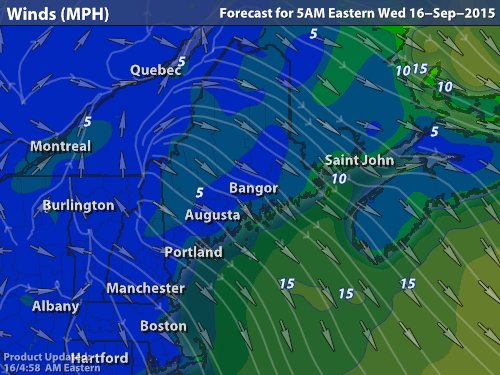
But last night’s radar was even better! Here are the very active 10pm, 12am, 2am, and 4am radar and velocity images from the overnight. See how much was offshore, even as of 4am?
10pm radar

10pm velocity

12am radar

12am velocity

2am radar

2am velocity

4am radar

4am velocity

And come dawn, the winds aloft were perfect for a good Morning Flight at Sandy Point.
5am wind map

In other words, that’s what produced 2,000 birds at Sandy Point, and with a busy schedule this fall, I was quite pleased to catch one of the big ones.

Morning Flight Fail

Following yesterday’s cold front, a huge flight was underway come nightfall. It was by far the biggest of the season to date, and one of the stronger (by density) flights as you can see around here.

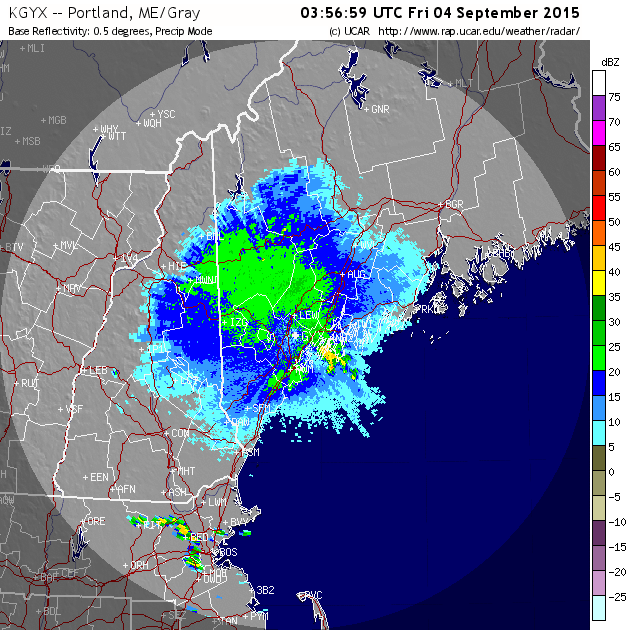
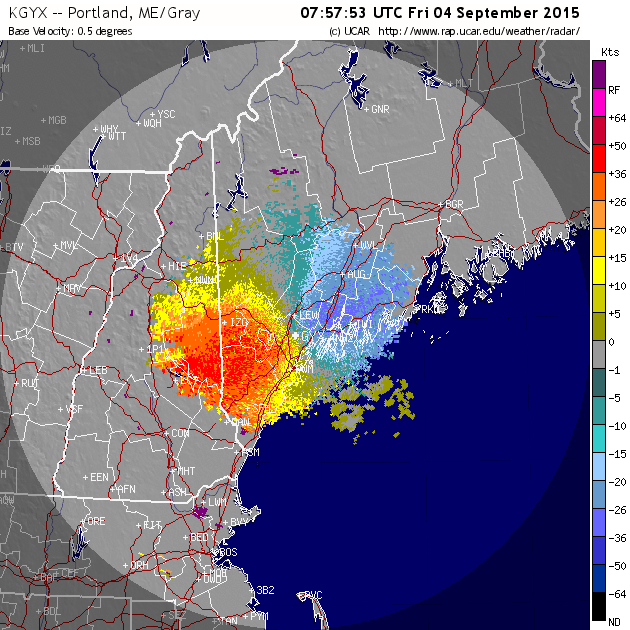
Here are the midnight radar and velocity images, for example:
12am_radar

12am_velocity

Even as of 4:00am, with the eastern sky likely showing a little light, the flight was still strong:
4am_radar

4am_velocity

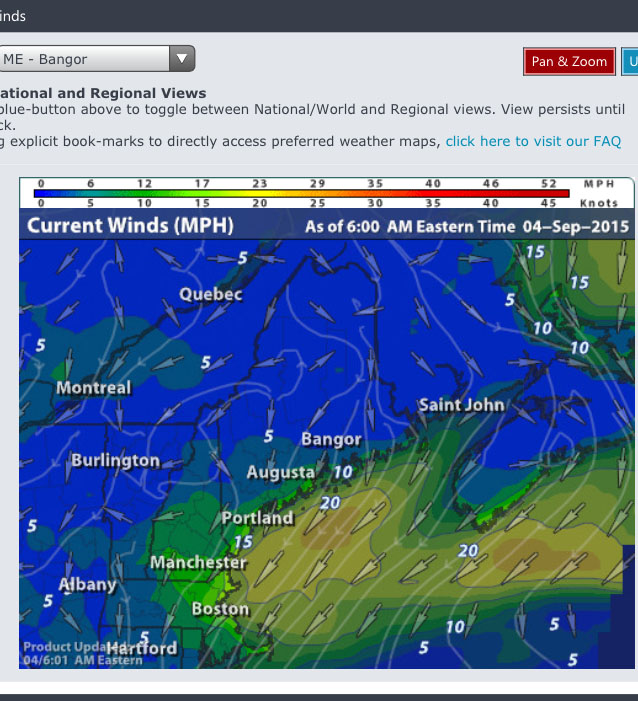
So of course I was up early to go to Sandy Point. However, the winds were forecasted to be out of the northeast, becoming easterly in the morning. And, the local weather stations I looked at (and my windometer at home ) were all reading north or northeast when I awoke a little before 5:00 this am. The 6:00am Intellicast “Wind cast” image shows this coastal northeasterly wind very well:
6amWIND_map

After almost any night in the fall with a little migration, there will be a few birds at Sandy Point. And after a migration as strong as last night’s, there were bound to be some birds. However, due to a combination of geography and the instinct to fly into the wind to compensate for overnight drift (to oversimplify things a bit), there are just never a lot of birds at Sandy Point on northeasterly winds.

On the other hand, on both north and northeast winds, I have witnessed good morning flights (aka Morning Re-determined Migration” or “Morning Reorientation”) in the south-facing peninsulas that reach into Casco Bay, including the dual peninsulas of Harpswell.  What I have not figured out yet, however, is which point is best, how, and when. This is mostly because I can’t tear myself away from Sandy Point long enough to find out!

But this morning, as I reached I-295, something made me turn north instead of south. With what was supposed to be an increasing northeasterly wind and a huge flight, this should have been a perfect morning to test my hypotheses at the tip of Harpswell.  So, with no small feeling of impending regret, I drove down to Pott’s Point at the end of Rte 24 for the dawn.

As birds that were over and beyond Casco Bay at sunrise begin to work their way inland and compensate for that drift, island-hopping to the north and northeast deposits birds in the long fingers of the Mid-Coast. Unlike Sandy Point on Cousin’s Island, however, there isn’t a single leading line, perfectly-pointing peninsula, narrow crossing, and raised bridge (for visibility) that combine to offer a perfect morning flight observation location.

So I thought today would have been a perfect morning to see if Pott’s Point was the answer on a northeasterly wind, even if it meant missing a few birds at Sandy Point.

I was wrong.

I arrived at the end of Pott’s Point at 6:27, 20 minutes after sunrise, but found the wind to not be northeast, or even north, but to be north-northwest. Uh-oh, I thought.

But since I have yet to find a way to be in two places at once, I settled in for the next hour at Pott’s Point (it would have taken at least 45 minutes to get from Pott’s Point to Sandy Point), and counted…very, very little:
16 Cedar Waxwings
11 American Goldfinches
5 American Redstarts
5 Unidentified
2 Yellow-rumped Warblers
1 Pileated Woodpecker

Now, all of those birds were doing the “right” thing, flying from over the bay or from Haskell Island just to the south, then over Pott’s Point and northward up the peninsula.  There were just so few of them!

CousinsIslandPowerPlant
If I only had a boat…

The view of the top of the power plant at the other end of Cousin’s Island was a reminder of what could have been, as Sandy Point is excellent in a NNW wind. Was I missing a huge flight? Or, were the winds northeasterly on the other side of the bay, and only a light flight was passing through there (although it would have undoubtably been better than the “flight” at Pott’s, I will convince myself of the latter!)?

In other words, I was here:
PottsPointMap

But should have been here:
SandyPointMap_edited-1

Besides, it’s a peaceful spot to spend the morning, with the only traffic being a few lobster boats.
panorama

And the narrow peninsula does have a Monhegan-esque feel to it and its birding (sometimes).
IMG_5997

So if the migrants were not at Sandy Point, where was the Morning Flight concentration this morning?  Looking back at the radar images, there was not a ton of offshore drift (due to the lack of a westerly component throughout the night), so maybe there just weren’t a lot of birds offshore come sunrise.  But there still looks like more than enough for a good reorientation flight at sunrise.

Bascially, I am not only left without an answer to my pursuit of a good Mid-Coast morning flight spot, but now I will no doubt spend the rest of the season being over-cautious about missing a flight at Sandy Point and therefore miss the next huge flight through Pott’s Point on a northeasterly wind!

There wasn’t much else left to do but go birding, so I poked my way up the peninsula and into Brunswick, checking a few of the hotspots. Some day I will find a rarity at Stover’s Point, but today wasn’t the day for that either. However, I did have some pretty good birding at Mitchell Field, including a trickle of warblers overhead. A Yellow-bellied Flycatcher and a Lincoln’s Sparrow were highlights, and other migrants present included seven species of warblers. OK, it was small consolation, but at least there were some migrants around Harpswell today!

Unfortunately, the wind and weather forecasts for the coming days hardly look good for Sandy Point, so it might be as much as a week before I am back to spending the sunrise at “my office” where I should be!

P.S. It’s not too late to sign up for my “Morning Flight Phenomenon on Cousin’s Island” workshop for RSU5 Recreation and Community Education next week. More information and registration details are here.

9/5 UPDATE: I received an email this morning from Bill Hancock who was at Sandy Point on Friday and reported it was “dead” and did in fact have a northeasterly wind. Phew!  Meanwhile, I tallied 110 migrants on calm conditions on Saturday morning – a very light flight, as expected this time.