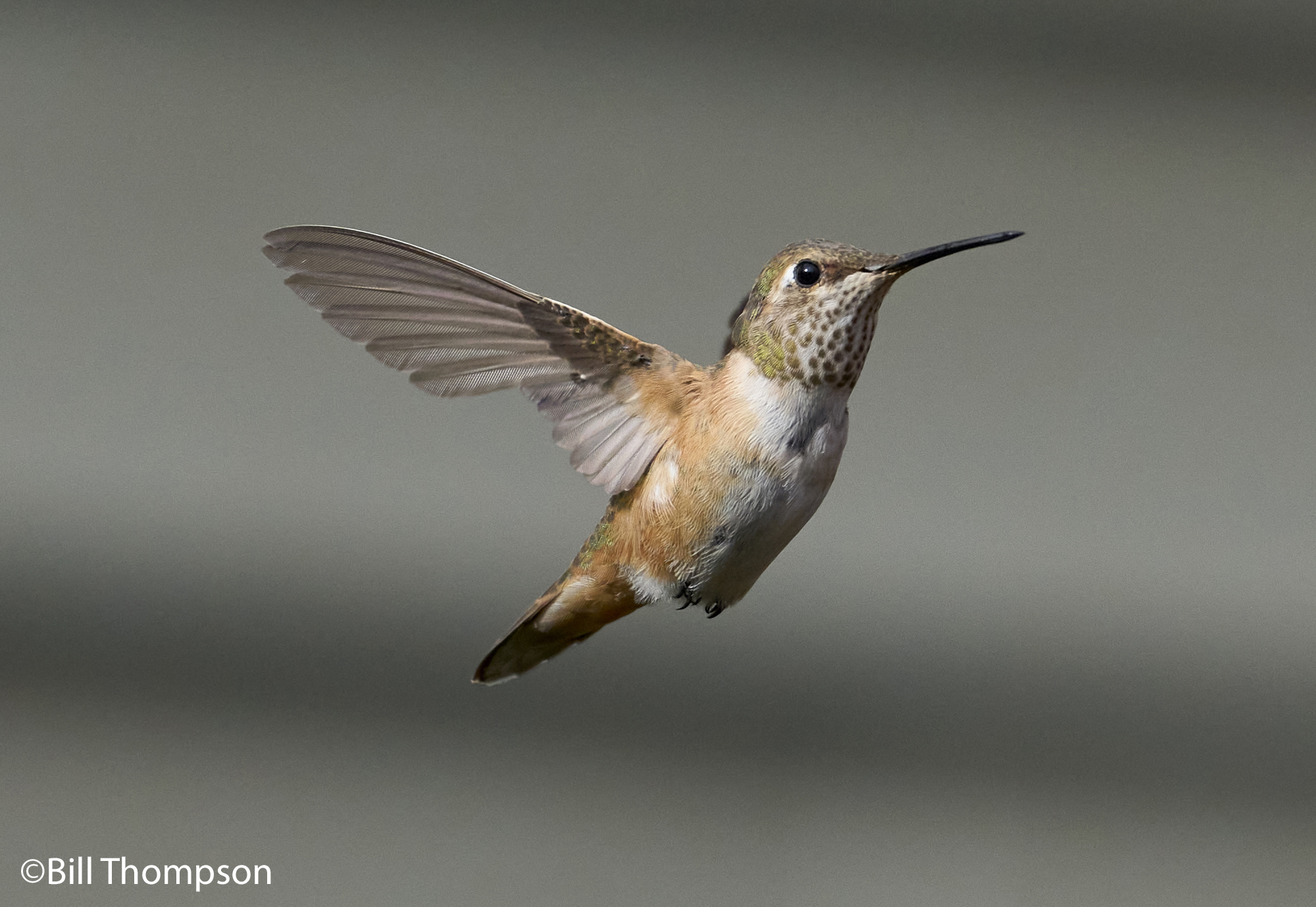
On Halloween, Sue and Bill Barker had quite a treat in their Bath yard: a hummingbird!
Each year, we put out a call on our email and print newsletter to keep your hummingbird feeders up as long as freezing temperatures permit, and to call us if you see a hummingbird after October 1st (and especially after October 7th). Among other outstanding records, this resulted in New England’s first Broad-tailed Hummingbird in 2022.
This year, we have received five hummingbird reports since October 7th, with the previous four including photos and/or video that were good enough to identify as Ruby-throated. Or, at least, rule out everything but that and the state’s first Black-chinned Hummingbird (we’re waiting!). Given the date of the 10/31 report, the statistics suggest that it’s more likely to be something else, so I asked for some photos.
Sue took some photos through her window and screen, and they suggested a warmth in overall color to the bird that would be on the extreme end of Ruby-throated Hummingbird. Sue invited me over for a look, and after waiting for about 45 minutes in the early afternoon on November 2nd, the bird appeared and soon flashed the reddish-brown in the tail indicative of a hummingbird in the genus Selasphorous.
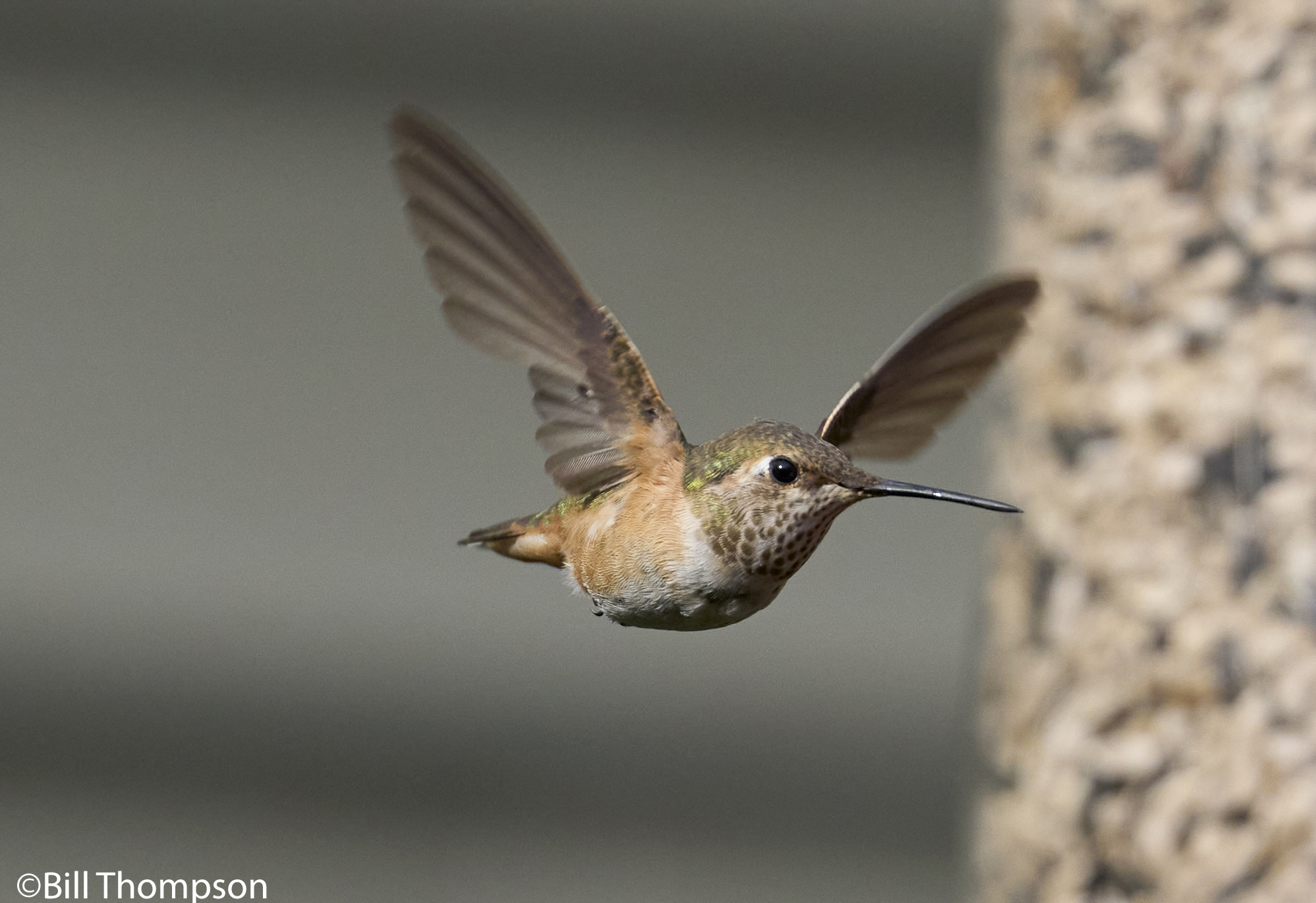
My photos are not very good (mediocre camera in shadow and low afternoon winter light), but they clearly show a Selasphorous hummingbird.
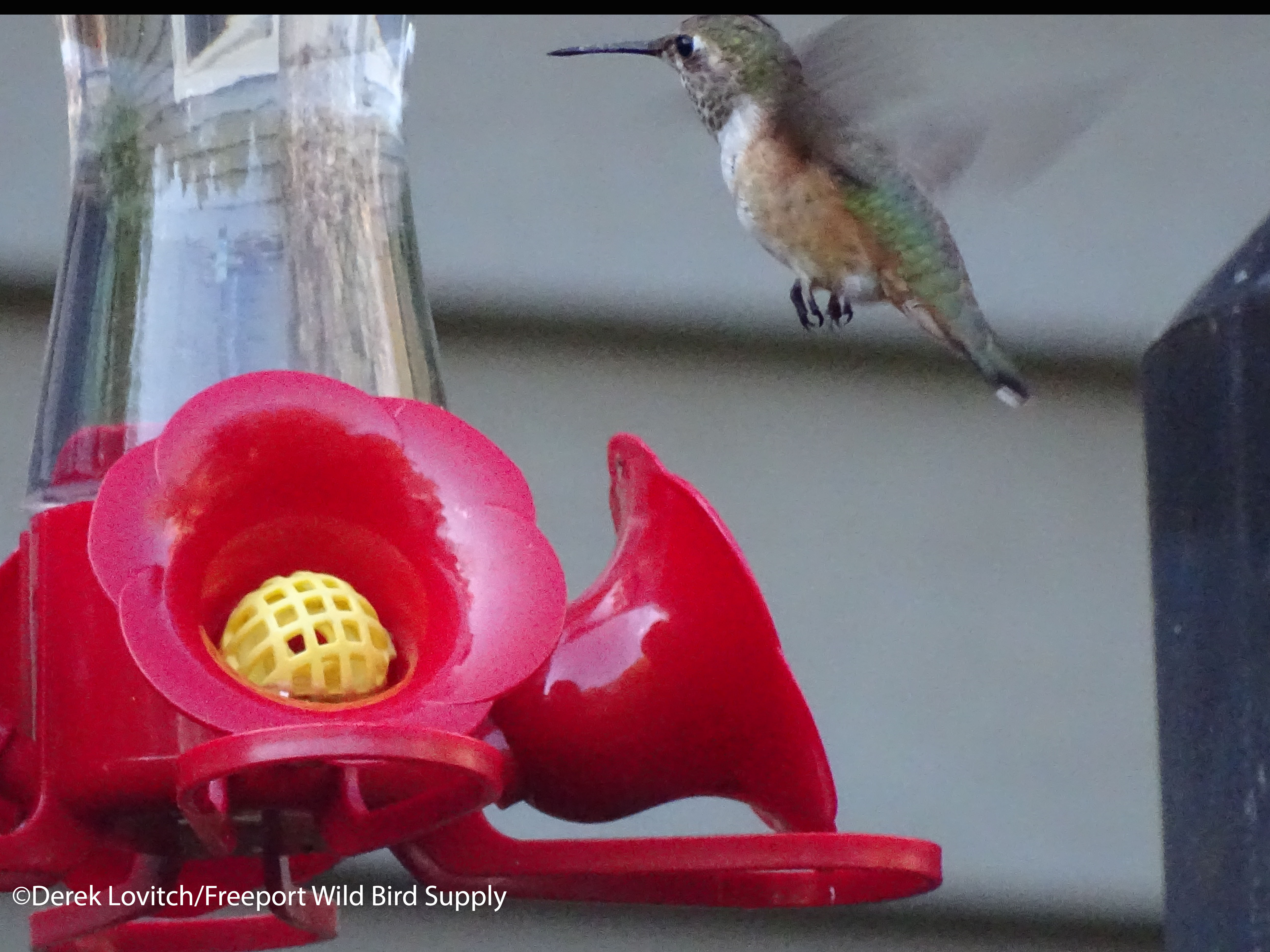
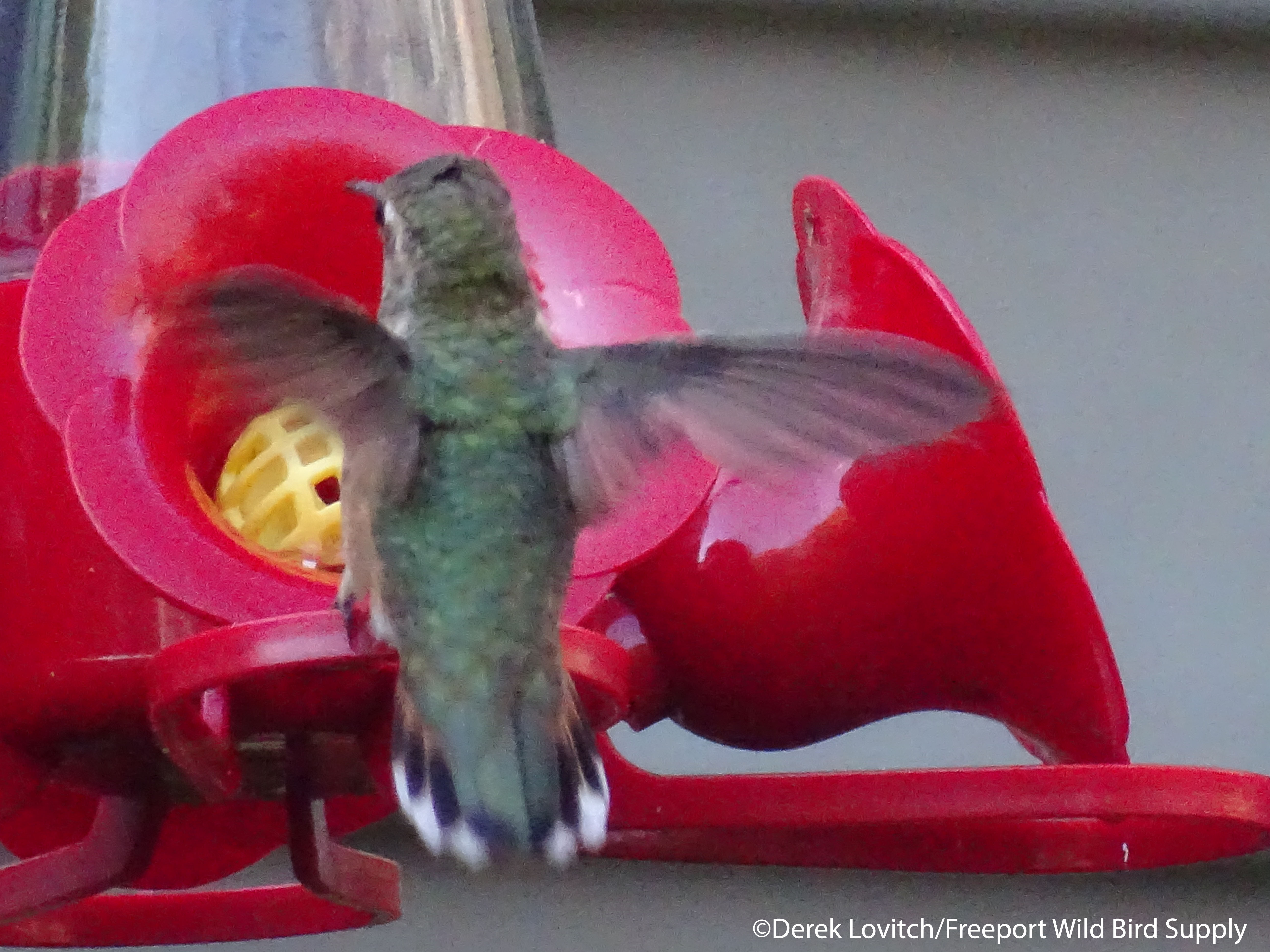
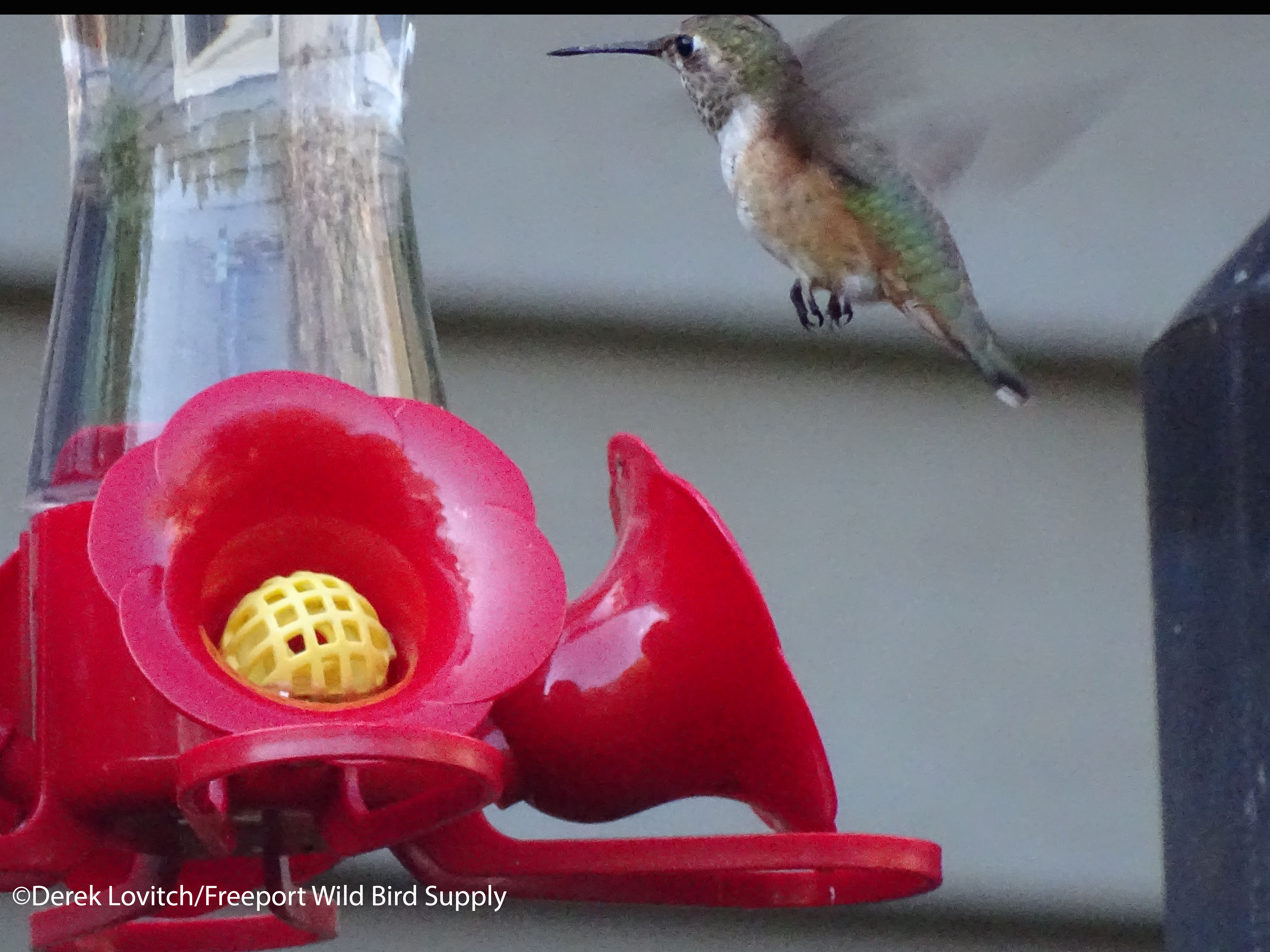
After discussing the situation with the homeowners, it was clear that, unfortunately, this was not a location that could be made public. It sucks, but there was no way to share this widely. Small, dead-end road, partially shared driveway, proximity to the house and the neighbor’s house, and all of the other circumstances that can lead to well, things going wrong when masses appear. We’ve had this happen often enough to guard against it, and privacy and homeowners’ rights always come first in our book (it’s partly why we are trusted with these special birds!). I did wander around and see if there was enough parking nearby to place a hummingbird feeder in a much less intrusive location (like we did with the aforementioned Broad-tailed) but that wasn’t practical or feasible in this case. I am sorry.
But needing to know more, and learn the bird’s identification, the decision was made to allow a very small number of visitors to contact the homeowner and arrange a time to view the bird and obtain additional photographs. I reached out to Scott Weidensaul, and arrangements began to be made to have it captured, banded, measured (and released).
Of course, I dispatched Bill Thompson immediately! And as usual, he “crushed” it!
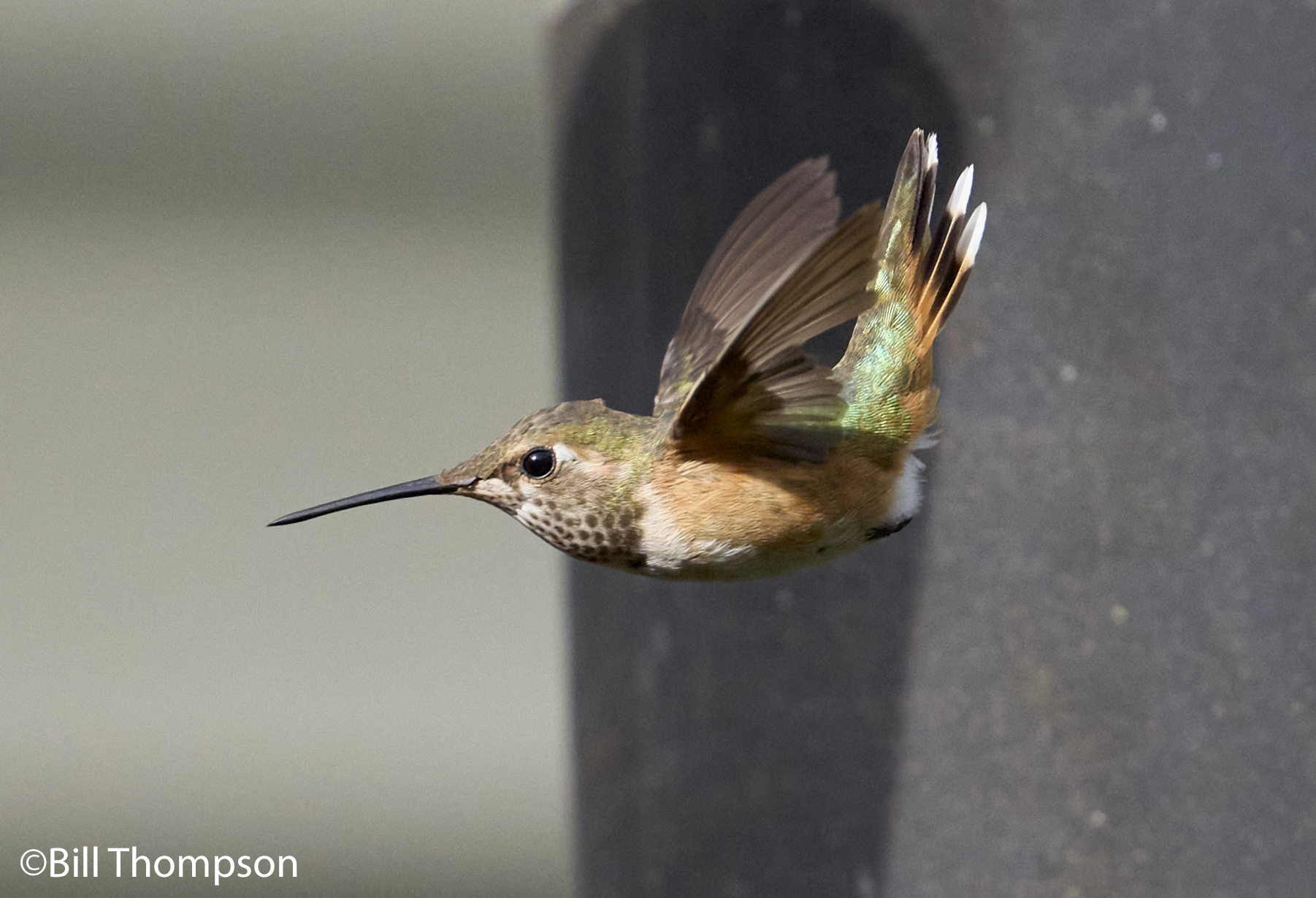
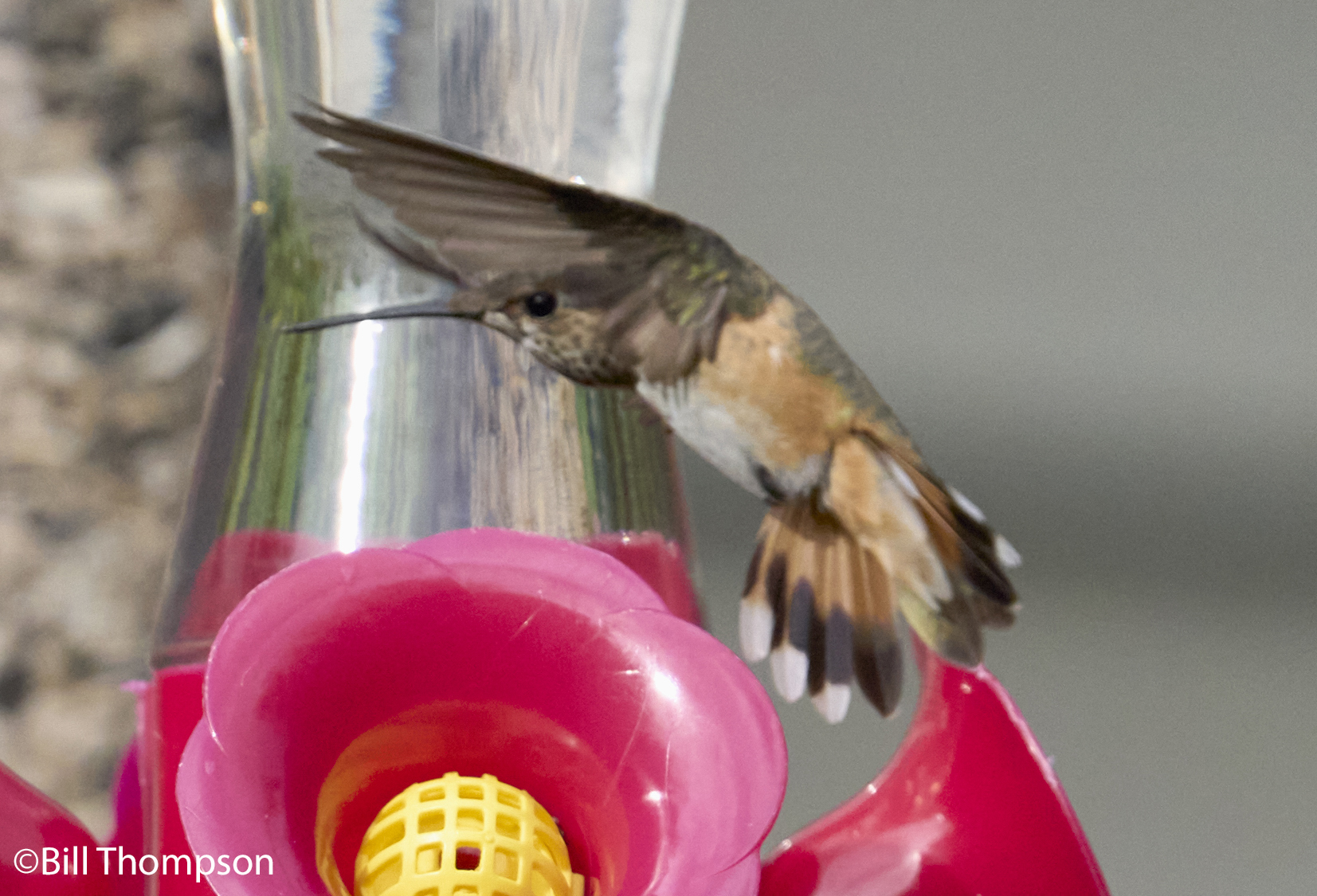
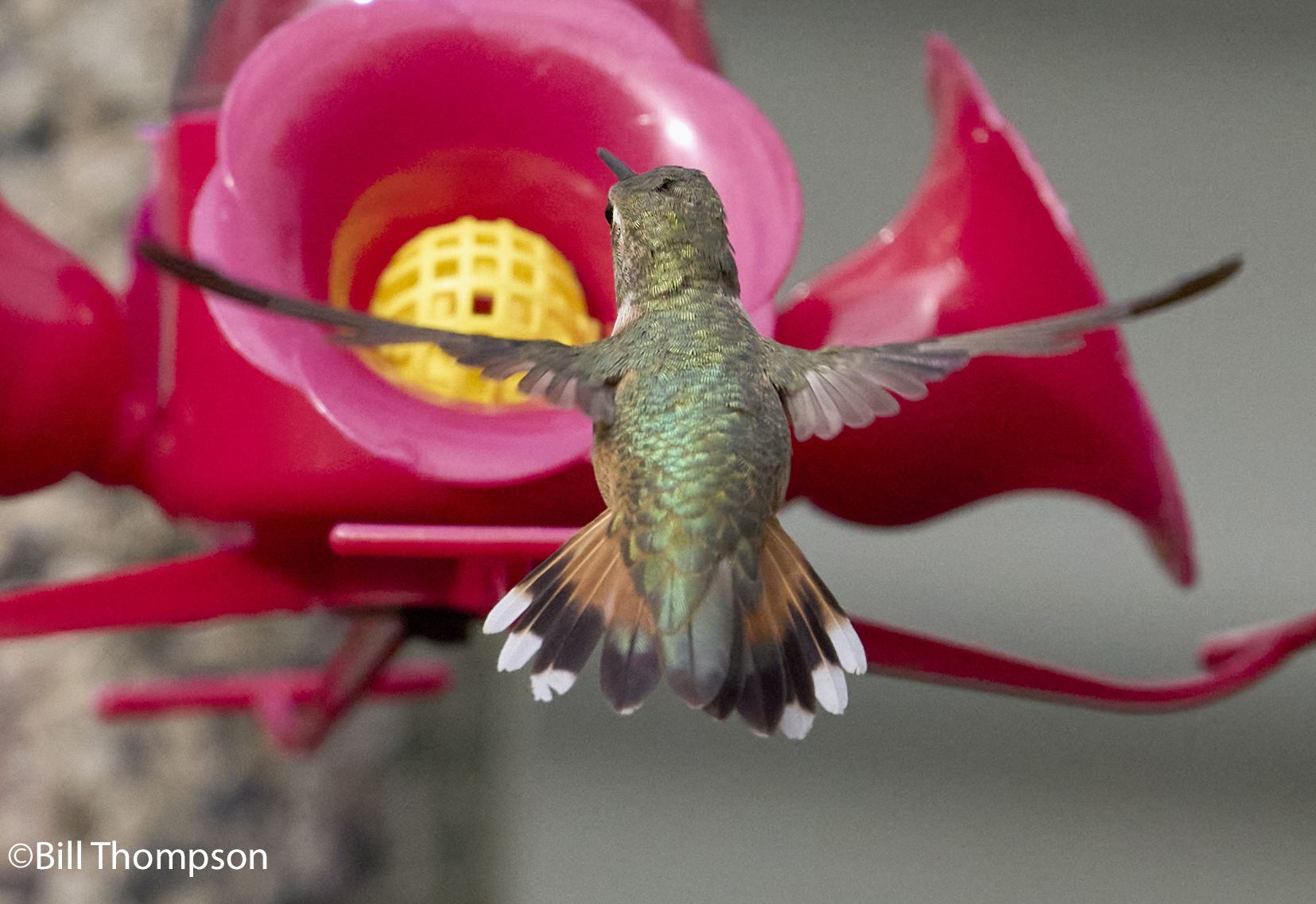

Highly suggestive – and perhaps all but conclusive, short of in-hand measurements – of an adult female Rufous Hummingbird based on the observations and photographs by several of us, and especially with a close analysis of the tail feathers in particular (critical for these non-adult male Selasphorous), Scott attempted to band it. Unfortunately, the first effort was not successful.
The bird continued to visit, more frequently and reliably as the days got shorter and colder. On 11/11, Jeannette and I visited the yard and were treated to three visits in a mere 30 minutes. While Jeannette worked on getting additional photos, I observed the bird’s behavior and feeding pattern in case we needed to get creative with the next banding attempt. I saw where she came from, fed in the backyard, then perched in a sunny bush with a good view of the front feeder, before feeding longer at that front yard feeder. And then repeat the pattern, as hummingbirds are wont to do.
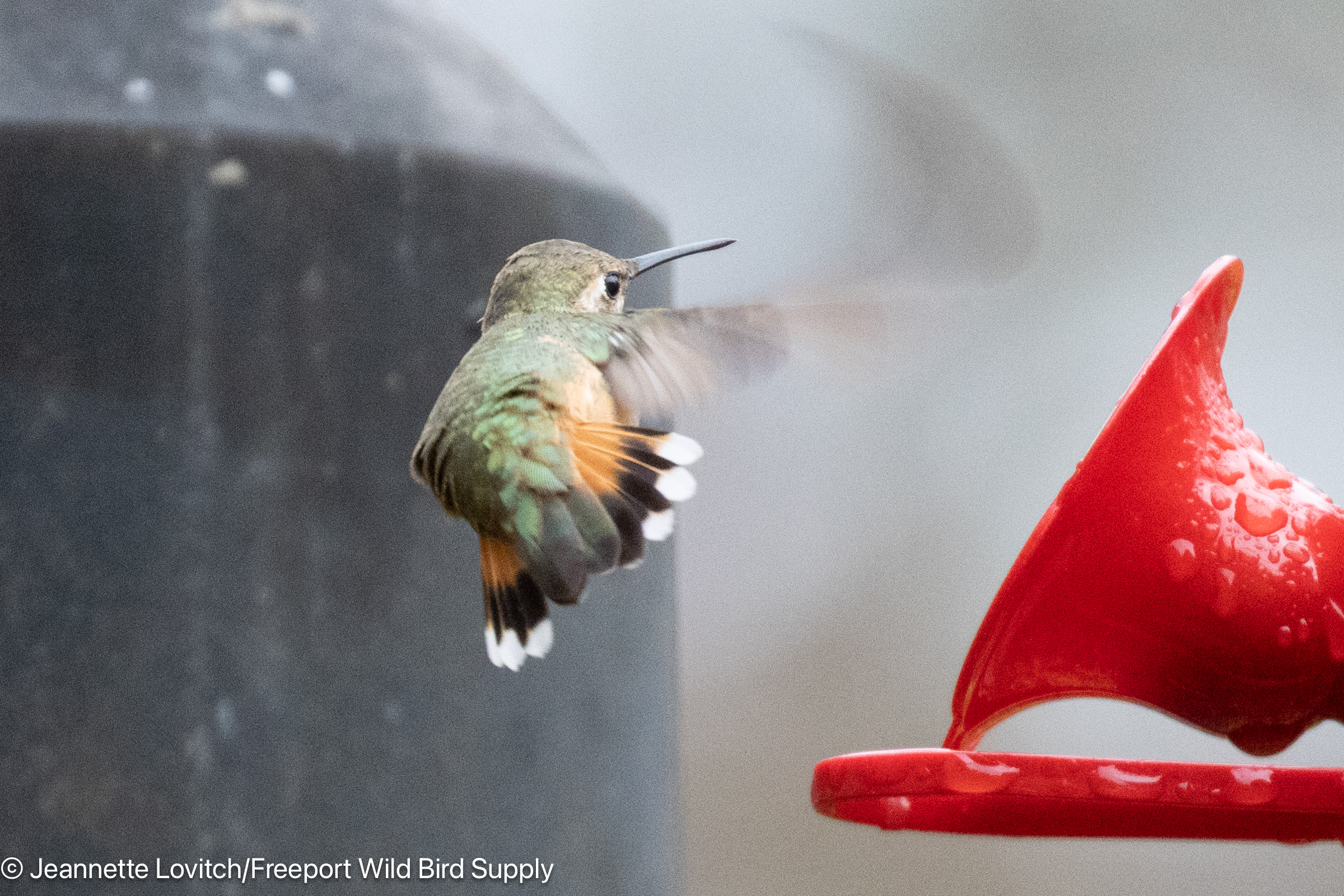
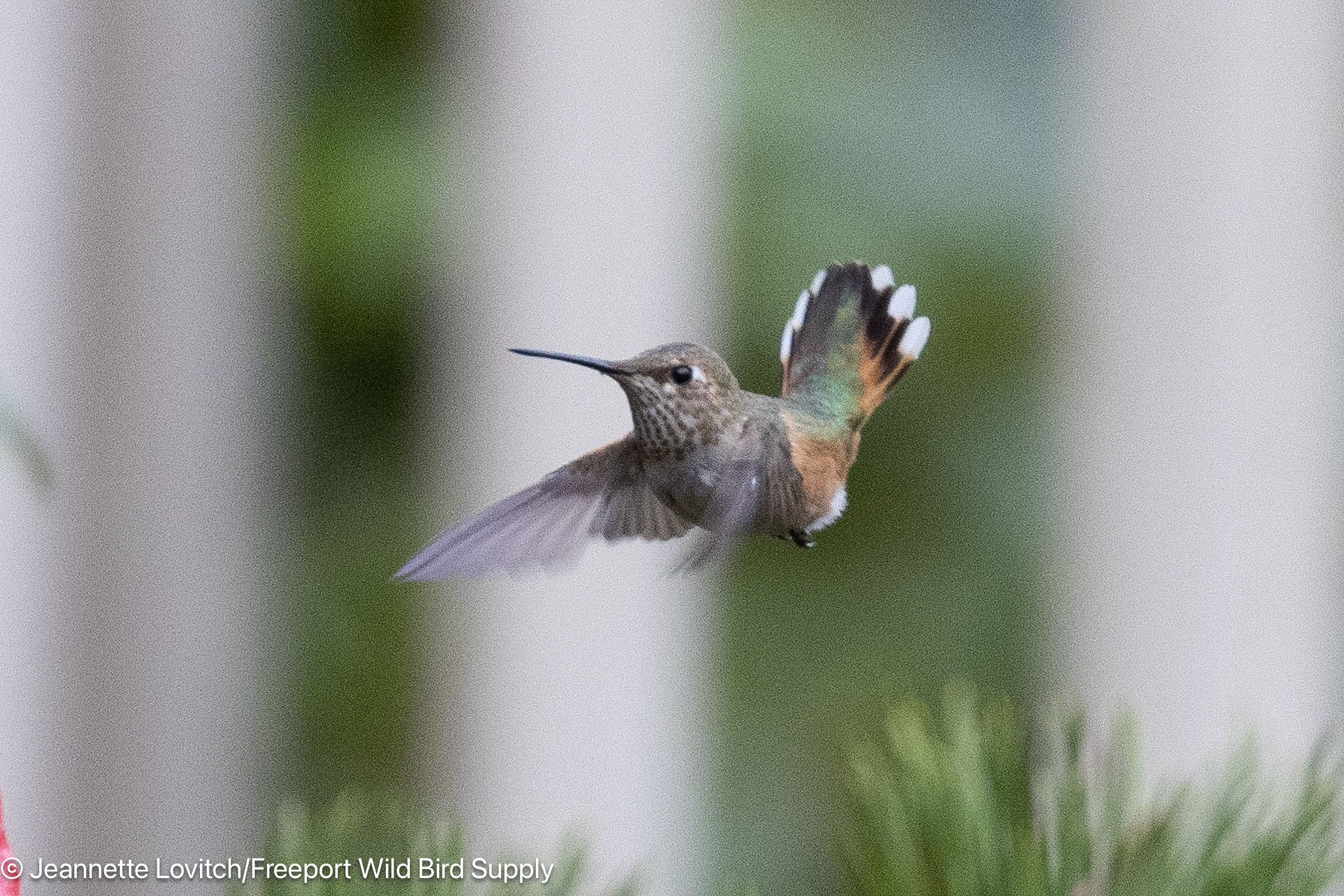
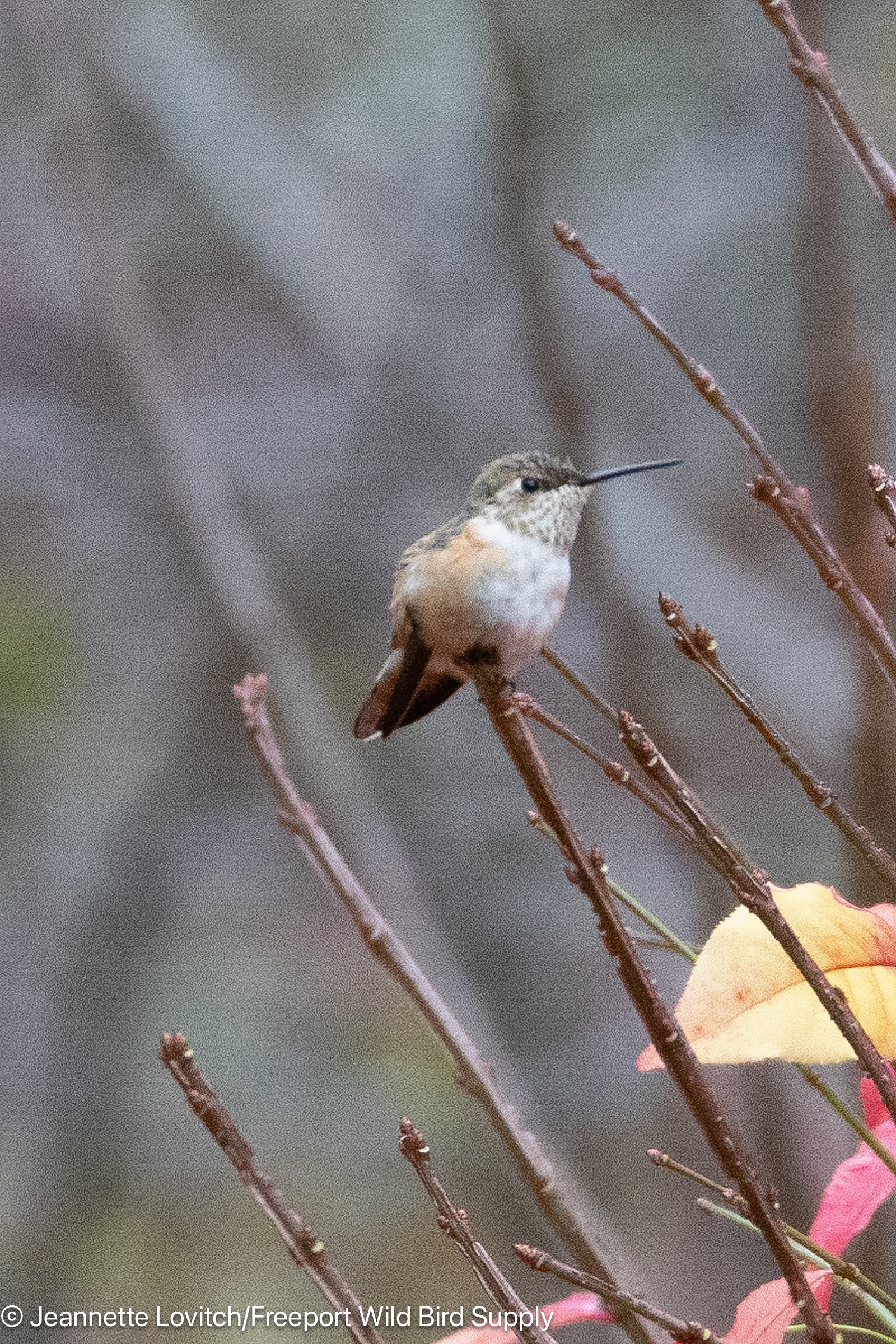
Then, on 11/14, Scott Weidensaul successfully trapped and studied the hummingbird in the hand, taking measurements and confirming our identification of adult female Rufous Hummingbird. This would be the 15th or 16th accepted record of Rufous Hummingbird in Maine according to the Maine Bird Records Committee. However, “unreviewed” reports likely include identifiable individuals, and I stand by my identification of this bird in our Pownal yard in 2021 as a Rufous Hummingbird, despite the lack of measurements in the hand (she departed before banding could be arranged).
And here’s the official banding report from Scott:
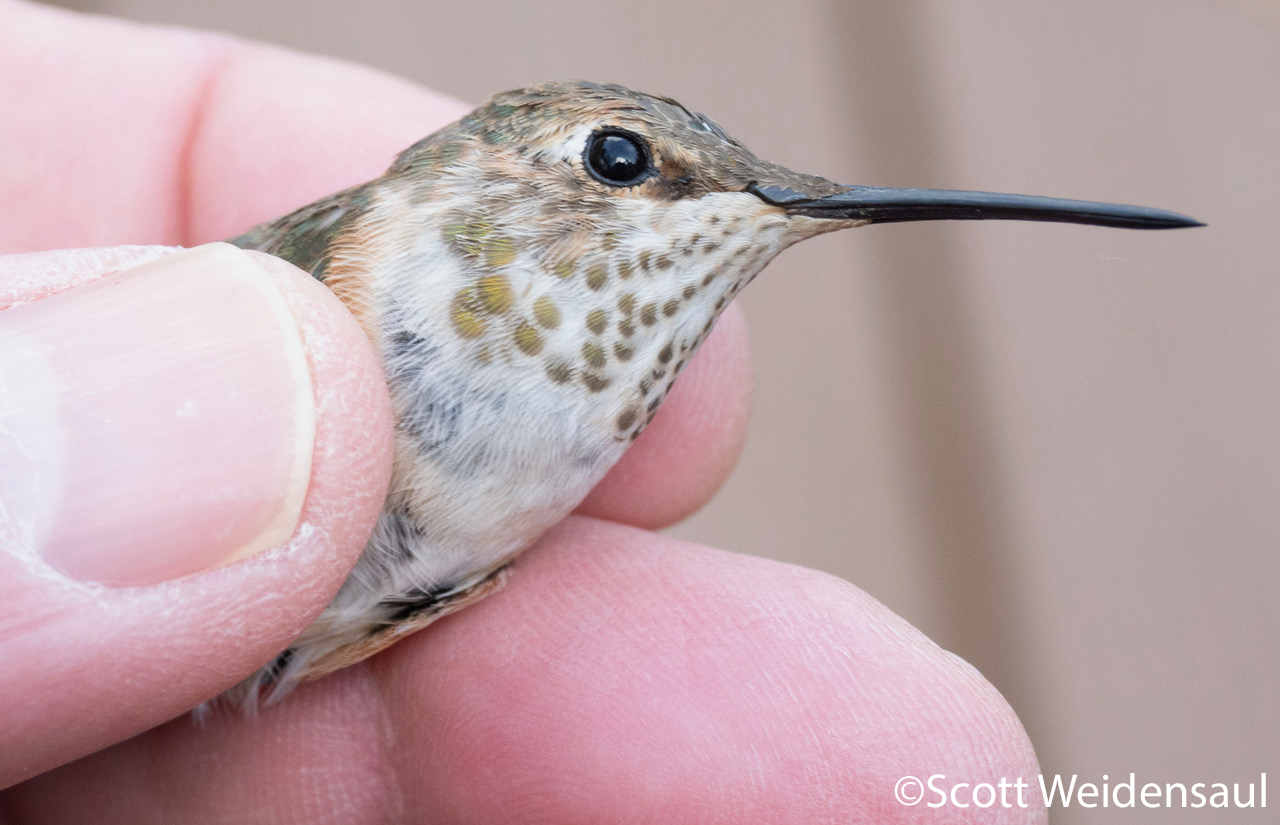
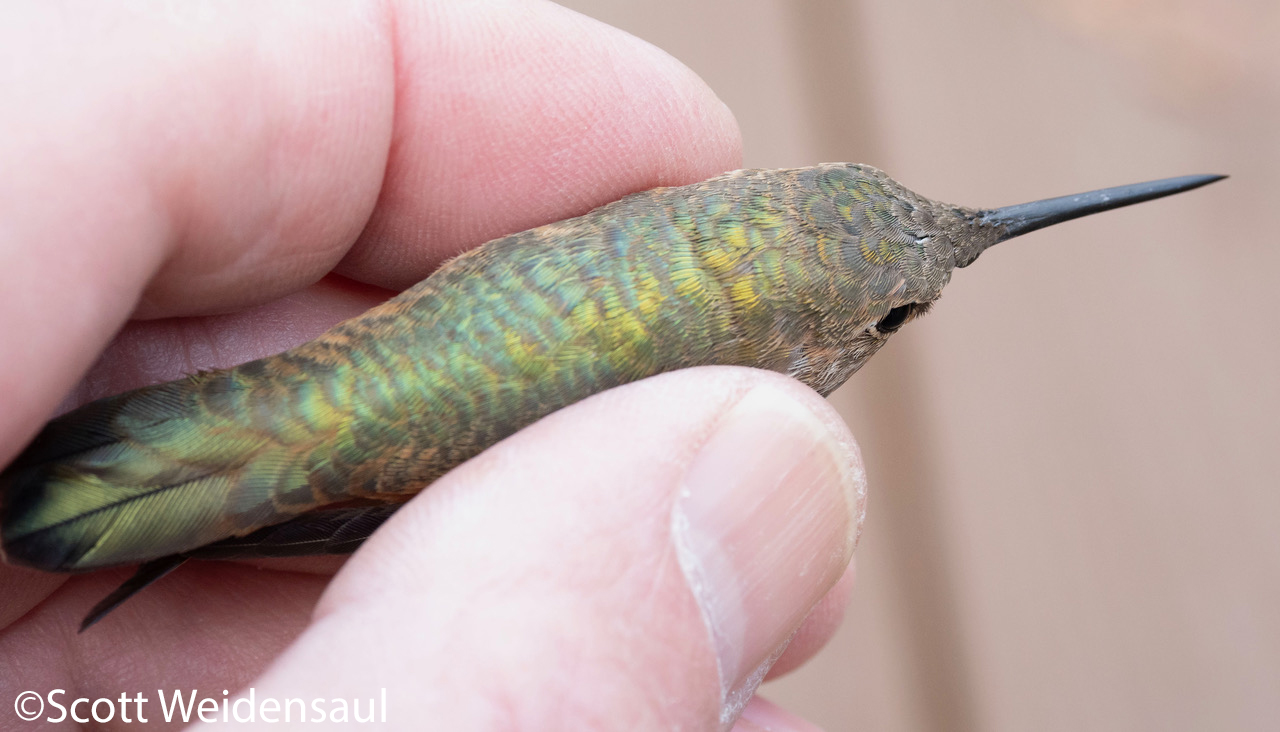

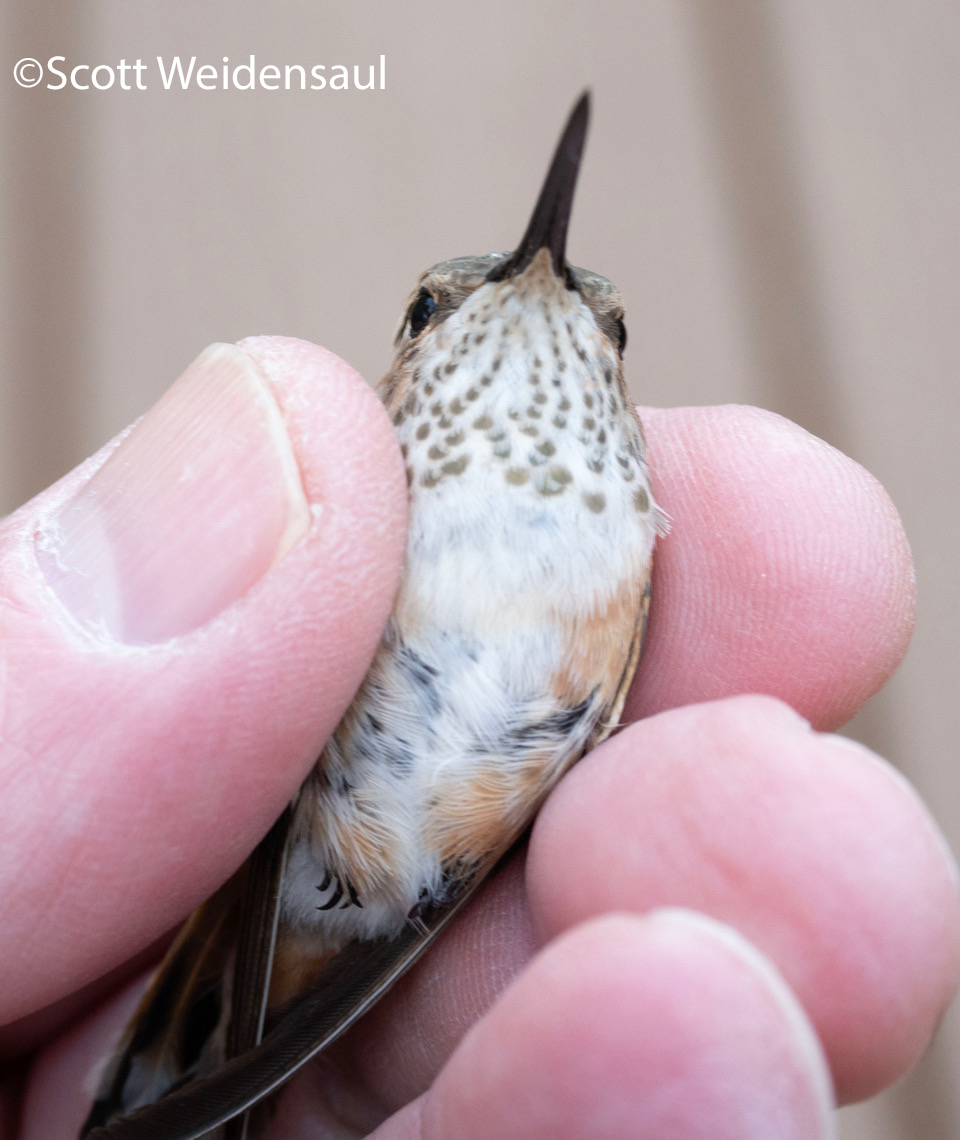
Band number: J73404 (the J code stands for 5100-, which won’t fit on the band).
Species: Rufous hummingbird
Age: After hatching year (adult, at least two years old)
Sex: F
Wing: 44.15mm
Tail: 26mm
Culmen (bill): 19.92mm
Bill grooving: 0 (typical for an adult)
Gorget feathers: 20+
Weight: 3.5 grams
Fat (0-5 scale): 3
Width of R5: 3.69mm
R2: moderate nippling
Scott then said, “All of her measurements are in line for a female rufous vs. and Allen’s. Her wing, tail and culmen measurements are all good for RUHU but beyond the upper limit for ALHU, which would lack the slight notch or nipple on R2. All in all she seemed to be in great shape and was quiet and cooperative in the hand.”
__________________________
Rufous vs Allen’s Hummingbirds, in non-adult male plumages are one of the most challenging identifications in all of North American birds, and so all the stops were pulled out here to confirm it’s identification. This blog will be submitted to the Maine Bird Records Committee for its review as well to add to “the record.”
When Jeannette and I first opened the store way back in 2004 (!), we were surprised to find out how persistent the myth of “take down your hummingbird feeders by Labor Day or they won’t migrate” was. It’s simply untrue. Instead, we encouraged people to keep them up much, much later, as it’s the latest migrants that need the help of supplemental food the most, especially after the first hard frost that knocks out most if not all of local flowers, such as the late blooming native, Orange-spotted Jewelweed. We also knew that there had to be more records of rare hummingbirds occurring in Maine, so we encouraged people to keep their feeders out, their eyes open, and to give us a call.
Meanwhile, a frequent question we receive is “what happens to these really late hummingbirds?”
It’s a great question! And with banding, we are beginning to find out! For example, a lot of these birds are departing the northeast on favorable winds after strong cold snaps but in good condition (fat score in particular). That suggests birds are doing the right thing and leaving when they need to.
With an increasing number of banded Rufous Hummingbirds – and other species – overwintering in the southeastern US, and returning in subsequent years, we know that not all of these vagrants are evolutionary dead ends. In fact, perhaps just the opposite – the survivors who are adapting to a changing world and a changing climate.
I found this pretty good overview via a quick search that touches upon the most commonly asked questions about vagrant hummingbirds, with Scott once again playing the leading role as he has with our recent Maine hummers! I encourage you to check it out.
Thanks to our loyal customers and observers, this is the 3rd Rufous Hummingbird that has come to light through us, along with one other Rufous/Allen’s, and of course, the famous Broad-tailed. And countless truant Ruby-throated Hummingbirds have been aided (and we have confirmed at dozens of late Ruby-throats, averaging about 5 direct reports of late hummingbirds after October 7th each year since 2014) along the way.
Sue and Bill’s Rufous hummingbird turned out to be just as tough as so many vagrant hummingbirds in the Northeast prove to be. Sue reports, “Our little friend made it through all that snow and the low temps, but I think by last Friday she had had it and took off. She was real active in the morning, (we saw her frequently), and was doing a lot of feeding. Then she was gone.”
Thanks to Sue’s diligent care, and the deployment of a heated hummingbird feeder – the same one that sustained the Broad-tailed as it was donated to the cause by its host! – the Rufous was afforded every opportunity to fuel up, continue to molt and build strength, and depart when she was ready.
This perfectly fits the pattern and behavior of “lingering” vagrant hummingbirds. Scott added “That sounds like absolutely classic departure behavior…My hope is that one of my many colleagues down on the Gulf Coast will recapture her this winter, read that band number and let us connect the dots. No guarantees, obviously, but it happens more often than you’d think… And Derek and I will be waiting to perhaps hear from you again next fall that she’s back, because *that* happens even more often than later, distant encounters.”
While I personally had planned to get back over there for some updated photos to see if her molt has progressed at all, I didn’t make the time before she finally departed. I am OK with that! I join Sue, Bill, and Scott in wishing her on her way!
 Maine Birding Field Notes
Pingback: This Week’s Highlights 12/20– 1/2/2026. | Maine Birding Field Notes