Tag Archives: Great Black-backed Gull

Boothbay ½-day Pelagic Trip Report, 10/14/2024

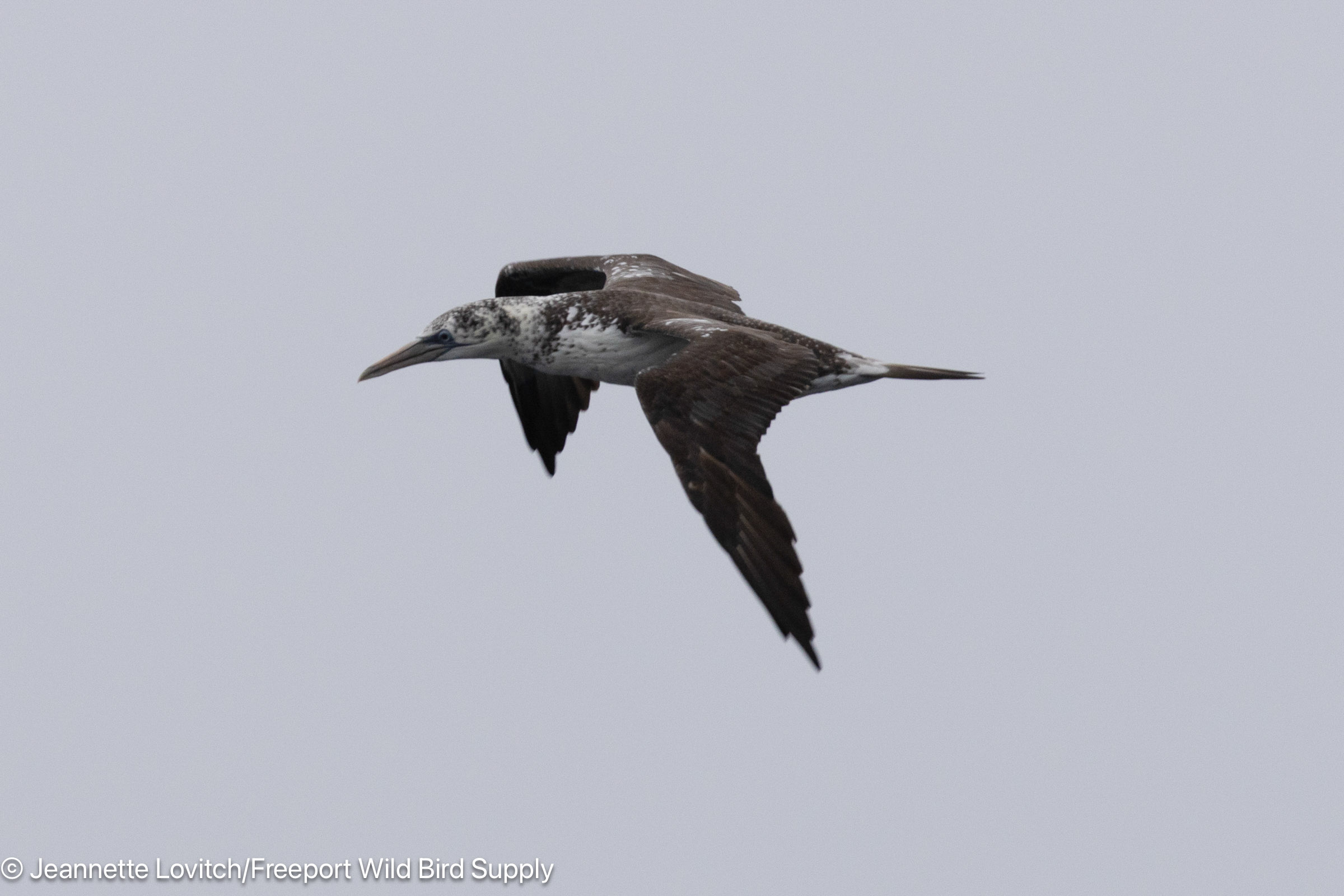
The trip started off right with plenty of close Northern Gannets.

Pelagic birding is a lot like Goldilocks’ porridge: it’s hard for it to be juuuuust right. Last year it was too calm and birds were hard to find. This year, it was anything but calm.

Once we traveled beyond the shelter of Damariscove Island, we had a plan – or at least the concept of a plan.  We’d slowly work our way straight south to deep water, make a turn to the east as the forecast was for seas to start diminishing, and then take mostly following seas for a smooth return trip home.

Peregrine Falcon having brunch to go.

We had lots of Northern Gannets early in the trip – always a good sign – but it was pretty slow going through the area known as The Pasture, which like all offshore patches, is always hit or miss. In fact, the only other pelagic we had was a single Cory’s Shearwater seen by only a handful.

Unfortunately, once we made the turn to the east, it became essentially unbirdable. The forecast 4-6 foot seas were right, but the distance between waves (the wave period) was significantly shorter than forecast, and the waves were definitely not diminishing. Captain Steve did an exceptional job of trying to soften the ride and keep us safe, but we just weren’t going to be able to continue east towards some of our deep water hotspots. When a bird was called – such as a single Northern Fulmar (one of our primary targets on the trip), few people were able to even try to see it before it was long gone behind the waves. Perhaps only the Yellow-rumped Warbler and Savannah Sparrow that we encountered about 15 miles offshore were having a worse day. I tried to keep some bird commentary going, if only as a distraction, but I’m not sure anyone was listening at this point!

So it was decided to make a turn for home. In a last ditch effort to salvage the birding day, we angled for the mouth of Sheepscot Bay. An unidentified dark jaeger zipped by, seen by just a few, tantalizing us to what else is out here today.

Once in the mouth of the bay, sheltered by Damariscove off to the east, we found gentle seas, and decided to try our hand at attracting some birds with a chum slick.  We laid a slick for about 1-2 miles of pork fat soaked in fish oil. Thanks to a generous donation of surplus fatback compliments of Old Crow Ranch of Durham, we were likely the first ever pelagic to use local, pasture-based, regeneratively-farmed, non-GMO, pork fat. The experiment turned out to be quite a success, too!

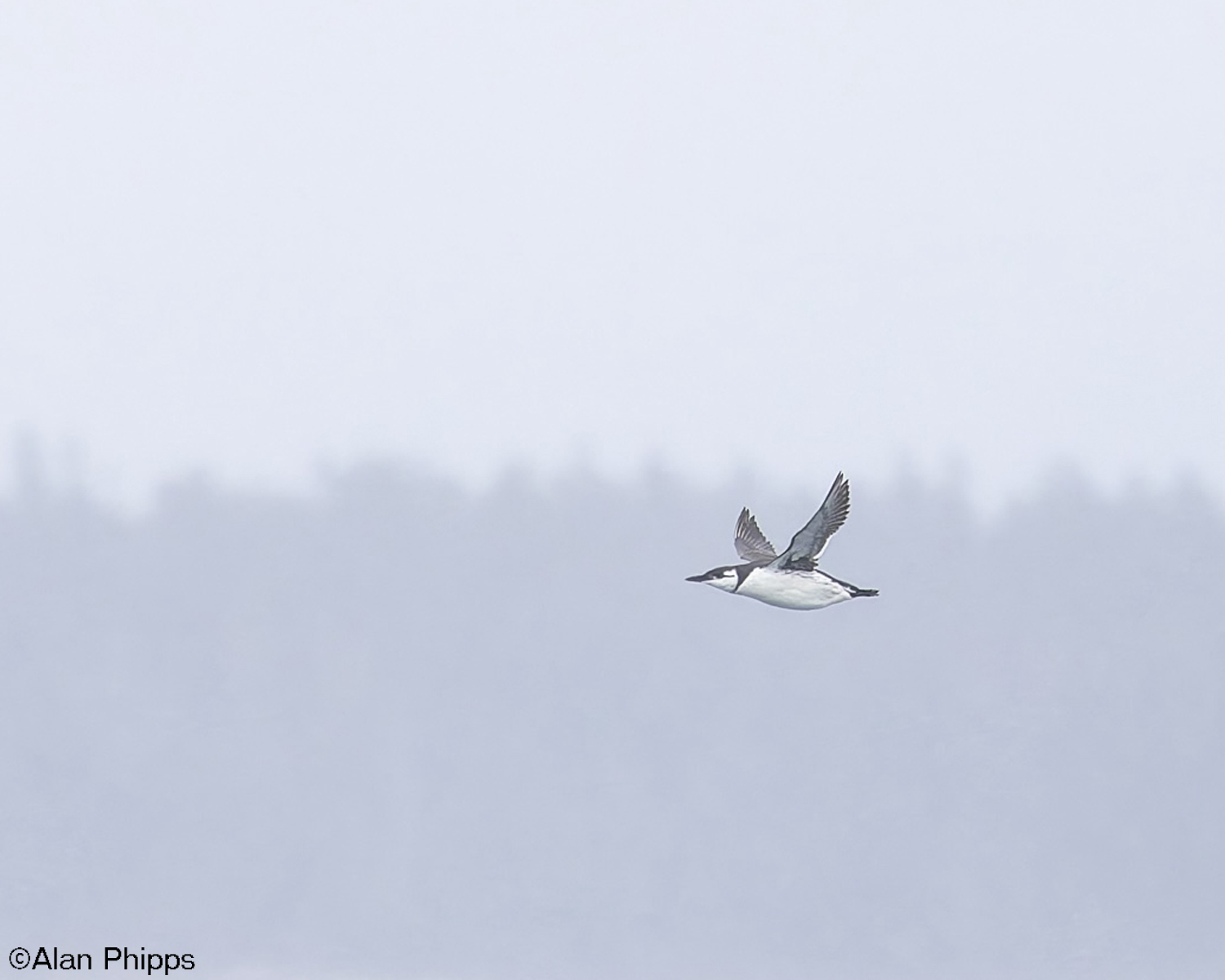
First, we kicked up two Common Murres as we traveled, one of which flew past the boat affording a great view for those who were still on deck; even the seabirds were seeking sheltered waters today!
We were soon attracting several hundred gulls to our chumslick, and we finally teased out a single Lesser Black-backed Gull from the masses. A few lingering Laughing Gulls and several Ring-billed Gulls, including spiffy fresh juveniles, joined the myriads of Herring and Great Black-backed Gulls.
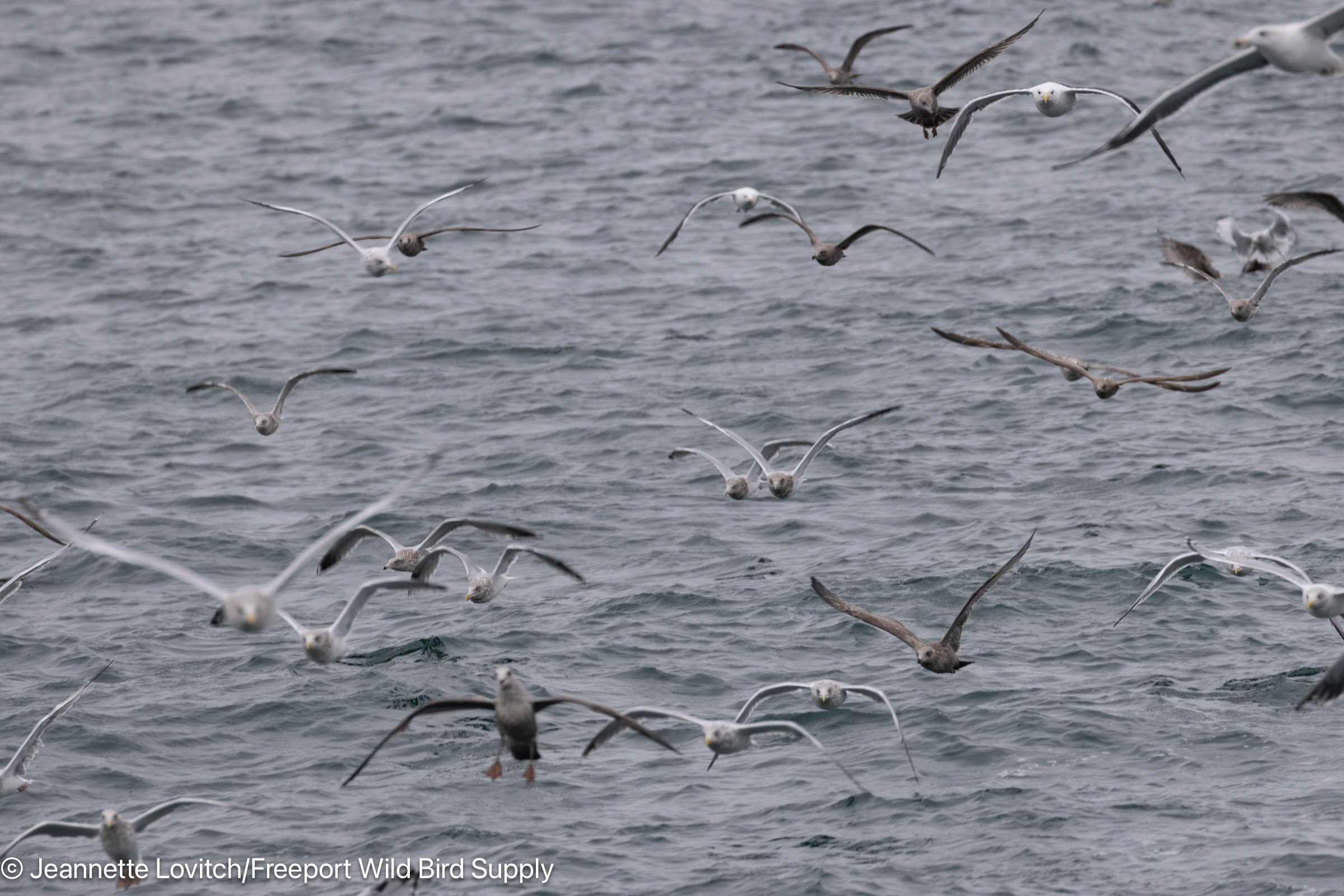
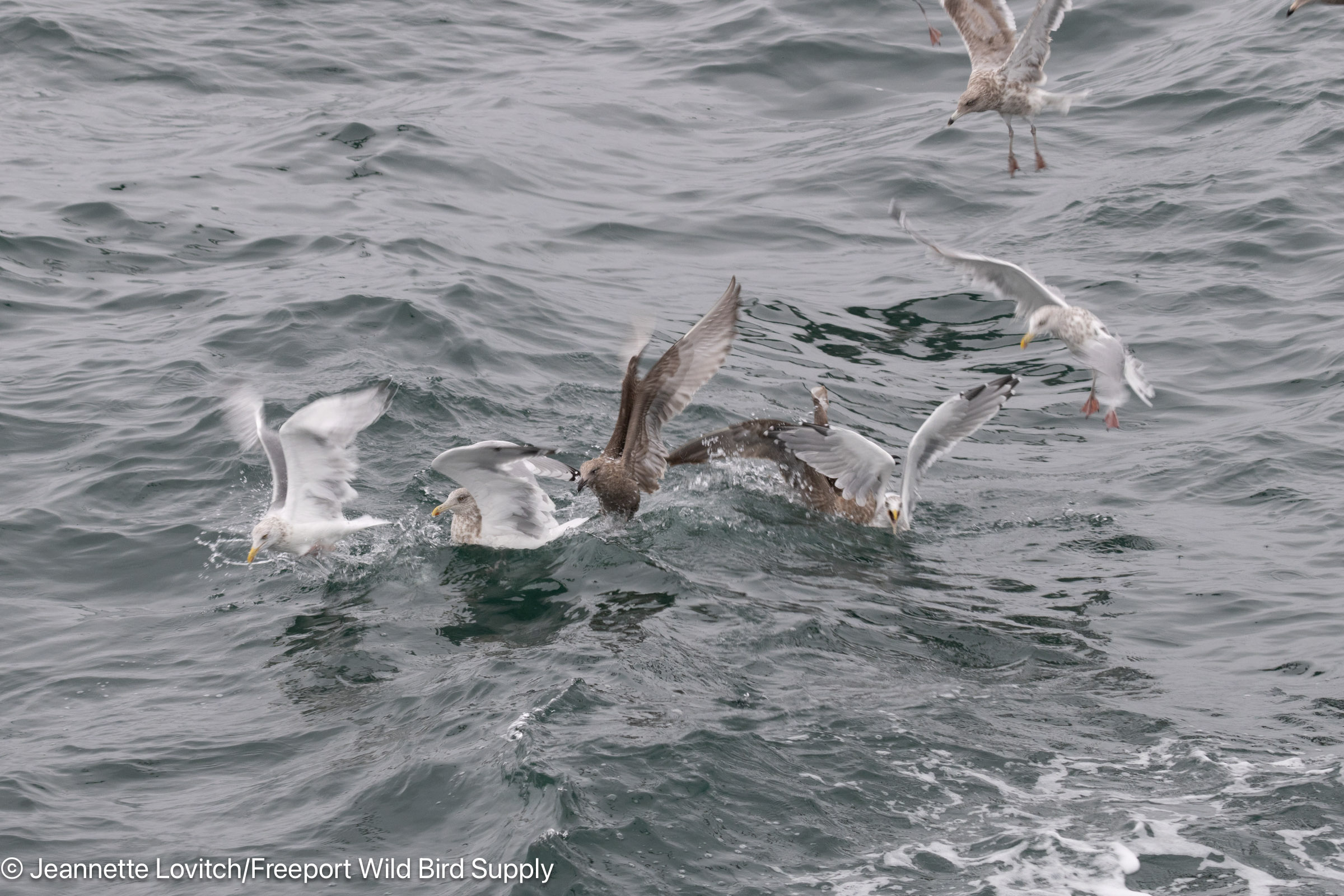
We then tried the same technique closer to the mouth of the outer Boothbay Harbor, closer to Damarsicove. At first the results were surprisingly lower, until a Peregrine Falcon and a Northern Harrier over the island kicked up the gulls roosting on the windward side. Once the gulls saw the feeding birds behind us, the game was on. Meanwhile, we enjoyed many dozens of Surf Scoters and Common Eiders, punctuated by both Black and White-winged Scoters, and from here to the harbor, another couple of dozen Common Loons and plenty of Black Guillemots.

I want to thank the captain and crew of Cap’n Fish’s Cruises for their hard work and dedication today, and their best efforts to keep us comfortable. I want to thank my spotters, Jeannette Lovitch and Ian Carlsen (who also did a fantastic job keeping the official eBird checklist following pelagic protocol). A big thank you to Alex Lamoreaux for still finding birds in the worst of the snotty water. And another big thanks to our chummer, Dan Nickerson, who got the action going once we found some calm waters.

And most importantly, thank you to all of those who came aboard today. Some said they had fun. Many suffered. But everyone endured. If this was your first pelagic, you’ll be thrilled to know you were likely just had your worst trip. For those who like roller coasters (unlike me!), I guess you’re welcome?

Here’s the trip list. For the hit-or-miss October pelagics in the Gulf of Maine it’s really not that bad.

Canada Goose7
Mallard5
American Black Duck2
Common Eider255
Surf Scoter180
White-winged Scoter50
Black Scoter40
unidentified dark-winged scoter40
unidentified scoter240
Rock Pigeon20
Dunlin3
Semipalmated Sandpiper1
Black Guillemot24
COMMON MURRE2
UNIDENTIFIED JAEGER1
Bonaparte’s Gull2
Laughing Gull7
Ring-billed Gull14
Herring Gull781
Great Black-backed Gull347
LESSER BLACK-BACKED GULL1
Common Loon50
NORTHERN FULMAR1
Cory’s Shearwater1
Northern Gannet67
Double-crested Cormorant307
Great Blue Heron1
Osprey3
Northern Harrier1
Peregrine Falcon2
American Crow7
Savannah Sparrow1
Yellow-rumped Warbler1
Unidentified passerine1

Gull Identification Workshop Wrap-Up

You may have noticed that my blog has been a little quiet in the last couple of weeks.  Mostly, that has been due to my birding being mostly about photographing gulls every chance I get! And in between, accumulating and sorting photos from friends.  What was planned to be a 95-slide PowerPoint program became an exhaustive (literally), 180+ slide dissertation.  Not only was I impressed by how many people signed up, but how many stayed until the bitter end – even though I strongly urged people who were new to this to depart before the section on Thayer’s Gulls and hybrids!

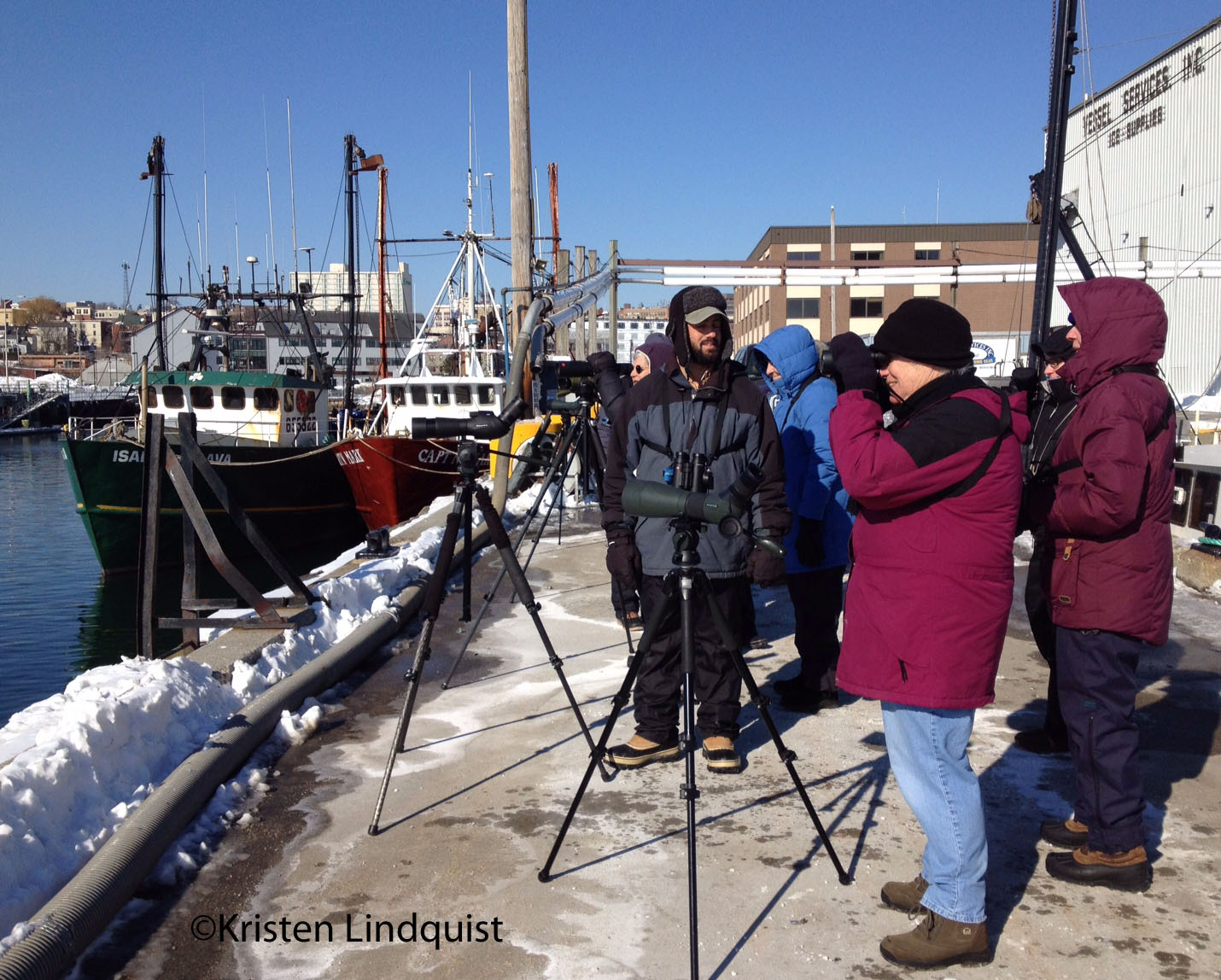
Come Sunday morning, 13 people joined me for the field session of the two-day workshop – no doubt reduced by the 12-degree temperatures that greeted us to start the day. We began with close studies of the various ages of Ring-billed Gulls at Back Cove…aided by a little “incentive,” of course.
photo 3_edited-1

Sorting through Herring Gulls was up next, and then we made our way over to the Fish Pier in OldPort, for some “real” gulling.  And it did not disappoint. The endless variation of “Kumlien’s” Iceland Gulls was readily apparent with eleven 1st-winter, two 2nd-winter, and 2 adults – many of them close and in direct contrast with each other. A total of three 1st-winter Glaucous Gulls were added to the mix, along with ample opportunities to practice aging Herring and Great Black-backed Gulls.
photo 3 (2)_edited-1

I really couldn’t ask for anything more…well, I could, and of course, did. And shortly thereafter a particular gull-of-interest put in an appearance. Widely being reported as a Thayer’s Gull, this odd individual was a bird I wanted to study closely (Jeannette and I only saw it in the distance on Tuesday), and it was indeed a very instructive bird for a gull workshop.  Having been looking at thousands of gull photos over the last two weeks, I have been a bit negligent with studying and addressing this bird.  Besides, I had not seen it in the field and even some very good photos are of secondary value to time with a bird in the field.

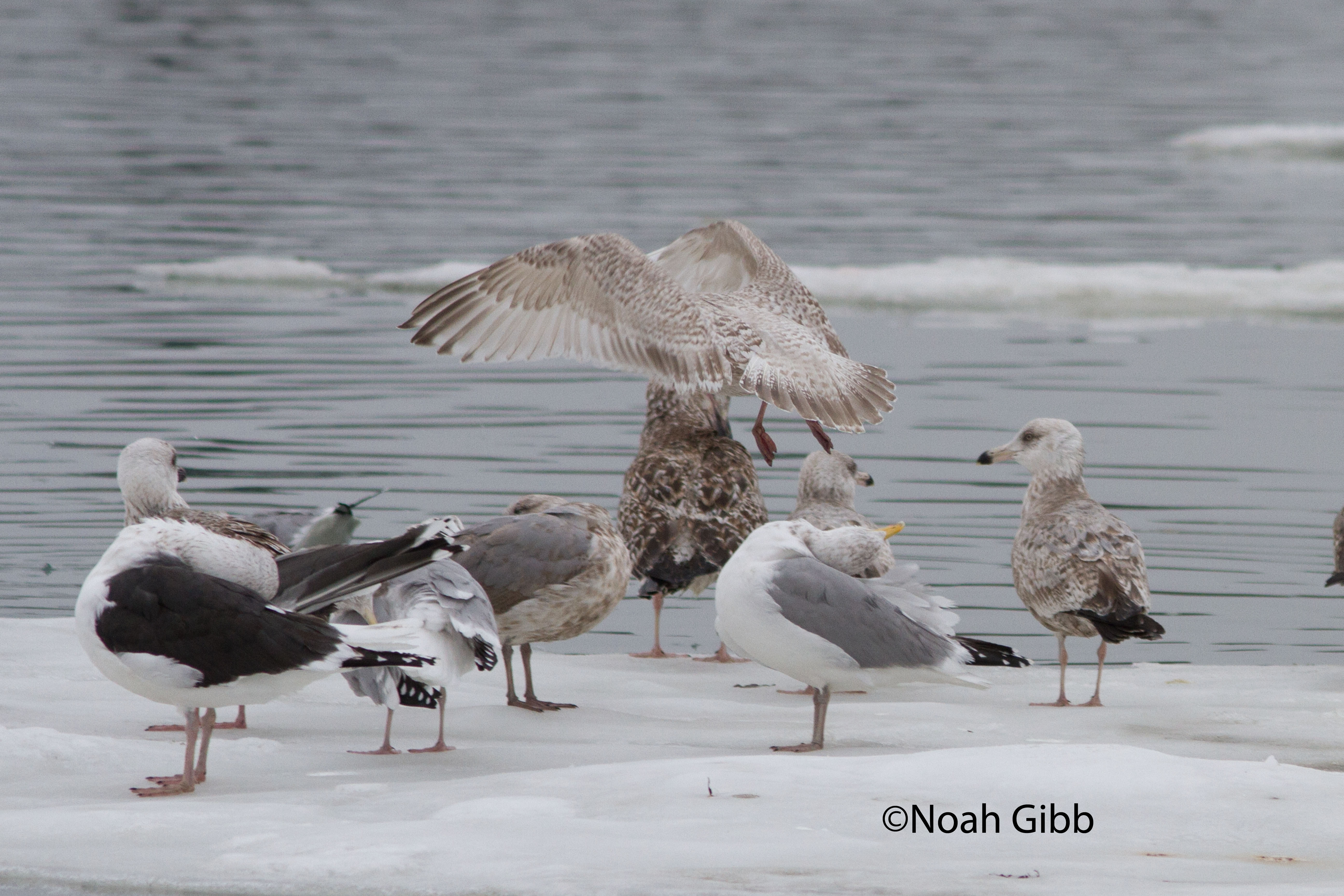
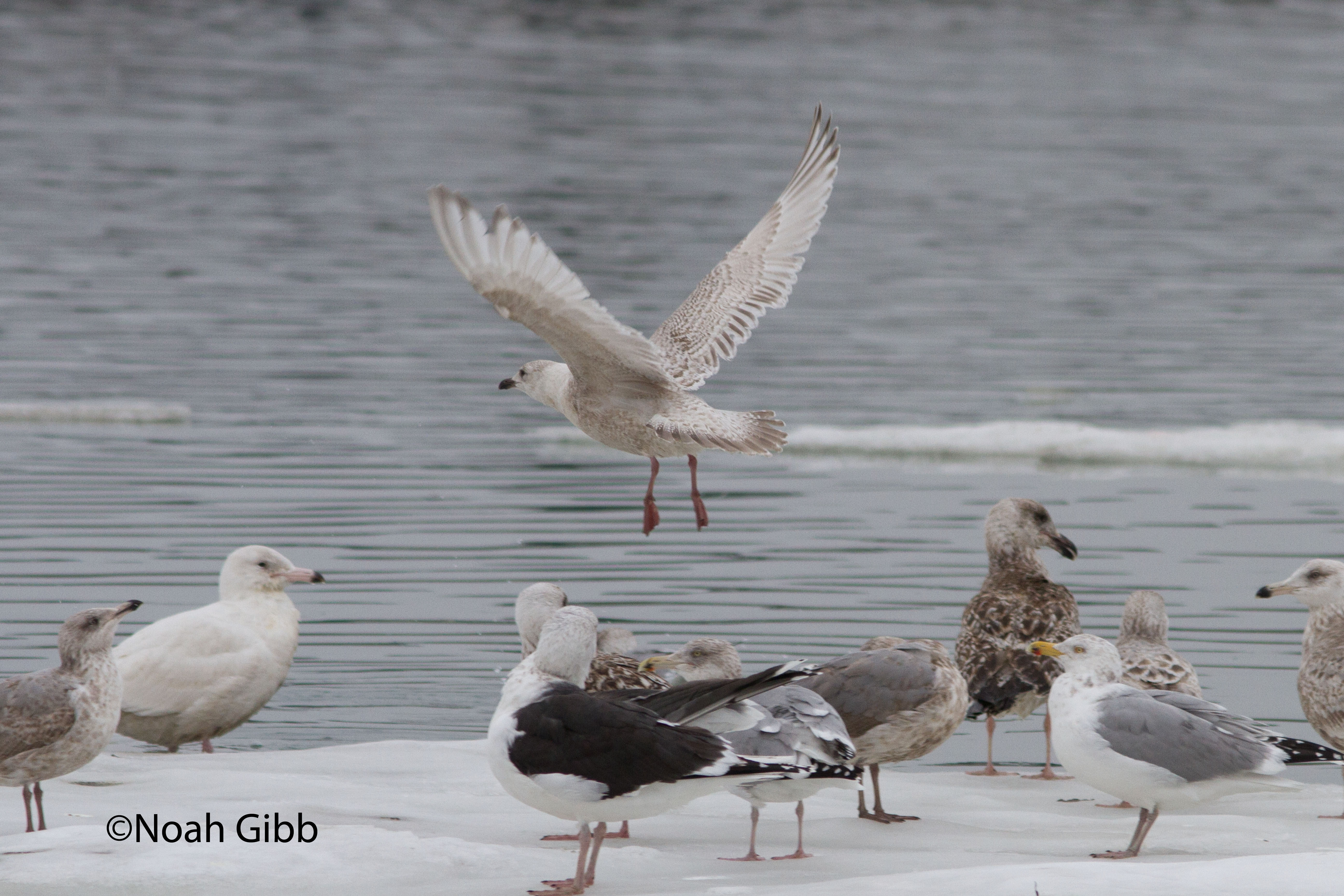
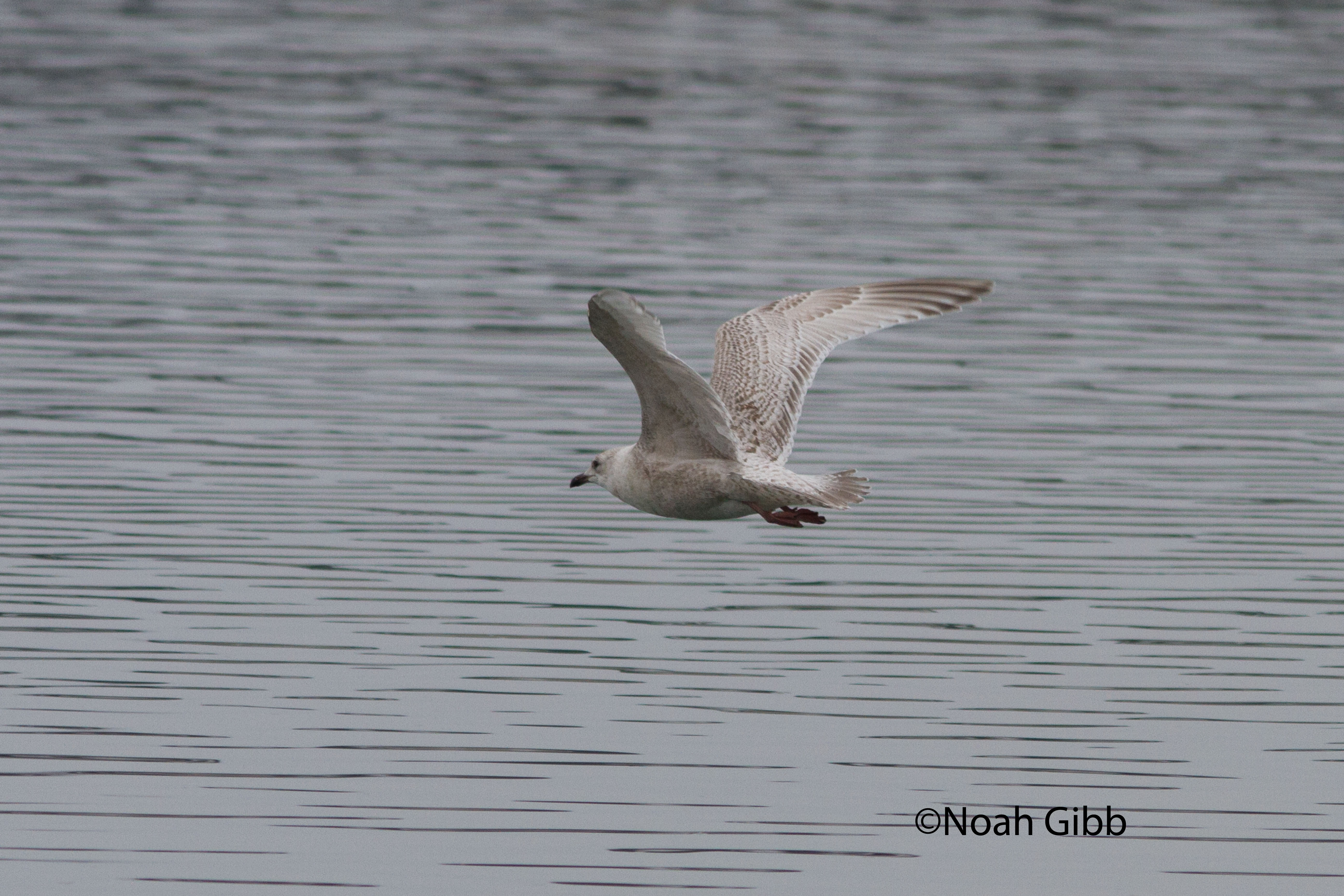
Doug Hitchcox got some decent photos of the bird on Sunday, but the best photos to date have been from Noah Gibb. I will therefore use these photos as our reference.
99.IMG_9975_edited-1

99.IMG_9985_edited-1

99.IMG_9987_edited-1

99.IMG_9998_edited-1

One of my take-home messages during my workshop is that a good “guller” has to be able to say “I don’t know,” and leave some individuals as “Gull sp.” This is probably the best answer to this bird, but what I think we can say is that this cannot be “counted” as a Thayer’s Gull.

For better or for worse, Thayer’s Gulls on the East Coast receive extensive scrutiny.  Birds that would be passed over in coastal California are analyzed to death in New England. Likewise, birds that look like “Kumlien’s” Iceland Gulls on the West Coast get extensive scrutiny, while here in Maine we pass some of these off as typical variation.  And I think this is a good thing – rare birds are rare, and vagrants to opposite coasts should warrant extreme care.

Therefore, this current rash of “Thayer’s Fever” – a common affliction of East Coast gull-watchers – needs to be tempered a bit. There is a reason that there are only two accepted records ever in Maine of this challenging, and variable, species. Therefore, extreme caution is necessary when placing this desirable label on funky gulls.

Like the Shawmut Dam gull reported by many as a Thayer’s a few weeks ago, I believe that the Portland “Thayer’s” is well outside the range of variation of what we can accept as a bona-fide Thayer’s Gull on the East Coast.  While there are a number of characteristics that suggest this bird could be a Thayer’s, there are a number of significant “strikes” against it.  While I think the Shawmut Dam birds suggests a Iceland-Thayer’s intergrade (I am not going to get into the muddled and controversial taxonomy here today), the Portland bird looks to me more like an abnormally dark-winged “Kumlien’s” Iceland Gull. Sure there could be Thayer’s genes in there…which there probably are in all Kumlien’s Gulls . . .oh wait, I said I wasn’t going to get into taxonomy.  Never mind.  Moving on.

So where was I? Oh yes… while the dark secondary bar (and upon closer inspection showing a distinct contrast between dark outer webs and pale inner webs) and the similarly distinctly two-toned outer primaries are important Thayer’s features, there are a serious amount of non-Thayer’s like features shown by this bird. Again, like the Shawmut Dam bird, there are just too many things “wrong” with this bird to safely label it a Thayer’s Gull, in my opinion.

First and foremost, there’s the Portland bird’s incredibly white overall appearance. While a first-summer or some 2nd-cycle Thayer’s can look this pale overall, this bird IS a first-cycle bird.  Since no second-cycle feathers are evident (the bird has a very uniformly-marked plumage typical of a bird less than a year old) and none of the feathers suggest any abnormal wear, we cannot call this anything other than a 1st-cycle bird.  It is not overly worn, and bleaching would affect all of the most-exposed parts of the bird – like the mantle, upperwing, and especially the primaries (and it is those primaries that are abnormally dark, not pale). The mostly-dark bill is also highly suggestive of a 1st-cycle bird, as is the fairly dark eye. Perhaps that is a bit of an over-simplification, but for now, that should suffice.

With that (fairly well) established, we can look at this bird more closely.  Again, those outer primaries and “picket-fence” secondaries are very Thayer’s-esque. Unfortunately, the similarities pretty much end there. The bird is not very big, and similar in size to most of the “Kumlien’s” Iceland Gulls we see it with.  It is also has the somewhat short and thin-billed appearance, with a gently rounded head and large eye that are typical of Iceland Gulls; this bird does not get any subjective gestalt points.  More importantly, in my opinion, are more tangible issues, from head to tail (and in no particular order of importance):
–          The overall pale appearance to the entire bird give that “white” impression at a distance; Thayer’s (THGU) usually look “dirtier” or even “brown.”
–          The pale face doesn’t have that nice dark smudge that we like to see on THGU.
–          The bill is clearly becoming pale at the base already.  The pattern looks good for Iceland (ICGU), and is certainly on one end of the bell curve for THGU.
–          The tertials are wholly marbled, and look perfect for ICGU.  “Classic” THGU show mostly dark tertials with marbled distal ~1/3rd or so.
–          On the folded wing (and on some flight shots), the primaries definitely have dark outer webs, but they also have a pale fringe that not just rounds the tip, but continues down the length of the most of each feather’s outer web. That is more consistent with dark-winged “Kumlien’s” Gulls.
–          While the tail is mostly dark, the bases are fairly extensive white with lots of marbling.  The extent of marbling is a good fit for ICGU.

While absolutely none of these factors eliminate a THGU on their own, the sum of all of them taken together makes for a most unusual THGU.  Considering the range of variation in “Kumlien’s” ICGU combined with hybridization – and by some accounts extensive intergrading – put this bird well outside the possibly-artificially-delineated box that we currently label a Thayer’s Gull.  At the very least, this is far short of a bird that could be “good enough” to constitute a third state record.

Can you see why I was so impressed that so many people stayed to the bitter end of my program on Saturday (and Sunday, for that matter!)?  So there, I said it – the OldPort mystery gull is not a “good” Thayer’s, despite the wishes of many-a-birder!  Sorry.

So anyway, after the Fish Pier, we ventured over to Mill Creek Cove in South Portland.  Two more 1st-winter Iceland and a 1st-winter Glaucous were present (some are all likely birds we saw on the other side of the harbor) to reinforce our new-found skills.
photo 3 (3)_edited-1

And finally, some of the group joined me for a field trip extension over to Westbrook to look for the “Westbrook Gull,” a bird that, as I explained in the workshop, still defies identification and therefore is also quite instructive. Unfortunately, it was not present today (I see it less often on the weekend), but we finished up with a great showing for here of 4 Iceland Gulls (three 1st-winter and 1 2nd-winter) with the Herring and Ring-billed Gulls near the falls.  Meanwhile, while we did look at other birds all day, the open water behind downtown Westbrook yielded the surprise of the day – a pair of Ring-necked Duck that has just been found by Colin Chase.  Whether they are southbound, northbound, are somewhere in between, this was a great winter find, and a nice way to bring our workshop to a close.

Some people added Iceland and Glaucous Gull to their life list this day – and I think one person deleted Thayer’s Gull from their life list! – but more importantly, everyone left with a little more knowledge about how to identify gulls, and more importantly, hopefully a new-found appreciation for these remarkable, adaptable, and successful creatures.

With the success of this weekend (and some refinement due to the slide show portion of the program), I think it is safe to say that you can look for this workshop again in the future.  Until then, good gulling everyone!