
Approaching the island on Friday, 9/27, the fog was rapidly lifting on the mainland, and the skies were clearing. High seas from the previous days were steadily diminishing. An offshore fogbank reduced our chances to see many birds during the boatride, but by the time we reach the island, the sun was shining through.
Things seemed fairly slow, but there were birds here and there. One single bush hosted all three Melospizas: Lincoln’s, Swamp, and Song Sparrows, and one of the tarrying Baltimore Orioles soon joined them. It was a relaxed start to the weekend, affording us time to check in and enjoy lunch before returning to the birding.

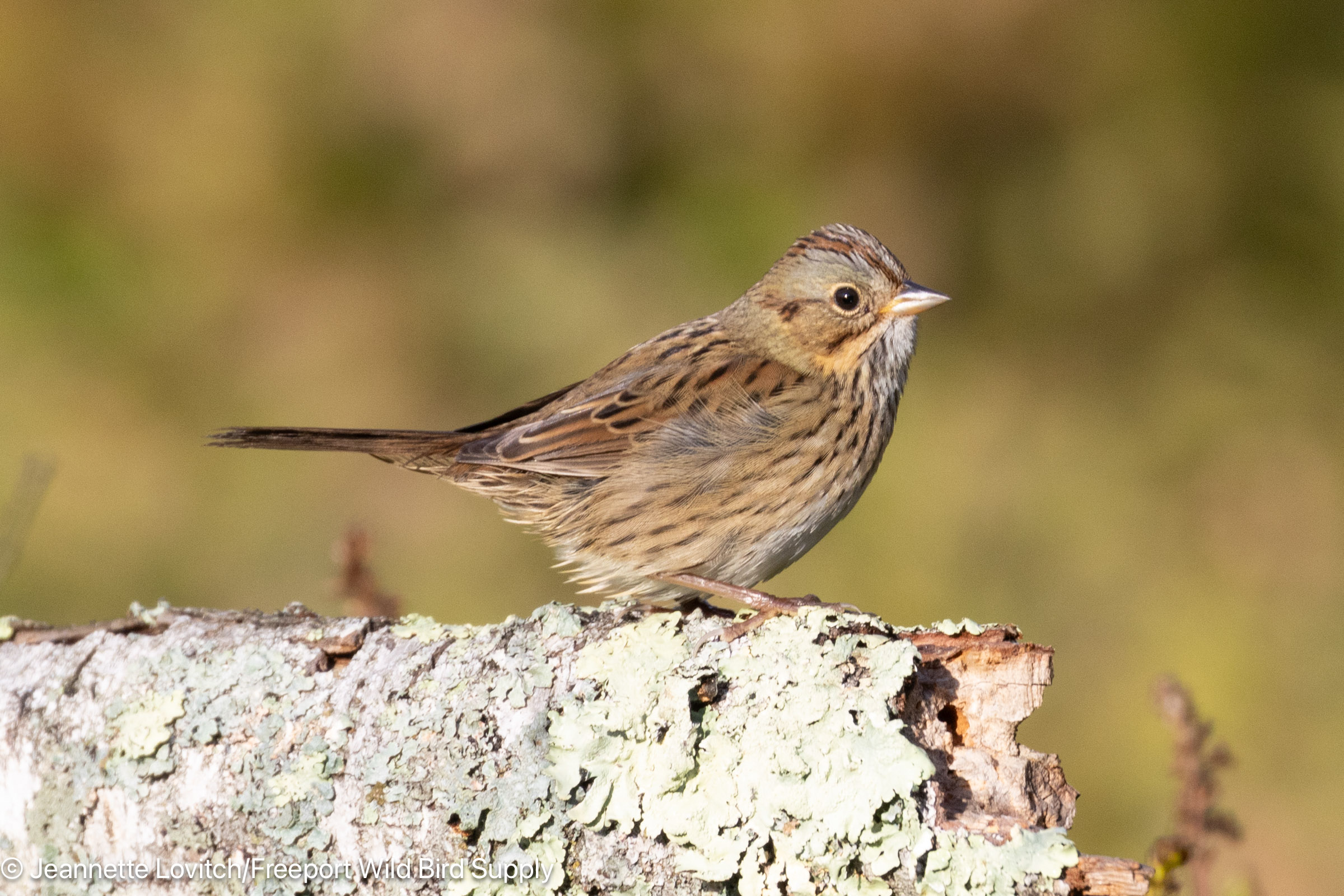
Like this cooperative Song Sparrow
The afternoon was quite slow, as expected from the preceding nights with little or no migration on unfavorable winds, but we had birds to look at: Yellow-rumped Warblers sallying for midges at the top of spruces, scattered assorted sparrows, lots of great Merlin performances, and no shortage of Ring-necked Pheasants.

As the sun set, a huge flight was taking off and continued throughout the night. Very light northwesterly winds overnight were a little lighter than I would have preferred, but there was just a massive amount of birds on the move, and a great Morning Flight on Saturday morning to start our day was indicative of that.
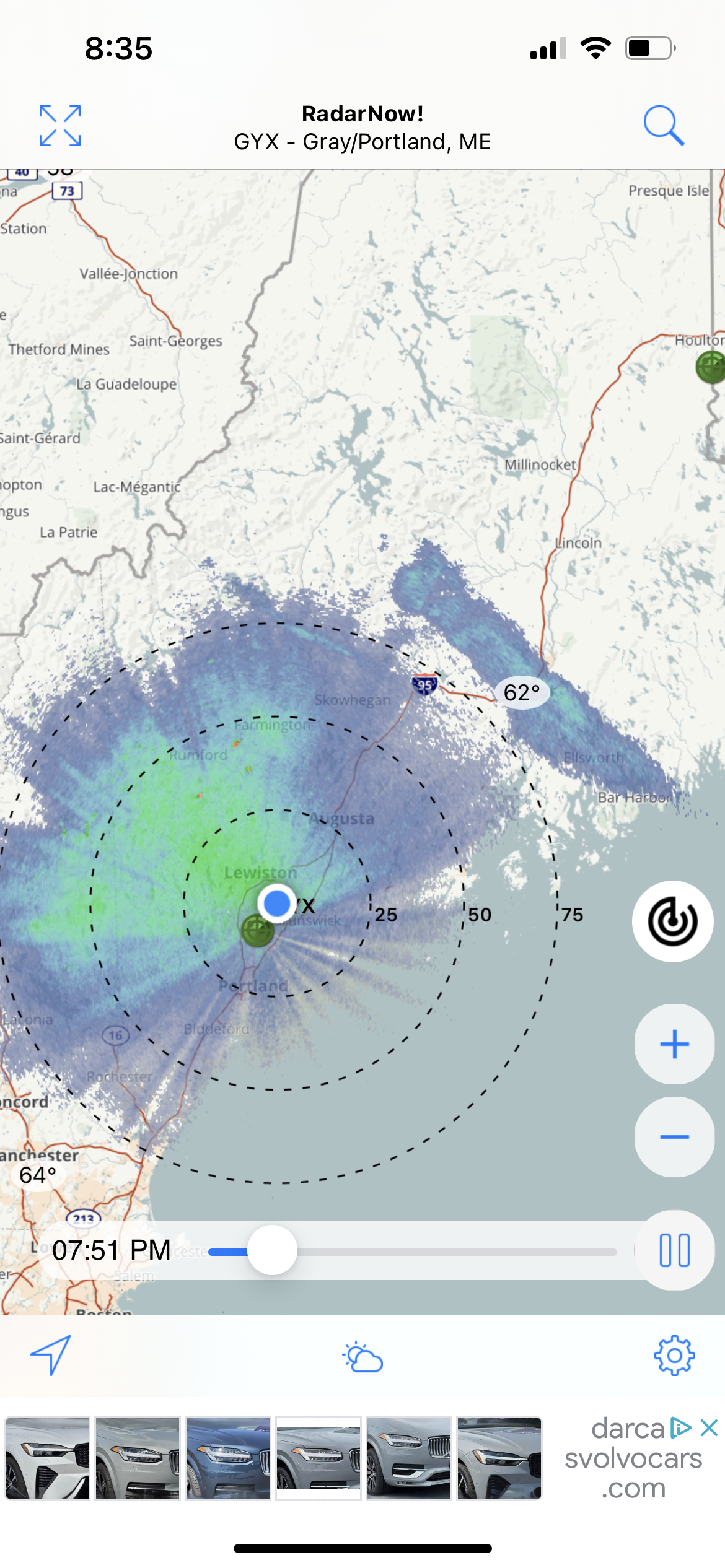

Yellow-rumped Warblers filled the air, with handfuls of Blackpoll Warblers and a small number of Northern Parulas. After the morning flight settled down, the rest of our am was also very good. While the very light winds allowed much of the birds partaking in the Morning Flight to leave the island, there were plenty of birds remaining on the island to be seen. In addition to Yellow-rumps, there was a good arrival of White-throated and other sparrows, and pockets of activity were sifted through, producing a wide array of fun birds.

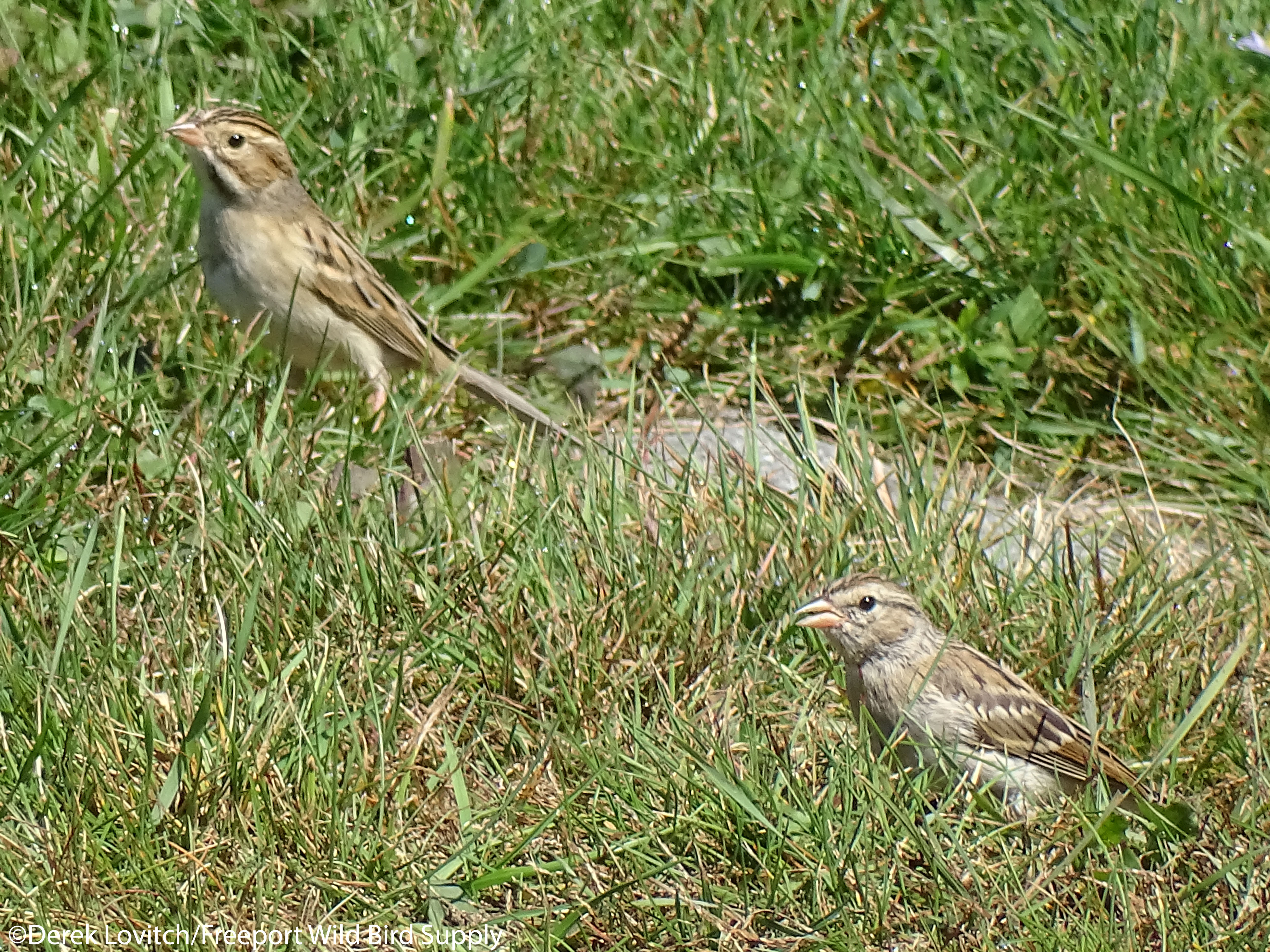
A Dickcissel in the community farm and a total of 6-7 Baltimore Orioles nearby were soon trumped when a first fall female Mourning Warbler actually walked into the open for all to see (for a change) …on a plywood garden table nonetheless! We found a Clay-colored Sparrow feeding amongst Chipping Sparrows, discovered a rather rare on the island Pine Warbler, and enjoyed a nice variety of the expected seasonal migrants.

Lovely weather all day encouraged us to enjoy an afternoon on Burnt Head, were we picked up a tardy Chestnut-sided Warbler and a rather rare in the fall on the island juvenile Ring-billed Gull. We also noticed a lot more Red-eyed Vireos during the course of the day, with many at and below eye level.


While a rare Yellow-crowned Night-Heron called over the harbor at nightfall, I was wandering on my own so it doesn’t count for the group, unfortunately. I was still pleasantly surprised by it, and it punctuated the calls of songbirds departing the island.
Luckily, a moderate flight occurred throughout the night (the overall intensity was a little obscured by fog on the radar images) on light west winds that had become calm by morning. Those calm and cooling conditions allowed fog to roll back in, and the Morning Flight was just a trickle to start on Sunday morning, our last morning together.


However, once the sun burned through, birds were in the air and appearing out of nowhere, and the birding really picked up. In flight, it was mostly Yellow-rumped Warblers, but there were more Palm Warblers involved today. We began finding “new” species for the trip list, like a Cape May Warbler, some recently-arrived American Robins, and we enjoyed watching a swirling flock of 16 migrant Black-capped Chickadees.

After breakfast, the birding was overall quite a bit slower than Saturday, but the quantity was replaced by quality! An Orange-crowned Warbler at the Ice Pond, a continuing female Dickcissel in the cul-de-sac, two different Clay-colored Sparrows. Pockets of activity offered up nice views of a male Cape May Warbler, a few Blackpoll Warblers, and then we found not one, but 3 Nelson’s Sparrows in the Lobster Cove meadow – one even perched conspicuously enough to be viewed by all!
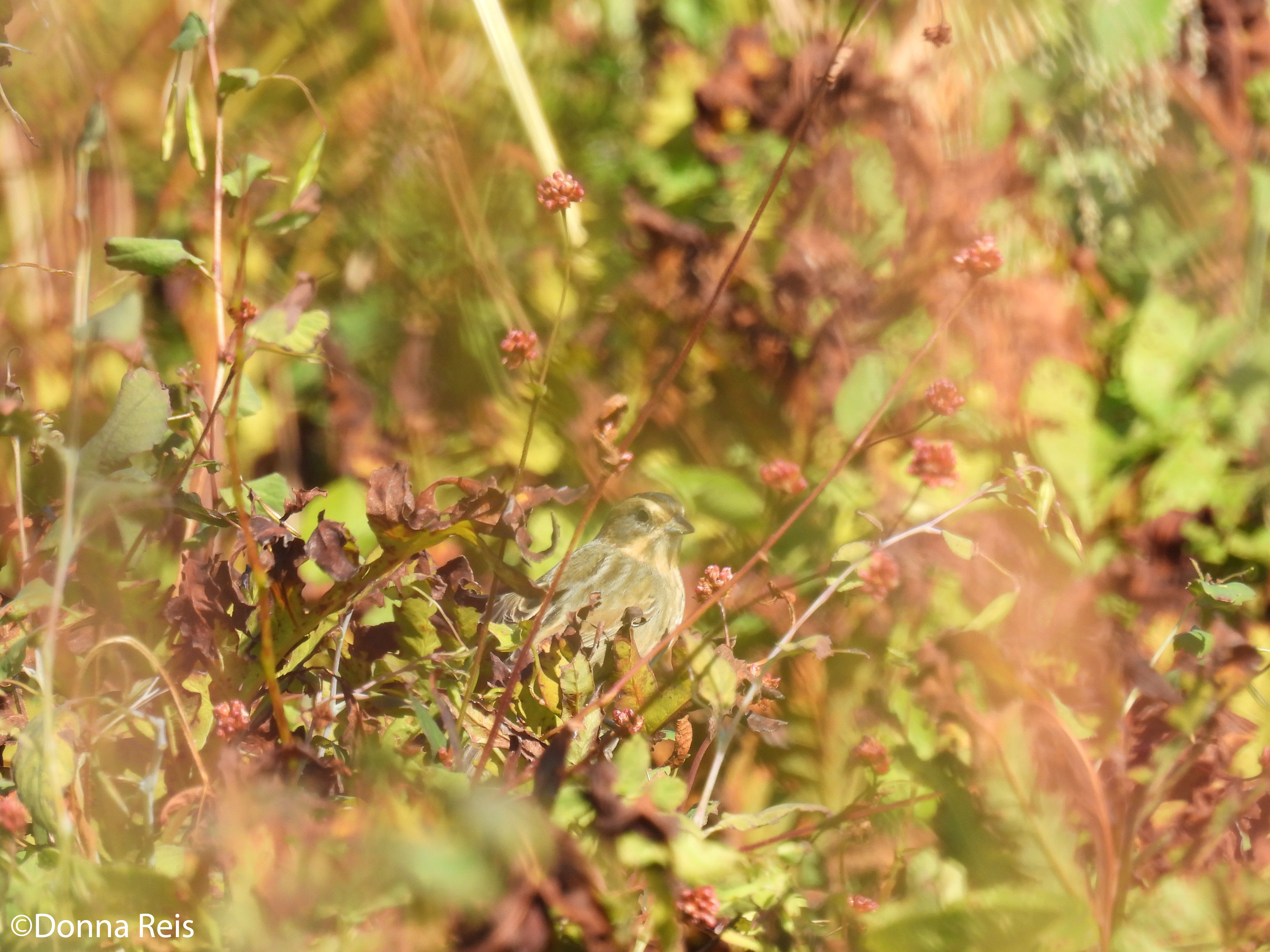
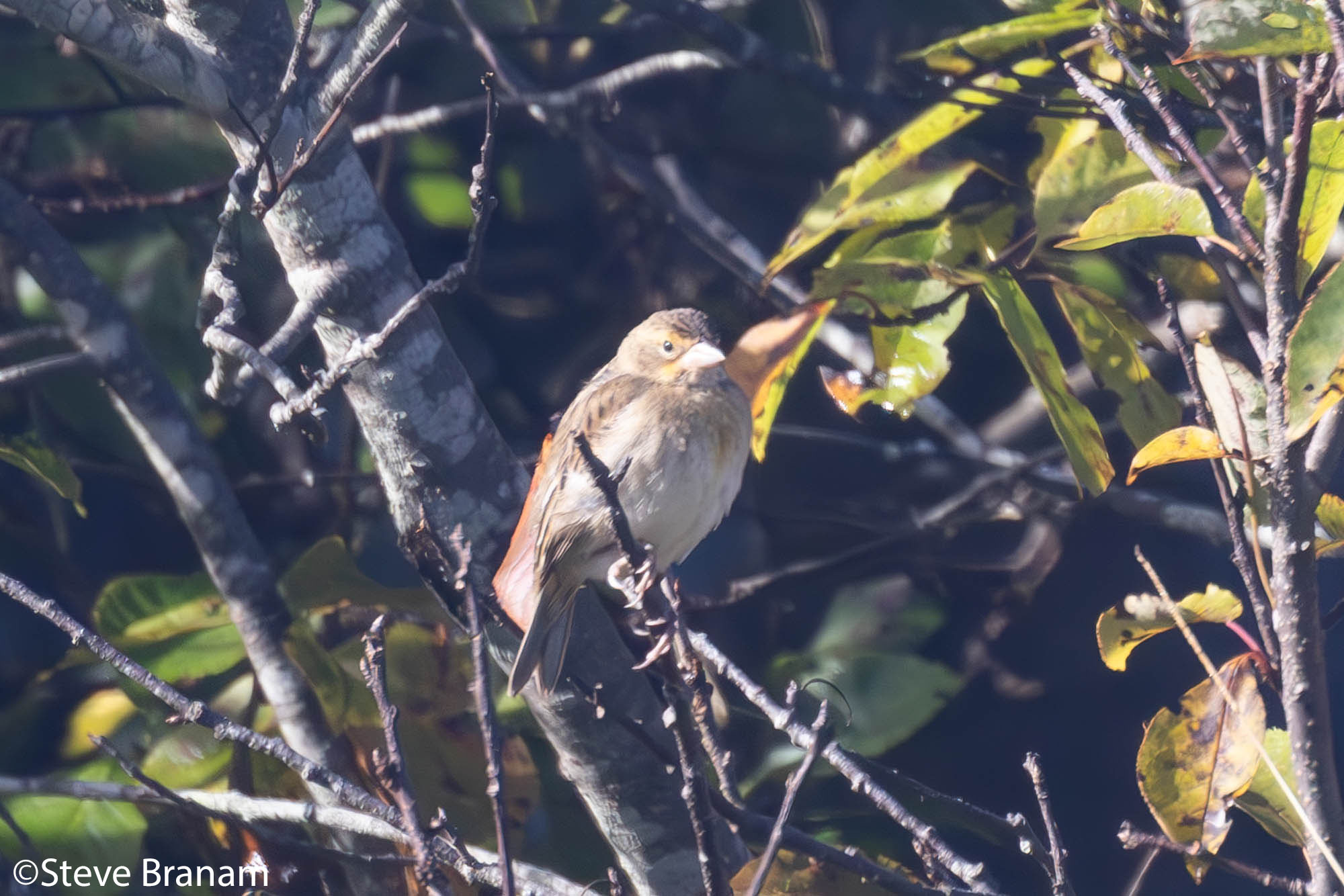
As the group trickled home, the last participants standing joined me in a little longer hike from Lobster Cove to Burnt Head, which yielded two Lesser Black-backed Gulls, more Great Cormorants, and yet another Orange-crowned Warbler to bring the official tour to a productive conclusion.
I remained on the island overnight, and with light southerly winds and a return of the fog, there was very little in Morning Flight and to start the day. But the day had a “rarity” feel to it (southwest winds overnight will do that!), and my Rarity Fever was soon stoked by a wayward Yellow-billed Cuckoo that sat still for me, gaining the first rays of sunshine of the morning, in a small tree in the Monhegan House lawn. Two Rusty Blackbirds were foraging on the lawn, and once the sun came up, a few more Yellow-rumped Warblers began to appear.

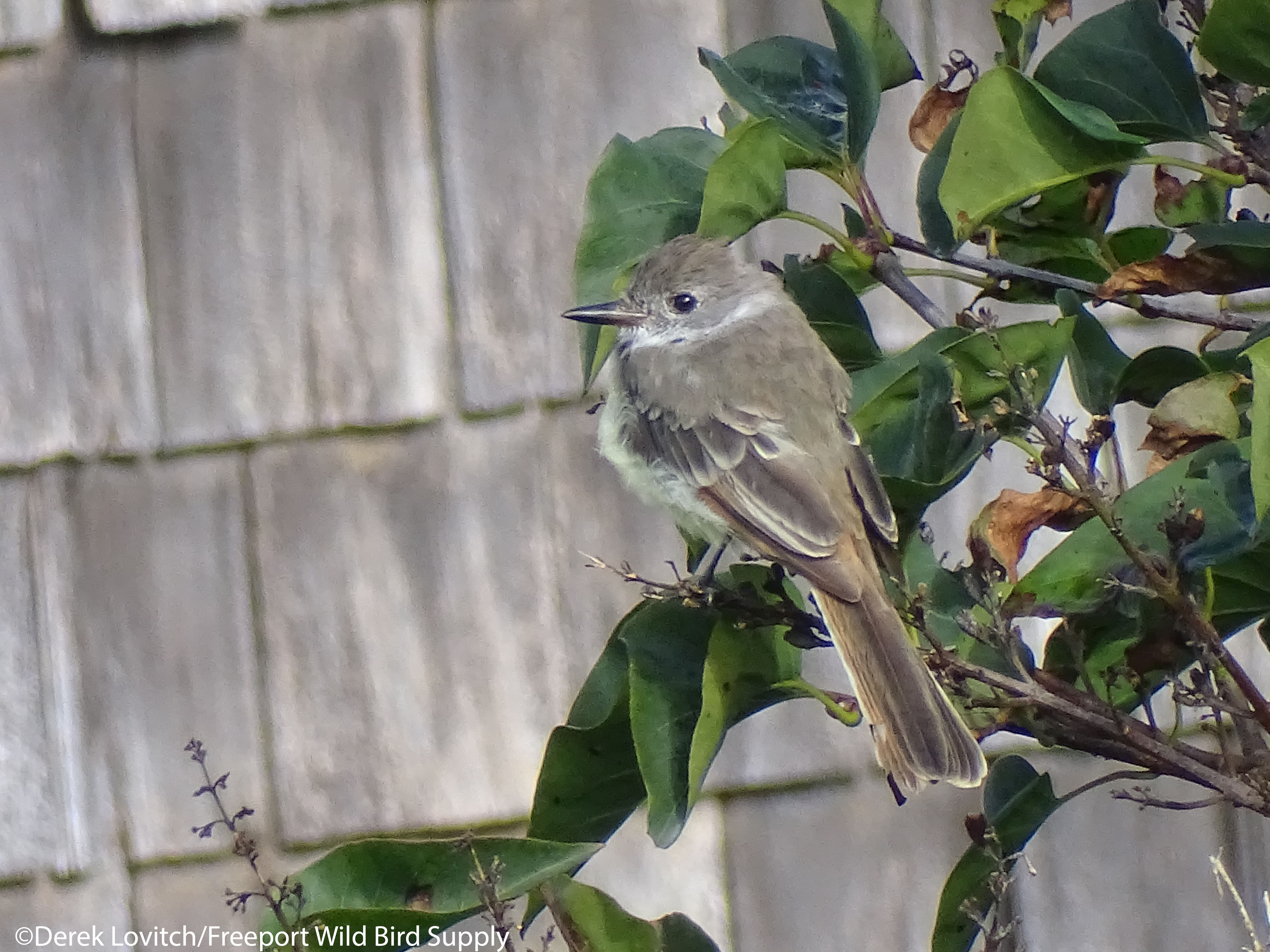
But as Jessica Bishop and I began a post-breakfast search, the What’s App began to ping. Ken and Sue Feustel had just found an Ash-throated Flycatcher on Wharton Ave, and we did a quick 180 and began the march back across town. The ample Trailing Yew breakfast was weighing on me, however, so my speed could have been improved. Nonetheless, the bird had disappeared before we arrived, so we fanned out to search.
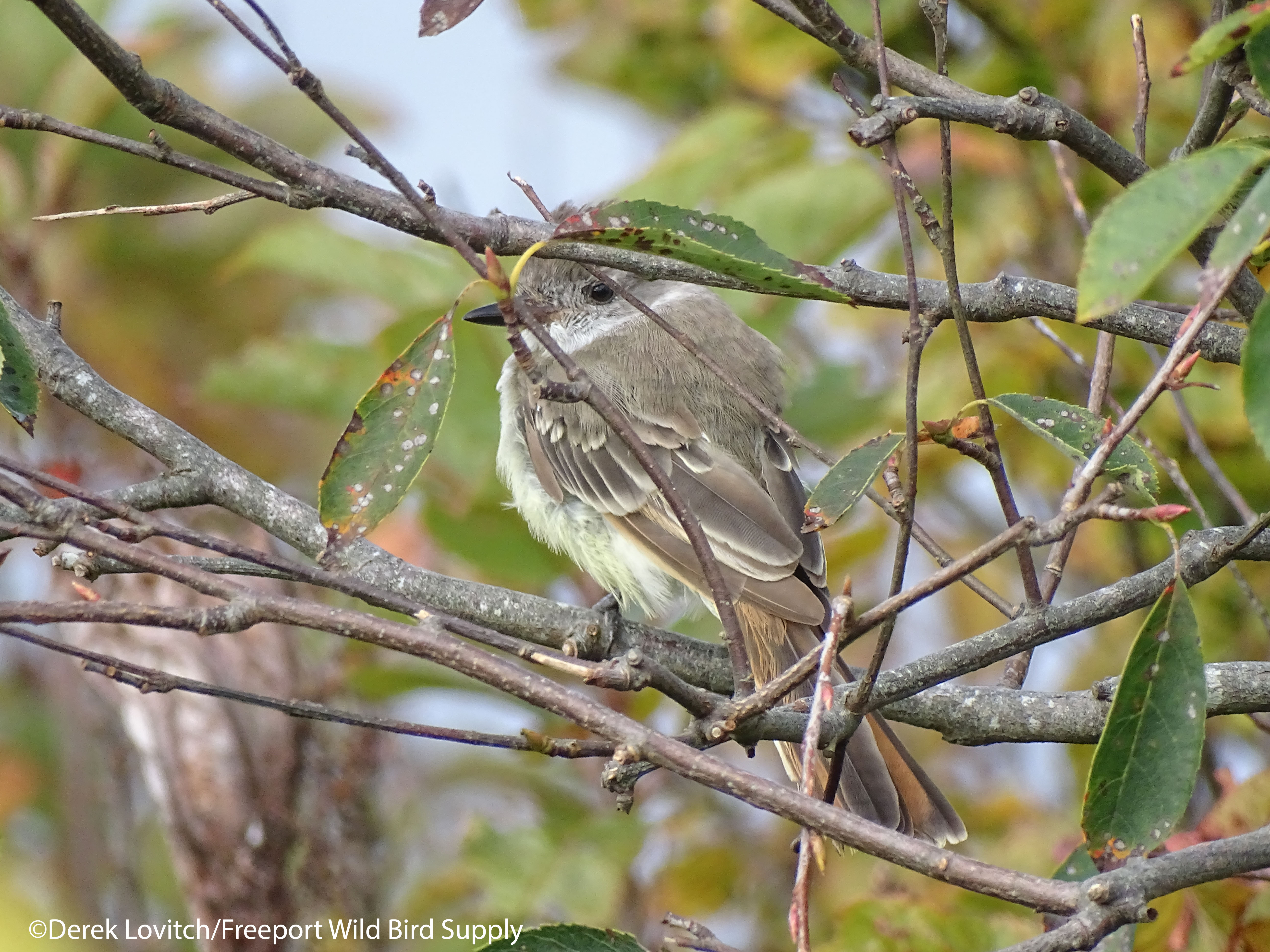
After a short spell, I relocated the bird behind the Trailing Yew, and Jess rushed over and we began photographing it as the rest of the island’s remaining birders convened, including Donna the last member of my to depart. And she was quite happy with the decision to linger to say the least! (The tour was officially over, so this gem doesn’t count for the official triplist…darn!)

We studied the flycatcher, and I made sure to get a shot of the tail that would be adequate for identification confirmation (to rule out an even rarer Myiarchus flycatcher). Here, you can see the outer tail feather on one side, showing the dark brown of the outer web intruding into the end of the inner web – diagnostic for Ash-throated.

This was my 227th Monhegan Bird, and the island’s 3rd-ever, of this southwestern vagrant. What a bird!
While the rest of the day was a little anticlimactic from a birding perspective, Jeannette arrived and we set out to search for the now-missing Ash-throat and whatever else we might stumble upon. Two Clay-colored Sparrows were now together, one of the Orange-crowned Warblers was still at the Ice Pond, and at least one Nelson’s Sparrow was still at Lobster Cove. At dusk, two Wilson’s Snipe launched out of the town marsh, and at sunset, a migrant Great Blue Heron flew over. No sign of the Ash-throat for the rest of the day, unfortunately.


On Tuesday, Jeannette and I awoke to a strong flight on the overnight radar image, but as expected on a north to north-east wind by dawn, only fairly a light Morning Flight occurred. Made up of at least 95% Yellow-rumped Warblers, it was a little busier than I expected, but it ended by about 7:00am. Granted, at least two hunting Peregrine Falcons may have had something to do with that.
We watched a Wilson’s Snipe evading a Merlin in flight, and some more new species for the weekend were overhead, including a Horned Lark, an Osprey, and a Semipalmated Plover. There were at least a half-dozen American Pipits in morning flight, and a new-to-us Brown Thrasher put in an appearance.
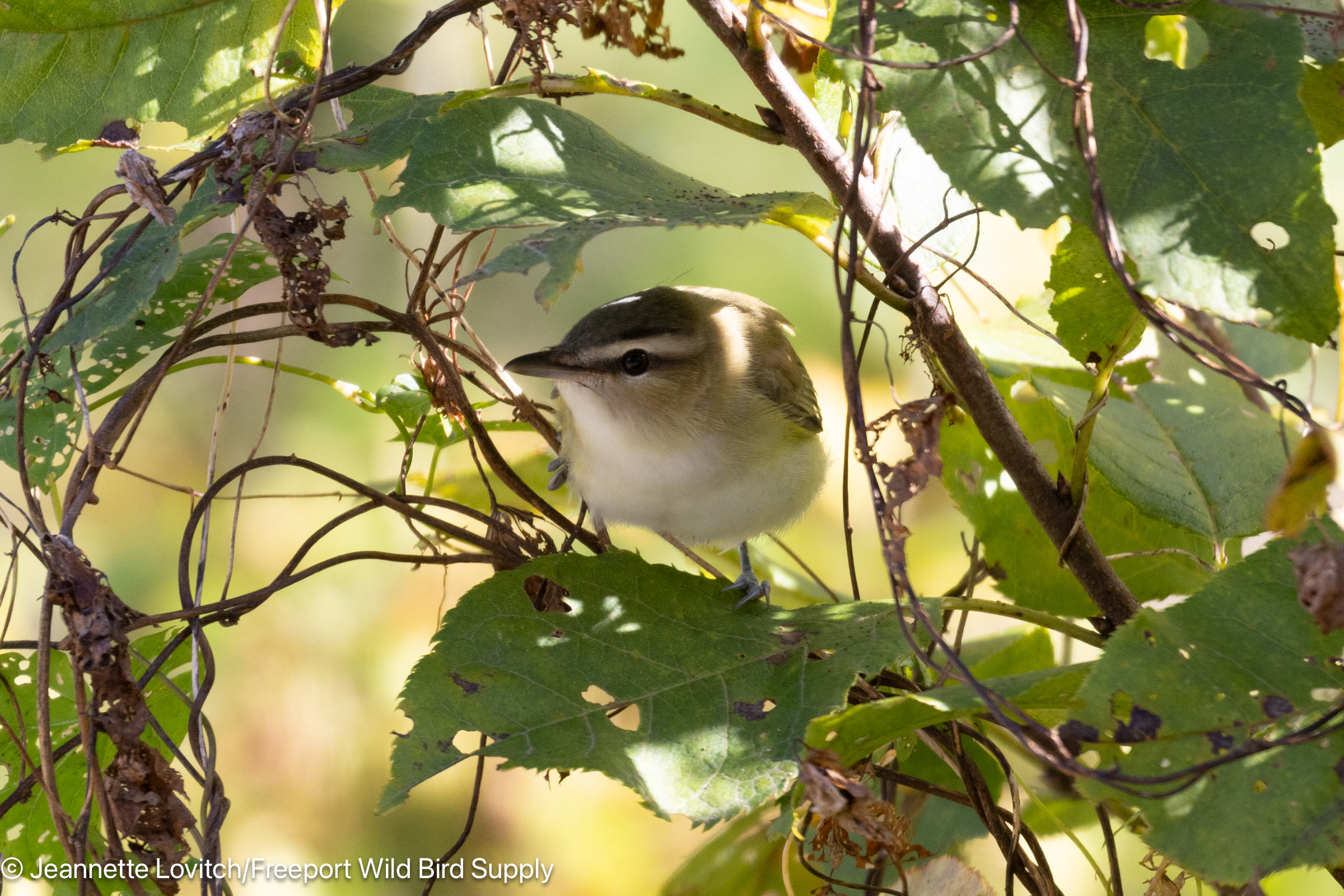
After breakfast, it was exceeding slow, but we did have a Dickcissel in the garden, and a Scarlet Tanager joined the remaining Baltimore Orioles in the grapes. But most of our morning was spent chasing a reported Yellow-headed Blackbird (seen by two and never again) and Will Russell briefly relocated the Ash-throated Flycatcher – which looked much healthier today and was much more active. In other words, it was soon once again melting away into the scrub. It kept us occupied until it was time to depart, however.
A very pleasant boat ride back to the mainland for Jeannette and I was far too nice to produce any seabirds of note, but it was a lovely way to finish up a delightful and fruitful fall weekend.
Here’s the official tour checklist:
| 27-Sept | 28-Sept | 29-Sept | |
| American Black Duck | 0 | 0 | 1 |
| Mallard | 8 | 12 | 16 |
| Green-winged Teal | 0 | 0 | 1 |
| Common Eider | x | x | x |
| Black Scoter | 0 | 0 | 8 |
| Ring-necked Pheasant | 15 | 15 | 25 |
| Mourning Dove | 10 | 15 | 12 |
| Black Guillemot | x | x | x |
| Laughing Gull | 8* | 0 | 2 |
| Ring-billed Gull | 0 | 1 | 0 |
| Herring Gull | x | x | x |
| LESSER BLACK-BACKED GULL | 0 | 0 | 2 |
| Great Black-backed Gull | x | x | x |
| Common Loon | 1* | 0 | 0 |
| Northern Gannet | 2* | 0 | 1 |
| Double-crested Cormorant | x | x | x |
| Great Cormorant | 0 | 1 | 5 |
| Bald Eagle | 2* | 0 | 1 |
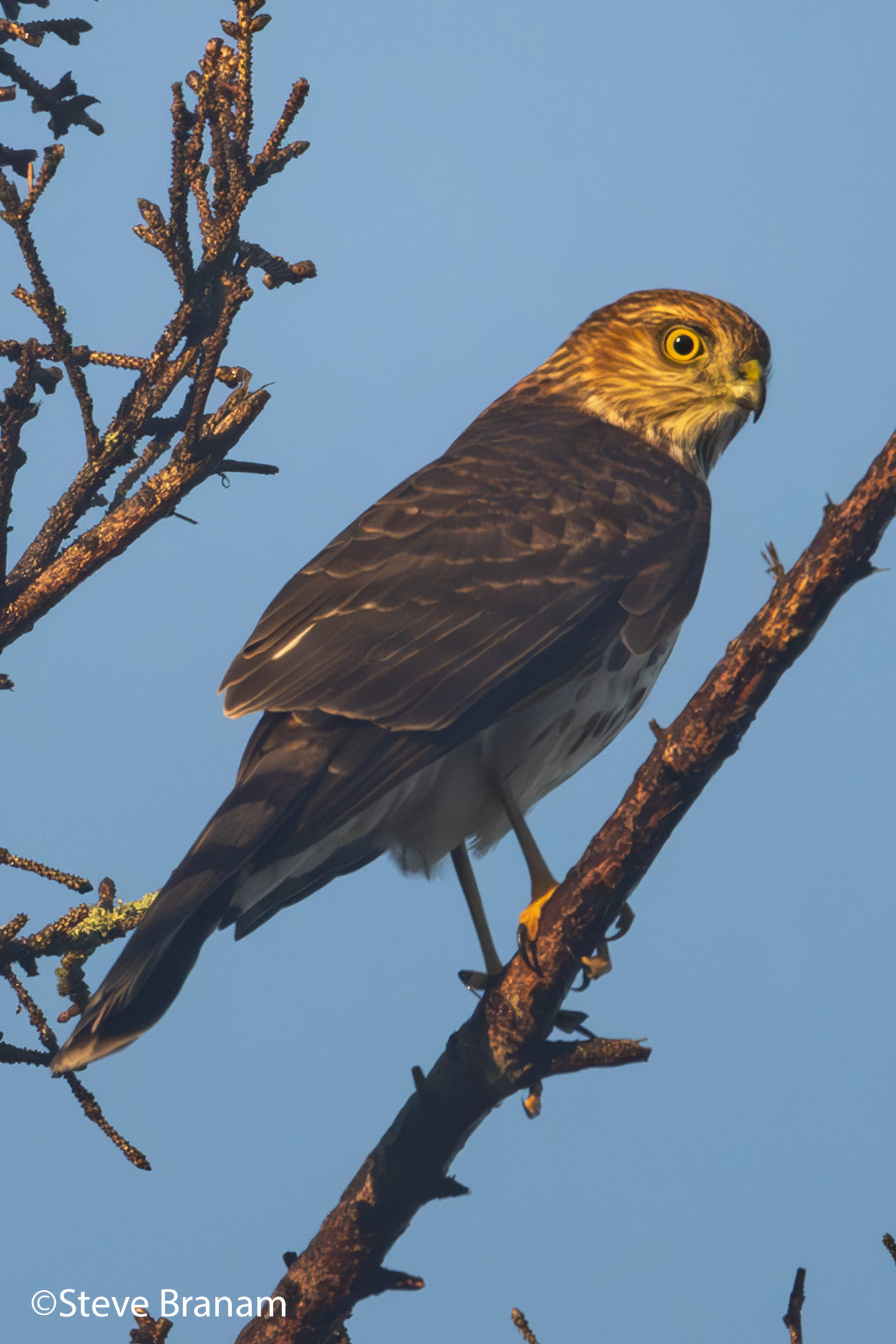
| Sharp-shinned Hawk | 2 | 4 | 4 |
| Belted Kingfisher | 1 | 0 | 1 |
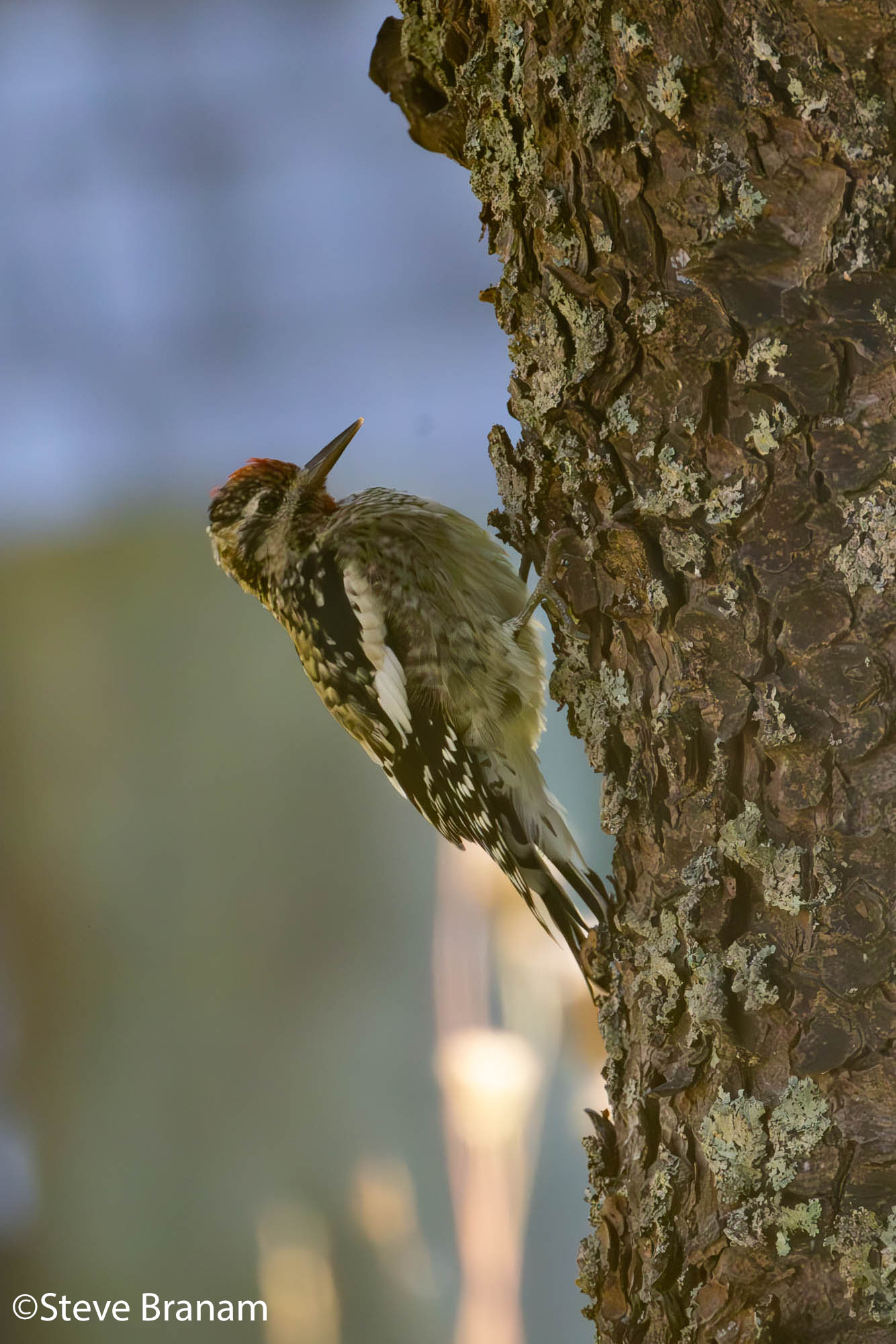
| Yellow-bellied Sapsucker | 0 | 20 | 20 |
| Downy Woodpecker | 2 | 4 | 3 |
| Northern Flicker | 3 | 15 | 15 |
| Merlin | 6 | 8 | 6 |
| Peregrine Falcon | 2 | 3 | 4 |
| Eastern Phoebe | 0 | 3 | 3 |
| Blue-headed Vireo | 0 | 3 | 4 |
| Red-eyed Vireo | 1 | 30 | 25 |
| Blue Jay | 9 | 13 | 9 |
| American Crow | 4 | 4 | 4 |
| Common Raven | 0 | 1 | 1 |
| Black-capped Chickadee | x | x | 30 |
| Golden-crowned Kinglet | 4 | 15 | 40 |
| Ruby-crowned Kinglet | 2 | 10 | 20 |
| Cedar Waxwing | 30 | 40 | 40 |
| Red-breasted Nuthatch | 2 | 8 | 6 |
| Brown Creeper | 0 | 4 | 4 |
| House Wren | 0 | 1 | 0 |
| Carolina Wren | 5 | 10 | 10 |
| Gray Catbird | 10 | x | x |
| Northern Mockingbird | 2 | 2 | 3 |
| European Starling | x | 26 | 26 |
| Hermit Thrush | 0 | 1 | 0 |
| American Robin | 0 | 0 | 2 |
| American Pipit | 0 | 3 | 3 |
| Purple Finch | 0 | 4 | 5 |
| American Goldfinch | 10 | 10 | 8 |
| Chipping Sparrow | 0 | 10 | 12 |
| CLAY-COLORED SPARROW | 0 | 1 | 2 |
| Dark-eyed Junco | 0 | 4 | 2 |
| White-throated Sparrow | 15 | 50 | 60 |
| NELSON’S SPARROW | 0 | 0 | 3 |
| Savannah Sparrow | 1 | 6 | 10 |
| Song Sparrow | x | x | x |
| Lincoln’s Sparrow | 1 | 5 | 4 |
| Swamp Sparrow | 2 | 15 | 20 |
| Rusty Blackbird | 0 | 4 | 2 |
| Common Grackle | 2 | 20 | 20 |
| Baltimore Oriole | 2 | 7 | 6 |
| Northern Waterthrush | 0 | 1 | 0 |
| Black-and-white Warbler | 0 | 0 | 3 |
| ORANGE-CROWNED WARBLER | 0 | 0 | 2 |
| Nashville Warbler | 0 | 3 | 0 |
| American Redstart | 0 | 1 | 0 |
| MOURNING WARBLER | 0 | 1 | 0 |
| Common Yellowthroat | 0 | 8 | 10 |
| Cape May Warbler | 0 | 1 | 3 |
| Northern Parula | 1 | 15 | 15 |
| Blackburnian Warbler | 0 | 0 | 2 |
| Yellow Warbler | 0 | 2 | 1 |
| Chestnut-sided Warbler | 0 | 1 | 1 |
| Blackpoll Warbler | 6 | 25 | 15 |
| Black-throated Blue Warbler | 0 | 0 | 1 |
| Palm Warbler | 1 | 30 | 20 |
| PINE WARBLER | 0 | 2 | 1 |
| Yellow-rumped Warbler | 20 | 150 | 100 |
| Black-throated Green Warbler | 0 | 10 | 3 |
| Wilson’s Warbler | 0 | 1 | 0 |
| Northern Cardinal | 8 | 10 | 6 |
| Rose-breasted Grosbeak | 1 | 0 | 1 |
| Indigo Bunting | 0 | 1 | 1 |
| DICKCISSEL | 1 | 1-2 | 1 |
| Day Total | 44 | 68 | 73 |
| Warbler day total | 4 | 15 | 14 |
| 3-Day Tour total= | 81 | ||
| Plus with Jeannette after the group and on my own = | 13 | ||
| Total warblers = | 19+1 |

And the additional species seen by me without the group, on Monday, and on Tuesday:
- 1 YELLOW-CROWNED NIGHT-HERON, 9/28.
- 1 American Kestrel, 9/30
- 1 YELLOW-BILLED CUCKOO, 9/30
- 1 ASH-THROATED FLYCATCHER, 9/30
- 1 Magnolia Warbler, 9/30
- 1 Semipalmated Plover, 9/30 and 10/1.
- 2 Wilson’s Snipe, 9/30 and 1, 10/1
- 1 Great Blue Heron, 9/30 and 10/1
- 1 Northern Harrier, 10/1
- 1 Horned Lark, 10/1
- 1 Brown Thrasher, 10/1
- 1 Osprey, 10/1
- 1 Scarlet Tanager, 10/1

 Maine Birding Field Notes