
Tour itineraries are meant to be broken. Or is that “rules.” Well, those too.
We have offered some kind of “Bicknell’s Thrush Wekeend” tour for almost 15 years now. There was a hiatus for COVID, and last year – perhaps due to the uncertainty with travel planning – we pulled the plug on our weekend for the first time as registrations were slow to come in.
Therefore, for 2024, it was time to try something new and head into Northern New Hampshire for a new plan of attack. Two chances at Bicknell’s Thrush over the course of two days, with this one enigmatic bird the sole focus (well, at least until we see it) – that part of it had not changed. Everything else was new this year.
We assembled at 9:00am on Saturday, June 29th in Errol, New Hampshire. The itinerary? Well, never mind.
Several folks arrived to see their guide staring up at the sky and immersed in deep thought (you could smell the wood burning). It wasn’t raining, and it looked like we had a nice window of fair weather. But it was already 9:00am, and by the time we got up the mountain…
…but the forecast for tonight. And tomorrow morning.
…but it can’t be worth it to try for one of, if not the, most elusive of North American breeding songbirds in the middle of the day.
…and it’s getting warm.
…and there’s rain building to our west. The winds are picking up higher up.
…but let’s go for it!
So up the mountain we went. At least we would be trying. And that evening, with the risk of severe thunderstorms, we might not even have a chance to try. And the next morning didn’t look great.
But weather forecasts are fickle, especially up here in the mountains, so it’s hard to make plans. But it’s easy to look up and see what’s about to happen, or not. And when I looked up, my face didn’t get wet, so that’s the only forecast that’s dependable in these parts.
We raced up hill, arriving at about 3,000 feet and the realm of the Bicknell’s Thrush around 10:30, stopping for a Ruffed Grouse in the road escorting five chicks.

Southerly winds were increasing, blowing right up into and through our thrush territories. This was pointless. But hey, the rain was still across the valley. So we birded.
We heard the Fox Sparrow, spotted a couple of Blackpoll Warblers, and enjoyed the usual high-elevation species like Yellow-rumped Warblers and Dark-eyed Juncos.


Then, at the surprisingly late (or extremely early) time of about 11:15am, a Bicknell’s Thrush began to call. Over the next 15-20 minutes, we were treated to two birds counter-singing, and at least 3 or 4 birds calling. One bird silently flew across a clearing, as well seen as a thrush in flight can get. The two dueling birds darted between trees and occasionally paused in view of one or two people before melting back into the trees.
There weren’t photography opportunities, but everyone was more than satisfied with the sum of their views. And it was a tremendous auditory performance. Overall, it was actually a pretty good show, and really demonstrated the behavior of this fascinating bird. And since this is more than just a tick and run” tour, the birds’ behavior was instructional and of keen interest.
And after all being satisfied, the rain arrived.

We enjoyed a leisurely and delicious lunch, and then set out for a little more birding. Making up for the change of plans in the morning, we took a walk and a drive through some boreal habitats, but rain was becoming steadier now. We heard and saw a few common birds, but it was just some good quality time in the afternoon woods, absorbing our phytoncides. When the rain arrived in earnest, we called it quits and went to check in at our hotel.
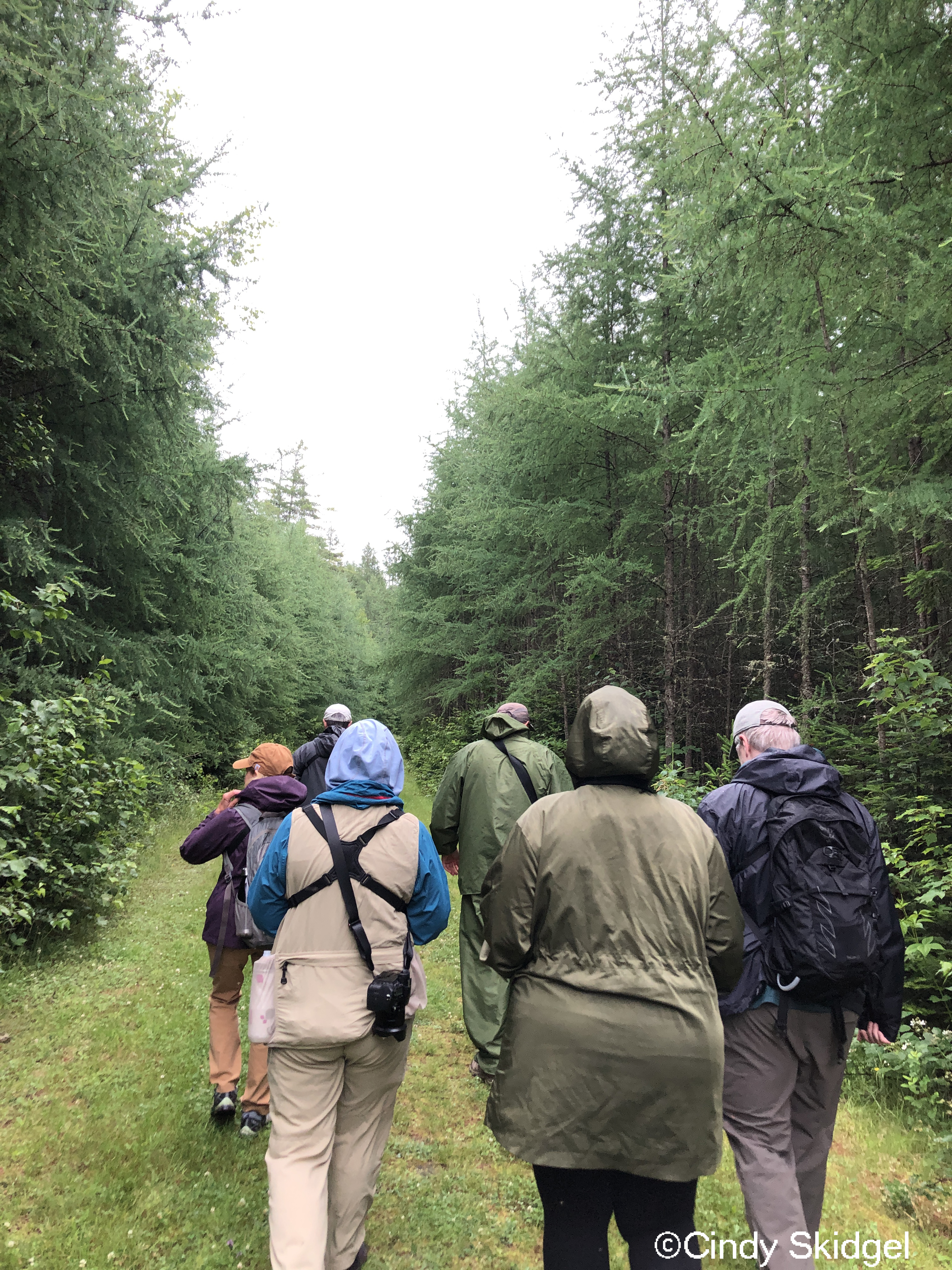
The original plan was to have an afternoon break, early dinner, and then head up the mountain at dusk to take advantage of the evening activity of the thrush. Instead, we had a relaxing dinner, many of us enjoyed a beer or glass of wine, and we just chatted. Good conversation was enjoyed by all, and the rain kept falling.
At one point, the rain let up and I began to ponder a run up the mountain. Just in case the thought became serious, a downpour arrived. Dessert was ordered.
We were back in our hotel rooms at about the time I had planned to be on the mountaintop, so I didn’t know what to do with myself! I think I was stressed about having nothing to stress about. When a tour is solely dedicated to one species, a trip is a failure without that one species. But we already had our quarry, and if it was raining in the morning, oh well. And if it wasn’t, we would just go enjoy the bird some more. I think I had the longest and best night of sleep I can recall while leading a Bicknell’s Thrush weekend!
Well, it wasn’t that long. A “civilized” 5:30am departure from the hotel (thanks to our success the day before) found us free of the rain that was forecast, and there were even a few breaks of sun. It was rather breezy atop the mountain, and in almost two hours, we only had a couple of calls from Bicknell’s Thrushes. A simple continental breakfast was served from the back of my Subaru.
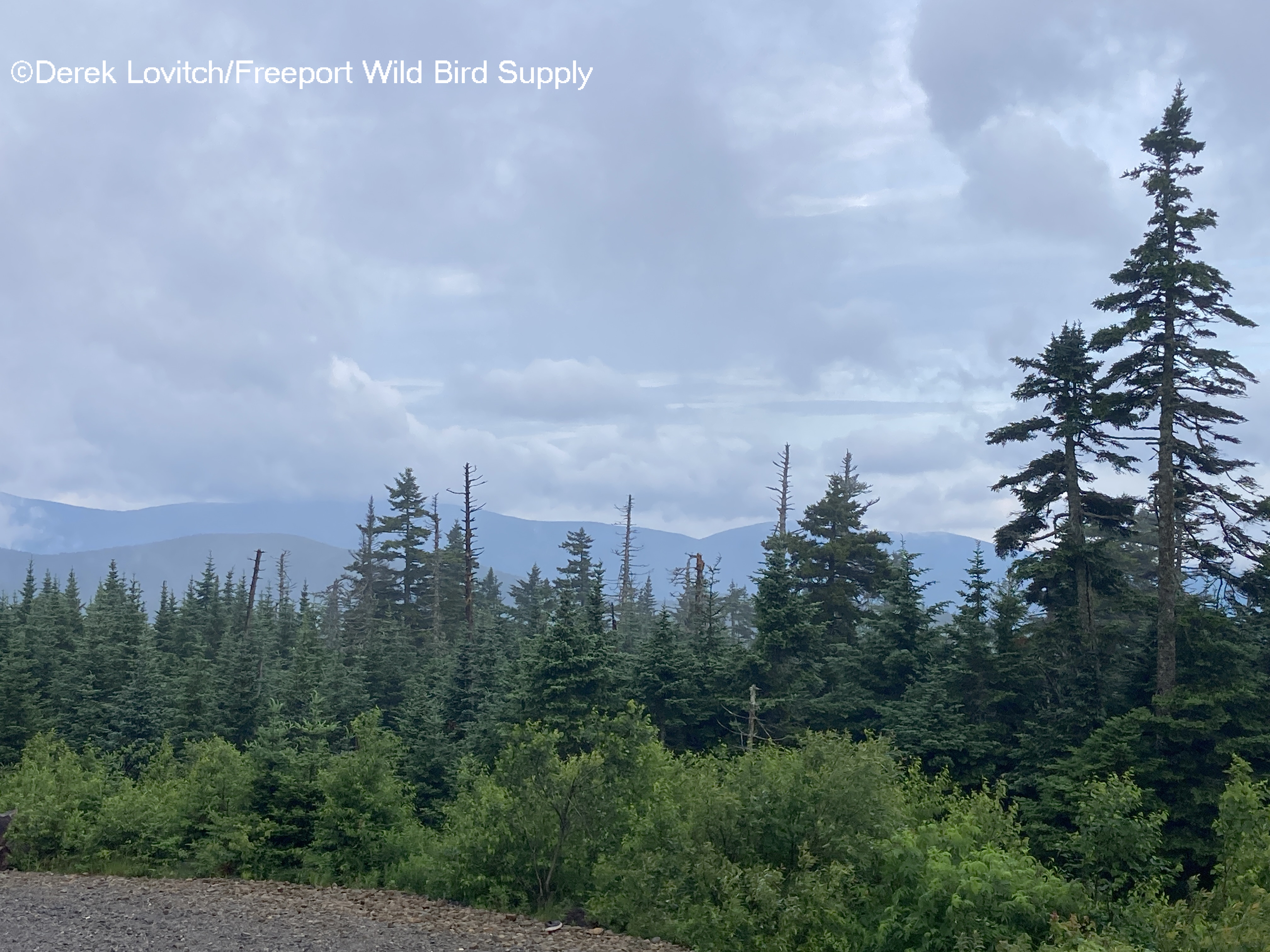
However, we had a Canada Jay (likely the last youngster in a family group that passed just downhill from us) in plain view, and spent some quality time with the local breeders like Blackpoll Warbler. Then, much to my disbelief, the second-most wanted bird on the tour (according to an unofficial survey), began to call very close to us. Could it be? I had to be mistaken. But not much else sounds like a Black-backed Woodpecker!
Then, with jaws dropping to the ground, it proceeded to fly overhead of us, heading up the mountain where it called a few more times. That was not something I was expecting – not just the species, but such a great look at it in flight (I can only recall one other time that I had seen one overhead) and far removed from the deep and dark bogs most of the local birds prefer.
Between yesterday’s thrush luck and today’s woodpecker fortune, not to mention another mountaintop visit devoid of the forecast rainfall, we were just ecstatic.
And then this happened…
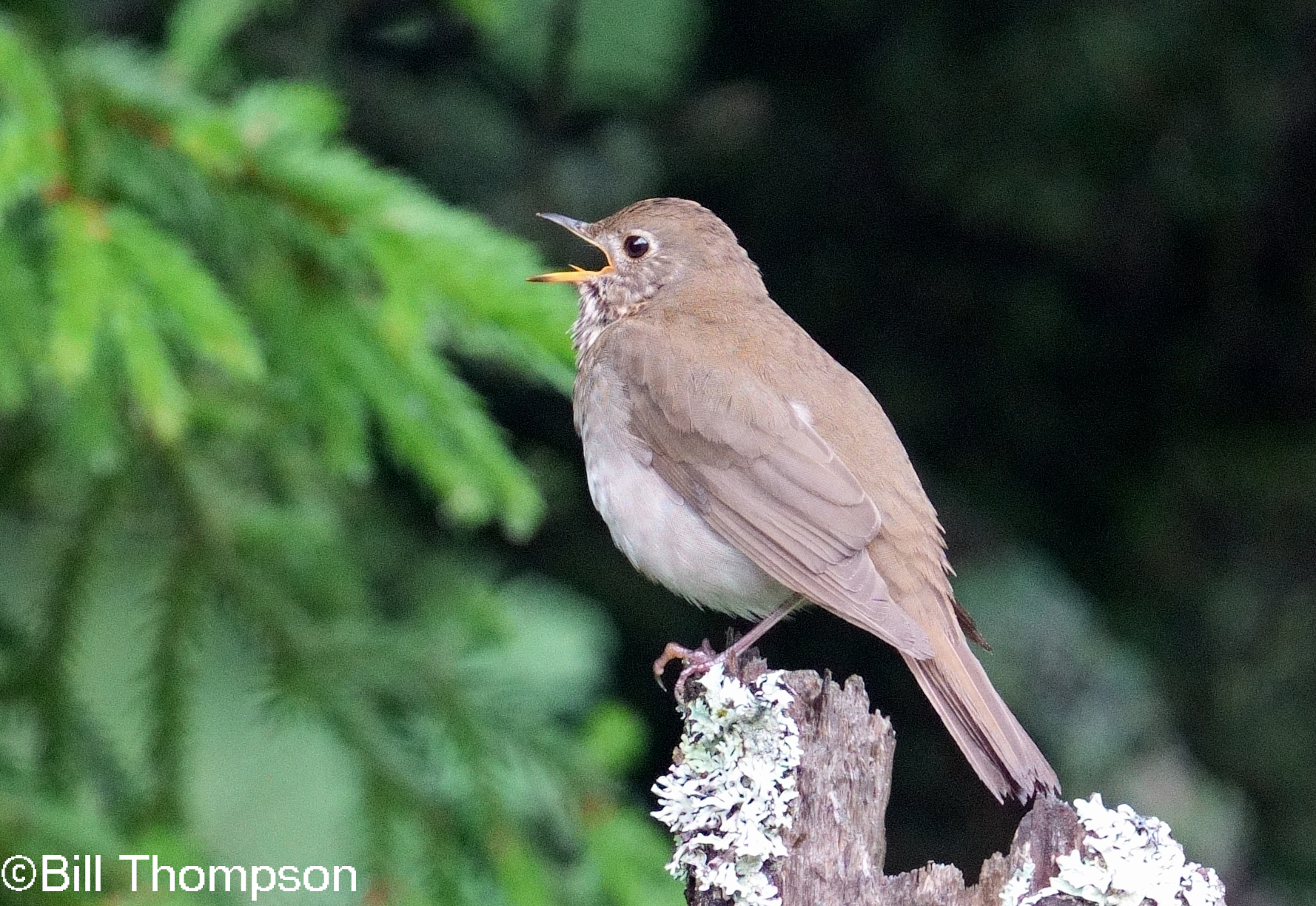
You get a photo, and you get a photo, and you get a photo!
Wow. Just wow.
And it was on a snag that I had just declared, “if this bird comes out, it’s going to perch here.” Most people thought I was joking.
The thrush didn’t. Now, I wish I could always control birds like this, but especially with this species, I have really come to know them and their behavior. To me, it did look perfect for one to sit on. But no, I did not expect it to be sitting on it, singing up a storm, about 30 seconds later. It truly is better to be lucky than good.

And it sat there for long enough to take your camera down, adjust your settings, and return to firing away. It was even there long enough for your dumbfounded guide to remember he had his camera with him for a change. My panicked photos did not do the bird justice, so I will let everyone else’s speak for themselves.

There wasn’t much left to do up here, so we began our trek downhill.
A Mourning Warbler cooperated nicely.

Then, returning to our cars a (the?) family group of Canada Jays returned and came to check us out. Kathy’s granola bar was clutch here as two adults had a snack, with 2-3 dusky juveniles looking on, learning the ways of the Camp Robber.
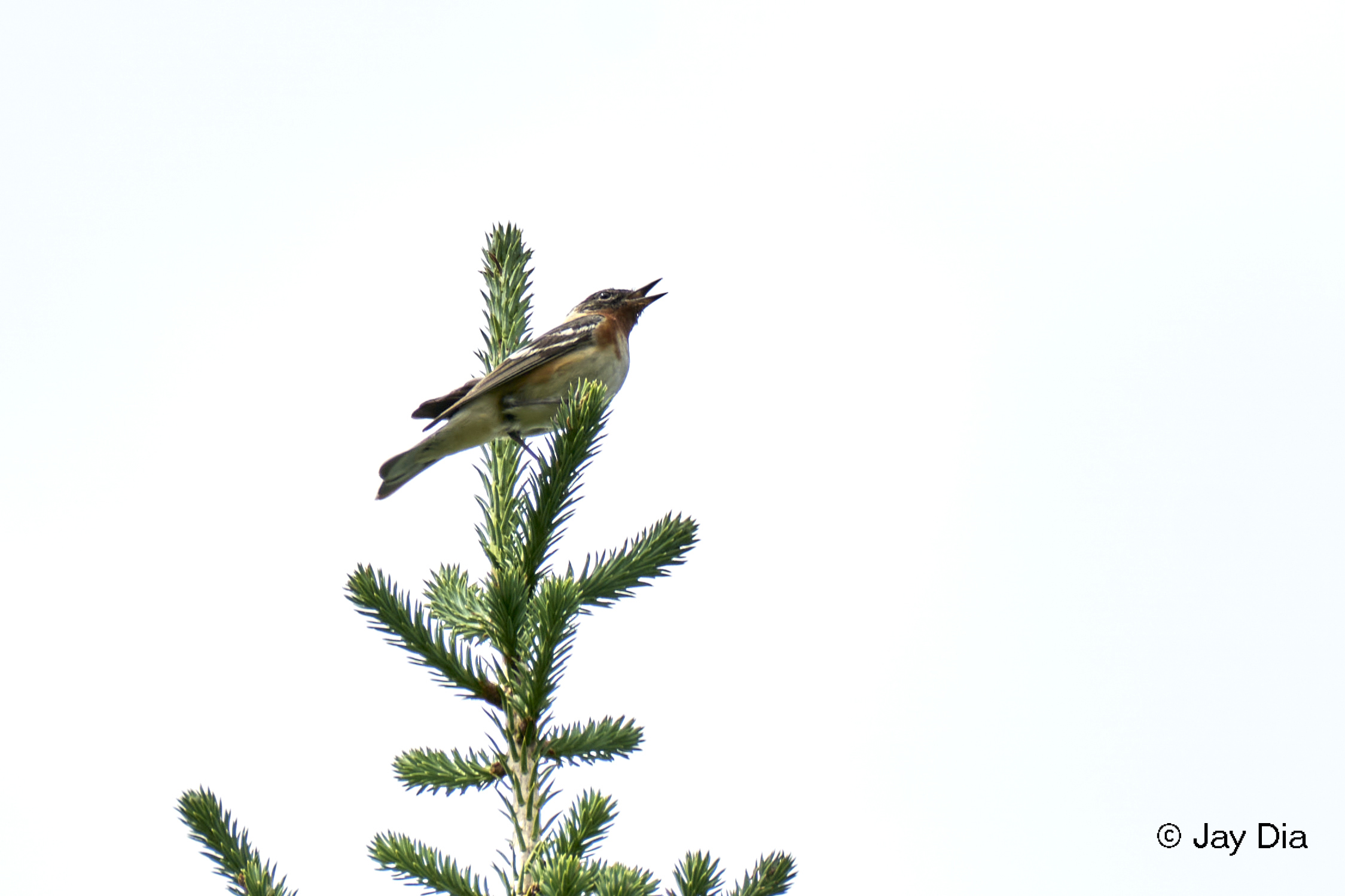
And then Kathy exclaimed “there’s a Bay-breasted!” and we all looked up to see a stunning male singing from a roadside fir right over our heads.
We heard or saw at least another 5 Mourning Warblers on the way down, glimpsed a busy Lincoln’s Sparrow (a Sharp-shinned Hawk passed overhead precluded a better observation, however), and took some time to enjoy and identify butterflies – even skippers (OK, only Bill actually identified said skippers) – and plants.

White Admiral
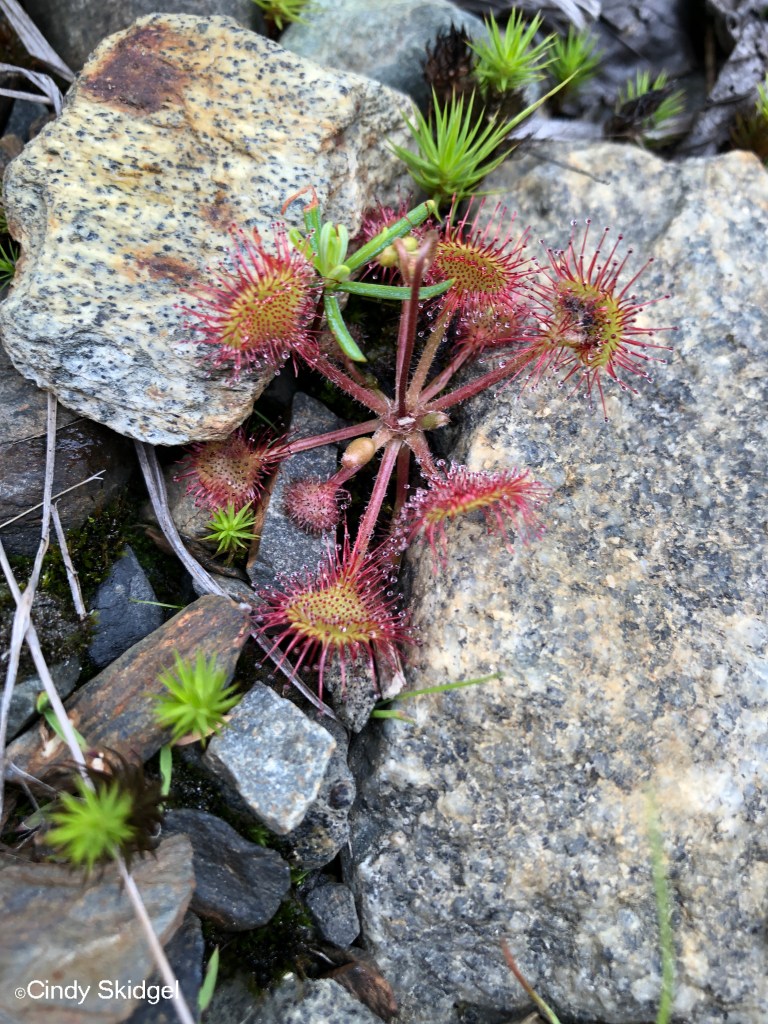
Round-leafed Sundew.
But as the winds began to gust, more rain was approaching, and ATVers were becoming overwhelming, we left the mountain and headed to Colebrook for a relaxed, celebratory luncheon as the rain began to fall and before we headed our separate ways.
As for this new Bicknell’s Thrush Weekend itinerary (with and without necessary audibles), well, I think you can assume we’ll see you here again next year!
 Maine Birding Field Notes